
Experts Only · CleanCapital
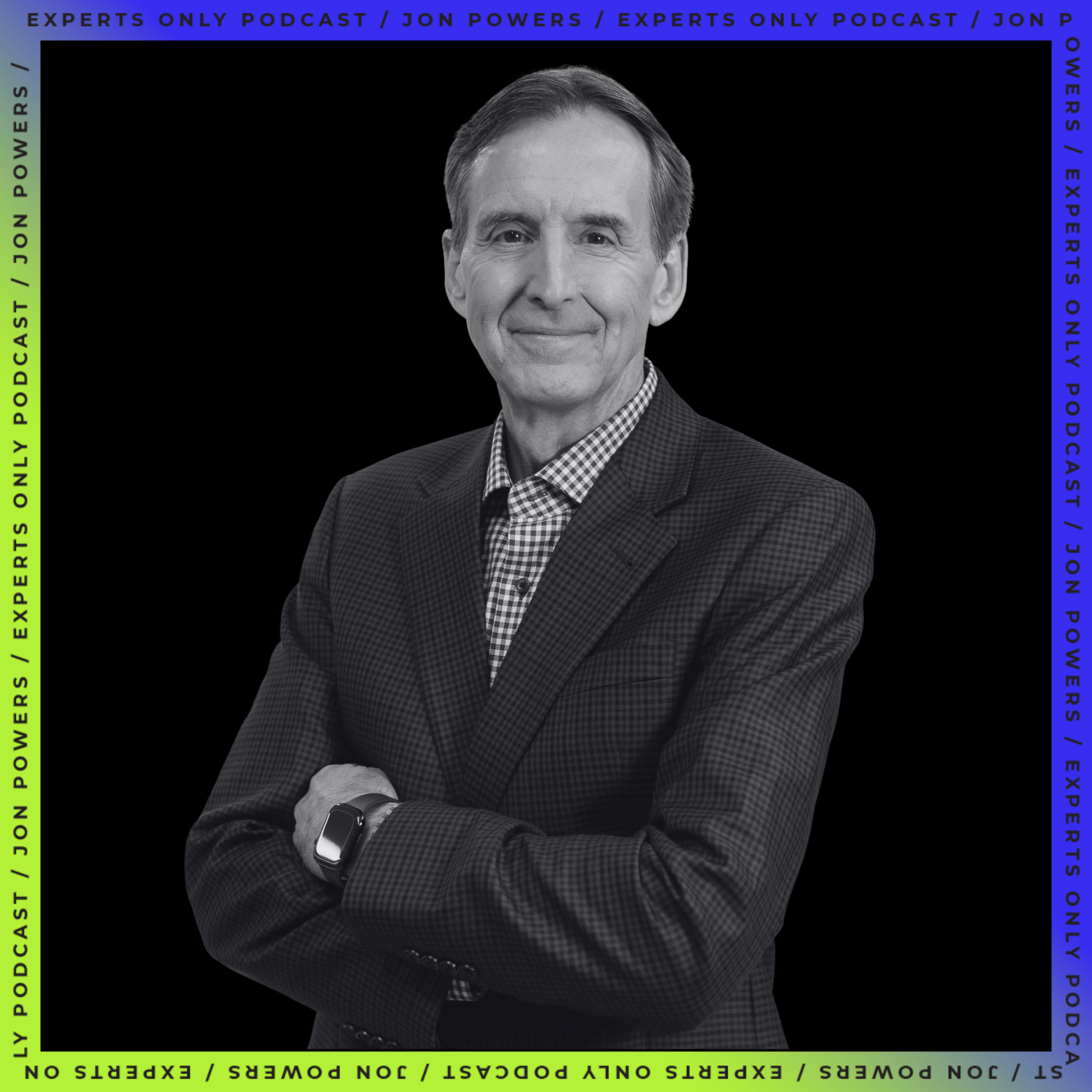
In Episode #140 of the Experts Only Podcast, host Jon Powers sits down with Governor Tim Pawlenty, President and CEO of the Solar Energy Industries Association, to discuss the future of solar and storage in America. Governor Pawlenty shares how his experience in public service shaped his approach to energy policy, why bipartisan support is essential for durable progress, and how the solar industry can help address rising electricity demand, affordability, reliability, domestic manufacturing, and permitting reform. The conversation also explores how the industry can strengthen its message beyond Washington, build a broader political coalition, and better communicate solar’s role in meeting America’s growing energy needs. Governor Pawlenty closes by reflecting on his own career and the advice he would give his younger self: make room for courage, take risks, and think bigger.
speaker-0: Welcome back to Experts Only. I'm your host John Powers. I'm the co-founder of Clean Capital and serve as President Obama's Chief Sustainability Officer. On this podcast, we explore solutions to climate change by talking to industry leaders about the intersection of energy, innovation, and you can get more episodes at cleancapital.com. Welcome back to Experts Only. Today we're joined by Governor Tim Pilente, the president and CEO of the Solar Energy Industries Association. He's previously served two terms as the 39th governor of Minnesota. He spent his career working at the intersection of public policy, executive leadership, and business. As governor, he led on a range of complex policy issues and he chaired the National Governors Association, Securing a Clean Energy Future Initiative, which we'll definitely get into. But now as president and CEO of SIA, he's helping to lead our national Trade Association for America's solar and storage industry at at really this critical time around energy affordability, reliability, domestic manufacturing and permitting reform. Governor, welcome to Experts Only. speaker-1: It is great to be part of Experts Only. Thanks for having me, John. speaker-0: Yeah, absolutely. So I'm gonna switch to Tim here 'cause we you know I get to have gotten to know each other if that's all right. And I wanna go back to Minnesota as a boy who grew up in Minnesota, a hockey player. Before we get into politics, you know, what was there something growing up that sort of triggered your interest in things like clean energy or the environment at the time, because clean energy really wasn't a thing then? speaker-1: Absolutely. You know, as a younger person growing up in South St. Paul, Minnesota, I I didn't really have an awareness of clean energy, but I did as I be got older, especially ⁓ became a policymaker at a local and state level and started to learn about how important the industry of energy is to our economy, to our quality of life, to affordability. And I started to lean into it when really when I got into public policy and politics as a young adult. speaker-0: I I'd read that you I didn't realize you were training to be a dentist and then ended up switching into politics and policy. What drove that? speaker-1: Well, sort of being less than an A student in organic and inorganic chemistry, John. So I I I I definitely wanted to be a dentist. You know, my ⁓ life story in a nutshell is I grew up in pretty modest circumstances and my local dentist in town had a Buick Riviera. It was it was can candy red. It was a reserved parking spot with his name on it. So every time I went to the dentist, I walked by his car in his reserve parking spot and I thought as a young person, This must be the ticket to success to go into dentistry because then you get a car like this and a parking spot. But then I got into college and realized that maybe my aptitud weren't necessarily fully aligned with organic and inorganic chemistry and ended up being a political science major. speaker-0: Yeah, absolutely. So in that early sort of political career, you know, I think you've d obviously done a great job of hor being bipartisan, you know, over the years. But you know, what was what were those experiences like that sort of helped educate you to where you are today? speaker-1: Well, i i yeah, you learn of course, ⁓ as with anything over with experience and and a lot of people talk about intuition, but intuition I think is largely sort of ⁓ muscle memory, psychic muscle memory from things that you've seen before or done before, sort of aggregated into a sense and what I realized is even in these polarized times, and back then it was pretty polarized too, not as bad as today, that things that are going to be durable, that are going to last and that sort of reflect sound policy for a longer haul need to be bipartisan ⁓ and ideally maybe even nonpartisan. And it wasn't until long ago that energy really was. You know, you you can remember, you know, people could have some differences about energy policy, but sort of the the direction of energy policy writ large was largely non-political or often non-political. And we had a window of time when I was governor where we were able to put together some then nation leading sort of cutting edge renewable energy. policies that was were done on a bipartisan basis. And we had a whole coalition of both conservatives and liberals together working on it. And not only does it still exist in Minnesota that to today, ⁓ it's been expanded upon. So it was durable in part because it was bipartisan. speaker-0: Yeah, I mean Minnesota's really been a leader in this space, driven a lot by the work you did. So where you are in your career, right? Someone who's been been the governor, someone who's even run for president, you know, what has what drew you to the Solar Energy Industry Association and sort of our issues today? speaker-1: Sure. I think one of the most important and largest challenges facing our country is how we're going to address this skyrocketing demand for new and more energy. And I just love being in the intersection of public policy and problem solving. And being the ⁓ CEO of SIA at a time when the country is so thirsty for more energy and be able to bring the solar story in terms of affordability, in terms of reliability, being quick to deploy, ⁓ and being clean. is helping to solve one of America's biggest challenges was really exciting and meaningful for me. And that's one of the mo things I get most excited about coming to work every day. speaker-0: Yeah. Well, we obviously we're excited to have you. And so just a few weeks ago we had a journalist come up to one of our sites here in Buffalo and I took her to see one of our solar systems. And while I was sitting outside waiting for her to come, I was talking to a guy who'd been sitting there in his pickup truck. There was a ⁓ training facility for long haul truckers that's right next to our facility. And we were talking about energy because he was asking me all these questions about solar. And I remember him pulling out his phone and opening up his electricity bill. And showing me the different pieces of it down to transmission, because he was blown away by the fact that his electricity bills were going up so significantly. For me, that was a highlight to understand this political moment we were in where, you know, we could not have created the momentum around the our issues that we're seeing at the kitchen table, but in state capitals and, you know, obviously in in in Washington as well. So how do we prepare as an industry to capitalize on them? Right, not take advantage of it, but come with real solutions that can get implemented. speaker-1: Well, of course, when it comes to the economy, most people who are sitting around their kitchen table, they don't think about gigawatts or kilowatts. They're they're just look at the cost. How much does it cost to heat their house? How much does it cost to fuel their car, et cetera, et cetera? And and right now there's an affordability crisis in the country. People are really concerned about these rising costs. And most people also understand that if you want to control costs or hopefully bring them down, it's ultimately a supply and demand equation. And The demand is huge right now and the supply is limited and for a variety of reasons. But but one of the things that I think the solar industry can bring forward is we have a story to tell that we have been most of the new energy added to the electric grid solar has, not just in the last quarter, but over the last several years, the majority, and in some cases, the vast majority of all the new supply of energy going onto the grid has come from solar and storage. And if we it didn't have us in that equation, America's energy situation would be much more acute, much more painful from a cost standpoint. So we have not only the affordability issue that we can help with with storage, we're also more reliable. We're also quick to deploy. We have big backlogs for nuclear and gas plants that, you know, they can't get to market or put those plants into the ground, those facilities into the ground in any near or intermediate time window. So we can get quicker to deploy and we're clean. So we're a big part of the solution and eventually, eventually, the policymakers catch up to the facts and we have really good facts and we have a lot to offer in terms of solving America's problems. And we got a bunch of asks and requests for policymakers to make the road a little easier for us. But that's the fundamental answer to your question, which is we have a great story to tell, a compelling story to tell, and we need more policymakers to have get caught up to the new facts around solar. speaker-0: Yeah, and how do we build the political space for them to actually do the things that we need them to do? Right. ⁓ because I think we're we're facing a time when, you know, obviously that success has brought detractors who, you know, last year were really trying to hamper our industry. ⁓ but there's a new opportunity now to create a new message, to talk about our successes from from speed to deployment to capital, et cetera, in a way that historically our industry's just been the right thing to do. That was we we rode that wave. ⁓ but that wave no longer is working for us. So we have to adjust to these these new messages. So, you know, I'm interested in like your efforts now, even going back to when you were at the National Governors Association, right? Like focusing on even when you framed up the initiative you ran, it was securing a clean energy future. You talk about sort of what that experience was like and then what how that sort of prepares you for what you're gonna be doing now. speaker-1: Yeah, of course when when you're the chair of the National Governors Association, as I was, you get to pick for a year the initiative for the association to focus on. And it could be education, it could be healthcare. In my case, I chose renewable and clean energy ⁓ because I've had a long standing interest and and advocacy and p passion for it. And what I learned in Yeah, so this would have been around two thousand seven or so. speaker-0: Just for the audience, can frame the time frame of that? speaker-1: And of course, within the National Governors Association, we had governors from oil and gas states. We had other folks concerned about affordability even back then and a variety of interests. And if you threaten them with, you know, we're going to take your stuff away, they get very defensive, understandably so. And we were able to sort of navigate a consensus point, not by focusing on how we're going to take each other's market share, but how we can all you know, be together and live together in the same space, moving in the same direction. And I think that's applicable to today for this reason. ⁓ you know, I think energy policy got overly political, I call it around 2012, 2013, when, you know, everybody s was some parts of the political discussion were saying we're gonna go to all EVs overnight, we're gonna go to all renewables overnight. And it was never really realistic. And it was also, you know, quite ⁓ threatening or putting certain other sectors on the defensive. And now there's such a huge demand, I mean enormous demand for energy that we're gonna need all of it. Obviously, we want to get our share and more of the market in that regard from a solar perspective, but it doesn't need to be, you know, a a antagonistic or defensive discussion when we can say we need everybody all hands on deck. And if you give us fair rules, like in permitting, for example, we'll compete. Because we got a great story to tell. And like I said, cost deployment, clean, ⁓ reliable with with solar and storage. So I I I think the the great moment that we have is the energy discussion broadly is we need all of it and we don't need to be fighting with each other. We can ⁓ we can compete with each other, but it doesn't have to be we're gonna put you out of business, you're gonna put us out of business. It's a more constructive dialogue, and I think that's gonna result in better policy and more durable policy. speaker-0: Yeah, I mean, I think some of the polish someone who who's worked in climate, climate advocacy, some of that polarization leaked in over the last, you know, 20 years. And I think it's now it's interesting. We're at a moment where now we're seeing mega influencers, for instance, coming out talking about solar, you know, really reaching out in a new way to the conservative ⁓ side of the aisle. How do we start to build a bigger tent? So to include all of those players, right? Because we don't want to walk away from the folks who have been historical champions for us, but we want to continue to educate and gain folks within the tent ⁓ so we can see the progress we need. speaker-1: Well, and you just said the word educate, and I really think part of this is having ⁓ certain portions of the policy making community catch up to the facts. And the the historical or traditional criticisms of solar has been, well, it only works when the sun's out. Well, you need to understand what's happened with storage, large scale storage, ⁓ storage at scale. And once you understand that set of developments, you s begin to understand a solar, first of all, can operate well. When it's cloudy to to a certain degree, to a significant degree. But when you combine it with storage, you've now started to address those reliability ⁓ concerns. They used to talk a lot about cost, and there's no question, if you look at the Lazard report and others, that solar is leading the drive to pr ⁓ on cost effectiveness and affordability relative to other sources of energy. Of course, there's been concerns expressed about sourcing from China, and that has to be addressed. And it has been addressed. Very few, almost no solar panels. speaker-0: Can we repeat that one more time? 'Cause I think people don't understand that. speaker-1: Yeah, I mean people think well all the solar panels are imported from China when the facts currently are that's not true. I mean it's just the panels are not ⁓ we have import almost zero panels from China. Now, when you talk about the American domestic manufacturing capacity for solar, for wafers, for cells, for modules, we can produce it all here, but we need to need to make sure and it and the capacity exists, we need to make sure we have the materials coming here, presumably not from China, from other places. So we're just asking the administration as we move away from China. And we should we support that. We should do it in a way that off offers an off ramp, not a cliff, so that we can have the reasonable amount of time to build up the American domestic manufacturing capacity. speaker-0: ⁓ and I think I'll say this so you don't have to. I think there'd also needs to be an effort to show that we're we're not in a position we can compete on these issues, but you can't have certain rules that we have as an industry that other industries that we're competing with don't have. So if you're gonna put those rules around our our systems, for instance, let us compete on an equal level playing field. And I think that's a message that is often well received and not often implemented on, unfortunately. But you know, I think now we can create the space to do that. speaker-1: Totally, totally agree. I mean, we we again we have compelling facts. We give us a fair set of rules and a fair and consistent equal treatment relative to our the other sectors in the energy discussion, and we'll do great. And we just need a fair, a level playing field. speaker-0: Let's go back to that point for a second. So the the we have very compelling facts. And I think we've now shifted because of the work of SIA and others, the messaging around how we tell those facts. You know, going into last year, you know, actively being part of the conversation in Washington, we had great jobs numbers. We had, you know, great investment numbers, manufacturing numbers. What we didn't have is the infrastructure to spread that message and to educate, like you were talking about, where we can bring it not just to the folks inside the beltway, but literally into their districts locally or highlighting the workers that they have at home. You know, what do we have to do as an industry to to begin to grow that strength so we can get our message heard, you know, more clearly outside the beltway, recognizing that we're up against, you know, in some levels of a a movement that's been investing for years to culturally educate on things like fossil fuel, you know, we don't have that leeway, we don't have that, ⁓ that runway to to to where we are today, we sort of have to really invest today to build out that infrastructure. speaker-1: Sure. And I think it really falls, John, in two or three buckets. One is the policymaker bucket, and that is why the value of SIA ⁓ is to on on the state capitals and US capital one-on-one with these policymakers and their staff, bringing them hopefully up to speed on new developments that they may not be aware of around cost and affordability and reliability and clean energy. That is, I think, is compelling. It's a compelling story with third party validation. for the policymakers. And that that's I don't want to say that's the easy part, but it's a fairly modest number of people you go contact and we just got to do that on a retail basis, literally a retail basis meeting with each of them. ⁓ and got to do that at the state level as well, which is a little more complicated. So we got to build out the scale there to get that done. We we've got capacity, but we need more capacity in that regard. But then also ⁓ solar and storage needs to tell the story at a wholesale level as well. And that means getting to the public Ultimately translating into grassroots support and activity. And I think that's going to start, we got to reimagine or have be more imaginative about how the industry goes to market to tell our story. And that's going to take resources and it's going to take a little time. And I think there's going to be some opportunities coming up to get that done. But you know, politics is a lagging indicator of culture, and the culture is something that we can curate or help inform, which will then feed up into the policy making discussion. And and we got then that's in short what it means is we gotta have a better public relations effort nationwide to tell solar's story. speaker-0: So this is my call to action so you don't have to ask for folks in the audience, but that takes money and resources. So we have to be considering what we do as companies, investing in organizations like SIA as individuals, putting our voice out there, willing to write an out-bed or do a meeting, or politically donating as well to folks that are our champions. So, you know, we all need to ramp up our our investments in this space to build ⁓ the support we need long term. To go to long term for a second, you know, we have the midterms coming up. ⁓ you know, that it's it's we're in a really interesting position this year because of affordability, et cetera. But, you know, so that we're not living election to election. How do we build out this more durable political center? And, you know, I think your ⁓ role at C is pretty, you know, like the number of text messages I got when we announced that you were the new CEO that were incredibly positive from both sides of the aisle was amazing. Right. And I think highlighted for me like this window of of opportunity we have to build that coalition. So what are the steps? I know we've talked about some of them, but what do you sort of see as the next key steps to building that out? speaker-1: Sure. And I think part of it is to make sure we have a a organization and a message and a positioning that is appeal that can appeal to big elements of both parties. ⁓ obviously for for known reasons, the Democrats have been quite supportive of renewable energy and ⁓ our industry, and we're thankful for that. ⁓ but we have some work to do on the Republican side of the aisle. And you know, the messaging and the substance behind that isn't different, but you know, we need to recognize that the Republic the Republicans have been more skeptical. We've got to catch up ⁓ got some catch up work to do with them. Yeah. ⁓ I I do think it comes down though to making sure that you know things that that are don't need to be political don't aren't political. For example, when we talk about permitting reform to meet America's gr you know skyrocketing crisis for more energy, that doesn't need to be Republican or Democrat. And I think we've got a decent shot of making progress on that. this year or early next year or before then. ⁓ as we talk about, you know, many speaker-0: Can you for a second paint a picture of what that looks like? Because that is an important topic that I think people hear about, but aren't exactly tracking the activity in DC. speaker-1: Absolutely. So at of course at the state level, there's a whole separate series of processes that we have to do one at a time. But as an example at the federal level, the Department of Interior issues permits as does the Army Corps of Engineers for what can and can happen on federal lands. And there's been a decision by the Department of Interior almost a year ago that says we're basically going to have an extra level of review for solar and wind projects. And that's going to rise all the way up to the Secretary. ⁓ office. And that has caused concern because there's been delays and other forms of energy are not going through the same type of elevated review or scrutiny. And there's a two-tier system that's developed for those permits. And so we're trying to get legislation passed and working with the secretary as well, but get legislation passed to make that a more certain, fair, uniform process, regardless of which energy source is asking for the permit. speaker-0: And there's a chance really to work across the energy industries with that, right? Because this is something that absolutely will feel obviously when there's a democratic president, they're feeling that a similar pinch. speaker-1: And and another example of of it could be it is bipartisan. You have leaders from both parties interested in this, supportive of it. And if it happens, and I think it will, it's going to be durable for that reason. I also think on the politics of it, ⁓ you know, the the solar industry, NCIA, you know, we need to make sure that we're engaging politically in a way that is appropriate but effective. And people in Washington, you know, if you want to to s get support from them, they expect some support from you in in appropriate ways. And I think we need to up our game in that regard as well. speaker-0: So as you're getting settled into your new role, I mean, this, you know, I I always look at RE Plus, which used to be Solar Power International, ⁓ as a you know, ⁓ an annual check-in. Like how is how's the industry doing? Where are we going? This is coming up in November. You know, between now and November, you know, talk a little bit about the work you're gonna be doing across the industry, whether it be talking to companies, engaging folks, like what could what what are you gonna be doing and what help do you need from the industry over the next few months? speaker-1: So from an industry standpoint, we have got a lot of things going on at SIA, one of which you mentioned RE Plus, which for people who don't know is as you mentioned, is the brand name for one of the largest renewable and solar energy conferences in the world. It's in Las Vegas, it's in ⁓ November. There's thirty or forty thousand people who show up. There's over eight hundred speakers. I haven't been there, but I'm told it's just an unbelievable event. So it's Everybody, anybody who's there anybody in this space will be there if they can be. And so I encourage people if they're interested to just, you know, search RE plus and find that website and learn about it and hopefully sign up and register. We'd love to see you there. ⁓ and then beyond that, we're working very diligently on a series of work streams in Washington, permitting is an example of that that I've just mentioned to you. Internally, I'm meeting with all the SIA members and board members between now and call it Thanksgiving, if not before. ⁓ and we've got a bunch of other work streams as well. Manufacturing is another example. You know, whether you're Republican or Democrat, people like American manufacturing. And as we all strive to get more manufacturing done within the US, there's support for these ideas of supporting policies that support manufacturing, including solar manufacturing. So I'm optimistic about a future where the current supports for manufacturing, including solar manufacturing, are extended and maintained. I and I think that's another good example of the type of work that we do. Excellent. speaker-0: So when we, you know, talk again in a year and you've been in the role for a year and we've had the midterms, you know, what do you think things look like in sort of mid twenty twenty seven? And how do things like the the midterm sort of change the current debate that we're having, if at all? speaker-1: Yeah, I think the midterms will be very consequential for the future direction of the congressional policy and ultimately what gets negotiated with the White House. And so if if we do have a change of control or one or both houses in Congress, that will have implications for energy policy, no doubt. And there may be some challenges with that, or there may be some opportunities with that, depending on which way it goes. So ⁓ we're gonna continue our work diligently. And of course there'll be a lame duck session as well, which is its own story. But ⁓ Our goal is, regardless of what happens in the election or a lame duck or some future election, that the solar story gets told, ⁓ is heard. And I think again, I'll just say it again, with ⁓ the facts that we have underneath us, ⁓ I think policymakers from both sides can rally around solar on a bipartisan basis. And again, I think even Republicans, not all of them, but a good number of them, will come around to be supportive of solar. And one of my goals is to reengage them in ways that are more positive and get them from being ref reflexively against solar. speaker-0: Yeah. And and as someone who works in in finance and and as a a business leader, I know there's so many of us that are willing to be part of that conversation. So whatever you need, you know, bringing us to the table, we're willing to ⁓ help along the way so that we're in a really successful place, not just in twenty seven and beyond. I think obviously, Governor, we're super excited to have you sort of leading leading Sia and leading in the future. I want to go back to you growing up in Minnesota. And, you know, remind me, where did you go to school in Minnesota? speaker-1: I went to the University of Minnesota both as an undergraduate and and for law school. speaker-0: So if you could sit down maybe after law school and have a beer with yourself, what piece of advice would you give? speaker-1: Well, this is hard for younger people who are starting out in their careers in life because so much is uncertain and it's not clear. But I just love the phrase, you know, don't let your fear be exceeded by your courage. and I you know, I think younger people should think about taking more risk, ⁓ leaning into things that are innovative, new, dynamic, open. and yes when I when I grew up at a meat packing town, my mom died when I was in tenth grade. My dad was a truck driver. I was the first in my family to go to college. And I was so focused just on sort of surviving slash making sure I could put gas in a car and pay the bills. ⁓ and working while I was going to college and working while I was in law school, ⁓ that you know, that that becomes sort of a a survival mentality. And that's necessary because you gotta eat and you gotta live and you gotta pay put gas in the car, but leave room for your courage to create. ⁓ a vision and some imagination that might allow you to think bigger, even even when you're young and things seem like it's a they're a little unstable. speaker-0: Yeah. Well that's a time to take the risk, right? You do have to pay for your kids going to school. ⁓ well, Governor, thank you so much. And thanks for the team at SIA for helping to put this together and ⁓ Colin Young, our producer at experts only. ⁓ this is you know, we we look really look forward to continuing this conversation ⁓ as you're getting ⁓ get your feet under you at SIA and really excited about the leadership you bring. So thank you so much. speaker-1: That's right. We appreciate your leadership, John. On behalf of the industry, you're a great spokesperson for it with your experience and background. We look forward to leveraging that as well. And I'm very optimistic and bullish about the future of solar. I think it's gonna be a good run from here. speaker-0: Me too. And challenge all of you, if you're not members of SIA, sign up today. ⁓ and if you are members of SIA, up your ante ⁓ so that we can have the impact we need next year. And as always, you can get more episodes at cleancapital dot com. speaker-1: Thank you. Thank you.