
Evolutionary Insights by Anthropology.net · Anthropology.net
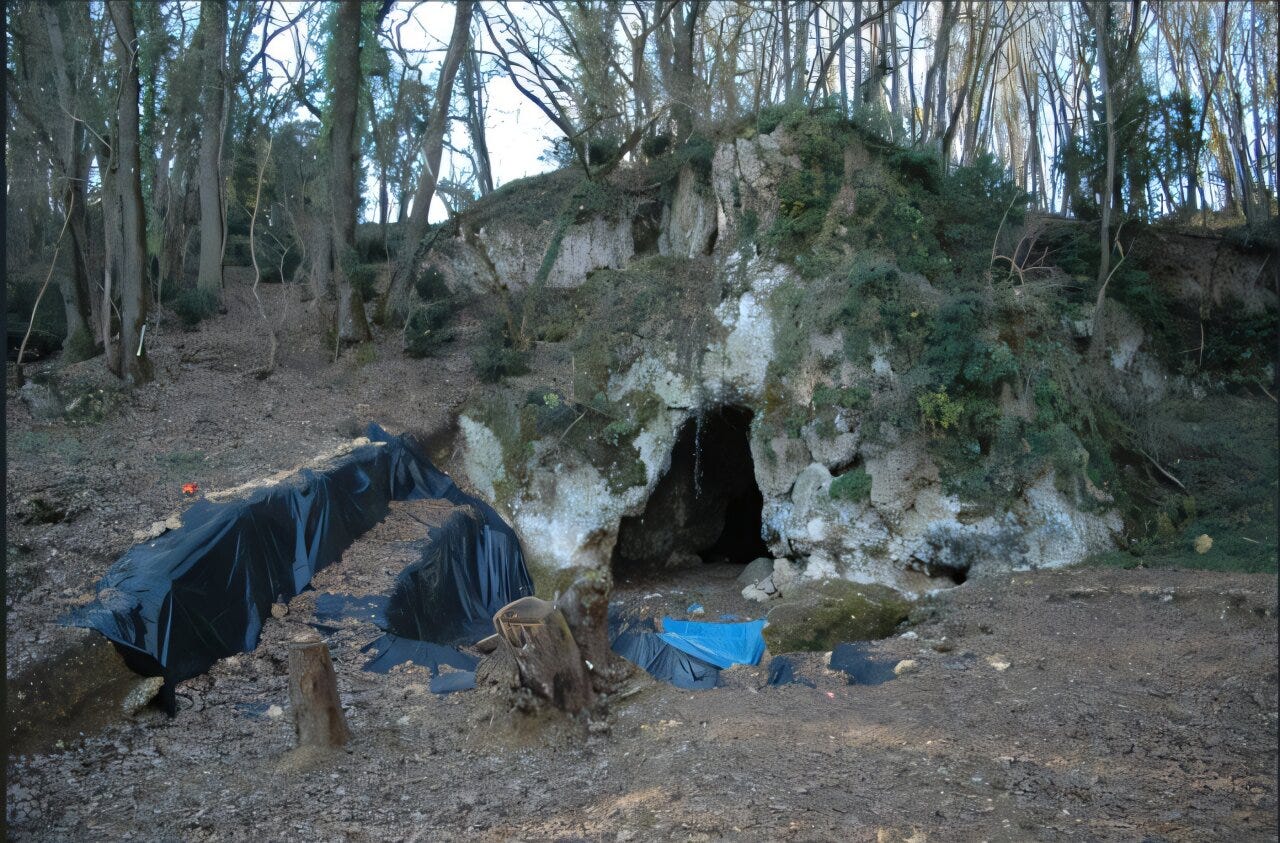
A tibia fragment from a Belgian cave had been sitting in a museum collection, confidently refitted to a particular leg bone, for years. Then researchers sequenced its DNA. It didn’t match. The fragment belonged to a different individual entirely — and only by redoing the refitting and pulling a new sample from the correct bone did the picture come clear. This is the kind of thing ancient DNA analysis does now: not just fill in population histories, but correct the physical reconstruction of bodies that died forty thousand years ago. That correction is one small moment in a much larger study, published today in Nature, that represents the most genetically detailed look yet at the final Homo neanderthalensis populations of northwestern Europe. Researchers from the Max Planck Institute for Evolutionary Anthropology and collaborating institutions recovered genetic data from 27 individuals who lived less than approximately 52,500 years ago, drawn from ten archaeological sites in Belgium and France. The findings speak directly to some of the most contested questions in Neanderthal research: how connected were these populations, how much did they interbreed with close relatives, and did genetic deterioration contribute to their extinction? The short answers, as far as this dataset allows: more connected than previously suspected, less inbred than their eastern counterparts, and probably not dying from a genomic death spiral. A region, not a scattered handful Most of the sampled sites cluster in the Meuse Basin of Belgium — Goyet, Spy, Couvin, Trou Magrite, Fonds-de-Forêt, Engis, Walou — with two French sites, Saint-Césaire and Arcy-sur-Cure. The density of Middle Palaeolithic sites in this region is unusual, and that density is precisely what makes it possible to study something approaching a regional population rather than isolated individuals from distant locations. The team generated a high-coverage genome (22.4-fold) from a Goyet individual designated GN1 — only the fifth high-coverage H. neanderthalensis genome sequenced to date. For specimens with poorer DNA preservation, they used a new hybridization capture panel called ArchaicPlus, designed to target around 2.3 million SNPs informative for Neanderthal and Denisovan variation. Combined, this approach yielded nuclear data from 19 skeletal remains across six sites. The genetic picture that emerged is of a loosely knit regional population. Most of the Belgian and French individuals are more closely related to each other than to other contemporaneous late Neanderthals, including Vindija 33.19 from Croatia and the Mezmaiskaya individuals from the Caucasus. Their estimated population split from the Vindija lineage falls around 54,000 years ago — roughly 10,000 years before these individuals actually lived. A relatively shallow separation. Distinct, but not isolated. What is perhaps more telling is what the genomes do not show. The H. neanderthalensis individuals from Chagyrskaya Cave in Siberia,...
0:00SPEAKER_01You're handed a microscopic vial of dust.
0:02SPEAKER_00Right, just a tiny pinch of crushed bone.
0:05SPEAKER_01Yeah, just dust.
0:06SPEAKER_01And you're told to use it to solve, like, the oldest murder mystery on Earth.
0:11SPEAKER_00No pressure, right.
0:12SPEAKER_01Exactly.
0:13SPEAKER_01I mean, you need to pull out the family history of the person it belonged to,
0:17SPEAKER_01map their social networks,
0:19SPEAKER_01determine their overall health,
0:21SPEAKER_01and ultimately figure out how their entire species completely vanished from
0:25SPEAKER_01the planet.
0:26SPEAKER_00It's a tall order for a few milligrams of powder.
0:29SPEAKER_01It really is.
0:30SPEAKER_01Usually when you're looking at a forensic cold case,
0:32SPEAKER_01you have the luxury of,