
Evolutionary Insights by Anthropology.net · Anthropology.net
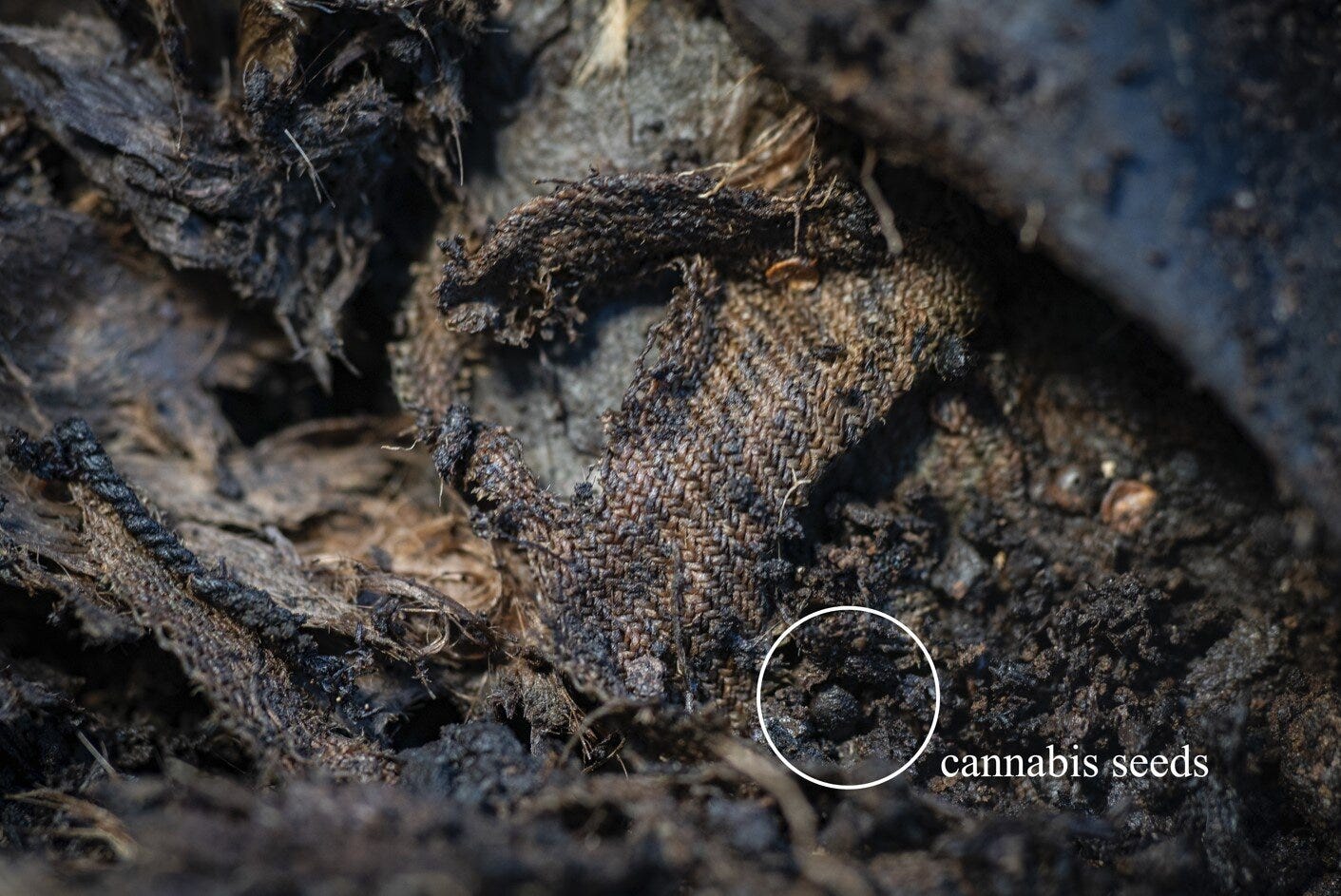
In the central burial chamber of a princely tomb in Tyva, in southern Siberia, human hair survived for roughly 2,800 years, and several samples give clear chemical signals consistent with cannabinol, a compound that can form when the main intoxicant in cannabis oxidizes. The tomb belonged to high-ranking members of Scythian society, the horse-riding culture of the Eurasian steppe, and it also held about 1,000 cannabis seeds. A new paper in Science presents these finds as the earliest direct evidence of ancient cannabis use. The belief this tests is one many of us hold without much scrutiny, that cannabis in an ancient grave means someone was getting high. People have often suggested as much, but the evidence is awkward. Cannabis also supplied oil and fiber, so seeds in a burial don’t prove intoxication, and residues on vessels and heated stones from later Central Asian sites point to inhalation while recording an object rather than a person. Hair could close that gap because it comes from a body. The study’s lead author is Dr. Gino Caspari, an archaeologist at the Institute of Archaeological Sciences of the University of Bern and the Max Planck Institute of Geoanthropology. He and eight coauthors, including Timur Sadykov and Daria Fomicheva, conclude that cannabis consumption dates back at least 2,800 years. In the press release issued with the paper, Caspari takes the next step: “The molecular traces in the hair and the cannabis seeds come from the same grave and suggest that cannabis was used for its intoxicating properties.” I should say exactly what I read. The full text is behind Science‘s paywall, and for this post I worked from the abstract, the editor’s summary, and the release, without the methods or the supplement and its eight figures and seven tables. When I call a detail missing below, I mean missing from those documents. On that evidence, I think the case that people in this tomb used cannabis in some form is good, and the case that they used it to get high is weaker. How do you find cannabis in 2,800-year-old hair? The date comes from the seeds. Radiocarbon dating measures the decay of carbon-14 in once-living material, and six seeds were dated directly. I consider this the firmest part of the study because the date belongs to the cannabis itself and not to something found near it. Together with other dating results, those measurements put the seeds in the grave in the early eighth century B.C., which matches the 2,800 years in the paper’s title. The error ranges, and what the other dates were taken on, are missing from what I read. The chemistry comes from the hair, and it is easier to follow once you know the two compounds involved. Tetrahydrocannabinol, or THC, is the main intoxicating compound in cannabis. Cannabinol, or CBN, is one of the things THC becomes when it oxidizes, which makes it a sensible target in very old material. The team used high-resolution mass spectrometry, among other methods; the technique sorts...
0:00SPEAKER_00You know, usually when we talk about a medical diagnosis,
0:03SPEAKER_00there's this expectation of total precision, like engineering, almost.
0:09SPEAKER_01Right, like a binary.
0:10SPEAKER_00Exactly. You break your arm, the x-ray shows that jagged white line,
0:14SPEAKER_00and the doctor just points at it and says, you know, there it is,
0:16SPEAKER_00broken or not broken, it's super clean.
0:18SPEAKER_01And we are very comfortable with that level of visibility.
0:21SPEAKER_00We really are.
0:22SPEAKER_00But the thing is, when you step into the world of ancient human behavior,
0:27SPEAKER_00suddenly that x-ray machine is just totally useless.
0:30SPEAKER_00We end up looking at an archaeological landscape that is fundamentally murky.
0:35SPEAKER_01It forces us to confront, well, diagnostic muddy waters, really.
0:39SPEAKER_00Yeah, totally.
0:40SPEAKER_00Because trying to diagnose exactly what our ancestors were doing or feeling
0:45SPEAKER_00or experiencing thousands of years ago, I mean, it requires an entirely different,