
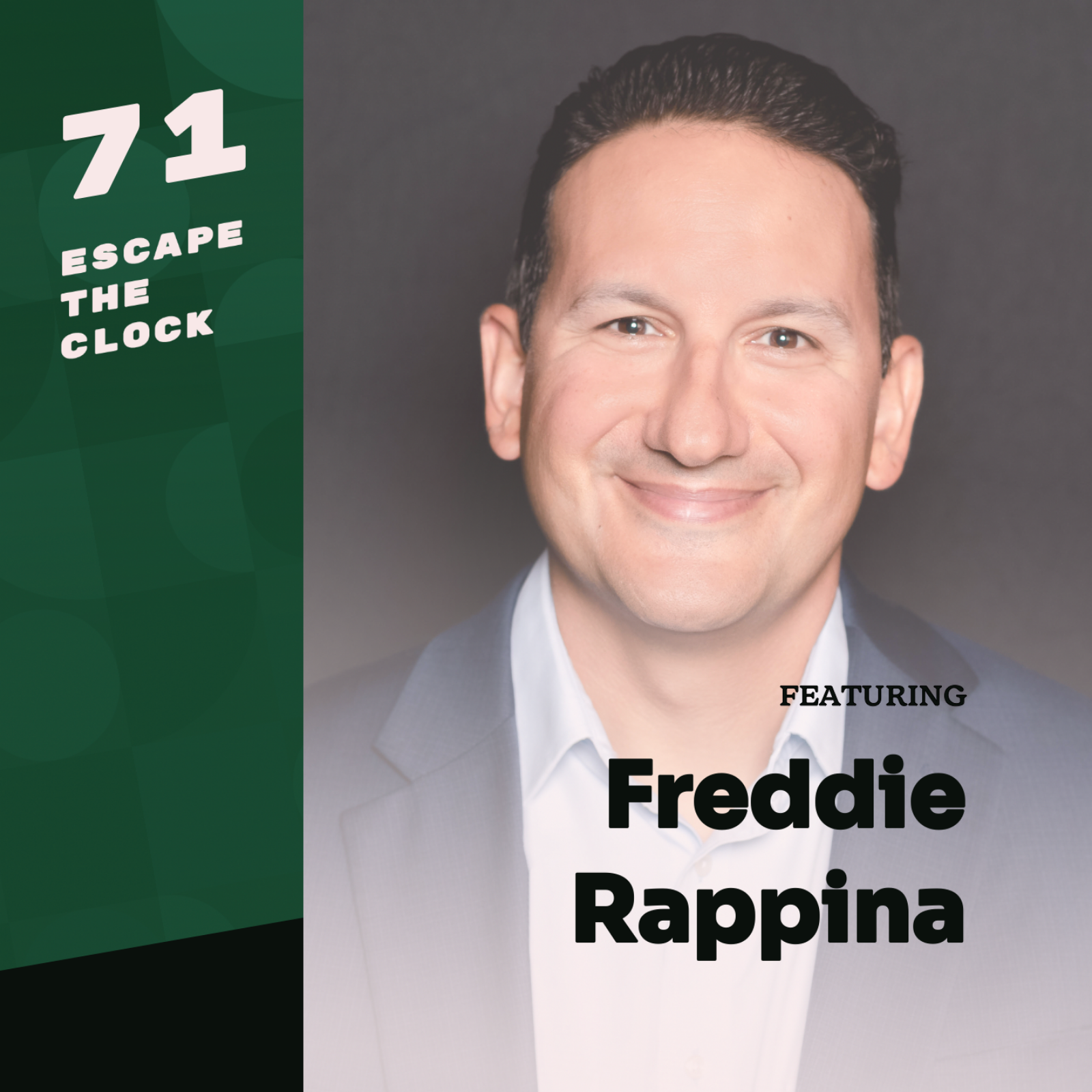
Escape The Clock: How to Become Financially Free and Have the Option Not to Work · Daniel C. Rodgers
Got something to say to this podcast? Send a voicemail, and you might hear yourself on the next episode! What happens when the rules you were handed were never the rules the wealthy were playing by? In this episode, Freddie Rappina explains the difference between the two money games most Americans never know they are choosing between. Checkers is the path we are all handed: avoid debt, max the retirement accounts, buy the index fund, wait 30 years. Chess is what the wealthy actually play: let assets appreciate, borrow against them instead of selling, and use that money to buy things that pay you back. Dan and Freddie get into where the line really sits between debt that builds you and debt that buries you, how the flywheel of leverage and cash flow works at any scale, why your own advisor may never mention any of it, and how to know when you are ready to switch games. Chapters: 00:00 - The Rules of Money Nobody Teaches You 01:47 - $1.9 Million to Reach the Top 10% 04:16 - Watching Wealthy Clients at 21 06:08 - Debt Attitude Separates the Two Games 09:15 - Why the Wealthy Read the Tax Code 11:19 - Win at Checkers or Switch to Chess 13:22 - $1.28 Trillion in Credit Card Debt 14:56 - The Flywheel That Pays Its Own Loan 16:28 - Build the Statement a Lender Will Fund 18:00 - Reserves for the Storms That Are Coming 20:06 - Why Advisors Steer You From Real Estate 23:14 - No Life Insurer Failed During COVID 27:15 - Two Ways to Borrow $40,000 29:22 - $103,202 Is the Median at Age 65 32:50 - Building Assets You Never Sell 35:09 - Know Your Goal and Play to Win Escape The Clock Resources: 📖 The Book — https://escapetheclock.com/book ⬇️ The Planner — https://escapetheclock.com/toolkit 🎙️ The Podcast — https://escapetheclock.com/podcast 🤝 1:1 Help — https://escapetheclock.com/schedule ✉️ Free Monthly Insights — https://escapetheclock.com/subscribe Episode References & Resources: ℹ️ Top 10% of US wealth - Federal Reserve (2025) https://www.federalreserve.gov/releases/z1/dataviz/dfa/distribute/chart/ ℹ️ Real estate by earner group - Redfin analysis of Federal Reserve data (2025) https://www.barchart.com/story/news/816336/the-top-20-of-earners-hold-over-half-of-americas-real-estate-wealth ℹ️ Top 10% household net worth - Federal Reserve Survey of Consumer Finances (2022) https://www.federalreserve.gov/econres/scfindex.htm ℹ️ How millionaires built their wealth - Ramsey Solutions National Study of Millionaires https://www.ramseysolutions.com/retirement/the-national-study-of-millionaires-research ℹ️ Credit card debt and average rates - Federal Reserve Bank of New York (2025) https://www.newyorkfed.org/microeconomics/hhdc ℹ️ Insurer mortgage loan holdings - NAIC (2025) https://content.naic.org/sites/default/files/capital-markets-special-reports-asset-mix-ye2025.pdf ℹ️ 401k balances by age - Vanguard How America Saves (2026) https://workplace.vanguard.com/insights-and-research/report/how-america-saves-2026.html Connect with Freddie: 🌐 Website -...
0:00In America, almost no one sits you down and teaches
0:03you the rules of money. You pick them up by watching.
0:06Save, stay out of debt, max out the 401k, wait.
0:09But if that is the way to make money, then why
0:12is the divide so wide? The top 10% of American
0:15families now hold roughly two-thirds of all
0:17the wealth in the nation. Americans hold roughly
0:20$48 trillion in real estate wealth. The top fifth
0:24of earners hold 56% of it. That is a lot of
0:27wealth at the top. Yet the bottom fifth holds
0:29only 5%. So the wealth divide is real, and there's
0:32a real difference between the moves that each
0:34side is making. The gap's not discipline. The
0:37gap is usually what you own. So today on Escape
0:40the Clock, we're aiming to answer the question,
More Escape The Clock: How to Become Financially Free and Have the Option Not to Work episodes →