
Equine Assisted World with Rupert Isaacson · Rupert Isaacson
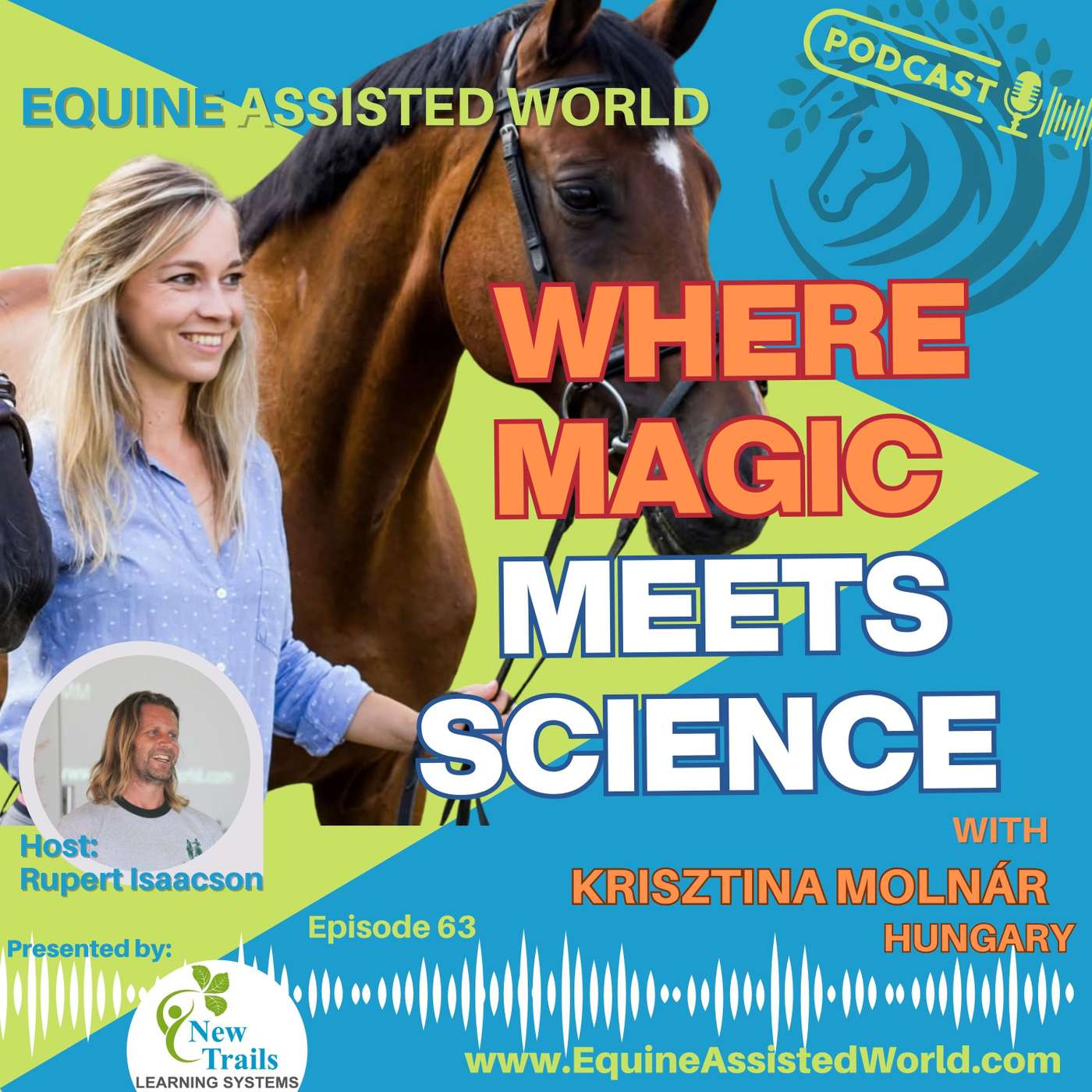
✨ "I think the horse and the animal is kind of an anchor that keeps you in the present." – Krisztina Molnar Deep in the forest near Debrecen in eastern Hungary, a six-year-old foundation has become a home for animal-assisted therapy of every kind: clinical equine-assisted psychotherapy, work with neurodivergent children, family therapy, group therapy for children, adolescents and parents, and sessions for adults, alongside a small riding school, dressage and a vaulting team. Clinical psychologist Krisztina Molnar leads its clinical work with children and parents, supported by a team, 14 horses and three therapy dogs. The original plan was four to six horses and a quiet life in her "fairy forest." Instead, the foundation grew one family, one colleague and one need at a time, guided by a single principle: keep running something only as long as it serves everyone in the story, meaning the clients, the animals and the therapists. Along the way the forest itself became a therapeutic tool, complete with a wishing forest, a mound where problems can be blown away, and a transparent indoor arena that clients describe as a safety bubble inside nature. Rupert and Krisztina explore why nature can take clients deep very quickly, and why that is both a chance and a danger. They discuss how a classic "three wishes" diagnostic task becomes a fairy tale, what Winnicott's transitional space and the "wise mode" of schema therapy have to do with the forest, Hungary's relationship with mental health and transgenerational trauma, the difference between healthy fantasy and delusion, and why the horse is the anchor that keeps a person in the present moment. If you want to support the show, you can do so at Patreon: https://www.patreon.com/LongRideHome 🔍 What You'll Learn in This Episode How a foundation planned for four to six horses grew into a multi-program center with 14 horses, three dogs and a full team Why the guiding rule is to run something only as long as it serves clients, animals and therapists alike Why mentally healthy therapy horses need a natural environment, and how that shapes therapy before a session even starts Why the forest can take clients deep very quickly, and why that brings both a chance to grow and a risk of falling apart Why children who are overloaded by impressions may fear the forest, and what they are really afraid of How having a forest, an arena, a small indoor and an inside room lets the therapist tune the setting to each client's safety needs How a transparent indoor arena, chosen because it was the cheapest option, works as a "safety bubble" and a transitional space How magical places in the forest, like the wishing forest and the mound where problems are blown away, are built around clients' psychological needs How the diagnostic "three wishes" task becomes a fairy tale, and how to translate a child's wish into an underlying need What schema therapy is, and how the forest may help clients connect to their inner "wise mode" How to...
0:00Rupert Isaacson: Welcome to Equine Assisted World.
0:02I'm your host, Rupert Isaacson, New York Times best selling
0:05author of The Horse Boy, The Long Ride Home, and The Healing Land.
0:08Before I jump in with today's guest, I just want to say a huge
0:12thank you to you, our audience, for helping to make this happen.
0:15I have a request.
0:16If you like what we do, please like, subscribe, tell a friend.
0:22It really helps us get this work done.
0:24As you might know from my books, I'm an autism dad.
0:27And over the last 20 years, we've developed several
0:31equine assisted, neuroscience backed certification programs.
0:35If you'd like to find out more about them, go to newtrailslearning.
0:40com.
0:41So without further ado, let's meet today's guest.
0:44Welcome back to Equine Assisted World.