
Equine Assisted World with Rupert Isaacson · Rupert Isaacson
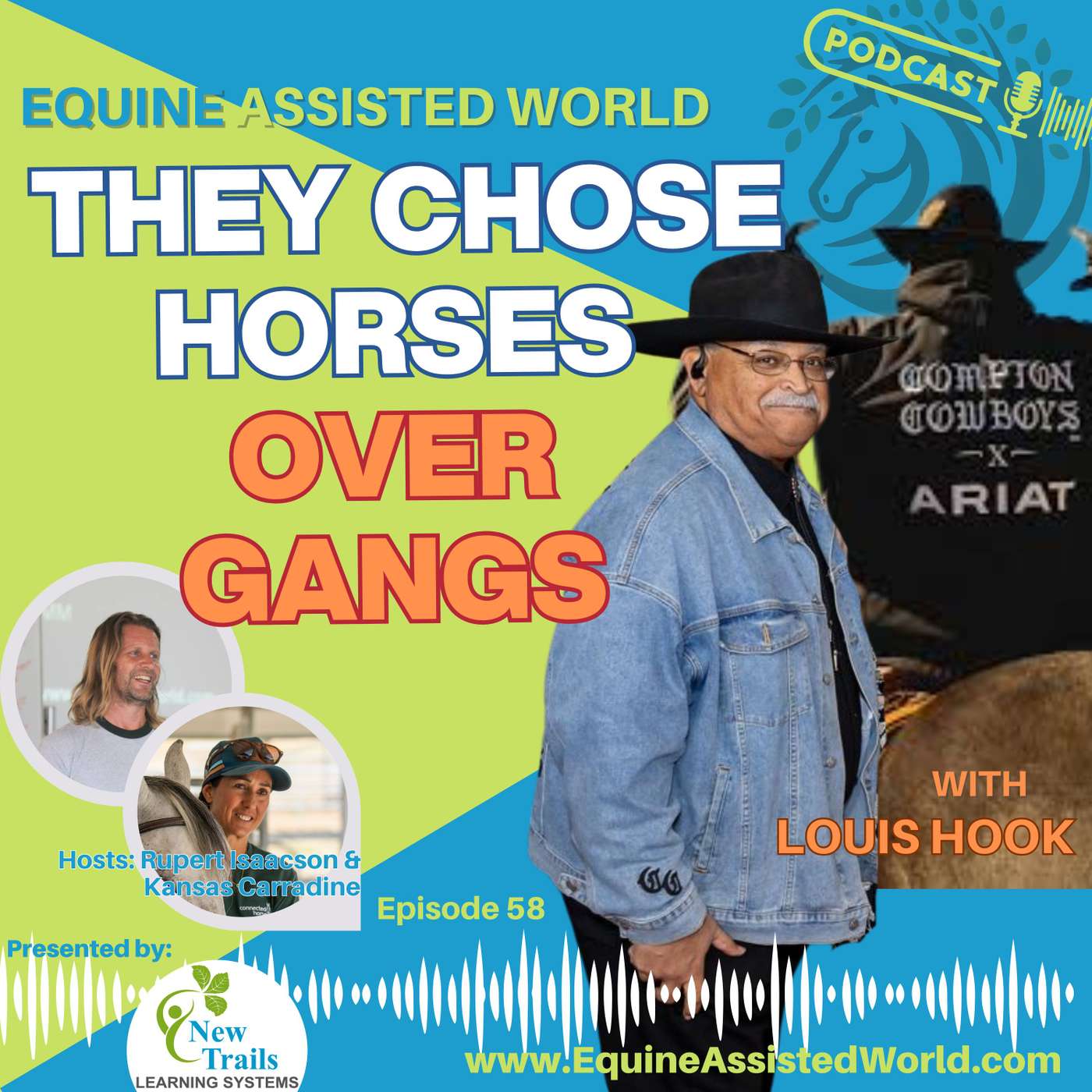
✨ "I believe that in our ancestry we were equestrians, and that's why it's connected so hard with my family." – Louis Hook For 35 years, the Compton Cowboys mission has run a self-development program in Compton, California, that leverages horses to help kids grow into upstanding young men and women — serving roughly 30 kids a year. Founding member Louis Hook and HeartMath practitioner Kansas Carradine, who has worked alongside the organization for years, join Rupert Isaacson to talk about the mission's history and how it works today. What started when Louis's sister Maisha Akbar moved to Compton's Richland Farms neighborhood in 1988 has grown into a four-track program covering horsemanship, equine science, farming, and self-development. Kansas brings the science side of the conversation, explaining how heart rate variability and heart coherence research from the HeartMath Institute is being used to help kids and horses regulate together. The conversation ranges from the history of West African cavalry culture and Mansa Musa to the concept of epigenetic and intergenerational trauma, and what Louis calls "Shadow PTSD" in kids growing up in high-violence neighborhoods. It's a wide-ranging discussion about ancestry, the funding challenges facing Black equestrian nonprofits, and why reconnecting to the history of Black horsemanship matters for healing. If you want to support the show, you can do so at Patreon: https://www.patreon.com/LongRideHome 🔍 What You'll Learn in This Episode How the Compton Cowboys mission began 35 years ago when founder Maisha Akbar moved to Compton's Richland Farms neighborhood Why Compton developed an equestrian culture at all, and how a protective land deed kept it from being lost to urbanization How the Compton Cowboys' "four tracks" model — horsemanship, equine science, farming, and self-development — structures a full day for kids Why the program shifted from Western to English riding due to funding and racial barriers within the Western equestrian world What HeartMath research reveals about heart rate variability (HRV) and how horses respond to human nervous system regulation How epigenetic and intergenerational trauma is passed down, and why reconnecting to ancestry can support healing How the Compton Cowboys' own research into Mansa Musa and West African cavalry culture reshaped their understanding of Black equestrian history What "Shadow PTSD" means for kids growing up in high-violence neighborhoods, and why the organization believes it needs formal recognition How the Compton Cowboys have expanded to serve LA's broader community, not just Black families Why field trips to ranches and farms are a powerful — and fundable — model for connecting urban kids to nature What it actually costs to run a nonprofit equestrian program, and how funding and celebrity support really work in practice How Compton Cowboys has advocated to keep equestrian centers open across LA County How Rupert's own experience adapting fox hunting...
0:00Rupert Isaacson: Welcome to Equine Assisted World.
0:02I'm your host, Rupert Isaacson, New York Times best selling
0:05author of The Horse Boy, The Long Ride Home, and The Healing Land.
0:08Before I jump in with today's guest, I just want to say a huge
0:12thank you to you, our audience, for helping to make this happen.
0:15I have a request.
0:16If you like what we do, please like, subscribe, tell a friend.
0:22It really helps us get this work done.
0:24As you might know from my books, I'm an autism dad.
0:27And over the last 20 years, we've developed several
0:31equine assisted, neuroscience backed certification programs.
0:35If you'd like to find out more about them, go to newtrailslearning.
0:40com.
0:41So without further ado, let's meet today's guest.
0:44Welcome back to Equine Assisted World.