
Equine Assisted World with Rupert Isaacson · Rupert Isaacson
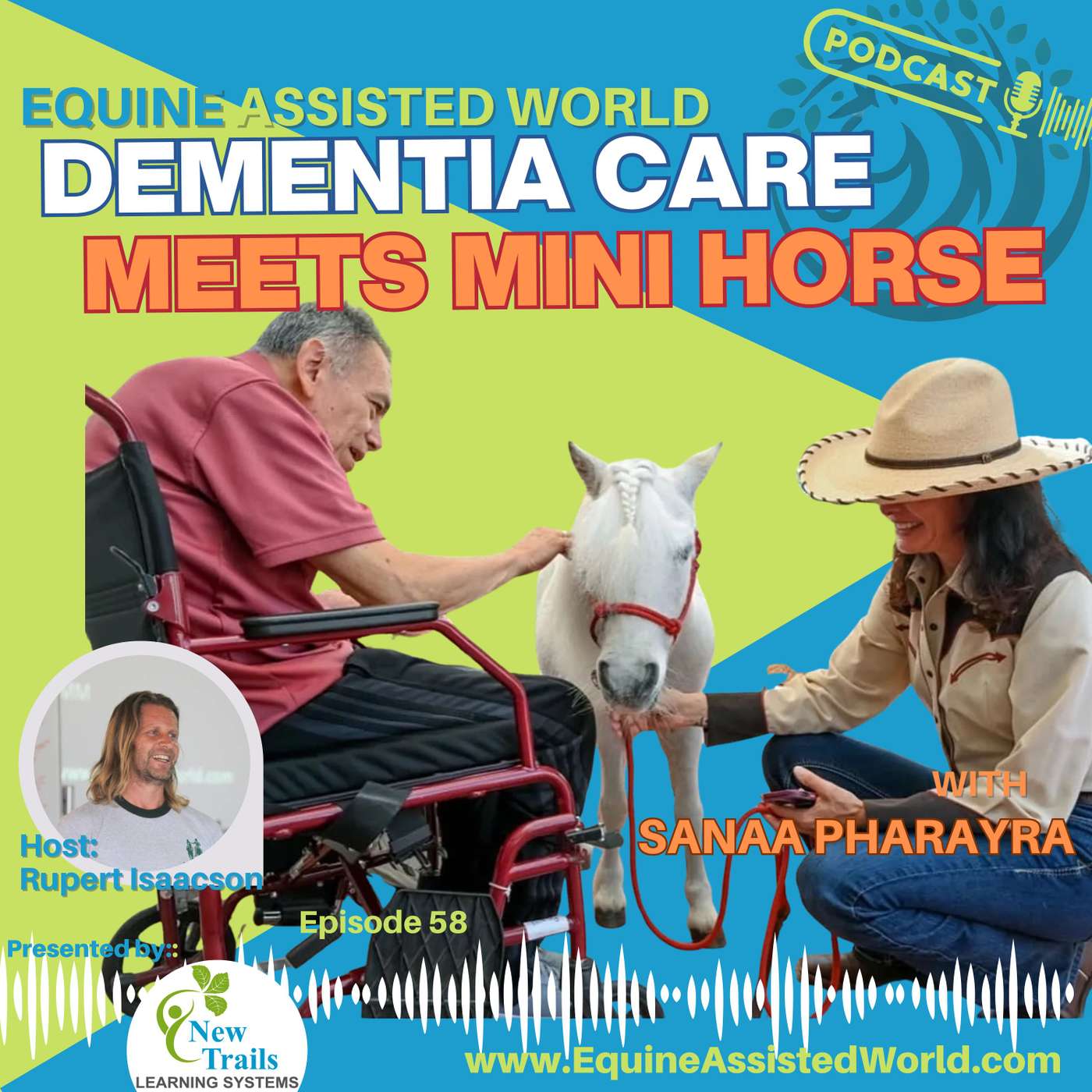
Sanaa Pharayra runs the Romeo Roadshow, a Southern California-based program that brings miniature horses named Romeo and Ziggy directly into memory care facilities, senior day programs, and hospital rooms for people living with Alzheimer's and dementia. What began as a rescue project for a single abandoned, feral miniature horse has grown into a program now drawing research interest from the University of Southern California and Cal State Channel Islands. Faculty there are studying why repeated visits from Romeo and Ziggy appear to reduce fear and increase engagement in residents, even those who don't consciously remember the horses' earlier visits. Sanaa and Rupert dig into the neuroscience behind why this works, from oxytocin and cortisol to brain-derived neurotrophic factor (BDNF), and compare notes on what it actually takes to train a horse for genuine emotional engagement rather than quiet compliance. They also discuss Sanaa's own Bedouin and Arab-Israeli ancestry, discovered as an adult, and what it might mean for the program's future. If you want to support the show, you can do so at Patreon: https://www.patreon.com/LongRideHome ✨ "I call it the awe factor. That's what I see in these people's faces — they're in awe." – Sanaa Pharayra 🔍 What You'll Learn in This Episode How a rescued, feral miniature horse named Romeo became the foundation of a therapy program that now visits memory care facilities across Southern California Why repeated visits from the horses reduced residents' fear within just three visits, even when they had no memory of the horses' previous visits What staff report when comparing horse therapy visits to the dog therapy programs already in place at the same facilities How Sanaa connected with The Connected Horse program, founded by Nancy Scheer and Paula Hirtel, and their research advisor Dr. Claudia Sonder Why Romeo Roadshow is now partnering with USC and Cal State Channel Islands, working with Professor Ronald Verkowski, to formally study its effects How oxytocin, cortisol, and BDNF (brain-derived neurotrophic factor) explain the neuroscience behind equine-assisted therapy Why horses must be trained for genuine emotional engagement, not just quiet compliance, to be effective therapy partners Why Sanaa believes people with more advanced cognitive decline may respond even more strongly to the horses once language falls away How Sanaa discovered her Bedouin and Arab-Israeli heritage as an adult, including her grandfather's history as a "Faras," an Arab horseman who raced Arabians Why Sanaa and Rupert believe the program could eventually support conflict-resolution work in the Middle East What Sanaa's long-term vision is for Romeo Roadshow, including plans for a documentary and a newly filed 501(c)(3) nonprofit status How the program is exploring intergenerational partnerships that pair university students with senior residents through the therapy visits 🎤 Memorable Moments from the Episode [00:13:00] The Painted...
0:00Rupert Isaacson: Welcome to Equine Assisted World.
0:02I'm your host, Rupert Isaacson, New York Times best selling
0:05author of The Horse Boy, The Long Ride Home, and The Healing Land.
0:08Before I jump in with today's guest, I just want to say a huge
0:12thank you to you, our audience, for helping to make this happen.
0:15I have a request.
0:16If you like what we do, please like, subscribe, tell a friend.
0:22It really helps us get this work done.
0:24As you might know from my books, I'm an autism dad.
0:27And over the last 20 years, we've developed several
0:31equine assisted, neuroscience backed certification programs.
0:35If you'd like to find out more about them, go to newtrailslearning.
0:40com.
0:41So without further ado, let's meet today's guest.
0:44Sanaa Pharayra Sanaa Pharayra Sanaa Pharayra Sanaa Pharayra welcome