
Equine Assisted World with Rupert Isaacson · Rupert Isaacson
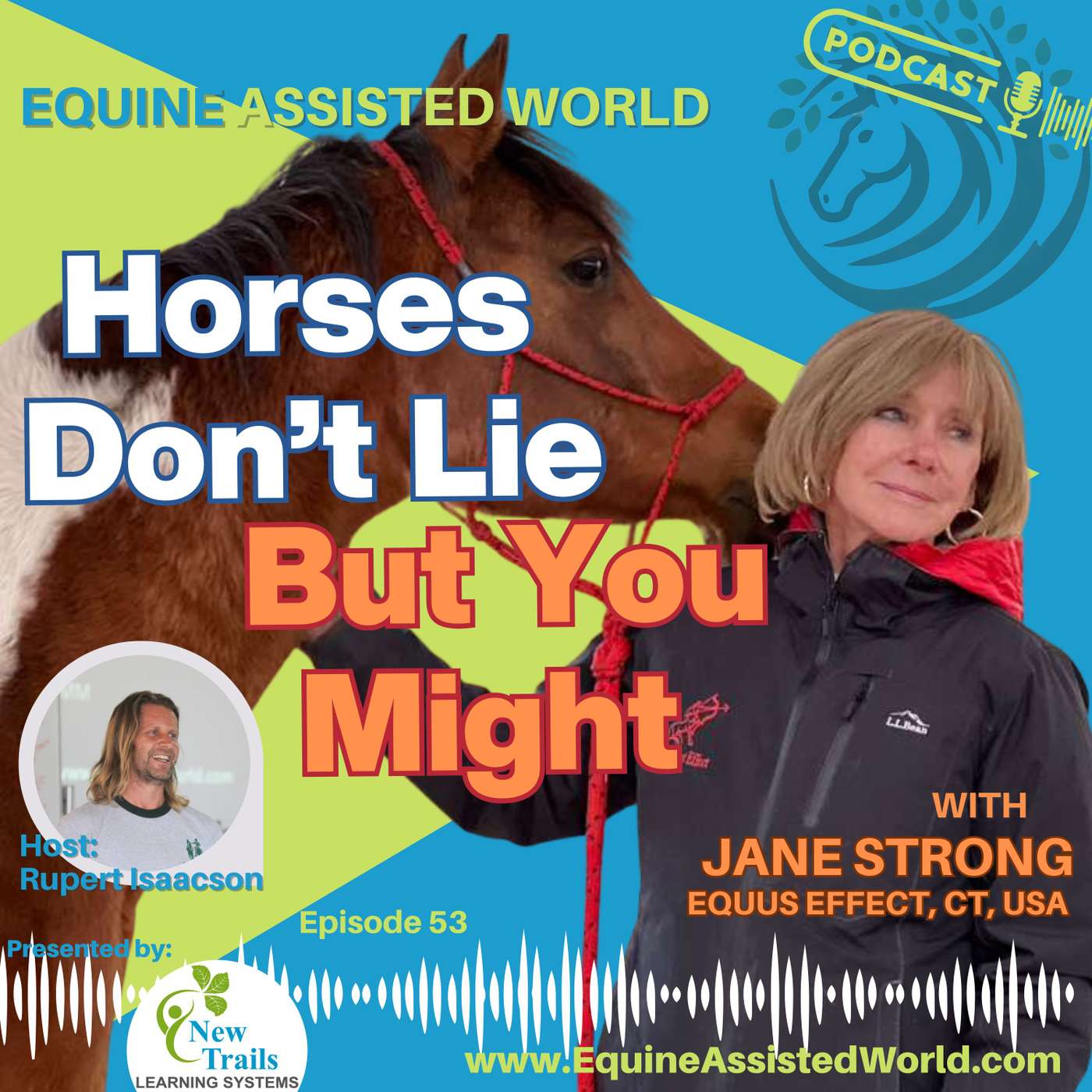
✨ "The horses don't see the stories. They see who you are right now — and what you brought with you." – Jane Strong Jane Strong is the founder and executive director of The Equus Effect, a nonprofit based in Connecticut, USA, that uses equine-assisted experiences to help veterans and first responders rebuild healthy relationships — with themselves, each other, and their communities. What sets Jane's work apart is her refusal to treat trauma as a diagnosis to manage. A former ethnographic researcher who spent decades studying subcultures for corporate clients, Jane came to horses and veterans with the same tool she'd always trusted: genuine curiosity. The Equus Effect's 16-hour curriculum blends somatic body-based practices, emotional agility training, and progressive groundwork with horses — all without metaphor, without therapy-speak, and without telling a veteran what anything means. This conversation covers Jane's unusual path — from advertising research to Monty Roberts to a 30-year-old Mustang who taught her that guilt is a waste of time — and dives deep into why horses are uniquely suited to reach the people hardest to reach: the ones still scanning for threats, still waiting for the playbook, still paying a nervous system tax no one else can see. If you want to support the show, you can do so at Patreon: https://www.patreon.com/LongRideHome 🔍 What You'll Learn in This Episode Why veterans and first responders experience transition stress as a nervous system cost — and why talk therapy often falls short How ethnographic research trained Jane to enter any culture with curiosity instead of assumptions — and why that's essential for working with military populations Why The Equus Effect never uses metaphor in their horse work, and what happens when they let veterans find their own meaning instead How the program's somatic body scan and joint warmup prepare participants neurologically before they ever touch a horse Why horses respond differently to officers than to enlisted personnel — and what that reveals about internal organization What "uncoupling" means in trauma work, and the story of the veteran who found his focus again — safely — while leading a horse in a circle Why Jane advises against letting participants know each other's rank, and what she learned the hard way when she didn't follow this rule How The Equus Effect's 16-hour curriculum unfolds across four sessions — from barn introduction to liberty work — and why soak time between sessions matters What the Enneagram's three centers of intelligence (body, heart, mind) have to do with how people move and communicate with horses Why you don't need a military or first responder background to serve this population — and why Jane believes it may actually help not to have one How the program uses movie clips to open conversations about fear, vulnerability, anger, and depression — without singling anyone out Why curiosity and compassion are inseparable, and what gets lost when we enter...
0:00Rupert Isaacson: Welcome to Equine Assisted World.
0:02I'm your host, Rupert Isaacson, New York Times best selling
0:05author of The Horse Boy, The Long Ride Home, and The Healing Land.
0:08Before I jump in with today's guest, I just want to say a huge
0:12thank you to you, our audience, for helping to make this happen.
0:15I have a request.
0:16If you like what we do, please like, subscribe, tell a friend.
0:22It really helps us get this work done.
0:24As you might know from my books, I'm an autism dad.
0:27And over the last 20 years, we've developed several
0:31equine assisted, neuroscience backed certification programs.
0:35If you'd like to find out more about them, go to newtrailslearning.
0:40com.
0:41So without further ado, let's meet today's guest.
0:44Welcome back rockers.