
Equine Assisted World with Rupert Isaacson · Rupert Isaacson
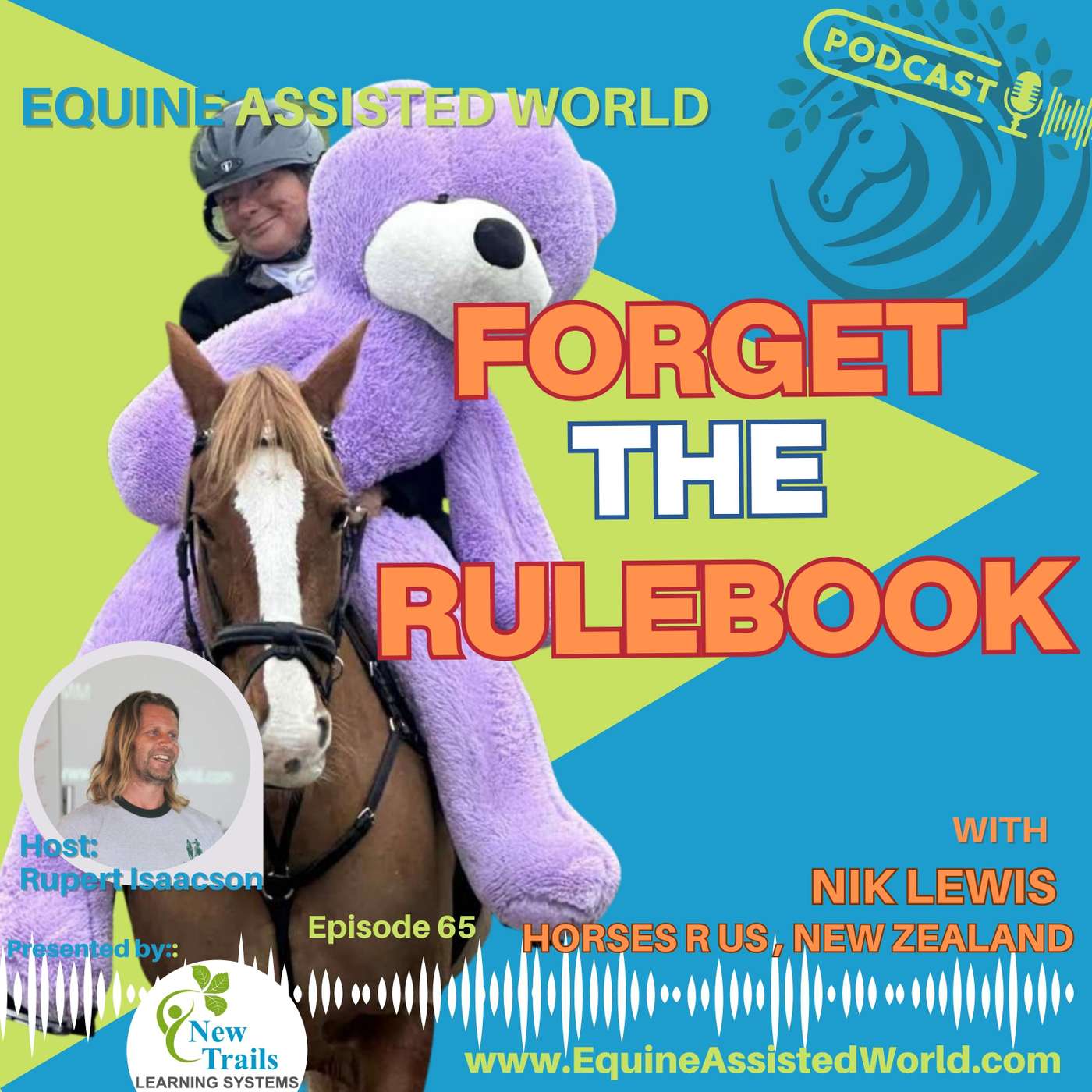
✨ "It's not the breed, it's the brain." – Nik Lewis Rupert Isaacson speaks with Nik Lewis of Horses R Us NZ, an equine facilitated learning program near Taupo in the Central North Island of New Zealand. For about eight years, Horses R Us has worked with young people and adults, including neurodiverse clients and clients working on social-emotional goals or riding, with no set parameters. As Nik puts it, if they don't know something, they go and find out. What makes the program distinctive is how little of the session is fixed. Nik describes working with whoever "rocks in on the day," keeping an end goal while letting the route change. Clients stay matched with one horse, each with a plan B horse, and in one story a 29-year-old non-verbal client walks and talks a jumpy Thoroughbred calm, reversing the usual roles of helper and helped. Her horses live in herds outdoors around the clock, and they get their own outlet: Nik and her horses also hunt and jump wire fences. The conversation covers Nik's bareback childhood in rural New Zealand, her path from teacher aide and classroom teacher to burnout in 2015, her EAGALA training, her mentorship with a social worker, and the 2018 leap into running the program full time. It also looks at how Māori tikanga, language, Matariki and Māori stories find their way into sessions, and where story and sense of place could take the work next. If you want to support the show, you can do so at Patreon. If you want to support the show, you can do so at Patreon: https://www.patreon.com/LongRideHome 🔍 What You'll Learn in This Episode How Nik's "if we don't know, we go and find out" approach shapes a program with no set parameters Why Nik links the Kiwi "number eight wire" mentality to a flexible, can-do way of working What Nik sees as the difference between outcome-focused and client-focused work, based on her understanding of RDA How a client and a horse can swap roles, with the client becoming the horse's regulator Why clients stay matched with one horse, and how a plan B horse and horse care days keep the relationship going What takiwatanga, the Māori word for autistic, means: in their own time and space How Nik moved from teaching burnout through EAGALA training and a social worker mentorship to leaving a secure income in 2018 What Nik found limiting about the EAGALA triangle when she trained, and how she says the model has since evolved How hunting and jumping wire fences shaped Nik's riding, and why she says it is the brain, not the breed, that counts in the hunt field Why Nik's horses get hunting weekends as an outlet, and how Rupert describes rotating therapy horses through varied work How Nik keeps her horses in outdoor herds around the clock and lets them "be horses" How Nik uses volcano language to help younger children notice what their bodies feel before an outburst How Māori tikanga, language, Matariki and stories such as Tangaroa show up in Nik's sessions Why Rupert suggests story and sense of place...
0:00Rupert Isaacson: Welcome to Equine Assisted World.
0:02I'm your host, Rupert Isaacson, New York Times best selling
0:05author of The Horse Boy, The Long Ride Home, and The Healing Land.
0:08Before I jump in with today's guest, I just want to say a huge
0:12thank you to you, our audience, for helping to make this happen.
0:15I have a request.
0:16If you like what we do, please like, subscribe, tell a friend.
0:22It really helps us get this work done.
0:24As you might know from my books, I'm an autism dad.
0:27And over the last 20 years, we've developed several
0:31equine assisted, neuroscience backed certification programs.
0:35If you'd like to find out more about them, go to newtrailslearning.
0:40com.
0:41So without further ado, let's meet today's guest.
0:44Welcome back to Equine Assisted World.