
Emotional Sobriety: The Next Step in Recovery · Allen Berger & Thom Rutledge
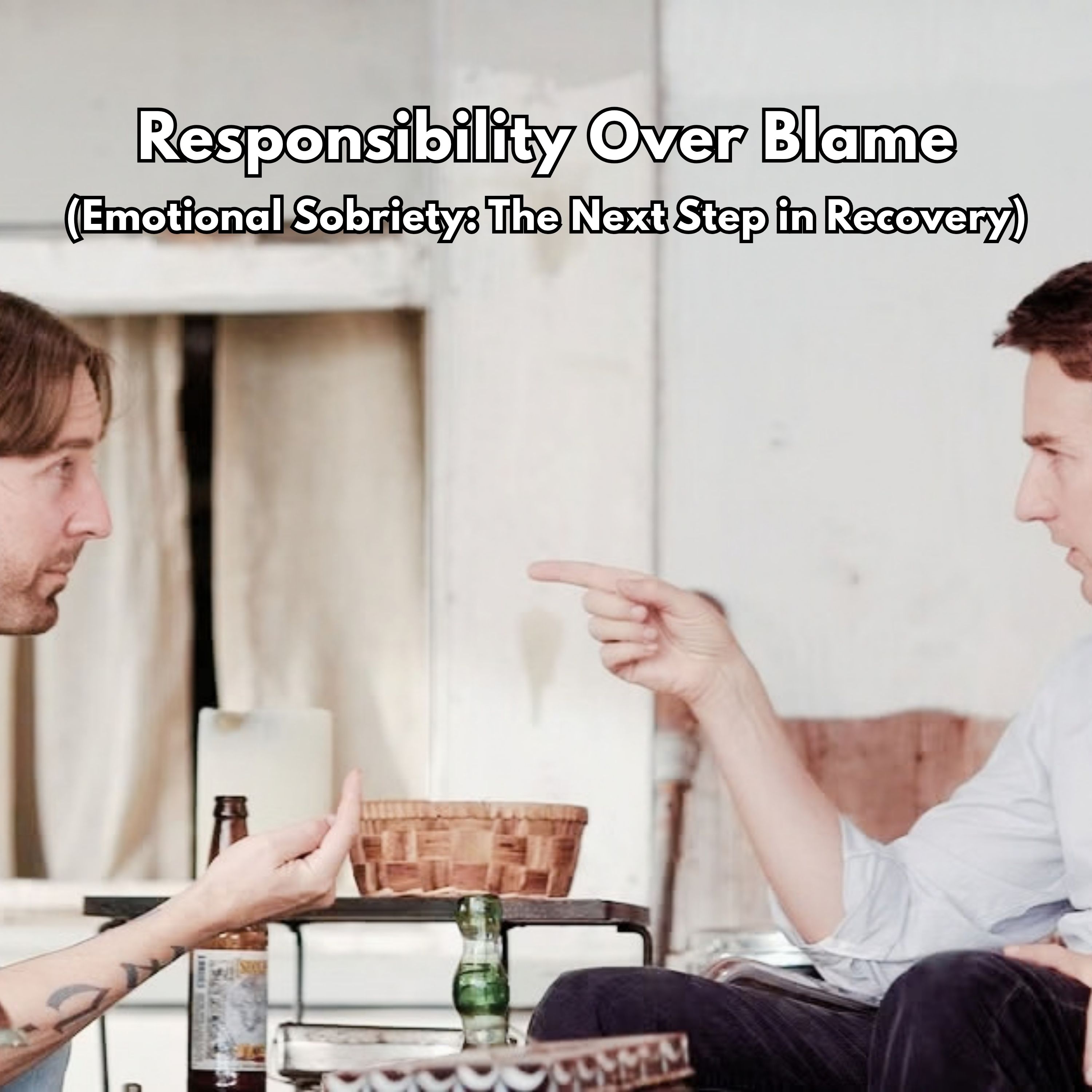
Thom’s Nutshell: Serious condition: I’ll be okay as soon as that thing that happened to me didn’t happen to me. There’s a difference between blame and responsibility. Blame comes from “low differentiation,” or a low level of emotional maturity. It’s a sign of where we’re stuck in our development-fused with our environments. Taking responsibility, conversely, empowers us. It gives us more possibilities, brings in enthusiasm and zeal. We’re working towards self-support, where we act for ourselves without being selfish, and acting for others without losing ourselves. Our music is provided by the great southern artist Jefferson Ross. Learn more about Jefferson at jeffersonross.com Visit our website: www.emotionalsobriety.info Learn more about Joe C., Secular AA and Rebellion Dogs here: https://rebelliondogspublishing.com Follow us on social media: Instagram: thomrutledge2 Joe C. Twitter: @Rebellion_Dogs Friendly Circle Berlin workshops: https://friendlycircleberlin.org/events Allen’s book, 12 Essential Insights for Emotional Sobriety: https://www.amazon.com/12-Essential-Insights-Emotional-Sobriety/dp/1955415129/ Join Allen & Thom at our Thursday night, 7pm PST Zoom meeting on Emotional Sobriety and the Steps (login information below): https://zoom.us/j/330149513 Password: 375986 For our ongoing workshop video series on Emotional Sobriety and the 12 Steps, visit our YouTube channel here: https://www.youtube.com/channel/UCHEM2-kqLkfp3I4c0jy-X-g Also, please join our “Emotional Sobriety and Recovery” FB Group at the following link: https://www.facebook.com/groups/120450976662519 We’d love to stay in touch in between meetings. We appreciate feedback! Contact Patrick, our producer, at [email protected] for any questions or comments. Chapters (00:00:07) - Introduction and Recovery 2.0 Retreat with Tommy Rosen (00:02:46) - Yoga, Travel, and Recovery Speaking Life (00:03:58) - Blame vs Responsibility: Defining Emotional Immaturity (00:08:50) - How Blame Turns Us Into Victims (00:10:20) - Walking Through a Disappointment Scenario (00:12:27) - Empowerment Through Responsibility (00:13:49) - Joining Joe: Milestones in Long-Term Sobriety (00:14:33) - Childlike Curiosity vs Duty and Obligation (00:16:58) - Addiction as a Solution That Almost Worked (00:18:00) - Self-Regulation and Mindfulness (00:20:16) - Expressing Feelings Through Music (00:21:10) - New Parenthood and Emotional Sobriety (00:23:04) - Uncharted Territory: Supporting a Struggling Friend (00:26:24) - Living With Human Range, Not Transcending It (00:27:41) - Agency, Responsibility, and Passing Time (00:29:04) - Perpetrator, Victim, Rescuer Triads (00:30:23) - Programming, Privilege, and the Limits of Emotional Work (00:31:54) - Responsibility as Meaning, Not Burden
0:07Speaker AWelcome to Emotional Sobriety, the next step in Recovery, with Dr. Alan Berger and Tom Rutledge. So happy to be here with you, Alan. You're in Northern California currently, right? You're like Santa, bringing recovery across these United States and sometimes to other countries.
0:25Speaker BI was in West Virginia a couple days ago. In fact, the last Thursday workshop I did from West Virginia and then I flew here to. Flew into San Jose and got driven here up to Watsonville to a wonderful retreat center in Mount Madonna, I think it's called. And it's just remarkable. There's a Hindu temple on the grounds here and people come up on the weekends to all the Hindus in this different vicinity close to this facility, come up and celebrate on Saturday. But the energy up here is just very spiritual, very positive. And I'm up here now working with Tommy Rosen, Recovery 2.0. And Tommy has a great program. It brings yoga into Kundalini, yoga, Hatha Yoga, some of the other yogas into the space for recovery. He's got a great following and well deserved. He's got 35 years of recovery himself and he's got a lot to share and a lot to teach us. His breathwork stuff in itself. Today we did the Breath of Fire and it was just incredibly empowering. Just that experience over about 10 minutes was quite remarkable. And I could really see how that the meditation he teaches and the state that yoga can put you in can be so valuable in self regulation. And look, it's in emotional sobriety. A big piece of it is how do we get balanced again? How do we regulate ourselves? And he's got something to offer to that, to the answer to that question.
2:14Speaker AMy first and only time trying yoga was actually at the recovery reimagined conference that we did in Dublin a couple years ago.
2:25Speaker BWas it Dublin?
2:26Speaker AYeah.
2:26Speaker BOr Dublin or London?
2:27Speaker ADublin, yeah. It was the second year. Yeah. And I did. Do you partake in it when you go on these retreats or. No. It's not your thing?
2:36Speaker BYeah, yeah, I do. I didn't this morning. I was. Yesterday was quite a challenging day of travel for me. I did this afternoon. I did the breath and stuff like that. But I've done that before. I went on his retreat at Costa Rica last year and doing that again this year and I did a week long, the yoga experience and it was very good for me. I really enjoyed it.
3:02Speaker AWell, I feel for you, Alan. We just had the South Bay roundup here in the South Bay, California and one of the first. I think it was the first or second year that I, you know, was. I met you and was getting to know you, that you did a presentation there at Roundup, and you had your suitcases with, like, all of your. Your books and your, you know, your materials. And I mean, travel takes a lot out of all of us. And then when you're on stage or when you're doing that, you've got to be, like, cranked to 110 the whole time. So, like I said, could feel the energy. You're coming off stage and you're just, like, finally taking a breath. And listeners, you know, you don't. You don't get to see the real, you know, the. The real what goes on behind, you know, backstage. But it's. He puts a lot up there, man. It's a. It's a lot.
3:49Speaker BThanks. Thanks, Patrick, for recognizing that. It means a lot. Yeah. And we've. We've gotten a chance to travel some together and to share this stuff. And I'm just so glad that you've been on this journey with me and I've been on your journey with you. It's wonderful.
4:04Speaker ASo today we wanted to discuss the difference between blame and responsibility. And we've got a nutshell here. It's. There's a difference between blame and responsibility.
4:15Speaker BBlame is an indication, a symptom of how we are stuck in our development, because blame comes from low differentiation or a low level of emotional maturity. So when our maturity, when we're stuck at a certain stage in maturity, which we all are, we're stuck at the. It's all about me, and I am more. The more I have. When we're stuck at that stage, we end up being fused with our environment. So what it means is I'm very dependent on what happens for how I'm going to feel about myself if things go my way. I feel wonderful. I feel great. Life is good. I want to celebrate. If things don't, typically I'll get upset. And when that doesn't work, I typically withdrawn, just feel defeated. Bill talked about that was the key formula or equation that he eventually got insight into that helped explain what his depression was about. So he identified his emotional dependence. And I think that that's right. I can see that that's been my problem, too. When things don't go my way, you know, the way I think they should, I get upset about it. I try to manipulate people to do what I want. And when that doesn't work, then I'm just deflated. Sometimes people become people pleasers in response to that. Sometimes people will try not to Care. There's a lot of different responses to that. The important thing here, though, is to understand that when. Where our emotional maturity is low, we are fused with our environment. So when something happens to me, let's say you and I are supposed to do something and you don't show up. Yeah, right. And I'm disappointed. Well, what I do is I'll blame you. You know, how come you're always setting me up like this and disappointing me? Because I don't know how to just be disappointed without blaming somebody. If it happens, somebody's got to be at fault, is the thinking I have. Well, that set a low level of emotional maturity. Doesn't have to be anybody's fault.
6:40Speaker CIt's.
6:40Speaker BIt didn't work out, but I couldn't. I can't see that when I'm immature. I take it personally. How dare you not show up for me? You should do everything I want you to do all the time for me to be okay. That's my demand. But I never say it out loud because I would be too outrageous. And yet it's exactly what I feel
7:02Speaker Aand what I'm doing, it can be literally deadly. To be fused with your environment because of the nature of environment is so unpredictable and uncontrollable and volatile. And it's going to be what it's going to be irrespective of our desires for it.
More Emotional Sobriety: The Next Step in Recovery episodes →