
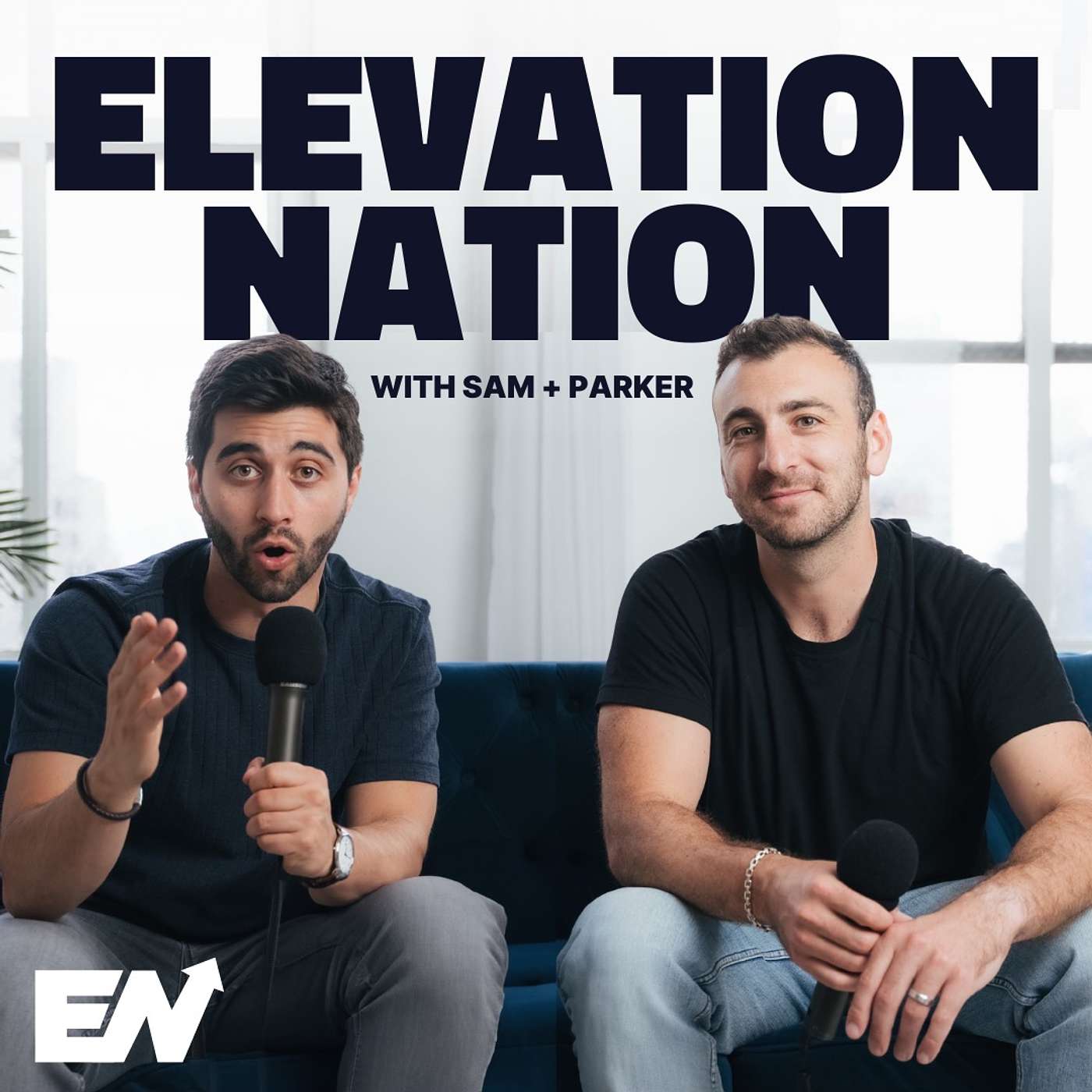
Elevation Nation · Sam Panitch & Parker Yablon
Elevator no. 247: Eric Zalewski is the c-founder of Acru, a social fitness app built to track and share every workout, from lifts to classes to runs. A former S1 basketball player at Northwestern, Eric walked on to the team as a manager and earned his spot on the court through relentless preparation. He's spent the past two-plus years coaching fitness in NYC on top of his finance day job, and outside of work he's chasing marathons, HYROX race, hooping, golfing, and slowly leveling up his cooking beyond chicken and rice. In the Elevation Nation Podcast: Eric breaks down the mindset that got him from team manager to walk-on, why anybody can lead regardless of title, and how he channels a "more to give" mentality into everything from fitness coaching to endurance training. We get into the power of a portfolio life, why the hardest goals are the ones worth chasing, and Sam makes a bet he may come to regret.
Sam Panitch: Elevation Nation. You've probably heard me talk about my high school Stevenson, the Stevenson Patriots outside of Chicago, Illinois, before. We've had many Patriots join Elevation Nation in the past, including Matt Johnson, Connor Cashaw. I'm forgetting others. I'm sure there are a ton more. how about the Handshake Bets Boys? some Stevenson Patriots right there. We get to add another one to the list right now. Eric Zeleski. My former basketball teammate is now on the pod. He's now an elevator. Do we get to call each other teammates? I feel like I probably coached you, Eric, in some summer camp back in the day somehow. 'cause I'm much older than you. But welcome to Elevation Nation, brother. I'm so excited to have you on the podcast. Eric: Yes. you definitely were my like player camp coach growing up at some point. I'm sure I'm sure we ran the camp. But I'm I'm super excited to be here. really, really excited to get into it. Parker: Well we're pumped to have you, Eric. So you're two years younger or three years younger than Sam? Eric: I think three. I think three. Parker: Three. So you you got first look at Sam backing up, Jalen's backup Eric: I did, I did, yes. was there aspiring to be like Sam Panich. Parker: Well, it's funny 'cause I always thought Sam backed up Jalen until it came out in a podcast about a month ago when he had to clarify for people 'cause we were gonna make content about it, that he was Jalen's backup's backup. So now I just have to say that on the record and give Sam like, Hey, dude, you said for a while that you were his backup. No, you're backup to Jalen's backup. Just pointing it out there. But Eric Eric: You know, honestly, honestly, you gotta do what you gotta do because I I have a similar thing with that. I mean, I tell people that I played basketball jail in high school, which I did, but I was also a sophomore and I was going in between the sophomore team and then varsity that whole year. So leave those details out. No one needs to know. Except for the people listening. Parker: Hey, that's a flex. That's a flex right there. But Eric, it's so great to have you on. Obviously the Stevenson guys know you. I'm just getting to know you. And Elevation Nation, for the most part, they don't know who you are at all. We start off every single podcast the exact same way. Tell us your elevator pitch. Who are ya? Eric: That's great way to start it off. so I am a FPA analyst in New York. I went to Northwestern where I played collegiate basketball, walked on to the team there for my last two years. I'm sure we'll get into that a little bit. So I have an atypical college basketball career. but in New York, I don't really like to talk about my day job because it's just a part of what I do and who I am. I'm also a fitness coach in the city, coaching at a gym called the Athletic Clubs. Well, it was formerly the Athletic Clubs, now it's called Club Athletic. and I am also founding my app, my own app with a friend of mine from college, a new social fitness tracking app. So kind of have my hand in a lot of different buckets. so that is me in a nutshell. Sam Panitch: In a natural born elevator, I mean, with that elevator pitch. One of the craziest things, and this is why the universe just works in wild ways. It was probably two months ago, I sent Parker one of your videos, Eric, because you've been popping up creating content on my feed, and this is why I think making content's so important, even though mine is cringe worthy and yours is actually good. So you're gonna have to teach me how to do that. but I was like, yo, Parker Eric: As no, no, that's too kind. Sam Panitch: This dude played basketball with me. He was younger. He has a crazy college hoop story. Sounds he's starting this company. Like, we gotta have him on the podcast. He was like, Yeah, no problem. Like, add him to the to-do list. I think a week later, Eric DM'd me to catch up and talk. And I was like, Bro, that's insane. I don't know how that happened, but you gotta come on the pod. This is perfect timing. And so sometimes the world works in mysterious ways and you trust the universe. And so, Eric, I'm so grateful that we got to reconnect. I see. Obviously, so much of myself and you from our journeys growing up, of course, on entrepreneurship. And I'm just excited and grateful that Parker and I hopefully get to mentor you on this entrepreneurship ride. I want to talk first and throw it back to your incredible college story. you were certainly much better than me at basketball, which is not a high bar. but you ended up not playing college basketball off the jump. you were also smarter than me. You decided to go to Northwestern, an incredible school. and be the manager of the basketball team. Talk to me about that initial decision to be the manager to still be around basketball, but obviously the grind of being at such a prestigious university. Eric: Yeah. Well, first of all, I gotta I gotta bring you around with me more often. You're the biggest hype man ever. It's that was such a nice introduction to you know, to me. But yeah, I originally wanted to work in the NBA out of high school because I loved basketball, I loved being around the sport, and for me the best way to do that would be to be a part of a collegiate basketball program. And you know, at the time my options were to either play D three basketball and kind of grind through that, or to try my hand at being an undergraduate manager at like a a bigger school. and so I went that route. Luckily Coach Ambrose, love Coach Ambrose. He had some connections at some Big Ten schools as he does, and was able to introduce me to some co some of the coaches at Northwestern. And so That's kind of how I got my foot in the door at that program. and so then going into college, I knew that I was gonna be a part of it as a manager. And it's funny, actually, when I first joined, I had a conversation with the director of basketball operations who's a great guy. but he sat me down and he was like, Hey, just so you know, I know you played basketball in high school. I'm sure you're good and everything. But if you come here, you're not gonna walk on. Like you're coming here to be a manager. You just wanted to set the expectations. He's like, that doesn't really need that doesn't happen. And I was like, yeah, that's fine. My goal is to work in the MBA. I want that experience of working in program, make connections, all of that good stuff. and then fast forward two years later, ended up walking onto the team, did exactly what he said I wasn't gonna do, which is a fun story that I kind of like to tell. But the grind of doing that. was is it's hard. It's hard. Like that is your full time job in college. working in like playing or being a manager in college is a full-time job on top of studying. And so you're traveling with a team, especially at a smaller program like Northwestern, as a freshman at bigger universities, you might not be traveling with a team. So you might have some off time while they're you know away. But Northwestern I was often traveling with the team too, getting home late at two, two a.m., three a.m. sometimes and because you fly back the same night at the games. And so you just gotta make it to class the next day. and you rinse and repeat that. And being a manager is like it's fun for sure, but you do a lot of the grunt work. You're there wiping up sweat at practice. If somebody falls, it's who can get there first, who can wipe up the sweat off the ground first? and then you're always there during timeouts handing out water and everything. So it's a lot of the stuff that, you know, is not glamorous by any means. and so that whole experience was honestly very humbling because you are like you're essentially serving people. You're serving the players, you're serving the coaches, like you are there to serve. and you know, that's not a position a lot of us are in all the time. And so taught me hard work, taught me how to be humble. never forget those experiences. So yeah. Parker: So it's funny that you say that 'cause if when you originally said that you started as a not as a player, right? You start as a manager. I was like, all right, wait, is this like normal that a manager then goes and plays? You hear some of those stories of like a manager who's like in his senior year, possibly walks onto the team or gets the opportunity, but for you it was a little different. I'm curious though, what like walk us through the story. Of how they went from, yeah, dude, Eric, you're not gonna be a player, you're gonna be a manager, to where was the idea that wait, Eric can ball still and we need maybe just an awesome bench guy. Eric: Yeah, I got lucky. I mean, I will be the first to say it. It was a I mean, I feel like as most things are, it's a combination of luck and being ready for the opportunity, right? so I was still training on my own. I was still working out a ton, playing a ton of basketball. but I got lucky because a coach that I played against in high school went to a practice to go take notes of the practice and meet with the coaching staff and all that good stuff. And they got to talking and he was like, you know, one of your managers is actually pretty good at basketball. He just like slid it in there because I was, you know, a freshman. I'd recently played him. So he remembered me. And I am forever grateful for that. because that put the idea in Coach Collins' head that like, well, maybe you can use me on some on court stuff, you know? And so from there, I got the opportunity to be a part of some drills, be a part of scout team here and there. Fast forward to my sophomore year, I got another break where two of the walk-ons are honestly they're my good friends now. but at the time, like they both got injured. And I had the opportunity to step in on Scout Team and fill their role while they were sidelined and did that for almost the entirety of my sophomore year because Charlie had back surgery, he had a back injury, so he was out essentially the entire year in Tino. He had shoul shoulder injuries. He dislocated a shoulder multiple times. And so both of them were essentially out like 80% of the year, if I remember correctly. and so I guess I did well enough to then get an opportunity in the spring to work out with the team as if I was a part of the team. and then I had the opportunity to walk on. the actual story of it happening is a little embarrassing, but it's kind of funny. Think I told Sam this when we talked a couple weeks ago, but yeah, that's so Sam Panitch: I was gonna make you tell it regardless so you might as well get into it. Yeah, go ahead. Eric: fair. I mean, it's a it's a great story. It's a great story, certainly embarrassing for me. We could have gone so much smoother. but what happened was as a part of any college program, you have a certain amount of spring workouts during the week. And so that's what I was doing during the spring, was working out with a team. And as we get closer to the summer, one of the final workouts, Coach Collins had me go up to the free throw line and finish the practice by making a free throw. Super common thing. and before I took the free throw, he prefaced it with like, if Eric makes this, he has a big reward. But if he misses, he has a major consequence. And he was being like, boy with it, like obviously implying that I would probably walk on. And so going up there, definitely very nervous. on top of the fact that I'm not a great free throw shooter to begin with. So I was definitely feeling the heat, feeling the pressure. And I go up there, first shot, honestly felt great. And it just went in and out. I swear it went like halfway down and went all the way out. And at that point I was like, shoot. So then we all we go down to the baseline and we run two down and backs. And then I go back up. He says, Eric shooting another free throw. If he makes this, he has a big reward. If he misses, he has a major consequence. And I was like, well Alright, here we go. Obviously more nervous now that I missed the first time. And then it hits back rim and then we're back on the line again. And then get back up there one more time. he says the same thing. Miss it one more time. And then the fourth time I get back up there and I make it. When they retell the story, they'll probably say I missed like seven or eight times, which like you know, it kinda felt like it. I thought I was I didn't know if I was ever gonna make it at the time going up the fourth time, but I made it and then at the end of the practice after we got in there, he announced it. So that's how it went down. Not not my smoothest operation, but got it done anyways. Parker: I love it. It's a great great story to always Sam Panitch: It's an incredible story. Parker: tell. Yeah. Eric: Yeah. No, I I it made for a good story. I prefer I would prefer if it was you know, you make the first one, but whatever happens, happens. All good, yeah. Exactly. Sam Panitch: Hey, life's like that. We got ups and downs. okay, so you're now on the team. What an incredible accomplishment for your college career and just shaping you into who you are. Talk us through just a couple, you know, stories or lessons that you learned from being part of a collegiate program that have helped you in life. Obviously, you've now had the opportunity to play with one of the best the best basketball players in high school of all time with Jalen. And then in college, one of the best freak two sport athletes of all time, like at the Bo Jackson and and Dion level, I would imagine Pat will go down as like talk to us about what doing that kind of Parker's laughing, but I honestly think it's true. Like Pat's a freak. And we say that with love. He's marrying one Eric: He was the goat in one sport, yeah. Sam Panitch: of our friends. So we love him. But he's a freak and it's incredible. So what did you learn from those experiences? Eric: I think the biggest lesson that I took away from playing college basketball is that anybody can be a leader. Like you don't need to be the best player to be a leader. Similarly at companies, you don't need to be the best or smartest employee to step up and lead your team. You don't need to be the manager to get people together and have people go to a happy hour and start bonding as a team. Like when I was a junior, when I was a junior, I'll talk about Tino, because Tino Tino Melnadi, I'm not sure if you know him, North Shore kid. great guy. He did you really? that makes sense. Okay. That's hilarious. Sam Panitch: I met him at a Knicks game with Joey like two months ago. Yeah. So funny. Eric: Yeah, yeah. he's the man. Tino's the man. And his senior year, my junior year, he was voted team captain. And he was a walk-on, but he was voted team captain. And I learned from him that you like he is a great example of you know stepping up and saying something when something needs to be said and nobody wants to say it. and what it like he was just so consistent in working on his game, even though he wasn't a scholarship player. He wasn't getting a ton of minutes. He got into some games here and there, but he wasn't getting a ton of minutes. But like you would still see him before and after practice working his ass off. And that that's always kind of stuck with me. so that's big lesson number one is anybody could lead. I think the big second lesson is that like good things come from being prepared. and all of success is is opportunity meet meeting preparation. And I think that's a it's a cliche, but it's true. that's what happened to me. being able to walk on, that was literally my childhood dream, was to walk onto a Big Ten team. And it's the only reason it happened is because I created the habits of working hard and showing up every single day when it felt like I was making no progress or not doing anything massive. And then things slowly start breaking your way. And because you didn't stop. thing you like you're able to take advantage of it. And so that's something that I kind of carry with me today too is like you don't always see progress. especially like, you know, something like training for a race, which is something that I do all the time. And I was like, you don't always see progress a week, a month, even a couple months out. but like you stack up those bricks over time and good things happen. Parker: think it's probably very I mean, how many people get to play at the next level, right? But how many not a lot, right? But how many people actually get to play Eric: Yeah. Parker: at a program like, you know, a Northwestern, a Big Ten program with an incredible group of people who I mean to your point, it sounds like the team dynamics were awesome and great and you built each other up and you're very, very few people to get to be part of that environment. I think it's super cool and I always love hearing from people we speak with who have been part of, you know, Sam and I have been part of teams. We played high school sports, but like at the next level where i there really is something bigger than what they're playing what you're playing for. You know, whether it's in college sports, professional sports, Olympians And it it's just so fascinating too because we hear how it translates into what they do next, how many people actually make a full living off of the sport that they grew up loving and playing? Very, very few. So qua Eric, my question for you is you take all these lessons into the real world and your life is a little bit different. Like, was it challenging? to say, you know, I'm I'm joining a new team, but it's not a team of basketball. It's a team of I don't know, in the corporate world or whatever you're doing for, you know, to make a living. Eric: Yes and no. I think yes and the fact that the activity itself isn't as nearly as fun. Like going into the office and you know, doing desk work and learning, I think is a it's obviously not as fun as playing basketball. But I will say that it was easy to transition to a team environment. So Like my first job was consulting out of college. And so you're always working as a part of a team there. And I think the biggest part about consulting and honestly any corporate job is like how well you communicate. And I think communication is like it's obviously key in in sports, but you know, that's a that's a trait or it's a skill rather that like Once you learn it and you know that it's a good thing to overcommunicate and it's a good thing to be very clear on what the expectations are, what you're gonna do, what needs to happen, like what a success look like, all of those good things, everything else becomes a little bit easier and and that always stuck with me. So like it it did feel easy to to go straight into the team environment. But yeah, the activity, not not nearly as fun as basketball, if you could believe that. Sam Panitch: Well, one of the things Parker: Definitely not. Sam Panitch: that I think you n unites a lot of elevators, Eric, together is we have this I call it is it a blessing or a curse, but this like elevator mindset where we can't just go work a corporate job. And I think for a lot of people, nothing wrong with that. Sometimes I wish I could. Like I wish I could just go and be like, all right, this is how much I'm gonna make. This is the corporate ladder I'm gonna climb. This is my career path. And like, I'm cool with that. And I'm gonna buy a little house and I'm gonna have a dog and like I'm chilling. I honestly have a lot of envy for people like that because my brain is way more fucked up. Like I am constantly looking for new challenges, new things, trying to build Elevation Nation, trying to find new hobbies, like Always in this constant state of I don't want to say unhappiness, a lack of contentment. Or I'm always just, I mean, I had a call with Parker yesterday for an hour. I was like depressed. I was like, I don't know what the fuck I'm doing with my life. Where am I going? What am I doing? Why am I here? Where do I want to live? What do I want to do? And I think for you, obviously, you started personal training on the side. You've now are building your own company and an app. You also, if I had to read your mind, have this blessing, curse, elevator mindset. Talk to us about when you were first in the corporate world when you realized I can't just do this. Was it right away or did you have like an shit moment or a deep struggle of depression that was kind of this wake up call for you? Eric: That's good question, yeah. that resonates with me a lot. Yeah. Like I I always have those questions, like am I going the right way? Like what am I doing? oftentimes like those come when I'm I'm sitting at my desk in my nine to five. But there are good redeeming parts of what I do. if if anybody at my company listens to this. There's great parts of what I do. But I think for me it that feeling kind of came when I was just, yeah, sitting at a desk and I felt like I could be doing more with my twenty-four hours. I think that's what it is. Is like you have twenty-four hours in a day, you only have twenty-four hours in a day. You gotta make the most of it. And if I'm not constantly working when I sh like could be, then I feel like I'm not making the most of it. So I would say like out of college, you're still kind of in that college mindset. You know, you're going out even on weekdays, you're showing up to work. The next morning, maybe slightly hung over because you went out on a weekday, very similar to college. And you get three, four years out of college and that is gone. Like I can't remember the last time that I went out on a weekday. and now I'm waking up at five AM every morning. So how times change. But like You yeah, for me it was it was always about how can I start providing value to the world. And I think personal training for me, since fitness is a passion of mine and it's been something that's been a cornerstone of like my life and what I do, that I can take that knowledge and skill set and give it to other people. And to me, like personal training and fitness is such a tangible thing. Like you help. somebody do an RDL correctly or do a row correctly. And they're like, I've been feeling this in my lower back the entire time. I finally feel it like where it should be feeling the exercise. Like that is such a tangible good thing. And to like help people be consistent over time to see real changes in their body and their mental clarity. Like that was that wasn't that's what led me to do personal training. It could have been anything, but like That's why I chose personal training slash fitness coaching. and so yeah, that itch came for me to sum it up. That itch came for me like about three, four years. I can't really recall the moment, but I was like, Yeah, there's gotta be something more that I could do to like help the world out. And so that's what I landed on. Parker: And do you like doing it? Eric: I love it. I love it, man. it's there's not, you know, if you told me a f even like a few years ago that I was gonna be waking up at five AM, actually kind of earlier, like at four forty to go do fitness coaching or to go do anything for that matter, I'd be like, No, dude, I'm not there's zero chance that I'm waking up and doing that. But Even though some mornings are hard, once I get to the studio and I see the the people that I coach, it like it that kind of instantly goes away. Like I find energy, I find purpose and it's great. Parker: Is the goal to eventually do this, like with all of your time, you're filling those twenty four hours or a way to make a living through this? Eric: Yeah. Originally I thought it was. Originally I was like, you know what, I can build up this whole book of business with personal training and I can start my own company for training and coaching, or I could do online coaching, or I could fill my schedule with like group fitness classes. And I think I've kind of fallen away from that. I think I want it to be a part of my life always, but I don't think I want that to be the main thing. I think in an ideal world, I am able to build up my own project that, you know, eventually pays for the bills that doesn't that isn't coaching because I think what I found is like that can be very exhausting. because you're just that you're talking for and being on your feet for so long. And so like I do enjoy the part where I'm sitting at a desk and I'm doing like critical thinking. and so like whether that's a corporate job, startup, my own thing, ideally, like I wa I need that part too. Sam Panitch: Again, I'm just so grateful and happy that we all met because it's another similarity between us. Eric Parker and I call that concept a portfolio life. I think so often people say, What is your calling? What's your life purpose? To which I say, I like a lot of shit. Like there is a ton of stuff that I enjoy. I enjoy boxing. I enjoy working out. I enjoy public speaking. I enjoy coach coaching and mentorship. I like consulting. I like entrepreneurship and working with Parker. And so for me to be like, put all your eggs in one basket, that's been really hard for me to grasp. And Parker and I over time, now that we're 30, we figured out that we just want a portfolio life. And that's working on a bunch of different things at once. That to me is the dream that we want. So I love that. Yeah. Go ahead, Barks. Parker: Yeah. I I wanna jump in what one more thing. I've been noodling on this idea. I like wrote some notes in my phone like earlier today. I don't know. I was walking around. Eric, if you knew me, I just have thoughts and I write them in my phone all the way dating back till when I first met Sam, freshman year of college. Yeah, Eric: are great. I love it. Parker: and I I was thinking about this idea that like anything worth good doing should be hard. Right? And Eric: One hundred percent. Parker: What I mean by that, like through your experience as a manager coming onto the team, I can imagine that experience was very challenging for you to get from manager to getting on the team and then playing your role on that team. It was challenging. It was hard. It was filling, but you were doing the thing that you were loving, basketball. And that gave you a sense of purpose. That gave you a sense of meaning and fulfillment that was amazing. Then you graduate and then you go in the job. And I think to Sam's point, what we found with all these elevators is that people who are willing to do things that seem hard, but those hard things or things that they actually enjoy doing gives them meaning and gives them purpose. So what I s find with you, it's like with your job, you were looking elsewhere for some way to find ways to like fill up your time. You found that through training other people. And I'm sure training yourself to build up for big races. And that's not easy. That's not easy at all. It's actually very challenging. But through that challenge, that gave you purpose and then meaning. And to your point, over time you're growing, you're elevating. You're going to continue to spend your time where you want. And You know what? It should never get fully easy. And this is something I've been grasping, Sam, a little bit through our conversations the past couple of weeks, is that the reason why it gives us meaning and purpose is because it's hard. Because we can wake up and say that we have not solved it or accomplished it. That's where we get filled up. We get filled up when we accomplish something that we know we can't do easily. And so I found myself in a moment the other day where I was like, damn, maybe things are a little bit too easy. Maybe I gotta challenge myself again. And so Eric, there's this concept, I think misoji, masagi, I think it's called it's a Japanese term. I would look it up. But basically it's the idea that you should do one really big hard thing a year, physical Eric: Mm. Parker: feat a year that you should work up to, that you should challenge yourself to to accomplish, whether that be a marathon, a race, you're gonna go travel somewhere. I'm curious for you, like what is your misogy? That you've had maybe this past year or upcoming that you're working towards. Eric: Yeah. Yeah. Well, first of all, I think that's so true. and that's something that I have actually recently started telling myself, like, if it was hard, it wouldn't be worth doing. Like, and if it was hard or if it was easy, everybody would do it. And then that takes the value out of what you're doing, you know? and so it's like it's a really good I I like what you said. It's a really good reminder, like when things get hard. That like, why would you have it another way? Why would you want it to be easy? Because it's not special if it's easy. so and then also I do like that idea of a portfolio of life. Like I am that to a T. So I completely agree. Almost to a fault. But my misogy Sam Panitch: Hundred per cent. Listen, it's a dream and I think go. Eric: No, no, yeah. one hundred percent. It is a dream. but I I was gonna say my massji, it usually is yeah, it's always around something physical. I can't remember if you said that it had like it needs to be something physical, but for me I do enjoy training. training really hard. And so last year, I I guess honestly for three years straight it's been a marathon. I've been getting into high rocks recently, which I'm not sure if either of you have heard of it. It's still pretty new. but it has been growing pretty fast. And I think that's been a lot of fun to train for because you're training a lot of different movements and a lot of different like systems in in you know in your body like the aerobic system and also like muscular endurance and strength and stuff so it keeps me like not bored so I like how I train for that but I would say marathon training there's something very marathon training is so monotonous and there's something very challenging specifically about that and I'm sure like triathlon stuff too with Ironmans and like all of that. It's also super monotonous. But you're doing the same activity for frickin' 15 hours a week. and like you're exhausted and you just pound your you just pound the pavement with your feet. That's literally all you do. and it's really good mentally because you get past the first four miles. I was on my run last night and I was like Gosh, like I could be at home chilling, calling it a night. I went out on my run at at 9 p.m. because it was the only time I could do it. And ran nine miles. And I get to, I was doing intervals of like two miles, and I did three sets of that with like some spacing in between. and like during my second one, it's like me against myself is what I was telling myself. It's like you could stop. You could stop, but like you told yourself you're gonna do this. And I'm trying to teach myself, trying to teach my mind that you it's important to do what you say you are going to do. So if I said I was going to go out and run nine miles, I better go out and run nine miles because the only person that that's letting down is me. And it's teaching myself that I don't follow through on what I say. And I think when I was younger. I mean, honestly, even like three years ago, I like I start stuff and I don't finish it. that's who I was and that's not who I wanna be. And so something like running, where it's so monotonous and you can quit at any time, is so important for like teaching yourself that. so that's my misogy misagi, and that's that's like what it's been teaching me. Sam Panitch: You're a beast, first off. it's incredible. Parker's also run a marathon. He was yelling at me that I need to run a marathon or I need to do sorry, Parker's run two marathons. That I need to do some big some big feat, which I hear him. High Rocks is sick. Parker: That was the that was that was the thing here. I was like I'm curious if we can inspire Sam to get a nice masoch. Not run a marathon. I'm not put I'm not putting Eric: Yeah, let's do it. Parker: that out there unless he wants to, but like a physical something cool, physical Sam Panitch: I would rather fight someone. I'd literally rather fight someone. I'd rather train for a fight, like a boxing fight. Eric: You'd rather what someone? Parker: Y But you already fight some people. Eric: Could do that too though. Sam Panitch: Yeah, that's true. I've been try I've been starting to run. I'd Eric: I mean that could be great too. That's definitely I would consider that hard. Sam Panitch: Yeah, Parker won't let me punch him the face. I think it would be an incr Eric: That's your misogy. That could be your misogy. Sam Panitch: a fight night between me and Parker would sell so many tickets. I'm just saying. We can run a marathon and then fight. Eric: I mean that would that would elevate Parker: That's not a misoji. Eric: Elevation Nation for sure. That would bring it to the next level. I'm in. I'm in on a fight between you two. I would I would go and live stream it and Sam Panitch: Right? I agree. I'm just saying, Parker. Parker: If you i if you run, this is here, this is the clippable piece right here. This is gonna be the clip that goes and Eric, Sam knows me, I make bets with my friends and I follow through. I got slapped in the face, actually punched in the face by one of my friends because I lost my bet. If Sam runs a marathon in under four hours, I will fight him in a boxing ring. I'm just gonna put it out there. There it is. It's on record. Eric: I think that's a great personally, Sam Panitch: Intriguing. Eric: I think that is a great trade. I think that's a great trade, Sam. Because one, Sam Panitch: Intriguing. Eric: you get the experience of running a marathon. And two, you get your golden opportunity. I don't it's a win win to me. Objectively. Parker: And the best is is that Eric: Objectively. Parker: objectively I know he would be focused on his training. So during his training I'll be able to know that I Sam Panitch: Ha ha. Parker: need to start training. So Eric: Mm. Parker: for the other thing. It's actually a win win Eric: Strategic right there. Sam Panitch: For the fight. Parker: there. There you go. Eric: Very strategic. Sam Panitch: I like it. Eric: Genius. Sam Panitch: I like it. No, I think it's a it's a good feat. Eric: Playing Chess Parker. Sam Panitch: I mean I've only been able to run like four and a half miles max. So I don't know how I'm gonna get up to a marathon, but Parker: Dude, Sam Panitch: okay. Parker: come on, man. I started during COVID. I got fat as shit from eating and drinking during quarantine. And I said, you know what? I want to run one mile. One mile. I had Osh good slaughters growing up. My knees would hurt. I was a catcher in baseball. Dude, I was a mess. One mile turns to two, two turns to four, and Eric knows it. Four turns to eight. Your body starts to change and you get used Eric: Snowballs. Parker: to it. And it snowballs physically, but more importantly, mentally. And then you realize, wait, I can actually do a half marathon. And then you're like, shit, I can actually possibly do 20. And then next thing you do, you're crossing a finish line in a marathon after doing 26 miles. And you're like, how did I get here? It's physical, but it's just training your brain to get there and not like limiting your belief that you can actually do it. Of course you can do it. Sam Panitch: I'm sure I could. God, it sounds so fucking miserable Parker: Last point on this before I last point. Sam Panitch: though. Parker: Fifty thousand people run the New York City marathon. Guess how many people finish? Fifty thousand people run. Eric, guess how many people? Sam Panitch: Not ninety nine percent Eric: Guess how many people finish? I how like the people that start the marathon, how many people finish it? I would guess like at I don't know, forty eight thousand, forty nine thousand? Parker: 99% of people who start the New York City marathon finish the marathon. They walk across the finish line. Yeah. Eric: Honestly, that was an awful guess on my part. That was an awful guess. Parker: Basically what that says is that it it's the will of the mind is that I started something, I'm gonna finish it. And if if you run in marathon, you see all different people, shapes and sizes, ages, cultural backgrounds. 99% of people finish it. It's pretty freaking amazing. Eric: Yeah, that's crazy. I mean, I I was when I was trying to answer that, I was think I thought you were gonna like shock me and how few people finish it. But I was thinking in my head, I don't know who would like go to the starting line and then not see it through. So awful guess on my part. But I will say, yeah, like when I first started running, I was I remember r going out and running a mile and a half. It was a mile and a half to two miles. I was so sore the next day. It was absurd. And that was after my like Collegiate basketball career. So like I'm not not in shape, but I obviously in running shape. And that was a rude awakening. I was like, my gosh, man, I gotta take a beat and I gotta get back to this because that should not be happening. Sam Panitch: It's a journey. Maybe I need some coaching. Maybe I need Eric to help me out on how to run properly because my Achilles Eric: Ooh, let's get to it. Sam Panitch: and my calves essentially feel like they're gonna explode after two miles. And I don't like that feeling. And I'm like Parker: You don't have the Eric: Mm. Parker: right shoes. You don't have the right running shoes. I'm telling you, they're Sam Panitch: I just bought running shoes, bro. I just bought running shoes. I just very flat footed. Parker: not right for you. You gotta get the right shoes. Eric: Do you have fleet feet where you're at? Sam Panitch: Yeah. I went to a fleet feet they gave me I got them. They're like glycerin. What are they called? Brooks glycerins? They're pr they're like comfy. They're good. Eric: the Brooks the Brooks Glycerin. I think I have those too. Yeah, I actually think that's what I wear. And they're great for me. Love Yeah. Sam Panitch: They're good. I just run like a fucking dinosaur. All right, we'll work on it. I want to move us to our rapid fire section, Eric. We got a couple quick hitting questions for you. First up, we're both big, we're all Big Ten guys, because Maryland counts now, so suck it. we all went to Big Ten schools. What's the favorite stadium that you traveled to for a basketball game and and were in? Eric: Indiana Ass Assembly Hall. th it was just so cool Sam Panitch: Who is? Eric: being on the court for that. And when you're on the floor, like it it looks so high up and I think conversely, like when you're really high up it looks like tiny the floor. And so it's it I mean, it's just a really cool stadium. It's a really cool court. Sam Panitch: Was Justin on the team then? Eric: He was. That was also so fun. It was it was a lot of fun. I actually played I Sam Panitch: Yeah, that's cool. Eric: played Justin in Scout Team. So it was kind of funny. Sam Panitch: That's hilarious. Yeah, you guys are a similar athletic ability, Eric: Yeah. Sam Panitch: exactly. Parker: The this isn't Eric: Yeah. Almost like a mirror mirror image of each other, some some would say. Yeah. Parker: Mm-hmm. Sam Panitch: Yeah, yeah. He he only has a f what, forty three inch vertical? Eric: Yeah. Yeah. Yeah. No, I can windmill for sure. Parker: my god. Eric: Yeah. pushing six six. Parker: The Eric: Yeah. Parker: this is not my rapid fire, but do you ever did you ever sit there and like you just sit there and you're like holy crap I am in these insane places and these insane environments with all these eyes watching some five dudes go up against five dudes trying to put a basketball through a hoop in like the coolest circumstance ever? Eric: Yeah. Yeah. Yeah, it was pretty cool. And I can only imagine if we were like good when I was there and like we made the tournament, you know, that would have been a crazy environment. but yeah, like there's we're part of some some games that were kind of insane. and the the college atmosphere is there's just almost nothing like it, you know. Parker: Nothing like especially Big Ten. Now I think if Eric: Yeah. Parker: like you're a if you're a bottom like four team in the Big Ten, like yeah, you kind of suck. But besides the bottom four, it's always like a grind. I Eric: Yeah. Parker: mean, even even the bottom teams make it, you know, come out and they'll they'll go toe to toe with a big team. It's awesome. It's great. Eric: Yeah. Parker: All right, my my rapid fire for you, Eric, is What's the elevator pitch for a crew? Eric: The elevator pitch for a crew is that community is the most important thing when being on your fitness journey. So almost I forget what I should know this, but accountability and having somebody that keeps you accountable is one of if not the biggest indicator if you're going to make it far on whatever journey you're on. And so We're wanting to create those communities within fitness studios so that people come back to it and keep themselves accountable and follow through on their fitness goals in that way. The other thing that a crew does really well is it it captures everything that you do on your fitness journey and it's built. capture everything that you do on your fitness journey. So lifts, hit circuits, cardio, like runs in classes, it's the only social tracking app, the only social fitness tracking app that is really like the infrastructures built to track and share those things. Whereas like if you have Strava, if you're taking a fitness class, all you can really say is like, I took this fitness class. And you can't direct people to like what you're actually doing. Right now, like you can direct people to the exact site and class that you took so that people know, you know, what you're taking. Strava also like they recently implemented strength training, but there's there's other some other apps out there that you can track strength training and share it with your friends, but they're lacking the classes or they're lacking the cardio part of it. And so like we're the only one that really combines all of them. So if you are somebody who likes doing a class here and then likes doing a lift here and then likes going on a run, like there's not a great app for it. And so that's where you'll find a curve. That was a lot longer than a normal elevator pitch, but I got excited about it. Sam Panitch: It's a sick app. It's no, it's perfect. As you should. And we didn't give in get enough time to dive into it. We were distracted. But it's an incredible app. I'm so proud of you for trying to make something in a niche that you're passionate about, but doing it in your own way. I have a product feature request, if at all possible. since now that I'm friends with the co founder. Okay, Eric: One hundred percent. Would love to hear it. Sam Panitch: great. there's nothing like this for the boxing gym. And boxing's how I start my day every single day. I don't know how it would Eric: Mm. Sam Panitch: look. I'm happy to have you try it out at our boxing gym and work with me to figure it out one day eventually. But the mixed martial arts space is a very underserved market for from a fitness perspective. And I think it's a cool industry. So that's my pitch. I'll fund it. Eric: Interesting. yeah, I would love to talk more about that with you because yeah I'm very curious how we would be able to help with that. Yeah. There's a lot. there's a lot of neglected. Sam Panitch: We'll figure it out. Entrepreneurship and this is gonna help. Eric: I mean, honestly, right now it's it's just running and only running. And then you have a bunch of AI coaches, but to me that's kind of obsolete because if you have Claude or if you have ChatGPT, like they do a great job. I do it myself sometimes. Like those. LLMs do a great job at creating a plan for you and so if you have a fit if you have an AI fitness coach, granted, we have AI as a part of our app, but at this point I think it's kind of just table stakes. Like if you want people on your app, you should probably have some sort of AI component to it because otherwise, like it's it's so easy to have it on there. But that's why the big thing, in my opinion, is accountability, social, social accountability and community. That's what we're gonna try and build it around. Sam Panitch: love it. All right, Eric. Our final question for you. We ask every single person that comes on the Elevation Nation podcast, as well as thousands of young people that we've spoken to across the globe. We're all united by our elevator mindset, mental fortitude, and most importantly, what we call your mental motto. It's a phrase, a quote, a slogan that embodies who you are at your core. So, Eric What is your mental motto? Eric: My mental motto is more to give is what I always say. And that's kind of I think that embodies me as a person as well as like I always have more to give. I when I'm tired, when I don't want to do something, I tell myself that I have more to give. And I think as you know, somebody who like is in a position to pour out to other people as like a fitness coach. I think it's important to have that mindset that like when you are tired, when you don't want to do it, you have something left. and it's also super helpful for me when I'm training, to look back on that and and continue to push myself. I think if people just gave more of themselves to the world, it would be a better place. I think a lot of people have talents that they keep to themselves for whatever reason, because they're scared of what might happen, because they don't know where to start. there's a lot of different reasons why you could not give your talents to the world. And that is not what I want to do. and so that's also kind of where I go with that mental motto is that like I feel like I have a lot to offer the world. and so Five more to give. We gotta keep giving. Parker: I think it's a great mental motto. I think it sums up you personally, Eric per personally, Eric, and I think it's it's a great message for Elevation Nation and the audience chiming in, listening in today. It's funny. Like we do a podcast, we run fifty minutes, and you forget that there's gonna be a ton of people listening to this. It's great. You did an awesome job and all I gotta say is thank you for joining us and Sharing your story. I think it's super cool. I think your journey is very unique and you're just getting started, which is super exciting in the journey of your high rocks journey, your marathon training, your a crew app, your professional world, whatever it might be, basketball, who knows? Maybe we'll have to play pickups sometime. I'm sure you can still ball. the Eric: I would love that. Parker: yeah, would be amazing when I moved to Hoboken. 'Cause then I'm looking for my new people. I had my crew up in the upper west side, but now not anymore. but Eric, just appreciate you a ton and thank you for joining us. Eric: Yeah, thank you both so much for for having me. Sam, I know that you know, we go back away. Parker, it was my first time meeting you today. You are great, man. it was such a pleasure meeting you and had a really great time talking with you both. I think that you guys do such great work. Like you guys are a really good example of what it is or what it means to, you know, keep on putting one foot in front of the other, even though if you don't know where you're going, just keep going. you guys have built something great with Elevation Nation. it's the whole reason why I reached out to Sam is because I've seen what you guys have done and what you're what you've built and what you are continuing to build. And it's incredibly admirable admirable. and hats off to you guys. Sam Panitch: Appreciate you, brother. All right, Elevation Nation. Until next week, peace. We gotta take a selfie.