
Dulin Weekly Podcast · James Henry
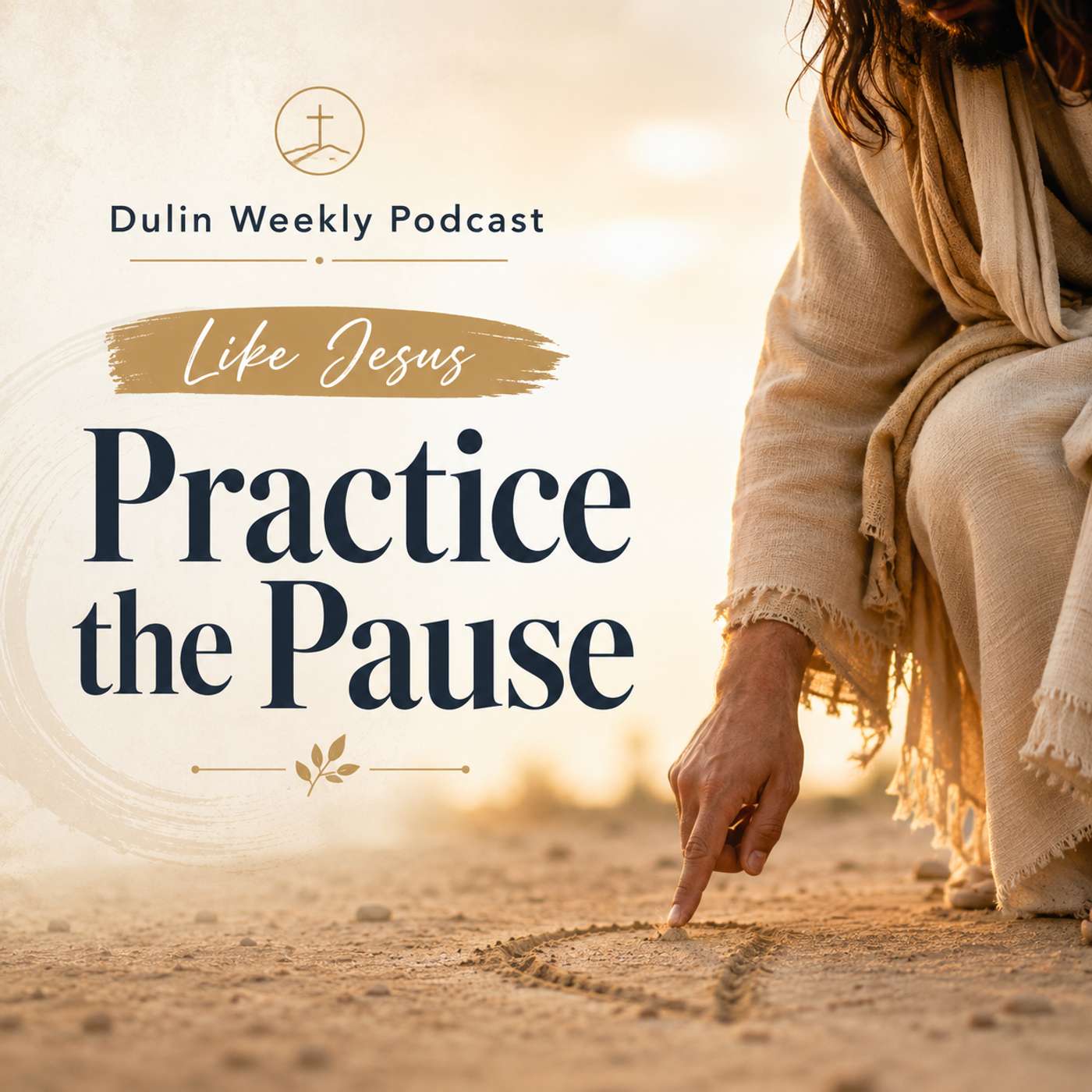
In this episode of the Dulin Weekly Podcast, Pastor James Henry launches a new series called "Like Jesus," exploring how the practices and postures of Jesus can shape everyday discipleship. This week's focus: the pause. James turns to John 8, the story of the woman caught in adultery, where religious leaders bring her before Jesus and demand judgment under the law. Rather than answering immediately, Jesus kneels and writes in the dirt — a deliberate pause before he speaks. James reflects on what that moment reveals: not passivity, but restraint born of intention. Jesus may well have felt anger at how the woman was being used as a prop in an argument, but he chose to respond rather than react. From there, James offers practical, everyday ways to practice the same kind of pause — taking a breath, counting to yourself, naming that you're not ready to respond, or simply stepping away from a conversation until you can return to it with clarity. He's honest that this isn't always easy, and that sometimes patience runs thin. But the invitation stands: when we pause long enough to notice what's underneath our anger — hurt, fear, defensiveness — we create space to respond the way Jesus did, in a way that disarms rather than escalates. This is a short, practical word for anyone who's ever said something in the heat of the moment they wished they could take back — and a gentle nudge toward a more intentional way of engaging conflict, news, and difficult conversations. In This Episode The launch of the "Like Jesus" series on the Dulin Weekly Podcast John 8 and the story of the woman caught in adultery Why Jesus paused before responding — and what that pause accomplished Practical ways to pause: breathing, counting, naming your limits, taking a break How pausing helps you recognize anger, hurt, or defensiveness for what they are An invitation to practice presence over reactivity in daily life
Intro: Hi, friends, and welcome to the Weekly Dulin Podcast, a brief weekly reflection from Dulin United Methodist Church in Falls Church. Here, we take time to think together about faith, community, and what it means to live as disciples of Jesus in today's world. James: Hello, Dulin friends. It's me, James Henry, your pastor coming to you on this lovely Thursday. It's lovely because I get to be with you. I get to share some thoughts with you and I hope they're helpful to you. Hope you will find meaning in them. You're certainly welcome to share some thoughts with me about those thoughts that I share with you. You can email me at pastordulinchurch dot org or you can certainly call me. Beloved, pull me aside after worship on a Sunday and I'd be delighted to talk to you. We have started a new series here on the Dulin Weekly Podcast, Dulin Weekly Moment And it's about being like Jesus, the Like Jesus series. And I thought that something that could be very useful to us in the world in which we live is practicing the pause like Jesus did. Now, I've heard that actually there's a book called Practicing the Pause. I called it Practicing Pausing before the book came out. But it is about stopping before we say something. One of the times that comes to my mind especially that I think of Jesus practicing the pause is in John, the Gospel of John chapter eight. There is a woman who has been caught in adultery. Many people ask me, what about the man? But that's not the point of this. The religious leaders bring her, point out a point of the law which is shouldn't she be stoned? Actually she and the person with whom she was with according to the law should be. But Jesus doesn't respond immediately. They make an accusation. Jesus bends down and begins to write, draw, scribble, circle his finger in the dust, the dirt at his feet. Now, you know, there's been much ado made about was he writing something in particular? Maybe he was listing the sins of the people who were in front of him. Maybe he was talking in general. I don't you know, he was writing something that would have pointed to something different. Maybe he was just circling his finger. I don't know. But for me, it was an opportunity for Jesus. This was one of those moments when somebody's life hung in the line. And Jesus didn't want to make a poor response in that moment. And so he paused. And the way he paused was to kneel down and begin writing in the sand, the dirt. Sometimes I pause by taking a breath. Now I try not to be so loud about it, particularly I can sound like something has frustrated me. The funny thing is that particular kind of breath that I just did actually, it has been shown to actually relieve some of the tension you feel in your body and relax you. It's a form of relaxation when you take a deep breath and then you let it out in like a big sigh. But that's not what we're talking about today. We're talking about a Jesus who paused. And not saying anything, not doing anything until you've caught your breath is one way to pause. Sometimes, especially if you feel yourself getting frustrated or angry, you count to yourself before you respond. Every once in a while, it is so bad you have to just walk away. You pause by saying, I can't respond to that right now because my response is clouded by how I'm feeling in this moment. Let's take a break and come back to this. And if it's really important like you're having a conversation with a life partner, someone who matters to you and you want to be sure that it's not just an emotional go getter kind of moment, go get him kind of moment, go get them kind of moment. But rather it's a weighed appropriate kind of response to something. You might need to just take a break. I am not ready to respond in this moment. But this is important and I think we should talk about it. Now, sometimes you just don't have the patience to even get those words out in that kind of level way. And I get it. I get it. But Jesus practiced the pause. I don't know in that moment. 'm not omniscient. Don't know if Jesus was angry in that moment, but if it's the Jesus I think he was, I suspect that he was angry. I don't know that he was, but I suspect that he was angry because these folks were trying to catch him out and test him, but they were doing it at the expense of this young woman that they dragged out in front of him. And they were making a display as if a person could be purely an object to be used to win an argument. And I suspect that the Jesus I know was angry about that. But rather than say the angry thing, if he was angry, he paused. I do not know how long he wrote in the sand. He wrote long enough so that he could give the response that he did. When he looked at them and said, let the one who is without sin cast the first stone. And one by one, they all faded away because none of them were without sin. Jesus found the right response in that moment for me in part because he paused. Because he took a moment not to react but to respond as best he could. And it it worked for Jesus. It would work for us. So if we want to be like Jesus, we want to take every moment that we're engaged in conversation, in work, even in watching a program, usually something like the news that quickly stirs us up. If we took a moment to pause and to step back and to figure out where all of this stuff is coming from. Because in the midst of the pause, you see the anger for what it is. It's the hurt you feel for the other, the hurt you feel for yourself, or it's the defensiveness or the pain. It's something that's touched upon you that's triggered inside of you. You recognize all those things if you can pause long enough to let it settle. So practicing a pause is practicing being like Jesus in what I consider to be one of the best possible ways. Go back and read the very beginning of John chapter eight and read the story of the woman caught in adultery and watch how Jesus takes his time and that his response disarms the very people who were trying to catch him out and trying to use a person as an object lesson. It catches them out and sends them away. You're not always going to do that. I'm not always going to do that. But perhaps if you pay attention, you'll find ways to do that, to pause, to not say the thing you can't ever take back that might hurt someone. And instead, reflect, catch your breath, and be careful with the things that you say and do. Jesus did that. Jesus modeled that. John chapter eight is just one place that he did. I'd be interested in your responses please. You can always email me pastordulinchurch dot org. You can call me, text me. You can do all those kinds of things if you'd like to. Certainly make an appointment and come and see me. We can talk about it. I'd love to. I d love to. It s been great to have you join me. If this has been helpful to you, I encourage you to share it with others for whom you think it might be helpful. And until next week, I wish you all the very best.