
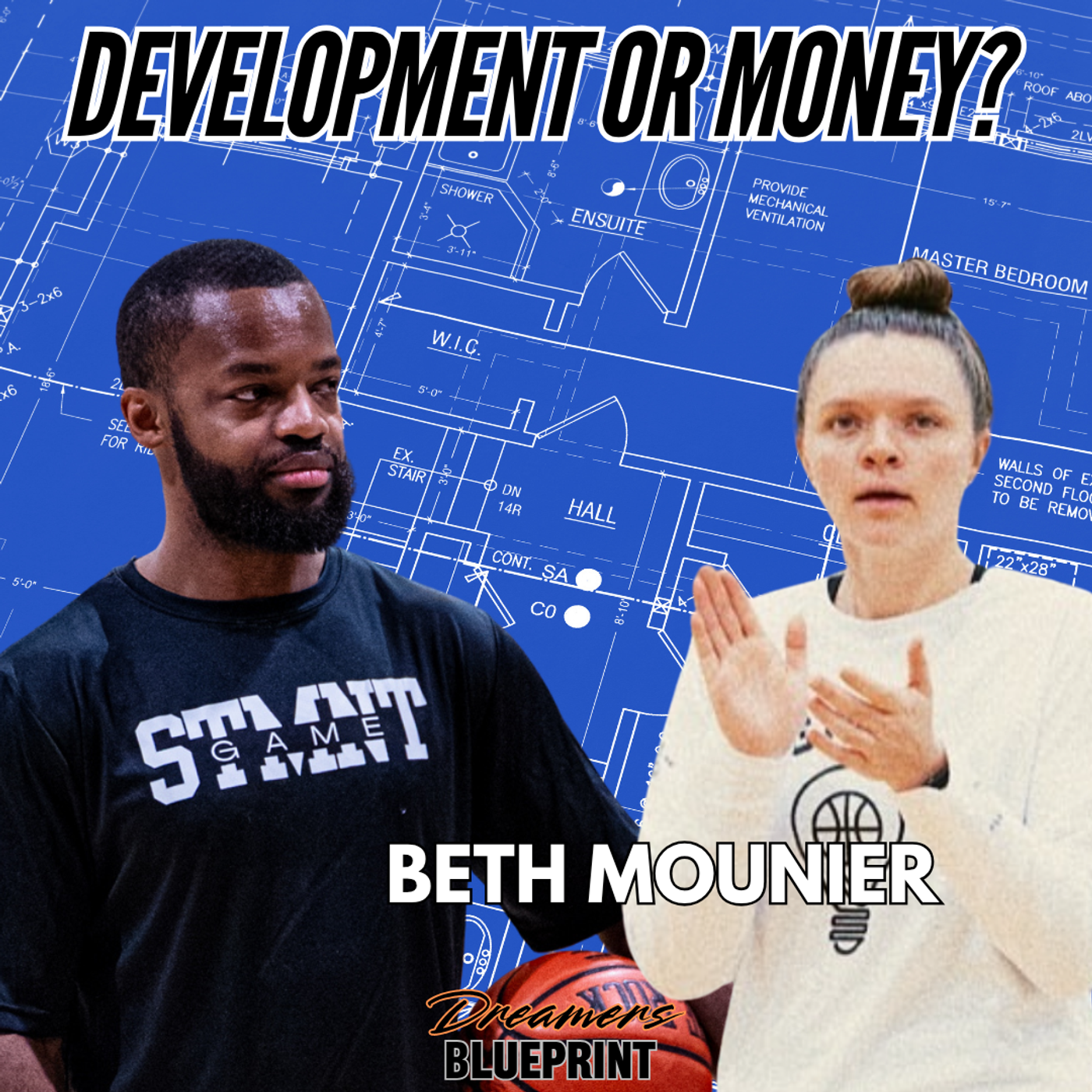
Dreamer's Blueprint · BeBall Jones
We say we want to be successful... But what does that actually mean? As trainers, how do we define successful player development? As parents, what does raising successful kids look like? You have to clearly define what "the best" means for you. Human development is more important than athletic achievement. But right now youth sports are consumed by rankings and social media looks, and that's messing with kids' confidence and development. The chase to "be the best" comes with real sacrifices, mental and physical toll, burnout. Is it worth it? So let's get clear on what success actually means and not what social media or rankings say, but what it means for you, your players, your kids. Define it. Then build toward that. What does it mean for you?
BeBall Jones: Your biggest problem in player development is that you're too focused on the player and trying to make the best athlete possible rather than making the best human being possible. That's what we talked about in today's episode with Belle. So in part one, we talked about this, but part two really got deeper into more of the human development piece. We talked about redefining what success actually is for us as trainers, for parents, for the kids, and as a player for themselves. Really redefining what success is and what it looks like. We talk about the full scope. of human development and really reorganizing balance and what that really means and what that looks like. But we kick it off where we ended last episode of if Beth had a kid right now, what is the phase? What would they do for their development to make the best player she could possible? So without further ado, we're going to finish it off with we kicked off with part one, getting into the rest of part two. If you had a kid and you're like, ideally, of course you want your girl to make it to the W, your son to make it to NBA, are you with me? Let's just say, no, just saying if if, if we want the best for our kid and we could, we have the potential to make him, make him there, you know, what would your ideal plan look like to get him from birth to pro? You know what I mean? Like, what would you do if you had a kid to kind of set them up for the optimum success? Let's say that you want to be as successful as possible. Beth Mounier: mean, finish your question. Yeah. BeBall Jones: to reach the highest level possible, whatever that is, what would you kind of do to have that layout for them? Beth Mounier: What do you think is like, what is the point of parenting? Like what does success look like in a kid? BeBall Jones: Way to make it philosophical. Thanks, yeah. ⁓ on one end is to set them up to be able to. have some love of independence when they hit adulthood. You know what mean? Like that's one piece of it. To have the tools in place to be able to function and operate in life. and figure out how to enjoy the process at the same time. So I kind say those three things to kind of make it not too deep. Beth Mounier: Okay, so those are, let's say like the primary functions of parenting, right? For them to be like independent adults, maybe like contributors to a larger society and to like fall in love with the process of like the journey of life, right? So like what, so those, that's what you're saying, that's our primary goal as future parents. Then like what the heck does it matter if they make the MBA or WNBA or not? But I think the question that you asked, parents are trying to figure out. And it's like, who cares? And not who cares. Like we're coming from like different situations where like people, like sometimes people feel like sports is their only way into a new kind of life. Right? So I have to make it right. But there's so many, there's so many industries that like people could make money in, you know, so many different industries. So I think like for me, you talk about being a parent, like I want, I would want, I want to have kids who is like, they're like happy, healthy, contributing members of society, right? Where like whatever they learn, right? Is they can go out and they can apply whatever they learn to the next thing they want to pursue. Right? Knowing that like, if you make it to the WNBA, like even the NBA, for the most part, you're done with that career at 35. Like, and that's if you're good, right? But let's say like the average career is you never make it to the second contract. So you're finishing your MBA career at 20. Some of them come at 19, right? So if you have a four year career, you're finishing your professional basketball career at 25. Right. And if you don't have any of the other skills to be a contributing member of society, then what are we doing as parents? Right. So for me, and again, I don't have kids. But I would hope, right, it's like you're putting them in an environment where like they get to learn and try a whole bunch of different stuff, right? They get to see themselves fail and try again and get better, right? They get to meet all sorts of different people. They get to learn from different voices, right? When you find something to pursue, hopefully as a parent, we have the resources to help you see how far you could take it. And when you change your mind or you want to pursue something else. That's cool. Do the next thing. Right. And if we give them like they like parents right now, it's like we are ego is on the line. If our kid is not quote unquote successful. Right. But we know the numbers, right? 1.01 % of people make it to the NBA. Right. But if my kid doesn't make it, well then I'm a disappointment, not the kid. My parenting has done an injustice only if I would have put them. on the better AU team, only if I would have paid. It's like, no, like 0.01 % of people make it to the level you're talking about, right? So a better function of us as parents would be like, how do we support what you want to do? And if we want them to be independent, like how can you start to coordinate your own development, right? It's not my job to hold your hand every single step to sit in the gym and watch practice and talk to you about practice and then. You know, pack your snack so you make sure you're drinking Gatorade at the game. Like how do we start to actually develop those long-term skills in how we're approaching parenting? And like if we're supposed to love our kid, no matter what, like how can we remove like our ego of like, some parents is like, okay, like if you don't play well, we won't go out to eat. And you're like, what? Like what are, what are the back-ended things that we're trying, that we're accidentally teaching them? from how much stock we put into their athletic performance, right? So that's what I think. put them in all these different situations, see what they like, see what they don't like, sign them up for ice hockey, sign them up for gymnastics, like sign them up for whatever, but with the goal of being like, can you see yourself get better at something? Can you see yourself start as bad and improve and come back to something that's hard for you and come back to the table again and say, okay, but I want to keep. I want to find stuff that's worth struggling for. Right. And if we can help them find those things and develop some work ethic of like, okay, you can pursue anything you want in the world. But if you want to be great at it, you're going to have to work really hard at it and just kind of like put that back into their hands. And I think we build, we help provide the space for like really cool adults, not just really, you know, good little athletes for when they're little. So I didn't answer your question at all. Huh. BeBall Jones: No. You did. in a way that was better than what I was expecting. Because I think we need that. We need that. Because we get so caught up in our world and our bubble of, OK, I have to make the college basketball. And like you said, my child is a reflection of me and my parenting skills. Because if they're not operating at this level or higher, that means I failed. And so many times, that gets me back into the whole conversation of parents kind of forcing their kids to train all the time and all this stuff because their success is a reflection of me and that's a judgment of my success. So now my identity is tied to their identity and now we're one and I'm trying to live them essentially. So we just pulled a step back and was like, hey, what matters the most? Send them up to where... They love themselves, they love life, they love me. At some point they're a great parent if Lord willing and everything's rolling smooth. They like people, people like them. Sounds pretty good, you know? And Homoza has his line, it's two different ones. He's like, if you wanted to create the ultimate human being. Like if you wanted to restart life and you could talk to God, he was like, hey, I wanna be more confident. Well, I'm about to put you through a lot of stuff to make you insecure and make you uncomfortable. I wanna go out and learn this. I wanna be more patient. I'm gonna challenge your patience then. I'm gonna make you be very costly effective and like, okay, you have to wait for this. So all the things that we want on the other end of being uncomfortable. He also has said this, ⁓ he really wants to make it to where the rich basically have to give away all their money before they die. And if you don't do it by your die, the clock kind of resets on the finances. So you can't just like leaving a heritage for your kids. Like, well, why? because my kids don't learn anything just from me handing them money. But if I hand them skills, now that's where the fun kicks in. Beth Mounier: Getting. BeBall Jones: And then there was this billionaire heard on an interview, he was saying something similar like, I don't really talk to my kids lot about money. We don't really do a whole lot around that. It's really more like the skills I want them to have. We talk about self-discipline, talk about the work ethic, we talk about the mindset and stuff like that. Now, they're doing well, don't get me wrong, they still figured out how to do well, but it's because he built the system and the process in them to get that outcome. So I think that's what really matters the most when we're talking like human development. Now we took a whole step back from player development to human development. Like that's what matters the most for them just because at some point, even if they are eight years old or whatever, there's a period where they take the athlete hat off and the human hat on. I'm not playing basketball 24-7. I'm not playing a sport 24-7. At some point I have homework. At some point I have to be a friend. At some point I have to be a niece or a nephew or an uncle or whatever. How do I operate in that? And that matters the most. So that's why I think that answer was so great. Beth Mounier: Mm hmm. Yeah. Yeah. But they also say like that builds more resilience in in a person, right? Like if I have more than one thing, right? Like you talking about, OK, you got to be uncle, got to be this, got to be that, right? Got to be whatever. Then like in one area, life is hard. You have something else that still feels grounded. Right. So sports isn't going well for you. Work isn't going well for you. Something. But I have friends who I could just be myself with or I have. some practice that's not physical or work related that's like, can still feel like me. And well, then you build more resilience because like your entire identity isn't on the line, right? So like building more well-rounded people helps them become better athletes. You know what I mean? So it's like, we get it when we get it so backwards and we're like, well, no, we got to be a good athlete, got to be a good athlete. But then they don't have any other little boxes to sit in or pull from. Well, then when the athlete isn't going well, their world shatters. But if I, but if we, so actually by helping them see new things, experience new things, get different, you know, friends and different groups, well then one area could be hard and it could just be the thing that's hard right now. It doesn't have to be like my world is ending. Right. ⁓ it's a challenge I'm working through, but I got this other stuff I got going on, you know? and so to also to answer your question, that's like, I'd hope that we'd find a way as parents. to help my kid have a little bit of balance or harmony of like, okay, you're in this season right now and we're going to support you through this season and like, but we're going to get an off season or we're going to get something where like our family gets to have some priority too of like, yep, we're, we're going to help you pursue your dream. But like we're parents who, know, we have lives too, right? So like your life is not my life. So like, I might not drive you to practice five days a week, right? I might. you know, we might have to carpool and that's not because I don't love you. It's just because like my world can't be your world. So that when your world is hard, it's not my world. Like then I can support you as your parent and not as like, God, I've been driving to practice four days a week. Why, why didn't you shoot the jump shot? It's like, who cares? Right? They're just, they're little and they're running around and they just need you to be their mom. need you to be their dad, not like their 18th coach of the day. Right. And so finding ways to do that, I think would be like my goal as a mom. BeBall Jones: Yeah. I think like the word balance is something I've, I want to say redefine, but I had to define for myself to add more clarity. And so when people, most of the time say balance, it's in today time work life balance. And when you see what we talk about it, it's split 50 50. But I got to a point where I'm like, that doesn't It's like you read a sentence, but then you stop before you get to the period. It's like, that's not the full thought of balance. So if I had a weighing scale right here and I have the goal to get to 100, right? That's the completeness of it. So one side has 10 pounds and the other side has 90, but it weighs out to be 100. Isn't that balance? Beth Mounier: Mm-hmm. BeBall Jones: No one would disagree with that because the math checks out. So what if it's 60-40? Still 100. OK, 75-25, it's 100. So why do we hear balance and think, OK, I have to spend equal time at my job and equal time being at home? Or why would you judge me? Because my balance says 90-10. I'm not complaining. I'm not out here stressed out or concerned about what your balance looks like. If my life is complete and I feel well doing this, your opinion of what my balance looks like should not matter. And so for parents, they're like, hey, you should be balanced. You should be 50-50. Maybe. because you see them stressed out all the time, but that doesn't mean 50-50. That means, hey, basketball is amazing. We love that you do this. But we would like a little bit of family time, too. So instead of being 80-20, can we pull back to 75? Can we pull back 70? Give us a weekend out the month. Give us a phone call here and there. And I think that sometimes that... Like you said, the identity of parents kind of like whoops around them. Hey, you're not balanced. You're not living right. Maybe, maybe not, but you can't be the judge of that. And so like, I like to kind of add more clarity when I hear words. And I think parents will hear this and be like, ⁓ well, my kid needs to be more balanced because I want him to be a great human being. Let's get clear on what balance actually is and what it looks like before we start pushing them to be more balanced. Because that could be, hey, you're practicing a lot on basketball, but you're not spending any time with this. OK, cool. Don't make them go from practicing every day of the week to now practicing three. That's off balance for them. Maybe do four and a half and give us that half day. Maybe do four and give us that one day. And so my little two cents on that. It's just like giving that player or your child Beth Mounier: Mm-hmm. BeBall Jones: that space to kind of live their own life in their world. But have it where it's a Venn diagram and the overlap makes sense for both parties. But that's also what parents have to sacrifice and be like, my life isn't theirs, their life isn't mine. So now we can have this part where we're still together, because we're still family. We're still some level of together, but they're not me and I'm not them. So it gives both parties the space to figure out what makes sense for them. So that's like my tag along with you said. Beth Mounier: Mm hmm. Yeah. What are the conversations you have when you get in the car? Right. Is it about the game or is it about something else? Right. What do we talk about around the dinner table? Like, do our brains ever get a break from it? Right. Because, my first year, one of your earlier questions was like, all right, so if you have this kid who wants to play college basketball, like, yeah, the demands are high, but the chances are like you like doing what you're doing. So you're not going to feel the same burnout from it. Right. You're not going to feel it's just part of what you do. Like you just love it. Right. But so then when what so it's all just like, who is driving the train? Right? Is it you the parent? Or is it the kid? And is it like, and how does it feel? It's like all this stuff is it's so nuanced. But it's like, you know, when it's going too far out of balance, like, some days kid will come, like I had a kid this year, she came in super tired, super like, man, she just had a super hard practice. And I was like, dude, you want to go get frozen yogurt? Like just today, like tomorrow we'll go right back to training. But like today, do you just need one hour that you don't have to do this? Right. And I know you practicing six days a week plus extra. So I'm not saying you don't work hard. I'm just saying in the moment you need it to just have a different conversation, to sing the songs in the car and to not be thinking about the team. Do you have those moments? Right. And that could be balanced one hour that you got back that you could just take a deep breath. Right. And then go back to everything else you need to do. Okay. You have practice Saturday from nine to 12. Cool. From four to eight, we're going like no phone family dinner. Right. It's like you don't even have to necessarily remove something to be like, okay, but I'm, feeling recharged from this. I'm feeling excited about this. ⁓ So it's all just like, just your kids success is not a reflection of you. And we gotta support them any way we can. And what does that look like? It's individual for every single family. BeBall Jones: you. Do think there's a lot of keeping up with the Joneses mentality with this too? Because their teammate, ⁓ you should be looking at Jimmy and what they're doing. They're training five days a week, so you should be doing the same thing too. ⁓ look at Rebecca. She's getting scholarships and she's in the eighth grade, weren't you? Or maybe it's the internal internal conversation like, man, are we doing something wrong? Because you both started in fourth grade. We played together, but then their kid got to the next level a little bit faster and so on and so forth. How much do you think keeping up the Joneses ways Beth Mounier: For shame. For shame. I think it's Because I mean, and I think social media, ⁓ hundred times is that right? Because now it's not just me compared to whoever, Rebecca, it's me compared to the kid in New York and the kid in Florida and the kid in France. Right? So it's like, our perspective of progress is so skewed because we're getting, you know, like I'm seeing national rankings in third grade and I'm not on them. Right. And I'm, or I was on it in third grade, but now I'm fourth grade, I'm not on it. And it's like, who is, who is evaluating third graders? Like whose job is that? You know? So I think there's definitely some keeping up with the Joneses. ⁓ We want our kids to succeed, right. And we want them to have the best opportunities, but we pushed that so hard. And it's like, Well, we were going to take the summer off, but everyone on their team is playing summer ball or, know, we were going to go do this, but I don't want them to fall behind. And it's kind of like, again, I think sometimes we just need to like, how do you give yourself a longer timeline of like, okay, me, us taking the summer off in sixth grade. Like we won't know the effects of that in like the fall of seventh grade. Like we might, our kid might be so much more well-recharged. that they want to train harder, they want to push harder, or they're feeling like they've learned from these other experiences they've gotten and they can come back to the gym fresher. But the kid who stayed and trained all summer might be skill ahead of them. But if we walk that out a year, two years, three years, does it level set itself? Right? So nobody wants to look at anything very long term. We want to keep up and we want to keep up now. And that puts pressure on the kids, puts financial pressure on the family, like puts just pressure, right? Because I want my kid to be successful. And you know who gets offered an eighth grade, like the very best kids in the entire country. Like there's like 10 kids who are getting offers. Or like there's like 10 schools offering kids that young, you know, who they might actually commit. And those kids will be like the top 100. maybe like but really like the top 25 kids might start getting offers that early. Right. But I might get I had a kid this year who was like, Beth, where were you on the top 100? And I said, What do you mean not on it? She was like, What? How are you not on it? I said, Are you kidding me? Like, the kids who were on that list were so much better than me. And I still play college basketball, graduated from one of the top universities in the country, like in you know, have had successes and adult. So it's like, But who cares? Not who cares. Like, but some of these things is like, when you're in those rooms, you'll know it, right? And if you work your way up, and you're on these lists, or you're on whatever, those are like byproducts of everything you've done before. Like they're not the goal. And if they're the goal, then we'll stretch and we'll push and we'll pull and we'll do anything to get there. But if it's a byproduct of like, man, I played, I got him, our team got invited to Peace Jam, and I killed the top team. Right. Because my preparation prepared me for this moment. And then I went out and I performed when I'm on the list. Right. But it's like the list isn't the goal. Right. The things that we have to do to get there has to be where I prioritize. And then again, like where that ends up, who's to say, who's to say where, you know, but so let's just pursue the thing and see what happens. BeBall Jones: As far as the recruiting piece, how much blame would you feel falls in the coaches lap and the colleges lap for that? Beth Mounier: What do mean? BeBall Jones: recruiting of class 2045, like the whole idea of having a ranking and stuff for fourth graders. Like in your opinion, when would you say a good time to start having rankings be? When should college coaches genuinely start having recruitments in all the recruiting agencies and whatever? When should we start having lists and stuff done in your opinion? Beth Mounier: Mm-hmm. I have no idea. No clue. I don't know, high school, eighth grade. But, you know, I don't know. I just don't know what, what, because sometimes, like, so the, always think about some of these metrics as like, they're kind of just like a point in time, right? So to be the best seventh grader in Oregon. Okay, cool. You are. But then what if you're not on the list in eighth grade? Like what does that do to your confidence? What if you weren't on it, sixth and seventh grade, but now you are on it, eighth, ninth, 10th grade. Like to me, some of it is like, we're so concerned by the public perception of our progress, right? Well, how does it look to you that now I'm worried about you and I'm not really focused on my development. So like, who cares when the lists come out? But do the me as a player, do I care about them? Right. Or can I just be like, cool, like that it's a check mark. We must be doing something right. That I'm on this list. Cool. Let's just keep doing the right thing. But if I'm concerned of like, I'm on the list, I'm not on the list. I'm on the list. didn't get invited to that camp. That's the coolest camp in town. ⁓ my God. I didn't get invited to that camp. I did get invited. Like we're just so concerned with all these things that are more or less out of our control, which is sometimes why I say like, well, who does the rankings? Like who is sitting at these youth tournaments across the country and evaluating third graders? Like whose job is that? Right? Or is it like I call in, I got this guy and he's going to like, and so we just put so much stock into stuff that changes, so much stock in the stuff that to some degree is out of our control. What if I'm the number one player in my area, but then we go to Seattle and I'm not as good. And for some, then that bumps me off my list. It was like, was it exciting that we met competition that was better than us and we figured out how much better we need to get? Or am I discouraged because I'm not on the list anymore? Like it's all, it's to me, it's like, it's all arbitrary. Like until you like a McDonald's All-American or not, you know, like until you like some of these things that is like, all right, these are the best of the best. Like who cares? And again, if you're one of those kids, chances are. You know it because you're starting to get opportunities, but that doesn't mean you can't work your way up from wherever you're at or learn quick or whatever. I just think it's all like to me. I'm like, what does it matter right now? Right. BeBall Jones: And then goes back to what we were talking about earlier is the human development first. And once that's taken care of, the athlete will progress and do what they have to do. I know, man. I think we're in a very peculiar place in our basketball culture and society. At least in America, I'll say that. You I can't speak for the overseas life completely. I haven't ventured over there, so I don't fully know. But... Beth Mounier: Mm-hmm. BeBall Jones: What would you say the state is? Like if you could give like a grade, like, okay, in American basketball culture, from what we just said of like A being human development first, what would you feel like the overall grade would be? Like we're doing it real great, we're A or F, because we're so focused on athlete first and the outcome and scholarships and money and blah, blah. Beth Mounier: Mmm. I'd say we're close to like a D, you know, but I don't think it's just youth sports. think that these, this is just the area that we are in every day, you know, but I think that it's like American culture across the board, right? We're obsessed with winning sometimes no matter the cost. We're obsessed with playing a zero sum game. If I win, you lose. It's the only way. We can't both win. We can't both lose. Right. So your success actually takes from my success. So you can't win because I want to win. Right. And we're obsessed with like, I want it to look good. Look at social media. Everything is a curated edited. We're going to cut this up. It's going to be curated, curated highlight reel of what you think is the best part of this conversation. Right. Because that's what we think people want to see. And so our entire world, like we're more, we're more. we have more access to people. We've never been less connected, right? I can have a million followers and feel alone. Right. And so the things that we're putting value on are like production metrics, but they're not like human metrics. Right. You see, and so as a society at large, it's like, we're getting so far away from like, like, how do we do this human thing? Well, And we don't care for the most part. Like we don't all care if we're getting it wrong or not. You know, we don't care that our 12 year old has however many followers and cares about the followers they have. Even though we know the long-term effects say that's bad for them, but they're popular right now. That's good. That's good for me. It's good for you. So I think that trickles into how we do almost everything as a society. so like a D and F, but it's not just basketball. It's how our culture has shaped how we then go and we play and we pursue basketball. BeBall Jones: I'm gonna ask this question again. I think I can ask it better this time. So, Beth, you have been blessed to be able to be a mom. And you have to create the best human being ever. And you went through the guidelines of what you, like the principles that you wanna have for them. What will you do now? Because you wanna create the best baby Beth. Like you want her to be the best human being possible. What are we doing? Beth Mounier: What do mean? ⁓ I think... Helping them be in places where they're really learning how to learn and think. ⁓ Putting them in places where ⁓ they get to feel the highs and lows of struggling for something that they feel like is worth struggling for. That we have a high respect for other humans, their time, their energy, ⁓ whatever role they play in your life. The person standing next to you, across from you, or beside you. like they're worthy of like our attention and respect as well. And then like your willingness to, you know, pursue anything, right? Like if you want to be great in drama, like go be great in drama. And if you get to the, like to have some adaptability, less rigidness where it's like, okay, I'm going to throw five things at the fan and the one thing that sticks, like let's run with it for a while until that goes down to the next lane. And you're like, okay, let's pop over here and just building like, and excitement for life and excitement like to explore and have adventure in the world and like the confidence to like believe in yourself but that not be like fixed on who you are today but fixed on like who you will become on the journey to do anything ⁓ and surrounding them with people who care about them as people who just want them to be them and anything that comes along with that is exciting or or anytime they fail, still have people that they can come home to. That would be like what I hope for little kids turning into adults. BeBall Jones: When you said the piece about ⁓ kind of letting them explore and if they want to pursue different things, let them, there was a part of me that kind of was like, ⁓ I don't know. But I think that's the American part of me of like, you have to be great and greatness requires you to stick in this one lane. You know what mean? And so. Beth Mounier: Mm-hmm. BeBall Jones: Different phases, yes, like the Mist Blow, but it gets to a certain point where it's like, okay, you want to be the best. This is what we do. You have to stick with this. And funny enough, it's like... that goes back to what saying earlier about human development versus not even just basketball, like replace basketball with anything. You want to be the best drummer, this is what it takes. You want to be the best pianist, you want to be the best in business, you want to be the best podcast, you want to be the best streamer, you want to be the best shoe designer, whatever. Remove everything else and just focus on this thing. I think that's the mindset that we have and I'm guilty of this too. I wrestle with that a lot and I think that goes back to what we're saying like, hey. Balance looks like this for you. And so you have to be able to be accepting of you're not going to be quote unquote number one of this thing. So yes, everybody wants to be Kobe. Everybody wants to be Jordan. Everybody wants to be LeBron. Whoever you go to, don't care. It doesn't matter to me. But that's the goal you want to have. Every kid wants to be able to do that. But can you live with, like you were saying, Saying you explored, had fun throughout the process and now you're at a point where you've reached your personal best versus the objective best of being the best in this lane. And that's the part that I feel like we all have to really answer for ourselves. Because if you want to sacrifice everything to go be the goat, then cool. But you have to answer that for yourself and be like, I'm satisfied with what this outcome will be. And I had to suck at that one myself just that fast. Beth Mounier: Mm-hmm. Yeah. I don't I don't know. I think like that the pursuit of being the best like I would ask ⁓ like if we could call up ten people who are quote unquote the best like and we asked would you want your kid to go through what you went through so that they could hire what you have how many of them would say no right like and look at we could call up ten people who are quote unquote the best like and we asked would you your kid to go through what you went through so that they could hire what you have how many of them would say no and look at You know, pop stars. Okay, so you making so much money. Would you ever would you tell your kid, I want you to be a pop star because you know what comes with it. You know, the pressure of fame, you know what it's like to have paparazzi like paparazzi around, like, you know, and so would you ever actually ask that of your kid? Right? Or would you say like, man, I just want you to enjoy whatever you want to enjoy. Right? Or same with same with basketball, like ⁓ pop Would you would you tell your kid, I want you to be a pop star because you know what comes with it. You know, the pressure of fame, you know what it's like to have paparazzi around, like, and so would you ever actually ask that of your kid? Or would you say like, man, I just want you to enjoy whatever you want to enjoy. Or same with same with basketball, Like the amount of sacrifice that it is for you and your family. Would you, would you tell your kid to do it Like the amount of sacrifice that it is for you and your family. Would you, would you tell your kid to do it now? If your kid is like, all right, I think I want to do it. I'm ready to go. You obviously have so many resources to help them get in place. Right. But would you ever tell him that the best is your highest level of pursuit. Right. Or would you tell him something else? Like, okay. Like. Serena Williams documentary, right? A lot of the, the time on the tournament is like they're in the hotel, right? Can't go outside. Don't want to be photographed. Can't do this. Is that the life you actually want? But that's the best. She's the best, best tennis player ever. Right. And is her kid going to become a professional tennis player or would she ever force try to be like, bro, be the best is like, no, like she had a parent who wanted her to be the best. Right. And whatever that looks like, like, so I just think like the, the pursuit of saying, I want my kid to be the best is like that costs so much. And if they were going to sacrifice their entire life so that they could be the best in something for a moment, would you actually want them to do that? Right. Like, and so I think that's the question of like, do you, the best is such a moment in time marker, right? Who is the best singer in 2015? We'd probably find out most records sold are they still making music right? So just like to be best is like, what is it worth? ⁓ Is being the best worth sacrificing everything? ⁓ but that's a huge ask, right? Huge You see like the mental health toll that that takes on people, the level of stress they have to deal with. Like you could be like, I don't think that I'll ever be the best trainer in the world ⁓ because I don't want to sacrifice my Is being the best worth everything? ⁓ Maybe, but that's a huge ask, right? Huge ask. You see like the mental toll that that takes on people, the of stress they have to deal with. Like you could be like, I don't think that I'll ever be the best trainer in the world ⁓ because I don't want to sacrifice my whole life and existence to get there. whole life and existence to get there. And I just know that about me. Like I want to be excellent, but I have no desire to be the best. Right? I don't want to be on the road 300 days a year. I don't want to do some of the things that I know it would take to get there. And so I'm going to be the very best I can. I'm going to impact lives in my community. And if that opens doors to do stuff on a bigger scale, then that's awesome. But like the pursuit isn't to be the best. because it would take too much of me. And I don't want to give all of me to a pursuit that someone else gets to grade on if I'm the best or not. You know? So I hope the same thing for my kids someday when I have them. BeBall Jones: Yeah, I wrestled that a lot because I saw this clip of Mr. B saying, uh, I watched the whole podcast and he was like, I, if I cared about my mental health, I wouldn't do what I was doing. I would live life totally different because this is the game I'm playing and to be the best, this is what I have to do. And I mean, sacrifice some of my mental health. And like he was saying, like, I think he said that thing too of like, wouldn't want this for anybody else. But because I do want this, this is what it takes. A lot of people quit at this point, but I'm pushing through and this is why I'm Mr. Beast. And I think for myself, it's like, like I have a goal to get in my own gym, but I like, what does that look like for me? Beth Mounier: Mm-hmm. Yep. BeBall Jones: Like I always knew for myself, I don't want to be the trainer that has a thousand kids in the gym. That's just not for me. I like the more intimate setting. I like to know everybody first and last name, know what happened, want to go to the games. I want to live that life. But then I can't, don't, me personally, I don't want to be the other end of it where because I train 20 kids, I'm charging them a thousand dollars a piece. So like, I have this weird piece of like, what does my game look like for me? Cause this is my business, I have to figure out. So I've been tinkering like, okay, what if I do this? What's this model? What's that look like? But like you said, I have to do what's best for me in a situation. Well, I don't only miss the beast and sacrifice everything to hit the number one trainer in the world. What does that do for me? You know what mean? There's no plaque on my wall I get to say this. There's no ⁓ retirement equity fund set up for me for being the best trainer. It's like, all right, cool. B is the best trainer for two years. Whoop-de-doo. What's next? You know, so once I kind of got out of that space and I started figuring out my game, I to play what success looks like for me. That added so much more clarity now, because now the game for me is figuring out how to get this to come to pass now. Like, OK, boom. Cause like, it's kind of weird, but like I like this challenge I'm facing. Like dang, how do I figure this out? Like, okay, I don't want to be the premium trainer, but I don't want to be the cheapest one either. I to make a living. But do I care about development or profit? It goes back to that. So I have to find my balance for what it looks like for me and know that. So I think ultimately, man, like ⁓ we all have to understand the game we're playing and whether it's human development, player development, business development. what game makes the most sense for the outcome we want to have reverse engineered from there to where now we can hit success because success is defined differently from each person. So. Beth Mounier: Mm-hmm. BeBall Jones: I don't know man, this is an interesting... Beth Mounier: took a tangent. Always. BeBall Jones: I think that's the answer to everything. I don't know and it depends. Those are two answers to every life question. This was a lot man. This was a... I don't know, it very interesting conversation we had. Beth Mounier: I it was good. BeBall Jones: I think so, somebody listening like, no, he's the worst. He's definitely not successful. This guy's terrible. But no. Beth Mounier: No, no, I don't know. Thank you. Thanks for having me. BeBall Jones: This is great. I enjoyed you man. Anything else that you want to share before we close this out? Beth Mounier: No? I'm good. I'm good. How about you? You have any final words? BeBall Jones: nothing comes to mind, man. ⁓ Beth Mounier: We've talked about it all. Today. BeBall Jones: Yeah, I think that's it for me. I will say if you are in Portland, Oregon, you should train with a certain young lady. ⁓ She's really cool. She's dope. You just heard her talk for about two hours. So that's a little bit of time in life. So think about it, though. Like, that's a lot of time to commit to one person and not commit to them. You know what mean? So if you're in that area, Beth Mounier: about it all. Love it. BeBall Jones: You're like, man, she's such an intelligent young lady. She seems really cool. I love the way she thinks and all of that. I would love to be around her. You should do that. And join her at her gym. She's doing great over there. ⁓ I'll say this too, one of my favorite trainers to see. I learned a lot of stuff from you. So have a little list of my favorites and your own there. So yeah, that's all. Beth Mounier: Thank you, I appreciate that. Thank you, thank you. Thank you for having me back. I love it. You know I love it. BeBall Jones: I appreciate you coming back. So that's it, man. This was a long one, but it was worth it. So thank you, everybody, for watching. Thank you for listening. Make sure you subscribe and see you next video. Beth Mounier: Bye guys.