
Dr. Eugene Lipov | Brain Hope Reality & Digital Toxicity · Dr. Eugene Lipov
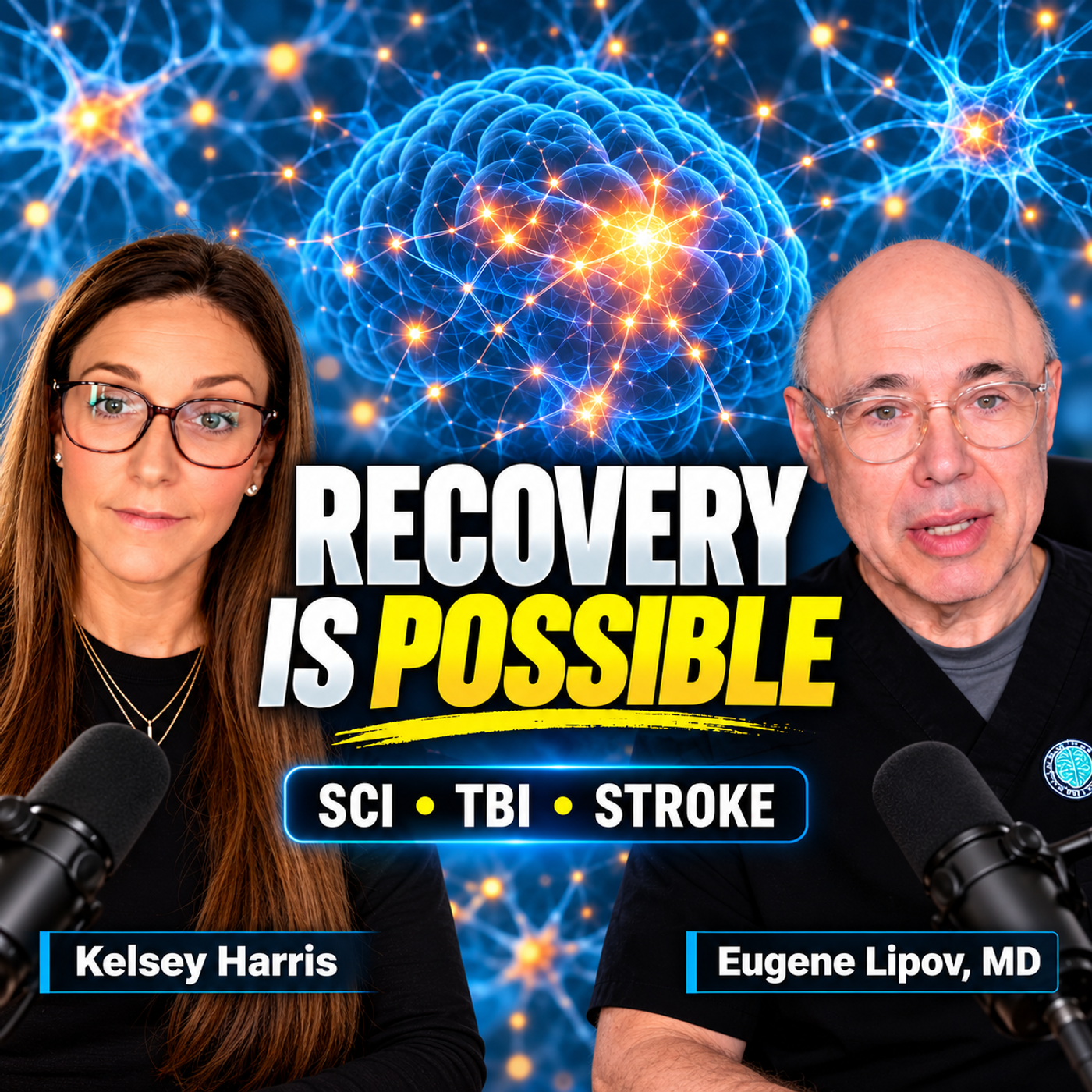
Can recovery continue years after spinal cord injury, traumatic brain injury, or stroke? Eugene Lipov, MD, speaks with Kelsey Harris, founder of NeuroAxis Rehab, about neuroplasticity, paralysis recovery, spinal cord stimulation, stellate ganglion block (SGB), and innovative rehabilitation. Discover inspiring patient stories, emerging treatments, and new hope for neurological recovery.
Eugene LIpov MD`: Welcome everybody to the next episode of Brain Hope Reality, where we talk about brain science and real hope. And reality, what can actually be done in the real world. I have an amazing guest today, Kelsey Harris. she and I met, thank God, and I'm gonna be joining her in Pittsburgh in her beautiful office. And we're starting in early November. The hope is for us to be able to treat some of the people. who've had unfortunately significant neurological trauma, brain trauma, spinal cord trauma, as well as other cohort of PTSD and TBI first responders, military, the usual people I usually work with, and God bless them for keeping us safe. Welcome Kelsey. Kelsey Harris: Thank you for having me. I'm so excited, as you know, to get everything started in Pittsburgh. Eugene LIpov MD`: I think we're gonna do it. So if you could just give us a so people understand your credentials and what you do every day. And the number one thing, what is the most clinical outstanding outcome you've seen? In that order, if you don't mind. So tell us about Kelsey Harris: So Eugene LIpov MD`: yourself first. Kelsey Harris: yeah, my name is Kelsey Harris. I am a physical therapist by background, and I started NeuroAxis Rehab almost five years ago now. we in NeuroAxis is a mobile-based therapy company. It's outpatient therapy specialized for people with strokes, brain injuries, spinal cord injuries, any type of neurologic, neuromuscular, neurodegenerative condition. As a physical therapist, I knew I could help my patients. Our healthcare system just wasn't set up to allow that to happen. So I built a company around it. we have over 36 team members now treating both in home, in the community, and then at our neurorecovery center, which is where you will be joining us, to help individuals with these conditions really continue on a recovery journey and not be stuck inside that standard six-month time window that typical. Healthcare provides. Eugene LIpov MD`: you mean the insurance will pay for three months and then you're good, goodbye. You saying that doesn't work? Kelsey Harris: Then that's it. That's all we can do. And shocking, right? Eugene LIpov MD`: That's that's amazing. I who knew who knew that that would be like nerve tissue grows at one millimeter per day and in you know, like finish it like that is great. Kelsey Harris: Well, yeah, it's so frustrating for for our patients and and the neurocommunity overall, because they're told after the first six months to a year, no more recovery is gonna happen. And if anyone listening has been told that, that is the furthest thing from the truth. Recovery is always happening. Insurance just stops paying for it at about six months because insurance models are based off orthopedic care, not neurologic care. And we know our neurosystem takes longer for recovery. So that is why I started the company and why what we're all found around. we provide multidisciplinary services. So PT, OT, speech, mental health counseling, massage. And that's why we're excited to have you come and join as well to really give that holistic approach to optimize patient recovery. Eugene LIpov MD`: So it's interesting. So in you know, I spent forty years doing pain medicine. So it's interesting. So PT plus I've seen good PT and I've seen really bad PT. Like people get really hurt with PT, Kelsey Harris: Yeah. Makes a difference. Eugene LIpov MD`: right? But as a pain guy, you know, if your hip hurts, I don't think you can a lot of times it's hard to fix the hip with PT. If you can do an injection, calm it down. PT is more effective and they're more available for the stuff you do, right? So as far as recovery, so this is an interesting case, which I hope we can replicate. That would be amazing. There's one case in literature out there where this gentleman was a quadriplegic. So he's paralyzed from the neck down and not able to move his arms or legs. his spinal cord was intact. It was not a transaction, but he was not able to move any of that. So he had CRPS, so burning in the hand. And then they did stellar ganglion block for him again. As your focus is neuro, my focus is stellar ganglion block. Any possible Kelsey Harris: Yeah. Eugene LIpov MD`: application to help people, I'm there. Anyway, they did eight blocks, and his arm came back, arm function came back. So before now be able to move the arm, now he's able to move it. I'm hoping we'll see similar results. I think that's possible. And it turns out There's a lot of really crazy neuroscience which is there where somebody and you know, we've talked about we're not gonna totally geek out, but you know, I have to go a little bit geeky. That's kind of part part of my style, right? I guess I I I I'm a self taught neuroscientist, I'm excited every time I see something new. Anyway, so I published a paper on TBI, traumatic brain injury, military medicine this year. And the whole concept of TBI is when somebody gets beep up in the head, technical description. Or has a blast injury. brain, there's an injury, obviously. The same thing happens spinal cord because they're part of the same continuum. What happens is inflammation happens. That's what actually does the damage, and that's what seems to keep things down. Turns out it also produces something called zombie cells. I love that term. So considering I'm older and I'm trying to operate for the next 20 years into my 90s, I've been looking at longevity. So people talk about zombie cells. Zombie cell is a cell that used to be a cell all by itself and then it dies or it's non functional, but it's still alive. And unfortunately it's taking space for good cells and it's producing inflammation. So we all have that, even somebody as young as you, but what happens in you you have something called autophagy. Autophagy means out of eating yourself. So it eats eats the bad cell and cleans up the system, which is beautiful. So that's a normal response. So there are drugs you can take for autophagy, like spermidine and other things. But turns out stalaganglion block improves autophagy. So it activates and takes away the bad cells, the zombie cells go away, and that's why the guy got his arm back. Further, stellate's been shown now a number of times to reduce inflammation, interleukin 6, all those things like that. But I think that's why it works with TBI. So there was a couple of people, I and Dr. Mulvaney both published on people had TBI from military action, and 50% of TBI symptoms were improved following stellate, which is crazy. So that's why I'm so excited to work with you. So hopefully we can calm down the system and get people to work. Also, your husband is ex-SWAT member, as I recall, and Kelsey Harris: Yes. Eugene LIpov MD`: I'm sure it it was SWAT as Those people who don't know what that as you know, the police that go in like really hot places, special weapons and tactics. So when bad things happen, that's when this the big boys come in, which is SWAT. So a lot of bad things happen, right? I'm sure he gets beats around, you know, has T BI and this blast injury, which is B T B I. I've had a lot of experience working with special forces, and those guys have a lot of TBI and T PTSD. And thankfully, hopefully it's okay. Talk about him. I think he got better after stellar. If he didn't, you and I probably wouldn't want to try it working together. Kelsey Harris: Yeah. well I think that's something that, you know, coming his background, which is why I'm so excited to be offering this to in Pittsburgh for our first responders and veterans, because I I live with a first responder who's been through this and has had significant success with this. but then also for myself, I've had 11 concussions. so I have been dealing with mild TBI symptoms my whole life. It just became normal for me of brain fog and not being able to sleep and all of those things and After I had this procedure done, you know I've told you this so many times. My life had changed. I didn't know it was possible to feel this good. Eugene LIpov MD`: So what do you think was the biggest change for you and your husband from your perspective? I I I I love hearing clinical improvements. Kelsey Harris: Sleep. Eugene LIpov MD`: It's my favorite thing. Kelsey Harris: Yeah, sleep and the ability to think clearly. I would set out hours to do a task before if I, you know, with the business switching things over, whatever a task was, I would give myself a bulk of time that I thought I needed to do that. I can get it done in like 20, 30 minutes now. So I'm much more efficient in my thinking, but I know for both of us. Sleep was a huge thing. I was waking up at 3 a.m. He wasn't getting restful sleep. We both sleep like babies now. It is glorious. We are out when we go to bed and we wake up and feel rested. And that just does so much for your overall health, your energy, your well being, your mental health. I mean it that was the biggest change I could say for both of us. Eugene LIpov MD`: So let me kind of geek out and tell you why that happens. I mean that to me it's always why, why, why, why. Kelsey Harris: Mm-hmm. Eugene LIpov MD`: I'm gonna put in the description, I wrote the summary of why it works on sleep. this year actually. The reason I'm interested in sleep, I had my stalli ganglia block number four and eight years, actually. And I did it primarily for sleep and also chest discomfort. I couldn't take a deep breath and feeling of doom. So I'm also a not not only am I an inventor of it, but I'm also a client, as I would say. But so in China, number one you use phosterate is for sleep. So it does two things for sleep. Number one, it drops norepinephrine levels, so it doesn't keep you up, which is great. So you get a deep sleep. It also reduces inflammation. So when the brain is on fire, as people in semi sciences call it, inflammation makes the brain swell. It doesn't work so good. So you have brain fog as what you're describing. And also if you don't sleep, you accommodate or retain byproducts of metabolism of the brain. So brain is a machine that burns three things: oxygen, glucose, and water. And the only way it gets out of the brain is when you need to be in deep sleep, phase four, three or four, through glymphatic systems actually pumps out the bad stuff out of the brain. So if you get sleep like a baby, you can focus. Right? Poof, and you're actually seeing that. Kelsey Harris: Yeah. Eugene LIpov MD`: And I mean that that that's and hopefully like I don't know if you had that, but like impulsivity is another thing that hopefully your husband is better. Because for me, I have an amazing wife and we have an amazing relationship. But before I had my block, I was like, she looked at me, she goes, You're trying you're trying pretty hard not to be kind of crankinator, are you? I said, Yes, I'm working very hard at it. Go get read it. Go, go, go, go, go get it done. Don't screw around. Go get it done. but I think, you know, my my mother kind of quick background, and I'll tell you why I'm really interested in this. So my father who was a flyer in World War II, he had severe PTSD. He was dropping bombs on German ships, which didn't want to be destroyed, shockingly. So out of 10,000 people in his squadron, 100 made it home. So horrible PTSD. He came home, pretty violent. Anyway, he gave PTSD to my mother, who eventually took her life. So I'm very interested in typically men, but not all men, could be either, and their spouses. Because you can catch PTSD like a cold. And, you know, I wrote papers on that. Those who are interested, go to drugenelipov.com. I have papers on secondary PTSD. That's what it's called, technically, or vicarious PTSD. Anyway. But the point is that. you wanna think about like if a first responder thinks hears this or a military person Don't forget the spouses. And you know, if you talk to the spouses, they know. And there's like the what what happens though, they don't understand why they feel bad. We haven't been to war, we haven't had attack, nothing really bad happened, but yet we're miserable. Well, the reason you're miserable is because all the stuff has been happening to you. You don't have safety at home, and that creates this issue, right? So I I have to put Kelsey Harris: Cascade. And I Eugene LIpov MD`: that plug in there. Kelsey Harris: yeah, and I think the same thing for our neurofamilies too. They've just had their worlds flipped upside down, whether a diagnos a stroke diagnosis, progressive disease, Parkinson's ALS, MS diagnoses, they've their sense of normal has just been flipped upside down and they're Now having to take on all these other roles in their families. And that trauma, that medical trauma from this, maybe a traumatic spinal cord injury, something happens that also affects the family, the spouse, all of those individuals too. So I completely agree with the secondary PTSD for spouses, caregivers, family overall, because they're all living it together. Eugene LIpov MD`: Yeah. Well it's interesting. So my wife took care of her mother who was very sick with cancer for fourteen years. So her point was like, you know, everybody thinks about the patient, but the caretakers really it's many in many ways it's easier to be a patient than a caretaker. So those I mean, so let's say somebody has Kelsey Harris: say the same thing. It's a different type of hard. Eugene LIpov MD`: say it again. Kelsey Harris: I said it's a different type of hard. Living it Eugene LIpov MD`: Right, it's a different type of heart. You're not suffering, but then you're thinking about you lost this loved one. They're no longer can do what they normally do. Number one. Number two, the whole financial thing has changed. Number three, a lot of times there's children, and now you have to explain to children why they cannot play with them. And then I mean, it depends, like ALS, horrific disease, and progressive. Kelsey Harris: Yeah. Eugene LIpov MD`: And I mean, all all of those diseases are bad. And I don't know how many of them will be able to change, but I do know one thing, stela definitely reduces inflammation. So if you can reduce inflammation in all neurologically degenerative disease, be it Parkinson's, being ALS, being whatever, you can slow down, at least maybe reverse. I don't know. But you also have this new device that you're using for spinal cord reintegration. Can you tell me about that? That sounded amazing. Kelsey Harris: Yeah, so it is transutaneous spinal cord stimulation. It is applied externally. So trans spinal cord stimulation has been done for decades and has had success with it. It was previously done through an implanted device. This is the first FDA-approved external device. Eugene LIpov MD`: Where do you put it on the head or the spine? Kelsey Harris: the on the spine around the level of injury. so it is helping reconnect pathways that previously weren't there. We've had people who were told that they had a complete level injury, had no movement below the level of injury, regain Eugene LIpov MD`: Mm-hmm. Kelsey Harris: movement in their arms. We've had people who have been a mechanical lift level, unable to physically transfer themselves at all. Now they're able to transfer themselves. We've had people who had spinal cord injuries 35 years ago not be able to move their arms or legs. We turn this device on and they're able to activate their muscles for the first time. It's been pretty amazing to see. Eugene LIpov MD`: So you know, I I have to ask you, how do you think it works? I I have my ideas, but I'm curious to see from somebody actually knows what they're talking about. Kelsey Harris: I think it's it's helping it kind of exemplify. One of our therapists described it best. It's like a microphone for the spinal cord. It's helping reopen and reconnect pathways through a different frequency than standard tens or FES or something like that would be. So it's c making new connections within the spinal cord, not and just getting to the muscles. Then it's our job to help build that strength back up and the motor planning aspect of it. Eugene LIpov MD`: Let give you different explanation. You know, I'm I'm I'm a crazy neuro neurosciencey geek, which I you know, I was stuck at the head of NIH and NIMH, sorry. And he said, how do you come up with those crazy ideas? I said, because I'm too stupid to know anything in the space I'm working in. Well, it's one explanation. Anyway, so what I've been looking at recently is I'm there's like stuff that goes on from right and left side, stellate, right? So I we're looking at it in great detail. So it turns out when you do something peripherally, like in the neck or in the spinal cord, the brain can cross connect, it forms pathways in the spinal cord and the brain. So let's say the left arm doesn't want to move, the nerve parts are still there, but the part in the brain that controls the motor has stroked out. It's gone, right? It's gone. There's no circulation, there's there's no power there. Other part of the brain can take on some of that function. So it grows those connections. So now you got this, and that part of the brain was dormant, it was sleeping. But now, spinal cord has a lot of different things in it, right? There is front and the back, dorsal columns, one of my favorite places, because I've done a lot of implants in the spine. There was a paper I was written in Japan that took 24 people who were in vegetative comas and they put stimulators in half them woke up. It's like, what? So the point is those columns, they go, it goes spinal cord. Most people think like you know function and you feel something. So information from the hand goes to the brain, you feel the hand, right? And then you go, okay, I want to move that hand. So that's it. Which turns out there's a lot more. There's proprioceptive sense, which is probably what you're working with primarily. Those are huge nerve fibers. They go straight to the brain. You can actually activate the brain by activating posterior columns. One of the ways to do it, I'm curious if you use it as a shaker plate. Kelsey Harris: We don't use a a vi like a vibration plate. Eugene LIpov MD`: Vibration, yeah. Those are really cool. I do it for me. Kelsey Harris: Certainly, we do use vibration, but not a set vibration pate that someone would Eugene LIpov MD`: Yeah. Kelsey Harris: sit on. Eugene LIpov MD`: Yeah, we could we could talk about it. It'd be interesting because a lot of athletes use it. And what they're finding is they have more they have better proprioceptive sense. So they know where the feet are, they have better balance. And is if you're an athlete, that's probably a good thing. I think if we can do the autophagy improvement, autophagy, as well as reduce inflammation, you may just find that device being even more effective than it's been so far. Kelsey Harris: of recovery that our families can get back, that's incredible. You know, someone just being able to to scratch their nose by themselves or take a drink of water. yes, of course, our goal is to regain independence and and walk and be able to transfer on their own, but being able to fix their glasses themselves, to to wipe their nose themselves, any amount of recovery is so impactful for these individuals. I'm excited to see what happens. Right. Eugene LIpov MD`: Well, any progress, right? Any progress. Because Kelsey Harris: Yeah. Eugene LIpov MD`: then y the thinking is being human, we all go, Well, I can do finger today. Maybe I can do two fingers tomorrow. I Kelsey Harris: Right. Eugene LIpov MD`: spent actually I never told you this. I spent three months in the rehab RIC Institute, Rehab Institute of Chicago. That's three months. No, maybe three months. I did a rotation there. So I got to see that. So I came in and it's like this guy was able to do this. And I go to you know, I I'm used to doing like Open heart, you know, whatever. I I was gonna be a surgeon. So I go to the guy, you know, the attending and I said, That's it? That I mean, that's pretty weak work. How long has it been? Six months. He said, You have no idea how much work it took and what it means. You have not Kelsey Harris: mean. Eugene LIpov MD`: a clue. Because that is a beginning of recovery. That's Kelsey Harris: Well, it provides hope for these individuals too, that recovery is still happening. And I think that's that's my personal frustration with our healthcare system at many different levels, is that we wrongly strip hope from these individuals before we should or even need to. Recovery's always happening. If you and I don't move our bodies, you know, not having a stroke, not having a brain injury, spinal conjury, if we don't move our bodies and we sit in a chair for six months. It's probably gonna be hard for us to stand up at six months and one day. So imagine what happens Eugene LIpov MD`: Hmm. So let me ask you a question. Kelsey Harris: for the people that have the neurologic impairment too. It's not that they can't recover. It's not that you and I can't stand back up from the chair, but it's gonna take us some time to get back to that point. Eugene LIpov MD`: What's interesting, so I think what you're describing is neurological loss as well as muscle loss, sarcopenia, right? Kelsey Harris: Absolutely. Yeah. Eugene LIpov MD`: So it's one sarcopenia I know a lot about just because I'm old and I'm trying to maintain muscle. So the question, what can be done to do muscle? So I'll tell you what I'm doing. I'm curious to see if you're doing something similar for your patients. Obviously, moving the muscle is huge. That's the best. What people don't think about is muscle is one of the major organs. To reduce autoimmune function. It's anti inflammatory. I mean, I didn't know about it, frankly. I I went to med school, blah, blah, blah, but I've never thought about that. So do does everybody take creatine supplements in your space? Kelsey Harris: I can't speak to that if they do or not. We don't have the ability to prescribe or recommend any of those things. I know some patients Eugene LIpov MD`: No, no, it's it's Kelsey Harris: do take that just on their own. I take it. I can say that, but Eugene LIpov MD`: Yeah. Wow. Yeah. Well, I I can't help you with that. Because I mean, I can prescribe, I'm I'm adm but the other thing is you don't it's over the counter supplement. It's one of the basic supplements, it's not a big deal. So moving the muscle, it's really important. But I am curious, because if you look at it from a big perspective, and I'll give you my answer after you give yours since you're a lady. My question is it's very resource consumptive to maintain people who are paralyzed. That's ridiculous what it costs, right? So why would insurance company not put tons of money and effort into rehab? Kelsey Harris: I would love to hear from them on their answer for this. It because you're exactly right. They can pay so much less money to therapy than they will for the lifelong impacts, comorbidities, level of care that people will need long-term equipment, all of that, if they just won't pay for therapy up front. And my personal belief is that standard therapy, kind of prescriptions and what insurance is noted to what's in their insurance plan of coverage is based around orthopedic cases, not progressive cases. And although, yes, a spinal cord injury and a stroke is not a progressive disease, it causes lifelong injury and impairments that without therapy will progress over time. And by that I mean let's we'll just use someone's arm. If their arm is affected and it's we don't do the initial therapy up front, I'm not saying the arm is progressively and neurologically going to get worse. But if we're not using a body part for the next five years, its mobility and strength and everything we talked about is going to progress and get worse. So even though it's not at a neurologic and physiological progressive condition, it they all are progressive and insurance will not cover it for people. And then yes, of course there's private pay options. We have a very large private pay base at the clinic and the company overall. But the individuals that we're seeing oftentimes can't work. They're young individuals who are on limited income because they had these significant injuries happen. So then their recovery gets limited from a financial standpoint. And that's a whole other can of worms. But it comes down to insurance and money. They make they keep more money Eugene LIpov MD`: Let me take a stab at it. Kelsey Harris: if people stay sick longer. They make more money off of that. And that's disgusting. Eugene LIpov MD`: Mm. Sh maybe. So I'll I'll I'll give you my perspective. So mine is a jaundice perspective, you can imagine. I've been doing this for a bit. So I think there are a couple of things. So one, physical therapy has been abused for years. People keep doing the same thing with no response. So there is good therapists and there are bad therapists. So Kelsey Harris: Orthopedic therapy, certainly. I will agree. Right, yes. Eugene LIpov MD`: Well, orthopedic, that's what most people are familiar with though. Right. And there's different people doing it and there's all type of things doing it, right? There's all type of ideas and this. And the question is, can you get people moving? And there's the whole thing work comp of priv you know, personal injury, it gets very complicated in that space, right? Because there is financial, there is legal, whatever. It doesn't really matter. So to me, I think the results takes time. So a lot of times our our medical system is set up for acute care, not for chronic care. As far as non-progressive disease, having a stroke, to me, everything downhill that goes downhill from there is progressive. They lose their muscle, they lose their mentation, right? So in somebody l if you lose ability to move, there's no stimulation to the brain, there is cognitive decline just from that. So to me, that is neurological neurodegenerative loss. So the time to change things is now, not in 10 years. The other part is financially, if there was specific protocols that were effective, I believe certain insurance companies would do it. But a lot of times, people who are currently in charge, medical directors who make the decisions, they are thinking. From nineteen sixties, a lot of times. I'm not saying they're that old, but you know, my my favorite statement in science, and I I've had experience with this with stellate and PTSD. PTSD costs a lot of money. It's fifteen thousand a year, at least. We're not talking about suicide and payment for all of that. And the misery and all of that, right? Horrible. It's millions and billions of dollars, billions and billions. But so Planck was a great physicist in like nineteen 17, I think he got his Nobel Prize. He said, Science move a f move ahead at funerals. People who are believing this need to start thinking differently, need to start thinking of the b out of the box. So the the thing, the thing that's important is that the only good thing I think that's coming there down the road, people are actually starting to maintain information and see what works, what doesn't. Not all physical therapists are the same. You is not the same that somebody doesn't have your experience or your passion or the equipment or the knowledge and the experience, Kelsey Harris: Right. Eugene LIpov MD`: right? That's the difference. They're not all PTs are not the same by any measure. And that's why, it's like I as a pain physician, I had a pretty jaundace view of PT in general. Because Kelsey Harris: I'm sure. Eugene LIpov MD`: I've had so many people, I would fix them, I would do an epidural, no pain. Now I'm trying to rehab them. They come back and I go, I can't walk. It's like what happened? Well, that moved my leg so much I had a shooting pain down the leg. It's like what What are you trying to do? Break the spine or are you trying to mobilize the spine? There's a different different plan there. Kelsey Harris: Yeah. It it's I think in therapy world overall, and this is my personal belief that we're taught everything in school, just like you are. And you know, you Eugene LIpov MD`: Course. Kelsey Harris: you were taught everything. And then physicians specialize. You still have that base of knowledge, and then you specialize into different avenues. Therapy that's that's just now becoming a thing that happens where therapists for a very long time Eugene LIpov MD`: People are specializing now. Yeah. Kelsey Harris: Yeah, therapists for a very long time just pretended like we can do it all, we can treat it all. We don't. At neuroaxis, we only see patients with neurologic conditions. If you have an orthopedic condition, sure, I'm sure I've treated it, but am I the best person for you? No. If I'm not the best person to treat that and I'm not a hundred percent confident in our team, we're gonna refer out to someone who is an expert in that for that exact reason. Because then that mindset turns people off to physical therapy and recovery and Therapy isn't just sitting in a chair and kicking your leg back and forth. You know, I I hear that all the time from people. Eugene LIpov MD`: Well no, I I hear you. I I heard that actually I not much is in neuroscience, but in PT. I mean like some of them just their PT is they're sitting in the bike. It's like why I'm going there to sit in bike. That that's stupid. Kelsey Harris: Right. Yep. Eugene LIpov MD`: well the other thing though from a medical doctor perspective, if you think you know, one of my favorite sayings, if you think you can, you think you cannot, you're right both times. If you believe somebody is a quadriplegic They are not going back. But if you think like that, guess what? There won't be any interventions. Now you're just going to maintain them. Kelsey Harris: You mean like as a therapist, your mindset is they're not gonna recover. They're Eugene LIpov MD`: I'm talking about the clinician that's ordering PT, the neurologist, and I'm not saying all neurologists are like that. There are some un Kelsey Harris: I got you. Yeah. Eugene LIpov MD`: unbelievable neurologists. There are some amazing psychiatrists. But a large number of people go, they had this neural injury. They had a gunshot to the head. That's it. It's over. But what makes me get really excited about working with you is I remember there's a case of a guy, finish summa cum laude Lade, in London, in math. He was like genius in math. For whatever the reason they were checking, our he had headaches. They scanned his brain. He had hydrocephalate, which is fluid in the brain. So brain usually is about yay big, give or take. So most of it was so shrunken down to about two centimeters. Right? So if you look at that scan, you're going, my God, how is he alive? Let alone summa cum laude in math And the reason he was is because the brain is has a redundant pathways that you can activate, and that's exactly what you're doing. There's redundancy in the brain, redundancy in the spinal cord. Until it's over, it's not over, right? Kelsey Harris: Yeah. Eugene LIpov MD`: Just a mere fact that it's realistic hope. It's not like, everything is great, everything's gonna get better. Why am I thinking it's gonna get better? But just a mere fact you're using specialized things, specialized equipment, specialized people who do it all the time. This is not the first stroke patient you're gonna take care of. This is not the first spinal cord injury patient. And just tapping the foot is probably not the only thing you can offer, is my guess. Kelsey Harris: Yeah. I I think when when people tell me, you know, I meet patients from all over the country who describe like I've done therapy before, it's not worked. I'm like, well, tell me what you Eugene LIpov MD`: Yeah. Kelsey Harris: did. Sitting there, your goal is to stand up. If you're sitting and kicking your leg back and forth and and squeezing your butt cheeks and and going like this. That's not going to help you stand. There's many different reasons from a neuroplasticity standpoint that that's not Eugene LIpov MD`: Right. Kelsey Harris: going to help. We need to do the movements. We need to get in the movement patterns. We need to get the high repetitions and like you're saying to build those pathways and allow for synapsed formation. Eugene LIpov MD`: Right. You know, f neurons that fire together stay together, right? That whole thing. But in order to do that, you need staff to hold the person up. You need not to be afraid they're gonna fall. You need to have this trap. You need to know how to do it. You need to understand. I mean, even though I've never seen your operation, I understand what it has to be doing if you are, you know, fake it till you make it, right? It's like look, today you were able to I was able to support you this much. Down in a month, I'm only giving you 50% of support I was giving you before. That's huge progress, right? That that's the whole thing. It's not gonna be like miraculous, like poof, you can walk. I mean, it's like unfortunately, you know, we are just helpers. Kelsey Harris: We're not quite there yet. Eugene LIpov MD`: The men upstairs is only we can perform real miracles, but we can help, right? We can be good helpers for the man. Kelsey Harris: always say we're optimizing neuroplasticity. We don't know what's there. There's only one man who can help decide all of that, but we're Eugene LIpov MD`: Right. Kelsey Harris: optimizing whatever recovery potential is there. We're gonna put make an environment that allows that to be optimized for each patient. Eugene LIpov MD`: Correct. And the nerves, if you make them fire, they will continue firing. And the whole concept is that it can cross connect in the spinal cord and the brain. And the whole concept that you can look at, there have been number of studies showing that you can have different parts of the brain take on other functions that originally they were not doing. Right? Kelsey Harris: Yeah. Eugene LIpov MD`: That's I think to me, that is a mind blowing concept how adaptive our brain truly is, right? Kelsey Harris: We see this happen all the time. we're very involved with Vivistem. It's paired VNS therapy. and we see this happen years, decades after stroke. The brain can w rewire Eugene LIpov MD`: Yeah. Exactly. Kelsey Harris: with the assistance of paired VNS therapy to allow for increased motor recovery, return, independence, all the things. Eugene LIpov MD`: Right. The whole idea is not to give up, right? There's real hope. So I mean, so I usually like to keep those relatively small. So it's not like a Joe Rogan, which is five hour discussion. I don't think I'm that interesting. You are interesting, but I'm not that interesting. But you know, do you ever hear the story of the Baron, the the ace, German Ace during World War One? Do you ever hear his story? So Kelsey Harris: I don't think Eugene LIpov MD`: you probably remember there was a cartoon, Baron and Snoopy. They were both in planes. Ha ha. Anyway. Kelsey Harris: Yeah. Eugene LIpov MD`: There's cartoons like that, right? So that's based on Baron, who was the top ace in German aviation, World War One. So he shut down God knows how many planes. But what's relevant, he had a head wound. He had a big hole in his head, literally. He continued to function the next five years. So the point is when somebody has a big hole in their head, they can still function. So it just shows resilience of the brain and compensation. What it takes is the will. So if if you tell somebody you will never move again, you're done. First of all, you don't anybody who tells you that, I wouldn't listen. So first of all, nobody knows. It's like how how how much time do I have, Doc? It's like, what are you talking about? I don't know. It could be a lot of factors, right? Kelsey Harris: We hear this all time. People have been told they'll never walk again, they'll never be able to do anything again. And it's the best day when they are able to hit that goal and do that thing. Eugene LIpov MD`: All right. So that leads me to my favorite last question. What are the most outstanding case you can give a quick summary for a couple of minutes that you remember that makes you get up in the morning and go, Holy tamoli, I'd like to have twenty like that. Kelsey Harris: We see it every day at the Eugene LIpov MD`: it's come on. Give me one. I can tell how about I'll tell you mine. Let me start with mine, Kelsey Harris: Okay. Eugene LIpov MD`: and you'll you'll you'll kind of get a feel for it. So the second guy I would treat it for PTSD was a lovely man who was a special forces in Iraq. So he was shot down a couple times because severe TBI. Then he was patrolling the street in Baghdad, and a 10-year-old kid was sent out to take out the squad laid in his explosive belt. Horrible, right? So he shoots a child. Pieces of a child hit him, comes home, tried to kill his wife three times. Horrible, horrible, real horrible. I do the block. This is only second person. This was 20 years ago. He said, Doc, I was going 120 miles per hour. Now I'm chill. Now I can get, you know, I'm I'm resting. You know, like I can, I remember what happened, but it's not as bad as it used to be. I'm okay. He, as far as I know, he's still married. It's been 17 years, he's still doing well. I mean that that to me is like hello. Go ahead, something Kelsey Harris: I Eugene LIpov MD`: like that. Kelsey Harris: yeah, no, w I truthfully we have this happen every day where someone moves for the first Eugene LIpov MD`: That's great. Kelsey Harris: time, takes a step for the first time, can itch their nose for the first time. But I think the the patient that I always come back to, his name was Dave. he had a sh severe stroke and was told he would never be able to walk again, be on his own again, kiss goodbye, anything doing it out in the yard, which was his happy place. Yeah. Eugene LIpov MD`: Huh, forget about it. Forget about it. Kelsey Harris: Never you you're never gonna walk again, let alone be able to cut your grass, garden, do all the things. Dave and I worked together for about two years, and that's what we did during therapy. We would pull out the chainsaw, we'd pull out the lawnmower, we would get out his tractor, we did the functional task specific things that he needed to do. He walked on his own, he cut his own grass, he'd made his own garden, like he did everything. We did a 5k together. There Eugene LIpov MD`: No, he ran five K. Kelsey Harris: W he and I did a 5K. I was like, Hey, do you want to stop and get a snack here? He was like, Nope, we're still moving. Like, all right. Eugene LIpov MD`: How old is this guy now? And how old is he when you met him? Kelsey Harris: Yeah, when I met him, he was sixty-four, d I believe sixty-four. Dave unfortunately passed away from Eugene LIpov MD`: I'm sorry. Kelsey Harris: non-related. Yeah, he he has a special place in my heart. He was one of the people that made me truly realize the importance of salient and task specific therapy because all of our sessions were in a garden or climbing ladders and cleaning out his daughter's, you know, playhouse, all the things that you don't know you're doing therapy. And he proved everyone wrong that recovery. Always happens. Mm-hmm. Eugene LIpov MD`: You know what? That's what I meant. I mean it's like there's a usually one patient that I can tell you when I did open heart surgery. Kelsey Harris: Yep. It does happen, I tell you, every day at the clinic when you're there, someone's got a new movement doing something new that just reminds you this is why we do what we do every day. Eugene LIpov MD`: Do you have a little bell for people to ring when they do something? Kelsey Harris: the the gym pretty much takes care of it themselves. Everyone knows each other so well there that as Eugene LIpov MD`: they do it yeah. Kelsey Harris: soon as someone does it, everyone's celebrating, Eugene LIpov MD`: No. Kelsey Harris: crying, families involved, you know, families of the other patients are cheering everyone on. It's a pretty amazing place. Eugene LIpov MD`: I I I love the I I love that type of enemy. I mean it's like that kind of environment. I mean if you you've been to my environment, you've seen it. I mean it's like we're kinda similar to that. And we have I mean we have really happy stories daily, thank God. Not it doesn't work for everyone. I mean anybody who says works for everybody, but I'm really looking forward to being part of the team, buddy. That's all I can tell ya. Kelsey Harris: We're excited to have you.
More Dr. Eugene Lipov | Brain Hope Reality & Digital Toxicity episodes →