
Door County Pulse Podcast · Door County Pulse Podcast
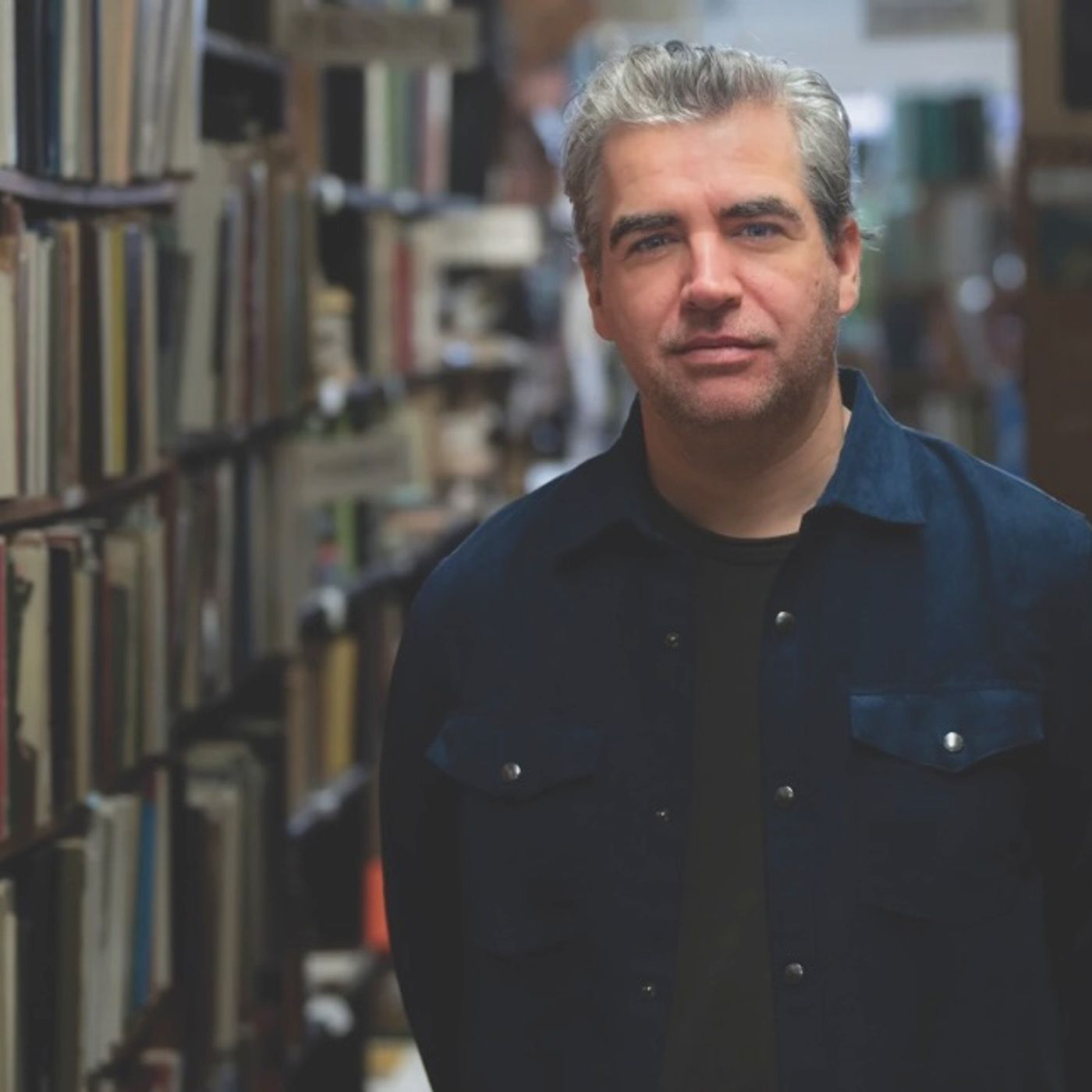
Award-winning journalist and writer Jeff Oloizia joins Myles Dannhausen Jr. to talk about his new podcast, Writing Forward, where Oloizia talks to Wisconsin scribes about carving out a creative life in the dairy state. He shares the writing journey that took him from Wisconsin to New York, and back, and why he embarked on this project to interview writers such as Liam Callenan, Michael Perry, Maggie Ginsberg, Nickolas Butler and many more. They discuss the closeness of Midwest writing communities, break down the misconceptions versus realities of being a writer, and explain how writers can create sustainable careers outside of major cities like New York and Los Angeles. Jeff Oloizia has written hundreds of articles for publications including the New York Times, The Atlantic, INTERVIEW, Madison Magazine, and T: The New York Times Style Magazine. While working on his debut novel, he is currently a Pulitzer Center StoryReach Midwest fellow and host of Writing Forward, a podcast featuring Wisconsin writers at all stages in their careers. Read Oloizia’s work: jeffoloizia.com/writing Check out his article, The Fish Fry Paradox, which explores how a changing climate is impacting a beloved tradition. Listen to Writing Forward: available on all major streaming platforms or on jeffoloizia.com/writingforward.
MYLES: Hello and welcome to the Door County Pulse Podcast. I'm Miles Danhausen Jr., writer and editor here at the Peninsula Pulse, and a big fan of writing and writers in general, and all the struggles and and the joys that go with it. And today on the podcast, I'm gonna be joined by somebody who also has a passion for writing and a and a passion for conversation with writers, Jeff Eloiza. And Jeff, welcome to the podcast. Did I say your name right right there? Jeff: It's it's Oloisia, but it you know, there's a lot of there's a lot of vowels in there, so I don't blame anybody for getting it wrong. MYLES: Aloisia. I knew I'd butcher it. Jeff, you're a you're an award winning contributor to a lot of different publications, notably the New York Times and Madison Magazine, and now a Pulitzer Story Reach Fellow. what is a Pulitzer Story Reach Fellow, Jeff? Jeff: So the Pulitzer Center supports journalists all over the globe. They identified in the last year that the Midwest has a sort of dwindling number of journalists, which is I think sad but true. And so they wanted to lend some support to Midwestern journalists and give some of their institutional oomph to to people working on long form stories. So they put out a call for journalists to join a fellowship. Two of the things they were looking for were like freshwater ecologies and food waste stories and climate stories. So I had been circling an idea about. writing about how climate change was affecting the Wisconsin fish fry tradition for some time. so I pitched that to them and with the backing of Madison magazine and they went for it. So yeah, for the last year I I was reporting on that story. It came out in August. but I would meet once a month with other fellows. the Pulitzer Center was really helpful in connecting me with sources and data and really thinking about like audience and how we can take the story as far as it can possibly go. So a very cool thing that that they offer for Midwestern journalists. MYLES: That is the most Wisconsin approach to a climate change story you could think of. Jeff: Yeah, exactly. Exactly. It's like it's I was trying to Trojan horse climate in or like Trojan, I don't know, MYLES: Yeah. Jeff: cheese curd or something. you know, it's like I think climate is one of those topics that's sort of unwieldy and often abstract, you know, like we hear about things that are happening either at the bottom of the ocean or somewhere else in the world. And so we were just trying to look for something to to make it a little more relevant and accessible to our readers. MYLES: Well and especially in Wisconsin where I mean, I think, you know, we have a lot of people in Door County who are extremely concerned about climate change, but it is harder to make that tangible when you're talking about rising sea levels and and so many of the frameworks that we often talk about it when we're talking about it decades in the future. we're we're talking long-term horizons and making it tangible to people up here where we are largely fortunately sheltered from wildfires, hurricanes. rising sea level, a lot of the hallmark phrases and and issues related to climate change. And I think I talked to Jeff Goodell, the author, I don't know if you've heard of him, but he he wrote a book called The Water Will Come. And I talked to him about like what how do you make this approachable here? And he said, Well, Wisconsin is well situated for this, but you're gonna feel the effects too. Your ch your cherry season will either change or potentially go away if climate pushes that north and out of your region. so there's it's it's interesting to look at like very little micro ways to make it real to a reader up Jeff: Yeah. MYLES: here. Jeff: Yeah. And that's exactly what's happened with with the fish fry is, you know, as water has has the lake water's gotten warmer, like a lot of what we would depend on the Great Lakes for before in terms of Fish species like perch and walleye, I won't get too far into it, but have started to MYLES: Yeah. Jeff: to go away. And so, you know, thankfully a place like Door County still has a pretty robust whitefish fishery. I talked to Charlie Hendrickson for the story. I had a wonderful fish fry at at Sister Bay Bowl a couple months ago. so you know, we're making do. MYLES: Yeah, Charlie and Charlie's a great source for that kind of story. I mean, he is well versed Jeff: Yeah, he was awesome. MYLES: and I I I served plenty of fish fries at the Sister Bay Bowl back in my day too, so it's Jeff: Nice. MYLES: a good place to get one. but now earlier this year was your first season of a new podcast you started called Writing Forward. And Describe this as a a thoughtful way to have sustained conversations with writers about their craft, identity, and what it means to build a writing life in Wisconsin. And you've you're talking to, and correct me if I'm describing this wrong, I've listened to a little bit of these podcasts. And you're talking to writers who all have either are in Wisconsin or have a Wisconsin connection, correct? Jeff: Yeah, that's right. Right. So some of our writers are lifelong Wisconsinites. some maybe moved here for a fellowship for several years. but looking for somebody with with a significant connection to Wisconsin who has something to say about the state's writing culture and and what it's like to write from here. MYLES: And and you're a writer yourself. you're you're working on a novel, correct? Jeff: Mm-hmm. MYLES: so was this just did you embark on this to with any particular purpose in mind or just for therapy as a writer to talk to other writers? Jeff: Yeah, I mean, mostly the latter. I think my my MYLES: Yeah. Jeff: motivations for starting it were a little bit selfish, which is that I was looking for some motivation myself. I, you know, it really is helpful for me when I'm stuck or I'm sort of agonizing about the writing life to hear from people who are doing the thing that I want to be doing and also, you know, if they're from the place that I'm from, all the better. so I was looking for something like this and it and it just didn't exist. The Wisconsin Writers Association has a podcast called Midwest Writers Room. That's fantastic, but is a little more geared towards self-published authors and that sort of thing. And so, yeah, I was saw saw a need for it and a hole for us to fill. And sort of went in blind and are now into our second season of ten episodes. MYLES: I saw you were you were you had a post thanking different writers for coming onto the podcast. what has the response been? are the writers you reach out to also in the same boat very happy to come in and talk? 'Cause they're not necessarily promoting their book. I mean they all everyone's always promoting their book once you become a writer, I think. but it's just such an authentic conversation that you're having with them. Jeff: Yeah. I'm glad to hear you say that. I think people have been receptive. You know, as a writer myself, I'm so glad there are many outlets for people to come on and promote their new books. but we're not so much interested in in that as as talking about what it's like to have a career in writing life. So often we'll have writers come on like between books. when, you know, the way that these cycles usually work is like, you have a new book come out, people are willing to do promo with you, and then they sort of forget about you for you know, until your next one comes out. And we'll we'll take people at all cycles. So I think, yeah, I think the reception's been really positive. And I hope it's refreshing for people to be able to talk about some deeper issues and and some of the more nuanced aspects of the writing life. MYLES: Who is it for your podcast? Jeff: We say, yeah, I I would say anyone building a creative life or trying to have a creative life in Wisconsin. And I might even broaden that to anyone who's looking to start a creative life outside of say the New York Cities and Los Angeles of the world. I think our primary audience are readers and writers. but I hope that the conversations we have are broad enough to encompass all aspects of a creative life. MYLES: I know you talked about that with Nicholas Butler that some of the differences between being a Wisconsin writer or a Midwestern writer versus being on the coast. Could you talk about a little bit about why that's important and what those differences are for the for the writers that you've spoken to? Jeff: Yeah, So on the sort of negative end, I think it it makes sense that the closer you are to the sort of centers of publishing, the more opportunities you might have and the more opportunities you might have to to do some promotion. but on the positive end, I think we have a lot of space, both physically and emotionally to sort of do the hard My friend Barrett Swanson uses the the phrase humble spade work of you know thinking and writing. that's work that needs a little bit of space. And we have that in spades. I think we also have like a really robust But inclusive writing community. and within that microcommunities, you know, I I know that Write On Door County does an amazing job up there. I've come up for the Washington Island Lit Fest So I know you have your own community up there. Eau Claire Wisconsin has an incredible writing community. Milwaukee has its own community, Madison has its own community. You know, having been a New York drive-by person myself, I think there is a really nice writing community there, but it tends to be a little more competitive. And I think in Wisconsin we're a little bit more supportive of each other. in part because we're you know, we're all just trying to do the same thing. And knowing that we might have to work just a little bit harder to to get some of the spotlight. MYLES: That's definitely something that that comes across in the conversations and other conversations I've had with writers in Wisconsin and in the Midwest is that just working harder. And Jeff: Mm-hmm. MYLES: I I what's a I wonder what are the common mis misconceptions you think people have either as they're getting started as writers, as young writers, or just in general. Like what like I I think Mm, I grew up thinking somebody writes a book and they become an author and as soon as your name's on a book, you're set, you've hit it, you you now you've made money and you're rich, right? Jeff: Yeah, yeah. I think that that idea still persists. I I got an MFA in fiction from the University of North Carolina, Wilmington. and I remember I had a classmate who kept saying to me, like, I need to s I need to sell my book so I can make some money and and do and I was like, Man, if that's what you're banking on, you know, I think it is really hard now to earn a living and a career on just writing. You know, most writers I know have a day job, whether they're teaching or working in communications or or doing whatever. yeah, I think that is a a misconception. Very few people get the big advances. and MYLES: Yeah. Jeff: even then, you know, you think about say you got a six figure advance from one of the big houses, that's typically for, I don't know, four or five six, seven, eight, nine, ten years of work. So if you're if you're, you MYLES: Yeah. Jeff: know, looking at it over that span. so I guess the takeaway is you really have to love what you're doing because the tangible rewards, if they are there, are pretty fleeting. so we talk about that a lot on the podcast. the good news is I think most writers enjoy what they do. and it's just You know, it just means you might have to find some more intrinsic motivation for for what you're doing. MYLES: And I think the the guy the the writers you talk to have this passion for or almost this need to give the Wisconsin point of view on things, right? Like to write from this mindset and the world as seen through the Midwest, because so much of our media, so much of our literature is from the coast. And I mean, if I think of a writer's life, I'm probably thinking of somebody in New England sitting in a beautiful home in a perfect writer's room. Like I think we all have this that sort of vision of it. And there's dozens of movies that portray exactly that scene, right? But that's not what it is. And I feel like guys like Michael Perry and people like Maggie Ginsburg, they have this intrinsic need to contribute this Wisconsin nugget to that whole picture. Jeff: Yeah, I totally agree. I think the two people you mentioned are really great at that. You know, Mike has been writing for years about volunteer firefighters in rural Wisconsin. Maggie wrote a amazing debut novel that takes place in the sort of surrounding areas of Madison. I think, you know, for a while here, We got to a place where It felt like every other book I was reading was about like a young guy or gal who was a writer in Brooklyn and they hung out with the other writers in Brooklyn. And you know, it's just like I think everybody deserves to see themselves on the page. and it's a big tent. There's there's plenty of room for everything. And so if we can carve out a little bit of that landscape for ourselves as Wisconsin writers, all the better. MYLES: Yeah, it's nice to think of like, I'm just gonna go down to the coffee shop and hang out with all these other writers and we're just gonna like share our immense knowledge and our deeper understanding of the world with each other and over our cup of coffee every day. Jeff: Uh-huh. MYLES: and not just cry about not getting paid. Jeff: Mm-hmm. MYLES: What do you hope this does? Jeff: I I think I hope it provides a model for people who want to have a creative life, whether it's in writing or something else. you know, I the the sort of complicated idea of the podcast is that I am someone who went to New York City. I think it benefited my career. And then I ended up moving back a number of years later, after having grown up in Wisconsin. But in part I think I did that because I had an idea that writing and and literature was something that happened elsewhere. and of course MYLES: Mm. Jeff: now I know that there are plenty of people who have really made it work without ever leaving the place they're from. And so I think we just want to give some models for people of of of the many different ways that a career can be made and a writing life can be cultivated. And so hopefully per providing value. I think the other part of it is just like peeling back the curtain a little bit and and and giving, you know, I said from the beginning that I wanted it to be a little bit like eavesdropping on on a couple of your favorite writers at a coffee shop or a bar or something. And so you know, hopefully we're fulfilling that mission. MYLES: tell me about your journey too. You mentioned that you had gone out to New York City, you you came back to Wisconsin. take us through your path and your background. Jeff: Sure. I grew up in Brookfield, which is a suburb of Milwaukee, and always loved writing. Really wanted to work for a magazine. and I didn't know how to do that other than moving to New York City. So I after college I I went to Japan for a few years and taught English. And then when I came back, I moved to New York. And just sort of locked my way into working for a couple places via unpaid internships that I don't even know if if they exist anymore. But I worked for Time Out New York, which was still in print then, and then I worked for Interview Magazine. and that turned into a job for a couple of years. Then I I moved over to T, which is the New York Times style magazine, and worked there for about three and a half years. And it was an incredible education in terms of writing and editing and and taste. but I at some point, you know, really felt like I wanted to write a novel and I wanted to pursue some fiction. And so I applied for MFA programs. I ended up at the University of North Carolina Wilmington, which was a three-year program. And, you know, I was I went from Sharing an apartment in Brooklyn to having a a little bungalow with a front porch and a 10-minute drive to the beach. And I think that gave me some space to write and think. And so when it was time to move somewhere else and pick up from there, which also coincided with the pandemic, I was after that kind of space again and ended up back in Madison, which is a place that I love. And You know, a lot of that had to do with our writing scene and the bookstores that we have here but also just like a real love for Wisconsin and wanting to reconnect with this place that meant so much to me as a child. MYLES: What did it feel like then to come back here? Do you feel like you're Giving up on that East Coast dream thing or does it feel more like a like comfortable coming home? Jeff: It feels more comfortable and and especially more comfortable than I thought it might. Yeah. candidly, I think part of why I moved back was I have two older parents who during the pandemic, I wanted to be able to look after a little bit. My dad had Alzheimer's and has since passed So it was great to be able to spend that time. But I also promised myself when I moved home that I it didn't have to be a permanent move. You know, I could I could always go somewhere else. And the longer I stayed here, I think I just really fell in love with Wisconsin again and became part of this Madison and Greater Wisconsin writing scene that I really treasure at this point. And yeah, I really can't imagine going back to a New York City. I think there's an energy there that I love, but there's also a lot of noise that I don't necessarily want in my life at this point. yeah, we're we're pretty I don't know, we're pretty good at tuning that out here in a way that I enjoy. MYLES: What what's been the biggest surprise to you in having these conversations? I think you've had how many episodes of your podcast have you had? How many different writers? Like sixteen? Fourteen. Jeff: I th I think we're at fourteen now, yeah. MYLES: Is there a thread that runs through it from the folks you talk Jeff: I think so. MYLES: to? Jeff: Yeah. Yeah. I try to sort of arrange the the conversations thematically. So, you know, there's certain things that keep coming up, whether it's you know, trying to balance the responsibilities of having a job or family life with writing. we've just coincidentally had several guests on who are sober and we've talked about, you know Obviously Wisconsin has a an intimate relationship with alcohol. And we talked about how that affects their writing life in both positive and negative ways. I think a l you know, something we try to do is have people on at every stages of their career. So it's interesting to talk about Whether, like, you know, with Nicholas Butler, he had a very splashy debut. And what does life look like after that debut? Or, conversely, someone like Sadia Hassan, who is the second guest of our second season as a young poet out of Madison. And what is it like to be on the ascent and to you know, be sort of like harnessing your potential? so You know, the hope is that there are some connect with threads, but also that each episode can sort of stand on its own and say something different about their writing life and about writing in Wisconsin. MYLES: Yeah, I thought your conversation with Nicholas Butler when he was talking about his, you know, that time when all of us from the outward world would look at it saying, wow, he must be riding high after Shotgun Love Songs came out, which is a phenomenal book. and then as a fellow writer, you're just like, Wow, I'm jealous. I'm jealous he Jeff: Yeah. MYLES: found that story and wrote that story. Just like the same way I felt about the first time I read Population 485 from Michael Perry. Jeff: Yeah. MYLES: It was a combination of like joy in reading it, jealousy and and almost anger and a blitz like, he wrote it. Like it Jeff: Yeah. MYLES: it just so perfectly encapsulates Wisconsin and my dad was a volunteer firefighter. in a small town up in Egg Harbor here, and very much identified with everything he was writing about. And I was just like Damn it, it's done now. And then you realize there's a lot of different versions of stories that other people can write. But in the moment, you're Jeff: Exactly. Right. MYLES: it's it's just a hard thing when you see when s when somebody does something so well and captures something that really resonates with you. but what Nicholas talked about was that being the the hardest time in his life. And it's it's instructive to read that and go, wow. So it doesn't just like a switch flips and everything's gravy. Jeff: Yeah, you know, and it's amazing how many people I've spoken with, be it friends or other authors like Nicholas who Have said some version of that same thing. You know, I have a good friend MYLES: Yeah. Jeff: who was the first of us to publish right out of grad school. And he said, you know, this is like the worst mental health period of my life. I think nothing can quite prepare you for that. Also, writing is a writing and publishing is a is a very vulnerable thing. And so to all of a sudden have your words out there in the public consciousness and to be getting press and that sort of thing, I think can be really disruptive to anyone, especially if you're not sort of built for it. And so yeah, it's I don't say that to scare anybody off of pursuing their dreams, certainly, but I think it comes back to this idea of like you've really gotta love doing it because I think the point is the doing and and maybe not the whatever end goal we all have in mind. Like of course I dream of publishing a novel, but I'm I'm trying to get as much out of it along the way as possible. MYLES: Yeah. I think one of those realizations that that you see that rings truth for all these people is okay, I did this, I had this huge success, like some people do early on. All right, well, how do you follow that up? That's not gonna carry you for forty-five years. So you Jeff: Yeah. MYLES: have to put food on the table and then you gotta think of all right, with the next one, I'm not the splashy new guy or new girl. I'm the established person. So now the expectation is just higher and it's harder to make a big splash because you're not new. You know, it's just there's Jeff: Yeah. Yeah. And the publishing industry is like so many others too, where they they really prize things that are new. and novel MYLES: Mm. Jeff: and and especially young first time novelists like you often see people getting big advances for their first book and if they can't earn it back you know in advance for anybody who's listening who might not know you know you get paid in advance for your book that's sort of like a lump sum it's basically an investment in you just saying we think that you're gonna sell this many books. And if you don't earn that back, you don't have to give the advance back necessarily, but you might not be looking at as big of a payday for book two or three. And it those might be much harder to sell, in fact. so yeah, yeah, you're totally right. I wish that the publishing world, both on the agent and editor side, had a little bit more of a career longevity focus, but it is what it is. MYLES: Yeah. what you know, talking about you personally, I was looking through all the different things you write about and it's such a wide variety of topics that you seem to cover. Do you find it hard to you seem like somebody who has a very wide variety of interests. You're wr you're writing about Luke Fickle at Wisconsin, you're writing about climate change and and fish fries and and then you're writing entertainment profiles. Do you ever wish you just had like one wheelhouse that you just like owned this segment and didn't have to do all those other things so you could develop a niche. I always wonder about that 'cause I'm a small town writer at a newspaper. You gotta cover everything. So you can't you can't be so deep in any one topic. Jeff: Yeah, I wish that all the time. I think, you know, it probably would have been a smarter tact to take to be a specialist than to to have a niche and to be that guy who people call when something comes up in your area. But I don't know. I think my I have a pretty restless brain and and disparate interests. And so I I mean I do love being able to be more of a generalist and to jump from topic to topic. It just means that I I might have to work a little bit harder to sell the stories, but Yeah, I don't know. I think at this point, you know, I I had periods in my career where I wrote more about music or film or something, and I think at this point I just wanna follow my passions and interests and obsessions where they lead me. MYLES: well with the podcast Writing Forward, where can people find it? Because I think you have a a partnership now where it's gonna be distributed to a wider audience, but obviously you can download it on all the platforms. Just look up Writing Forward, it pops right up. But where else? Jeff: Yeah. anywhere that you usually get your podcasts, so Apple, Spotify, those kinds of places, YouTube, we're there. you can find us online at it's jeffaloisia.com slash writing forward. That's just my name, J-E-F-F F O L O I Z I A dot com slash writing forward. we put our episodes up there. You can Reach out to me via the contact form. We're also on Substack. we just secured a partnership with WWM, which is the NPR station out of Milwaukee. And they're going to start airing abridged versions of the episodes starting in December tentatively, which we're very excited about, just to get a few more people on board. But yeah, we're out there. Just Google Writing Forward Podcast. you can throw my name in there and and you'll definitely find us. MYLES: All right, Jeff, well thank you for joining me on the podcast and talking to our listeners. Jeff: Right on. Thanks so much, Miles. I appreciate it.