
Door County Pulse Podcast · Door County Pulse Podcast
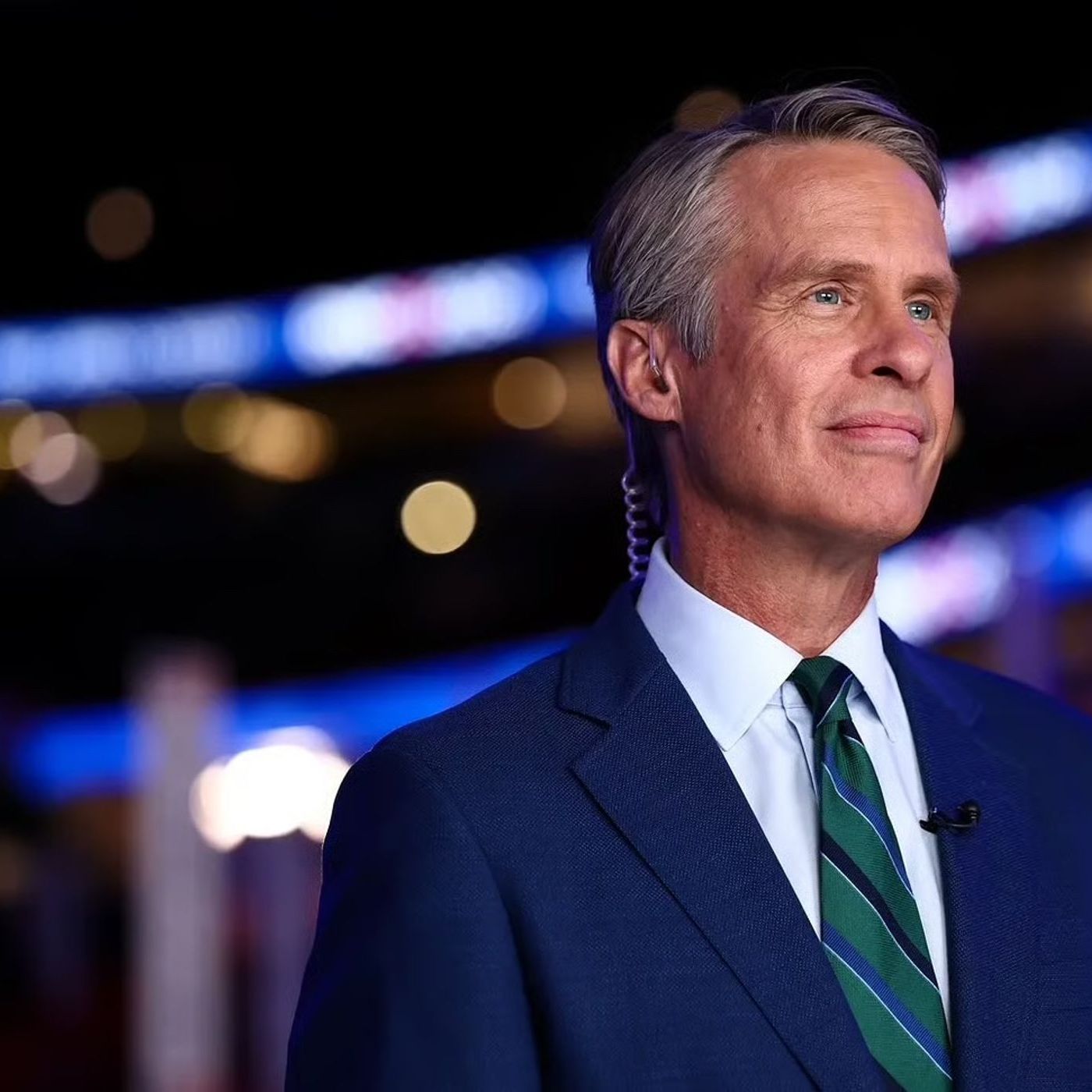
Former ABC News Senior National Correspondent Terry Moran and playwright Brian James Polak joined Myles Dannhausen Jr. for a roundtable discussion on journalism, playwriting and the arts in the age of Trump at the Door Kinetic Arts Festival.
MYLES: Welcome to the Door County Pulse podcast. Two weeks ago, I got to join a roundtable discussion with Terry Moran, the former chief correspondent for ABC News, who was fired for posting comments on X about Donald Trump and Stephen Miller. Also joining us was playwright Brian James Pollack, whose play, The Call List, is on stage at 3rd Avenue Playworks through October 11th. They were here for the Door Kinetic Arts Festival, where they were working together on Moran's new play, the Baghdad Gentleman's Club. It was a great conversation about their plays, writing for the stage, and of course, the state of journalism and arts in the age of Trump. This conversation was recorded at the Crest Pavilion in front of an audience of about I'd say 75 to 100 people. And the audio isn't perfect. But I hope you still enjoy the conversation. And I know I did, and especially the perspectives from Brian and Terry on Things like the Kennedy Center, covering Donald Trump, but also the the complex process of going from writing for journalism and television to writing for the stage. So without further ado, here is that conversation. speaker-0: Brian, we have not met. but I was reading your bio and a couple of things stuck out to me. When you said when you were young, all you knew was sports. I thought life was supposed to be day jobs and sports. And as I read that, I was like, man. That that is my childhood too. I just thought it was gonna be day job. Well, maybe not the day job, just the sports, is what I was there for. So you have a pretty interesting path to being here at this table and and your career, and I'm looking forward to talking about that. The Callist, as I said, will have its premiere at Third Avenue Playworks later this week. And you're currently writing the meeting about what artists might do in a fascist society where the arts have been banned. Is that a play or a guidebook for today's era? it is for sure both. it was a play that I first started to imagine weeks after the 2016 election. I found myself in Eastern Europe. I was in Poland and I was at a conference amongst other playwrights from Ukraine and Lithuania and the country of Georgia and Poland and we were talking about making the work that we make and we were talking about Belarus and Lukashenko and how he has exerted control over the arts and it just got me spinning out about whoa, well what if that happens here in the United States? So I imagined a near future world where a group of five former theater makers, because in this world theater doesn't exist, is not allowed anymore. And I started with the question, what would theater makers do if theater makers were not allowed to make theater? And the play that I wrote is the answer to that question, which is they make theater. And Terry, this doesn't resonate with you at all. speaker-1: Well now, I mean now, yeah, I I somehow wrote a a play and this has been an amazing experience, this festival and working with Brian and the actors. It's the best thing that can possibly happen to you at my age. You learn something new. And it's been it's been a fantastic few days. I mean I this play was in front of me for ten years and I didn't tell a solo. I didn't even tell my wife. because I figured if I let it out it would I it would die. I would just talk about it and and it wouldn't finish it. And to see this, it's a new world to me and it's great. And and I'm li I I just I I can't tell you how excited I am to see what they do with it. play is set in twenty years ago. And I was it's set in Baghdad, a news team in Baghdad during the height of the Civil War, and one night they lose their translator who because he has to flee the country because he's Sunni and the Shia are taking over, and they get a new translator, and that guy changes everything for the crew And I had to started writing it, and there were various motivations for it. And somewhere along the way, well I'll say. So I'm one of the characters is an Irishman, and he's the sound guy, and he's talking to his buddy, the cameraman. He's trying to get him to go home, and he says, You don't need to stay here, this is a shithole country. And I just typed it because it's the kind of thing that character would say. And I said, Whoa, that's a Trump word. And I realized that. A lot of what we're enduring today is because of what happened. The forever wars, the inequity of it, the loss, the fact that we lost them, all those things flow into the news that I covered at ABC and cover now. And it kind of surprised me when that came out. Sorry to use that word, but it is the only way to to describe it. And And it's interesting that the the connection between the politics of today and the theater world for me is in the past, in the historical past that I was writing about during the Trump era. speaker-0: why a play? What drew you to doing this after after stepping away from the news? speaker-1: Well, I did it it I'd been writing it for ten years. it wouldn't go it wouldn't let go of me is the thing. It g I woke up one day, we were living in London, and I'd been thinking about writing a novel about Iraq. It it was a very vivid experience for me, and it was about kind of a love triangle, and this place has nothing to do with that, but I just kinda thought there's there's something there that's interesting to me. And I wake up one morning, literally, and I thought, And I thought of the hotel, the little guest house that ABC News stayed in in the early years of the war. And I they had a courtyard in the back that everybody went in the backyard in the evening and and they dubbed it the Baghdad Gentleman's Club. And I thought that's where this or something can happen and this other thing happened. It just never let go. I would put it down for months. I I would walk away and I thought, well, okay, that's done. And then kept pulling me back in, right? And it just demanded to be finished. I had no intention to write a play. I've never I wrote a play in fourth grade. air pollution. It was not good. speaker-0: Ha ha. speaker-1: It was not good. s so I have no idea I actually don't know. and I just would it wouldn't let go. speaker-0: When you're going from your career dealing with finding truth, facts, and then you go into writing a play, how do you blend that background of all those years? just dealing with facts and telling the story and finding sources and finding quotes and people who can and and try and dig into it to writing this that's coming from your own truth but also you have to make it play. You gotta make it drama. How do you balance those two? And was that hard is that hard for you to do going into that practice. speaker-1: Well, I I just first say I still have a career. so I'm an independent but yeah, but the I now can have another career, right? I can now have more than one. And and the connection it's a way of reflecting on the work that I did as a reporter in a different medium. But it's actually not about that. the central figure is the cameraman. And he's a mess. He's off as nut drunk every night, as his Irish friend says, because there's something wrong. He won't go home. He's addicted to the bang bang, the adrenaline, the life, the whole thing. And there are a lot of guys I met like that. People can lose things. They can lose marriages. They can lose perspective. They can lose their job. The stakes are are high in a personal level in the context of of the war because for some people it's addictive. I knew that. And as I say, the the only connection between the play I wrote and the and current events is the fact that I'm in this time which has shaped our time so much. And I didn't push it that hard, but it's there. It reminds me a little bit, I've thought, about MASH, which was set in the Korean War, but really about Vietnam era, post-Vietnam era America. And it's it feels analogous. speaker-0: Brian, let's talk a little bit about your journey to this. You, like I said before, you were sports obsessed, you thought that was gonna be your future. You did not study theater in high school, were not a theater guy. how did you end up getting becoming an actor and then and finding your way to the stage? and now writing for the stage. I had my first existential crisis at twenty-two. I I I was living in Washington DC. I just finished undergrad and I had a job as like a research assistant and I was bugging around DC, going to the you know, the Supreme Court to get documents and go into land records to get documents and I was doing this. This is my first job out of college and it felt great. I get to walk around the monuments every single day as part of my job. But I found myself coming home and realizing I d have to do this for forty years. and then that's it. I just felt there was something that was missing. And I also, this was pre internet. So I assumed I knew everybody I was ever gonna know and that one of these people in front of me in my life was gonna be my future spouse. And I was like, ugh I need to meet new people. How do you do that? I was at the time kind of an attention getter. so I was like, maybe I can channel that desire for attention into acting. So I took an acting class, which led me into improv performance, which is a thing that led me into theater. And I sort of through my twenties, I did these things where I took acting and did improv and then I did theater and I ran a theater company with friends and I moved to Boston along the way, which is sort of like my home city because I'm from New Hampshire. But in doing all this acting, I realized I am not a good actor. but I still had that emptiness that drove me into performance in the first place and I was like, well maybe I can write. I wrote sad poetry as a teenager. Maybe I can write sad plays. And so I started to write and it was plays that I wrote because it was plays that I was doing every day. And then by that point, ten years had passed, so I was now thirty-two, just starting to write, and it just clicked. It just made sense. And I was like, I guess playwriting is the thing I'm gonna do while I have all my jobs on the side. you're now coming to DCAF and you're working you're you're an experienced player, right? You've written how many altogether? Are completed. Probably like twenty full-length plays and another twenty something shorter one act plays. And now you're working with Terry on something his first crack at it What's it like going through this process and working with somebody who's doing it for the first time? Yes, I was I approached this very cynically at first. who's this guy and How dare he write a play? Like, like, I'm not gonna go out and try to tell anybody the news, right? But stay, but stay in your lane. And then and then I was like, I really, I honestly was like, this is probably not gonna be great. How am I going to talk about it afterwards? Was like this before I even opened the document. And then I open the document and immediately there's a very detailed description of the place. And it is obvious that this person has an understanding of what makes a play a play. And so on page one, I was like, okay. He knows what he's doing. I knew it immediately. and then as I read through this draft, I was just like I was struck by the characters and I was like, okay, well, I know who Terry Moran is and I understand that now I think about it, he is a person who has spent decades telling stories. They happen to be, you know, the truth. But it still involves it's it like i they're not invented stories, but it still involves like editorial decisions and choices and saying this is the point I'm gonna drive to and I'm gonna say these things to lead up to that point. And that's like that's inherently what you need to do in telling any kind of story. And he understands, you know, what makes a person a person. makes a character a character, you know, so his characters in his play are real fleshed out people that just fly off the page. So after I read the first draft, sure I had plenty of thoughts about it from the sense of how to make a work for the stage, work better for the stage, but as as a story, he he he had it from the beginning. So all my cynicism that I started with was like gone and I was very excited to actually start talking about it and then dig into the script. So did it just become jealousy that he can just like sit down and write a play? Honestly, yeah. I mean f it's it's true. It's like somebody who has the facility to to just jump into something which took me years to be able to like really do well. it's not jealousy, it is admiration. speaker-1: well I'm I'm gonna brag on him now. So first you never told me that. Like who is this guy? But you well thanks. but yeah, I'm in a new medium. I had no idea if the thing would work at all or not. And at a basic level it does. This week, as I've said, and these experiences, and we sat down for a couple hours last night, and dove into it in ways it's just thrilling. I'm sorry, it's just absolutely thrilling to be at my age and being in first grade. and it just it's invigorating and And helpful on that level. Because all I did was sit down, I just waited. I waited for them to talk to me, the characters. And the S-hole guy, he's the first fella. And he just stood up and started talking. And but that's not structured. That's not play. That's not drama. That's not conflict. And so I realized I I don't really know what a play is. I have I have at least one character. So I had to kind of learn all that. But to finally get something. beginning to middle to end, and then to work and see well what's really going on in it and how will people latch on to its energy better or draw different streams of meaning out of it in a kind of technical way. It was just it's been amazing. It's been fascinating. speaker-0: It's gotta be interesting for you because especially in the news, especially at the national level, you come into the story at the conflict point. Like you're the it's news because of the conflict, because of the the bigness of it. And in this case, you have to to build the whole arc. speaker-1: So interesting. I mean it's true. Yes. yeah, because the stories that we tell in news, although magazine type stories, you know, on 2020 or Nightline or any of those longer form stories, which I love to do, you can kind of follow something into into its conflict. But generally the conflict's over. Generally you're telling a story of a grind story or a political campaign story or whatever, and that and it's done to discover that unfolding of conflict. I I kinda knew where it was going when I started it. I didn't quite know. but I kinda I had the basic arc I guess. but no I actually feel it's very, very different from journalism in in a way that I'm not sure I can describe, except to say, I mean I like it. speaker-0: Brian, your story of reading it for the first time reminds me of how I view it whenever somebody says, I'd like to come in and write about Door County. How do you step into that now and be helpful without stymieing somebody? without stepping on it. It it did take me a minute to sort of figure out where I can be most useful in the process for Terry. And Part of what helped me figure it out is I, you know, I drove up here Sunday from rehearsals in at TAP in Sturgeon Bay, where I am the playwright and I'm the one listening to my words and making adjustments and with an actor in the room and a director. And then I come up here and we get into on Monday morning our first rehearsal and I'm sitting in a similar room with actors and I realize the playwright is across the table from me and they're experiencing what I was just experiencing the day before. and the beauty of that and what they what the playwright gets is all of the mind sitting around that table feeding them ideas and asking questions to help contextualize the story. And and I was like, I he's getting all of that. I don't need to also do that. So Monday morning I started to think it's the big picture. It's the stuff that we don't need to talk about in a group amongst a lot of people. It's really the playwright stuff. So I started to think, you know, structurally, and like looking at the play from a ten thousand foot level, which is sort of the opposite of the way of an actor looks at a play, which is from the inside of their character. And so I was like It's gonna help I think to give Terry a more dimensional look at the play if I step out of it and look from an outsider's perspective. I was talking to Katie Dowl, another playwright and songwriter, a couple of weeks ago about this whole process and it because to me, it just feels like torture to sit there and watch people critique it and and see your words that you put on the page and then be portrayed by somebody. it sounds like it's more invigorating to you. Or is it torture as well? Yeah, no, it is and I'm and this will sound like I'm just Trying to be nice. it is literally the best thing in my life when I get to bring a play and put it in the center of the table and have other people around that table with me, actors, etc., director, and the play becomes the priority, and it's not my priority, it's all of ours. And it's a shared goal to make that thing the best it can possibly be. And I absolutely love it. I am a Introvert extrovert, and I get my introversion time when I am by myself in my silo writing my draft of my play, but I'm writing the draft of that play to get to the moment where I am sitting around a table with other people. That's really the goal for me. So you've become practiced at taking that input and watching somebody like how much do your plays change in that process? And you've got these words that you've painstakingly created this world, you've put it down on the page. And then these actors sit around. How often do they Take what you've put down and then they come up with it, you're like, wow, that's that's a different direction, or that's just far better than I imagined it, or that's you said those words differently than I ever imagined them in all the time of I've been writing them down. It happens frequently. And to use the call list as a great example, I first I workshopped at a DCAF in 2023 with Ava Nimmer, who was going to be performing it. And we spent a week together, just the two of us talking about the script and going through scene by scene by scene, and Ava. Would improvise lines that were better and now exist in the script because they're just they're good. and when you have that kind of trust with the actors and you trust that their goal is your goal, which is to make the play better, it's easy to do that. I am not precious about my work and I I don't think well That was my idea, so therefore that's the i that's the one we need to go with. if I'm precious then I'll write a novel. right? but Theater is a collaborative art form, and I'm a collaborator, and I want to create a thing that is ripe for collaboration and others to create, to bring themselves to it. So the call list has gone through so many changes. We workshopped it for a week in March, and from there scenes were added and sequences were inverted and lots of scenes in the past two weeks since we've been in rehearsals in Sturgeon Bay. have been condensed and things have been cut and little moments have been added simply through conversation, asking why. Wait, so why is she saying this? Why isn't she saying that? Like what is motivating? You just you dig and you question and sometimes in Terry's experiences over the past couple days, sometimes you know why you wrote that line, you understand the motivation, and sometimes you're just like, I don't know. I just don't know. And sometimes I don't know is okay. And you're just like, I don't know, it's a mystery, you just have to go with it. And then sometimes I don't know means maybe I should make a change, and then the best pitch in the room wins out. What's this process been like for you, Terry, to go through this for the first time? And how different is it from when you're doing news, when you're doing reporting, you have producers, you have editors that are working with you. So you're going through a version of this in some report. But how is it how is this different and alike? speaker-1: Well, like saying a like first, it's a team sport. And I walked into this room and could feel that and that's the best experiences in journalism, intelligent journalism in particular, video journalism, is that you've got lots of eyes on the story. You've got people who are doing different things, who notice different things, who feel different things. And you know, if you're good colleagues, if it's a good a good team, all of that is gonna flow into the story. Now, every night on the evening news, not so much. Okay, not so much because you're on everybody's on deadline, but you're at least working with one or two other people. But on longer form stories, yeah, it's very, it's very, very similar. And especially overseas. And that's part of the, I think the effectiveness of this of this drama, so far as it has any, is that it's a crucible. That team is alone in a dangerous and faraway place. And they have to rely on each other. And You know, the and I've been very, very fortunate, very blessed over my years at ABC News and even today doing the independent work I do when I go around the country to be with cameramen, who are not just taking a picture, they're in it. one example always comes back to me. I was in it was Kosovo shortly after I went in right after Milosevic gave up if you're a member of the war. Anyway, the Americans go in, we're among the first reporters on the ground there, and we're there for a few days, and the stories are very intense and very good. And we hear about this one village that the American forces don't want to go to because the Serbs there are so radical and so crazy and armed to the teeth that we wouldn't go there. It was the 90s. Now we'd basically obliterate it. But we said, let's go. which may not have been smart, but we all get in the car and everybody has to kind of agree on the level of danger and the rule of thumb is the first person who says, I don't feel good, we turn around because they might have the right instinct. But we all got to this place, and it turned out that they were starving almost. That they and that the outlying farms are getting picked off one by one by their enemies there, the Kosovar Albanians. And I remember the camera we kind of got that vibe and I said, How are we gonna shoot this? And he said, I yeah, he got it. I said, No, how we gonna how am I gonna tell this story? He said, I got it. So I did some interviews, and what he what he did was he it was all portraits of the faces with the anxiety and the fear and the shame written on them. That was one of the best pieces I ever did. And all I had to do was drop a few words in there. Because the way he shot it. rolling shot into town and so the process that doesn't happen all the time on on evening news right but we were away from New York we were away from the editors back then in particular when communications were hard you were really telling it on your own now you could do that same story you could go to that same village it could be dangerous maybe something bad happens And you'd send it to New York and they'd look at it, and since they aren't seeing it on any other of their screens, either on their phone or any on any of the stations, and AP wasn't there, so they didn't sell their footage, you wouldn't make air. It used to be they'd send you around the world to go get stories that nobody ever had. Now they send you around the world to go get the story that everybody else has. And and that that changed a lot. But the process, when it works like that. Whether you know, whatever it is, I I'm a team sport guy and and I and I love this. It's it's great. speaker-0: you know, since we're talking about the arts and the Kennedy Center is so hot in the news to me as Midwesterner, most of us in the Midwest are are never gonna set foot in the Kennedy Center, right? Most of us are gonna experience it through Nowadays, short clips of a cool concert moment that was up and and that's what most of the news when people talk about it being gone, most of the time they're or being changed or altered or remade into something else. They're sharing a clip of a concert that they watched on TV for the most part. at the annual honors. So I'm wondering, Terry, if you can explain why does it matter? And why does it matter so much, particularly in Washington? Because it seems to hit so much more when you're getting it through the national news and how they're talking about it and how much people worry about the speaker-1: That's so interesting. I I would say part of it is generational, for people of a certain generation. My first memory in life is the killing of Lee Oswald. I was like three. But it was something so terrifying happening around me, and I remember the he was it was on television. I don't remember anything about John Kennedy, but certainly the fact that it was a memorial to Dead president who's killing, just pollaxed America. Changed the people's imagination of what it was possible to happen in our country. We hadn't had it in long time. So that's part of it. But then the other part of it is so there's it's precious to a certain age cohort, I think. And then in Washington it came to stand. I mean, his legacy is still very much alive there, and it came to stand for Washington's. Office center. speaker-0: Thank you. speaker-1: And the people who ran it, who volunteered to be on the board or who were on the board, there were said the Congress wrote the law, there's got to be so many people from this branch of government, this branch of government, there's always the Supreme Court justice on there, and there's various benefactors. for Washington people, it was their responsibility to the country. Not just to the dead president, but to the country, to have a national center for the arts. And so you had these aspects of political power, economic power, cultural power in Washington, saying we are we are the guardians, we are the we're the people who are caretakers of this, not just Kennedy's legacy, but of the National Center for the Arts, which we didn't have in this country. And then the most important thing, and the most important thing for me. Is what he's doing is unlawful. It's unlawful. And this is one of those things. it and he just he does this again and again. it's black letter law that you cannot rename the building without an act of Congress. It's black letter law. He doesn't care. And he's gonna demolish it. In the middle of the night it'll come down. And it does apparently does need repair and they and it's a disgrace that it does, I guess, although I always kind of thought of it. I I don't think they did a great job caretaking it because I always thought of it as dull. the hall is terrible for sound. We never had a great symphony orchestra there, really, although Rostrof was the conductor there. So is it one of the great centers of world art? No, not necessarily, but it's not his. And so this thing that he's doing is part of that personalization of the power of the presidency, which belongs to us. But to him, he says it now openly. I've got the power, I've got all the power. I can do whatever I want. Does the Kennedy Center matter? No. Does that matter? Yes. speaker-0: One of the things people don't not all people really know about the Kennedy Center. we we do know that it's you know it's a sen as Terry just described, the center of the arts and so many arts are presented there. There's also a lot of programming that happens for people in the community and people nationally. And I have a personal connection to the Kennedy Center because that is literally where I became a playwright. I got, I was in my early 30s and I was like, I'm a terrible actor, as I mentioned, and I want to write plays, and they had a summer playwriting intensive program, and I applied to it and I went to it. And during that program, the person, Gary Garrison, who ran the program, made me say out loud, out loud, I am a playwright. And I'll never forget that moment. I'll never forget walking into this building as Brian the crappy actor and walking out as a playwright. And then seven years later, another component of the Kennedy Center is that annually they would have the Kennedy Center American College Theater Festival. College students and grad students across the country every year strive for being invited to this festival, winning awards from this festival. And I had the incredible fortune of you know seven years after declaring I am a playwright to be invited back. And be given awards for my playwriting as I finished grad school. And I don't like, I don't know if it would change my career if it didn't exist. I may not have ever become a playwright. If I didn't win awards, it may not have mattered at all, but I do know that it mattered when it happened. And it me and that so that building to me is not only a national symbol, but it's a personal symbol. And I wake up every morning with the fear, as Terry just described, that this this treasure is gonna be knocked down. Terry, why do you think he cares so I mean beyond the typical okay, he's got a huge ego, he likes power, but like is there something about controlling the arts that's so important to President Trump? speaker-1: Yes, I g I think the first thing you said he is at this point certainly his whole life, but it's certainly at this point, it's all about his own glorification. He needs that arch built. He needs to tear down the Kennedy Center, built the Trump Center. He he needs every artist to bow down to him. You know, he he he really does. He anybody who he's the most fragile man. And most ferocious personality because of that fragility. That I think it's it's it's psychological. He wants to be glorified. He wants to be glorified endlessly. There is a bottomless pit of need. There's a hole that will never be filled, no matter how much how glorified he is. And the arts in particular have scorned him. I you know, one of the images that have have And you know, is that should we have more conservative, I don't know, plays or whatever. I don't know that art should be divided along those lines, but does most of the art in this country come are produced by people who vote one way and not the other? Probably. Probably. but I don't think that's what it's about. It's because they don't they don't recognize his greatness. There's an image of Trump that you should never forget. And it is not apocryphal. It really happened because he wrote about it or it was in his autobiography, so he didn't write that. But it is something he's talked about, which is standing on the on the East River and looking from Queens, which is where he and his family, his father had set up these, you know, kind of mid-level apartment buildings, great housing or pro housing for New Yorkers is great. And he stares across the river at Manhattan and it's the golden city and he wants to rule it. And he gets there and he builds Trump Tower and all that. And and yet he is remains a figure of fun. A figure of because that's I there's no shame in it. He is who he is. and money means a lot. But but he that longing to be at the top levels of New York society. Top levels of world rulers should all recognize how great he is. Every American should realize how great he is. And the Kennedy Center, by law, won't do that, so he's gonna tear it down. speaker-0: you mentioned law. I mean we have these laws in place and I think a lot of us think, okay, that would protect it. Something as simple as, all right, you can't rename a building, you can't just change that building. And it seems like we're at risk of that just being run over like many other laws. a couple of years ago I interviewed you and you seemed a little more optimistic about where the country might go and whichever way we decided, you know, we figure out we're we're smart Americans. Voters ultimately are smart. are you as optimistic as you were two years ago in terms of the direction? You just wrote the title of your your post on the Substack the other day, the Civic thuggery. That's going on with news outlets being banned from the White House. did you think it would get to this point and I mean where does what do you think of the future now? speaker-1: I'm an optimist by nature. I'm a glass half full kind of guy and I think the country will draw whatever good it can out of the Trump years and leave Trump behind. Trump they sent Trump into the White House under our constitution for a reason, for reasons, some of which are bad, some of which were good, and we will be separated from the chaff in the way the democracy usually works, unless AI kills us all. but Trump, you know, is different. And did I think it would get to this with the reporters banned and with you know the demolishing of the Kennedy Center, which might be accomplished with the destruction of USAID, with all of these things done beyond the boundaries of law. Can can you hire a lawyer to tell you the the sky is green and the grass is blue? Yes, you can hire a lawyer. Should the Supreme Court believe that lawyer? No. They have again and again and again. They've stood up to them on some important issues. But it's the cost of this overweening presidency, which Congress, because they don't want to make the hard decisions, they throw the toughest decisions in emergency powers and all they've empowered, super empowered the executive, never imagining that we'd get what the founders warned us we would get: a bad man in that office. I don't mean privately bad. I don't mean Kennedy bringing them in, you know, five at a time every night. I mean a bad civic human being. And and they said it had happened. So he now and his clever lawyers are using every crease and crevice in the law to blow it up into more presidential power. And the reason I didn't think it would happen is I thought we would still have a Congress. And we don't have a Congress. Almost literally. The Congress has a pass an average of 270 laws per year that that go all the way through. Substantive laws. Thirty-eight. They they just Mike Johnson is the worst speaker of the house in history because he surrendered the powers of Article I to the executive, which is precisely what the people wrote the document did not want to happen. And so I did not predict that all these members of Congress all the Republicans would just go along with lunacy and unlawful lunacy at that. And so I'm surprised that but long term, even medium term, these midterms. Now he's gonna attack the elections again. Will we survive it? I think so. No guarantee, but I think so. But he's trying now. A to say, you should vote for me. Look at my wonderful arch. Isn't this amazing? I'm going to build this arch and he's now saying it's going to be a defense installment. He's going to put snipers up there so he can steamroll the laws against building there, because he's got some clever lawyer who can do that, not even very clever. But he's trying to argue people out of the facts of their own lives. And that is death for a politician. And I think the midterms are going to show that. You you cannot argue people out of the facts of their own lives. They know what's happening. And I kinda think, you know, the great beast of American democracy will kind of rumble over to this side, and make a difference. It's hard to you know, although am I as confident as I was two years ago? No. speaker-0: Well you Brian, as an artist, what kind of fears or optimism do you have? Theater speaker-1: Mm-hmm. speaker-0: came about at a time when no electricity existed. People stood on a stage and told a story live to people watching them two thousand years ago in Greece. you know, over the past couple hundred years it was like, well We have radio now, we don't need theater, and theater exists, right? We have television, we don't need theater. We've got movies, we don't need theater. There's always something. The internet comes, we've got streaming, like now theater's battling. Like it doesn't matter. It's going to exist. Forever because we have this need, we me, people like me, have this need to tell our stories and to do it in the way that we do it, which is live human to human. And it's not for every single person, but it is for some people who also have the need to receive these stories. And I think no matter how the context of our world changes, as long as human beings still exist in it, we are still gonna be doing it. Well that's a a good time to turn it over to the audience for questions. So we're gonna take some questions here in a second, but before we do that, I just wanted to thank both of you for being part of this and bringing these discussions and your play and your creativity to Door County and to Eric Simonson and the crew at the Door Kinetic Arts Festival for bringing so many fascinating programs and plays and And you know, maybe like so often happens with these things at decaf. A seed is planted here and a year or two or three or four years later, that's when it comes to fruition. You see it on the stage, you see it in a performance, you see it in a in a song. So thank you for everything that you do, Eric.