
Door County Pulse Podcast · Door County Pulse Podcast
Myles Danhausen Jr. talks with singer-songwriter, playwright, and performer Katie Dahl about her new musical-in-progress, The Northeast Corner, which explores the relationship between journalist Lorena Hickok and Eleanor Roosevelt. Katie discusses what pulled her to the story, who Hickok was, and the workshopping process. They also dig into the collaborative nature of theater, the emotional stakes of writing for the stage, and why Door Kinetic Arts Festival is such a unique creative incubator. A public reading of the play will take place Sept. 25 at Birch Creek. Get details at doorkinetic.com.
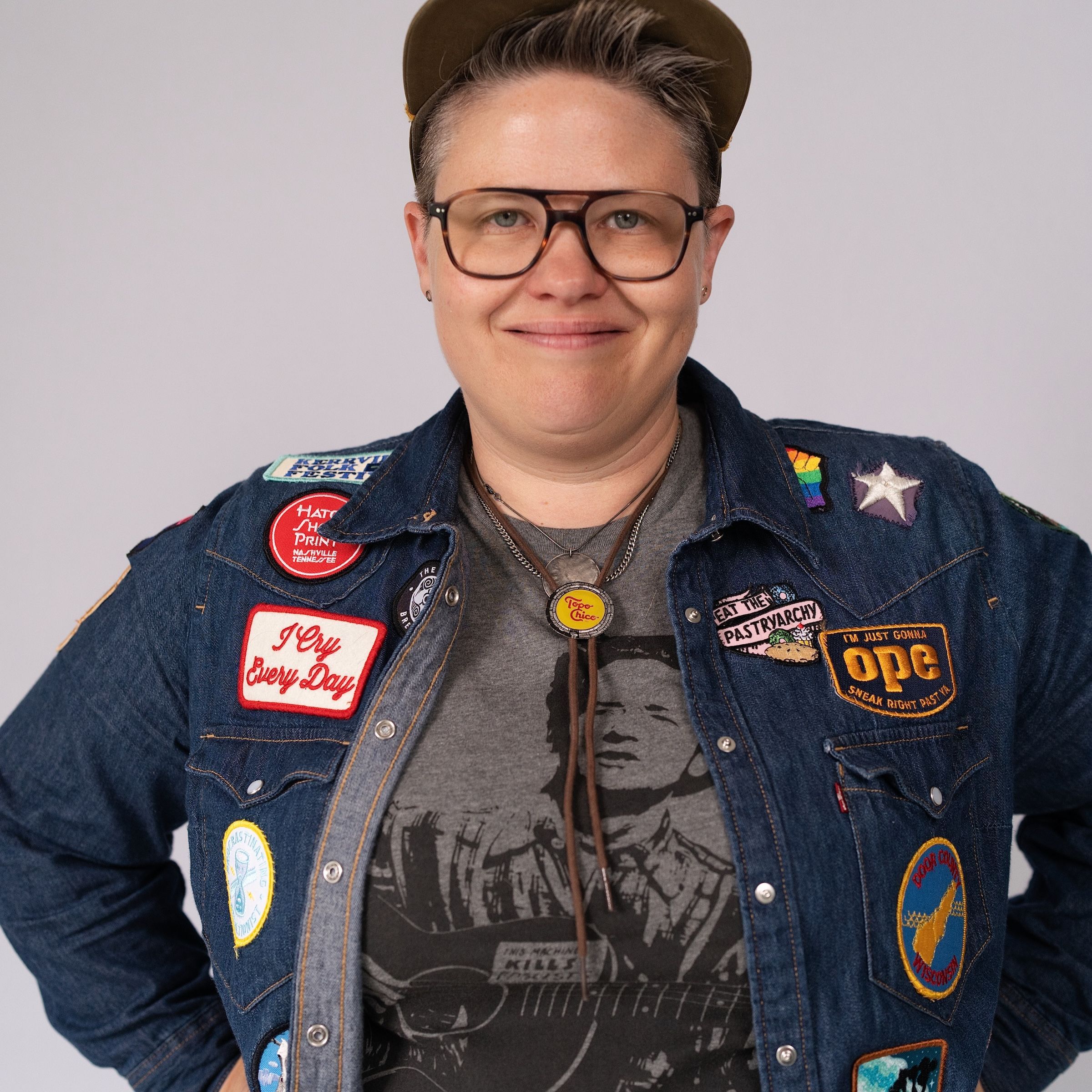
speaker-0: Hey listeners, welcome back to the Door County Pulse Podcast. I'm Miles Danhausen Jr. And later this month, an event that's different than any other event I've been to in Door County is coming up at it's it's based at Bjork Linden in Bailey's Harbor, but it takes place all over Door County. It's the Door Kinetic Arts Festival, September 20th through the 26th. And it's not so much a festival as it is This incubator for creative ideas and performance. You've got dance, you got writing, you got literature, film, music, mixology. there's probably a couple different genres I'm missing there. I've seen Emmy winners present, Pulitzer Prize winning authors, writers and actors from top-rated television shows and Broadway playwrights. And watch bartenders compete at different events at this. And I've gotten the unique opportunity to hear some of my favorite writers discuss their craft and their challenges and their breakthroughs. And one of the more memorable experiences that I've had going to an event here is just walking going down to B York London, it deep into the woods, into their campus, and walking into the the hall there and seeing world class tap dancing with set with music and followed by short films and turns out that when I was there I was seeing the beginning of something that is now coming to the stage a couple years later at the Widener Center. But it's a really hard event to sum up, but I would say if you are interested in the creative process at all, or just seeing some cool performances, I would check out what they have going on at the Door Kinetic Arts Festival and and give one of those events a a shot because it's gonna feel like something different than anything else in that you're gonna come across. It's it's different than a live music show, it's different than an auditorium show. It's Different than a play. It's worth checking out and giving it a shot, like I said. This year, one of the participants involved in one of these events is a name that people will recognize if you're familiar to Door County. Katie Dahl. She's a singer, a songwriter, a playwright, and she's gonna be workshopping a new musical she's working on called The Northeast Corner on September twenty-fifth. And I had a chance to sit down and talk to her about her playwriting process and it's it's a pretty fascinating topic to dive into and we're gonna get to that conversation Hope you enjoy it. All right. Hi Katie. speaker-1: Smiles. speaker-0: I was I was checking out the buttons on your jacket, for for the listeners. when you walked in, I d I cry every day. She's got a button on her jacket. Do you really? speaker-1: Yeah, pretty much. On a good day. Yeah. speaker-0: Yeah. I I just stress out. speaker-1: Yeah. Yeah, well that's true. On a day that's why I say on a good day, because on a day when I just have a lot of feelings and I don't express them via crying, that's a not as good of a day. Crying means I'm means it's all flowing. speaker-0: You're feeling something. Yeah. That is something like I actually try to like I kind of hate watching sporting events with other people because I like I like the big moments and I like, you know, when somebody gets a trophy or somebody's walking off the field for the last time. And I like to soak that in and actually like feel it. And you can't do that if like a ton of people are cross talking and everything like that. Same thing with like the Oscars. When when somebody is like starts talking, you're like, This is the speech. This is the the moment we've been waiting for. He just won. Like, why are you talking about The stress right now. I wanna hear what they say. speaker-1: I know, I know. The t crosstalk is a real problem in my life. speaker-0: But that goes for so much of life. It's like when you're hit so hard by something that's so emotional, like crying is bad, but it also makes you feel that thing and feel like really alive in that moment in a way. I think hopefully it's not like the depths of crying, but like feeling it is a good thing. speaker-1: Yeah. I to me it's a sign that like, I'm on it. You know, I'm I'm there. I'm I've found the pulse. Yeah. Yeah. speaker-0: Everyone's nice nice plug for the paper there. speaker-1: Hey, I found the pulse the pulse makes me cry every day. speaker-0: it does. but yeah, I just love that button. You got a lot of other good you know, op. speaker-1: Oop. Just gonna sneak right past ya. That's what it says around the Oop. I've got a they're patches actually for the listener. And they I have one that's a real American flag star, a star off a real American flag. I've got Eat the Pastriarchy. Yeah, we've got a lot of fun ones. speaker-0: How long have you been adding to this c collection of patches? speaker-1: I've been collecting the patches for maybe seven or eight years and then I just put them on the jacket this summer. speaker-0: Nice. Yeah, nice. I I like my my kids have a bunch of patches that are just in the pile of crap that they have. And I was like I'm always thinking like I think when Connor first grabbed one when he was like two, I was like, I'm gonna do this cool art thing and I'm gonna make this thing with the patches on them. He's now six. I have come nowhere close. I'm reaching the statute of limitations of like that age where he's not gonna be interested in these patches at all and like losing that moment, but like so many of them as they're getting older. Like how old is Guthrie now? speaker-1: He's ten. Yeah. speaker-0: Yeah. You're just like, okay, maybe we'll come back to that at some other stage but speaker-1: One hundred percent. Yeah. Well and we don't who has time, man? Like you just a lot of dreams, l very little time. speaker-0: Yeah, a lot of ideas on the stupid social media channels that come to you and you're like, yeah, I'm gonna do that with my kid. No, I'm not. speaker-1: Not gonna do it. speaker-0: I got him out the door this morning. They're their first day of school as we're recording this on Tuesday, September first. speaking of tears, I didn't cry, but like I feel it because I'm like, Man, Connor's first grade, Grady's four K, like they're they're getting on the bus and they don't even they like they don't blink like Wow. speaker-1: That's amazing. speaker-0: And and then I see all my friends posting pictures of their kids like last day of high school or first day of college. And then that's actually gotten me close to crying. It's like thinking that one day and it suddenly doesn't seem that far away. speaker-1: I know. speaker-0: That like, I'm just gonna drop them off and they're just gonna do their own thing. speaker-1: I mean I'm over halfway we're over halfway to Guthrie's age of majority, right? Like or whatever you call that eighteen. We when he's ten. It's like we're we've we're it's going fast. speaker-0: And now his toddlerhood lives on through the clothes that are now in my kids' hands. speaker-1: You're welcome. speaker-0: but we aren't here to talk about our kids or crying. It's just a that's a fun little aside for the listener. Like, let's talk about crying good. Miles the Therapist. you have like coming up in a couple weeks is the Door Kinetic Arts Festival, which you are taking part in this year. festival, is like not the word for it, right? Like it's just it's it's not the festival in the way that we think of festivals up here, right? And but it's like this creative Incubator, I guess. And that's and that's really what your role in it this year is, right? So you are workshopping a new plate that you are like what stage of writing this are you in? speaker-1: I would say that I am like halfway through the second and a half draft. Okay. speaker-0: Okay. speaker-1: I had a I've been writing it. I started doing research for it in twenty twenty two, so it's four years into the process. And I have I've had one full draft and then I've d had a couple of phases of rewrites of that one. speaker-0: We'll get into what it's about in a second, but I this just popped into my head, but like at what stage does 'cause you've written a couple of plays, correct, before this, and at what stage do you does the workshopping it come in and what is the workshopping in this process? speaker-1: So a workshop I've a workshop is a collaborative way of working on a play and it usually happens after at least a couple of rounds of drafts by the writer by the playwright and or composers. and it's be because the theater is such a collaborative art form, unlike a novel or something, because eventually for a play to exist it's going to need actors and a director and designers and all all these all this team is gonna come together. A workshop is like the first time that we bring or or maybe not the first time. You can have several workshops, but it's a time when you bring those other team players into a room together and say, how does this live in the air? This thing that you, the playwright, have been putting on the page for however many years. How does this live when we when we are playing it as it will really be in the in the real world. Yeah. because you can't really get a true feel for what's gonna work when you're just alone in your in your head. Yeah. You can think you do and you're wrong. And it's it's amazing to have like it's amazing to just bring in the the your other collaborators and finally have some like oxygen in this very what has been his previously like a kind of closed Process. speaker-0: Yeah, you hear the words said. And it's one thing to hear them said by you, and that usually helps in the writing process. And y you being a a singer, a songwriter, a performer, you're probably doing that as you go. I'm like speaker-1: Like saying them out loud in my in my own little speaker-0: Like you probably have to like you probably sing song. I I don't know. I picture you writing and being like, all right, how does this play? How does this speaker-1: yeah, as a songwriter for sure I r I I speaker-0: I don't do that at all. I like right. I'm like afraid for even a a basic news article. Like the idea of someone looking over my shoulder as I talk I I just freeze. It's like stage fright. Yeah. And it's just such a lonely thing. I gotta work through it in my head and then it helps so much to read something out loud because you catch errors, you catch like, Well, that sounds dumb. But I don't do it. I just I put it on a screen and hand it off to somebody and never want to look at it again. speaker-1: Yeah. I mean, you know, I'm a pr I write prose too and I and it's very different because I mean I agree with you, right? Reading it out loud can be helpful and I also agree with you I don't do it very often. but like in the case of a song, I actually cannot work on a song like in a you know, peop some people are like, I worked on a song on a plane on the plane and I was like, How did you work on a song on the plane? Like I need quiet and I need preferably my guitar in my hand and I need to be able to be making noise and no one can be anywhere where they could possibly hear me. You know, I need like oral solitude. No one is within earshot. and that's because like the songs and the plays do live they live in the air, the the like the oral space, aural space, and they also live in in time, you know, like they lo they don't prose you read at your own pace, but A song sort of dictates its pace with the rhythm of the yeah w of the work and and and if you're writing a play, the actors who are gonna be delivering it dictate the pace. You have actually an as a writer no control over what happens beyond the page. speaker-0: Yeah, that which is a hard thing to let go, I would think. well, speaker-1: yes. speaker-0: especially for you as a performer. Like I I always think of that with writers who write tons of movies or or songs and let somebody else do them. I'm like, wow, that's so weird to let a song like people who are just songwriters. speaker-1: Mm. yeah, who aren't performers. Yeah, like yeah. speaker-0: How do you do this and then let it go and let it be somebody else's thing? And it's just like, man, that's that's a brave thing to do. speaker-1: Thanks. Yeah, I do think it's brave. And and I also think it's it can be such a gift because when I'm my own little singer songwriter self, I can I can never hear what I do as a singer. I can never sit in the audience of a Katy Doll show. It's not possible. but I can I can sit in the audience of a Katie Doll play. So I can experience what I'm writing. the actors are just miracles to me. And like what they are able to sort of synthesize and metabolize from page to impersonated, inhumaned experience is so cool to like write something and then have it go through this metabolic process and then come back at me is is really cool. It is scary, but it's very cool. speaker-0: Do you see a lot of times where like what as you're workshopping this or an actor does it like you pictured it one way or being said a certain way and then this actor does it and you're like, yeah, that's what it is. It's totally different than what you had in your head, but it is that's the right way. Do you speaker-1: One hundred percent. Or like, that's a double another layer of meaning and I'm gonna write toward that actually because I hear what you're doing here. That's part of what the workshop is great. You hear you do rewrites every night. So your actors are w reading your words all day, you're talking about stuff, the actors are giving their ideas because they're walking the journey of this character. And then they give you ideas not only from how they read things, but they just give like tell you ideas. You go home as a writer, you incorporate the ones you know, you let some of them fall 'cause they don't resonate with you. Yeah. but the ones that do, you you just you can really learn so much from the people who are who are in the process. Yeah. speaker-0: All right. Sorry I took us on a segue to process before even talking about why you're I don't even think I introduced you. Like singer, songwriter, performer, playwright, travel agent. but the play that you're workshopping is called like is this a working title or the title, The Northeast Corner? speaker-1: Right now it's the title. I don't plan to change it, but anything could happen. speaker-0: tell us what it's about. speaker-1: So the Northeast Corner is about Lorena Hickok, who was a journalist, originally from Wisconsin. she grew up poor in East Troy, Wisconsin and a little bit in South Dakota and And then became one of the most prominent journalists of the nineteen twenties and thirties. So was the first woman with a byline on the front page of the New York Times, worked for the Associated Press, and then became the live-in lover of Eleanor Roosevelt. she she met a little speaker-0: aside. speaker-1: aside, she met Eleanor Roosevelt while she was covering the Roosevelt campaign in nineteen thirty the Frederick excuse me, Franklin Delanor Roosevelt campaign in nineteen thirty two. Yeah, speaker-0: He's Freddie in the play. speaker-1: right, I've changed I've changed his names. Just kidding. really speaker-0: Who we're talking about here. speaker-1: I hear the purists coming at me now. S aside, my son, because I talk about Eleanor Roosevelt all the time, my son at I learned this weekend thought his name was Franklin Delanore Roosevelt. Which makes sense, like Eleanor Delanor, you know. speaker-0: Yeah, I think I pri I I think I th thought that as a kid too. 'Cause Delano, you you just never speaker-1: Yeah, when do you hear that word? Yeah. Yeah. Anyway, so Hick, as Lorena Hickcock was called, that was her nickname, Hick, was assigned to cover Eleanor Roosevelt. or was was assigned to the the Franklin Roosevelt campaign and along the way encountered and interviewed Eleanor Roosevelt. And they fell in love and embarked on a relationship that was up and down and rocky and really transformative and Hick actually was resident of the White House for the rest of the for the entire Roosevelt presidency. it's about the first few years of their relationship. speaker-0: So none of this is public at the time. speaker-1: Right. speaker-0: It's probably known in Washington circles, but this is a different era of covering the presidency that, you know, even I mean, this is what, thirty years before JFK and then even then JFK's era, all the reporters knew certain things and knew about affairs, but you just didn't write about it. It you you kept certain scandals like that here and then he just covered the politics for the most part. And I think it was probably the Clinton presidency was the first one where they really started diving into that. You know, with with JFK, it came out like after he died, they would talk about these things, but it took years before they would actually like really seriously address them. And that was the case at this time with Eleanor Roosevelt as well and Hickok. Well speaker-1: I it is the case that they weren't covered in the press, but I'm not sure it's the case that it was known about, actually. I do think it was a a open secret that Franklin had affairs. I don't think I don't think that was a huge surprise to insiders. But I think Hick and Eleanor you know, I think there's something about two women doing a lot of traveling together, spending a lot of time together, even the fact that Hick lived in the White House, which wasn't publicly, you know, made a thing, but was was probably known by insiders. I I think there's there's something that's that people can hide, you know, especially especially women, because it's more pub it's more culturally acceptable even now for, you know, two women to sort of live together and be yeah it it raises fewer eyebrows. speaker-0: Yeah, and the assumption at the time, like nobody was even I would say a lot of people probably weren't even thinking about it in any other speaker-1: yeah, not including including them. I mean I don't know what their I don't know what their perception of their own labels would have been, or how they would have categorized their relationship. speaker-0: And so how did it come out, come to public light? speaker-1: So to speak. It came out. the well so there were there's a ton of beautiful correspondence and not and mundane correspondence between these two women over the years and speaker-0: People used to correspond. speaker-1: Exactly. And these women wrote each other long letters like every day, you know, like that really when they were apart, like it was very intense. And some of the more Hick Hick said later that she burned many of the steamier letters, which is disappointing. but what's left is pretty steamy sometimes, so so maybe so that makes me wonder like what were the really steamy ones. But anyway, Hick donated the collection of the course what what correspondence remained to the Roosevelt Presidential Library with a provision that it shouldn't be made public until ten years after both of them were dead. And so they were unsealed then in nineteen seventy-nine or something, because I think Hick died in sixty-eight. and a r reporter named Doris Faber was in the Roosevelt Library hoping to write a Eleanor Roosevelt biography. The librarian was like, Hey, we got these new boxes. No one's looked at yet. speaker-0: so nobody was even thinking, can't wait till speaker-1: no no no. speaker-0: these how quiet this really was and and undiscussed. Yes. speaker-1: I think I think inner circle friends knew and that's it. Eleanor ha had a lot of lesbian friends and lesbian of queer women friends. so the so the the librarian's like, you go you can go look at this box and Doris Faber looked at the box and was appalled. she had the homophobia that was not uncommon to her era and was was like Immediately she set out to she was like, Okay, I'm gonna write a book about Lorena Hickok instead. And I'm and the book is like a a a f book length exercise in proving that the that Eleanor was sort of a a benevolent person to this pathetic, needy s predatory woman that was Lorena Hickok Eleanor just took pity on her. which is just belied over and over again by the letters, but but she just bends over backwards in this book to to say that. and the but the value of what she did is that when she wrote that book in 1978, a lot of people who knew Lorena Hickok personally were still alive. So obviously we have tons of primary source interviews about Eleanor Roosevelt. It's no problem to get information about her. But if someone hadn't decided to write a book about Lorena Hickok in nineteen seventy eight, we would have lost a lot of people because she was born in eighteen eighteen ninety four or something like that. so so the book is is is a real problem but full of amazing interviews with her coworkers, a lot of cool biographical fact. And so she's the one who really sort of brought it out into the open. speaker-0: So Faber, an accidental I don't hero is the wrong word, but an accidental contributor to bringing this to light. Exactly. how how did you stumble across this story and d well, I shouldn't say stumble because it's it's public knowledge now, but like how did you get interested in it? speaker-1: Well, I I have a friend named Kate Krauss. Shout out to Kate who owns Paradigm Coffee and Music in Sheboygan. And Kate is like a cool, you know, community organizer, queer activist, and Kate has a big tattoo of Eleanor Roosevelt on her forearm. And I r one time I said, Kate, why do you have an Eleanor Roosevelt tattoo on your forearm? And she said, Because she got things done. Which is true, she did, and so does Kate. so I get it, but but it sort of like rooted in my brain like some sort of like queerness and Eleanor Roosevelt connection. And I sort of like had this I you know, this sort of sense like I think Eleanor Roosevelt was queer and s one day in twenty twenty two it just kind of floated across my transom, like, look that up. And I looked it up and I it's you know, it's there's plenty of there's plenty of stuff available on the internet if you want to do a s a shallow dive into this topic. And that's what I did to start. And and I just really got I really got sort of obsessed quickly. And I like to a degree that I haven't ever been by any story that or or any creative project. Like this this particular project is a passion project for me in a entirely different way than anything I've ever done and I am really, really I'm I have read so many books. I'm I've read so much about them and and I I so I'm I'm deep. I'm in deep to this story now f for the last four years. speaker-0: D have you gone through and read all those letters? speaker-1: I haven't read all of them. A lot of them are like reporting on like who had tea with who that day, you know. and not that I wouldn't be interested to read them, but I have read an entire there's a book called Empty Without You that is a a curated, you know, selection of the of the letters. so it's I mean it it's the letters themselves are pretty much intact, but there's but not all the letters are in there, right? so I've read that and I've read Eleanor Roosevelt's has a three part biography. I've read the first two parts and I've and there's this book. If anyone w wants to do a s a mid mid level dive, there's a book called Eleanor and Hick by a woman named Susan Quinn. And that is really kind of like has all the salient information about this particular relationship. and so that's that's really my my primary textbook for what I the book I return to the most and that has taught is just the best sort of everything in one place kind of resource. speaker-0: It's isn't it amazing when you s some of these historical figures and what they do with the presidency, how much gets saved and for researchers for for the future for historic documentation. And then you think of that era when people were still writing lengthy letters back and forth every day, like finding the time to write a letter. Like you go to a birthday party, you're like quick, I gotta dash off a birthday card. Yeah. You know? speaker-1: I know. speaker-0: Like sitting down to write lengthy letters and having that brain space to do it. And compose thoughts even before the pen hits the page of like, how am I gonna frame this? How am I gonna write this? What is the message I wanna get across? We just don't do it. Yeah. And that gives you such a unique peek into like an authentic look at a thought process. Whereas historians in fifty years from now are gonna be interpreting sarcastic text messages and tweets dashed off in a group thread to try and understand what like a president is saying. It's just speaker-1: Kinda makes me want to throw up. I mean it's like it's like the the the diff the gap between where we were and where we are. yeah, no, I agree. And and the letters w I have been to the FDR library in in upstate New York and so I've touched the actual, you know, letters and And the care with which they're treated by the archivists and the the knowledge, the deep knowledge of those librarians, of all that material that is saved is is crazy. There's so much to sift through. speaker-0: Is so in your play, when you take all this, you know, this is a high level big historical ground you're you're diving into, and then how do you turn it into this into a play? And are you are you I mean, Hickok on her own, when I when I looked her up at after hearing about your play, she's important from just journalistic standards and being a pioneer as a woman journalist in the early part of the nineteen hundreds. And then you have the whole the importance of her relationship with Eleanor Roosevelt. And I I guess like how do you how do you take that and go like, all right, well how when do you think like I I can turn this into musical? Yeah. speaker-1: I mean, I think what musicals allow you to do is explore feelings that are so big that you can't sp but people say when it's when you can't speak anymore you sing, right? Like that's what musical theater writers or makers say is that you sing when words stop being sufficient. And I think in this particular case, there was so much that couldn't be said publicly, but also between them. There was so much hurt and misunderstanding in ways that they weren't able to meet each other's needs or ways that they were and the deep gratitude that they felt. and so that's where it feels like the perfect thing for a musical to me is like We have all this we have all this logistic information and and the play and the of course these women live their lives in the midst of a sea of logistical you know, challenges and a literal campaign train, but just the the metaphorical train of the United States in the Great Depression that was just like hurtling forward and demanding you know, attention. and then you have these women in quiet private moments, you know, feeling just feeling things so deeply and affecting the course of history with their feelings. You know, so like the cool thing about Lorena Hickok the tragic thing about this story for her is she fell in love with Eleanor Roosevelt and then pretty soon after that, left her job as a journalist because she could no longer be speaker-0: Hard hard to cover. Hard to cover. It's someone you love. Yeah. speaker-1: Exactly. She could no longer be neutral. She was keeping, she was holding back scoops and stories that she learned about all the time for the sake of this person that she loved, either that she had heard about for the person she loved or that she'd heard out heard about from her own reporting and and knew might reflect badly on Eleanor or her family. so she she quit. And it this is a person who has scrabbled, who has clawed her way for every single ounce of status in every story she ever got. You know, she she grew up she was kicked out of her house when she was twelve by her abusive dad. She lived she moved from house to house and was a a hired girl. and like never graduated from a college, tried three different times, went to Lawrence twice, the U of once the University of Minnesota once and just she she she by all accounts she should not have become arguably the most acclaimed journalist, woman journalist of her time, or and one of the most acclaimed journalists of any gender at her of her time. But she did. And then the fact that she sacrificed that for this love is crazy. It's so deeply painful to me. But the cool thing is that she Eleanor knew she needed a job then after she quit her job. And so she got got her a job with the working for the people who are creating in the Roosevelt cabinet who are creating the New Deal because they needed a basically a reporter to go out into the into the country in rural places like the places that Hick had grown up. She literally went, you know, went to rural Minnesota, went to rural South Dakota, rural Wisconsin, and report back, this is what's happening to coal miners in West Virginia. This is what's happening, you know, to to people in the upper peninsula, and this is what they need. And would write to Eleanor and be like, we need and and Eleanor would do, you know, do favors for these minors based on what Hick said needed to needed to happen, you know. But also she would send these long, beautiful, meticulously reported, impeccably written reports to Harry Hopkins, who was in charge of making a lot of these New Deal decisions. so in a lot of ways she shaped. policy but in a way where no one knew her name, you know? Yeah. Yeah. speaker-0: They don't so she sacrifices her career, but she and Eleanor don't end up together. speaker-1: Right. They ended up being lifelong friends, but their romance only lasted maybe two or three years, depending on how you how you figure it. I'm I kind of feel like it was a probably a ragged ending, you know. she doesn't get her happily ever after story in either of those, you know, in either her career or in her her love life. And that's something to reckon with as a writer. Like how to make that a a dramatically satisfying piece speaker-0: Yeah, they you you're like, all right, I gotta end this musical. speaker-1: that's a tragedy. speaker-0: so I mean, you're still working on it, so it's hard to say like, well, what is the tone? What is the feel of this? But like what are you hoping this play becomes? speaker-1: Tonally, like as a piece of art. I have such an inner sense of its tone, like I and it's I'm that's an interesting question 'cause it's interesting to try to articulate what this feeling I have about it is. the feeling I have about it, so there are three characters. There's Eleanor Hick and then Tommy, who was real name was Malvina Thompson. She was Eleanor's secretary. she's a real real person. She's the third character. And in a lot of ways, because there are only three actors on stage, the play is most interested in the private moments that these three women had. and the you know, behind the scenes, what were the emotional stakes? behind the creation of Eleanor Roosevelt as a historic first lady, for example. so the play I would say the play is driving like a train in the first act mostly pretty much all takes on takes place on a train. They basically started their romance on various trains. so it is it does drive in the way that to be a first lady, I assume in any administration, but especially the Roosevelt New Deal administration w was just like you're on this train and you can't really get off. but it's all for a long speaker-0: For a long time. speaker-1: time. But it's like being in a private car on a on one of those trains. You know what I mean? the play is like we've got all this going on around us. what's our inner life within that? speaker-0: For you writing this, you know, like I said, it's it's a big topic, it's big people, big important historical figures. Like, do you ever wonder, like, as you go into this, like, who am I to write this? speaker-1: I do wonder that and I I feel certain that I feel certain because Eleanor Roosevelt is b beloved, that many people will not love what they might see as misinterpretations of history. I I don't see that way. but I feel called to write this story. I feel like it's been sort of offered to me in a in some sort of way that I don't that isn't knowable. Like someone I feel like someone is like, how about you? How about you to write this? And I it feels bigger than me. And I I feel like a servant in service of a story that wants to be told. so it helps when it can feel like it's not about me or my skill or my ego, but actually about like how could I best serve the legacy of these women that I feel like I have come to really know and care about and value. speaker-0: The ending dynamic of their relationship, you know, we talked about Hickok giving up her career. And then it's a weird situation where Eleanor's got the power. Like she's gonna still be the first lady, and the rest of her life will be as the first lady and all these benefits that come with it. So you're risking something in this case, having you're the president's wife and you're having an affair. I I w I just wonder if you've read into that dynamic of like how that power played out between those two where Hickok gives up everything and ends up with nothing. And at the end, Eleanor, she's still the first lady, she's still married to the president, she has relationships with other women going forward. I don't know if he I I don't know that the question I'm asking is, but it's an interesting thing to think about of these two women. I'm also thinking of them both i this is a weird thing, but it's history. And it's of an era that I only know through black and white, so I'm I I like picture their lives in black and white. Like, wait, they lived in full color. Yeah. But speaker-1: Yeah. speaker-0: I don't I've I I guess if you think about that at all. speaker-1: So much. Well first of all, in terms of color, there's I new technology easily colorizes photos and I have put these photos of them through these online colorizers and it makes such a difference to the way that I'm able to I would picture them. speaker-0: I would think like how you write it and think about them. Yeah. That's an interesting practice because World War Two you know, we've all watched so many movies and documentaries about it and in our heads it's mostly like the I I don't know, I just think of soldiers in black and white for the speaker-1: Yeah. And what is more present than the theater? Like there is nothing more like present moment and and effervescent than the theater. So like to move something from the static past of black and white to the inhabited present that doesn't exist outside of a moment in a space with a group of people in a room is like is really a a a h a big lift, as a writer to to to do that. So but act that's partly why this decaf workshop will be magic, because it you will have the people, humans, acting. but in terms of your question about privilege and power, I think about that a ton in their relationship because Eleanor is is not only has this status as first lady, but she also was an aristoc comes from an aristocratic background. She was a Roosevelt by birth actually. She was she was Teddy Roosevelt's niece, so she was a distant cousin of Franklin Roosevelt. and so she grew up wealthy. but she also speaker-0: So you have the wealth versus Hicok, poor, kicked off a farm. speaker-1: Exactly. Blue collar, always will be blue collar, you know, like just like like smoking and drinking and playing cards and and had that in common with Eleanor's secretary, Tommy, actually. So that's a fun part of the of the play that they kinda bond over that. but but you know, there's different levels of power in in different ways. You know, there's there's the amount of experience, like sexual experience either either of them had, and especially in queer relationships and Hick was more experienced in that way, I think. not to say that Eleanor hadn't had any experience, but Hick had had a lot. and so like there's that there's that power dynamic too. You know, there's the power dynamic of a reporter who can give away all the secrets of of this household. You know, that's a power, that's a card that you have. yeah. Like she's got power in that way at the beginning of the play, that she seeds. and as I think about their romantic relationship, I think a lot about power because I I one question I really have and I've asked a lot of different people their opinion, who makes the first move? How who in this really fraught stigmatized relationship, who is bold enough to say for the first time, let you know, how about it? and like that is really that's like such an interesting question and and a lot of people have said it's it's who has more power or it's who has less to lose. and those are different questions and I'm always asking like who has less to lose in this more more to lose in this moment? Or what did they each have to lose that they're mutually risking? The thing is these were not young Women. Like they had been heartbroken before. They were wise and had had hard, hard, hard lives. Both of them thought themselves ugly, had been told their whole lives they were ugly. They both grew up as I'm sure queer people in a place where that was there was no outlet for understanding that. So they they had this mutuality too of need that helped cut through those power and privilege differences where they saw each other and they both needed to be understood and they needed to be listened to. And that's what they had in each other. And that didn't necessarily go away when their romantic relationship ended. I do think they still witnessed each other in a way that that couldn't ever be undone. You know, they still were able to to feel seen by the other. And and it was really it that changed their their lives, both of them. speaker-0: Hickok is a journalist and writer. Aside from the letters, did she ever write about this? speaker-1: She wrote, yeah, she did. there is a unpublished autobiographical like treatment or segment that you can read in the Roosevelt library. And she wrote about the beginning of the relationship. and the later part of her relationship, you know, she wrote a lot about Eleanor. And you can so there's some quotes that I've from that. autobiographical segment, quotes from their letters. There's a lot of lines that are direct in the play. although we don't know how true to fact her accounting, of course, in her autobiographical segment was. And or it doesn't say she never wrote then we kissed. You know, she she writes like we shared a train compartment. literally like Eleanor was like, I have to go, I'm on this Roosevelt campaign train, but I have to go to my husband's mistress's mother's funeral, to Franklin's mistress's mother's funeral. I would like someone to accompany me. I would like it to be you. And it's and we we don't we're not gonna indulge in the extravagance of two different compartments at this time that the country is starving. So we'll share a train compartment. so that's the story that Hick tells what really happened in that train compartment is what I'm imagining, you know? Yeah. Yeah. speaker-0: What an complicated, interesting relationship that as you just tell that one story of it. Yeah. Of like, okay, this is the arrangement. Yeah. This is how we're doing this while we shepherd the country through probably the the most dangerous times, etc. Yep. speaker-1: And in the meantime, you know, like literally even on that trip, there's a reporter who asks or maybe it's on a different trip. It must be on a different trip 'cause there's a car. Reporter who asks if she can come along. And Eleanor's like, No, you can't come along. And Hick feels this terror, right? Because of course she doesn't want a reporter along on her on her solo trip with her lover. But also she's like a journalist first. You know, she has like a she has a she has an allegiance to speaker-0: The ethical speaker-1: Yeah. speaker-0: journalism question. speaker-1: And to a woman a young woman trying to get a a scoop, you know, trying to get access. She's like, I think she thinks she should come. Yeah. speaker-0: well for this workshop, is it September twenty fifth that you're doing this? speaker-1: That's the so the yeah, the workshop will be happening all week and then the public portion of it that people can attend is Friday, September twenty fifth. Yeah, Birch Creek. But the speaker-0: Okay. speaker-1: ticketing for it is through the D door Kinetic Arts Fest website. So you don't don't don't talk to Birch Creek about getting your tickets. Talk to Dor D Dcaf is the speaker-0: Which door kinetic dot org or door kinetic dot com or just Google Door Kinetic Arts Festival and you'll find it. speaker-1: And you can buy a one day pass. So there's gonna be two two public presentations of the musical, one at two PM and one at seven. And you can get a one day pass for Friday. You could come to both of them, I suppose, with your one day pass, but you could just come to one speaker-0: Double up. I wanna see what changes. I mean What but that is one of the cool things about this. Like if you I've been to you know, when you go to people are like, Have you been to Dcaf? It's like, well, I've been to some of the events of Dcaf, but it's like it's not a it's not like a one linear thing. It's th there's stuff at Write On there's stuff at Birch Creek, there's stuff at Bjorkland and Bjorkland like the home base, but it's like all all over the place and they collaborate with so many different organizations and there's so many different parts of it you have dance. Like I've been to I've walked into York London and been to a tap show. Like like an amazing tap dancing show. I've never been to t I've never seen tap before. Yeah. speaker-1: And you're seeing it in Bailey's Harbor. It's a miracle. speaker-0: In the woods. I know. After a short film. And followed by other short films and a cocktail with the New York Times cocktail writer. It's like how to describe this and and entice someone to go is a is actually a difficult thing, but I think it's a it's such a cool creative process. And you you get to step into into other people's creative process and see it evolve and see it come to fruition, which is really unique thing. And sometimes you don't know it, but you're seeing the beginning of something. Like that was the case with that tap performance. Jumani Taylor is now doing a performance at the Widener Center that started at a performance that he was collaborating with at DCAF. So it's like two years later, it's coming to fruition. So that's kind of what you're walking into. And in your case, you're walking into a play in the works that, you know, who knows? A year from now, two years from now, four years from now, maybe it's on a stage here in Door County or somewhere else. And you're seeing and you can go back to like, I remember Yeah, this is way better than the version I signed. Yeah. Hopefully, right? But Katie, thanks for coming in and talking about this and for taking on a pretty fascinating subject. Dedicating four years of your life not all of your life, but a good chunk of speaker-1: my gosh. And they'll be, I'm sure Four to six more at least that'll be working on it. I did want to say before we end that the music team for this, there's a great team of actors for the workshop, which is who are all from outside Door County, Kirsten Fitzgerald from Chicago, Gina Cornejo from Milwaukee, and Kat Woodkey from Milwaukee. but the music team will be familiar to a lot of Door County folks. and that's Karen Mall, Eric Lewis. Sue Demel who has played in Door County quite a lot, and then Julie Wolf, who's from the Bay Area, she's the music director. So come on out to see some good good music from people that you love in a totally different context. speaker-0: And while you're here, any other shows that you got coming up that you want to plug since speaker-1: Yeah. Well, you know, actually two days after this workshop reading on so on Sunday, September twenty-seventh, I'm playing my annual show at Woodwalk Gallery and that's an afternoon, Sunday afternoon show. There's no Packer game that day, it's a Thursday game. speaker-0: You are a smart smart Packer fan slash performer. speaker-1: Exactly. And so that I'm excited about that show. Eric Lewis is gonna join me for that show too. And that's I'll that'll be you know, just me and my songs and and Eric probably and so I'd love to have people come on to that. speaker-0: And Woodwalk, such a cool thing that they you know that evolution of that space, we had an article in it in last week's pulse, but Matt and Jocelyn taking the baton from the two previous owners and the things they've done and making it their own while holding on to so much of the best parts of what have been built in the past. speaker-1: I they are I love them. I love Matt and Jocelyn. I love them. I love them. I love them. And I love Woodwalk. It's my favorite place to play. it's just great. And there's a full bar this year, you guys. Amazing. speaker-0: Yeah, such a unique venue. speaker-1: It's like a really good full bar. speaker-0: Yeah. Yeah. And and Matt is a guy who who loves a great cocktail and makes a great cocktail too. So speaker-1: I only love a great cocktail. I don't make a great cocktail. So I appreciate the ones who can do both. speaker-0: All right. Well, Katie, thanks so much. Again, the the workshop is at Birch Creek, September twenty fifth, as part of the Door Kinetic Arts Festival. Find out more about a lot of other stuff going on with that festival And I'll put the link in the notes. thanks again, Katie. speaker-1: Thank you, Miles.