
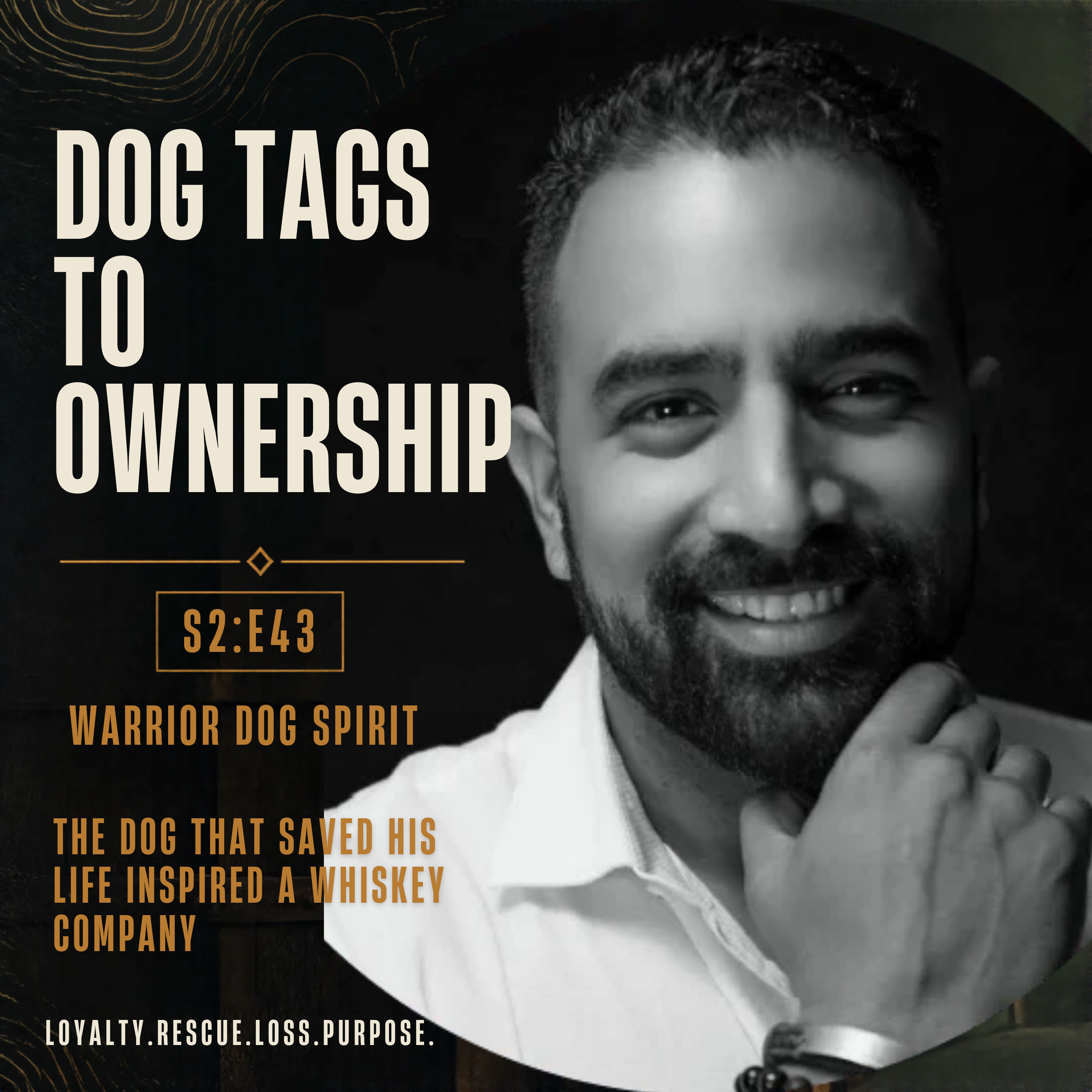
DogTags to Ownership · Julie Austin and Matthew Cain
Summary: In this episode, Jose shares his inspiring journey from overcoming trauma and addiction to creating Warrior Dog Spirits, a brand that honors service dogs and supports veterans. Discover how storytelling, resilience, and community impact are woven into his mission. Takeaways: Storytelling can be a powerful tool for healing and connection. Service dogs play a crucial role in veteran recovery. Creating meaningful brands involves personal stories and symbolism. Entrepreneurship can be a form of therapy and purpose. Chapters: Introduction to Jose's Journey and Warrior Dog Spirits The Impact of Trauma and the Role of Service Dogs Storytelling as a Healing Tool and Brand Foundation Innovative Use of Technology to Share Service Dog Stories The Whiskey Distilling Process and Product Development Symbolism in the Whiskey Bottle and Brand Design Distribution, Sales, and Community Support The Foundation's Mission and Future Goals Reflections on Help, Resilience, and Giving Back Resources: Support our community and purchase from an amazing businesses on https://forcesbrands-usa.com/ for the #ReplaceOneChallenge We are a proud member of Heroes Media Group Check us out on Wreaths Across America Radio on Thursday mornings at 7 am. Visit our website: https://www.dogtags-to-ownership.com/ Follow us on Social Media Instagram/Facebook/Threads: @dogtags_to_ownership TikTok: @dogtags_to_ownership
Julie Austin: Welcome back to Dog Tech Ownership, the podcast where military experience becomes entrepreneurial action. Matt Cain: Today, we're joined by Army veteran Jose Pila, founder of Warrior Dog Spirit, a whiskey brand with a mission that reaches beyond the bottle. Julie Austin: Jose is building a business that honors the bond between warriors and dogs while creating opportunities to continue serving. We're digging into the inspiration behind his brand, the realities of becoming an entrepreneur, and what it takes to turn a personal mission into a business. Matt Cain: If you're looking for your next chapter, this conversation is a reminder that the experience that shaped you can help shape what you build next. Julie Austin: Later, our forces brand USA Business of the Week is Above Ground Gear, an Air Force veteran founded American apparel and lifestyle brand. Matt Cain: their mission is simple, make every day count. Find your favorite veteran t shirts, hoodies, cups, blankets, and more at forcesbrands-usa.com Julie Austin: Let's get into this amazing interview with Jose Pila to hear his journey from dog tags to ownership. I'm here with Jose Pila. He is the founder CEO of Warrior Dog Spirits. I got to meet Jose actually last year at Military Creator Con. And I'm really excited about this interview because I love your spirits. I love what you're doing. And just getting to sit down and talk with you. But before we get to that though, first Have a cheers of some warrior dog. Salute. Salute. Love this. That is it is so good. It is by far one of the best whiskies I've tasted. And I think one of the best I'm not saying this because I like you, one of the best veteran owned whiskeys that are out there on the market. So thank you. Very good. But can you tell our listeners and followers a little bit about Jose and your military service? so I I joined the military straight out high school. I I had a very rough time in and not a rough time. I was just a mediocre student. Like I hated school. And I I live in Southern California, and I grew up in somewhat of rough neighborhoods in in Southern California. if you're familiar with Southern California, Southgate, Balm Park, then we ended up in a city called L Souza. so it was either the military and very very, very few went to college. Or you join a gang or, you know, came with cuss. I don't know. Yeah. Go around, fuck around or, you know, ruin your life in that way. So I chose a I chose the latter. I went I went to the military in two thousand one, prior to September eleven. So I was actually like very, very fresh out of boot camp and when September eleven happened. wow. And and I I mentioned this because it's been twenty five years since since then, since that day. And I could still remember it like it was, la yesterday, last week. I remember very vividly. so I went as an infantryman, I went to airborne school, I did other trainings and stuff like that. And ended up in Iraq, Afghanistan. and then I don't know Through through my ti my time in in in service I I started feeling or yeah, feeling inadequate, like I was I was just getting dumber by the day. Especially as a grunt. And and I got out and I had a bit of a rough transition out of out of service and But one of the things that I found comfort in and and which is funny because I like I mentioned I was a very very, very like mediocre student and I hated school. But I found my peace in academia and I've never stopped going to school. I'm a lifelong learner learner and I I collect degrees like there's no tomorrow. You mentioned it a little bit there, but your transition, how our podcast has a double meaning, right? Like own it it's also owning your life after service. How are you able to really during that time frame when you transitioned out? And I know that has a lot to do with Warrior Dog, but you know, how was that transition for you and and kind of getting back into society and and trying to own your life again after the military service? It it's it's rough, man. It's I I mentioned it to a lot of service members now if I get the opportunity to mention it to them like and you gotta you make sure that you're doing cer certain things if you're thinking about separating from the military you gotta you know do certain things so that it prepares you for for the outside. You're still going to to have a a bit of a rough time but it's I don't think it's gonna be as rough. you were, in school, you're struggling, living on the streets, y you mentioned, you know, raging alcoholic. Drinking a lot of or smoking a lot of pot. Yeah, doing all that stuff, right? What you know what was the cause for you to go get help? My yeah. or the catalyst for that. It was when I was at the lowest point in my life and I I struggled with like you mentioned alcohol and stuff like that. It's I there we were at a barbecue at at the house and I got completely b belligerent you were belligerent in your mom's house. Yeah. She had she was cutting something up. Yeah, the cutting board in my head. Ouch. And you Actually I didn't even remember that's what I was wondering. So did you even remember doing that? I r no, I don't remember doing that. It was my it was explained to me by other people and But I because I was coming in and out, the one thing I do remember is when my like there was a couple people that were holding me down and my mom was on my chest and she grabbed me by the throat, like not like the throat, but like right here, right below my my collarbone. She's like try to calm me down like you know Her face, I I remember her face vividly where she and she told me get help. And she just started crying, please, please get help. And she said in English, she said in Spanish. and that that stuck with me. And it was like I mentioned earlier, like it wasn't that it it happened night and day, like, my god, I I'm going cold Turkey. no. I that's what I did. That's exactly what I did. I went to at the VA and I tried their program at the domiciliary at the VA at the West LA VA. I was there for or originally for three months. vet in work. Got out and or left the program. So I I did that two more times after that. and it wasn't at the program I guess you can attribute a little bit about the program at at the domiciliary. But it was just the help and listening to to other vets and so and then the the organization that g that I got linked up with, Pets for Vets, that provided me with the the service dog that you know 'cause it like I mentioned, like it wasn't night and day. It's there's there's steps to to this. There's 'cause you you're You're always going to be in recovery. You're always so and it took me a while to realize that even if I fell off the wagon or if I and I'll explain why I have a whiskey booth. Because you're like, well why if you're original colleague, like why do you have a whiskey boost? But there's steps and you just have to get back on. And you just have to realize that you have to take control of it. You are the one in control. And so you went through you went to the VA, you went through these different programs, and like you said, Pet Servettes, you you, linked up with them and and you got your service dog. And I know we we've spoken a lot, but your service dog passed away in twenty twenty two. And so how did that really inspire you to create warrior dog spirits? So the the grieving process inspired black well the grieving process and then my wife saying, This is a good idea. so d during that grieving process I s I started writing a book, which I I one I haven't finished and two I probably will never publish. This is a a a stories of something that I want to share with my kids. And then in that process I was like, man, I I want to share these stories w with them when they get older. And I wanna sh in my mind as a dad I was like I wanna share them with with them with a gal with a five gallon barrel of whiskey. so that's exactly what I did. I distilled a five gallon barrel of whiskey. my my kids are super young, so by the time this barrel gets to be opened, we'll be eighteen, nineteen years old, or twenty. And So that's that's what I was doing. And and my wife walks in and or she walks in and sees that I'm like writing this book and and she reads the the first chapter that I have and she's like, my god, this is 'cause she she got to meet my dog. And then I started distilling this. So then she put it she put those two things together. She's the one that put those things the two things to together. You know, I was like, huh. Let do some research. Is there any brands that do like tell stories like that? We started the company last November, or we released our first label last November. tells the story of a dog that has been in service alongside military first responders and veterans. we started this with the mission of trying to connect veterans with service dogs that literally saved lives. The reason why I started this company is because a service dog saved my life. I was at the lowest point of my life, had attempted, I guess, my life twice prior to that, and that dog saved my life. And I wouldn't be here without him. And when he passed away in 2022, I was like, I need to tell either his story or stories similar to his of veterans that have experienced something similar from what I have. And then I got deeper into it and I was like, there's actually dogs that have done, like turned the tides of time in battle. You gotta tell those stories. And then we'll release smaller batches, smaller releases, and tell the smaller stories. just stories you might not hear as often. So that's our mission. people need to know stories of dogs that have been in service that have done incredible things like that Sergeant Stubby, our first release, was in s seventeen campaigns along the hundred and second Infantry Battalion, which is a Marine Marine Marine Corps battalion in two in World War One. We do use AI to bring these dogs back to life. Right. And then there's a QR code on the back of the bottle that you scan and that dog will come to life and they'll tell you their own story of service. So did you know anything about distilling whiskey before you started to distill that one? Okay. Moonshine. Okay, moonshine. Yeah, moonshine shine. but no. No research is a powerful. So I guess now, right, with the brand and what you do, where do you distill the whiskey? How how is that done? Are you doing it? Is somewhere else doing it? Where how is that all so we do we do contract we do have contracts with several distilleries? that we're sourcing our whiskey from and then there's there's a process called rectification where you can take somebody else's barrel, say that you're you love say you love I don't know. Jim Beam. I don't know why you would but So you buy their barrels. Okay. and you can rectify them, add flavor to it. this bring down the cast. So this had cast is at about a hundred and twenty-two proof. Okay. which some people love. I I also enjoy sometimes. but you bring down the proof, you can add flavors to it, you know, you can add different notes to it and then make it your own. You can blend it with other whiskeys. So you can take a rye, you can take a An eight year bourbon, a a five year rye and blend it. So what is yours blended with right now? what what what do you have in there? R like what percentage of rye? so this is a ninety nine percent corn, one percent malt barley. Okay. And it's a light American whiskey. because it was distilled in the second or not distilled, it's aged in the second use barrel. Okay. With the light chard, level one chard on it. So it's It comes out very, very light, very, very smooth. And yeah, but you could do different different things with it. So i this one if we were to take this thing barrel smash barrel, we could call it And we add a a different barrel, or you add a different flavor, different note, then you you have a completely different profile than what you have here in this bottle. And then you register it, label it, and it's all a different story. So right now it's you only have the one. Sergeant Stubb Stubby, eight year, right? Eight year whiskey. are you planning more? absolutely. What what is on the horizon? So we have a release coming out next year. our goal is to re our goal was to release it this November on Veterans Day. Okay. But if you're in into business and different vendors and different you know, sometimes it doesn't plan out. so we are having some issue with our glass. they're they're moving it a lot slower than we would want them to. Especially 'cause we have they the color that we chose and what we're doing with the color and actually and I I a little bit later we'll talk about like everything that yeah 'cause everything has a meaning. We're trying to make it meaningful. And on our website you you'll be able to see it. but we're having some trouble issues with the the glass company and and their processes and pain painting the bottom. So we're now projected to release this next label and the next queue on Memorial Day. Okay. and then we're we're also in line to release a next label on Veterans Day of next year. So we'll do two next year instead of this year. Okay. and yeah, so then let's get into the bottle and like the semblance of the Yeah. So there's there's a paw. Right front of the bottle that it's actually my my dog's paw that I casted when he passed away. Okay. it was much bigger, so I I shrunk it down. Or we what was your dog's name? Ranger. Ranger? Yeah. Okay. So Ranger's paw. Ranger's paw. you also see his profile picture here or like our logo. on our logo, that's that's our that's our dog. And the reason why we went from like a black to to light is for me it represented the darkness that I that I went through that many veterans do because my my unfortunate story isn't unique. It happens to a lot of us. So that's why I went with the dark to light. and not to say always drink responsibly, but it isn't to say like there's a light at the end of the bottom. No, it's there's a light at the end of the tunnel. You just gotta do the work. You just have to ask for help. so that's what it represents. And then we went with this type of label because we wanted to do a commemorative you know when you when you earn your R coms, when you do you know, you get your certificate and you get your medal. so that's why we did a ribbon with with the certificate of recognition for the the dog that did did that. So it's our it's our way of it's our Yeah, our certificate for the dog. It's yeah, it's your way of honoring the dog with their own certificate and what they've done and to show others, I'm assuming, that that these dogs have done so much for our country too, right? and for our military. that's that's awesome. And I think on here too, it it has veteran owned no, it doesn't. I thought it did. No, it's on on our website. It's on the website? Okay, so just on the website. yeah, so then let's talk about how can you buy Warrior Dog whiskey if somebody wants to get their hands on a bottle. So we we do have a distributor direct to consumer. You can buy it online at warrior dogspirit.com. so you can go on our website. We are currently distributing in in Altar, California, and Nevada. We just started distribution in Nevada. And so if you're it if you're in the Las Vegas area, ask for Warrior Dog and they'll have it. Las Vegas, Boulder City. Henderson, they'll they'll have it in Reno. We're we have a couple locations in Reno. wow. And then if somebody goes on your website, you are able to buy direct to consumer how many states? Forty eight states. And use code Mr. Griffiths. Ryan, if you're listening, he's our CMO. use code Mr. Griffiths to take take ten percent off. All right, yeah. So and then so not only do you have this delicious whiskey. And warrior dog spirits, but you guys also have a foundation. You do. And can we talk a little bit about the foundation and what that is and and how that started? So the foundation is actually created to so every every every a portion of every bottle that we sell and merchandise that we sell goes to this foundation that provides funds for organizations to continue to do the incredible dude like pets for pets. there's also other organizations that provide a a a better path for dogs to retire out of military service, first responder service. so we provide those funds through that foundation. Yeah, and I I just wanna say, Jose, that you know, your story is so so many other veterans out there have a very similar path, like what you said, right? Like, you know, just the whole the thing about the bottle, you know, is dark to light, the going through the tunnel and making it through and persevering through that. But then you started this whiskey because you're writing a book for your kids and you want them to be able to drink this whiskey with you. And then now you're honoring these amazing dogs who have served our country throughout all of the wars with what they're doing. But then not only that You're honoring the dog that saved your life and then the foundation to help other veterans get help. And I I think it's just if you put that whole story together and and what I I hear from you and and I think the theme from you is it's about help and helping each other. And it's so refreshing to hear you say that from a time where you didn't want to get help to then getting help and now helping so many others. And I and I don't know what your thoughts are on that, but that that's When I think of Warrior Dog and what you do and I think of Jose, I my the word that sticks out to me is just it's help. and and I think that's just so so incredible. Our CMO Ryan, he he just did an interview not too long ago and he put it he put it perfectly. Like I'm not I'm not here to to make a ton of money because I want to become rich. I don't I I live comfortably. I wanna make money so that I can help both. and that's the only this is the only way that I can do it. Yeah. Because if I were to only rely on the foundation and and applying for grants and applying for government assistance so that I can help other people, they're gonna put red tape on on that on that grant, they're gonna put red tape on so it it's gonna stop us from helping. it it's one of the things that I learned while I was going through the process that I went through through these organizations that helped me get out of homelessness and pro provided me rental assistance and things like that. Which I'm extremely appreciative of, but there is a lot of red tape. from your military journey and turning your dog tags into ownership, What has been something from that journey that's helped you in this entrepreneurial path? What's been, what were those qualities that you learned while serving that's helped you, with this company and building this company? So I went in as a, I was an infantryman. Brought through and through in that grit that we have. And I, I can't think it enough where You find yourself in these very, very tough situations. And I always this conversation in my mind that just take a knee. Take a knee. actually, a very good friend of mine earlier in my life, she mentioned take a knee and rally. Find your last rally point. And that's helped me a lot. As an entrepreneur, because this is my first venture, I've started three other businesses, and other businesses. Take a knee. Take a knee and rally. Look at where you're at now. If you don't know where you are now, look at your last known point and launch from there. Shoot the azimuth. Yeah, shoot your azimuth. And figure figure out but first like take a knee and figure it out. Just calm it calm calm down What is that I calm the noise relax and you know, but I always have to tell myself sticking me I think that's it's a great piece of advice because a lot of times as an entrepreneur you're in it right then and there and the noise and the chaos is happening and so taking that moment like you said taking me go back to your last known location that rally point and then say okay where are we going shoot that azimuth to continue grabbing that business forward I love that that's a great piece of advice yeah a lot of the times you'll you'll hear a lot you'll hear a lot of this busy noise of everybody trying to give you advice I'll go this way, go this in this direction or that direction. And you are the only one that knows what is best for the company right now. So if you take that knee and figure out what your last known point is, and then shoot that asthma of just one, because what is that? What is that called? Like throwing spaghetti at the lawn, see what sticks. I know that that's not going to work. And it happens a lot in the. There's a phenomenal book the founders mind Where you're trying to capture? Everything as much as possible so that you can you know do the business that you're doing but Yeah, take that knee and shoot that one as well. That's going to get you into the direction that you want to be in right now Because there is many many directions that you could be But what is that direction that you need to be in right now? A new chapter can give your purpose a new way to serve. Thank you to Jose Pila for joining us and sharing the inspiring story behind Warrior Dog Spirit. Building a business takes courage and persistence, and we appreciate every veteran who lets us into that journey. Matt Cain: To our listeners, you don't need every answer to take your first step. Start with what matters to you, find people who can help, and keep moving. Julie Austin: Take the hashtag replace one challenge and replace one product, one service, or one podcast with one from the military community. And when you're looking for apparel and lifestyle products, check out above ground gear, where the mission is to make every day count. Matt Cain: And remember, a portion of the proceeds from DogTags to Ownership and Forces Brands USA go to our two partner nonprofits, Owners in Honor and Craft. Julie Austin: Owners in Honor empowers veterans to buy, operate, and sell small businesses through acquisition, while craft assists veterans, veteran affiliated businesses, and first responder businesses entering or operating within the craft beverage and adult beverage industry. Matt Cain: Find out more about these veteran-founded nonprofits at ownersandhonor.org and supportcraft.org. And remember, follow, subscribe, and share this episode with someone who believes in supporting those who served. Julie Austin: And until next time, keep building, keep connecting, and remember the uniform may come off, but the mission doesn't end and keep pushing to turn your dog tags into ownership.