
Divided Argument · Will Baude & Dan Epps
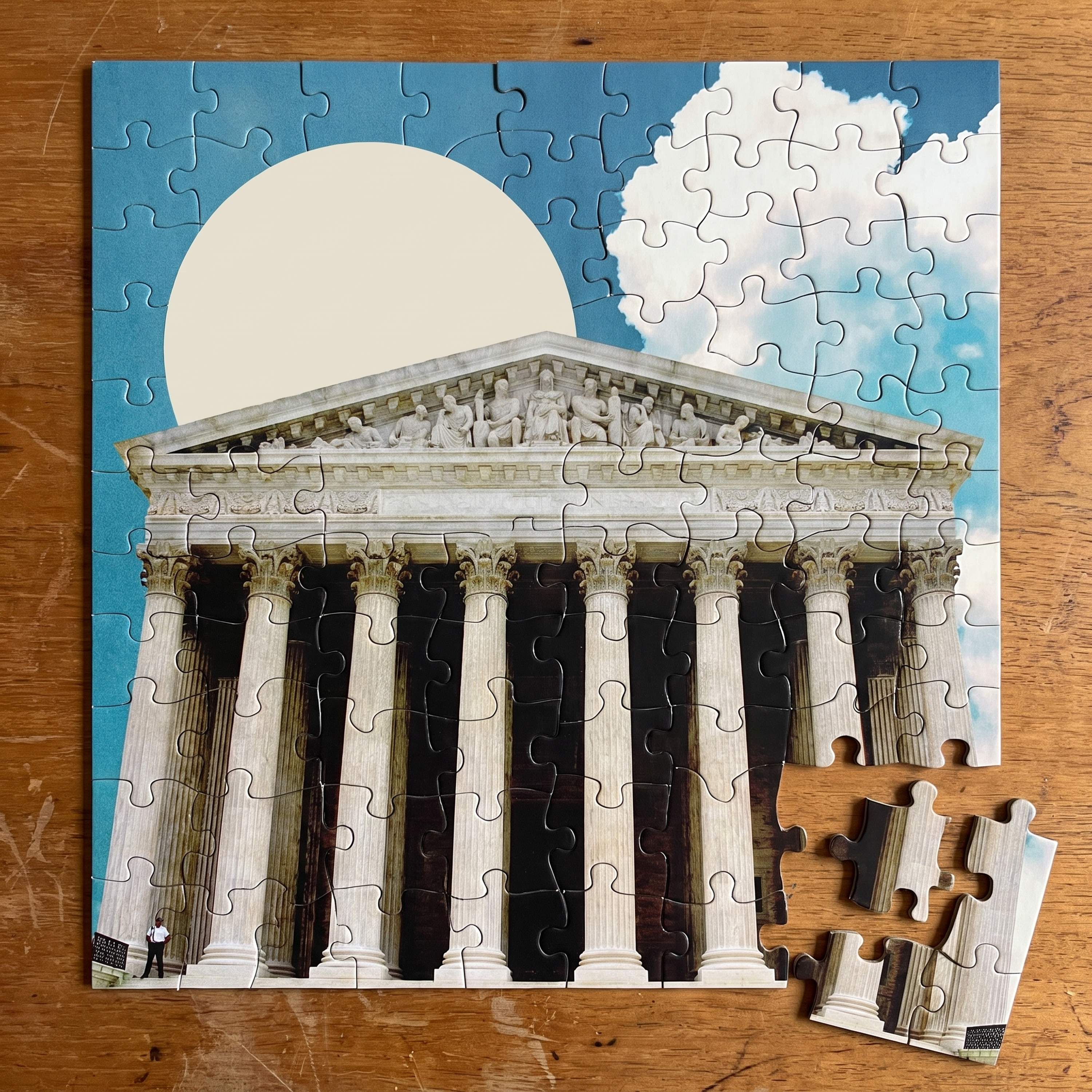
The Court’s latest Voting Rights Act decision, Louisiana v. Callais, narrows Section 2 in a way that could reshape redistricting, weaken majority-minority districts, and intensify the fight over how race and partisanship interact in elections. We unpack what the Court said, what it quietly overruled, and why the reasoning matters far beyond Louisiana. We walk through the statutory text, the long-running collision between the Voting Rights Act and the Court’s racial gerrymandering cases, and the practical consequences for future election-law litigation. Along the way, we debate whether this is best understood as a textual decision, a constitutional avoidance move, or a major shift in how the Court treats political power and racial representation. The conversation also covers the Court’s emergency procedural move after judgment, Justice Kagan’s forceful dissent, and the broader question of whether the decision is likely to help one party more than the other in the short run. The result is a sharp, candid look at one of the term’s most consequential rulings Key Topics [00:00:20] - Introduction to the episode and SCOTUS Blog partnership update [00:03:06] - Brief Supreme Court news: mifepristone litigation and shadow-docket timing [00:05:20] - Louisiana v. Callais and why the case is a major Voting Rights Act decision [00:11:35] - Voting Rights Act history: Section 2, Section 5, and Shelby County [00:13:39] - The collision course between racial gerrymandering doctrine and Section 2 [00:16:17] - Allen v. Milligan and how the Court shifted course [00:21:21] - Procedural background of the Louisiana map challenge [00:23:02] - Is the decision constitutional, statutory, or both? [00:24:28] - Section 2’s text and the 1982 amendments [00:29:14] - The Court’s reading of “less opportunity” and the role of partisanship [00:41:46] - How the majority treats Allen v. Milligan and prior precedent [00:43:06] - Constitutional avoidance and the Section 5 enforcement-power question [00:46:28] - The Court’s “updated” Gingles framework and why that matters [00:52:29] - Likely effects on majority-minority districts and partisan gerrymandering [00:54:25] - Justice Kagan’s dissent and the Court’s broader democracy critique [00:56:04] - The post-judgment timing dispute and Justice Jackson’s separate dissent [00:58:55] - Final assessment of the decision and its likely consequences Relevant Links Rick Pildes's post on the decision: https://democracyproject.org/posts/supreme-court%E2%80%99s-gutting-of-voting-provision-was-long-time-coming Travis Crum Amicus Brief: https://www.supremecourt.gov/DocketPDF/24/24-109/373625/20250903201226237_2025.09.03%20Callais%20Crum%20Amicus%20Brief.pdf
0:20DanWelcome to Divided Argument, an unscheduled, unpredictable Supreme Court podcast. I'm Dan Epps.
0:25WillAnd I'm Will Baude.
0:27DanSo, Will, we are now in our third episode, I think, in this SCOTUSblog partnership. So hopefully, we continue to have a new stream of listeners. And this episode, we're gonna talk about a higher profile case, so maybe this will this will bring in some new folks. So if you're new to the show, I'm sorry. I don't I don't really know what else to say to people who are new to new to the show.
0:52WillSo last time, I think we managed to not talk about our principal cases until, about twenty minutes and forty minutes into the hour long recording. So let's surprise people by
1:01DanYeah. I think we're gonna talk about very little other than our principal case. But you said you had two quick things you wanted to flag for people?
1:10WillYes. Two quick things. Some people have complained in the comment section on the Divided Argument blog where I encourage people to comment on and discuss our episodes that we did not talk about Justice Thomas's recent remarks about progressivism. I have not listened to these remarks. They are somewhere in my listening queue, but I confess listening to the new episodes about the new Magic the Gathering set has been a higher priority for me, and I still haven't made it all the way through the walkthrough of the new Strixhaven set.
1:39WillSo I'm behind on that, but I hear that it was controversial.
1:43DanOkay. I have not listened either. I I think we probably should and speak about it at some point. Well, although I know you you don't love kind of Supreme Court it's not really an ethics issue, but it's kinda feel like it's kind of in the same universe of kinda criticizing the judges for their extracurricular activities. It's not your favorite.
2:05WillIt'll be more interesting than our than our usual ethics conversations, maybe. I haven't heard the talk. Maybe the talk is boring.
2:11DanOkay. Well, yeah, maybe we can I was trying to find a transcript of it because I don't really wanna sit there and I'm not a I'm not a, like, a video person?
2:21WillNo. But you can play videos and just put the phone in your pocket and listen to
2:24Danall that stuff. It's kinda hard to do in the car. Do you know you know that YouTube is the the main place the the primary driver of people's discovery of podcasts?
2:34WillYes. When I did my other podcast side hustle last summer for the university, we get to do the whole thing on YouTube with, you know, professional studio and the whole
2:43Danwhole People are just like kind of sitting there, like staring at the screen. I just I don't get it.
2:49WillWell, it's all it's all on their phones, so you can.