
Discipleship for the Present Podcast · Kanu Emeruwa
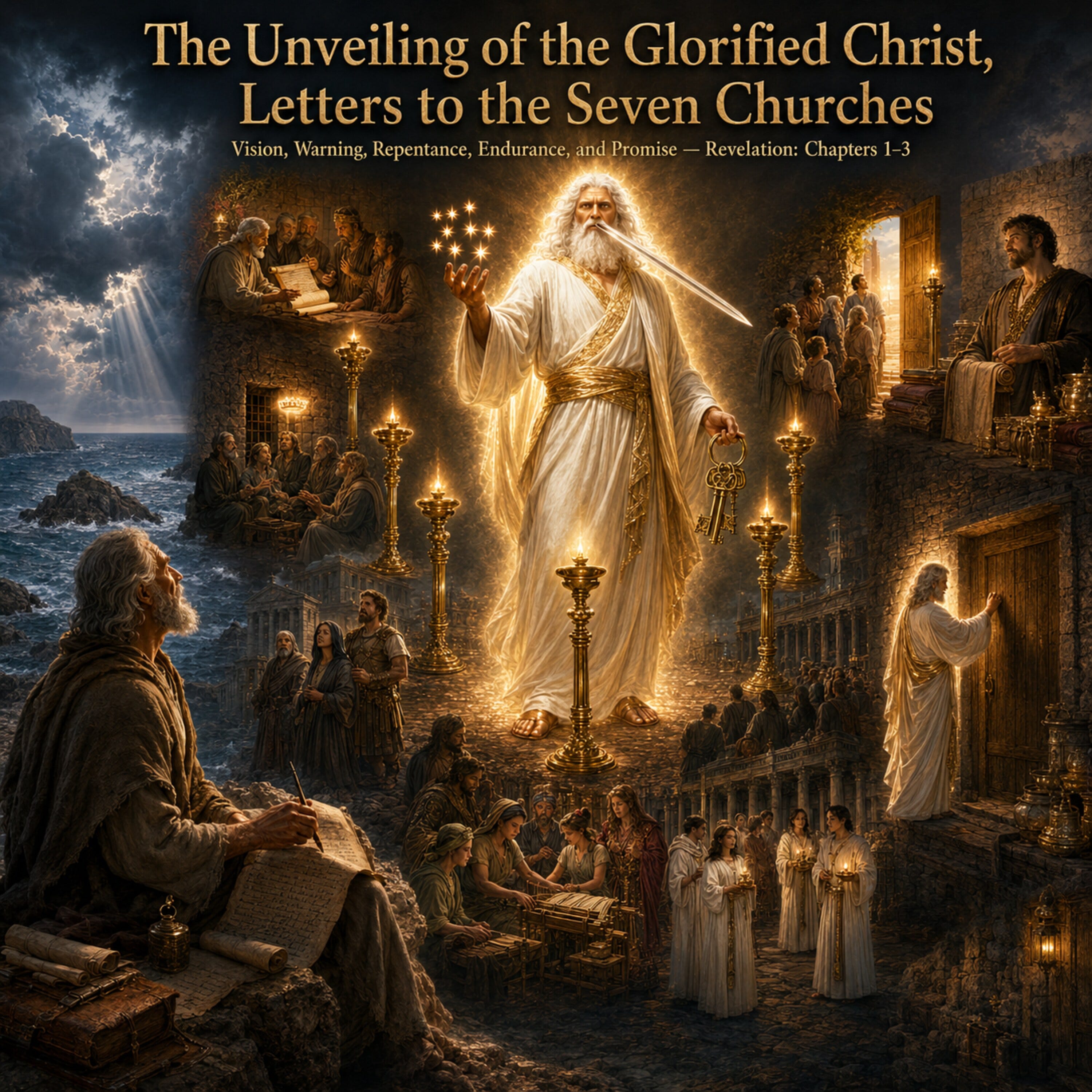
In the opening chapters of the Book of Revelation, we find a profound cosmic performance review of seven historical communities in ancient Asia Minor, now modern-day Turkey. These letters, addressed to flesh-and-blood people living in complex, hyper-competitive urban centers, reveal timeless truths about human nature, community, and spirituality. Our episode today explores these chapters as a diagnostic tool, cutting through the superficial metrics of success and failure to expose the underlying pathologies of the human spirit. Imagine walking into a doctor’s office feeling utterly exhausted, yet all tests show you are perfectly healthy. This is the paradox faced by the communities addressed in Revelation. They were functioning, thriving even, according to external metrics, yet spiritually they were decaying. This episode unpacks how these ancient texts challenge our modern reliance on external validation—be it wealth, reputation, or power—and instead demand a biopsy of the soul. The author, John, writes from exile on Patmos, a volcanic island in the Aegean Sea, under the oppressive regime of the Roman Empire. His words, born from suffering and isolation, carry a weight that transcends time. He critiques these communities not from a place of detached authority but as a brother in tribulation, sharing in their struggles. His vision, delivered with the authority of a trumpet, reveals a figure standing among seven golden lampstands, symbolizing the communities as bearers of light, not the source. The imagery of eyes like flames of fire and a voice like rushing waters underscores the penetrating insight of this cosmic diagnostic. It sees beyond curated personas and public facades, exposing the true state of the heart. The text challenges us to confront our own self-deceptions and the hollow routines that mask our spiritual poverty. In This Episode * How the Book of Revelation serves as a diagnostic tool for the human spirit * The historical and cultural context of the seven churches in Asia Minor * The distinction between being a light source and a lampstand * The penetrating gaze of truth that exposes self-deception * The critique of Ephesus: Orthodoxy without love * Sardis: The illusion of life while spiritually dead * Smyrna: Material poverty but spiritual wealth * Laodicea: Material wealth but spiritual poverty * Pergamos and Thyatira: The dangers of cultural compromise * Philadelphia: The power of faithful weakness Practical Reflection * Where in your life are you relying on external metrics to define your success, while neglecting the vitality of your spirit? * How do you respond to the penetrating gaze of truth that exposes your self-deceptions? * In what areas of your life do you need to hold fast to foundational truths amidst pressure to compromise? Suggested Substack Excerpt In the opening chapters of Revelation, we find a cosmic performance review of seven ancient communities, revealing timeless truths about human nature and...
0:00SPEAKER_01Welcome to Wisdom for the Present,
0:01SPEAKER_01where we take ancient truth and bring it into clear, modern understanding.
0:06SPEAKER_01This episode uses AI-generated narration based on human-researched and written material.
0:12SPEAKER_00So glad to be jumping into this one.
0:13SPEAKER_01Yeah, me too.
0:14SPEAKER_01So imagine walking into a doctor's office with this vague, persistent sense of exhaustion.
0:21SPEAKER_00Right, like you're just totally drained.
0:23SPEAKER_01Exactly.
0:23SPEAKER_01I mean, you are functioning,
0:24SPEAKER_01you're going to work,
0:25SPEAKER_01you're paying your bills, fulfilling all your social obligations.
0:29SPEAKER_01But beneath the surface, you know something is fundamentally misaligned.
0:33SPEAKER_00Yeah.
0:33SPEAKER_01So the doctor runs the standard tests.
0:35SPEAKER_01Blood pressure is normal.