
Discipleship for the Present Podcast · Kanu Emeruwa
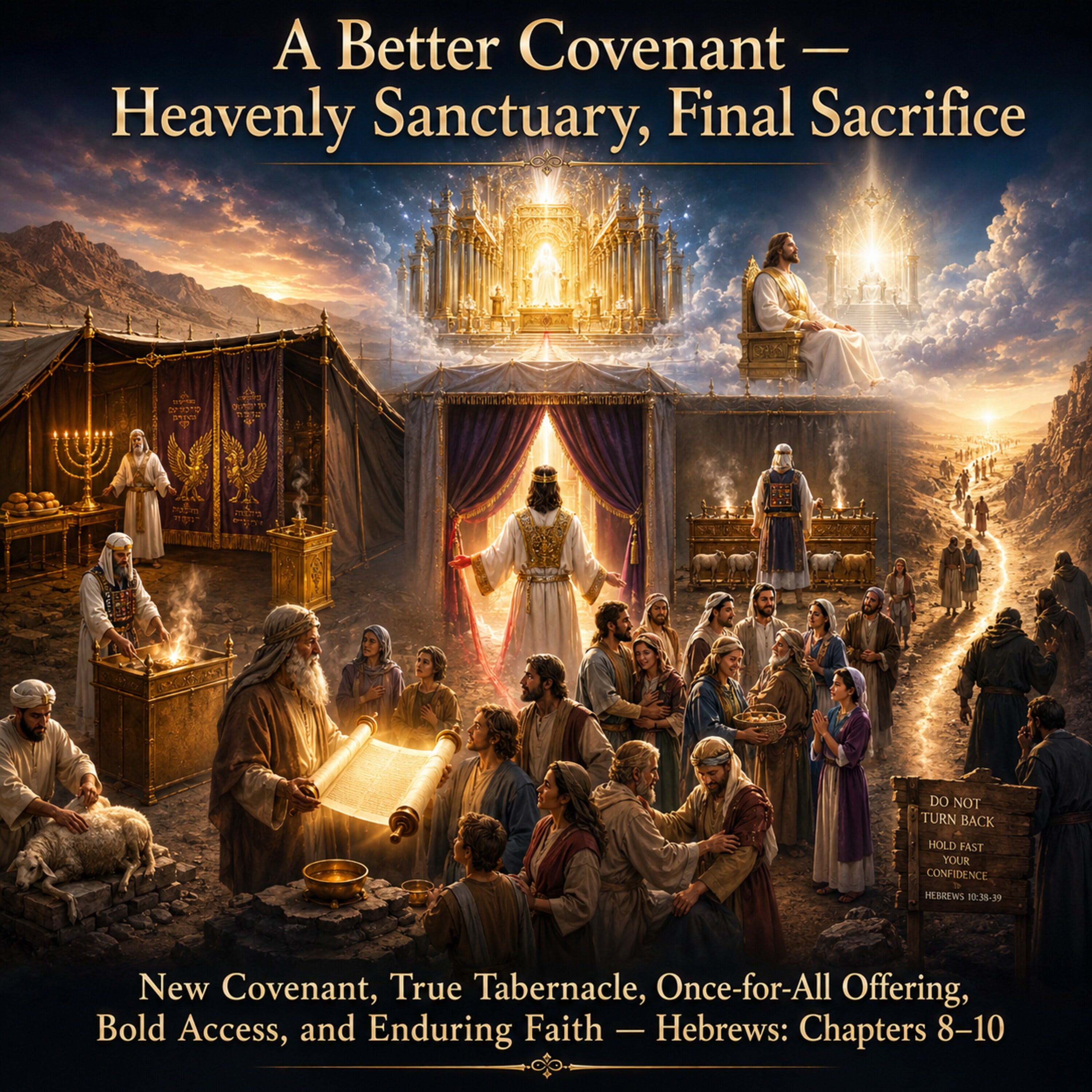
In the ancient world, peace of mind came at a steep cost — the blood of a sacrifice. Imagine having to present a living animal to a priest, witnessing its life ebb away, all to bridge the chasm between humanity and the divine. This visceral ritual, central to the old covenant, is where we begin our exploration of Hebrews chapters 8 through 10. These chapters dismantle the old system, introducing a radical internal revolution that redefines the human-divine relationship. The first-century Jewish audience of Hebrews faced immense pressure to abandon the nascent Christian faith and return to the tangible, structured system of the old covenant. This system, with its physical tabernacle and strict access rules, served as a constant reminder of humanity's alienation from God. The tabernacle's architecture — with its holy place and the impenetrable Holy of Holies — symbolized a dispensation of darkness and dread, where access to the divine was severely restricted. Hebrews presents a transformative shift: the new covenant, prophesied by Jeremiah, where God's laws are written on hearts, not stone. This internalization of divine law changes human motivation from fear-based compliance to genuine desire. The modern parallel is striking — we often perform for societal approval, maintaining external appearances while neglecting internal transformation. The new covenant invites us to shed this exhausting facade. Yet, the text doesn't shy away from the uncomfortable reality of blood. Blood, the ultimate currency of life, was central to the old covenant's sacrificial system. Hebrews reinterprets this through the lens of a last will and testament, where the death of the testator — Christ — activates the inheritance of forgiveness. This voluntary, ultimate sacrifice breaks the cycle of guilt, offering a clean conscience and bold access to God. However, the text warns against willful rejection of this grace. Apostasy, a deliberate abandonment of faith, leaves no alternative sacrifice. This stark warning underscores the seriousness of truth and the irreversible consequences of rejecting the only cure for sin. In contrast, the new covenant offers boldness — parrhesia — to enter the divine presence, transforming the relationship from alienated subject to reconciled child. This access demands community, as isolation threatens spiritual vitality. The text exhorts believers to provoke one another to love and good works, emphasizing the necessity of endurance in the face of suffering. Hebrews chapters 8 through 10 guide us from the shadows of religious performance to the reality of a transformed conscience. This journey challenges us to live by faith, enduring life's trials with a clear conscience and a resilient community. In This Episode * The visceral reality of ancient sacrificial systems and their psychological impact * The radical shift from external religious performance to internal transformation * The architectural symbolism of the tabernacle and its...
0:00SPEAKER_00Welcome to Wisdom for the Present,
0:01SPEAKER_00where we take ancient truth and bring it into clear modern understanding.
0:05SPEAKER_00This episode uses AI-generated narration based on human-researched and written material.
0:11SPEAKER_01Glad to be here.
0:14SPEAKER_00I want you to imagine a world where your peace of mind literally costs blood,
0:19SPEAKER_00like actual blood.
0:20SPEAKER_01Yeah, that's a lot to visualize.
0:22SPEAKER_00Right.
0:22SPEAKER_00Where to clear your conscience of,
0:25SPEAKER_00you know,
0:25SPEAKER_00this week's mistakes or just the things you've done wrong,
0:28SPEAKER_00you had to physically bring a living animal to a tent in the middle of the desert.
0:31SPEAKER_01And not just drop it off.
0:33SPEAKER_00Exactly.
0:33SPEAKER_00You hand it over to a priest and you have to watch it die.