
Discipleship for the Present Podcast · Kanu Emeruwa
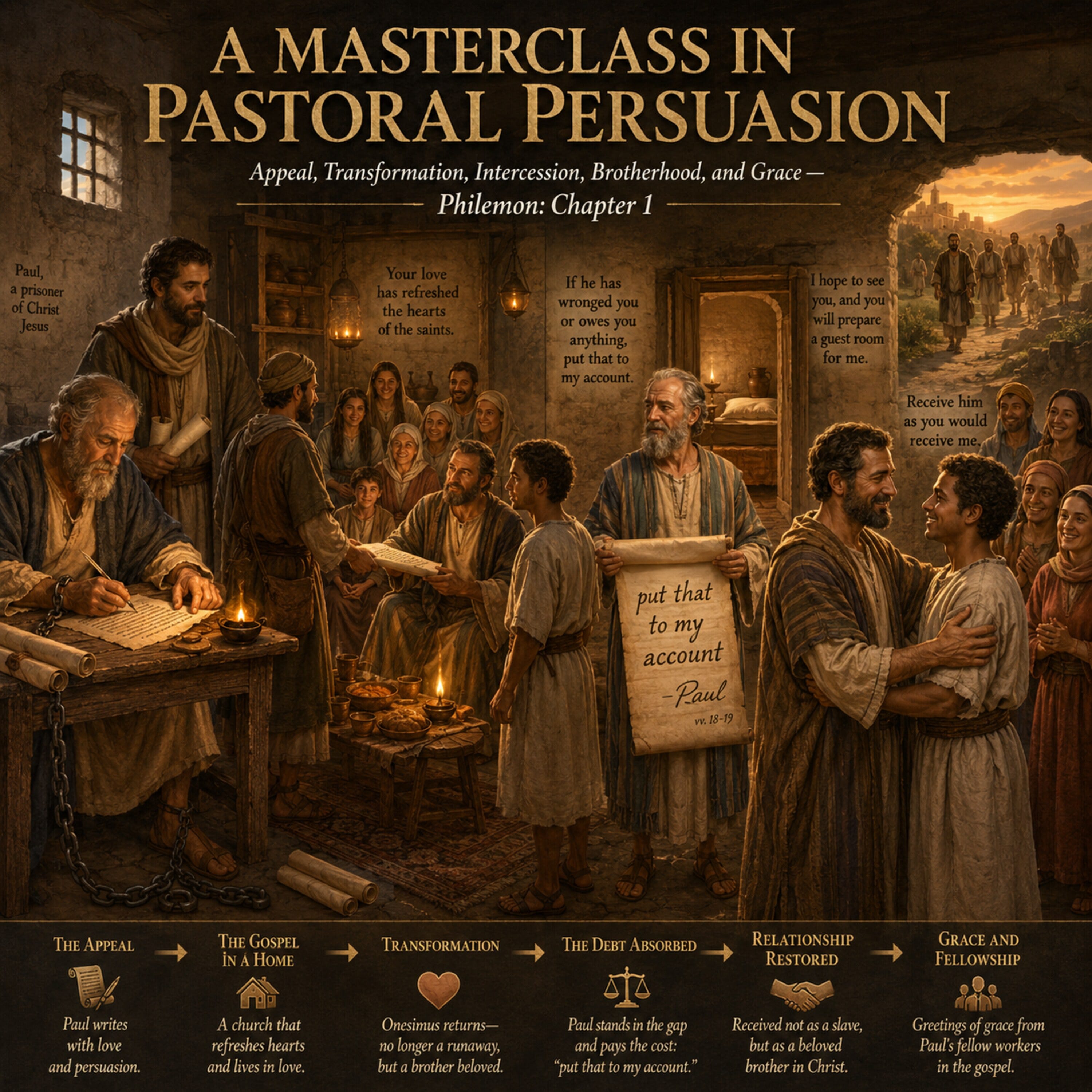
The Book of Philemon is a masterclass in resolving the unresolvable. In this episode of "Wisdom for the Present," we delve into this short, intimate letter that addresses a thorny interpersonal drama with explosive, universal principles for reconciliation. The hosts guide us through the text, revealing how the Apostle Paul, writing from a Roman prison, orchestrates a profound psychological and spiritual appeal to Philemon, a wealthy Christian in Colosse. The letter is not merely a plea for forgiveness; it is a radical redefinition of relationships, challenging the cultural norms of the Roman Empire. Paul's approach is a study in grace and persuasion. He begins by praising Philemon's character, waiving his own authority to foster genuine reconciliation. He appeals to love, highlighting his own vulnerability as an aged prisoner. The letter redefines Onesimus, the runaway, not as a slave but as a beloved brother, subverting the very foundations of the oppressive system of slavery. This ancient text challenges us to reconsider how we handle conflict, urging us to prioritize mutual respect and shared values over authority and demands. The episode also explores the broader implications of Paul's actions, drawing parallels to modern leadership, conflict resolution, and the transformative power of grace. It raises vital questions about how we view those who have wronged us and the true cost of peace. In This Episode * How the Book of Philemon serves as a masterclass in resolving interpersonal conflict * The strategic brilliance of Paul's letter from a Roman prison * The radical redefinition of Onesimus from slave to beloved brother * The subversion of Roman slavery through a "computer virus of grace" * The profound implications of imputation and suretyship in Paul's offer to cover Onesimus' debt * The stark contrast between secular mitigation and sacred transformation * How Paul's approach challenges modern conflict resolution methods * The Pygmalion effect and the power of positive expectations in reconciliation * The historical silence of Philemon's response and its implications for us today Practical Reflection 1. How do you approach conflicts in your life? Do you start with demands or by affirming shared values?2. Who is the Onesimus in your life that you need to see as a brother rather than a problem?3. Are your home and life genuinely open to reconciliation, ready to welcome those with whom you've been in conflict? Suggested Substack Excerpt The Book of Philemon is not just an ancient letter; it is a radical redefinition of relationships that challenges cultural norms. In this episode, we explore how Paul's masterful persuasion and subversion of Roman slavery offer timeless lessons in conflict resolution and the transformative power of grace. AI Disclosure This episode was created using Google NotebookLM Audio Overview, based on human-curated source material, structured guidance, and editorial review. AI is used as a tool for clarity...
0:00SPEAKER_01Welcome to Wisdom for the Present,
0:01SPEAKER_01where we take ancient truth and bring it into clear, modern understanding.
0:06SPEAKER_01This episode uses AI-generated narration based on human-researched and written material.
0:12SPEAKER_00Glad to be here for this one.
0:13SPEAKER_00It's going to be a really interesting discussion.
0:15SPEAKER_01Yeah, I'm super excited.
0:16SPEAKER_01So, you know, I was thinking about this the other day.
0:20SPEAKER_01When you break a bone, right?
0:22SPEAKER_01An x-ray shows you exactly where the fracture is.
0:25SPEAKER_00Oh, yeah, exactly.
0:25SPEAKER_00Just a stark white line on a black background.
0:28SPEAKER_01Right.
0:28SPEAKER_01And the doctor just points to it and says, you know, there it is.
0:30SPEAKER_01It's totally binary.
0:32SPEAKER_01It's broken or it's not.