
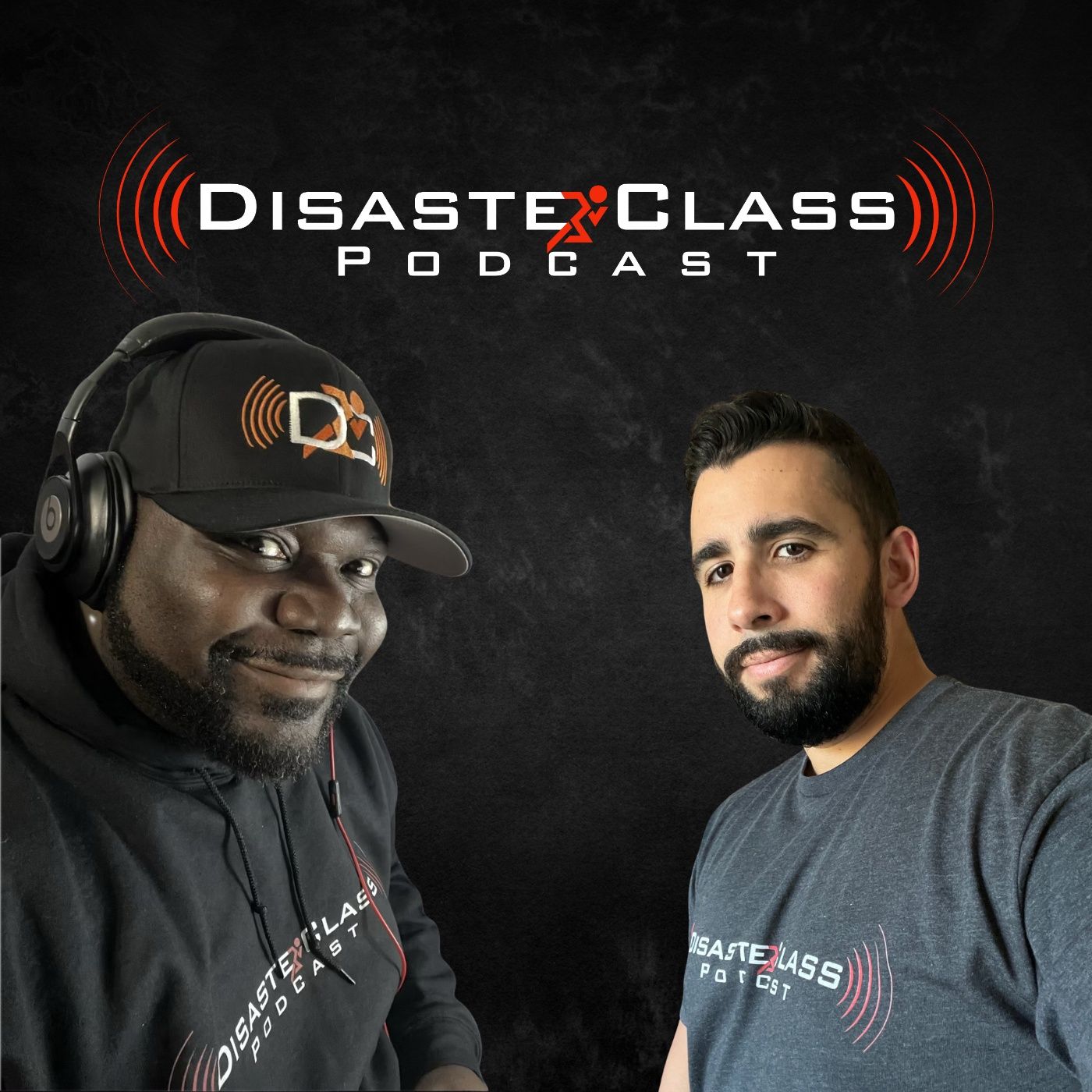
DisasterClass Podcast | Your Masterclass in Disaster Preparedness. · Jason Perez & Wesley Long | Instinct Ready Inc.
What if your emergency plan looks impressive—but has never really been tested? Alicia Johnson calls them “painted rocks”: plans, programs, and preparedness efforts that look complete on the surface but may not have the capability behind them to perform when they're actually needed. In this episode of DisasterClass, Wesley Long sits down with Alicia Johnson, founder of Two Lynchpin Road, for a conversation about what separates a completed emergency plan from genuine organizational readiness. They explore why hidden dependencies can derail response, why emergency managers tend to “fight the last war,” and why lessons learned from previous disasters should become tools—not rigid playbooks for the next incident. They also dig into one of Alicia's most important principles: “Findings aren't failures.” A realistic exercise should expose weaknesses while the consequences are still an after-action item—not during the actual emergency. The conversation then turns to something that doesn't always appear on an emergency plan at all: trust. Why do people ignore evacuation orders? The answer may have less to do with people refusing to listen and more to do with transportation, language access, previous experiences, accessibility, confidence in public officials, or whether the destination can actually meet their needs. And ultimately, emergency planners have to confront a fundamental problem with many planning assumptions: “There is no average person.” IN THIS EPISODE • Why a polished emergency plan can create a false sense of readiness • What Alicia means by “painted rocks” • How hidden infrastructure creates cascading failures • Why we tend to prepare for the last disaster • How lessons learned should become tools rather than scripts • Why “findings aren't failures” • How realistic exercises reveal actual capability • Why trust functions as part of emergency-response infrastructure • Why “they wouldn't listen” may hide the real problem • Transportation, language, accessibility, and evacuation barriers • And why emergency plans must account for real people rather than a hypothetical “average person” GUEST Alicia Johnson Founder, Two Lynchpin Road Alicia Johnson is an emergency management and disaster resilience professional with two decades of experience in the field. Her background includes preparedness, disaster response, resilience, exercises, and work with government agencies and communities. Learn more about Alicia and Two Lynchpin Road: twolynchpinroad.com SPONSORS STOP THE BLEED® Coalition A bleeding emergency can happen anywhere—and the person standing nearby may be the only one able to help. In just one hour, you can learn three simple steps that could save a life. Find a class near you, access bleeding-control resources, and learn how you can get involved at: StopTheBleedCoalition.org Instinct Ready Emergency Management Instinct Ready educates, prepares, and equips individuals, communities, and organizations for emergencies and...
0:00Speaker 1Uncontrolled bleeding is a major cause in preventable deaths. However,
0:06Speaker 1in just one hour, you can learn three easy steps
0:09Speaker 1to save a life from severe bleeding. The Stop the
0:12Speaker 1Bleed Coalition is a nonprofit organization formed to support and
0:16Speaker 1scale the Stop the Bleed campaign. To learn more about
0:19Speaker 1Stop the Bleed and to find a course near you,
0:22Speaker 1visit StopTheBleedCoalition.org.
0:26Speaker 2They Wouldn't Listen is like a cover story for... for
0:31Speaker 2what's really happening. It could be, it was a false
0:34Speaker 2alarm last time and I don't trust you to issue
0:37Speaker 2it correctly. It could be, I don't have a car.
0:41Speaker 2It could be, I don't know my neighbors and I
0:43Speaker 2don't trust them so I'm not gonna go with them.
0:44Speaker 2It could be, you didn't talk to me in my language.
0:48Speaker 2So I'm not gonna listen to you because I don't
More DisasterClass Podcast | Your Masterclass in Disaster Preparedness. episodes →