
Diabetics Doing Things Podcast · Diabetics Doing Things
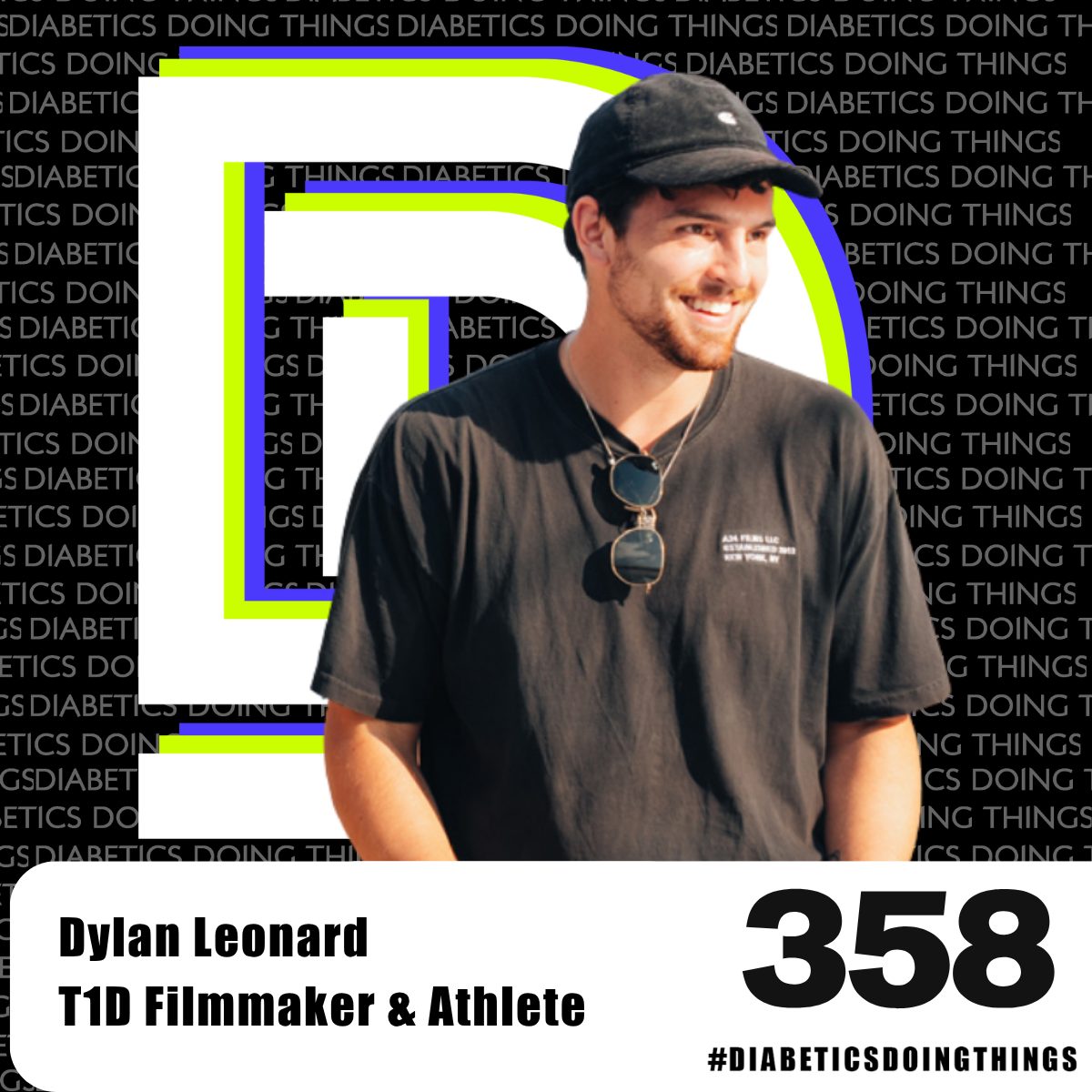
When mutual friends in the diabetes community kept telling Rob he had a doppelganger in LA, he figured they were exaggerating. Then he met Dylan Leonard — creative director, documentary filmmaker, college basketball player, type one diabetic, philosophy reader, world traveler — and yeah, the comparisons held up pretty well. Dylan was diagnosed at 15, having dropped 45 pounds before anyone realized something was wrong. He went from a hospital bed thinking he'd never eat sugar again to playing college basketball while managing T1D without a CGM, without a pump, and without knowing a single other person with diabetes for his first decade. What carried him through was activity — six hours of workouts a day during basketball season — and a mindset he's been intentionally building ever since through reading, travel, and genuinely hard conversations with himself. This episode goes wide. Rob and Dylan dig into Dylan's upcoming documentary Breaking Limits: Life on the Edge, which follows elite athletes with type one diabetes across seven different sports — from Olympic competitors to IndyCar drivers to American Ninja Warriors. Dylan invested his own money and thousands of hours into this project, not to make a cent, but to hand a 15-year-old sitting in a hospital bed the resource he never had. They also get into the philosophy of travel as the cheapest education on earth, why our brains literally haven't caught up to the abundance of modern life, the difference between manifesting and obsessing, and what a five-hour train conversation with a Norwegian stranger taught Dylan about human connection. Oh, and they're making plans to run a hoop session next time Rob's in LA. Cameras included. Chapters: 00:00 Rob's T1D doppelganger, meet Dylan 01:49 Dylan introduces himself: creative, hooper, T1D 02:39 Dylan's diagnosis story: 45 lbs lost at 15 04:36 First pickup game post-diagnosis, flying blind 06:26 How activity literally saved his diabetes management 07:28 Life after college ball: blood sugars out of whack 09:12 Morning routine: walk, no phone, delayed caffeine 10:34 Civilized to Death and the myth of progress 14:48 Our brains weren't built for this level of abundance 17:21 Phones, phones everywhere — even for T1D management 19:45 Abundance mindset, FOMO, and the creative career trap 21:01 Why athletes list it: delayed gratification is a superpower 24:20 Self-help books, repetition, and finding what actually works2 7:48 Manifestation is obsession with action behind it 29:15 Compounding growth: who were we six years ago? 33:14 Breaking Limits documentary: T1D athletes across seven sports 38:59 Nine months of travel: Vietnam, Norway, Australia, Mexico 40:00 "The cheapest education on earth is a one-way flight" 44:44 Japan and what loneliness taught him about human connection Resources: * Dylan Leonard on Instagram * Civilized to Death by Christopher Ryan — the book Dylan cites on the myth of perpetual progress and why foraging...
0:00Rob HoweDo I have a doppelganger? This was a question that was posed by at least three of my good friends in the diabetes community over the past nine months or so. They were just like, Rob, have you met Dylan Leonard? Do you know Dylan Leonard? You got to meet him. You got to meet him. You guys have so much in common. And I have to say, all of you are right. So my guest is Dylan Leonard. He is a creative from LA. He has type 1 diabetes. He played college basketball. He loves to travel. He loves to read philosophy. And we talk about what a creative life looks like for him. share a little bit about his type 1 diabetes diagnosis story, and dig into, in kind of random episode style, the questions that I love to ask, which is like something he could talk about forever, something he's changed his mind about recently, and something that he brings up in conversations with strangers. And so we have a wide-ranging conversation about everything from travel and the benefits of travel to living in a society where our brains are not wired for the abundance of today, and how we work on awareness and keeping ourselves always improving, even when things get difficult. So please enjoy this conversation with Dylan Leonard. Guys, who was MVP of the chat? Welcome back, listeners. Thank you guys for the feedback when I do these random episodes. Because today's going to be a little combo episode. You guys have not heard from this guest on this podcast before. but he's done some other podcasts which I will link in the show notes mostly on Risley Health but I'm doing this random episode because a few of you in the diabetes community like more than three I can think of three specifically we're like Rob do you know Dylan Leonard have you met Dylan Leonard because you guys are like there he's a basketball player he's a creative he's a director of photography he's Dylan Leonard Dylan man welcome to the show thanks for having
1:49Dylan Leonardme man I'm excited to to chat with you always always good whenever we have the chance to chat I feel like if we don't have a time limit on the conversation, it would just go forever.
2:00Rob Howe100%. 100%. Whether it's talking about old Lexus SUVs or traveling or diabetes and basketball, it could go any different way. So I'm excited to have...
2:12Dylan LeonardI think it's worth noting that we drive the same old car, both played college basketball. We're both big white dudes with brown hair.
2:21Rob HoweBig guards, dude. We're out there. Yeah. I love it. Yeah, I agree. It's funny to me, people making those comparisons and then meeting you. And I get it. We're on the same path, just in different ways. So I love it. Love it. All right, man, let's talk a little bit about your diabetes journey, and then we'll dig into sort of the randomness of this episode because you've just been on a whirlwind of travel over the last nine months, both on personal travel journey as well as work. So I want to dig into that. That's always a topic that I'm interested in and a lot of people are as well. But tell us about your type 1 diabetes diagnosis story.
2:58Dylan LeonardYeah, I spent my middle school, early high school years fantasizing about being a professional basketball player. It was all I wanted to do. Obviously, the first step to that was getting to college. And I was diagnosed at 15. I had lost about 45 pounds. So it was not insignificant. I think I was about 185 and stepped on the scale and I was 140. And I just thought like, oh, the scale is broken because that's not possible. Exactly. There's no way that that occurred. And my mom just thought, oh, he's skinny because he's always playing basketball. And it wasn't until a family friend saw me as I was on the city bus heading back from a training session. And she was like, what happened to you? And I was like, what do you mean? What happened to me? I just played basketball for two hours.
3:44Rob Howea good that's like never a good context for that to happen to somebody yeah so she she called my
3:50Dylan Leonardmom her exact words were that i look like a victim from the holocaust and so also not a great great image to have of yourself as a 15 year old boy i went to the hospital back in the day you know you spent four days in the hospital instead of what seems like today the modern world of diabetes is that you're in and out and you've got a cgm on you already so and i just you know funny enough I had the reaction that most people have, right? I thought life was over. I, you know, remember crying, thinking I was going to be eating broccoli and chicken breasts for the rest of my life.
4:26Rob HoweEvery 15-year-old boy's worst nightmare.
4:28Dylan LeonardI had a big sweet tooth as a kid. And so I was like, I'm never going to be able to eat sugar again. And obviously that's not true. But once I spent my time in the hospital, went through all the education and whatnot, I just kind of went right back to it. After I got out of the hospital, I had gained that weight back pretty rapidly because a lot of it was water weight and retention and muscles and whatnot. And I went to play pickup basketball the next day and had no idea what I was doing. Had a thing of glucose tabs and was like, if I feel weird, I need to eat these. And, you know, that's that. And my vision went blurry and I couldn't see. And that was the first thing I'm like, oh, shit, I don't know what's going on in my body. It's scary. And so, but I don't remember it too much other than that event. And from then on out, it was really just like, I'm not going to let this thing stop me from doing the things that I want to do. And we were under-resourced, I'll say, as a family and didn't have access to the tech. So first 10 years, I didn't have a CGM. I didn't have a pump. Didn't know another person with type 1 diabetes for the first 10 years. Never went to a camp. Saw the endocrinologist maybe once a year. So it wasn't the best sort of upbringing as a diabetic. and a lot of it was just activity saved me, man. Like I truly don't know what would have or could have happened to me had I not been so active because I was taking so little insulin for so long just because I was in the gym all the time. And so when I got to college and I was playing college basketball, I mean, I was working out six hours a day. I would literally have days where I just wouldn't even need to take insulin because I was eating to keep my blood sugar level and then I would be working out. And, you know, I didn't understand the aspect of the fact that you could go into DKA if you went a whole day without, you know, like that stuff didn't register for me and I wasn't educated on it.
6:26Rob HoweWell, I want to talk a little bit about activity saved me because that's something that resonates with me and my story. I think it continues to save me. I'm not sure how you feel about it as well. My identity is as an athlete, and I think at some point we are who we are. I think back to when you're rating athletes as an evaluation perspective in college, right? Your coach, you get to a certain point, and it's not that you don't continue to improve, but you are the type of player that you are. You have that sort of role at that level. And I feel that way sort of about my activity and the things that I need as a human. And activity is one of those. It honestly has nothing to do with the diabetes, but it is such a force multiplier for the diabetes, whether it's insulin sensitivity or muscle development, helping insulin absorption, being aware of what I eat and how that affects my body and my energy and my glucose. I know you've been posting since you've been back from your travels, back playing pickup basketball, like wanting to obviously be a high performer in that regard. How does that activity land for you today?
7:26Dylan LeonardIs that still just kind of part of your identity? Oh, I mean, it makes such a difference because when I left, when I stopped playing basketball in college, I didn't touch a ball for like two or three years. I was just exhausted from it. Like life had been basketball for the last 15 years prior. And my blood sugar just completely went out of whack. Like I couldn't, because I was so used to being as active as I was, I was now like at 200 or above all the time. And I didn't understand like, oh, I need to go see the endocrinologist so I can adjust the amount of insulin that I'm getting and my carb ratios and all that because I'm not burning off as much. And now, like, I see a version of that when I have days where, say, I'm editing a project or building out the creative for a project and I'm behind my desk all day and I'm not moving. Like, that and lack of hydration for me are probably the two things that I watch. Like, okay, those stubborn highs just won't come down, you know, and so I've...
8:28Rob HoweI'm laughing, like, if you're listening to this, you can't see me laughing, but I'm laughing because that's like my innermost thinking about diabetes and work is like, Ooh, I'll have like a big, say I go to Chipotle and I have like a high carb meal. And then I have two meetings in the afternoon. I'm like, Oh no, like I'm not going to be hydrated enough. I got to chug water in these meetings. I'm not going to be moving around. I'm going to be seated. I know that I'm going to have high blood sugar this afternoon. So to hear you like the hydration and the movement is such a huge part of my diabetes management. And if you put me in front of a screen for a couple hours and I'm not able to do my normal activity, my blood sugars respond. Even when my technology in the background, sometimes it's not even able to calibrate fast enough to, you know, those changes. So that's, again, another similarity between
9:12Dylan LeonardRob and Dylan. Yeah. So I've basically just worked in that, like, I play basketball twice a week. I try to have some form of activity. I know we talked about this and another similarity between you and I is sort of like the optimization of like sleep and routine. And so one of the things that I started doing was like first hour of my day, I would wake up at seven, go for a walk without my phone for 30 minutes. And then, you know, post walk, I'm stopping somewhere and reading for 30 minutes. And so the first hour of my day is no phone. And I'm starting with activity and and keeping things moving and doing that coupled with delaying the caffeine intake and you know having breakfast and all like I've watched my blood sugar kind of level out a little bit more in those mornings because I used to eat breakfast and I would just spike and have so much trouble bringing it back down it'd be like 11 o'clock and I'm like stuck at 250 and can't get get down from it and so it's I've sort of worked in those days when I know I'm at home okay I'm gonna go for a walk and take a call or I'm going to go for a walk and do like my language learning app or, you know, whatever it to break up those days. So if I'm playing basketball or if I'm not playing basketball, I have something that keeps me moving so that I don't have those days where I'm just
10:32Rob Howenot even outside at all. For sure. Okay. I want to talk a little bit about like get into the randomness of this episode. We'll talk kind of travel and then I want to pick your brain and talk about your documentary that you've been working on with some other diabetics doing things podcast alumni and some amazing people here in the community. But like, what's something that Dylan Leonard can talk about forever? Or something that you continually bring up either conversations with strangers or with friends? Like what's something you could talk about forever?