
Dementia Researcher Vodcast · Dementia Researcher
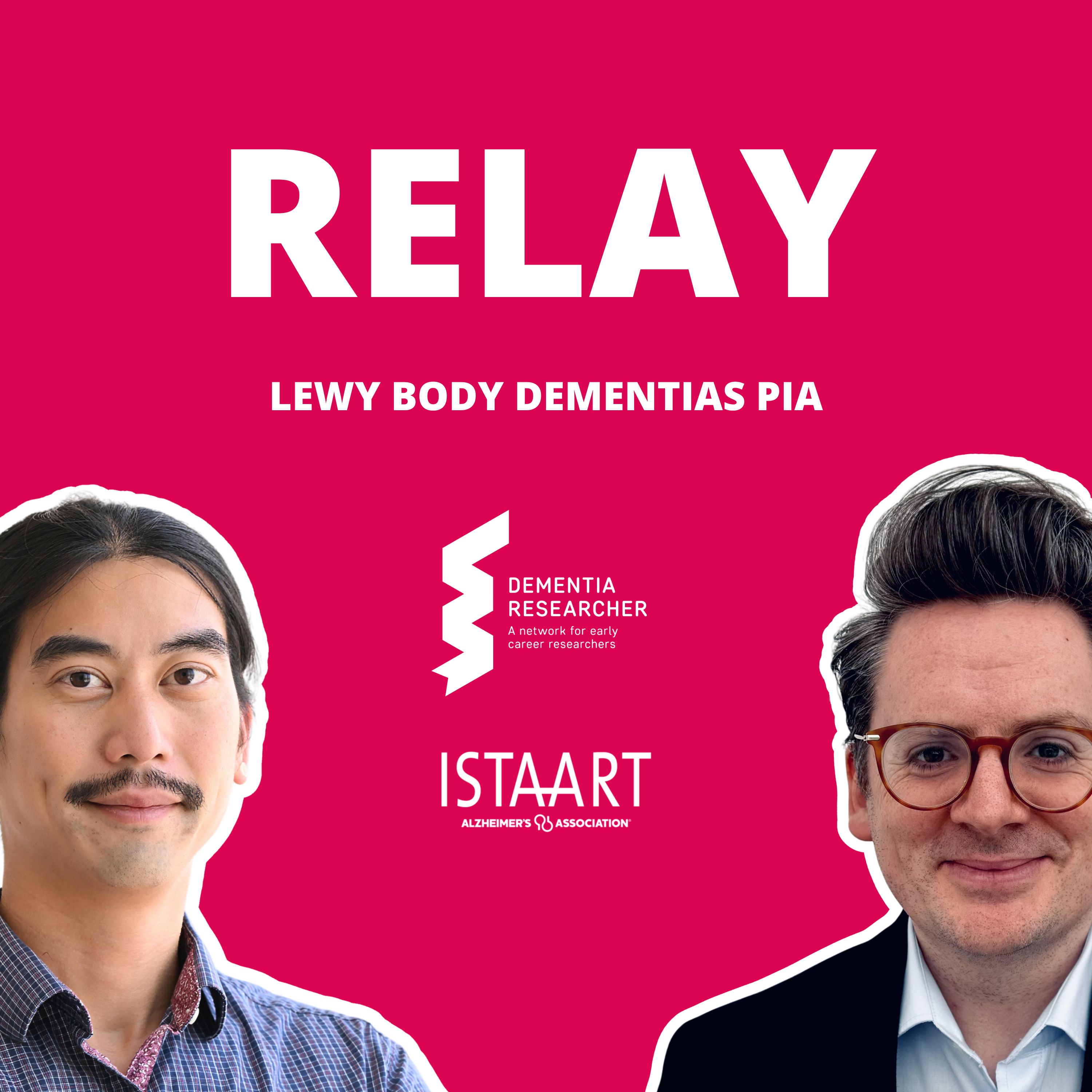
Welcome to the seventh season of the Dementia Researcher X ISTAART PIA Relay Podcast. Across six episodes, leading early career and senior researchers hand the mic from one ISTAART PIA to the next, giving you an honest, peer-to-peer tour of where dementia research is actually heading, from wearables and biomarkers to policy and trial design, in the run-up to AAIC. Lewy body pathology shows up in roughly 30% of the brains of people who had dementia, yet it gets diagnosed in only about 5% of cases. Closing that gap has shaped much of Dr Joe Kane's career. Joe is a geriatric psychiatrist at Queen's University Belfast and outgoing Chair of the ISTAART Lewy Body Dementias PIA, and with host Dr Patrick Lao he traces his work from the Diamond Lewy programme to consensus diagnostic guidelines built by Delphi process. They discuss the symptoms clinicians often miss because they don't think to ask, from constipation to loss of smell, the cardiac scans and seed amplification assays now detecting pathology in CSF and even skin, and the TOP HAT trial repurposing an anti-sickness drug for hallucinations. Joe makes the case for a Lewy body specific rating scale, explains why the prodrome may be psychiatric or delirium rather than cognitive, and runs through the PIA's biggest AAIC programme in years, including a PIA Day panel on seed amplification assays. Takeaways Lewy body dementia is heavily underdiagnosed: pathology appears in about 30% of brains but is diagnosed in around 5%. Much of the disease shows outside the brain, in constipation, blood pressure and smell, so it gets missed if nobody asks. Seed amplification assays, now usable on CSF and even a small skin biopsy, are changing how the pathology is detected. Trials can fail on the wrong yardstick, which is why the PIA is building a Lewy body specific rating scale. The prodrome is not only cognitive; the first sign can be depression, psychosis or delirium, and those gaps need data. -- The Alzheimer’s Association International Society to Advance Alzheimer’s Research and Treatment (ISTAART) convenes the global Alzheimer’s and dementia science community. Members share knowledge, fuel collaboration and advance research to find more effective ways to detect, treat and prevent Alzheimer’s and other dementias. Professional Interest Areas (PIA) are an assembly of ISTAART members with common subspecialties or interests. There are currently 30 PIAs covering a wide range of interests and fields, from Neuroimaging to Diversity and Disparities and everything in between. Find out more at https://istaart.alz.org/ -- A transcript of this show, links and show notes and profile on all our guests are available on our website at https://www.dementiaresearcher.nihr.ac.uk. If you prefer to watch rather than listen, you will find a video version of this podcast on Apple Podcasts, YouTube, and on our website. Leave us a tip: https://dementia-researcher.captivate.fm/support Follow us on social...
0:00(upbeat music)
0:02- [Voice Over] Hello, and welcome to season seven
0:04of the Dementia Researcher ISTAART Relay podcast.
0:08In this series, members of the ISTAART's
0:11professional interest areas interview each other
0:13about their PIAs and the hot topics in their fields.
0:18Each guest then becomes the next episode's host,
0:21passing the conversation along
0:22from one researcher to the next.
0:25We're releasing one episode a day
0:27in the run-up to the Alzheimer's Association
0:30International Conference, this year in London and online,
0:34showcasing the work of the ISTAART PIAs.
0:37Thank you for listening.
0:39(upbeat music)