
DeepSeek and Me Podcast | Brain Healing & Neuroplasticity · The D.A.M. Project | Neuroscience & Brain Healing
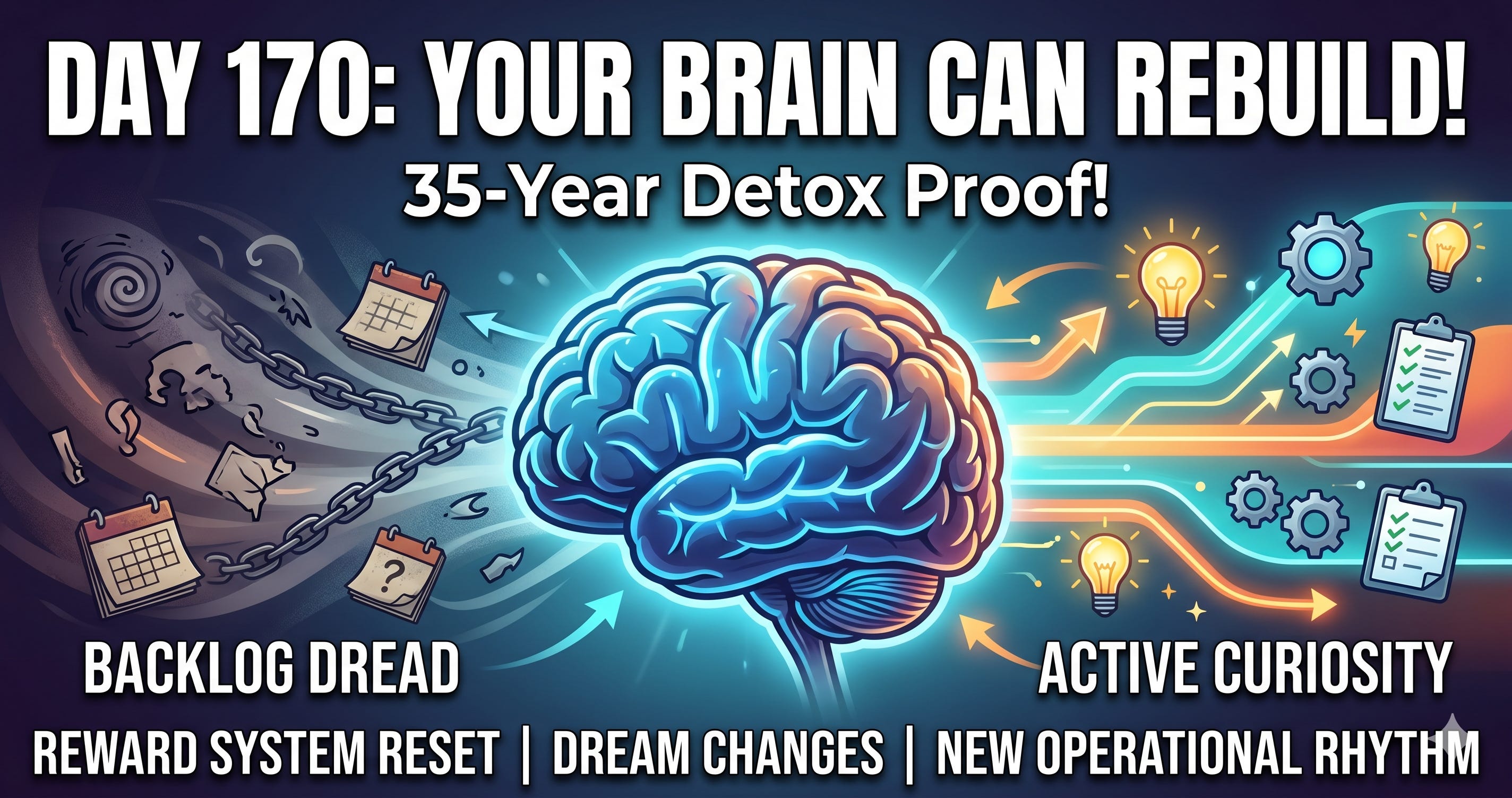
Yesterday at Day 170 of my 35-year weed detox, here is how my brain completely flipped the script from backlog dread to active curiosity, how the terrifying dreamscapes of early withdrawal have transformed into calm, non-threatening narrative integration, and why this structural shift proves your brain can permanently rebuild its reward architecture without substances. The Temporal Architecture of Recovery: Days Have a New Shape When you spend over three decades using cannabis daily with an alcohol chaser at weekends as a regular release valve, you inadvertently destroy the natural shape of time. Your week becomes a mechanical grind of building up executive tension, and your weekend becomes a chaotic chemical drop designed to flatten it out. Yesterday, at Day 170, the data showed that this volatile cycle has been entirely replaced by a stable, predictable, and structured inner rhythm. I woke up after six hours of very deep sleep, feeling clear, minimal grogginess, and snapping into immediate, high-velocity function. My morning baseline sat at a steady 5/10, but the real magic happened as the day unfolded. All core project workflows were cleared ahead of schedule before moving into afternoon client sessions. With brain fog and neurological rubble sitting at an absolute zero, I noticed a profound shift in how the hours felt: Time no longer feels like an unpredictable adversary. The days have taken on an entirely new shape. Instead of moving through the week in a state of hyper-vigilant defence, my unmasked brain is recognising a clean, calm cadence. There is a distinct morning ramp-up, a fluid afternoon execution phase, and a peaceful evening wind-down. For an undiagnosed neurodivergent mind that historically required chemical sedation just to slow time down, this predictable structural blueprint is the ultimate relief. The Recalibration: Task Completion Triggers the Burst The absolute crown jewel of the Day 170 log is a profound neurochemical pivot point: The healthy reward system is officially back online. For the first time in 170 days, task completion is consistently triggering a clean, organic dopamine burst. In the old ecosystem, a massive mountain of backlogged work was a terrifying, paralysing burden. A low-dopamine brain looks at a long to-do list and experiences absolute executive freeze - the backlog feels like a monument to your own failure, inducing immense dread. To bypass that pain, you would smoke to forcefully force a fake sense of completion without actually changing reality. Yesterday, that entire dynamic inverted. My head was whirring with a vibrant, natural curiosity. I found myself genuinely looking forward to tackling my tasks rather than fearing them. The backlog is no longer a heavy burden; it has been entirely reframed as an asset and an opportunity to trigger a natural internal reward. This is monumental proof that the prefrontal cortex and the subcortical reward pathways have successfully remodelled their receptors....
0:00SPEAKER_00The Dopamine Inversion Flipping the Script on Executive Dread Yesterday,
0:06SPEAKER_00at day 170 of my 35 year weed detox,
0:09here is how my brain completely flipped the script from backlog
0:13dread to active
0:14SPEAKER_00curiosity.
0:15How the terrifying dreamscapes of early withdrawal have
0:18transformed into calm,
0:19SPEAKER_00non-threatening narrative integration,
0:22and why this structural shift proves your brain can permanently
0:25rebuild its reward
0:26SPEAKER_00architecture without substances.
0:29SPEAKER_00Daily Dispatch,
0:30Day 171 When you spend over three decades using cannabis daily
0:35with an alcohol
0:36SPEAKER_00chaser at the weekends as a regular release valve,
More DeepSeek and Me Podcast | Brain Healing & Neuroplasticity episodes →