
Curious Worldview · Ryan Faulkner
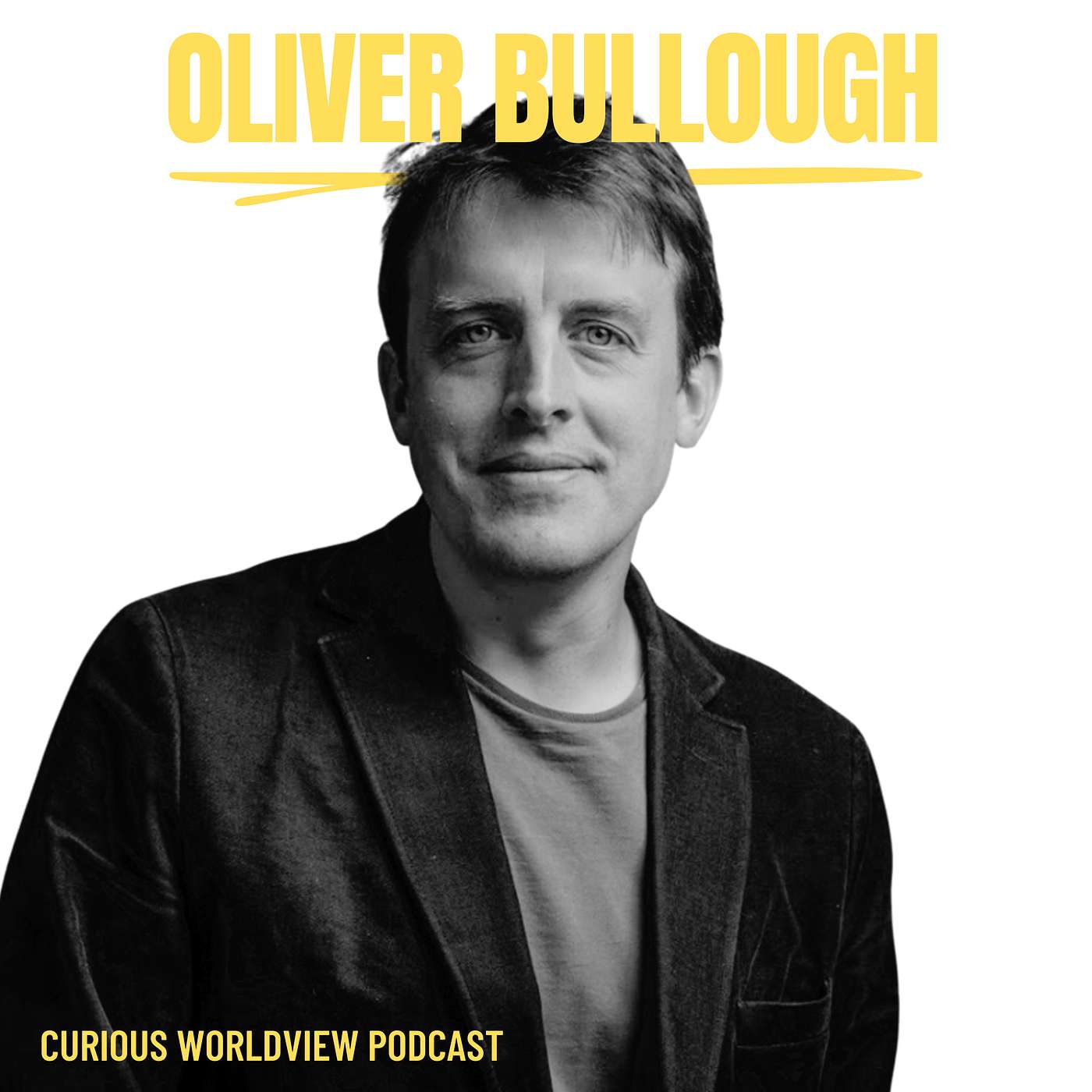
Four years ago, almost to the day of recording, Oliver Bullough was a guest on this show for the first time to discuss his concept of 'Moneyland'. This borderless virtual country where the wealthy go to keep their wealth beyond the reach of any government, any tax office, any voter. Between then and now, I've maintained interest on this thread. Nicholas Shaxson discussed on the pod the cancerous plumbing of the offshore world in Treasure Islands. John Christensen showed how that plumbing quietly corrodes culture and politics. Bill Browder shows where the abstraction becomes violence. Nathan Lynch showed how Australia is every bit as dirty as anywhere else, and Matt Friedman, just a few weeks ago, put a number on the human end of it: $236 billion a year in illicit profit from modern slavery. Oliver's latest book is Everybody Loves Our Dollars: How Money Laundering Won. His argument is bleak, precise, and very hard to wave away. We have spent decades and roughly $200 billion a year building an anti-money-laundering fortress, and by the best available estimates the share of the world economy being laundered hasn't moved since the 1990s. We get into why governments have failed so completely at this one. We follow the money where it actually goes: not just through banks, but through cash (central banks printing $100 bills faster than they can build factories), through crypto and stablecoins, and through the oldest trick of all — value hidden inside shipments of used cars, watches, oil, grain, the way the Medici did it in Florence. We talk about the scam compounds of Southeast Asia, where trafficked people are tortured into defrauding pensioners on the other side of the world, and how that horror connects — directly, traceably — to the very top of global power, through Tether, Cantor Fitzgerald, and a US Commerce Secretary's family. And underneath all of it, the real subject: the relationship between money and power, and what happens to democracy when the two become the same thing. Oliver's "offshore bandits" — elites who loot their own countries while living and banking somewhere else, feeling none of the consequences — are a darker upgrade on Mancur Olson's stationary bandit. It's a Moneyland story, and it's spreading. There are lighter turns too — Wright Patman, the forgotten Texan congressman who fathered anti-money-laundering law; Peter Pomerantsev and the propaganda war; Bill Browder before he was Bill Browder; and an unexpectedly lyrical detour to the walnut forests and white mountains of Kyrgyzstan. Oliver Bullough... Links Oliver Bullough Books Curious Worldview Substack Podcast Starter Packs Investigative Journalists Offshore Finance/Kleptocracy & Money Laundering Geopolitics/Economics/Economic Development Explorers & Adventurers Leave a review on Apple or Spotify (nothing does more to help grow the show)
0:00SPEAKER_00Oliver Balo is a journalist and author.
0:01SPEAKER_00He has written Let Our Fame Be Great, The Last Man of Russia, Moneyland, Butler to the World, Everybody Loves Our Dollars, How Money Laundering Won, which is his latest, and what we're going to be speaking about today.
0:12SPEAKER_00Oliver was first a guest on the show almost four years ago to the day.
0:16SPEAKER_00I actually just checked.
0:17SPEAKER_00It was the 15th of March 2022.
0:19SPEAKER_00And I've been interested in money laundering and the cancerous nature of offshore finance since I first discovered Oliver's book, Moneyland, which has followed up many other guests since.
0:29SPEAKER_00Money laundering gets to the bottom of how criminal organizations can scale to the heights that they do, make scamming more scalable, cartels more scalable, trafficking more scalable.
0:38SPEAKER_00It's the heart of the cancerous plumbing of financial secrecy.
0:42SPEAKER_00Welcome back to the show, Mr.
0:43SPEAKER_00Bob.
0:44SPEAKER_00Yeah, it's great to be here.
0:45SPEAKER_00So is Moneyland an inevitable consequence of globalization?
0:50SPEAKER_00So if countries with no competitive advantage to speak of look out into the market and have no way to really generate an income for themselves, is using financial plumbing to create one an inevitability?
1:02SPEAKER_01Yes.
1:02SPEAKER_01I suppose it's an inevitable consequence of the combination of globalization and greed.