
CSU's The Audit · Colorado State University Marketing and Communications
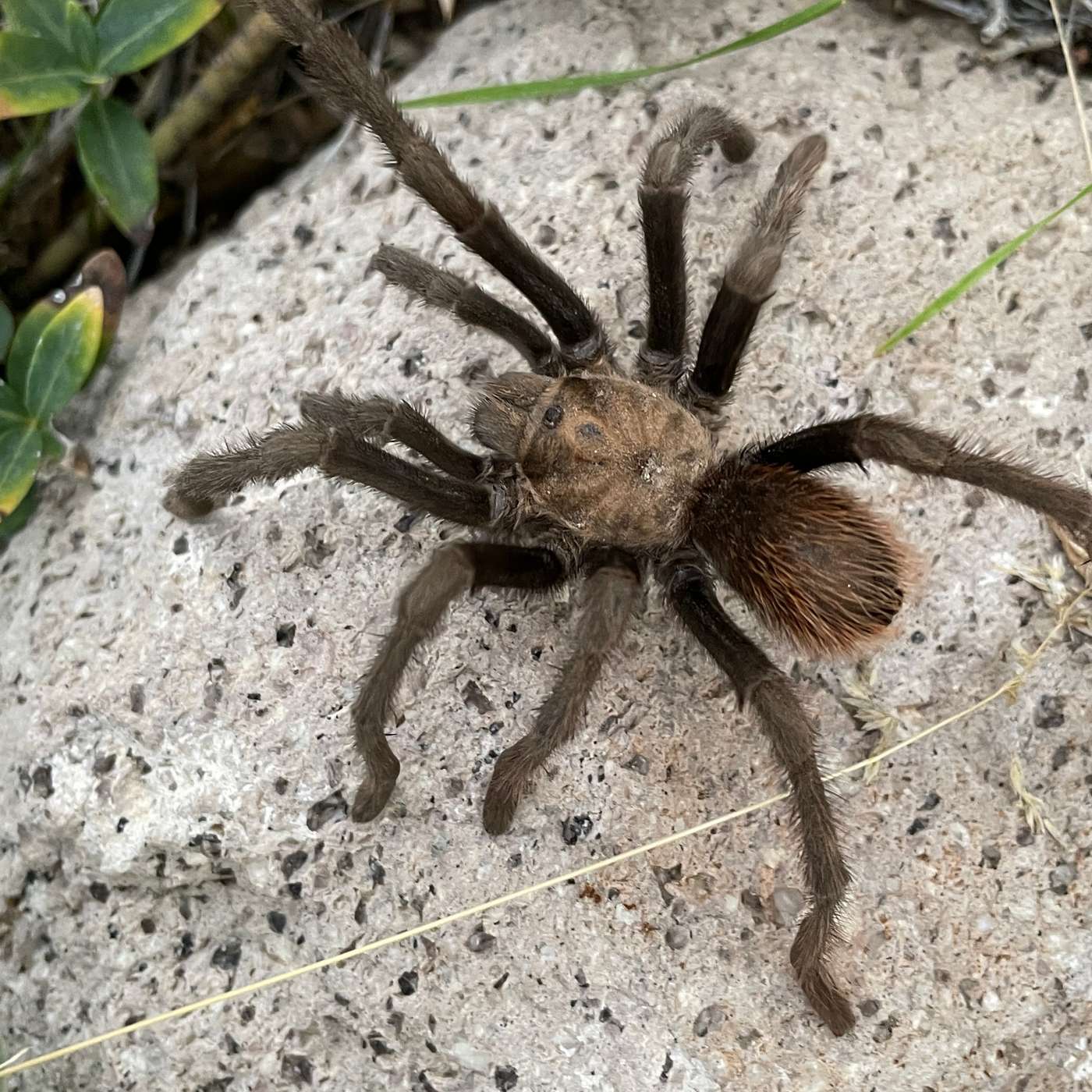
Each fall, thousands of Oklahoma brown tarantulas emerge from their burrows in southern Colorado and set off on a remarkable journey known as the "mate-gration." But in recent years, visitors and researchers have noticed something troubling: there are fewer spiders making the trek. Habitat loss, climate change and drought are putting pressure on tarantula populations across the state. At the same time, tarantulas and other wildlife are becoming targets in a global illegal trade that reaches far beyond Colorado. From brightly colored spiders sought by collectors to endangered species smuggled across continents, wildlife trafficking has become one of the world's largest illicit markets. In this episode, CSU entomologist Maia Holmes, along with John Macdonald and Rowan Hilend from the College of Business, will discuss Colorado's tarantulas, the surprising and strange ways wildlife is trafficked around the world, and what researchers, communities, consumers and law enforcement can do to help protect vulnerable species before they disappear for good.
INTRO: Every fall, thousands of Oklahoma brown tarantulas emerge from their burrows in southern Colorado and set off on a remarkable journey. Known as the “mate-gration,” the annual event sends mature male tarantulas wandering across grasslands in search of mates, creating one of Colorado’s most unusual wildlife spectacles. But in recent years, visitors and researchers have noticed something troubling. There are fewer spiders to see. Habitat loss, climate change and drought are putting pressure on tarantula populations across the state. At the same time, tarantulas and other wildlife are becoming targets in a global illegal trade that reaches far beyond Colorado. Wildlife trafficking – targeting creatures ranging from brightly colored spiders sought by collectors to endangered species smuggled across continents – has become one of the world’s largest illicit markets. Understanding how that trade operates requires looking beyond the animals themselves and into the complex supply chains that move them around the world. Researchers at Colorado State University are applying supply chain science to conservation, examining how illegal wildlife networks function, and more importantly, how they can be disrupted. Their work explores everything from the motivations that drive poaching to the hidden pathways traffickers use to move animals, insects and wildlife products across borders. In this episode, I’m joined by CSU entomologist Maia Holmes, along with John Macdonald and Rowan Hilend from the College of Business, who study illicit wildlife supply chains. We’ll discuss Colorado’s tarantulas, the surprising ways wildlife is trafficked, and what researchers, communities, consumers and law enforcement can do to help protect vulnerable species before they disappear for good. HOST: Maia, as an entomologist, you have an interest in all kinds of insects, but I know that you have a soft spot in your heart for arachnids. What is it about spiders? MAIA HOLMES: Part of it is the fact that so many people have such strong feelings about spiders. More people are now starting to feel very strongly that they love spiders, but I’ve spent a lot of time previously trying to convince people not to “see a spider, squish a spider.” I like that they have so much more personality than other arthropods do. You can have a wide range of personalities among spiders, especially within tarantulas. You can have a whole bunch of tarantulas that are the same species but have a bunch of different personalities within those species. And they’re fuzzy. I mean they’re big, fuzzy spiders. It’s hard not to love them. HOST: Well, there might be some people that don’t agree with that. HOLMES: Only a few. HOST: Every fall, southern Colorado becomes the site where tarantulas, specifically the Oklahoma brown tarantula, can be found walking about for what’s referred to as the mate-gration. Tell me a little bit about what happens there. HOLMES: In the fall, when it starts getting cooler at night, the male tarantulas that are mature will pick up and start wandering around trying to find females. The females are going to stay in their burrows. The males usually head west because that’s a way that they can all kind of collaborate in a direction, and they’ll start walking around trying to find females via smell. So, they’re walking around, they’re coming up to holes, they are tapping on the holes if it smells like there’s a female there. Hopefully they mate and hopefully they don’t get eaten, but sometimes it happens. Then as soon as you get to about that first frost, you’re going to have a die off of the males that marks the end of the season. HOST: I know that specific numbers have not been calculated – it’s probably really hard to count spiders – but over the years there’s been a pretty visible decline in the number of tarantulas that are seen during mating season. It used to be you’d see hundreds, thousands of spiders, and now it’s tougher to find them at all. Why is that? HOLMES: There are a lot of different reasons. It’s death by a thousand cuts. Part of it is that climate change is making it harder. Drought seasons make it really hard on newly hatched tarantulas. It is a bug-eat-bug world out there, so being a baby tarantula is not the easiest job. Then there’s been a lot with habitat loss, changes in habitat loss, and then also habitat fragmentation. It’s a little harder for a tarantula to cross the road than, say, a chicken. You have a lot more issues with being able to travel the environment and then on top of that, there’s just fewer out there because not as many are making it to adulthood. HOST: And maybe all of us coming out to see them is maybe not always helpful? HOLMES: I think there are helpful and non-impactful ways to do it, responsible ways. I know they’re starting to give guided tours, which is always good to be able to go and look with somebody who knows where to find them and how to reduce the amount of impact you’re having when you go to look at wildlife. But there’s many different reasons that tarantula numbers are falling in Colorado. HOST: Now, while the Oklahoma brown is impressive in large groups, it’s not exactly the most striking tarantula to look at. Its name kind of tells you what you’re going to see. But tarantulas overall are some of the more common subjects of wildlife trafficking. Why is that? HOLMES: Yes, our tarantula is pretty brown. I think it’s pretty and brown, but others would describe it as just “pretty brown.” But other more tropical species can get really bright colors, and so that’s really appealing for buyers, as is large size. I always think there’s this nice little progression of people who are getting into spiders where, when you first start out, you want the friendliest thing. Then you progress to wanting the biggest tarantula. Then you move to dwarf tarantulas, because you want the smallest tarantulas you can find because the smaller ones are harder to take care of and cute. They also often want really brightly colored tarantulas or really rare tarantulas or more venomous tarantulas; there’s the appeal in the danger. Tarantulas also often get trafficked because the laws around them can be obscure, and there’s more gray area to move around in, legally, with tarantulas. Also, it’s a lot easier to move a tarantula than it is to move say, a rhinoceros. HOST: And there’s some interesting ways people are moving them. We’re going to talk about that in a minute. But while the Oklahoma brown tarantula may not be high on the trafficking list, I’m guessing that there are people who do go to La Junta this time of year and maybe take a little passenger home with them. HOLMES: Yes, some people go and decide that there are so many wandering around that they might as well just grab one of these. With the males it’s less of a… it’s still never good to take wildlife but it’s less of an impact to take a male because they usually all die by the end of mating season. So, if you grab one down in southern Colorado this fall, it probably won’t survive past March. It’s more of an impact when you collect the females because the females can live for decades. HOST: To address the issue of illegal wildlife trafficking in Colorado, the state recently implemented new legislation targeting poachers and traffickers. But there’s another way to stop the illegal wildlife trade at the source, and that’s through the supply chain. That’s where our College of Business researchers are going to come in. John, you and Rowan have spent much of your careers working on ideas that support supply chains. What was it like to basically switch gears and decide, “I want to look at how to intentionally break one”? JOHN MACDONALD: So, I’m still stuck here for a second on the fact that most of the men die on the tarantula side – or get eaten, one of the two. HOLMES: Well, one leads to the other. (Laughs.) MACDONALD: Yeah, I’ve been in supply chain my whole career, but I started in Sri Lanka working with companies there, and a lot of them had constant challenges, normal challenges, yet they did well with their supply chains. So, my curiosity was piqued. How do companies do this? I did my dissertation on that work, how to help companies recover from disruptions. And then a few years ago, somebody mentioned, “Well, John, have you ever looked at the idea of intentionally disrupting supply chains?” No, no, I hadn’t. I’ve spent my career helping them recover. Why would I intentionally disrupt them? At the time I lived in Michigan working with the auto industry. My thought was “What, is the GM truck going to run a Ford truck off the road or something? What would intentional disruption look like?” When you think about illegal supply chains or illicit supply chains, they’re obfuscated, covered up, they’re being hidden intentionally, whether by professionals or just the guy down the road who made a few bucks by catching an animal. That’s what we started to look at, and it’s been an interesting turn. ROWAN HILEND: The approach that I’ve tried to take has been taking a multi-faceted approach. So, focusing upstream on how do we deter poachers and traffickers that are collecting those raw materials, wildlife in this case, and how can we also inform consumers and reduce the demand? Because if we can reduce demand all the way downstream in the supply chain, then there’s no incentive for trafficking to even take place. It’s kind of bridging this gap that we’ve taken where enforcement has focused right in the center of the supply chain, which is notoriously the most obfuscated. It’s really difficult to disrupt it right in the center, but if we could take a couple different approaches simultaneously, I think that is our most effective approach. HOST: When you’re looking at how to break a supply chain, where do you start? MACDONALD: Wherever you can find it. I’ll illustrate with a couple of different examples. So, one, I’m going to pick pangolins, which are forest species native to Africa and Asia. The Asian species are struggling mightily. There’s not many of them left, and they’re one of the most trafficked animals on the planet, primarily for medicinal reasons. Their scales are desired in Asia for traditional medicines. But they’re also used for bushmeat. So, imagine you’re living in a rural part of Africa or Asia and you need food for the family. It is perfectly allowable to catch and eat pangolins. It is not allowable to catch and trade them or send them off to the city to sell for money. The pangolins kind of look like armadillo, many people kind of confuse the two. Unfortunately, the defense mechanism for a pangolin is, “Oh, there’s a predator. I’m going to stop what I’m doing and roll up into a ball.” Well, that’s great if it’s another animal. That armor protects you. But for a human, a human walks up and says, “Oh, great!” and picks it up and puts it in their bag. HOST: Handy. MACDONALD: Exactly. Handy. Then they can just take it with them. If they’re going to eat it, they might just de-scale it and leave the scales right there in a pile. So, you started with the question, “What does the supply chain look like?” Well, at that point, it could be entrepreneurial-minded people traveling to various villages, looking at the piles of scales and asking, “Hey, do you need that? No? What if I give you a couple of bucks for them?” And there begins the supply chain. The entrepreneur picks up the scales, puts it in a bag – maybe they’re on foot, motorbike, maybe small plane – and they bring it to the next bigger market. If they’re trying to export internationally, then maybe they have a 40-foot container load of scales. The supply chain can start very simply and even innocently. It may not even be intentional at first. Then it can move all the way internationally to your foreign port of destination. HOST: It sounds like that makes it really hard to identify the starting point in an illicit supply chain. MACDONALD: I’ll use now my second example, which is a little bit easier to find. This example comes from Paul Evangelista, another professor here at CSU, and he deals with cheetah cub trafficking. Cheetah cubs only have about 10 days from taking the cub from the mother to be able to get to the next source of food before they will die. A lot of trafficking happens in Somalia and Somaliland, that Horn of Africa area. There are buyers in the Middle East, wealthy buyers, that want a cheetah. It is a status symbol. So, the traffickers will find the cub, put it in a bag – it’s small, it’s not going to fight too much. Then they either bike or take a car to the coast. They might do a small plane or even a speedboat across the Gulf of Aden, over to the Saudi Arabian Peninsula and then to the market. How do you detect that? Well, if you know those traffickers only have 10 days, you can look for those speedboats, you can look for those small planes, you can map the specific networks that they are most likely to take. Just like in Colorado where I can take I-70, and it’s a whole lot faster than the back roads through the mountains. HOST: So, when you’re focusing on looking at ways to break the supply chain, it sounds like hitting at that point is probably one of the best. What are the other ways? MACDONALD: OK, I’ll use the word “nodes.” You’re looking for common intersection points. In one of the papers that we published as a part of a National Science Foundation grant, that kind of got me going into this research, it was dealing with plowshare tortoises taken from Madagascar. Around 50 locals were asked if they knew where the tortoises live, what are the common walking points that you would use to the next level of travel – car to boat to plane? Then you start to map all these nodes. Suddenly you put it together and you realize that they’re all converging on one specific village. Well, if you can disrupt it there – maybe by sending law enforcement or making it more difficult to get to that village – then you’ve disrupted a major node and it’s a lot harder to get the product to market. HILEND: Supply chains vary so much but looking product-to-product, both pangolins and cheetah cubs are very fragile species. They don’t do very well in captivity, at least not on the journey to the next node. They become very stressed. Pangolins are traditionally moved in parts; they’re descaled. Sometimes that bush meat is used locally, but because of the scarcity of all species of pangolin now, it’s become a delicacy in a lot of Eastern meat markets. So, as with the scales, we also see a lot of these obfuscation techniques that we were talking about where they’ll powder it down, they’ll cut it with baby powder, so that it’s easier to move. It’s much easier to detect in whole forms versus if we’re going back to, say, the tarantula example or a lot of different species in the pet trade such as birds, reptiles, insects and arachnids. When in parts, they’re much harder to differentiate. You need a very discerning, well-trained customs agent. Because oftentimes, rather than them being hidden, that provenance has changed. So, we’re seeing falsification of the documents and if a customs agent isn’t discerning, then that’s how they kind of slip through the cracks. HOST: People can get pretty creative, as we referenced earlier. Let’s talk about some of the ways that people are trafficking these animals. As you said, tarantulas are easier to traffic than cheetah cubs. HILEND: A customs agent is generally less willing or likely to open up a box that’s labeled as venomous, whether it’s a tarantula or a snake or something like that. They’re more likely to say, “OK, that sounds good. It’s ‘legal.’ We’ll just keep moving it forward.” From the pet perspective, we have a stronger understanding of the reptile trade where heat-sensing technologies at these different nodes can obviously easily pass through. I imagine tarantulas are kind of the same. HOLMES: Yeah, no. They don’t give off any heat. That also makes it easier for them to transport. And instead of 10 days without food, they can go months sometimes without food or at least a month without food. Baby tarantulas are really small, so you can fit a lot of them in a small space. For more desirable but more illegal species, some traffickers will actually smuggle them into a country on themselves. Someone was caught fairly recently with tarantula babies in their pants. There’s also a lot of gray area that people navigate because transporting alive insects and arachnids is very different than transporting dead ones. Usually, you can move dead specimens so some people will knock out tarantulas, so they appear dead but are alive. And if you’re not worried about them having a good quality of life, you can fit a lot of tarantulas in a pretty small container. HOST: I’m still trying to think about … HOLMES: Tarantulas in your pants? Little tarantulas, if that helps. HOST: No, that doesn’t help. Actually, that makes it worse. (Laughs.) So, we’ve talked about some interesting ways that people have trafficked animals. Rowan, I know birds can be easier to transport as well. HILEND: Absolutely. Traffickers tend to move smaller or younger animals because they can transport more. With birds, oftentimes we’ll see eggs being moved because, think about it, an egg is a lot less noisy than a traditional bird. But then even the way that we see birds being transported as adults – their beaks will be taped, they’ll be shoved in, this is kind of gruesome, but in water bottles so they can breathe out of the hole but they can’t flap around so they don’t set off any motion detectors. Or if it’s these massive shipments, then they can be stuffed in a cage and if you get 50% of your shipment through and alive on the other end, it pays for the other 50% that were lost in transport. It can be very stressful for these animals and so it’s just easier for traffickers to move large quantities and expect and account for those losses. HOST: I know we mentioned in an earlier conversation that there were one of the areas that you mentioned, which I’d never heard of, was the underground songbird competitions. Yeah. I need to know about this. What are we talking about here? HILEND: Yeah, so going back to what Maia was saying on what makes tarantulas more or less exciting or enticing to procure as a consumer and kind of the evolution of that, the characteristics in more of the bird trade, sometimes it’s the physical characteristics like with the tarantula, like with reptiles, but less so from a venomous perspective. If it’s not based on their physical appearance, then it’s about their song. At these underground songbird competitions, the song that they carry can garner six, seven figures for a single bird, which is incredible. HOST: I’m imagining this is like a dog fight situation where you have all these people meeting in secret, but with their birds. HILEND: It’s like that as far as it’s done in secret but think of it as if we had the Westminster dog show, but it was all underground. It’s showing them off. People show a lot of pride in their birds. They are generally pretty well-kept in a lot of ways, but again, there’s a spectrum of this, so I can’t speak to every single songbird competition or underground show. HOST: But it’s animals that are obviously not supposed to be in captivity. HILEND: Yes and no. Going back to what makes it easier or harder for some of these birds, for instance, to be shipped – when we’re dealing with songbirds, parrots, for instance, like the African gray parrot, is largely illicitly traded. So, the ones that we see in our pet stores oftentimes come from illegal wild-caught origin. So, they’re claiming them as captive bred, but they might only have a few documented on hand, and yet they’re exporting hundreds of birds and it’s like, well, they can’t reproduce at that rate. It doesn’t align. So, there is kind of a limit there. But when we see this illegal trade alongside this legitimate legal trade, it’s really hard to differentiate because without having some kind of DNA markers to differentiate and that’s still limited by species and we’re improving upon those markers, or our understandings of those different genetic markers. HOLMES: And I would say that’s also extremely true with tarantulas where there is a completely legal, above-board pet trade of arthropods, including arachnids. It’s very dynamic, so we change names very frequently in science, some things are protected by an entire genus, but then that genus gets split up, so it becomes, “OK, are we legally protecting the old genus name and this new genus name?” And then can everyone even tell if this is this genus and not that genus? If you can catch an adult female tarantula that’s going to have eggs, if she has those in captivity, are those considered “captive bred”? It’s confusing and some might argue purposely confusing because the more confusion there is, the more ways you can get around the laws. HOST: So, how do you know if it’s illegal … MACDONALD: Good luck with that question. HILEND: That’s why we say illicit instead of illegal. HOST: It feels like a problem that is impossible. HOLMES: As far as tarantulas go, I feel like the average person who’s getting a tarantula is not saying, “And make mine illegal.” The people that are specifically going after the illegal component are probably not people you’re going to convince not to, but I think the average person who is going out to get a pet tarantula, given a choice between a captive bred one or a tarantula that has come in from somewhere it’s not supposed to, they’re going to pick a captive bred one. We’ve seen an increase in advertising that spiders are captive bred or locally bred. It’s just a label; I don’t know how accurate those are, and people get kind of weird when you ask about it. It’s a lot harder to provide the numbers that the market wants through captive breeding alone, though. Tarantulas might have 1,500 babies, but you have to get them to mate, and you have to get the eggs, and then you also have to get those eggs to hatch, and then an immature tarantula is worth a lot less than an adult tarantula and then, especially because as we mentioned earlier the males die a lot earlier than the females do, so if you want a mature female tarantula either you have to catch something from the wild or you have to get something that’s a baby and take care of it for like 20 years until it reaches maturity and hope that the one that you got is actually a female and not a male. So, you won’t see a lot of mature female tarantulas that are also captive bred and so if what you want is a long-lived tarantula you’re probably more attracted towards something that’s being sold as a large adult female and it’s not going to say it’s captive bred. MACDONALD: In one sense, we never will. I mean, I’m grateful for our police and fire departments, but that doesn’t stop all fires; that doesn’t stop all people from doing something negative. I think the better term is interdiction. if you really want to interdict the illicit supply chains, there’s four D’s, and this is from a 2015 journal article not written by me, but by co-authors. You can delay, you can divert, you can disrupt, and you can destroy. Obviously from my research perspective, I’m not going to be in the destroy department. That’s going to be for law enforcement. But, if I can help by delaying, diverting, making it harder to do this – then a certain percentage will drop off. So, it does end up protecting species more or increasing the livelihoods. All those things can help. We’ll never get rid of it, but we can definitely make an impact. HOST: There might be people listening to this and saying, well, who cares if someone is trading a bird or a spider, but the illicit wildlife trade is often tied to other forms of illicit networks. HILEND: Yeah, absolutely. Even though we don’t necessarily think of illegal wildlife as being run by these huge crime syndicates, oftentimes it is. And what we see a lot of the time is illegal wildlife being used to pay for illegal drugs or vice versa. For instance, a common currency is abalone to pay for drugs because then it’s a lot harder to trace. We have been able to crack down on some of the financial flows and detect those and interdict those. So of course, the traffickers have improved; they’ve adapted, just as any agile supply chain does. HOST: If we were talking about stopping the illicit tarantula trade here in Colorado, let’s just say that we have a real problem with people coming to Colorado and doing this. HOLMES: So, everyone’s discovered it’s the best tarantula there is, right? I’ve been trying to say that for years. HOST: Exactly, they’ve finally been listening, and they all head down to southern Colorado. What would you do to stop that supply chain? HOLMES: I would say local outreach would be important because there has been a smaller cottage industry that’s popped up around tarantula tourism, so protecting them in their native range is important. We see wildlife tourism becoming a more popular form of local income and revenues. And so having the animals in the spot that they’re supposed to be where you can see them as a tourist adds value, besides the intrinsic value in keeping animals where they’re supposed to be. Having a financial incentive to continue to something that happens predictably every year in a location that you could responsibly monetize would be a good place to start along with involving local groups of people who live in that area to help keep an eye out for people who are trying to take those animals. HILEND: I think Maia hit the nail right on the head. It’s a combination of focusing all the way upstream and downstream in the supply chain. Upstream we can convince locals and emphasize the importance of protecting these creatures, bridging that gap. African Parks has done this in Rwandan settings where trekking with the mountain gorillas is such a huge source of revenue for them. Locals work as porters and rangers and ultimately receive a lot of the revenue that’s coming in, and that’s being reinvested back into their local communities. That’s a huge incentive. We can essentially apply that same principle here and then also downstream in the supply chain if we’re focused on consumers, informing them about what the sustainable purchasing of tarantulas looks like and how can we discern between captive bred and wild caught. Do our homework rather than just go into a pet store and say, “Oh yeah, that one’s pretty. I’ll go with that.” So, taking this kind of multi-faceted approach where we’re informing consumers and then also equipping all the actors upstream in that tarantula supply chain on how they can be sustainable long-term, rather than depleting these populations. You run out of tarantulas, you run out income. MACDONALD: The only two things I’ll add would be there is an element that is opportunistic rather than intentional. You’re looking at these beautiful spiders and you’re down there and you think, “You know what, I’d really like one at home.” If you have signs up at certain places or you do a better job of communicating the fact that the ones you see will die within three or four months that can change peoples’ calculation and they’ll leave it there. The second aspect can be checking online. We haven’t talked a whole lot about social media posts and people trying to sell them online but law enforcement is looking online, trying to crack down on that aspect. So, focusing on both the behavior of the consumer and the behavior of the actual trafficker. OUTRO: That was CSU researchers John Macdonald, Rowan Hilend and Maia Holmes, talking about the illicit wildlife trade. I’m your host, Stacy Nick, and you’re listening to CSU’s The Audit.