
Crunching Tackles · Crunching Tackles
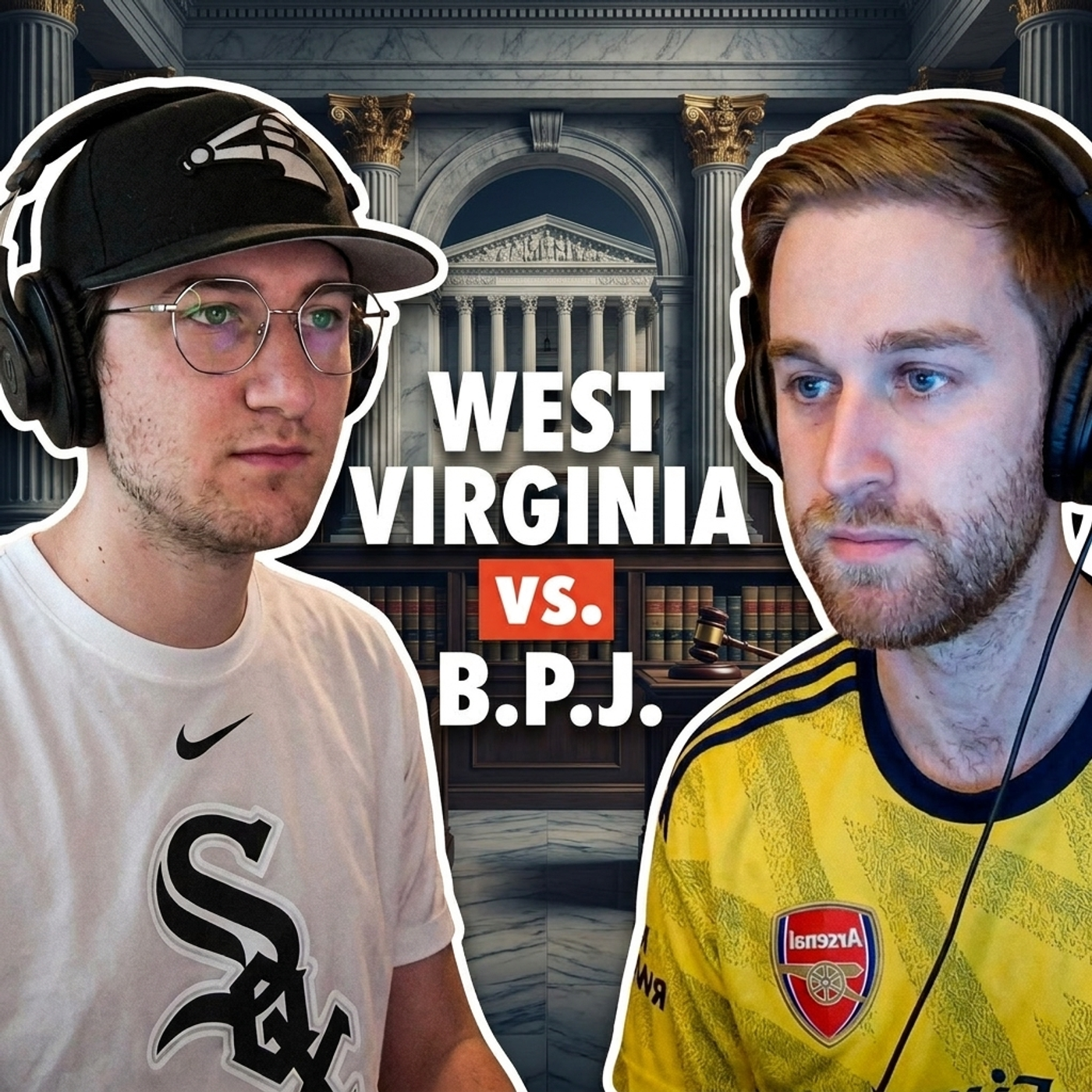
On today's show, Chad and John discuss the landmark Supreme Court decision West Virginia v. B.P.J. What does the decision mean, what does it change, and what happens next for this issue? We also discuss the ongoing drama involving transgender eligibility and the WNBA. 00:10 Transgender Issues in Sports 06:03 The Supreme Court's Ruling in West Virginia vs. BPJ 44:06 The WNBA and Transgender Eligibility
Chad W: Welcome to Crunching Tackles, where we break down the hardest hitting social issues in sports. On today's show, we discuss some various headlines surrounding transgender issues and sports, both in the WMBA and at the Supreme Court. My name is Chad Wiley, and with me as always is John Nakersov. And John, I just want to go ahead and dive right in. This is our big, big topic for this podcast. if you want to hear some of our thoughts about the Premier League or Even a little bit of Spider Man thoughts. That was in our previous episode, the last one before this that you can go listen to. but this is our big story for now. This is in many ways the biggest thing that we missed during the World Cup was was the landmark decision by the Supreme Court, ruling in a case called West Virginia versus BPJ. And and we're also gonna talk about the WMBA, the controversies surrounding Sophie Cunningham, The the discussions by the WMBA leadership around eligibility and some particularly trollish behavior by two former NBA players. John, I do you want to start with like the serious academic rigor, or do should we should we start with the the trollish culture war issues that are sweeping up Twitter? John Nekrasov: Well, I think we have to start with the academic stuff because I think the the WNBA d drama in all forms does it doesn't fully stem from the Supreme Court ruling, but I do think it's it is informed by the Supreme Court ruling that came this summer. and I think it's good to say as we as we start this conversation, we've had this we've discussed the issue of transgender women in women's sports specifically multiple times in this show over the last, you know six or so years that we've done this show. We talked about it in part in relation to the Paris Olympics. I guess it was two years ago now. That's weird. time has flown. I just like my my mind literally got blown momentarily. Yeah, like that feels like what? I can't I feel that feels like it was last year. Chad W: That's crazy. Remember we were talking about how dirty the water was in Paris? Like that was like the biggest thing. Yeah. John Nekrasov: anyway, be that as it may, the the The boxing issue that came up during the Olympics, which was a somewhat a separate issue, but was related and brought up a lot of of sports-related debates. obviously, transgender participation in women's sports was a huge issue in the 2024 election as well. it has been an issue for years before that, and we've discussed it through different lenses at at various times. we are now at a point where. these cases where legislation has been passed, I believe, in twenty-seven states l limiting the participation of transgender women on women's sports teams. and we have now reached the point where, you know, litigation regarding those state legislation has reached the Supreme Court. I believe on multiple occasions. I don't think this is the first time. And so we've talked about it in different lenses, but I just want to set the stage and just say, like, you know, we we take this issue very seriously. We we don't on this show, we don't we try as much as possible to not take this as a culture war topic, but as something to think through with empathy and also the seriousness that it deserves from every angle. and so if you are arriving to this show from social media clips of various kinds, I hope that you take the show as seriously as we do because we really do, regardless of your political perspective. we think that at least I think that this is this is a topic that, though it touches politics, is a human problem, and impacts people in different ways and needs to be dealt with accordingly. So Chad W: Yeah, I would just add that like the empathy that we endeavor to show to all people stems from the fact that we reckon this podcast is part of the sporting community. And we love sports and we want sports to be an inclusive and accessible thing for as many people as possible, while also, you know, in in a way that is safe and fair. And we we've I kind of view it like The sporting we have to steward this thing that we love, which is sports. And we have to steward it well because there's a reason why we care about it. And so, because of that, th issues like this are very important and are very complicated and require just a like you said, a level of nuance and and holding things intention that we never see on social media, but that hopefully here on a longer forum podcast we can we can do that well. So I think that was a an important preamble to start with. John Nekrasov: Very well put. Chad W: It's very interesting, John. I think to you know, it might have been a really like a I think it's a really an under-reported story in the last two years. And it's mentioned many times in the ruling of this of this dis Supreme Court decision, which is the fact that both the International Olympic Committee and the NCAA, and like you mentioned, twenty-seven states in the United States have determined that eligibility for sports in youth in youth sports, in collegiate sports, and in the international Olympic sports are determined exclusively based on biological sex. That obviously was not the case in the NCAA when Leah Thomas was swimming. That was not even the case several years ago in the the the Olympics. This is a new a new thing that's happened in the last year or two. And it's with that lens that a transgender girl who is initialed BPJ in this case, brings a petition to the Supreme Court seeking eligibility to play high school, to compete in high school track and field in West Virginia. And in a 6 3 decision, the that that split along loosely along ideological lines or or mostly on ideological lines, the court ruled that neither Title IX nor the What's the clause? The Equal Protection Clause of the Fourteenth Amendment can require states to allow transgender athletes to participate in youth sports. That that it is within the ability of the state governments legally to limit participation in sports to sex assigned at birth. that's kind of the fundamental basis of the case. The three liberal justices, Asada Mayor. Barrett and Kagan dissented and we're gonna of course break it all down. Where would you kind of like to start? We both spent a lot of time reading dense but interesting legal documentation over the last couple of days. John Nekrasov: Yeah, I would say that legal corner of crunching tackles is, you know, this is a serious topic again, but it is one of our favorite corners. it's not often that we get to sit down and read Supreme Court briefings for this show. And when we do, you know, it's a it's it's a d it's a dense time and and an interesting time. I think maybe we can talk about just to start, let's talk through what the implications of this case are. actually are. Because I think I think when you just like go down and read, you know, blog posts, you know, reporting on SCOTUS, you can read it and be like, okay, that seems like a big deal, but like, why is it a big deal? What is what is what is the point of what they were arguing for? and maybe we can take a step back and just talk about Title Nine to start. So Title Nine was created essentially as a way to stop discrimination against women in the educational system, specifically by institutions that r receive federal funding. it was not, as Justice Kavanaugh outlined in his majority opinion, it was not something that had anything to do with sports initially. but over time, you know, sports programs through educational programs do receive federal funding. And so its scope kind of expanded to include, include sports, you know, Title IX is what informs colleges having to give the same amount of scholarships to women as they do to men in collegiate sports, which causes, you know, the the classic situation where you may have tons of men's football scholarships and then you have men's basketball scholarships. And then You know, you may have women's basketball scholarships and then a ton of Olympic sports that have female scholarships that don't have the same equivalent on the men's side. And the reason for that is that there does have to be a one to one ratio between them. That's just one of the kind of classic effects that in your normal life you would see within a collegiate athletics program due to Title Nine. so this is important. I don't know if you have any other kind of thoughts on on the framework of Title Nine before we move on into what this has to say about Title I particularly. Chad W: Well, i if you're our age, you think you've always viewed at least youth and collegiate sports as equal. So one thing that I was surprised by that that Kavanaugh's opinion opened with is just showing the the need for something like Title Nine at the time it was created. What he said is that in nineteen seventy-two, the year before Title Nine was created, only three hundred thousand high school girls played sports. Compared to 3.6 million high school boys. So literally less than 10% of the amount of high school boys, high school girls played sports as high school boys. In 1972, at the college level, women's sports accounted for only two percent of college athletic spending. 98% went to men. That's that's the frame that's like that's the circumstances under which Title IX was created. It was created to solve a real problem. And it has. Youth sports participation at the high school level is is basically equal now. And as you mentioned, there are rules requiring that collegiate investment is also equal or or comparable in certain ways. you know, at the core of this discussion, and I and both both sides, I don't know if everyone in culture agrees with this, but both sides of this legal issue affirmed the fact that. The existence of women's sports is because of the physical distinctions between men and women. And and Title Nine was created with the understanding that if all sports were co-ed, women would not have an equal opportunity to compete because roster because because men would dominate co-ed sports in terms of s not only success but participation based on physical i based on physical characteristics. That makes more athletic. Kavanaugh goes into some detail. He cites the IOC study that they used that actually looked at different act acts of athleticism and actually compared the percentage increase that the average male athlete would have over the average female athlete. And all that that's true. Like even the existence of the WNBA, for example, is premised on the fact that there needs to be a WNBA because a WNBA player. would not obtain a roster spot in the NBA to the extent that the NBA could be ever be a co-ed league. It it functionally would not be, because WNBA players would not meet the criteria physically, athletically, to play with NBA players. And I think that's just like sometimes that gets lost in like the culture of like defining what is a woman and and things like that. And to the extent that some of that is interesting or trollish. We can talk about that later. But The existence of title nine and the existence of women's sports is premised on just that that basic truth. John Nekrasov: Yeah, no, I think that's I think that's exactly right. and I think when we drill into the nuances of this case, as I understand them at least, and feel free to jump in jump in as you you Chad did a little bit a little bit more Supreme Court reading than I did, so I feel well prepared, but maybe not not Chad W: This is my hobby. John Nekrasov: as much of a legal expert as Chad is. so I think what I would say is that as I understand this case, BP J is arguing That essentially her not being allowed to compete on this women's team violates the the clauses of Title IX that mean that she can't be discriminated against on the basis of her sex. And she is claiming that as a transgender woman, that means that if she is not allowed to compete on the team. She is being essentially discriminated against on the basis of her gender. and that is that is basically the the crux of the argument that the majority and the minority on the Supreme Court split over, and there's a lot of nuances to that, which we can get to. But the question the question that we end up having to ask is does Title IX require that anyone who identifies as a woman, not biologically, but you know, d does Title IX include some total transgender women, not just biological women? That is basically the Chad W: In some total or in specific circumstances. John Nekrasov: Right. Well no, I just mean like does does Title IX require that it includes everyone or not? Would you say that's a fair characterization of what they're what Chad W: Yeah, I mean sir yeah, I think John Nekrasov: she's alleging? Chad W: yes, I I think so. And and they cite a recent decision that was about Title Seven, of a case called Bostok, and actually Justice Gorschich wrote the majority opinion in Bostok, and in that case they ruled that workplace discrimination on the basis of sexuality or sexual orientation or gender identity is unconstitutional. be based on Title VII because Title VII is designed to be is is designed to eliminate distinctions on the basis of gender. In the workplace, gender is not supposed to be a deciding factor. Sex is not supposed be to be a relevant factor in terms of employment in the average workplace. Title IX actually exists to do the exact opposite. Title IX exists for the purpose of creating a sex distinction that acknowledges the difference between men and women and affirmatively provides women with an equal opportunity to access sports at the youth and at the collegiate level. John Nekrasov: Right. And I think I think what's interesting is this case basically in my mind hinges on what is the burden of of the law that is placed on the states. you know, when when a state passes a law that says, you know, a transgender woman is not a biological woman and therefore is not allowed to compete in this sport in this context. Does does the law look at that situation and say, no, you are actually denying someone their constitutional rights? And that's basically what the Supreme Court was deciding here. And the majority in the Supreme Court decided that no, because it it put simplistically, because Title IX was set up, as you said, to create a distinction between sexes based in the athletic context, based on ultimately on physical differences, on differences in funding and all of those things that we've discussed already. They're actually they basically said that there's no burden put by the law on on the states to allow transgender athletes to compete. Now, they didn't close the door to transgender participation in women's sports. And I think that's an interesting distinction here. What the decision hinged on was that Title IX does not preclude those laws from happening, in their opinion, because the idea of transgender athletes transitioning from male to female was not in the intent of the law at the time, due to the physical questions that we already talked about. So they do talk a little bit about which I found interesting. I think they basically said that like they don't want to be the people litigating whether, you know, if you take Puberty blockers, for example, which is kind of one of the big things that came up in this case a lot. If you take puberty blockers before you hit puberty and you know, limit at least some of your physical development into a biological male, you know, does that mean that you should be able to participate in women's sports because maybe you are, you know, less s strong now than your average man, and maybe you're as strong as an average, average biological female? and the Supreme Court basically said that we're not interested in litigating that. That the question that we're interested in is does Title IX preclude these laws from happening at all? And they believed that based on their interpretation of the original law, no. Now, can there be other laws that are passed at the state level or the federal level? or, you know, sport by sport and governing body by governing body rules? They said absolutely. But that's not what the Supreme Court exists to do is litigate that problem. Chad W: Yeah. John Nekrasov: and I don't know. I think that like there's an interesting there's just the facts of the case, which I think like personally, just to put my cards on the table, I think that constitutionally I think that's the right decision. but I think there's an interestingly interesting constitutional question there. There's an interesting question about you know what we've talked about many times, which is like how do sports organizations handle the transgender question in in a way that's, you know, not a culture war issue and instead just takes everyone seriously. I don't know what where you've landed as you've kind of been digesting both the majority and the the the minority opinions. but I think I come away from this having a clear understanding of the laws, but also I d I do feel like we landed in the correct place. Chad W: Yeah. I I think at the outset for me it's worth noting that this the facts and the scope of this case and this opinion are actually quite specific and quite narrow. This is not the facts of this case and and the the legal analysis of this case are not about anyone at any level of development identifying as a different gender and having a availability to play. Even like the the people bringing this claim actually acknowledge that the like it says the plaintiff agrees that the state may prohibit most biological males from women's and girls' teams. They actually concede that. What Kavanaugh says is that they contend that safety and competitive fairness, which are sufficient reasons to exclude most biological males, do not justify excluding a relatively small subclass of biological males, namely those biological males who identify as female and have taken puberty blockers or home or hormones. When we're talking about sex-based discrimination or classifications, they are permissible only when the government, in this case the state governments, have a important government object objective to achieve and that the the distinction, the classification is substantially related to achieving that objective. In this case, the objective that West Virginia is claiming and that most of the other states who have passed l similar laws are two things: safety of female athletes and then fairness of competition. So safety and fairness. And base and and and the plaintiff, the the the athlete in this case is not contesting that in most cases, biological males Would pose a risk to both competitive fairness and to safety. What ultimately at the end of the day, what this case comes down to and what both the majority and the descent spend a lot of time on is a very specific, I'm gonna use the exact words, subclass of biological males who have never undergone male puberty at all. And the contention by the plaintiff is that those people would not present a risk to safety or to fairness and that they would actually be similarly situated physically to the other female athletes, the biological female athletes that they were competing against. That question is a core, it's kind of the core crux of this case. And John Nekrasov: Right. Chad W: ultimately like it seems like in the scientific and medical world, that question is not settled at all. John Nekrasov: Yeah. No, I think that's exactly right. And I I don't know, I think it it's that's a question that we have we have addressed specifically on the show multiple times. and I think I think it's interesting I think you framed this very well. You know, when we look back on even six years ago when we first started having this conversation on this show, which was by no means the first time the conversation was had, but you know, when we started talking about it The ball was in a very different place in this debate. You know, as as you said and as the plaintiff said, the conversation is no longer about should transgender women be in women's sports in general. It is about a specific subset because the the cultural consensus has changed, I would say, pretty dramatically in terms of the vast majority of Americans on both sides of the political aisle. You don't you don't really have sizable majorities arguing that sports basically that anyone should be allowed to participate as long as they, you know, f feel strongly that they should. Chad W: Right, like just for example, like this the facts of this case have nothing to do with someone like Leah Thomas, who went all the way through male puberty, competed for a men's swimming team, and then transitioned to a female team in college. Even even even John Nekrasov: Yeah. Chad W: even by the by by the plaintiff's version of this case, that would not be that would not apply. John Nekrasov: Right. And assuming, you know, assuming that what we get to later doesn't happen, I don't think Leah Thomas or someone someone like Leah Thomas would yeah, would participate in at the highest level of sports, at the current time. Which is just that's a ch it's a big change from where we were. Chad W: Certainly not at the Olympics or the N C double A just based on their rules, but yeah, culturally as well. John Nekrasov: Right, right. I think that the so the the dissenting Justice Sotomayor's opinion kind of spends a lot of time talking about the fact that we don't know that Transgender women who did not undergo male puberty are not Basically, we don't know enough to say that they could be stronger than their average female counterpart. And the what the majority argues for is essentially that it doesn't really matter in terms of the burden of of proof of the law. I don't know what you think about that. That also is definitely like splitting legal hairs to me in terms of in terms of my like deep understanding of of the of where the laws are at. But it made intuitive sense to me to say that like the I don't know that the states should be required to account for this legally. Chad W: Yeah, that's certainly what the majority ruled. Basically, like the one of the core components of Justice Sotomayor's dissent was that it is not unnecessarily burdensome to protect this subclass that she th this distinct subclass that she defines as transgender women who have not undergone male male puberty and on a case by case basis, either at the school board or judicially, review those instances and allow and and determine Eligibility is is one of the the I think the the components of her argument. Justice Kavanaugh basically says that when we're dealing with the equal opportunity clause of the Fourteenth Amendment at at the level of intermediate scrutiny, the states are allowed to exclude an entire class based on the situation of the vast majority of that class. That it does not require a case by case basis if the major if if most instances Would necessitate the exclusion. And in this case, we are talking about a very, very, very small subclass, right? Like transgender John Nekrasov: Right. Right. Chad W: issues get significantly disproportionate amount of attention than there actually are transgender athletes. In fact, at the time of this decision, BPJ was the only transgender athlete in the entire school system of the state of West Virginia attempting to play in women's sports. So the subclass in West Virginia is one person. And on the basis of a of such a small minority, the state is not required to, according to the majority opinion, take those on a case by case basis. the other problem I think with taking them on a case by case basis is that you open the door to removing the ig the importance of gender classif of sex classifications. And focusing on just ability classifications, right? If a biological male who doesn't undergo puberty becomes eligible because their ability is similar or below a biological female, what if there's a biological male who identifies as a male who also has ability at or below a biological female? Are they allowed to play? That's actually a question that Kavanaugh asked. He said Would exemptions also be required for biological males who still identify as male but contend that they too are no taller, no stronger, no faster than the typical females in their chosen sports? Would those males also not be entitled to play on a women's or girls' team? If not, why not? And again, I think the answer is we don't want judges or school boards making these decisions. Like the the those these decisions are too case by case to to to have hundreds of different answers on hundreds of different cases. The other issue you could you could potentially run into it with if if you make it a an ability classification and not a gender classification is would there be a biological female who proposes who actually does pose a safety risk to other biological females based on her ability, right? Like if there's a basketball player who is eight inches taller And 40 pounds heavier than any other player in the league, should she be eliminated because she's actually better than the other women? Would that pose a safety risk to them? Or would that impact fair play? Obviously not, because at the end of the day, any woman who meets the ability, we want to be able to compete. So those are just kind of like the when you take the logic of the descent to their logical extreme. Which is something I think you try to you want to do in these exercises is say, Okay, if we apply John Nekrasov: Right. Chad W: this rule, what would the extremes of that be? Though I think those are some of the situations of concern from my perspective that you run into when you consider the dissents logic. Does that do those things make sense to you? John Nekrasov: I think they make sense and I think I think that I don't know. What ultimately what we want here is we want common sense rules to be applied. We want women's sports to be protected. We want women to be protected within their sports. and as much as possible, you know, I think I think we would both say that we want everyone, regardless of their sex or sexual orientation or gender beliefs, to have the opportunity to participate in sports. And I I don't know, I think when I look at where we're sort of slowly landing here, we're seeing a patchwork of state laws that are dependent on the political orientation of the state across the US. And then you have some governing bodies at at a higher level that are making un unilateral decisions like the NCAA. and in those circumstances we are removing the burden from the federal court systems or the state court systems to s say you must, as the state of West Virginia or the state of Idaho, or the state of Ohio, or whoever, you must create constitutionally a case by case process that you will process exceptions for this specific type of transgender woman who maybe or maybe not should be allowed to participate in women's sports. Instead what we're doing is we're saying the law allows under what the Supreme Court's interpretation was, the law allows for states or sporting bodies to make this decision. And then the question is, what do the people want? You know, we are a democracy after all. and I don't know, t to me I think this is a decision for sporting bodies and I think it's a decision for Congress and for state congresses to sit down and ask, like, what are the edge cases that we need to be considering? You know, how how difficult should it be to get an exception in the circumstance? Should you be allowed to get an exception at all? Like, I think that those are all all reasonable questions to ask and reasonable questions that are not because of the complexity required to address them are not constitutional rights questions. you know, there are avenues there are coed avenues in sports that do exist, obviously, and in, you know, most ages and levels of games. and so like it's not like, you know, these in general, these rulings specifically restrict school sports, which does matter, obviously, for people who want to participate in their school. But I do think that like if the majority of states continue to go in this direction, th that doesn't mean that transgender athletes d have no avenues to compete in sports. And I think that that's like I think that's something that is ignored in the debate pretty often. and I think like Yeah, I don't know. I think I I think that's basically where I stand. Chad W: Yeah, I mean I think that the reality is that a decision like this allows the diversity of America to function in a way that that selects for people's desires, right? Like if BPJ's family, if sports are the most important thing, there are many states in this union that would allow that BPJ to compete in their highs in their in their youth sports. If another person lives in California and their parents are extremely worried that their daughter will be playing w against biological males in their sports league. There are plenty of other states that you can go to, like West Virginia or Idaho, that would protect that girl from that your daughter from having that happen to them. Like the reality, like people can kind of select to what they prefer. And that's democracy working at the state level. And I think that's actually good. Do you have a like I don't know like I'm not scientific enough to have an opinion on whether or not preventing male puberty actually does eliminate sex physical sex distinctions. Do you I don't know, do you have an opinion on that or I don't want to spend too much time on that something John Nekrasov: I I would say that I Chad W: that I'm very n unknowledgeable about. John Nekrasov: Yeah, I would say that I'm not well informed enough at at a scientific study level to be able to confidently say, you know, th one or the other is objectively true. I feel like I've seen discussions on both ends, you know, and I've seen s I've seen studies and and interviews and such that that do seem to indicate things in one direction and studies that seem to indicate the exact opposite. And I think that like that does It ultimately is complicated because this is a hot button topic and it you know, like issues like the abortion issue, you know, it's a very different cultural and constitutional question. But you do have you have one side that says an objective moral truth, you know, i in one case is is, you know, aborting a fetus before before the baby is born is that, you know killing a person or is it not? Is the is the fetus not a person until it's born? You know, in this case, the question is, you know, if you transition, does that mean you are no longer biologically under the law, the gender that you were born as? A around half the country believes one thing, around half the country believes the other thing. And I think that like when we sit down and and have honest conversations taking that seriously and also trying to take the situations that transgender athletes who do want to participate in sports and I I really do empathize with that. You know, I don't think that like the whole debate ultimately hinges on do you believe that the law at its core, when it's distinguishing between genders, considers transition to be legally viable. You know, and and if you don't believe that, then, you know, you're gonna agree with this decision. And if you do agree if you do agree that it's viable, then, you know, you're gonna end up frustrated by this. And I think that that's like It is ultimately to me a democracy question rather than a constitutional question. Chad W: I think the other specific I I yeah, I agree with you. I think the other specific, I guess, part of this case I would like to discuss is the idea of and you hear this, I think, from some people who advocate for transgender participation, which is what's the harm? Right? Especially at the youth level. Is it really so damaging to these people to just let you know, especially since there's so few transgender athletes to just let them in? What actually is the harm? And that's something that Just as Sotomayor mentioned saying that it is actually, you know, not a zero-sum situation, because in the case of BPJ, every girl who tried out for the track and field and cross-country teams made the team. So in that case, you know, if everyone can be included, then it does no harm to allow BPJ. And Kavanaugh addresses this head on. And this is where I would like to end by talking specifically about Kavanaugh as the ambassador for sports at the Supreme Court. But on this issue in particular, he says. Sports are highly competitive and generally zero sum. Someone wins and someone loses. Every athlete who makes a team takes a roster spot from another athlete. Every player who earns playing time reduces the playing time of a teammate. Every player who makes the starting lineup sidelines another who remains on the bench. Every competitor who wins a race or competition deprives another athlete of that victory or medal or prize. I mean, that's just right, isn't it? Like John Nekrasov: Yeah. Yeah. I mean it is right. Chad W: That's just sports. John Nekrasov: It is sports and I think it When I look at Sodomayor's question, I think it's I think it's a And ultimately why I agree with this decision is that is taking a an edge case where one person seemingly does not affect the outcomes because maybe it's a bad I don't not familiar with BPJ's school, but maybe it's not the highest quality in the athletic program. let's say everyone does make the team, whoever tries out. And BPJ makes the team, you know, maybe B HPJ is not particularly good. I have no idea, but you know, assuming that, you know, assuming BPJ doesn't have physical advantage over the rest of the players, competes, has a great time, that may be true in that specific situation. But if we go suddenly to a competitive school, you know, and BPJ does get a spot and someone else loses out, then you have to ask that zero sum question of, you know, did someone lose their spot? Because of an unfair competitive advantage. And that's what happens. What we are trying when the Supreme Court looks at this case, this is my kind of summary thought, they are asking, does there need to be a blanket provision mandated by law for all states to to allow for this exception? Chad W: Yeah. John Nekrasov: And I just don't I don't think that from the law, in the interest of fairness, that we can extrapolate that over every state. I just don't I don't think that is fair from a sporting perspective. Chad W: While the litigation was ongoing, according to Cavidal's opinion, BPJ competed on in high school track and field on a girls team and BPJ won the regional in both of their events, being discus and the shot put, and John Nekrasov: Shop out, right? Yeah. Chad W: won the cla the high school state championship in s in shot put. So that's interesting fact. briefly, I would like to talk about Kavanaugh. You and I I was talking to you before the podcast about how Kavanaugh has kind of become the sports ambassador on the court. And whenever there is a sports related case, be it sports gambling or what's the acronym? I mean name name image and likeness N I L for college John Nekrasov: Mm-hmm. Chad W: players or college players being paid, or now the transgender issue. Whenever he's on the majority side, they seem to hand in the case. infamously in his hearing, we know that he is, in fact, a high school coach for his daughters. He has many daughters and they play sports. So, like, he's a guy who like understands this thing. And I think that at the end of his opinion, he does a very, very good job of like we mentioned at the beginning, balancing the empathy and while while also understanding the importance of sports. He mentions that. We great we acutely aware of the difficulties sometimes faced by boys who identify as girls and by girls who identify as boys. We admire the desire of all students, including transgender students who want to participate in sports. Then he goes on this he has an amazing paragraph. I I I boxed this entire paragraph where he talks he's just talking about the importance of sports. He says, Women and girls who play sports care deeply about these things. They obsess about them. And then he goes, he kind of gets a little like, This is like really, really good writing. He's like they spend John Nekrasov: It's thirty for thirty stuff, yeah. Chad W: extraordinary time and effort to train in the heat and in the cold, to work out early in the morning and late at night, to get a little faster, to become a little stronger, to jump a little higher, to shoot a little better, to watch a little more video, to make the lonely journey back from an ACL tear, to scrap for playing time, to start, to win. I mean, he goes on and on. It really is like like it's a thirty for thirty but like this is a guy who like understands it. And then he ends by saying No student athlete on either side of this issue, whether a biological female or a transgender, deserves to be ostracized or vilified. certainly culturally, these issues get a lot of attention. And we certainly hope that people who are struggling with this on either side are not are not being bullied or or ostracized in their that they have community, that they're not being bullied, that they're not facing harassment of any kind. And I think that he does a good job of Being firm on the law while also bringing empathy to the issue. And ultimately, like like you said, I think this case was decided rightly. I think that it's an issue that belongs at the state level. And I think that the compelling interest to protect women's sports for women, which is the basis on which Title IX exists, is good. And I think that ultimately, from a legal perspective, it would be extremely burdensome to require. courts to adjudicate transgender participation on a case by case basis based on physical characteristics of how they perform as compared to biological men or biological females based on physiological metrics and attributes. John Nekrasov: Yeah, I think it's exactly right. I think that's very well put. And obviously if you disagree with us or have thoughts about what we shared from either side of the political aisle, you know, we'd love to hear from you. we welcome all questions and hope that you won't vilify us on social media. no, I'm just kidding. There Chad W: Ha ha. John Nekrasov: is a place, however, I think this is a perfect opportunity to segue into a place full of vilification, ostracization, Chad W: Yeah. John Nekrasov: bullying. Lack of good faith in general all around shenanigans, and of course that is, unfortunately, the WNBA. The circus of our times. Chad W: Yeah, I mean, this is a situation where we've got we go from highbrow to lowbrow at the most extreme level. And like yet, you John Nekrasov: So fa zero to one hundred. Zero to one hundred. Chad W: know, the reason I wanted to spend most of the time on the Supreme Court is that I really don't like engaging with trollish behavior. And Kavanaugh brings, John Nekrasov: So bad. Chad W: you know, the the Supreme Court justices, every single justice, maybe with the exception of Thomas in this particular case, brought a level of seriousness and and goodwill and and rigor to the issue. how you know, some when I see people on Twitter just like trolling people by the woman, or like those kind of things, like I find that ultimately to be a very reductive and unhelpful thing that is just fueled by affirmation and confirmation bias on social media. And I think a lot of what we're going to talk about on the remainder of this episode is that. I think it starts John Nekrasov: Just disastrous. Chad W: it starts with something I guess that we could classify as serious, which is Sophie Cunningham, the one of the stars of the Indiana fever, a teammate of Caitlin Clark, being asked about, you know, women participation in sports. And she said, you know, girls' sports should be for girls. Is it's basically the essence of what she said. Yeah, do you I mean that's kind of like the core. I don't know if you wanted to kind of walk us through the timeline on on what kind of how this escalated. John Nekrasov: Sure. Sure. I mean it's been a disaster. the WNBA, you know, has been genuinely since it kind of launched into the limelight of popular culture when Caitlin Clark entered the WNBA, has just it seems like just the league culture has just been been desperate to cause controversy in in all kinds of situations. So Cunningham comes out with this, you know, obviously a a very firm personal stance. and Almost immediately backlash, you know, began coming in from different areas of the league, obviously from social media, but from actual people within the league. You know, there were fans one particular incident, I think this happened during the World Cup, which caused us to kind of not have time to cover at the time, but you know, there were some some fans at a Seattle storm game. I guess it was a it was probably Seattle versus Indiana. and there were fans who were supporting Cunningham and basically had signs regarding her stance at women's sports and Seattle Storm co owner Celeste Keaton basically came up and started like confronting them and berating them. and Chad W: The owner of the team. John Nekrasov: yeah. And like the owner of the team comes up to fans and is like, How dare you, you know, take this stance. that obviously caused a lot of controversy. shortly afterward in kind of related semi related news, Player DeJuni Carrington, I think is how you pronounce it, really aggressively fouled Cunningham on her way up to the basket, got a flagrant two, was ejected from the game. then seemed to be just take to her phone on social media in the locker room after being ejected, tweeted white privilege out. you know, after Chad W: Was that related to the transgender issue, or was that just related to Co Sophie Cunningham in general, I guess? John Nekrasov: I don't know. I don't know. I I'm not saying that that's like directly correlated. I'm just saying like in the wake of all of this happening, in the aftermath of Cunningham taking the stance, the incident occurred. when asked about it, Cunningham's coach basically kind of waffled on it and seemed to kind of defend Carrington, the player who fouled her instead of defending her own player. It seemed like Caitlin Clark ha like put her head in her hands in the press conference when the coach began talking in that way, which just also looked weird from an optics perspective. and so all of this is this firestorm has been going on. Everyone's been opining, you know, the WNBA's been weighing in i i from the very top and then you add to the picture. Okay. Chad W: Yeah. Let me let me add two things real let me add two things to to this. So Cheryl Cheryl Reeves, who was the head coach of the Minnesota the Minnesota team, she wears a shirt in the pregame against the fever that says trans kids belong. she wears that shirt very, very publicly. It's posted on social media and things like that. Which and then that's but that's contrasted with many p fans who are wearing shirts that support Sophie Cunningham being asked by or ordered by league security to cover up or change their shirts in the stands. And that even happened last night, Monday, August 17th. Yeah, that John Nekrasov: I was gonna say this weekend, yeah. Yeah. Chad W: continued to happen where fans were being told by by league officials, league security to r to to cover or change shirts. And the WNBA actually released a statement saying that that was wrong and that those fans should not have been asked to do that, which is good that they're finally kind of stabilizing this. But But the again, a hypocrisy for a coach to be allowed to wear a shirt on one side, but then fans trying to wear a shirt on the other side are ordered by the leak to to not. All of this, John, while high drama and controversial, I classify all of this within the range of like normal, the normal intersection of politics and sports. John Nekrasov: I mean maybe semi normal. I don't know about normal, but chaotic Chad W: We are about to John Nekrasov: normal. Chad W: we are about to veer off the road of normal. And that is because former NBA players, Inez Cantor, who is now Inez Cantor Freedom, and Royce White have announced on social media that they are w women and are eligible for the twenty twenty-seven WNBA draft. Inez Cantor, Who, you know, he he wanted to change his last name identity, and now he wants to change his gender identity, I guess. So he he's John Nekrasov: Apparently. Chad W: no stranger to changing things about his himself and his identity. this this is obviously trollish behavior of the high of the highest order. In S. Cantor begins this with a super produced, very trollish video. He follows it up with an interview with former Football former head coach and now p right wing political commentator Bruce Pearl doing a sit-down interview to discuss his journey to becoming a transgender woman at the age of whatever age he is, 30 something. Is he 40 yet? No, he's 30 something. John Nekrasov: no idea. Chad W: Yeah, at the age of 34, he has now discovered for the first time that he's actually a woman. the same thing with Royce White. And You know, I was for several days the the league was pretty silent on this. I wondered if they were just gonna ignore it and pretend that it didn't happen. I don't think it helped the WMBA that they then announced that they were having a summit with twelve league officials to determine player eligibility and then walked away from that summit without having determined what player eligibility would be. Again, prompting the trollish questions of can the WMBA determine what is a woman? All of this again, even in our tone, significantly more lowbrow, significantly more trollish. I don't like at all what Inez Cantor or Royce White are doing. I don't like the the the back I don't like the backlash that that fans have received for simply wearing apparel or holding signs on one side of an issue when players and head coaches on the other side of the issue are openly allowed to voice their opinions. I think that Sports leagues within reason should be a place for, you know, free speech. If you're gonna allow speech on one side, you should allow speech on the other side. that's just a stance that I hold. It's not an enforceable stance by the government, but it's just it's just what I believe. And I think that Sophie Cunningham has made her stance. I think that it is I think that when you make yourself a public figure in that way. You can you also need to be held to a higher standard. So, Sophie Cunningham, if you are very passionate about protecting the safety of girls, should you be the ring girl at a UFC fight featuring Connor McGregor and at a league owned by Dana White, two men who are not particularly concerned with protecting women or girls? Like definitely not. Is that something that you should public should be should be doing? No. When you make yourself a public figure on this issue. Is it fair to criticize you on those things? Yes, it is. Like be consistent with your messaging. But just just chaos of the highest order at the end of the day. John Nekrasov: Yeah, I would just like to say it is trollish, but NS Cantor and Royce White declaring themselves eligible for the WNBA draft is an easy layup for the WNBA. It is like let's Chad W: Will they s will they make it? John Nekrasov: let's let's be clear about this. 'Cause it is trollish. Don't get me wrong. It is literally straight out of a Matt Walsh comedy film, which was actually made. if you remember Lady Ballers from a couple years ago. Chad W: Yeah. John Nekrasov: this this is a real plot. notably, you know, around a month ago, Donald Trump in fact announced that he wanted LeBron James to declare eligible for the WNBA and that he would he would win the WNBA with LeBron James. so this is an idea that people have trolled about for a while. And I just think it's it is so obvious that given the entire highbrow conversation we just had. That you do not want people, whether they identify as a woman or not, with the force of a biological male to be competing in women's sports, because it makes women's sports meaningless. It does not mean anything if you allow that. And if you can't draw the line as simple as saying that someone who just declares that they've transitioned without taking any transition steps whatsoever, not to mention pre puberty. The fact that you can't even draw the line there as a league, to me, is irresponsible as a league. And so, like, I don't know. I I think that like it's not it's not the like the classiest move of a a former athlete to be stepping out in this way. But I I genuinely do think like this is just a an own goal by the WNBA that they can't even they can't even take a stance. Like, if this is the stance they're gonna take, why shouldn't they be eligible? You know what I mean? Like Chad W: Yeah. I mean, yeah, you John Nekrasov: To take it seriously for a second. Chad W: mentioned this as an open layup. Are they gonna score it or are they gonna miss it like Angel Reese missed nine layups against the fever on Sunday night? that's an open question. I do think like John Nekrasov: Yep. This is an open question. Chad W: it is interesting of like what what are the WNBA's paths forward? Path one is just ignore Inez Cantor and Royce White and do nothing. Right? Like they could just make no change to their eligibility. Just proceed as normal. As far as we know, there's no transgender player in the WNBA. They're just gonna ignore these two people, brush them off as individuals who are not engaging seriously, and just move on. John Nekrasov: Does Annus Cantor sue the WNBA at that point? Like could we get there? Like yeah. Chad W: For what? There's no requirement to be why what do you mean? Like on what by what basis? Do you have John Nekrasov: I don't know. Like like like Chad W: the right to for the WNBA to declare you eligible legally? That's that's I think that's nonsense. You don't have the right John Nekrasov: Well, I don't know. No, I'm not saying I'm not saying a serious legal case, but I'm saying like could it get there is the question I'm asking. Like could he sue the the the teams for collusion? Like Kaepernick style? Like Chad W: I don't know. I Yeah, I don't know. I I really don't John Nekrasov: That's the only risk. And if they ignore him, that's the only risk I think that they they would run. Basically. That was my only point. Chad W: I'd be surprised about that. The other option number two would be for the WNBA to just align with the majority of sporting bodies at this point and make a make a distinction like the the IOC does or like, you know, but it seems like culturally that would face a lot of pressure. that that many people in their league players, coaches, executives would not support an actual biological sex exempt like like distinction. so would that cause trouble from within? The other alternative would be, but like ultimately, like this isn't going to be proved until an actual transgender athlete tries to play. John Nekrasov: Right, of course. Chad W: What will they do then? That's the question. Like, not Hines Cancer, not Royce White, like someone who actually is seriously and earnestly a transgender person who has been transgender, when they try to play at whatever level of ability they are. What will the WNBA do? I I don't I I honestly don't know. They're they're the league that I think is most likely to just say, shrug their shoulders and let them play. But I think that that would cause that would force so many other players who have been silent on this issue to take a stance and would potentially risk like splitting causing a civil war and potentially splitting the WNBA. John Nekrasov: And it would, in addition, be a break from the college system that feeds into the WMBA, which Chad W: Right. John Nekrasov: I think is notable. Chad W: Right. Right. Yeah, yeah. That person would not have played N CAA collegiate basketball. So Right. Either straight from high school or or from Europe. John Nekrasov: Right, like they'd be coming from some other system if they were to get that far. So Right. Chad W: so yeah, I mean, I don't know. I I really think that the the number one reason why the WNBA would not like to do that is not that it's not about the competitive advantage issue. I think it is about the fact that it would make it would force so many more people who would be this person's teammates or opponents, coaches, to have to take a stand on this issue. And I think they're gonna find that just like in the rest of life, this is a very polarizing and and a very split issue. And there is not as much unity in the WMBA as they might as they might think there is when they wear their trans kids belong shirts. John Nekrasov: I think that's probably true. And I'm what do you think is gonna happen? That's my question. Chad W: I think they're gonna ignore it. Yeah, I think they ignore it. John Nekrasov: Do they just ignore? Ignore. Yeah. Chad W: I think if I was a PR person and I was paid to consult with the WNBA, I think that's what I would tell them to do is just never acknowledge that these two people are real people. I don't yeah. Yeah. John Nekrasov: Right. Like they're just Twitter they're just random Twitter people. Yeah. Chad W: I just yeah, I mean, ult at the end of the day for me, it's like I don't I don't take this. Super seriously. I think obvious John Nekrasov: No. Chad W: I think the WNBA is a league that might be confronted with this ear with this issue in a serious way in the next five or years or so. And I'd be very interested in having that conversation. I just don't want to like degrade my own intellectualism by having to deal with people of such low interest to me. John Nekrasov: I just my primary takeaway here, after I think a really a good conversation and a conversation that I hope if you listeners have thoughts on that you continue with us. I just think the WNBA has done a terrible job of branding over the last couple years. Like the WNBA has elevated in terms of brand awareness at a completely new level compared to what they were three years ago. Like it is a key cultural league in terms of conversations in a way that it was just absolutely was not before. and it is zero percent making the most of it in terms of like league leadership making it a respected party in the sports world. And that's just ridiculous. That's un I it's really unfortunate for women's basketball in my opinion. Chad W: During the period in which the WNBA has been more popular than it has ever been, it has the WNBA media has constantly and and many veteran players have constantly undermined and belittled the best player, the most popular player in the WNBA by by by a significant margin, exponentially more popular than anybody else. And now is openly hostile toward fans of a particular political pr persuasion. Like I don't even think that the WNBA have to like I don't I'm okay if people want to counter protest Sophie Cunningham, like that's their prerogative. Like Sophie Cunningham is a public figure. She John Nekrasov: That's totally fine. Yeah. It's America. Yeah. Chad W: chose to speak. You can counter protest her all you want. To go after regular fans who are supporting Sophie Cunningham by threatening to like remove them from stadios for things that they're wearing or for signs that they're holding is completely outrageous and is ali and is continuing to just alienate fans at a time when the WNBA needs more fans. Like there is there John Nekrasov: It's just bizarre to me. Chad W: is nothing that the WNBA needs more right now than fans. They should be welcoming every fan that they can with open arms. John Nekrasov: I mean that's like it's like the the equivalent of me walking into Costco wearing political gear and depending on the political persuasion of the person, you know, like at the the like the card scanner at Costco being like no you can't come in. Like you are denying yourself business. Yeah. Like what? Chad W: Yeah, I'm I'm revoking your membership. Yeah, it's completely outrageous. And like the WNBA, let like set set aside that as well, just like completely missing the mark on using Caitlin Clark to grow the long-term legacy of this league. I sp I see John Nekrasov: Right. It's on serious. Chad W: significantly more stuff on my social media about the coverage of Caitlin Clark by the WNBA than I see. anything that happens on the games of the WNBA. And that's just not where you want to be. John Nekrasov: Well clearly it's where they want to be, but I don't I don't understand why. I d I really it's Chad W: It's not where they should be. John Nekrasov: not where they should be. I don't understand why. It's like when you have the most see Shohei Otani, someone who I think is like on a similar ca I I think Calen Clark is as recognizable as Shohei Otani, or at least close to it. Chad W: Yeah, probably. Yeah. John Nekrasov: And Shohei Otani is like the superstar of Japan. Chad W: Right. John Nekrasov: He's everywhere. He dominates an entire country. And when you have an athlete at that level in a league that has struggled desperately for viewers for decades to just throw it away is insane to me. Chad W: Yeah. John Nekrasov: But Chad W: I'm really I'm not sure if there are ten NBA players with better name recognition than Caitlin Clark. John Nekrasov: Probably not. Chad W: It's it's it's it's it is a it is the it is a once in a lifetime opportunity for the WNBA that they are completely punting on. John Nekrasov: Yeah. I do think in terms of in terms of like basketball fans, there are probably name there are more than ten. But I think in terms of your average household, I do think genuinely she would be in the top ten of NBA players in terms of name recognition. Genuinely. I'm thinking about it now. That's just true. Chad W: Yeah. Yeah. I agree. I agree. There we there we have it. We got through it. We got through the chaos. Man, John Nekrasov: It was a big big pod, guys. Yep. Chad W: thank you for so much for for having this conversation with me, for coming prepared, for doing the reading. I know not every podcast that we do is as academically rigorous as this one, even though it kinda derailed at the end. But it is fun when we get to bring I get to put on my legal hat and we get to kind of dive in. And so thank you for for being up to this and for tackling a a difficult subject in the way we did and for just for for the preparation 'cause I know formulating words and and trying to be sensitive to an issue like this is hard. It does take a lot of preparation and mental work. And I think we we both are very sensitive to that. John Nekrasov: Yeah. Yeah, and thank you for doing the same and and thank you all for listening and for those of you who have been with us on this conversational ride with us many times over the last few years, you know, I hope again to close out, I hope hope you all know that we both really do take this seriously and I think in a ultimately like that's what this converse this whole show is about is making space to like take a serious sports question seriously. So Chad, I I appreciate you doing that and bringing your your legal expertise here. I always enjoy hearing you break down a a Supreme Court ruling for us. So Chad W: Yeah. And I I do c like John said at the beginning, I do consider this issue like an open dialogue with any of our listeners who want to engage with this seriously. Like this is an issue where like if I am there are certain types of responses that I'm just going to ignore that I could imagine happening. But if someone does want to engage who disagrees with me with a level of like with but with a level of seriousness and and goodwill and exchange of ideas, like Meet me in the YouTube comments, meet me on my Instagram, like meet me on Twitter. I I'm more than happy to engage and consider this a dialogue as long as that dialogue is happening respectfully and in good faith. John Nekrasov: Yeah. Yep. I I c couldn't have put it better myself. Chad W: So yeah, meet us in the comments if you'd like, if you agree, if you disagree. And thank you so much for listening to this podcast. Like I mentioned the beginning, if you missed our last podcast, we talked about some lighter sports subjects and also Spider-Man. So make sure to check that out as well. And until next time when we'll be back with another episode of Crunching Tackles, we hope that you all continue to be well and be safe. And we'll talk to you later. John Nekrasov: Right. Cheers, guys.