
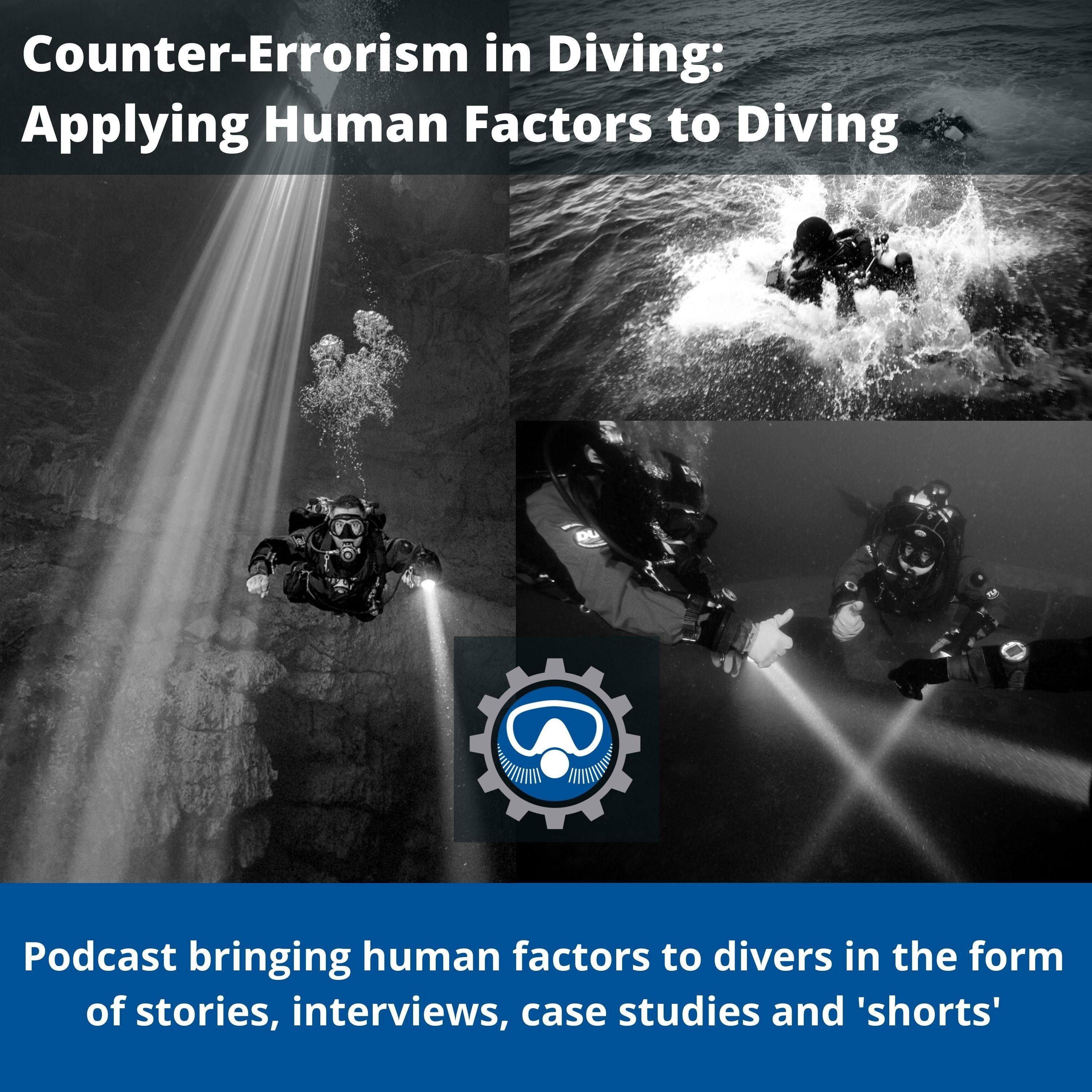
Human factors is a critical topic within the world of SCUBA diving, scientific diving, military diving, and commercial diving. This podcast is a mixture of interviews and 'shorts' which are audio versions of the weekly blog from The Human Diver. Each month we will look to have at least one interview and one case study discussion where we look at an event in detail and how human factors and non-technical skills contributed (or prevented) it from happening in the manner it did.
This blog explores why asking “whose fault was it?” after a diving fatality can prevent us from learning how to stop the next one. Using examples of serious...
This blog explores the two different kinds of trust involved in diving: trust in systems such as certification, standards and equipment records, and personal...
This blog uses a family road trip in an electric car to explore the similarities between planning a journey and managing gas on a dive. Gas planning is not...
This blog explores how toxic team dynamics can create safety risks in diving operations long before anyone enters the water. In dive centres, liveaboards and...
In this blog, Jenny Lord explores the “herbs and spices” of diving: the small techniques and habits that are rarely found in standards manuals but can make a...
This blog introduces Learning From Emergent Outcomes (LFEO), a new approach to analysing diving incidents that looks beyond what went wrong or who was...
This blog explores why telling divers to “speak up” or “call the dive” is not enough to create a culture where people actually feel able to do it. Speaking...
This blog looks at what happens between having an experience and actually learning from it, particularly when that experience is frightening or traumatic....
This blog compares two diving emergencies at the same dive centre to show why technical competence alone is not enough. In the first incident, a diver...
This episode explores how social media shapes the way the diving community responds to serious incidents. When an accident happens, discussions can quickly...
When should a diver call off a dive, even when everything seems to be going well? Using the 1996 Everest disaster as a starting point, this episode explores...
This episode explores what diving insurance can—and cannot—do, drawing on insights from two highly experienced dive insurance underwriters. Insurance can...
In this episode, Brent Webb explores the idea that Human Factors should be more than a collection of concepts or courses—it can become the “operating system”...
In this episode, Connor Tate shares her experience of attending the Human Factors in Diving Conference while struggling with imposter syndrome as a...
We explore how capable, motivated divers can gradually push beyond safe limits when their environment rewards risk-taking and treats near misses as...
This episode explores Human and Organizational Performance (HOP), an approach to safety that starts with the idea that people will always make mistakes, so...
This episode explores what really makes complex technical diving successful: not just helium, decompression and equipment, but the people using them. Using...
In this episode, Gareth Lock reflects on why improving diving safety requires more than telling people to follow the rules. Drawing on his experience in...
This episode explores why experienced divers still die in situations that seem predictable, using the tragic 2026 Maldives cave accident as a starting point....
This episode explores how a restorative just culture can help the diving community respond to incidents in a way that promotes learning rather than blame....
Showing the latest 20 of 326. Every episode is in the API: GET /v1/podcasts/pod_6xqvp60qyvazpsrprjp3dc7r9z/episodes