
Copper State Firemen Podcast · Steve O
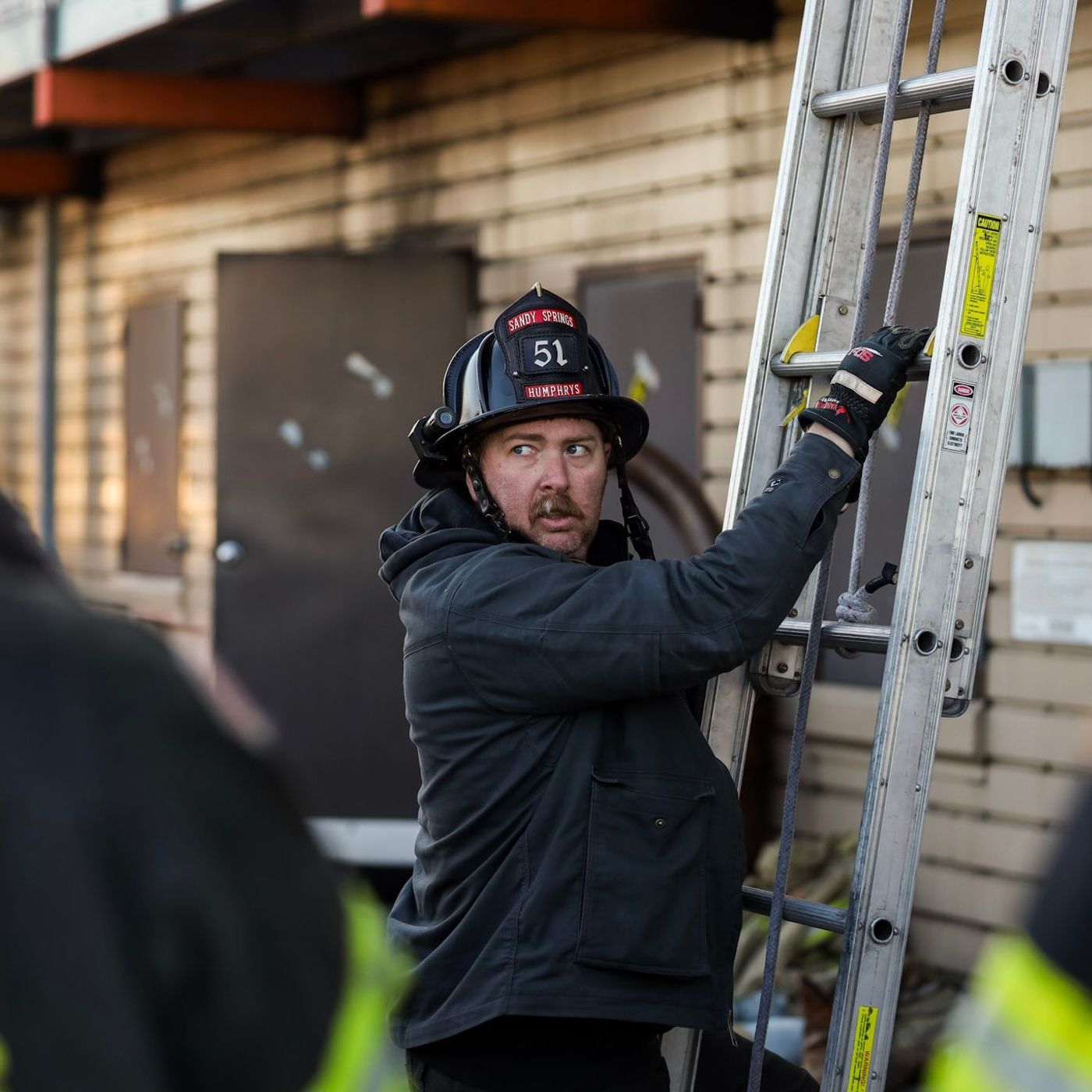
www.theenergydrink.com discount code COPPER 10% off www.oldmancopper.com. discount code COPPER 20% off The conversation features Lee Humphrey, a seasoned fireman, discussing his journey in the fire service, particularly his passion for ground ladders and the challenges he faced in his career. Lee shares insights on training, the importance of adaptability in firefighting, and his experiences transitioning between departments. The conversation focuses on the importance of ground ladder training in the fire service, emphasizing the need for effective techniques and building confidence among firefighters. Lee shares his experiences in teaching ladder techniques and the significance of practical training, while also discussing the challenges and changes in the fire service over the years. Takeaways Passion for ground ladders Overcoming career challenges Ground ladder training is essential Confidence is key in firefighting Chapters 00:00 Introduction to Lee Humphrey 01:30 The Journey into Ground Ladders 05:12 The Importance of Training and Adaptability 10:35 Operational Dynamics of Firefighting 18:00 Career Transitions and Challenges 37:30 Passion for Teaching and Ground Ladders 39:59 Building Confidence with Ladders 44:58 Effective Ladder Techniques 51:40 Training Scars and Real-World Application 58:11 The Journey to Becoming a Firefighter 01:01:01 The Importance of Kitchen Table Traditions 01:05:11 A Vision for the Future of Fire Service
Steve-O: Welcome back everybody. I have the privilege to sit down with Lee Humphrey. He's a Christian husband, father, married to his wife Candice, and they have a twenty-one month old daughter at home. Lee: Mm-hmm. Steve-O: he's a career fireman in the Sandy Springs Department in Georgia, just outside of Atlanta. Lee just started his twentieth year in the American Fire Service. He began his career in five as a volly transitioned part-time in O seven, and then full-time paid career fireman in two thousand nine. he's currently assigned to company number fifty-one on the north end of the city at a double company where they swap between the engine and the truck. Lee teaches with Bears of the Oath and has been part of it since the inception of 20 in 2020, when it started. while doing that, he found his spot with the cadre on making ladders. Wait, excuse me, making ground ladders or is it making ladders great again? It's making ladders great again. He's all about ground ladders. Lee: Mm-hmm. Megan ladder's great again. Steve-O: No, we have he has a ladder cadre, which started through the bears of the oath. He's got ten dudes. He's a proud fools member of the 706 Fools. I'll tell you what, leaves one of the men ladder brother, through and through. Hence he's on the show. So, Mr. Humphrey, thank you again. This is like our third time trying to do Lee: Yeah. Steve-O: this. Is there anything I butchered, mispronounced, misled the audience, or is anything you want to add in your bio, my brother? Lee: everything's good, man. Steve-O: All right, D. Well, listen, I'm just gonna get to the meat and potatoes real quick. So we connected in MAFFC in Georgia. Got a chance to sit through your class, making ladders great again. I freaking love it. I'm a ladder dog through and through. So, first of all, how'd you get into ladders? Is that something like when you got in the American Fire Service that you just fell in love with ground ladders immediately, or is that something you found later on in your career? Because Man, you've been on a job for a hot minute, twenty plus years at this point. Lee: unfortunately it was not something that I did early on in my career. a lot of people I didn't have a understanding of it, so th they were it was intimidating, probably for the first ten or so years, unless I absolutely had to use a ladder. I never touched one, never did anything with it. It was like a you know, stay away from it. I took a class probably around two thousand seventeen ish time frame. It was a first due firemanship class. it's taught by some guys here in Georgia. very like it's all the stuff you do on a first due fire, pulling hose, ground ladders, search, forceful entry. made it around the ground ladder station. I was thinking it was gonna be, the traditional two man carry, carry it up, throw it up, do it all. not single single man throws, and I was like, I kinda tucked myself to the back, waited and hoped nobody noticed. I did it. was not good at it, at all. but that really I I I got humbled in that class, so it it sparked my drive to to start messing with every chance I got a clo to take a class that pertained to ground ladders, I would take it. I take I'm taking OJ's class. dark side of the ladders a couple of times. some guys out in Vegas I took took their class at MAFC one year. just got my hands on every chance I can get. I started really focusing on it when I did my truck checks in the morning. So when I made it around to the ladders, I'll just make a habit of getting them off. at least I tried to do it every shift I didn't always do it every shift, but for about six months to a year, I was consistently doing it as a ten shift, probably seventy five percent of the time. I was pulling the ladder off, going around the building, throwing it, setting it up, moving it, getting familiar with it. And like I said, over time like I've developed I've probably changed my way of throwing ladders ten different times. I just whatever works, I'm not afraid to try anything new. But some I st I still today pick up on things and it makes it easier. So yeah, that's where my drive came from it. And I just fell in love with it and I started teaching it. So Steve-O: Man, that's awesome. It's it's the fact that you're even humbled and you didn't disappear in the back and was just like, Man, that never happened, right? I'm never gonna do this again. You Lee: Yeah. Steve-O: you took it as a fucking fire up on your ass, which is what a good fireman should do. It's like, hey man, I identified I am lacking in a modality on the fire ground and instead of just going, Hey, fuck it, right, I'll stay on the engine, no, you did the opposite. I granted at my own pace, but I'm gonna get better. I'm gonna try every freaking Lee: Mm-hmm. Steve-O: day. every day I'm on shift and that's all it comes down to. I teach ground ladders is my jam. So when I as soon as I teach and guys start comprehending them, I start throwing in a couple little verbiage words to And I'm like, because everyone feels the same way initially with ground ladders, if you don't get into them day one. It's one of those things where, yeah, they're big, they're heavy, they're fucking scary, they look weird. You'll see an instructor do it, and you're like, I don't know how the fuck he did that. There's no way I'm gonna be able to do that. But once you realize it's just a game of balance, then it's easy. And once you learn Lee: That's all it is. Steve-O: where the balance points are these ladders, yeah, it's it has I wouldn't say it has nothing to do with strength, but it's I would say 40% strength, 60% just balance, and then dancing with Lee: Yeah. Steve-O: that fucking thing, and then it works, dude. It's so you spent, and correct me if I'm wrong, about ten tennis years solely on the engine before you started kind of getting into the ground ladders and stuff, is that right? Lee: Yeah, most of the departments I worked for were they a big engine culture. It was in a rural area. We didn't have a lot of ladder trucks. ground ladders off of an engine was what I was primarily used to. Steve-O: I got you. Now with the engine or I'm sorry, real quickly with the just with those engines that you were talking about, what kind of ladder package did you have on there? Were they fourteens and twenty fours or were they sixteens and twenty eights usually? Lee: fourteens and twenty fours. and a couple different departments I work for were side mounted. some of them were the hydraulic racks that came down. So I I had to develop how to figure out how to get those off by using d the different weights 'cause it's one's higher up, one comes down to your waist. so and then we had a couple that came out of the back like a tunnel. So I just Getting used to Steve-O: No I Lee: whatever you're working with. Steve-O: Yeah, and we we tell guys all the time it's like it's your initial throw or I should say your go to throw typically depends on what rig you're riding that day. engines depending on the engine, is it in a well, is it coming off the rack, hydraulic, whatever the case might be, you might want a low shoulder every single time with a waiter's carry, or if it's in that freaking well, depending on the height of that truck, maybe your go to's gonna be a high shoulder. So, dude, I'm a high shoulder guy, I'd say ninety percent of the time. I've got in much, much better at the low shoulder once I I worked with Hugo out of Texas and he taught me that waiters carry and dude that was a game changer when it came down to and Lee: It's yeah. Mm-hmm. Steve-O: I know you know Hugo. He's he's the fucking man. It's it it was im I was embarrassed when I started first working with him because I'm like, man, I'm I'm good at ladders. And then I watched him throw the quietest I had ever heard a ground ladder go up and I'm like, holy shit, that's a whole new level. And it's just like Man, I need to absorb as much as I can from this dude, Lee: Mm-hmm. Steve-O: And just shout out to Hugo. He's a he's a freaking man. But so when it comes down to the the ladder work and everything else, everyone I I'm a firm believer. Everyone needs to start an engine. I did three years at a single engine company on the East Coast in the Baltimore region, and I dude, I freaking loved it. The only reason I became a ladder guy was I wanted to go Spec Ops, and guess what? Spec ops had a fucking quint, had a quint, a heavy rescue. And a couple side pieces that, we had a pickup truck that fucking pulled a boat and everything else. So I had to get good at ladders and I had to get comfortable with them. And then once I've realized the balance points and how much fun they were, now I was like, hey, I'm never going back to an engine again if I can if I can control it. Granted, engine work is still cool, but ladder work to me is just next level. It's one of those things like we always jokingly say, and me and Chief Fulmer go back and forth all the time. I'm like, dude, I always tell him I'm like, man, and I'll fucking I could train a monkey to pull hose, right? Not everyone Lee: Yeah. Steve-O: can throw ladders and be a good truckie. And he he always goes back to me, he goes, Hey Steve O, he's I've never seen a vent hole put a fire out. I'm like, hey, touche. I'm like, but we go back forth on my butt. Mission number one is life safety. I said, We make grabs, I care less about the house initially, and then then we'll protect the property afterwards. But it's always a good banter between the engine and a truck. So let me ask you a question. in your bio, dude, we're talking and it says currently right now you're at station fifty one where you guys swing between the engine and the truck. So how does that work in your system? Is it dependent on the call or is it dependent on the crew? How do guys figure out which which truck to pull on these? Lee: You talking about like response for the engine or truck? so Steve-O: Yeah, yeah, yeah. So mm-hmm. Lee: yeah, so basically our our engines, they're they're on obviously they're gonna run all the fires. and our trucks run fires primarily the engines set up for medicals and the trucks are set up for service calls. So like gas leaks. lift assist, stuff like that. obviously they go on fires and wrecks as well with entrapment. we also have a squad that comes with us. it's a it's an engine, but it's set up as a rescue engine. So one side's firefighting, one side's all your rescue equipment. primarily we do basically our first due engine sets up Water fire attack usually the driver will get his own water supply. We're in in a pretty heavily hydrated or hydrant driven department. So they're pretty close. first new truck is primary search and then our second new truck comes in and does topside. Steve-O: with your truck work in your system real quickly, but just because we're talking about the fire side, when that first in truck is primarily looking for the search, do you guys ever split you I'm assuming you run four in the truck, four in the engine? Do you guys ever go two Lee: Three three and Steve-O: twos? Lee: we run three and four. So w three's our minimum. Sometimes we run four. honestly we we don't have I won't say we don't have time to split, but our second due truck is on top of us pretty quick. there there's some areas in our first view it's a it's a it's a all out foot race for the us to not get beat by I mean it's just the the length of our territory. They have a straight shot and we got a some turns and stuff to get some of the addresses. But it really sets up by the time that we're getting ready to search, they're already on scene getting ready to cut. So they just send their crew up and we just go do primary. And then we'll that we'll all get together and overhaul and stuff after that together. Steve-O: Let me ask you a quick question just because that swing thing. So I've worked at one one of our stations at our heavy rescue, we swing between the heavy rescue and an engine. So Lee: Mm-hmm. Steve-O: our how how it works for us is if it's a first few box, we always pull the wagon a hundred percent of the time because we're gonna be the first pumper in. It makes the most sense. Outside of if we're not gonna be first in, unless we're dispatched in the heavy because it's a little bit farther. It is officer discretion on what goes. And so me as a captain, I'll look at the run assignment real quick and be like, where's my ladder? And I'm like, hey, they're freaking ten minutes out. Let's grab the heavy, let's go. and my command staff will support me on that. because that's my call as a suppression officer on what piece we're gonna dig. But I have to have a really good fucking reason why I took the piece that doesn't have water, because it's gonna suck when I roll up first on the heavy rescue. I got two cans. That's all the water I got on that piece. So If you guys I'm assuming first in box you're gonna pull the wagon, but how do you guys operate outside of a very first if it's not a first due box, are you going off of your dispatch or is it officer discretion? How do you guys work when you when you're swinging between the engine and the ladder on those? Lee: no, so our both of our trucks are staffed before. So so I yeah, no no Steve-O: shit. I I misunderstood you, brother. Lee: no yeah. So I our tailboards swing between like today I'm on the engine, yesterday I was on the truck. So Steve-O: Mm. Lee: it's basically 'cause our engine's obviously busier, so we flip flop. we have usually have a medic. If we have it fully staffed We have an officer, driver, medic and an EMT on both trucks. So we flip flop to keep the personnel from getting, beat down on the on the truck on the engine or the truck. Steve-O: Yeah, and it keeps keeps your skill set up too. Lee: yeah, that's what we when I said swing between I meant our personnel switch. So we are both staffed, we we all have our own calls to run. Yeah. Yeah, yeah, yeah. I got you now. Yeah. Yeah, yeah, yeah, yeah, yeah, yeah. We have we have Steve-O: Okay, no, now I'm we are now on the same page, my brother. So it is it is a straight double house. You guys are running out of then. So okay. Lee: eight peop eight people here when we're fully staffed. So yeah, yeah. No, good? Steve-O: Okay, d dude, but yeah, my my bad a hundred percent. I'm thinking you guys are swinging, it's four dudes swinging between whatever piece. Okay. okay. Well that's dude, that's even better. so Lee: No, no, no, no, no. We have we have eight guys here. So Yeah. yeah. Steve-O: that I love the fact that you guys can switch back and forth because again, it's it's nice to be like, Hey man, I want to be on the fucking knob today, so I get to I'm gonna ride, backstep on the wagon, Lee: Mm-hmm. Steve-O: next shift, hey, I'm freaking back step on the ladder, whatever. I I think that's freaking I wish I kinda wish every double house worked like that because it you never get stale and then y you never really have a true ladder guy or a true engine guy. Everyone, it's our boys from Old South, Those guys they talk about squad by default. They they kinda do that because they Lee: Mm-hmm. Steve-O: have to be a master of everything. So you guys are your skill set's automatically gonna be higher compared to the system I work in where there's a majority of guys are like, dude, I do not want to be on the freaking ladder. They're They've been on the engine the entire time, they don't feel comfortable. And I I I give them all the respect in the world when they say, Hey man, I'm not comfortable. I wish they would kind of go across, hey, I'm not comfortable, let me get trained up, but maybe that'll come in the future. but I respect the guy that says, Hey, I I don't feel comfortable. I'm comfortable on the engine. I'll run that. You know, Steve O, hey, you wanna you wanna be on the ladder? Fuck yeah, I do, a hundred percent. So when it when it comes down to Since you guys swing back and forth, which one which one do you prefer now in your career? Do you like to ride the truck or the wagon more right now? Lee: I'm I like both of honestly I can I'm I'm I'm good being first in on the nozzle, I'm good being first in doing primary search. it doesn't matter. I enjoy both of I know truck work is a little is more fun sometimes. you get to do a little more. and prime primarily our area of the city is where I won't say all the fires are, but a good portion of are when we have so very rarely do we get to do the, topside vent because we're the first due truck. it's any given day. Some days, it's fun going in and searching past the hose line, and then some days it's good to just be on the knob and put the fire out. I can do either one. Steve-O: Dude, it that that's a fireman right there for ya, in your we had talked prior and everything else and then in your bio, you gave me a little bit of information and and I kinda wanna get your backstory some. So you have twenty years in the American fire service right now, and you had stated like, Hey, you you had to overcome some obstacles from a prior department. if you don't mind filling in the audience, your career on on where you where you came from and then where you are now and and what those obstacles were because a lot of guys face a lot of turmoil when either switching departments, switching stations, switching assignments, getting promotions, demotions, whatever the case might be. So what's your story, brother? Lee: I started out in the s in the county that I I lived in, grew up in. started volunteering there, went part time there, ultimately went full time there. small department. I knew at that time I wasn't gonna have much growth there. so I used that to, get all the classes I could get all the classes I could. that department. they were very receptive about sending people to get training. I left there and went to a county that was next door to us, a little larger. spent I think I spent five or six years there before I went to the other department. got some great training, ran a good many fires and at that department we were a one man engine. so yeah. Yeah, driver on one one person on a truck, Steve-O: I'm sorry, I'm sorry, hold on, stop back up. driver only? Okay. Lee: yeah. It's a very rural in the northern part of Georgia. A lot of departments are like that. Once you get outside of the metro and surrounding county areas, there's a lot of single man, sometimes two man engines. it's a lot up here. went to a larger department, as a fire and EMS department, the only good thing about being on the med unit there was you were if it was your first due, you were the the fire attack crew. if you weren't at the hospital. So so I spent a few years there and then I went to the city inside of that county. I stayed at that larger department for about three years. and then I went to another department inside that county. it was the city department. I stayed there for about six and a half years. all this time, I worked forty eights for the majority of my career, at another fire department somewhere else. if you look at where I work, it looks like I've worked a bunch of places, but I've had steady job or steady departments. for the most part, the the secondary ones were the ones I was working forty eighths on. so I was working full time at another department with that city department and I moved my second job closer to home, a little growing two two station city, small. I got tired of working 48s, so I left a bigger city to come closer to home, less commute. didn't ride an engine all the time, just run five or six calls a shift, get do some great training. So I stayed there full time. while I I I started as a firefighter driver, it was a two man, it was four four people per shift. So there's two stations, so two at each station. both of had a company officer and a a firefighter driver, essentially, is how that was ran. backfilled with part time for whenever some one of the full timers was off, we filled it with part time. So dynamic was different, but it was it was still fun. enjoyed it, planning on staying there my entire career, finishing out there. so took on as a an acting lieutenant because we didn't have a lieutenant at our station. took on that and then our other shift officer left. So ultimately it was like a step up fill in shift officer for I think six months or whatever. both of those officers were lieutenants. we had got a public safety director there. he's trying to figure out, the dynamics of how things work. He's like, you are both lieutenants, but the lieutenant at the downtown station has to do all the paperwork, everything like that, and they're not getting paid for for it. so we're gonna make that person a captain. so me and two other guys were Selected. I think at that time I had sixteen or seventeen years in, and the other guy had eighteen, and the one below me had fifteen, and the next closest person had five. So we there was a testing process for it, going through the whole taking the captain's exam, inbox scenarios. it wasn't just hey, y'all are the three most senior people here, y'all are getting promoted. we had to test for it and get get hired for that spot. rocked on for I think that was in February of twenty three. Yeah, February of twenty three. And so worked until around June, May or June, I got a new driver. the guy that previously worked there. he left to go to another department. came back. it's one of those g things where a lot of people had issues with him. I never personally had an issue with him. I I got asked if my involvement with, bears would influence that. No, I'll work with it, I I I like to form my own opinions, I don't just take other people's word for stuff. so around September ish, I was out in the bay, we were working on a project, got pulled into the chief's office and he's like, Hey, I got some complaints. and you know, we gotta do an investigation on it, blah, blah, blah. I'm gonna put you on admin leave. I was like, Wow. Well what is this about? And he's Well, I can't really tell Steve-O: Yeah. Lee: you about it. So I had no offense for it because or a defense because I didn't know what I was up against. So went back, I w a week and a half went by, he called me and he's like, Hey, we finished our investigation, come in, talk. I was like, Yeah, sure. so sat down, he listed out everything that was complained about. There's only one valid. complaint in there and it was I had a an issue with dispatch one night, but it was I mean that was minor. I could have took her right up over it. But broke down everything. I sat down and explained everything my actions of everything I did. he's like, yeah, he's like sounds good to me. he was good with it. our public safety director was not. He was not a fan of the fire department. he was not a fan of my involvement with the training I did outside of work. that was that's a whole nother story. but yeah so me and the another captain that got promoted. we both trained with bears of those on our own time, not on not on city time. Always took vacation PTO. What we did outside of work was was our thing, so anyway he's like, I need you to go type up. all your responses to these and have them ready for me when I get back. I said, okay. I went there type out real quick, like I said public safety director was not a fan and the city manager was not a fan and the HR director and the driver I had were were tight. So he came back, I'm thinking hey I'm I'm good, I'm going back work. And He's he's like, Well, he's like I thought the C I talked to the public safety director and he's like unfortunately he's like, We gotta terminate you. And I was like, Okay. Steve-O: What? Lee: I was like, all right. So at that point, I was just I was I was furious I was like, Well, I was like, I'll be back in an hour to get my stuff, bring everything back, so that was pretty hard. that's probably the hardest thing I've ever had to do, was call my wife about, hey It's got terminated. And that was that was a kick in the in the gut, like 'cause I mean I quit working forty eights. That's the only job I have. I'd I'd have a landscape business on the side I do on my days off. that's all I had for income at that point. so I was like, Well was like, okay, I guess I'll be cutting some grass for a little while, you know. but fortunately I was able to call up I it was about two days later, I was sitting down, I was like, man, I was like I was looking all over the internet, I was like, who's hiring? Who's hiring? who can get me on the fastest, so I called up the the the department that I worked for full time that I left to come to there. my second full time job that I left to go work up there. I called him up, I explained the situation. I was like, hey, do y'all have any openings? And the guy that was captain that day was in the office with the deputy chief. yeah, he's like the second in charge. So I talking to him and I'd worked with the captain before on that shift and he's like, Is that is that Humpy? That's what they call is Humpy. He's like he's like, Yeah, he's like he says he's wanting to he's wanting to come back to work. He's like, Hire that son of a gun today. he's like telling him I got an open spot on med one for him and I was like, I'll take it. I was like, I don't care. I need a job. I said, I'll I'll work on the busiest ambo you got. I don't care. Steve-O: Ha ha ha. Lee: that was hard. having to overcome that, trying to figure out, I'm I'm married. at that point. I don't have a job now. I've I've been promoted captain for s seven months, thought everything was going good and then just crashed down. overcoming that was hard. but, luckily I was able to call that department up. I was able to go back to work there. and that's where I worked up until I came here and that was from probably October of twenty three until February of twenty five or March of twenty five is when I left there. So I I enjoyed working there. I had no issue. it was the same thing. Sometimes we had two man engine, sometimes it was just me. So and we had ambulances. luckily I didn't have to ride the ambulance much. So but I was able to do like when fires came out. The captain that I worked for was like, Hey, go get it. I need you doing fireman stuff right now. so I was able to do that. it worked out good. we had our daughter while I was working there. so I was only able to take four or five shifts off when I had my daughter, just from the time that I didn't have built up. so I they were worked with me on that. they they covered my time and I basically came in and worked free shifts for two free shifts. because I didn't have the time, so they just put it down that I worked and then I came in and basically did, eight to five stuff for whatever training, whatever whatever they needed, so to pay back that time. So I was nineteen, twenty minutes from the house. my wife was able to bring my daughter by. I was able to see her while I was going to work. so that that that helped out. but when I sat down, I found out the department I work for now was hiring and the the pay was substantial. it was almost a twenty thousand dollar more increase to come down Steve-O: Ooh. Lee: here. The drives further, I had to factor in pros and cons of insurance is better, pay's better, but I got an hour and a half commute. I've got I'll be away for at that time it we were on twenty four forty eight still, so but being on forty eight ninety six now, I don't have to drive down here as much. I'm just gone for two days. But the time off is has is better. that was the that was the hardest part. And it's it's the same way. I'm I I know you've heard Goldstein talk about, him transferring departments. and everybody know everybody that talks about moving departments, without a doubt that it's the best thing for your family and your lifestyle. to move departments. fortunately mine was not a a toxic environment I was in. I was just needing a better environment. I knew some people to work down here. I talked to them about it and hey man, it's a good place to work. but you still got that that fear of moving and like I said starting over twenty years in, and being thirty eight when I started down here. So that was the the difficult part of making the decision to come down here. Steve-O: Now, just quick question about that, I I'm just gonna say a douchebag department or douchebag dude that freaking terminated you. That's horse shit. Lee: Yeah. Yeah. Steve-O: I'm assuming you guys did not have a union. Lee: No, we don't. Steve-O: Okay, okay, because I'm like what? And I'm like the union should have been up in arms. you don't get freaking Lee: Yeah. Steve-O: yeah, y y I've never heard Lee: and and we Steve-O: of something in Terminate. It's I've heard of Demotions, Lee: and that's well he he offered like he offered the fire chief was just gonna put me back to work. and then he's like, No, that's not gonna work And he's like, Well how about I demote him? Technically they couldn't demote me back down to lieutenant because I technically wasn't a promoted lieutenant at the time, I was only acting. So Steve-O: Mm. Lee: I was gonna have to go back down to the firefighter, which I would have been okay with. he's like, No, that's not gonna work. Terminate him, so But we also I mean, we had Steve-O: Holy shit. Lee: I mean, I I probably could have fought it and but at the same time The older I get like the older I get, the more I'm like, hey, these things are happening for a reason. I don't know what that reason is right now. but it's happening for a reason. So I got to think I'm like at first I was like, I'm gonna fight this and get my try to get my job back. 'Cause we have in our policy, progressive discipline, all this other stuff, verbal written, days off, all that stuff up to termination. I was never wrote up the whole time I was there. I feel like I had a case but at the same time I was like, do I really want to spend twenty five years working here and having to look over my shoulder the whole time I work here. So let it I let it go. So Steve-O: Well we'll just we'll leave it as karma's the bitch and that that'll come back to that dude one day. That's that's Lee: Yeah. Yeah. Yeah. Steve-O: absolute horror shit, dude. I I had Lee: Yeah. Steve-O: no clue, man. That's like I that's I had no idea it was that extreme. I'm like, when Lee: Yeah. Steve-O: you said terminate, I was like, my god I'm like, what in the world? Like that is Lee: Yeah. That's the same reaction I had. Steve-O: I I can't I can't imagine having a get on the phone and call my old lady and be like, Hey babe, we gotta talk. I mean that's Lee: Yeah. Steve-O: That's gotta be a very uncomfortable conversation to have. And then you were saying, just at that point you're like, What the hell do I do? at least thank God you had a side Lee: I mean I d I I didn't know like Steve-O: gig. Lee: Yeah. I mean I I didn't even know what I was getting in trouble for. So like I didn't know like when I went back in for Steve-O: Yeah. Lee: the interview I was like I still don't know what I'm gonna talk about. Steve-O: Jesus Christ. That dude, that's that is insane. Well, yeah, Lee: I'm gonna better off now, so yeah. Steve-O: and again, like you said, every everything happens for a reason. And even if it's just being able to come on here, tell your story and someone's listening that's been through something like that, be like, Hey Lee: Mm-hmm. Steve-O: man, I'm not alone. and it's just shit, bad things happen to good people sometimes, which sucks, and and it the guys that don't know Lee, Lee's one of the most freaking probably the nicest dude and one of the most solid dudes out there, so I I can't imagine anyone having a a personal because that sounds personal to me, having a a personal issue with you. That Lee: Yeah, it is. Yeah. It's Steve-O: dude, that's freaking nuts. So well I'm glad I'm glad you're where you're at now. I'm glad you're happy. Every again, like you said, everything works out for a reason. But so now we got a great backstory. Let's talk about the ladders again real quick because you have, first of all, the best name for the cadre ever. making ladders great again, but Lee: Yeah. Steve-O: Where where did the passion come from? Because yes, okay, you transition. You could have easily been like, okay, cool. Now I feel comfortable with ground ladders. I'm doing my thing. I'm working. Everything's cool. What what drove you to take the next step of saying, Hey man, I need to get in front of people. This is important. Was it was it a lack of something that you're seeing in your region? where where did the cadre come from? Why did that ignite such a passion in you with the ground ladder work, brother? Lee: Yeah, so before Bears of the Oath was formed, we we all trained together. I mean it's small area up North Georgia. So everybody trained together. so Shane that's over Bears of the Oath, I was like, Hey man, they were doing a class, a two day class, engine truck class and he's like, What do you want to do? And I was like, I I'll do whatever you want me to do. put me wherever you want to put me. He's like, How about ground lighters? I said, sweet, cool. I mean so basically it was that. and having students come through that first I mean I I was nervous that was the first time I've ever, you know, talk. I mean I've I've helped other people's out around or people around around the station, but as far as having a a group come through a rotation and me sitting there talking in front of them That was the first time I ever did it. so as the day went on, I don't know if Jason Painter or not, he's from Georgia as well, he teaches with us. he told me one time he's like that dude, I teach letters all the time. I don't think I ever give the same presentation twice. every group that comes through is something different. I just do it on the fly. And so I try Keep it somewhat uniform when I the groups come through. But it's usually man, I need to add this in at this point. I need to add this in. And just him throwing me throwing me in that group, saying, Hey, go do the ladders with these this group. And I was like, Okay. And I did it again, b with form bearers. I was like, hey man, put me on ground ladders. I said I'll do them. And So did that had some guys that come came through, helped us out. I didn't I always had, you know, two or three people that would help out with ground ladders. and as time went on, Nate Shuler that is part of our ladder cadre and Drake Meister, they both helped out a lot with ladders. Nate took all the classes three times. I finally had his finally had to tell him, I like, Hey man, I was like, go talk to Shane and tell him you want to help. And Steve-O: Mm-hmm. Lee: he's he's been helping me with with ladders for probably three years now, four years now. So but yeah, that's where it came from. Just and and every time I did it, I got more comfortable with it. to the point now, this last class were able to get a couple of new people that had interest in helping out with ladders. And I would do the first one and then I'd let the next guy take over. And then I'd let the other guy do the next rotation. And then the second day I was like, Y'all got this and I just sit back and watch so I'm I'm doing what Shane did to me by putting them up front and letting them know, hey man, you can do this. Me having that the background that I had of having a fear of and not understanding I can pick out in in the group rotations who those people are. I can see that guy right there or that girl they're intimidated or they just don't have the time on to have the ability to be confident enough to do these ladder stations 'cause We do all our single person throws for the most part. we'll show them the high low carry, the alley raise, whatever. we'll show them all those and if we have time, they can do them. but primarily it's high shoulder, low shoulder, whatever you're comfortable with, and raising it confidently and keeping that ladder, upright and not letting it fall and having the ability to be able to maneuver that ladder to get it up. So that's what we do in our groups. we're in the process of trying to do a a hands-on part of our class. that's a separate class from Bears. I'm new to doing a a hands-on class. I know it takes a lot of logistics and planning, but I was able to help Lugo out at Massy with his class. not trying to model his class by no means. there's only so many ladders you can throw high shoulder, low shoulder, carries and raises, VES over here, and stuff like that. it's it's all relatively the same, but it's unique in each person's ability to present that class. Steve-O: What do you think with the ground ladder work? Because you've been involved in the ladder cadre for a hot minute now and then you're you're helping other guys out. And I dude, I the same thing. I'm part of like three different cadres just to help. Lee: Mm-hmm. Yeah. Steve-O: it it's and it's there it's it's the most valuable time and experience ever because you get exposed to different guys, different methods, and you can I I try to pick up something from everybody that Lee: Absolutely. Steve-O: I meet and then just keep perfecting my game and then become a better instructor and everything else. In with your cadre right now, what is your I'm trying to figure out how to word this correctly. So what would be your highest priority when it comes down to the students? So at the end of that experience, if it's a day, eight hours, or a weekend, whatever it is, at the end of that experience that you're helping out with, they take away X. You're like, all right, cool. Everything's good. what is the one thing that you want to make sure they take away with? Does that kind of make sense, Lee? Lee: Yeah, getting the ladder From point A to point B and being able to effectively raise that ladder and get it to a window or target area. that's our primary goal. That's in and as a f a part of like a engine and truck class, you have a small window of time. So we we can't do ladder splicing, we can't do necessarily high shoulder, low shoulder or a high low carry, two person carry. We have to be able to get these people effective at getting a ladder and I'll be honest with you, I'm not a fan of I'm I'm in the process of getting a or trying to build a ladder prop. So kind of like a hose bed prop, but have a a ladder prop so that you can pull these ladders off like you're coming off of a truck. Yeah. Steve-O: Truck. Yeah, right. Lee: Or have them mounted on the side of something so that you're simulating getting it off the side of an engine. Because I've ne I've never once picked a ladder up off the ground on a fire scene. it I I get it off the truck and I take it to the building. I take it off the building and I put it back in the truck. I mean I guess there's instance where like I guess you stage your ladders in the front yard, but they're not doing any good in the front yard, so they need to be on the building. so I hate sitting there, having to spend that extra time showing them how to walk a ladder up, find the middle balance point, and then go throw the ladder because it's not practical. but in that time frame, my my my primary goal is whether they do high shoulder, whether they do low shoulder, if they can't, if they're shorter and they have a hard time throwing it high shoulder, I try to get them to choke up on it a little bit. And if that don't work, hey, get the ladder to the building, put it up against the building, walk it up. as long as they can get the ladder from point A to target. quickly and effective and raise that ladder to the appropriate heights. You know, we teach them, you know, sixty degree angle, ten foot off the building, two clicks for a 24 to the second floor went floor window. that's a ballpark, right? So I mean that gets people in the in the mindset of thinking, all right, I need to at least go 10 foot, two clicks, I can start there. Now I can look and judge what my distance is gonna be. Do I need to add a click to it? Do I need to come off a little more? Whatever the case may be. but yeah, just the the basics. I mean that's that's what we're shooting for is the basics. Steve-O: Dude, I I tell guys when I teach all the time, especially with the the ground ladder work, we discovered a deficiency on our end as instructors, and you you hit the nail on the head. We were throwing a lot of ladders from the ground. And then we're transitioning these guys back out into the field or into the field for the first time because they were recruits, for example. And the feedback we're getting is these guys don't know how to pull it off a truck. And we're like, what do you mean they don't know how to pull it off a truck? You know? And they're like, they they pull off the truck, they put it on the ground, and then they pick it up. I'm like, why would they do that? 'Cause that's what you guys taught them. It's like we didn't teach to take it out of the truck and put it on the ground, but we're doing so many reps where they're on the ground because we're trying to build that muscle memory and it's like, Holy shit, we're building a training scar and we didn't realize it. So in the training academy I work at right now, we're lucky enough that we have a bunch of reserve engines that we Academy engines, they're from all different areas. They're they're all on their last leg, but they work great for what we need for. So as soon as we teach them the basics of the ladder, from there on out, they pull everything from the truck. Lee: Mm-hmm. Steve-O: and we do that for a reason now because we didn't realize we were building a training score exactly what you said, because it's like, holy cow, what do you mean they they they don't know? It's like and and you hit the nail on the head, you're like, We never put the the ladders on the ground. The only time I've ever put a ladder on the ground, a twenty-four or twenty-eight foot ladder on the ground, is because I needed to carry a bunch of shit a long distance. So I'll load that ladder up and drag it, i heavy rescue will will do that all the time to the rear of a building, unload it, then throw it up. But how that's the one percent of house fires or should say structure fires we're doing it on. Everything else, like you're saying, it's coming out the side, coming out of the well. Whatever the case might be. So I love the fact that you're doing that you said it too. That point A to target, and we'll beating guys' heads over and over again too. As soon as they start feeling comfortable and we're like, Hey, when you go back to your department or wherever the scenario might be, the only way to get good at these ladders and I'm curious on on your thought process behind this too is on like you need a ladder every single building you possibly can. Because the only way to get good at it is throw thousands and thousands of ladders and then before you realize it, you don't even think anymore and you're going two, three clicks because from an eyeball stance, you've thrown that ladder to that building, even though it's not that building, if you understand what I'm saying, a thousand times already. And you're like, now you don't have to think about it. The less we have to think and it's all muscle memory, then we can commit that brain power to actually scanning that building, looking for our victims, hollering out the seat of the fire. The building construction, all the things that we're trying to teach these forward think firemen to start start start to absorb in a very short period of time. And they can't do it if all they're trying to think about is how many clicks, how far away from the building should I be, what's my angle? now they because they've thrown it a thousand times. I'm like and I tell them too, I'm like, if if you feel like I'm better at throwing ladders than you, it's just because I fucked him up a thousand times before I met you. That's the only reason I'm better. Lee: Yeah. Steve-O: because I screwed Lee: Yeah. Steve-O: them up more than you've screwed yet. That's it, Lee: Yeah. Yeah, I mean that's I mean, Steve-O: So Lee: like I said, I mean if pe people only knew how many how many ladders that most people drop behind closed doors, you know, before they get out on the on the training ground and start teaching it. it's just like anything else, forceful entry, pulling hose, searching, you start at the bottom, you're not very good at it, you gotta work to get it. So ladders are the same way. You just gotta build confidence. That's all it is. it's a game Steve-O: Yeah. Lee: of it's a game of balance and it's a game of confidence. Steve-O: Right there, balance and confidence. If you're confident and Lee: Mm-hmm. Steve-O: you figure out these balance points, you can ladder any building, any location, any setback because it you'll figure it out. it's that's the best part about ground ladder, is it's in the in like we teach especially with those alley carries and modified painters carries and everything else. Man, if I can fit my shoulders through something, I can take a twenty four or twenty eight with me all day, every day. And guys Lee: Mm-hmm. Steve-O: are like, Holy shit, that makes sense because you I'm sure your areas like mine, the The more we start developing, the closer these houses get to each other. We have we have neighborhoods going up all over the valley right now that are brand new neighborhoods. They're rentals only. You cannot buy. And they are literally, Lee, I'm not joking you two firemen standing shoulder to shoulder. That is the distance between the houses. And between that, there's a block wall between that two. So you basically have Lee: Yeah. Steve-O: a freaking a fireman can fit back there and that's it. And their backyards are just as small because Lee: Yeah. yeah. Steve-O: people nowadays they don't want to take care of lawns, they don't want to do anything. It's basically it it's a it's a step up from an apartment, is what they're doing. But and Lee: yeah, sure. Yeah. Steve-O: now we're now we're having to fight fire in these buildings and they're not the traditional setbacks that we're used to in single family dwellings. That's our new Lee: Yeah. Steve-O: single family dwellings. Lee: Yeah, the there we got all kinds of we got a lot of apartments in our first due close together. some of we have to take the breezeway through just to get to the rear. we we got dispatched to a fire two weeks ago and our only access to the C-Side was through the house to the backside. So yeah. Well we had access Well Steve-O: How did that work? I would love to see that. Lee: Well I mean we we had access it luckily it the fire was out so I mean we didn't we didn't ladder it yet but but yeah so I mean we had access to the rear but it it's a long apartment, row apartment. almost like a apartment townhome type thing, but it's really long. So you would have had to do walk around, a long ways. Our lieutenant he was he had to walk through the the house to get to the rear to see to make sure nothing was no burning back there. But it's it's Steve-O: would love I've never done it. Twenty years in the American fire service. most of that's been on a ladder company. I would kill to take a ground ladder through someone's front door out their backslider to ladder the fucking Lee: Yeah. Yeah. Steve-O: Charlie side. That would be bad ass. Lee: Yeah, absolutely. Yeah. For sure. Steve-O: I would I would I would take pictures of that shit. I would tell I would talk about for the next twenty years. That would be a that Lee: yeah. Steve-O: would be a great experience because I I have never even heard a story of a guy doing that before, which is Lee: Yeah, no. Steve-O: Pretty freaking awesome. All right, well, dude, listen, I love the passion for the letters. I love what you're doing. so before we kinda transition and ask you a couple questions, if guys want to get a hold of you, you have that train cadre. Do you all travel outside of your estate? And if so, how do they get a hold of you? How do they even just connect with you because they might have a question? Lee: I have an Instagram page, Making Ladders Great Again. We hadn't really got set up to travel outside the state yet. or really do anything in the state. I'm looking at doing something with our fools chapter. d for sure doing my lecture with them. but working on doing you know, four four or eight hour ground ladder day with the fools chapter. so do a trial run on it, see how that goes. I mean honestly we do most of our traveling with with bears. they we will go out of state for that. but as far as a a true eight hour ladder class, we don't have that set up yet. but it's in the in the works. yeah, the Instagram, making ladders great again, reach out, I usually answer any any message you get sent, I usually answer it. So been busy lately so I ain't posted on as much as I need to, but there's some stuff on there. life gets in the way. Got other priorities, so but yeah, so it's Steve-O: Dude, tell me about it. It's yeah, full full time running podcasts, fucking academy me, everything else. Instagram is a freaking full time job on the side too, just trying to get get as much information Lee: Yeah. I'm sure, yeah. Yeah. Steve-O: out there. Well, if you guys do want to get a hold of him, check out Lee on Makin Ladder's Great Again on Instagram for sure. He is a solid freaking dude. And then more importantly, follow his ass because like you just said, in the future they're in the works again it. I'm telling you why. Set through his class, it's an amazing freaking class. At least if you can get that portion of it, you're it it it's gold. So look up Lee. He's one of the fucking brothers for sure. so ground ladders, hell yeah. Ladder work, hell yeah. It is the best thing in the American Fire Service. So we didn't get a chance to touch on it. You have twenty years in the American Fire Service, but why? So we never even covered the why. So why did Lee Humphrey decide to become a fireman? Is that something like I go back to my boy Kevin Weis came out of the womb with the fucking halligan or Colin Ward, high shoulder coming out of his fucking mom, Lee: Yeah. Steve-O: or did you find it later in life like I did? So what's your story, my brother? Lee: no, I actually I started out when I was in high school. had some guys on the explorer program, basically like a junior firefighter program. straight I was I think seven, sixteen, seventeen. they all did it. I was like, we'll see what that's about. Went up to the fire station one night and got involved in that. I actually went through fire school at night while I was still in high school. So basically as soon as I turned eighteen I was certified and was able to go started volunteering. started volunteering while I was still going to school. so the end of five I started and then finished up or did my fire school in the month of January. on the weekends at the local tech school. So yeah. it's all it's all done outside of, high school jobs. Steve-O: Yeah, I I love those those kind of programs are out there. we have a we have a program out here called WestMec and they have it it's for everything. So my daughter right now is sixteen, getting ready to turn seventeen, junior in high school. So she's in West Mec doing nursing. so when she graduates high school, so she spends half her day at high school, the other half the day at a different location doing all nursing stuff. So when she graduates high school she'll be a med tech, I believe. And then she can kind of gang on to that and either go to nursing school or something like that. But we have a fire science program too and they come to our academy a couple days a week. right when we're leaving, they're coming in. But dude, you see high school kids, you're like, my god, they're so little, you know, they're so little and young, but man, they're charging Lee: Yeah. Yeah. Steve-O: down there. They got some old ass grinder gear and they're but they're plugging away and I'm like, I I love seeing that because man, that's the future of the American Fire Service right there. These kids are in high school and they're already starting to see it and find, hopefully, find the love and passion for the job like you did. And then like you said, before you know it, twenty years later, you're you've been doing it your whole freaking adult life, which is which is stinking awesome. Lee: Yeah. Steve-O: So now we know the why for Lee. So let's talk about you're a fools member. We started this podcast to promote the fools, especially Copper State Fools, but the fools across the country, w the traditions are huge. Fools has their own traditions. The American Fire Service is steeped in traditions. So it doesn't Lee: Absolutely. Steve-O: have to be from your region. but what is your favorite American Fire Service tradition? But more importantly why? Why do you love this tradition so much, my brother? Lee: mine is the kitchen table. at our station we have now, it's an older station. so if we do our our morning meetings at the kitchen table, you know, everybody gathers in, we start shift at seven. everybody gets here early, to r make sure everybody's here on time. And seven o'clock rolls around, we're all ready, we sit in there. Captain goes over the day, what we got planned for the the two days. but that's also nobody's safe in the kitchen or at the table. even officers, they get it just as much as the firefighters do. but to me that's that's important to have that that safe space to 'cause nobody's safe there. So Steve-O: The the the kitchen table is definitely one of the best things about the American Fire Service and you hit the nail on the head. The best part about it is and my personal opinion and I know you resonate with it already, there is no rank at the kitchen table. So if you have a battalion that runs out of your station, you're talking shit to Rob. As soon as that fucking call goes out, he's chief again, But that's the only place you get to just dog each other all day long. But at the same time, you build that freaking camaraderie. You talk shit, it's therapy, it's freaking training, it's everything. It's Lee: Mm-hmm. Steve-O: the I it is easy to see on the fire ground the guys that don't hang out at the kitchen table compare to the guys that do, because I'll take a house that might not be the highest performers, but man, they sit down every single day and they're they're a jelled crew. They will outperform the top performing guys all day every day. Because they all they hang out with each other, they know what they're doing. There's very little communication and those boys just go to work compared to you have eight guys that are all studs, but they go in their room, they all meal prep, no one hangs out with each other, you know, and they're Lee: A bit. Steve-O: all doing their own thing, but they're not operating as a team. And I think that kitchen table builds that team mentality so much. and it's just it's it's one of the best things and it's needed. It is absolutely needed. And there's no other profession that I know of that has that we do. I've said it on a couple different episodes. The military does a hundred percent, especially when they're deployed, but they don't have it for twenty, twenty-five, thirty, thirty-five years like Lee: No. Steve-O: we do. We have it every day, all day. It is it is I I I never want to compare ourselves to our boys that are out fighting the war, but it's a war every single day that we're at work because as eight five AM, you could have the call of your freaking career on day one Of your fucking fire service career. it's we don't know. we don't I I wish we Lee: Yeah. Yeah. Absolutely. Steve-O: knew when the fires were coming. because I Lee: Yeah. Steve-O: feel like every time we take off it's definitely when they come, you're like, damn it, the Lee: yeah. Steve-O: boys got a job. I I took one shift off, or I took I took the morning Lee: Yeah. Yeah. Steve-O: off to go help the kids out or something. I'm like, you catch the next one. It's all good. There's always plenty of fires. So Lee: Yeah. Okay. Steve-O: But dude, so all right, so now we know the why. We know your favorite American fires are service tradition. So with your story, man, you've been through the ranks and then you went but all the way back down and I know you're gonna work your way all the way up again, but right now I'm gonna promote you. I'm gonna promote you to the pinnacle. So we call this commissioner of the freaking United States, fire chief of the fucking world, Plus on top of that, you have that genie, that magical wish. You get to change something in the American Fire Service and it happens right now. Zero sweat equity instant graphication. So that's either add, delete, whatever you want to do. So what is it that you're going to do for the American Fire Service? But more importantly, why? Why are you adding, deleting, changing whatever this is, my brother? Lee: Is it just one thing or can I change two things? Steve-O: Let's give you two, sure. Lee: a twenty-four seventy two schedule Steve-O: Okay. Lee: across the board. 4896 is great. it's definitely better than a twenty four forty eight, in my opinion. but the twenty four seventy two would be amazing. And no EMS calls on the fire truck or lighter truck. Yeah. Fine. Steve-O: Yes. Two best answers ever, so I'm glad I give you two. Lee: Fi fires and wrecks only. Steve-O: I t I had a I had an old retired deputy chief from Jersey City, and Jersey City still to this day does runs at zero freaking EMS calls And I'm like and on top of that, that Lee: Must be nice. Steve-O: that my god, and they burn and I'm what the hell? They are the freaking unicorn of the American Fire Service that's still left, but Dude, I agree. If we ran only jobs, car wrecks, granted, yes, we'll go to medicals on the big the bigs, or cardiac arrest shootings, stabbings, things like that, where they just need the Lee: Yeah. Steve-O: manpower and we're all gonna help. But hey man, I I my stomach hurts. It's two AM, it's hurt for a week and I'm gonna call nine one one. Hey man, why'd you call? It's well I can't sleep. It's like well, why'd you call you call your doctor? No, I want to bug the doctor but you you had four grown men, you you'd have us come in your house at two AM. What whatever, but it's dude and then Lee: Yeah. Yeah. Steve-O: I've said it before. I wish and I it could happen. I wish the international straight up would come out and say, Hey, across the country, the only schedule that we will back is a twenty-four seventy-two, because there is enough research out there between rest work cycle, PTSD. I mean you could you could blanket it with a thousand different things. That is the only schedule that accommodates what we have to do on a daily basis. Period the end. And I came from it's it's funny, so I came from 2472 back east. And we were twenty-four forty-eight. I had a little over a year in the job when we transitioned. So I barely worked that schedule. When I relocated out here and had to start over kind of like you did, we do right now, well, we just changed our schedule. We were talking offline a little bit, but we were running twenty-four forty-eights. We just switched our schedule now to one, three, two, three. a lot of departments around us that are slower all run that forty eight ninety six. My problem is, and it's just my personal opinion, I do not endorse any schedule that requires us to be on shift for two straight days. And the only reason I say that is because from the minute I got hired in the fire service all the way up to right now, I've been told over and over and over again that O Dark 30, So I'm talking about sixteen hours into my twenty-four hour shift, my chances of being hurt, maimed, or killed are exponentially higher. So you cannot tell me on the second day that it's it's okay because it's during the day. It's gotta be dramatically increased. So I don't understand why any fire department and there's a shit ton out there wanna work a forty-eight hour schedule. It's we should all be doing a twenty-four seventy-two. I just I just don't understand it. And guys will say, Hey, it's too expensive. We have to hire more guys. And I always challenge them. I go, How much more is it? And they're like, Well, it's expensive. I'm like, run the fucking numbers, man. Because nobody will. They're like, it's too expensive. we need two we need more guys. How many guys is that exactly? Do we really need more guys? have you run those numbers? And then if we do, think of it this way: if your department goes twenty-four seventy-two and I don't know your region on what schedules they run. But let's just say everybody around you runs a 4896. You guys switch to 2472. What do we always complain about then in the fire service right now, last five years? Retention and recruitment, If you do need more guys, let's say you need 30 more dudes to be able to fill out that D shift. If you're the only department that's at 2472, you can be the busiest department in the freaking state, and you will have 50 dudes lined up going, I don't care how many calls you guys run. I am coming Lee: Yeah. Steve-O: over, Lee: Yeah. Steve-O: 'Cause I would be the first guy in there too, I'm coming. Like, let's go, boys. Lee: Yeah. honestly, it's not it's not terrible. some days it's busier than others. but as far as I've never went back to work tired from a forty eight. So when it's time to go back to work, it's plenty of rest time. I don't know the answer to it. it's what we do now. I I do like it better than a twenty four forty eight. just simply because you always feel like you're getting off work or going to work. and people that have a drive, it takes me an hour and twenty minutes to get to work. So that's a lot of driving back and forth. that part helps out. But I'll take it versus we got another department that's two cities over from us. They do the one, three, two, three. but the the other so our region, our North Fulton region is everybody's twenty four or forty eight ninety six now, except for that one department. four out of the five are forty eight ninety six now. Steve-O: say there's there's probably a caveat so I won I wanna back up for a half a second here. There's one other schedule that I didn't know existed till maybe a couple months ago and I'm embarrassed I didn't even know existed. And when I heard it I'm like holy shit. So it's a Detroit schedule but a couple guys run it 24 on 24 off 24 on five off and I'm like shit I'd I would do that. I would I would do that in a freaking Lee: Yeah, if if if I Steve-O: second Lee: if I didn't have a commute home or such a far commute, I would be down for that too, but I'd be miserable driving. Steve-O: I would try to work twenty four hours overtime in that midday, do a seventy Lee: Yeah. Steve-O: two, have five days off and and collect that money is what I would do. But holy Lee: Yeah. Yeah. So Steve-O: cow, dude. Lee: yeah. twenty four seventy two would be ideal for sure. Steve-O: All right. So let's let's boys, let's let's do it, Twenty four seventy two, and then no EMS runs that's that would be making the American Fire Service great again, To to piggyback on making making ladders great again. So dude, Lee: Yeah. Yeah. yeah. Steve-O: listen, my brother, thank you so much. I know this was an experience to try to finally sit down and get recording. Congratulations, we freaking did it. Dude, I'm so stoked. Before we sign off, my brother, is there anything you want to leave the the audience with? Lee: build your confidence with your ladders. if you're afraid of just get out there. If you're afraid of doing it around people, go do it by yourself. find somebody on your crew that'll help you. but it's the only way to get confident with them is just to go out and mess with there's tons and tons of videos on how to watching people do it that you can watch. some are really, really good and some are terrible. I don't know how they even make it on the internet, but they do. But Steve-O: Yeah. Lee: just be selective and find your way that works for you. not everybody does it the same way. I think I'm the only person on my crew that does a low shoulder throw and carry. everybody else is high shoulder. So it's find what works for you. Steve-O: I'll tell you what, ladders is one of those things that the greatest part about is exactly what Lee just said. You don't have to have anybody with you. The rig isn't gonna be out of service. You can pull a ladder, go to the back of your freaking station, throw it a couple of times. If you do pop a run, throw back on real quick, no harm, no foul. It's not like pulling hose where it's it' Holy shit, we get a call and you have 150 or 200 feet of hose down. You're like, shit, Lee: I've always said that. Yeah. Steve-O: do we just leave it? Do we roll it and throw it in the cab? But it's you can do that all day, every day. and Lee: Yeah, I mean Steve-O: if you're a new guy, just tell your officer, hey boss, I'm just gonna I need to work on ground ladders I'm gonna go out there. He might come out there and fucking coach you up a little bit. Who fucking knows? Or he might be like, hey man, I'm lacking two. Let's let's figure it out together. if you have an issue with a tactic Or something on the fire ground that you don't feel comfortable with, I guarantee you're not alone. so if you're the guy that's brave enough to just like Lee said, man, I just I don't feel comfortable with it. Some other dude doesn't either, and he's been terrified to say it, and all he's gonna do is now he's piggyback on you, and before you know it, I bet you you probably have the whole crew out there and you guys are throwing things at each other, and then it's then it's fun. Lee: Yeah. Steve-O: you don't have to have anybody to do ladders with. That's the best part about it. You can practice on your own. Until you feel comfortable and then you can start inviting the crew in there if if that's the way you want to go. Lee: Absolutely. One hundred percent. Steve-O: All right, dude. Well listen, thank you again for your time. I appreciate it. So remember, making ladders great again. Instagram, check out Lee. He's got a lot of things in the works here. He's gonna be fucking one of those high performers in the American fire service. So look out for him. One of the nicest guys you'll ever meet, too. So with all that said, Lee, thank you so much, my brother. And everyone listening, Lee: Yeah, thank you for having me on. Steve-O: thank you guys. dude, my pleasure. we'll catch you Lee: Yeah, I appreciate it. Steve-O: on the next episode. So hang tight. We'll see you soon.