
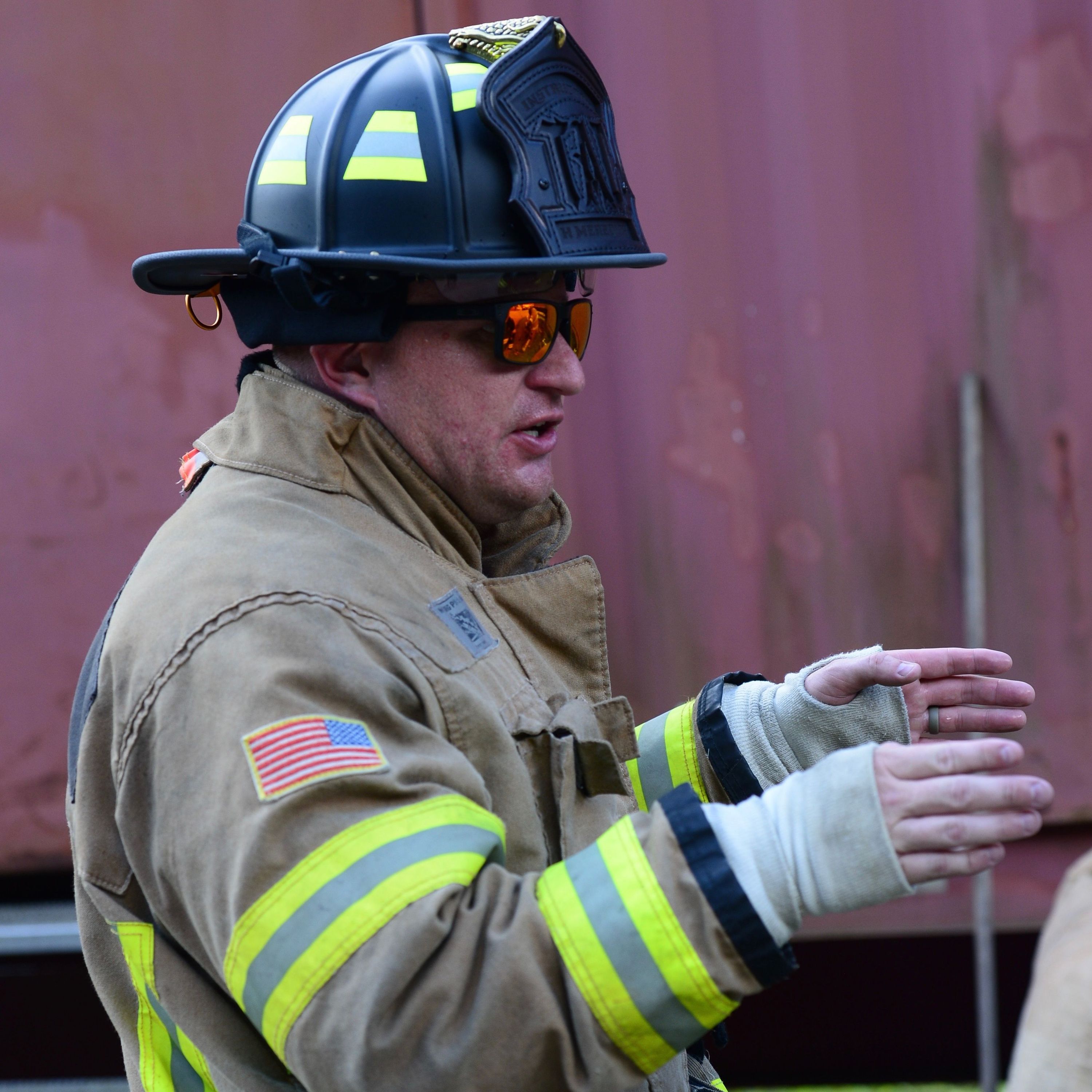
Copper State Firemen Podcast · Steve O
The conversation covers topics related to fire service culture, mindset, and operational tactics. It delves into the importance of addressing conflict at the station level, the significance of the first five minutes of the fire ground, and the need for adaptability in training and leadership styles. The conversation also highlights the challenges and opportunities in shaping the next generation of firefighters. The conversation covers a range of topics related to the fire service, including training, certification, and the changing landscape of fire academies. It also delves into the importance of realistic training and the impact of generational differences in the fire service. The conversation highlights the significance of tradition and camaraderie in the fire service, as well as the evolving role of firefighters in modern times. The conversation delves into the tradition of smoking cigars at the firehouse, the importance of camaraderie, and the need for credible instructors in the fire service. It also explores the impact of technology on fire incidents and the significance of problem-solving and critical thinking in the industry. Takeaways Fire service culture and mindset are essential for effective operations. Addressing conflict at the station level is crucial for a cohesive and efficient fire service. The first five minutes of the fire ground are critical for mindset and tactical readiness. Adaptability in training and leadership styles is necessary to cater to the diverse needs of the new generation of firefighters. Realistic training is essential for bridging the gap between certifications and real-life application. The next generation of firefighters is characterized by a strong desire to learn and improve, leading to a positive shift in the fire service culture. Camaraderie and tradition are essential in the fire service The need for credible and experienced instructors in the fire service The impact of technology on fire incidents and the importance of problem-solving Chapters 00:00 Fire Service Culture and Mindset 02:46 The First Five Minutes of the Fire Ground 21:10 Adaptability in Training and Leadership 32:19 The Changing Landscape of Fire Academies 33:03 The Impact of Generational Differences 35:17 The Importance of Realistic Training 01:12:16 Camaraderie and Tradition in the Fire Service 01:14:06 Firehouse Traditions and Camaraderie 01:17:47 The Role of Credible Instructors in the Fire Service 01:23:10 Technology's Impact on Fire Incidents 01:39:48 Problem-Solving and Critical Thinking in the Fire Service
Steve-O: I have the privilege to sit down with the Heath Meredith. He's a veteran of the American Fire Service from Houston, Texas, with over fifteen years of high volume operational experience. Having served as a firefighter, engine operator, captain, move up or ride up battalion training officer, Heath is specialized in the critical first five minutes of the fire ground for specifically for departments with low heathmeredith08: you Steve-O: staffing and rural water supplies. As a founder of TAC training, In Firehouse Fist Fights mindset, Heath has dedicated his career to bridging the gap between minimum standards and elite performance. Heath is a sought after speaker on the fire ground culture mindset on the go-no-go realities of modern fire attack. He provides departments with tactical framework, mental discipline that requires to operate in the highest level of readiness of the resources on the rig. Beyond the tactics, Heath's founded Third Alarm Cowboys because the fire service is more than just a job, it's a code. heathmeredith08: Okay. Steve-O: We're all returning the mindset of honor, respect, and family to every firehouse we enter. So, my brother, thank you for taking time out of your day. I'm sure I butchered, destroyed, or forgot heathmeredith08: Alright, butchers, destroyer! Steve-O: something in that whole mix right there. So I'll take my old man glasses off. Is there anything you'd like to add, delete, or did I mislead the audience, my brother? heathmeredith08: no man, I just that's my professional bio at the end of the day I'm just a normal retarded ass fireman, but you got to put something on a website, right? Otherwise people don't ever look at you So yeah, that's my super fancy try to make me make me sound a whole lot better and cooler than what I really am because that's what you have to do in today's You know social media world and trying to book conferences and everything I'm like, how can I sound important and that's basically it but no man. that's pretty much it. I've been very honored honestly and I've had the privilege of working outside the Houston area. I actually work just for clarification because I don't actually work for Houston Fire Department and guys ask me that all the time. You work for Houston? I'm like it's kind of weird down here. I work in the city limits of Houston but I work for a county department. So Houston grew so fast, so quick that it they annexed a bunch of areas and within that there's like 80 something of us fire departments that are county departments inside the city limits. And basically at the end of the day, what that means is, is we don't work for the city of Houston. We work for a county department and we have all still county infrastructure. So there's no water supply infrastructure, there's nothing like that. So we do all the big city fire operations like Houston fire, but we do it all with tanker operations instead of hydrants. So that's kind of what makes us to have our specialty while we're able to teach the way that we do. but just for clarification, that's about the only thing I do like to clarify with guys. like, you work for Houston. I'm like, no, but I can literally hit a golf ball to the nearest Houston station. So know, they were everybody back in the day 20, 20, 25 years ago was just trying to get as much area as they could to get in, take in tax money. And that's just what happened. Steve-O: So a real quick question because I didn't know any of that shit, which is freaking crazy that you guys operate like that. So do you run and excuse the lack of proper knowledge for your region, so I'll just refer back to what I know. Do you guys operate in like a automatic or mutual aid with Houston? Or is that a completely separate thing, or is it like if you for example, if you guys get a fucking ripping house fire in your do or like right outside your dew, are you Are you responding with your units and Houston fire, or is that completely separate? heathmeredith08: all the above. So we actually automatic Steve-O: okay. heathmeredith08: aid Houston, because they have areas where they annexed and they didn't get hydrants and stuff like that. And they have a lot of mid rises and commercial properties. So we actually, we do automatic aid them. but they're on like our second alarms. So for our first alarms, it's the county departments that are out next to us, but it's so, it's really honestly so screwy because like the south end of our district, my district from my department is tall and skinny. So if you're on the Southern Station, which is my home station, where we make the most fires at, it's actually closer for our neighboring county departments to that district. So you'll actually have at a single box alarm, you'll actually have like four to five different departments at that one fire that are all county departments as opposed to dumping my whole department on a single district they pull from every. So our automatic aid system is really, really weird here, but it's basically just because you have a different department on Demner every corner. around Houston. But as far as with Houston, yeah, we automatic aid them and then they're on our second alarms or if we need an additional ladder truck or something, they send one of their ladders or towers to us. So we work with them quite a bit. Steve-O: No, I mean that that makes sense to me because I work in the Phoenix metro area and it's the same deal. Like I don't work for the city of Phoenix. I work for a very busy department just next to it. But we'll run literally we have a station that sits on the border of Phoenix that runs more Phoenix City of Phoenix calls than the City of Phoenix unit right there. It's just because it goes by GPS location. You know, it's just so I I I understand like kind heathmeredith08: Yeah. Steve-O: of how all that works, but it's cool that you guys have something like that because Dude, I came from back east. I was a East Coast fireman in the Baltimore region prior to moving out here. And dude, it was the opposite. It was territorial as fuck. It was like we heathmeredith08: Mm. Steve-O: would watch at that point, and I can't speak for it now, heathmeredith08: Thanks. Steve-O: but I'm talking eleven years ago I left there. But at that point, we could watch a house literally burn to the fucking ground right across a city or county line. And we're not doing shit because we weren't invited yet, you know? And it was one of those prideful things where and And I'll tell you, right, wrong and indifferent, it was a tradition, which I fucking love traditions, but it was one of those things where like I was in the busy North Battalion and it was like first battalion boxes. We'd even like to invite our second battalion, third, fourth, or fifth battalion units to us. And they're our fucking guys. Forget another heathmeredith08: yeah. Steve-O: city or a county. They'd be like, Well, you you you guys are the shittiest firemen ever. Like that was the mentality. It was like you handle your own, but so That whole automatic age system was a a complete mindfuck for me initially until I got out here. And then I'm like, holy shit, this is crazy. Because as you know, the general public believes, hey man, when I call 911, fire, Grandma Smirkins is having a heart attack, whatever it is, they're expecting the closest rig to show up. Period the end. heathmeredith08: Yeah. Steve-O: They have no idea that because they're in a city or the county of X, the closest unit ain't coming. They're right down the street because it's not their fucking due. But it's it's cool that you guys work like that because that's That's how we work, man. It's we're surrounded by shit like a shit ton of different cities and we're running the city I I work for right now, there's areas that we have zero fucking firehouses that respond to. And it's it's one of those things where other units cover and it's it ain't right. We're eventually building out there, but it's it's it's one of those crazy things. So anyway, we got fucking sidetracked because that was that was heathmeredith08: Hahaha! Steve-O: crazy. But what I really want a couple of things we really want to talk about. First of all, we did did episode with Captain Jeff Kincaid about bring fist flights back to the firehouse, and that's your coin phrase. And I'll tell you what, from the moment I heard it, I fucking loved it. Literally on the back of this laptop right here, the sticker's been there from day fucking one since it came out there. And I got one on my lid and everything else, and then I gotta I gotta respect Third Alarm Cowboys, right? So he sent me the shirt with the bring I can't even fucking turn around right there. Bring fist flights back to the firehouse. heathmeredith08: Hahaha! Steve-O: Dude It is the fact that the mentality of it, and we we covered it in the episode. So again, if you guys haven't had the chance to listen to, go back a couple of episodes, listen to it, but I'll give you the quick little recap. It it's basically going back to old school. The problem that we have today's day and age, and and I know Heath is gonna chime in because this is again my personal opinion, is the fact that we have pussified the American Fire Service. And I don't mean that is in an offensive way. I mean it's just a reality of either the candidates we have The future firemen that are coming into the department and just the culture or should say society as a whole has kind of ruined it for the job because there's traditions that have been taken away because the quote unquote they're hazing, right? I can't have a an adult conversation with, say, Heath because heathmeredith08: Yeah. Steve-O: we disagree on something and we can have words. And then at the end of the day, guess what? We're still freaking buddies. We still respect each other. Right now, I feel like If me and Heath have an issue, we argue about it, then all of a sudden either my feelings are hurt or his feelings are hurt. And who fucking cares? But then all of a sudden we're not friends anymore. We don't talk because we disagreed on something, which is fucking ridiculous. It's like and that is what I believe that's what it is. Because back in the day, that's what the fucking heathmeredith08: Yeah. Steve-O: men did. It's like you had an issue, you went out to the fucking apron, you duked it out, right? You came back and guess what? You're fucking friends. Anybody that watches a UFC or a boxing fight, you could see it. They beat the fuck out of each other. And then they hug and they say, Good fucking job, man, because it's not about the aggression of the fight. It's getting those fucking energies out. And then we realize, hey, you're heathmeredith08: It's a good one. Steve-O: a man, I'm a man, we can disagree, but we can still be bros. So can you please kind of explain to the audience where you came up with that phrase, kind of how that manifested? And then I hate to say it, I know there's negatives, but the goods and the bads that kinda came with that, brother. heathmeredith08: Yeah, absolutely. So I mean, it's kind of and like that's why I reached out to you man, because like it was kind of when y'all y'all did that episode and it was right off the cusp of some some pretty serious hate that was going on. I was like, shit, here we go. So, you know, I did my due diligence and I was like, I'm going to see what these guys have to say. And, know, I went to the episode and that's whenever I hit you. I was like, dude, you know, thank you so much for being like open and understanding, actually like knowing the content before you open your mouth and So that was a huge deal to me. was like, okay, bet. You know, that's how we connected and everything. And really like, and kind of going to the backstory, you're a hundred percent spot on. Like that is what it is. That's what the shirt was all about. So my wife thought I was absolutely crazy. I launched those shirts before a Smoky Mountain weekend last year. So 2025. And it was really just an idea because like, you know, just like everywhere else, my department has shift wars, like every other department, you know, you come in and The truck wasn't washed or the damn truck didn't have fuel in it. The dishes are still in the sink. This is all the typical fire department bullshit that every department, every station goes through. And, you know, I was like, man, and I'm not saying my department, but in years past, there was always those guys that like they would never handle the issues. It would immediately go to the captains. The captains would start having conversations about who left what undone. And then before you know it, the shit's in the chief's office. And then you're looking back, it's like, man, this was something that could have been squashed between Pipe men. Like what are we doing? So that was kind of the thought process rolling into it. And then it was just really like the message was always from the very beginning was like, hey, let's go out back. And it didn't even necessarily have to be about boxing. Now, like when I first came in the fire department, I am old enough. Like there's been a lot of older guys, like, you know, some guys that I look up to and everything like, you know, pong Kong way and all that kind of stuff. Like we talked and had some great conversations and he was like, well, you know, were you around back in them days? I'm like, yes, I was old enough and I'm from Texas. Like News flash for people, people in Texas still fight. And especially from from deep East Texas where I live. if you look, if I look at somebody sideways at Walmart, there's a good chance we could still fight where I come from. Like we're still me and around where I grow up. know, and even my family people can call us Jerry Springer or whatever, all they want. like, you know, there's me and my brother fight. Me and my dad have fought me and my grandpa have fought like it's still. when you're in a culture of very strong men, like eventually it's gonna come to a breaking point when opinions are so strong. And so it was kind of all that kind of wrapped into one. And my wife thought I was nuts when I came out with those shirts. And I think the original order was like a hundred shirts. And I took that to Smokey Mountain Weekend, man. And we go down there and literally sold out in an hour and a half. And all these people were like, what does this mean? What does this mean? And I was just telling them, like my simple thoughts, like this is trying to break a mindset back to like where guys handle their issues at the station level. because I know, and I have a lot of friends, people don't understand necessarily my platform, but a majority of my supporters and especially my sponsors through the years for the podcast and whatnot has been fire chiefs. And so I have a lot of conversations with chiefs and they tell me, like, man, we are so bogged down with investigations on station level bullshit that we should never have to be discussing. This stuff should be handled at the station amongst the guys. And so it all kind of got wrapped into that and the message and everything. And I really got to process it. And I was like, you know what? And I actually even talk about this in my lecture, because I actually, it's part of my lecture that I travel across the country teaching. And I'm like, guys, you know, how many people are married? You know, I'm married. I love my wife and stuff, but I'm married to this woman who's had my kids, is helping me raise my kids and does that thing that I like and all the stuff that goes along with being married. And I fight with her. So you're telling me I'm gonna live with these dudes at a station and we're never gonna have a disagreement? Like you can kumbaya it in the law office with the lawyers and the bankers all day long, but if you really think you're gonna live with some guys for 48 hours a week or 24 hours, whatever that looks like at your apartment and you're never gonna have a disagreement and have to have a conversation with them, that you're fooling yourself. And so that's really where it's it's taken off and gone into this and... You the good thing about it, you ask the goods and the bads. The good thing about it, man, is it has, it's opened so many doors for us as far as being able to be a conversation starter piece. Because the shirt does what it does and people can clown on me. you're just selling a slogan for a shirt. You got to. I don't care who you are. I don't care if you're selling a book or whatever. Like whatever the title is of the book, you read the title, that grabs your attention and then you open up the book and you read the book based on what the title was. Like that's just the game. So. You know, it is a slogan. You read the slogan. You're like, what's that about? And it opens up an entire conversation about being able to address these issues at the fire station. And that's been the good thing about it, man. And honestly, I should have looked. I didn't even think about it. But to date, man, I want to say we've sold five, six thousand shirts at this point in time. So for anybody that says that it's a bullshit message. Well, there's five or six thousand people out there that don't think it's a bullshit message, you know, so. It's really taken off and it's been great. So man, as as far as like the the bad, you asked about the bad. I mean, everybody knows, you know, the the stuff where I've pissed off, you know, a couple of the largest platforms out there. And and being honest, man, the part that kind of bothers me about that is the fact that like nobody reached out to me. they could have asked what the message was before, you know, they started on the on the hit campaigns or whatever. But other than that, man, it really hasn't been that bad. There's been no bad to my face. That's the funny thing. You know, the we go to these conferences. I think at this point I've probably taken those shirts to I don't know, 20, maybe 20 to 25 conferences slash training events that I've been at, either teaching at or I just had a booth at. And it's been literally like nothing but, dude, I love that. I love that message, blah, blah, blah. Like I've I've yet to have any of these people come up to me and be like, Man, you know, screw you. You're a piece of crap. You're violent. This, that, and the other, like. You know, so that's really the only thing, only bad experience I have is just kind of the social media hate that honestly was out of nowhere, as far as like I'm concerned, besides just grabbing, you know, grabbing people's attention, but them not finding out the full deal, which in turn actually shows the whole message behind the shirt. And it's like, hey, if you had an issue or had a question about what the message means, instead of doing that, let's have a firehouse fist fight. You come have a conversation with me, hit me up. I'm easy to get a hold of, you know, Facebook or whatever, email me. and then like I'll tell you what it's about. That's what you know, Paul Conway with Conway Shields, that's what he did. He was like, hey, what is this all about? We spent like three hours on the phone. He's like, dude, I love this. This is great. Blah, blah, blah. So, you know, it's it's one of those deals where it's like you don't have to necessarily like the framework of the message, but you can't deny the fact of. Firefighters talking to each other, regardless of the subject, whatever the subject is, like that that's genuinely what it's all about. you know, you've been in the game a long time, like sitting at the kitchen table, man, how many issues do we solve? Whether it's talking about parenting issues, kid issues, tactical issues, how much we hate the fire chief and the administration. Like, we do that shit at the table all day long. And that's all I'm trying to tell people to do is like take that mindset and just if I have a grievance with you because of something you did, whether you you screwed up pulling a cross lay. You know, and it made us look bad on scene or you took too long forcing the door and it made it whatever that looks like. Or like, hey man, why'd you leave the why'd you leave the engine low on fuel or you didn't refill it with water or my air pack is low? Like it's that simple. So that that's really what it's all about. Steve-O: Dude, it's it's funny because I picked up on a couple of things you said and I I know the answer. You're like, Hey, I brought it to like twenty or twenty five different trainingslash conferences, everything else, and guys fucking love it. 'Cause guess what? The guys that are there are the fucking high performers. You know, the dudes that are fucking bitching and complaining are the fucking mutts. Anybody that's a fools member knows what I'm talking about, but they're the guys that you know, and again, they do it behind a keyboard or they do it through a freaking email or a text message. Or whatever, it's never face to face, you know. And I've dude, I've I've run into the same fucking bullshit. And it's even like just the most positive fucking messages out there, and you still get hate no matter what. You know, so it's you can't win with these fucking these nerds half the time anyway. It's just one of those deals where you're like, hey man, if you're doing the fucking right thing for the right reason, you're good. You know, and and that that should be what it is. heathmeredith08: out there you can't look at this one that that should be one Steve-O: And in all reality, if you're benefiting, again, personal opinion, if you're benefiting the American Fire Service as a whole. And like we all say, hey, leave the fucking place better than you found it. That's a true statement there. If you're doing that, it doesn't matter how much fucking hate you get, because guess what? I guarantee you, when you go home and you put your head on the pillow, you ain't got no worries in the world because you're doing the fucking right thing. So, dude, I appreciate guys like you that are still trying to pump out the message. and I'll I'll tell you what, I was nervous when you reached out because I'm like, God damn it, he doesn't like it. You know, I'm like, motherfucker. I'm like, I pissed the guy off that I actually freaking I really appreciate him, And it was obviously the exact opposite. And I was like, oof, because I'm expecting you to like hit me up and be like, bro, you got it fucking wrong, man. And I'm like, God damn it, you know, but so thank God. And again, it was just our interpretation of it, and this is just what pulls on our heartstrings because again, in Texas, Arizona, New York, it doesn't matter. We all have the same fucking issues across the board, no matter how big or how small you are. But dude, keep fucking trucking along. I love the message. I love the aggression. Fucking keep making the guys better. There is something though, because I read in your bio, so I I wanted to ask you about what was it, the first five minutes and I I'm probably mispronouncing that of the fire ground. What what was that again that you called it? first yeah, the first five minutes of the fire ground. What's that about? Is that is that a class that you came up with or or can you just expand heathmeredith08: So that's a Steve-O: on that please? heathmeredith08: yeah, that's a portion of my lecture. So I really like to focus on on my lecture is honestly it's about mindset and culture. it's everything from brotherhood, you know, obviously the conflict resolution stuff. I gotta put that fancy word on it so that the chiefs be like, it's conflict resolution. you know, that and and all the way to we actually cover, I have a section in it that covers a lot of the tactical stuff. And it's not, I don't get real into weeds, but it's more or less like what your mindset should always be leaving the station, rolling out of the station, in route to the station, and or in route to the scene, and when you get on scene, more or less like your size up and what you're gonna do. So you know, I was raised in the era, I I'm a legacy firefighter. I was raised by by some hard charging, you know, old school dudes. And I remember being a little kid running around the station and stuff. And and those old guys really instilled in me. and I've been blessed of where I've worked because that's the culture here. Like if you ain't a dog, you ain't making it around around Houston. Like that's just the way it is. And so, you know, I was always taught basically every fire is an interior fire. You should roll up and every fire should be an interior fire until it gets so bad it pushes you out. Then you knock it back down and you go after it again. So that's always been my mindset. And and I have like I don't know, probably three or four different slides of scenarios that we go through throughout my my lecture where basically it's going over go or no go situations. And I kind of punch everybody in the mouth kind of before we get going into it. And I play them some audio from from a dispatch that that's you know, recorded audio from a dispatch that really pulls on the heartstrings and it's like, hey man, like for you it's just a fire. But for these people, this is them. Like they're calling 911, you're listening to real life, you're listening to real problems. And and this is what you're showing up to. So where your head is at needs to be about that. And so that's where the whole first five minutes deal kind of comes in and really getting guys like focused back on the job and what we actually do. Because I think, you know, and and bless it, it is what it is. We can't control it, but we've had such an influx and I've done it myself. I did plenty of time on ambulance hell. I still ride an ambulance part-time. And We've had such an influx of like the EMS mindset, you know, scene safety and all the mess that all everybody talks about and everything, where a lot of guys they work at departments and they just don't make fires. They spend 20 years riding an ambulance and they might make, you know, half a dozen fires in their career. And so their mindset is not necessarily on that like fire dog type mentality. and that's where I go and I'm like, hey man, like this is where this is when it counts. Like I get it, 95% of what you're doing is medical calls, but This person calling 911, this is what they're going through. And this is where you need to have your head at to to actually do your job whenever it truly matters. you know, and then touching on one more thing that you said a minute ago about wrapping up with the the stuff. I like to tell guys, when it comes to like the hate and you know, people always got something to say and everything like that. The best thing I could tell people as far as like my experience with all of that is I went ahead and got it out of the way, right? I went ahead and I was kind of I'm still a small dude. I'm not, I'm not like some big great speaker on a on a you know with 100,000 followers and all that. I'm still just a little small town Texas guy. But it was actually a a blessing for me to go ahead and have to experience some of that social media hate and some of that judgment. So I kind of got I just got it out of the way. So now it's not like a dagger to the heart anymore. Whenever you realize like that your heroes that you looked up to want to shit on you, that that's out of the way for me now. Now I'm like, okay, now I can be mission focused. I know where people stand with me. I don't have to look up to these people anymore. I don't have to, you know, think that they're where I want to be someday because now I know I'll never be that because they're never going to accept me. So I was able to kind of get that out of the way. And then it's also really, really taught me that there is a big issue, and we we could go into more of this in a minute if you want to, but you know, there's a big issue of understanding that there's more than one way to skin a cat, right? So We used to teach people that. Like, what is there a wrong a wrong way to force a door? No, the only wrong way to force the door is just not getting it open. Every other way is perfectly Steve-O: Get it, yeah. heathmeredith08: acceptable. As long as it gets open, it gets open. You know, and I think the big thing, and this is not an attack on any specific platform, but the big thing with all of these different fire service platforms is the lack of understanding that the different strokes for different folks. You and I, we jive on on like, if I'm on you like a football coach, you're gonna be all about it. I've been to tons of these conferences teaching classes. there's those instructors that are like real hardcore, ready to rock, and dudes respond to that and they love it. They eat that up. And then there's other classes where people are are, I don't want to say, you know, kind and gentle, but they're more that it's a nicer tone. It's a a a a different tone than what I and guys respond to that. We got a million plus firefighters in this country. And for anybody that thinks that that everybody's gonna like one one tone or one set way of teaching or this works for everybody is kind of lying to themselves or they're trying to just sell their own product. And that's what I really learned through that is like, hey, yeah, some people are gonna not like how I talk. They don't like my tone. They don't like how I address things or the fist fight mentality. They don't like all that stuff. But there's a lot of people that do. So I just focus on the ones that do and it's I'm successful and it's working for me. So that's kind of the lessons learned from all that. And I just like to share that with guys, especially, you know, guys like yourself and stuff that have platforms, like just kind of get in your mind, get out of the way that you're not gonna be for everybody and but you're gonna be for somebody. There's gonna be at least one person in American fire service of a million people that likes how you present a message and what you're trying to teach. And that's just what I rock with. Steve-O: I love it. I I just had Steve Cathy on from the Florida region for your locks don't work, great fucking fireman. Period the end. And all he specializes in forcible entry. So he's got a great platform. He I mean, he's a good instructor and he talks like us. He acts like us. He's a true fucking fireman. But he he made a a statement that resonated with me. He's like, hey man, I'm talking to the guy. He ain't listening. Guess what? I stop my attention to him, I go to the guy next time I start teaching him. You know, it's because exactly what you just said. It's not for everybody, and that's and that's okay. And we're personal opinion, we're struggling with with that right now when it comes down to fire instructors, trying to get guys to understand, like, hey man, the kids, I I mean, I know they're not kids, they're all different ages. The students that come through region, you know, academies now because career academies that want to be you know heathmeredith08: Yeah. Steve-O: That that's the last part of their hiring process, basically, to get on probation and actually do the job. but they're already picked up in the city in our region. They go through a 14-week academy. The problem is, is little Billy needs that coddling a little bit. Fucking Ray wants to be that football coach in your fucking ass and he loves it and he performs. But as a good instructor or company officer, even senior fireman, let's just say leader in the American Fire Service, you have to start realizing and reading people. And then realizing, okay, this guy, I can't be straight up in his face because he just shuts down. The other guy, he thrives on that shit. But we, as instructors and then company officers, and then just trying to make the American Fire Service better, we have to be able to adapt to all those people because unfortunately, it it is what it is. The new generation coming heathmeredith08: Yeah. Steve-O: up is the brand new American Fire Service. And I guarantee, when you and I got on the job, the generation before us called us pussies. I guarantee it. Right? Because we did something wrong. heathmeredith08: I got caught a lot worse than that. Steve-O: So But it's so it's like it's it's ever flow. You know, it's the last generation was always better, blah blah blah blah blah. It doesn't freaking heathmeredith08: yeah. Steve-O: matter, man. It's we have to adapt to the new guys coming in to make sure, and this is again personal opinion. I always tell when we leave, our ceiling should be their floor. You know, they should heathmeredith08: Yep. Steve-O: be better than us. If they're not better than us, then we'll guess what? We fucking failed. And What are we doing it for? We're not doing it for your department, my department, we're doing it for the fucking public. That's why we even exist. Again, heathmeredith08: Yep. Steve-O: personal opinions. The other part of that, too, before I get off my little soapbox, is just because you had mentioned it I'm super passionate about this because I've gotten a lot of pushback. The and I know you've heard this saying before, we've always done it like this, bro. You know, it's like, yeah, cool. I I literally had a s very senior, respected captain tell me, after he retired, heathmeredith08: Yeah. Steve-O: Hey man, and it was it was the stupidest little thing. I just put it out there knowing that it would give fucking guys just spun up. And it was literally a statement I posted that said, If your primary attack line is designed to be dragged on the ground, it's inefficient. Prove me wrong. That's all I said. I didn't say anything else. I just just said, prove me wrong. Tell me why dragging a hose is more efficient than carrying it on your shoulder or whatever else you want to do. I like to carry it on my shoulder as a minute man, compared to a fucking drag. And the responses I'm getting is I've dragged hose on the ground for forty plus years. Every fire went out. I am not arguing that fact. But guess what? We can be faster, we can be more aggressive, we can be more efficient. Those are all things because unfortunately 40 years ago we had a lot more time to knock down the fucking fire than we do now. Because you know, I know the guys listening know, and we've talked about in multiple episodes, as we arrive, we're in pre or Post flash over conditions right away. Compared to the old timers where the I mean, they're on three fucking four bottles inside, you know, and they're calling us pussies because after one we're done. It's like, well, dude, after one, we either put the fire out or burn it to the ground. Because of our fire loads. That's just how it is. But dude, I love the talk. So hey, I'm gonna get off my freaking soapbox. This is about you, my brother. heathmeredith08: Yep. Steve-O: so what in in your career right now. I know you have a lot of years on the job. You you I guarantee you have a lot more before you're getting ready to retire, hopefully, because we need to keep good guys around for as long as possible. it's a two part question. What do you think we're lacking as American Fire Service with getting these kids up to speed that are coming in the new generation, and then more importantly, what is the dramatic difference and what are you trying to change compared to the old timers to what we're doing now to be able to progress us forward. Because like we talked about, our building construction is shit now. Our fuel loads are heathmeredith08: Okay. Steve-O: fucking garbage, Time is not on our side. It is it it's a shit show and we have to deal with this. So what's I guess what's your plan of attack? or or what are you trying to accomplish with your platform, your guys, your department, and then going to these conferences to say when you finally walk away going, All right man, I made a difference. I made something better. heathmeredith08: For sure, man. So honestly, that's a pretty that's a pretty simple one to for me to answer because it's it is literally what we're kind of known for. So our hands-on class is called the real pump to nozzle class. and real pump to nozzle engine ops class, whatever. And basically it's it's kind of funny and it may not be like this everywhere. It may just be a Texas thing, but I work in Texas, so that's where it slaps us the most in the face. But Texas has gotten what I call cert horny for the last like probably 10 years. And everything is a certification. Whereas when I went to Fire Academy, you know, you had your basic firefighter, but it encompassed a lot of different certifications within it. Whereas now they've broke those down and you know, used to if you got your instructor, your fire officer, and your driver operator, that was basically it. Unless you went and got hazmat or like extras. Now every single one of those, they've broken them down into different tiers. And then even the basic fire academy doesn't cover all the different things that it used to. It everything is about money, right? Because they could charge 75 bucks a pop now for the renewals on all those certifications. So the state of Texas is not dumb and that's what they're doing. And the other big influx that we've had. Is a lot of the dot com style fire academies. Where when I went, you went, we went to like a boot camp style fire academy where you were there every day, you know, got your ass beat for for a semester and in a college semester, and they weeded out the quitters and it was a lot more, you know, in your face. whereas now these guys can take them online and they have their place. Like I sent my brother to a dot com because he had a a a young family and he had bills to pay. So he was working in the oil field and And did, you know, his two or three months online stuff and then went in for a few weeks at the very end and knocked out all of his hands-on skills and all that stuff. So they have their place for guys that you know, need that ability to still work and they can't just quit work to go to a fire academy for four months. But the realization of like, hey, we're pumping way more people through dot-com style academies than we are traditional academies is really becoming it's becoming a real issue for us. whereas like I spent two weeks doing live burns. These guys are spending like a day and a half in these dot-com academies. And then they're coming to us, you know, and they're and I'm not saying that it's like this everywhere, but there's a lot of pencil whipping that goes on, whereas they should have done a certain amount of live burns and but they're doing them only in like an LPG house. So they don't even really know what hot is. and so just different, basically, the realism is not the realism is not as real as it was a few years ago. and that's nobody's fault. That's definitely not the guys coming in. They went to Fire Academy, they did their due diligence, they got their certifications, they took their tests, now they want a job. And so it's kind of my my platform, and what we've done is basically that that real pump to nozzle class. Our entire curriculum is basically bridging the gap between certifications and real life application. So I'm not teaching you coefficients on pump ops. I'm not teaching you the textbook stuff. Like you can go do all that, knock out, get your certifications to make the state happy and make your department have their CYA capabilities. But if you want your guys to actually be able to know, like, hey, look at the hose and I count count sections of the hose and I know what to pump it at, we're the ones you call. So that's kind of what we're doing. We're, we're teaching realistic fire ground stuff. you know, and as far as that goes, like even in my own department, something that I've noticed, and you were talking about a minute ago of like the different personalities of these guys coming in. Like, you know, we've got several rookies that are on my shift right now. A couple of them played played college athletics. One of them played D2 college football. That dude responds to me very well. I can go over there, you know. He played freaking college football in in Oklahoma. The dude's pretty solid. And you know, another guy played baseball for for one of the big colleges here in Texas. So these guys are athletes, so they're you know, they're able to handle some things. Whereas some other guys, you know, they they lived at home with their parents, they went to school, they didn't do all they did was PE basically, they didn't play sports. So you gotta kind of teach them a different way. And it goes along great with what you're saying, and it actually works, it it's kind of funny because Obviously, at your department where you're with these guys for you know a year your whole rookie year, it's a little different. You can kind of, if you are that company officer or you're the senior guy, whatever, you can more or less you gotta kind of treat it like you would a parent, right? If you got more than one kid, all of your kids are different, they all have a different personality. I got five daughters, and every single one of them is different. I have to, I have to be a parent completely different. Some of them respond to You know, hard ass dad. And then some of them I gotta I if you whip them, you completely destroy them. And so it does better to talk to them and explain. And it's no different than the firehouse. Now, where it is a little different, we go to these conferences and I have somebody for four hours, or I have somebody for an eight-hour hands-on class or a 10-hour hands-on class. That's where it gets a little different. And it's actually funny because I've stacked my cadre, which is guys that I I fight fire with full time. The guys that travel with me or guys that are on my shift, one of them's in there right now. These guys are are guys that I you know, personally fought fire with. And all three of our personalities are different. You got me that's like the loudmouth, you know, in your face guy, but then like my captain, he's the more methodical dad mode. So even when we go to these conferences and we recognize real quick off the bat of the different personalities of students we're dealing with, I only have them for an eight hour day. So I go ahead and pair them with the instructor that they're gonna respond to the best. And you can usually pick that up pretty quick because first thing in the morning. You know, them guys are either, you know, liking what I'm doing and they're all about and they're smiling, they're giggling, or they're kinda standoffish. And I'm like, Yeah, you need to go over here with Brad. So I I kinda do that and and kinda have to play a game. That's that's my way of being able to, you know, try to teach that next generation is just bringing the realism back. we were taught your generation, my generation, the ones before us was very heavy operations focused. We were like I can't tell you how many old heads used to tell me, Well, I ain't never seen a a textbook put a fire out. Well Like it or not, regardless of of my personal opinion on, and if you want to know my opinion, all you gotta do is listen to my podcast because I beat this up extensively. But the education route is here to stay. I I'm I'm fearful. people that have really pushed the certifications, the degrees, all that kind of stuff, that's not going away anytime soon. So, what guys like us, before we do retire, what we're gonna have to do is on the backside at our station level or at these conferences, you know, if you're a training cadre. You're gonna have to really hammer down on that operations focused realism so that it holds just as much of an importance in these people's mind as what they're getting fed on the formal education route. Because, you know, if a lot of these administrations have their way, they're gonna tell guys, yeah, you're qualified for everything here as long as you have a college degree, but they've never pumped a fire or they've never actually done a real search, or they've never actually cut a hole on a working fire. And then they look up and they're assigned to a position when they actually have to do it. Now that's where we have problems. you know, and like I said at the end of the day, a lot of these I don't beat up guys at their departments or even guys in my own department for what they don't know because they don't know what they don't know. I know that's kind of a corny tune that people say all the time. But if they're being told, like guys I've seen, they're being told, yeah, you're qualified for that position, test for it, do it. They go through the testing process, they pass the test, they think they're ready to rock because they've been told that they're ready to rock. But now they're, you know, assigned, hey. Engine, whatever, go to the roof, cut a hole. shit, I've never done that. So that's kind of my whole deal is really trying to make the realism as as much on everybody's forefront of their mind on just the importance of the job. That's where that whole first five minutes comes in, the go or no go situations. Like I I I go back to the same old mentality I do you know, early in the show talking about it. Like we've gotten away with it's very, very easy, you know, just talking about company officers, because you asked. It's very easy to be a a company officer or a captain on a medical call. You know, you you do the radio traffic, you secure scene safety. If you have a paramedic that's there, they're doing the patient care. A lot of times, you know, where I I'm from, a lot of captains will be like the scribes. So they're they're getting, you know, demographics, so they're getting meds lists. It's easy to be a captain on a medical call. And if you work at a department that runs 99% medical calls, you could get away with being a captain pretty easy for maybe even 20 years. But that one or two fires that can bite you in the ass, that's when you get people killed. And that's where I really, really, really try to focus in on like, hey, man, this job is fun, but it can get real real quick. And if you're not, if you're not ready for that or understanding of that, or no one's ever even told you that, that's where it's gonna be a problem, you know. And and I would say it's a blessing and a curse. I've been being a legacy firefighter, being around this for as long as I have, I'm actually gonna drop an article real soon kind of telling my history a little bit about it on my platform. But like I was literally doing this shit, like riding around fire trucks and and like just being around this, running around the station as a little kid in diapers. That was me. And so you know, having that type of background and also seeing my dad's friends get killed, going to line of duty death funerals from the time I I can literally remember. and then not to mention just where I work here, man, in the area where we make a lot of fires in this area. My partner in the back of the engine was about 10 seconds from death last year. Got burned up pretty bad, like literally gear, everything failed. burn up pretty significantly. I mean, he's fine now. He had to go get scrubbed and stuff like that, but his mask was literally at the point of failure and he was still completely engulfed in flames. So for me and being in that type of experience, it It is a reality shop because when you actually see it, it changes your whole outlook. When you actually see guys get hurt or actually see guys get killed, it's no longer, you know, it's no longer just some podcast or some book or some slideshow talking about it. Now it's real. Now that person was here today and they're not here tomorrow. And I don't think, and I never want departments to have to experience that. I don't want guys to have to experience that, but I think sometimes that Experience needs to be felt because you you're, you know, too many departments have gotten away with it using hope as a tactic for so long. And so they just never they never have that realism of danger. They never have that true sense of like, hey, this job is like wild as shit. It's funny to me when I'll I'll make a post about how dangerous this job is and I'll have some jackass in the comments, which not even listed in the top 10 most dangerous jobs in the world. Okay. Yeah, it maybe not where you work, bud, but when when you are at a place that burns and you make a lot of fires and you know, like we my rookie year at my department I'm at, cause I recently and I didn't talk about it in the bio, but I actually moved a couple years ago. I've been a captain for about eight and a half, almost nine years, and I moved to the department that I'm at now. But when I did, I had to completely start over. So I rookied again at 34 years old. In my rookie year here, we made sixty-three working structure fires as a crew. And my gear went from being brand new to my gear and helmet failed inspection after one year. We made that many fires that my shit failed. So for me, it's real. And I know a lot of guys are like, damn, see, like some guys won't make 60 something fires in a career. And we can make that in a year here. So it is different, but it also it's like, hey man, just because you work at a place that you don't make that amount of fires, your fires are still hot. Your fires will still burn you, your fires are still kill you. And more importantly, they'll kill your citizens. If you're not doing your job. So that's that's kind of my platform. And that's what I really, really, really harp on these young guys that are coming in. and and I'll say this because I talk about it a good bit, and this, your listeners need to hear this too. We do talk about how a lot of the younger guys are are are coddled, you know, that yes, they were raised differently. I do not disagree with that at all. But I'll actually say this, and I've seen it in the traveling, and you see it, especially with the amount of conferences and stuff that are popping up. These younger guys coming in, the 18 to 24-year-old range are way hungrier to learn and be better firefighters than anything the fire service has ever seen before. It's it's it's a wave coming. That's the best way for me to describe it. It is a wave coming of hard charge. They don't want to go. You'll see the conferences out there that it's like basically all lectures, that there's no hands-on tracks available. Those conferences are actually starting to decline in registration numbers. And like the small little, you know, conference that just popped up where they've got whatever me or Todd Edwards or like somebody else coming in teaching a pretty good hands-on class, those suckers are booming and dudes are signing up going on their own dime to go take these hands-on conferences instead of going to like the big name, you know, been around 20 year lecture only conferences. That's what we have coming. and I'm excited about it. I think it's a great thing. I think that the next 10 to 15 years of fire service is gonna look really awesome. Steve-O: Dude, I I can't agree with you more because right now I'm at a regional my job is I'm assigned to a regional training facility. So I literally train eleven different city firemen that and we do it a little bit different. You get picked up, then you go to the academy. And then you have to be successful in the academy. heathmeredith08: okay. Steve-O: You know, so it's it's a little bit different. When you graduate the academy, that next Monday you start on the truck and you do your one year probation with your respected city. But so I I get to see heathmeredith08: Is it kinda like a draft or something? Steve-O: No, so it's like every department will do their hiring process and then we as a regional training academy, because there's eleven different cities that come in, will be like, Hey, this is the next class, how many you send it? Right? Okay, they're sending ten, they're sending ten, heathmeredith08: okay, okay. Steve-O: you're sending ten, like so our upcoming class is like fifty-two or whatever. And then every city that sends recruits will send a a captain as a recruit training officer on top of it. And then myself and then my cohort that run the academy, We kinda oversee everything and then we're also instructors and we get in the mix just because there's never enough instructors and there's always too many students and everything along those lines. But it's going back to what you were saying about the cert you know, the the cert with their state. I remember back east in smaller departments, I saw that more at least talking to the guys. We always called him paper firemen. They had if you look at their resume, you're like, This is the most qualified motherfucker I've ever seen, but he's a dog shit because again, Fortunately, unfortunately, whatever you want to say, right? He doesn't fight any fire because of where he works. or he literally doesn't care and he just wants to pad with education. And I can't I can't fucking stand that. And I heard somebody say it the other day, and I wish I could quote them on it, because it's not mine. But I love it. I love what they said. They were like, hey, you need fire officer one to make lieutenant, you need fire officer two to make captain, along with instructor one, instructor two, blah blah blah blah blah, right? But great example. What in Fire Officer One or Two taught you to be a leader? Fucking goose egg, zero. Right? But we require this for what? For what fucking reason to go through fucking JPRs or whatever bullshit, like admin paperwork stuff that heathmeredith08: Hundred percent, yeah. Steve-O: you and I could easily learn from a senior suppression officer in a one one to two week kind of ordeal. Hey man, you got promoted. You're gonna cut your teeth under a senior guy, you're gonna learn the paperwork side or whatever. You've already been fucking running the calls, now you're just running your crew. And doing whatever admin paperwork that your department requires on top of it. But but to say that this class is required or to have these guys be able to test early for a lieutenant or captain position because they have a college degree, or even worse, you take the best captain out there and he's not eligible to make battalion because he doesn't have a fucking bachelor's is bullshit. Because yeah. Because why? What in the world of Freaking emergency management or whatever, underwater basket weaving, Makes me a fucking better battalion chief. Nothing. What makes me a better battalion chief is fucking windshield time. Being in that fucking fire SUV and running fucking calls. That's what's gonna make me good. And the only way to get good is I'm gonna have to fuck up a lot of fire scenes. Because that's how I learned. I l I learn fucking zero when I do things really well. I learn a lot when I screw stuff up. And guess what? I screw stuff up all the fucking time. That's why I'm halfway decent at my fucking job, I hope. You know? It's like heathmeredith08: Yeah. Steve-O: through through the numbers. So dude, I I love the mentality on it. listen, I we could talk for ever, but I want to hit on something before we start kind of running out of time a little bit. In your bio, you said you and you you had mentioned it earlier when we first started talking. Water supply issues, things like that. So have a couple questions just about where you work. what's your staffing like? And then you're already, you know, self-admitting, hey man, there's a lot of places we don't have plugs, everything else. So how does that scenario work? Especially when you start talking about the first five minutes. Are you guys rolling pumper tankers? Is it seven hundred and fifty gallons on a wagon? Or is it just like, hey, you're gonna dump the tank and then sh set up a shuttle? Like just kind of educate the audience on how you guys have to fight fire in your area. heathmeredith08: right now kind of just being full transparent, I'm actually floated to our northern station right now because I'm the one of the senior guys on my ship. So I'm actually having to ride up as a driver. right now I've been up here for a couple of months, but my actual home station is it is a an engine tanker house, or some states call them tenders, whatever, but down here they're tankers. and it's a a 2,500 gallon tanker. It's got a a 12, I think a 12, no, we got a new one. It has a 1500 GPM pump on it. and basically it's just a water shuttle. So we are blessed where we're at that the staffing has beefed up from where I started. You know, it wasn't shit back in the day when I freaking first started. You might have one or two guys on an engine. now, like we have we have five in the station. And so basically it looks like four on the engine, and then the fifth guy pulls a tanker. So it's on the automatic box alarm with us. It rolls to every single fire with us, except except for maybe car fires. and a lot of times the guys will it they'll just bring in anyway. and usually what that looks like is which we do seat assignments down here. So the Bravo guy that rides behind the captain is always on the nozzle. The Charlie guy normally your senior guy that's behind the EO. And then usually Like when I was still down there, me and my partner. So we were the two most senior guys at that station and we would rotate every other shift. It'd be my tanker shift and then we'd swap back and forth. Sometimes it didn't work out that way, but that was ideal conditions. and then we roll that with us on everything. So our new engines we did because, you know, just like everybody else in the country, nobody can afford doing custom pumpers anymore because of all the, you know, the hedge funds that have skyrocketed them through the through the through the roof on the price. are actual we've had the same spec pumpers forever here. but now those those pumpers are man they're upwards like 1.5 million and stuff. So now we've had to drop back and and we do have all brand new in our fleet but they're they're demo trucks. So I can't complain but it did drop us we used to have a thousand gallons now we have 750 but the new tanker they increased the size of the tanker we went from a 2000 gallon to a 2500. And so it's kind of give and take or whatever but Yeah, we we roll a tanker on every and actually on our box alarm, our mutual aids bring tankers too. They they'll roll an engine and a tanker. So on initial box, we usually will have two to three tankers and then three engines and then maybe a ladder and then a couple of chiefs. and then kind of funny where our district is, especially that end of the district, we got mid-rises, commercial property. We actually, it for people in the Houston area, We are actually share a fence. Our our district shares a fence with Bush Airport, Bush Intercontinental Airport. So the major airport in Houston, we share a fence. Our my entire department is just west of there and then runs up and down of a major interstate. So we got major thoroughfares, tons of commercial properties, lots of midrises, tons of hotels because we're right there by the airport. So all that stuff. Yeah. And there's no and and then of course obviously a ton of residential, a lot of old school residential. and then we we're we're hood. I mean it's It's Houston, so it's super hood. Lots of shotgun shacks, lots of trailer parks, and and so stuff like that. But yeah, we do it all with with water shuttle operations. Sometimes we get fortunate because we are very, very aggressive, and so are mutual aid departments. They're very, very aggressive. I mean, it's it's kind of like what you were talking about. Like we pride ourselves on being able to get out there, stretch a line, get inside, knock it out, and tap it out before incoming units get there. That is a prideful thing for us. Some Chiefs kind of cringe because you hear the word, you know, like. Racing to be first in and stuff like that. But that's just a culture. I mean, that's we we do the job and we do it to the max. And if you can tap the fire out before incoming units get there, it's a prideful thing. and so we're all about that. And basically, it's just it's it's very, very it's a very cool environment and it's allowed the opportunity for guys like myself to have experiences that like most people probably never will in their career. Houston as a whole. Because we are overshadowed by Houston Fire Department and they are very aggressive. We wear a different, a different spec of gear than what most other departments in the world or in the country or the world for that matter wear. Our gear is a lot more beefed up than what a lot of departments are. So we're able to handle a lot more. We wear a different style of hood than what most people do. that's actually basically the exact same as your actual bunker coat. It's just an extension of your coat that goes over. So, like you'll a lot of guys, like we don't When you start talking about training, everything like that, there's a very few times in my career like we don't crawl. We don't do a lot of the different stuff that guys teach across the country. We don't do the mask up at the door thing. We come off the truck ready to rock because with that hood that we wear, you have to actually put your mask on first, then the hood, then your coat, because it goes under your coat. So we come literally off the off the truck, literally with the only thing left to do is plug in. We got gloves on, helmet on, mask on, we're ready to rock. And you know, people will argue about fogging and and there's a lot of techniques that Houston Fire has put out about how to defog your your mask. But this is how we, you know, it's been done down here for 30, 40 years. You talk about how it's always been done. Like that's just what it is. So I was brought up in that culture. And like you come off a truck rate rock. There's not the I never actually even seen the whole mask up at the door deal until I started traveling and teaching. And then I was at a at a conference and I saw Cody Trestrel teaching with the brothers in battle. And I was like, I've never seen that before. Like that was a total new thing for me, you know. And I've been in the fire service for a while. And so it there's a lot of different things that we do down here that necessarily people don't don't always understand, but it it's kind of one of the mentalities where it's like, hey, it works. And you know, statistically, this area burns more than anywhere else pretty much in the world, especially when it comes to residential properties. Houston Fire as a whole holds the stats of one of the hottest burning departments in the world. and I would I would argue that that's kind of extended out to the county, but because there's so many different departments, it's hard to track. But basically we're all making fires. And so it is a totally different mindset down here, but that's kind of how it works. Steve-O: It's it's I I love what you said too because I and full transparency I don't step off the truck with my mask on, but I'm also the right front seat too. So I'm trying to absorb as much information as possible. My guys in the back seat, I don't care what they do. And I tell that listen, if you want to mask up in the truck and go to work, I'm cool with that. If you're good and you can mask up with your gloves on in sub fifteen seconds, I'm good with that too. I'm happy with both. My biggest thing is if you do put your mask on, it is a physical well, l let me just preempt this. I'm assuming you probably were Scots. heathmeredith08: Yes, yeah, we do. Steve-O: Okay. All right. So Scots have a much wider field of view We wear MSAs. So MSAs are a lot narrower. It is a physical blinder when you put them on. So you automatically put blinders on. So for the newer guy, it's hard to teach them to kind of keep their head on a swivel. And I mean I know that's an old coin saying, but it's it's true, that's why I try to teach them. Like you need to actively looking as you're stretching, as you're forcing. I want you to absorb as much information from this building as possible. Window locations, seat of the fire, victim, whatever it is, the setback, everything for that particular fire right now, I want you to try to absorb. And at the end we'll talk about it, then we can kind of say, Hey, next time this is what I want you to kind of look at, but I don't care either way. Some guys are like, Hey man, I'm always gonna mask up and I'm always gonna be on air, and I'm like, That's ridiculous. It's it's I'm a huge fan of like, hey, I don't care what you do, but give me a good reason. heathmeredith08: Yeah. Steve-O: You know, so here's here's an example of mine. So again, I already told you I wear MSA. I keep my waistbelt very loose on my MSA, where guys are like, that's and I understand this, they're G1s, they are designed to hold the weight on your hips. So they're designed to pull that waist strap really tight, get the weight off your shoulders. I would rather have it on my shoulders because my go-to is if I need to hook up a quick harness, I'm using my seatbelt of my waistbelt as my initial go. with my strap or whatever it is, if they have a D or D, something like that. So that way I can turn around and crawl if they're a big motherfucker and start dragging effectively dragging. So and literally I had a battalion chief challenge me once and once I explained it, thank God he's all like, Okay. What he was looking for was a good reason why instead of, I always do that, right? And well that's not a fucking good reason, It's get some thinking. Like that forward thinking and I know you you preach the same thing. heathmeredith08: Yeah. Steve-O: But it's we're trying to teach these guys to be that forward-thinking fireman. And dude, what you're saying about the generation come in, I'm excited. I have fifteen years until I retire. Period. The end. No more or no less, most likely. In the next 15 years, I see I already see it now with the kids coming in. We are transitioning to a better state of the fire department because of what you said. These guys coming in, granted, yeah, they might have been 18, they got their EMT three months ago, they've never been on the ambo, and now they're sitting in the fire academy. and they're they're on the job and we're training them up. It's not their fault that they were good and they got picked up right away, or there's not a lot of applicants and they got picked up. But guess what? That guy wants to take those classes, wants to be the best freaking goddamn fireman ever, listens to podcasts, watches videos, absorbs that information, and then tries to implement it. Trains on it, works at the house, and then when he feels comfortable, executes it on the fire ground. They're the young members on the job, the guys that are holding us back. Or the 15 plus, unfortunately, the majority of those guys, because of what we've been saying, is that it's always been that way, or hey, my department or I have always done it every single time like this, Well, no, there should be a reason behind it. And if it's just because I always do it, that's not a fucking good reason. You know, but I'm heathmeredith08: Yeah, yeah. Steve-O: that your mindset is identical to mine, dude. I fucking love it. I I I knew it from the get go when we when we first started talking after the episode. So I was super fucking hyped to get you on here. and I wish I could keep you on here for fucking hours, but I know I can't. So, with all that heathmeredith08: Well, we could do another one. I'm down for it because I I haven't so like just being honest, man. Steve-O: We're we're g we're gonna have to. heathmeredith08: Your yours is probably like the fourth show I've been on as a guest. So it's very cool to me because it's different. Cause I'm normally just doing my show. And so I like this because it gives me more or less like challenging questions, things like I I don't already come in having an idea what I want to talk about. So I enjoy it, man. Anytime you you want to do this, like we can jump on because I'll talk tactics, whatever, because it's To me, it's so much that goes into this job. And and like my my EO Timmy, but he travels, he's one of my instructors. He's one of the best known EOs in in all of Texas. He's very, very, very well known. He's a badass at water supply. and like his whole coin phrase, he's like, Yeah, a lot of people know how to draft and we could teach them how to draft. And we didn't even get into that on the deal, but like we draft a lot, like it in Houston, because the the engineers when they built Houston, for some reason they thought it was a good idea to build a city at sea level. And for people that don't know, when you build a city at sea level, it floods. So our streets and stuff will all flood. And like that, you know, we got six foot, seven foot deep ditches on on all sides of the streets. And so if it's raining in the middle of the storm, it's nothing for us to drop a hard suction and we'll pull a draft out of the ditch on a structure fire like that. And one of the things that Timmy preaches in in our class and everything is like, we can show guys how to draft. It's easy to set up dump tanks and and show guys, you know, this is how you transfer water and this is how you pull a prime and blah, blah, blah. The big thing you got to teach the guys and what we're we really specialize in is not just how to do it, but when to do it. And then how to do it quickly. Because when you start setting up a water supply, you're you're setting up water supply because your guys are running out of water, right? Like you have no more water coming. That's the whole purpose of doing it. Or you're going to be setting up a tanker shuttle and it needs to be done 20 minutes ago. So that's a big thing is knowing and it's not just water supply, but it's like, yeah, it's one thing to know how to do something, but it's a whole other deal to know when to do it. and that's where, you know, it comes into that first five minutes. That's when it comes into all the the realistic training that a lot of guys out there like myself and you and everything are teaching is like you can know how to do something all day long, but do you know when to do it? And then how can you do it quickly and proficiently to where it matters in that three to four minutes on the fire ground when it needed to be done. Steve-O: It's that it's that forecasting, you know, it's that forward thing fireman heathmeredith08: Yes. Steve-O: that can forecast, hey man, I d I don't need water right now, but man, I'm gonna set myself up for success. That way when the boys start screaming, I'm a couple steps away from establishing a solid water supply, sending on their way, and and they don't even fucking know a difference. It's not skipping a beat. I heathmeredith08: Hundred percent. Steve-O: I am a fucking ladder captain, period the end, and guys fucking make fun of me and I don't give a fuck. I purposely every single time As soon the airbreak hits, I turn my engineer, I'm like, set up for a defensive operation, and then we go to work. Because if it gets away from us, they already have the outriggers out, the sticks down, and it's in our area, and it's not how it was where I came from. It is a it is a a black eye if you put a stick up on a residential house. I don't know why. We used to do it back east. Okay. We used to do it back east all the time. But I will purposely heathmeredith08: Here too. Here too. Yeah. Steve-O: set it and I'll put they'll put the bucket on the ground just in case. Because guess what? When shit goes sideways, we're exiting, we're getting in the bucket, we're going elevated, and we're gonna knock the fuck out of it, and then we're gonna go right back inside. Because that's that's what we're trying to do. And again, be aggressive, be forward-thinking, and then know your fucking job. dude, we're we're we'll have to respin this part two and do tactics because it I am thoroughly fucking entertained with what you guys do right now. And I would love to just kind of banter back and forth between East heathmeredith08: Yeah. Steve-O: Coast, you guys, West Coast now, because I I have zero experience in the yeah, I don't even think I've had any guys from Texas on here, which is awesome. So I just I I I love what you guys are doing, especially the the unique situation you're in with being encompassed in the city, but you're not city firemen kind of deal. So That we'll we'll fucking cap it there. We'll bring it back a hundred percent. Thank you for being willing to come on. dude, so let's let's get in a couple questions. We never covered it, but you you touched on it a couple times. You said you're a legacy fireman, which I have the biggest soft spot in the world for, just because you you said you got five girls. I got two of my own kids, two step kids, so four total. None of them will be firemen, unfortunately. And I wish one would, just because I have it I think it's the coolest fucking thing ever. But the why. So whatever you want to tell the audience, why did Heath become a fireman? please explain why you decided to become a career fireman, my brother. heathmeredith08: and I actually talk about this in my lecture. So like I gotta be totally honest on it. Like, my why has changed multiple times throughout my career, of why I come to work, why I still do it. I'm kind of like you. I got I got 12 left. and then I'm out. But and it's kind of a weird. Weird deal, but basically in our area, we all used to be on a 401k system. And then in 2014 to 2016 time period, they swapped us all over to a pension. So my generation of guys, we all kind of get in the short end of the stick. We're having to work 30 years to get a 20-year pension. So I got 12 years left to that I'm sitting at 17, almost 18 years, but I got to work 12 more to get a 20-year pension. So that'll actually be 30 years of service and I'm out. But my why has changed multiple times throughout that and I I'll start like I went to fire academy because honestly I thought it was expected of me. you know, coming up, like my grandpa, literally my hometown, which is the oldest town in Texas, Nacadoches, Texas. the truck they have in their museum, my papa drove as one of the the original paid EOs for that department back in the 50s. and so I I literally I when I said I grew up in this shit, I literally grew up in it, you know, and through my dad, I got uncles that are firemen, my brother's a fireman. it's I don't want to call it a family business because every single one of us has basically worked at different places. None of us had been at the same departments and things like that. But it kind of was one of those deals where it started off as that. Like I kind of thought it was expected me, wanted to make my parents proud. It was something I had said I want to do and didn't want to do. My whole you know childhood growing up, I I just really wanted to do it. you know, and then and then throughout the last 17 years. It's it's changed multiple times to where now I'm I'm kind of at the point, you know, like and I in shame, I'll say like I've had a point in my career I did it because I was able to work two full time fire jobs. I worked two full-time fire jobs for almost 10 years. and so my my time in a fire station, while on the books, it'll say 17 years, but 10 of that I was working two full times. So my time in a fire station is a lot more than I've got almost 30 years in a fire station, if you look at like that. But I've been that guy where it's like, hey, I want to do this because I wanted a good schedule. Like I've been that guy at times. you know, and to the point where now kind of my why has even over the last three years, it's changed a lot where I'm seeing this wave of the young guys coming in. And my why is really focused in on like, I want to, for one, teach these guys how to genuinely stay alive, but then teach these guys how to love it like I love it. you know, and and it's It's one of those things when you are those guys, you grow up in like we're you can call us nerds, you can call us woo-woos, you can call us, you know, whatever you want to call us. There's a lot of names for dudes that are just genuinely ate up with this shit, but I absolutely love this. Like I there's been times in my life I have put the fire service shamingly before my family, before my kids, before my marriage. I love this shit. And so I I know that that can sometimes be an unhealthy love because I've loved the job more than it's loved me at times. but ultimately I want to be able to teach these guys that are coming into this corporatized bureaucratic fire service. I want to teach them how to love it, how to love it the way that I love it. And so that's that's kind of where my mind is now as far as far as the why. But like I said, it's changed multiple times throughout the last couple of decades. Steve-O: Dude, it's it's that's probably the best why ever because I wish like I I wish I could take like a pitcher of my freaking love for the job and pour it into everybody because I I and I do, and I even tell when these kids get ready to graduate, I tell all the same thing, and it's a very serious conversation. I'm like, listen, congratulations. You know, they passed all their testing. We're we're getting ready to do graduation. Hey, congratulations, you made it through the fire academy. You're not a fireman yet, you know. Hey, you're gonna get a certificate that says firefighter. The guys on the truck are gonna tell you when you're a fireman. That's when you prove yourself. But I said, welcome to the family. Do not let it replace your family. Because I did the same thing. You know, 19 years being married, not married to her anymore, you know, and I I put the job. I put I'm I'm more stubborn, you know. So I but I heathmeredith08: I didn't even make it that far. Steve-O: put I put the job in front of my family multiple times and heathmeredith08: Yeah. Steve-O: As I've gotten older, I've realized, and you know, I have a a sticky note, my boss has one on his computer too. It says family's first. And it it's the truth. Like this job is the greatest job in the world. But when everything's said and done, we do I'm in the same boat, dude. I had to start all over. So when I retire in fifteen years, I'll have thirty-six fucking years on the job. You know, and it's just like, holy cow, that's that's a long fucking time. But guess what? When you walk away, when I walk away, the trucks still go out the door, someone gets promoted where we were sitting. And eventually three, four, five years around, they'll know who the fuck you are, they all know who the fuck I am. You know, it's just how it is. But it's a machine. We're just part of it. So it would suck to do thirty-six years of service, thirty plus years of service, and then you go home to an empty house because you put the job in front of your own family. So that that is a valuable lesson that I I tried instilling these kids. Like, hey man, enjoy it. Be part of the family. Just don't let it replace because it could easily heathmeredith08: Yeah. Steve-O: Replace your own family, unfortunately. And it's and unf when you retire, the family's gone. It's just how it is. But all right. we've been kind of hinting on it the entire episode because we've been going back and forth traditions. favorite American fire service tradition. It doesn't have to be from your department, your region, whatever it is. But what is your favorite American fire service tradition? But more importantly, why? Why do you love this tradition so much? And you would die if it ever went away. heathmeredith08: well I'm actually fighting that right now. So I as a lot of people know, a lot of your listeners may know whatever. Like I'm I was the original, like I looked it up on Google, whatever. We would launch the original like firefighter cigars. So Thurl Arm Cowboys, we have our our cigar own cigar line that I partnered with Payne Mason Premier Cigars out of California to do. And that's always been a tradition that's huge around this area is smoking cigars at the station. That's a big tradition. And I I've done that my whole career. And one big thing that we do, and I'm actually proud of it, it's actually something we're fighting right now because my department just passed a no tobacco on on the premises policy. And so we're all pissed, but you know, that's one of those administrative things. But one of the traditions, and I highly encourage this to to you guys out there that can still smoke at the station, like a big thing for us is we all smoke and like the rookie and stuff when we have a new or e you know, rookie comes in, is they could sit out there with us, but they can't smoke with us until they make a fire with us. And so whenever we finally, you know, we make that one in some guys, it's their very first day. Like my very first day in my department I'm at. My first 48 here, I made three work instructor fires. So it was pretty quick for me. But you know, some of these guys, they got to wait a couple of months, or you know, a couple of weeks, whatever. But when they finally get that and they walk out and we hand them a cigar and they get to smoke with us, it's like, yeah, you're not off rookie yet, but you're coming into the fold. you earn this with us. And then we sit out there, you know, we talk shop and we talk about marriage and we talk about kids and we, you know. What do we got going on? What are y'all doing on days off? Like it's a that's one of our biggest camaraderie building activities because we do have like some pretty bougie lounges that we build out in the bays. you know, that would make back of the bay really proud. Like we got some pretty cool shit out there. And so we really, really enjoy that. And yeah, here in a little bit, I'll be out there with the guys when I wrap this up with you. They're all sitting out there right now, but you know, kick that fan on. We got one of them big ass fans in the bay, kick that on, sit out there, open the bay doors up, and and we just That's really where we have our brotherhood. And you know, the the cigars has always been a huge tradition, especially in the Houston area. Even our chiefs, like my my district chief smokes with us. or he did up until now, because August 1st, now it's outlawed. But we'll we'll find something else. But but that's the biggest tradition for me. I know you know, a lot of guys maybe don't smoke or whatever, but just like having that, that outside sit in the bay, sit on the tailboard if you don't have a a good lounge or whatever, your department doesn't have room for it. Sitting on the tailboard, sitting on the front bumper. Hell, I know guys that roll office chairs out there and sit in front of the on the apron in front of the trucks. Like what that is some the best tradition. That's the best time. Guys aren't on their phones. you know, you kind of tell the wives, like, hey, we're hanging out, the weather's cooler, because it's, you know, Texas, it's always freaking hot. But when the sun starts going down, it's pretty reasonable outside. that time together, I can't tell you that there's no class I've ever taken. that r could replace the amount of fire ground operation stuff, strategies and tactics, history of the fire department that I've learned sitting doing those just back of the bay chill out sessions. That that is by far my favorite, favorite tradition. And I wouldn't replace that for anything. and I, you know, that that is honestly probably next to the kitchen table. That's my favorite place to be in a fire station and will always be. Even our we have retirees that come up and hang out and sit out there. in the bay with us 'cause they know in the evening time the guys are going to be out there in the bay. So they come by and they drink coffee and they tell us, you know, you young whippersnappers, ya blah blah blah. And then when I you know, I'll I'll tell the old man like, Hey bro, I I'm not afraid to knock an old man the hell out. I don't care if you're on a cane or not, I'll put your ass in the ground. And you know, but that's that you can't replace that. There's no amount of anything that replaced that. So that's honestly my favorite tradition. Steve-O: Dude, it's there is nothing better than smoking a stogie with the boys, especially after a fucking job, and just talking shit about it. But then even just on a nightly, and yeah, we we have a couple crews and I've been part of a a handful of crews that we still do that. I fucking do that's my it's my favorite thing in the world to do at the firehouse is literally just outside the bay in the freaking patio furniture, talking shit, puffing away a cigar, and i like you said Sometimes we're talking about the old lady, sometimes we're talking about jobs, sometimes we're talking about fucking what we're gonna do on the weekend or or days off. But it is always, always beneficial, always good. And again, anything that brings a crew together, you're gonna operate better on the fire ground, so it's a win all the way around. And I hope to God that you guys figure out how to reverse that shit because that sucks. Well you you just gotta get a couple chiefs with a cigar back in their mouth and they'll just go by the wayside, you know? heathmeredith08: yeah, we're kind of laughing about it because even like our assistant chief, he's been dipping for fifty years. So we're like, Are Steve-O: fuck. heathmeredith08: you are you really not dipping? Like how's this working? And he just stares at us. So we're we'll navigate it. It'll just take some time. Steve-O: Yeah, he probably go goes into his office with a spinner like it's like like a junkie in the corner, he's like, I gotta get my fix real quick. Yeah. heathmeredith08: Yeah. Yeah, he's sitting in the bathroom just swallowing it or something. Steve-O: man, all right. Well, last question, my favorite question, man. So, I know you had to rinse and repeat and start all over, but dude, I'm gonna promote you farther than you've been before. Th we call this the commissioner of the world, fire chief of the universe. Plus, on top of that, you get your fucking magical genie wish. You get to change something in the American Fire Service. Zero sweat equity, instant graphication. So it happens right the fuck now. Insert, delete, whatever it is. What would you change? And more importantly, why? Why are you inserting, deleting, changing, whatever this is? heathmeredith08: Whoo, this is gonna be a good one. so actually, in all fairness, this one is actually possible. and I've talked about it a good bit before. It will never happen because it would expose too many people for for what they've actually done, but it is possible. We already are doing the system do it. So everybody, I don't forget what they're calling the new system, but basically everybody's had it turned in for infers forever, right? So if I was, if I was King Ding Ling of the Fire Service, this is exactly what I would do. Every single person that's in the American Fire Service, or worldwide for that matter, but American American Fire Service, you would, when you have your everybody has their state certifications. Their state certification. list or whatever, basically what we would do is create a stats system where every report that gets turned in on infers also uploads to the system for your state certification. And what that would do or what I would like to do is basically where you can go on your certification, you log on, look up Heath Meredith, whatever, right? You can then see through the InferS reports every fire that I made, every wreck that I made, every extrication I made, every medical call that I made, hazmat call, all that kind of stuff. I literally have a stat sheet attached to my certification for my career. now some people say, well, that you know, you can make a lot of fires but not do anything. I know the system's not perfect. You're still gonna have the people that make the fires and stand in the front yard. But at least then I know, hey, Heath made, you know, whatever, thousand fires in his career. At some point in those thousand fires, he had to have touched a hose line. So it would be my way and basically and and what I would like to do and even adding to that because I'm I'm the king of the universe and I can do it on your social media profile. If you're gonna have any kind of fire service, anything, you gotta upload and put on your profile a link to your damn stats for your certification. So if I log on there and I can see, this dude, you know, Heath Mered is bumping his gums like he's you know the world's baddest fireman, I go over there and click. Man, this dude's made four medical calls this year and no fires. Now I know his credibility level. And so that this kind of, you know, if I if I truly got to be in charge, that's what I would do. Because I think, and you've seen it, I've seen it, and I'm not going to say that there's not outstanding, there are some outstanding guys out there that are putting out great information and they come from a department that doesn't make a lot. But it seems to me like a lot of the, especially in social media world, a lot of the people that are the loudest on Dogging on others come from places where they really don't have a background. They're taking a class, they'll go and take whatever, just say they'll go take Kyle Romagus's class, and then they copy and paste that class for themselves, and then they go sell it to the next place like they came up with all of it. Or they'll tweak a couple things like they came up with all of it. Same thing for whether it's Kyle or it's freaking Todd or Isaacson, who like all the big names that are out there that these guys have spent the last 10, 15 years of their careers. developing and building something from their experience and putting it out there for it to work, offer somebody else to just copy and paste it and act like they made it all up. and so for me it would cut all that fluff out. For me, it would be able to be like, okay, well what's what have you really done? you know, I I I listen to Andy Frisella is one of my favorite podcasts. I listen to him talk a lot about, you know, the the entrepreneur space and how everybody, it's no different the fire service. Everybody is selling I I made a billion dollars in 90 days. This is how you do it. And they're all selling a class for entrepreneurship, right? On on Instagram. But they don't even own a business. They're selling you a class on some shit they never even done. And so for my idea, it's kind of that type deal, especially for with the new generation we're coming in. I want these people that are actually teaching. I want these people that are putting out this information to be from guys that have actually done it. Like it's really hard for me. And and people strike me down, hate me for this, but hey, I'm king of the fire service, right? it's hard for me to swallow the fact of someone teaching a vertical ventilation class that's never been on the roof and cut a hole. That that and and some people would argue with me and say, well, you don't have to, but but you kind of do. It's like, how are you gonna teach how to do primary searches, but you've never done a primary search? So for me, it would just be a way to really kind of weed that out. And it's I like when when you ask me that question, I like that because it's possible. We're already doing it with EMS. You can go look up every EMS call that you've ever made because it's all registered in the trauma registry, the federal trauma registry. So we could do it with the fire service, but we wouldn't do it because it could potentially expose a lot of the fire chiefs at the top that come from places that they never did anything. and so it's kind of an ugly deal, but I would love to see that happen and I think that would cut a lot of the fluff out and it would really streamline a lot of who are the truly credible people, who are the people that are actually putting out good information, who are the people that know what they're talking about. And then that opens up. And hey, if you still want to follow this person or you still want to go take this person's classes, then fine. By all means, you have the freedom to do that. You with freedom to do whatever you want to do. But if you want to know like, hey, is this person actually full of shit or are they actually have they really done it in real life? Now there's a true metric, a true way to track it, and we can really see that. Steve-O: Dude, it's it's what I tell guys all the time. I'm like, listen, we we have a cadre just like you guys with Copper State Fools. We teach a bunch of classes, and then most of us are part of other cadres also that travel. And it's it's one of those things where like w we say it from the get-go. First of all, we we establish the fucking borders and we say, Hey, listen, none of us came up with this shit. Someone taught us, now we're here passing the information on. And then when we're done with the class, we we tell the guys, it is now your responsibility to teach your guys. Next. Like that is what we're doing. This isn't a proprietary anything. You know, it's everyone learns from somebody. I can learn something from you, you learn something from me, vice versa. I give you credit. That's all I need to do. Hey, I learned this from this guy. I put a spin on it, boom, boom, boom. You like my way, you like his way. It doesn't matter. I just want you to get better. But I love heathmeredith08: Yeah. Like my way, like his wife. Steve-O: it because I say it all the time. We have a thousand dollar I I don't even know where my fucking phone is, but we have a thousand dollar computer in our pockets. Well, not me, apparently. In our pockets all the time. I'm like, vet the information I give you. Even though I know it's good, I want you to research it. That way you feel better about like, all right, Steve O knows exactly what the fuck he's talking about, And vet me, please. You know, but this dude, heathmeredith08: Yeah. Steve-O: that would be amazing because right from the get-go, typing, all right, Heath Meredith, I pull stats, I'm like, fuck yeah, I want to talk to this motherfucker, Or Joe Blow, look him up and be like, nah, fuck no, he's all over Instagram. But like you're saying, he runs four medical calls. He's never on a fucking fire, but he's talking about command leadership on a fire ground. You're like, what the fuck do you know about that? You know, besides a whiteboard or heathmeredith08: Exactly. Steve-O: something, something along those lines. And I I agree with you. I've met a bunch of dudes at very small departments that don't run a lot of jobs, and they are way better instructors than I am. And I try to soak in as much as I can, but they still have made fires. They still have made medical calls and things like that. It's just not as much as I did or as much as you did, but that doesn't mean anything because they took their time and their passion, they really honed it in to make all of us better. So but they have to run something, you know, the kid and I I love it. And this is like my biggest pet peeve in the fire service because what we were talking about with that education, you know, grading that we do when it talks like promotional processes, you'll run into battalion. deputy assistant or maybe even the chief of whatever department that's been an admin guy's entire career. You know, and you're like, and now he's my assistant chief over operations, and I vet him and realize that he's never been on a ladder truck. He's been on an engine for maybe three years. And then he was in the office and then he did really good on the test and then he was in the field for a week. Then he went back to the office. You know, like what you know, that ops chief is not the same as like, for example, I'll give my current ops chief, who's a fucking stud, a real fucking fireman's chief, that's been with a couple different departments, has been through all that, have was a ladder dog, Now he's our ops chief. Guess what? He's a fucking fireman and he and he hits us back. You know, because he also understands, hey man, I've been off the truck for a hot minute. So I, you know, I don't have my finger on the pulse like I used to. So he looks at us for that kind of information. But man, he has a wealth of knowledge and he's credible. So dude, if we could heathmeredith08: Yeah. Steve-O: You're you're right, we could do that. So let's fucking do it. You know, like there's Firefighter Rescue Survey, there's Mayday Survey, everything else. There should be whatever you want to call that fucking for the American Fire Service and include medical calls in there too, because there's a shit ton, there's a shit ton of these medical conferences and shit like that. You know, I I jokingly say all the time, like our system, we run two paramedics and two EMTs on every single truck. And they could be both heathmeredith08: Yeah. Steve-O: your front seat, both your back seat, a mix. It doesn't fucking matter. Two medics have to be on the truck. It could be four medics if we have the staff in that day. but then nothing gets done because nobody'll carry boxes or take a fucking blood pressure because they're all trying heathmeredith08: Ha. Steve-O: to do med work and shit like that. But like j I heathmeredith08: Yeah. Steve-O: jokingly say all the time, I'm like, they're like, you ever go to a medic school? I'm like, fuck no, I'm a fucking fireman, you know? I'm like, you what medical calls are good for? And they're heathmeredith08: Same. Steve-O: like, What? I'm like pre-planning because I'm pre-planning that house when it catches on fire. I'm looking, is it is a care home? Hey, how many people do you have that live here? Is it sprinklered? That that's the kind of shit I teach guys. I'm like, the only good thing we get from medical calls is you get to pre-plant some fucking buildings. You know, this is because they invited you in. heathmeredith08: Damn straight. Where's the staircase at? Steve-O: Exactly. Is there a basement? Is there not a basement? Because in our area, there are no fucking basements. So the one in a hundred houses that have a basement, for us, that's a big deal. Compared to back east, where 95% of our fucking house fires were basement fires. That's just where they started because heathmeredith08: Okay. Steve-O: it was older construction. You know, we still had I and I'm sure you guys are the same. We had home heating oil in the basements, you know, and that shit is all your utilities. I remember when I moved out here, like I rented a house and the guy's like, he's showing me around. He's like, let me show you where the breaker box is, and we go outside. I'm like, why are we going outside? He's like, This is where the breaker box is. It's like right next to the front door. I'm like, what Why is it outside? He's where else would you put it? I'm like, the base. there's no fucking basements. And I'm like, what prevents a fucking asshole neighbor kid from fucking hitting my my breakers and turning my power off? He's like, why would you do that? I'm like, I don't know, that's what I would have done as a kid. You know, heathmeredith08: Ha ha ha. Steve-O: I was like, I'm like, and he's looking at me, I'm like, okay, heathmeredith08: That's your guilty conscience coming in. Steve-O: I'm like, I'm I'm gonna fucking stop talking because this guy thinks I'm a complete asshole now. So heathmeredith08: Yeah, we don't have basements either because if we have basements here, they would flood. So there's like very, very Steve-O: yeah, that's true. heathmeredith08: few places that have basements. So yeah, it's a scary thing for us. Like when you actually find out there's a place that has it, you're like, ooh, that's sketchy. So we don't we don't mess with them much either. But yeah, that's a hundred percent. That's what we use. Like medical calls are great for pre pre plans to figure out what you would Steve-O: Mm-hmm. heathmeredith08: do straight up. Yeah, it's it's highly possible, man. I don't you know, and talking about the instructors because some of them like some of my very good friends, there are outstanding instructors. But the one thing, and you actually said it, the guys that are good instructors are also honest and they will tell you, like, hey, I come from a department where I'm stuck on an ambulance, but I've gone to a lot of trainings, I've really poured into this, but such and such taught me this. They always pay it forward. Most of those really good guys aren't taking credit or acting like they invented the wheel, they're always Like saying, you know, I learned this from such and such, I took this class, whatever. And so there is a lot of caveat and there's some nuance to it. I know it's not perfect, but that's ultimately what it comes down to. Like, I I love the quote, like Kelsey Trotty, which was one of my original chiefs. And had him on my show. He said it the other day when I I had him on the show, but he's like, There's no new problems to the fire service, they're just new to you. And so if we will always kind of keep that, like somebody else has all done all of this, regardless of what it is, and you see it, especially with traveling and the new technology and all this, like. We're literally our tactics just kind of go in a circle. We're back to doing some of the shit that like my dad and his guys were doing back in the 80s. We're back to doing that now. So it just all kind of goes in full circle. And it's just understanding that like we're not reinventing the wheel. We're just keeping the wheel rolling. And but there's a lot of people, and you talked about the Chiefs out there, man. Like I that's been my career. I've worked for less than a handful of Chiefs, including districts and everything, that actually had been dogs on a truck. Other than that, all of the chiefs I worked for, they either were on the EMS side and then promoted up through the ranks and ended up the top fire chief because of the way that the tree went up, the command structure went up, or they worked at like a super bougie department where they really, you know, they didn't make you fires. It was all mansions and and they got lots of degrees. And like that's been my career. I've worked for basically every chief in this area that didn't have much time on a fire truck, and they damn sure didn't work on a fire truck in the hood. And so that's been me. I've been that guy that's beat my head against the wall trying to have conversations with chiefs that's just never been there. So it's kind of a a tender spot for me when we start talking about it. And that's kind of where all that comes from because I want to be like, hey, pull the stats. Like, let's pull the stats. And you know, Steve-O: Yeah, follow it plus. heathmeredith08: we grade everything else, right? Whether it's it's baseball or whether it's any other professional anything, we grade that. We grade the military on how many deployments they. I mean, weren't you military? Like that, Steve-O: So yeah. heathmeredith08: the more. The more deployments you had, you were kind of a little bit more credible, right? Like, especially Steve-O: Mm-hmm. heathmeredith08: when it how you gonna teach how to how to go to combat, you've never been to combat. Like we're we do that in every other aspect, but it's like the fire service that's like, no, we can't do that. Why? Because it would expose too many people. So it just kind of my my little personal opinion on it. I think that there's a lot of really, really great people out there that are teaching, but I would encourage everybody to like just pay that shit for, man. Understand that like you didn't invent nothing. there is people that invented some stuff, but if they actually, in all fairness, that they didn't really invent it, they just renamed it. So, you know, I laugh about it. You'll joke you'll laugh about this joke because you've been around long enough. But you remember like back in the day, probably 10 years ago, when they started talking about like resetting fires, like that was the big tactic. We're gonna reset fire. Steve-O: Mm. my god, yeah. heathmeredith08: Well I hated it too. But I was like, wait, hold up. If you go back like Ben Franklin days. The bucket brigades were Steve-O: That's heathmeredith08: resetting fires because they were throwing water in from the outside with a bucket so they could knock it down and go back in. So now we're just back to doing bucket brigade tactics. Like it's all we're doing is just reinventing the wheel as the as the years go on. So that's what it it just it's nuts to me. But anyways, man, you got anything else? I'll ramble all night on you. Steve-O: Dude, there's a I just want give credit to to one of my boys. So there's a retired recently retired battalion chief out of Mesa, Arizona. His name's Chris Slayer. He's a fucking dog. and he's he's gotten so much hate throughout his career, he's a fucking fireman through and through. But he has the best saying ever. And he says in like every class I've ever taken of his. And he goes, You wanna learn s a new tactic or a new thing in the American fire service? He goes, Read a old book. And that's exactly what you just said, because it is a hundred percent true. You know, it's it's heathmeredith08: It's Steve-O: It yeah, like you're you're right. We're going back to the eighties. Thank fucking God because I wish I was a fireman in the fucking seventies and eighties because I was badass. You know, like I I'm heathmeredith08: yeah. Steve-O: there. Yeah, and and before I mean I'll I'll jump on that pedestal one more time because this is part of what I teach. So I'm a big and I you're gonna fucking hate me for this. I hate myself for this every single time I say it. I'm a big fucking EV and s stored energy nerd by accident. I got in there by accident and now it it's it's a real passion of mine. And I've I've been privileged to go all over the country teaching my class and I fucking love every second of it. But I fell in I fell into that curve by accident, but dude, it's fucking like the fire. So the the heyday of the American Fire Service, seventies and eighties, right? The war years. You I've had a couple old tires from FDNY and I love just fucking hearing the stories. But I tell guys at the end of my class, I'm like, hey, that I'm telling you right now, the next fucking five years, we're gonna have more fucking house fires, dwelling fires, whatever you call in your region, than we've ever had before because of The EVs and the stored energy. So my state is Arizona. We get rain like fucking ten days out of a year. So of course everyone's got goddamn solar panels and then everyone's now harvesting that energy and storing it. And then where do they put it? So I go to every fucking class I can go to as soon as it comes out. Tesla's like, hey, we're doing this new thing. I'm like, sign me up. I went to Tesla's latest and greatest thing on stored energy. So they have this new box. Twenty one cells of a solid state battery, which is a safer battery. This is coming from them, right? Safest battery they've ever made. auto ignition temperature on the old 18650s is 800 degrees. 800 degrees plus, they will just ignite period the end. So I asked the guy, I'm like, hey man, what's the auto ignition temperature on these new batteries? Because I don't know. He's all like, hey, Steve, I don't know, but I'll get back to you. I'm like, thanks, brother. I appreciate it. So he gets back to me, he's like, hey, I got all the stats for you. He goes, There's 21 batteries in there. I'm like, cool. He goes, if it goes in a thermal runaway, 21 minutes of Uninterrupted unstoppable fire. I'm like awesome because we bolt this inside people's garages. Cool, right? What can fucking go wrong? heathmeredith08: my God. Steve-O: Auto ignition temperature, bro. This is gonna be fucking trip you out. He goes, it's 102 degrees Celsius. And I'm like, you motherfucker. So what do I do? Hey Siri, what's 102 degrees Celsius on fucking heathmeredith08: Yeah. Steve-O: in Fahrenheit, right? It's a little north of 300 degrees. 300 degrees auto ignition with 21 minutes of un uninterrupted fire. So we are gonna have more fucking house heathmeredith08: Yeah. Steve-O: fires than ever before. So it is the uptick's coming because of technology. You know, they fucking made a movie out about it, man. It's called Terminator Skynet, you know? That's how it fucking works. heathmeredith08: Yeah, no shit. Dude, that's insane. Hell, it'll be it can be 300 degrees in a Texas garage in the summertime. Like that ain't nothing. Steve-O: That's Yeah, I'm like I'm like, what's a safe operating temperature? He goes up to 122 degrees. I'm like, we had ambient temperatures of 122 degrees. I said inside my garage is 170. He's all like, heathmeredith08: Yeah. Steve-O: Yeah. I'm like, okay. You got no answers for me, bro. So heathmeredith08: Hell yeah. Hey man, I'm I'm trying, which you're right about the 70s, 80s. That was my dad and his guys' time period. And so like I I got to see all those pictures growing up, all that kind of stuff. Like, and because I I started off in Deep East Texas as a volunteer and as duty crew, we were still very much so stuck in that time period. Hell, they still have my hometown is still running inch and a half with 95 GPM fog nozzles. We're still still back in that time period. But I'm laughing because I'm like, man. When I first started, we were still stretching two and a half dry to the seat of the fire, charging it with a smooth bore and going to work like that. Like structure fires were at two and a half. And that was just that was the standard tactic. So I went on that to come back because that's when we could s separate the men from the boys. We start stretching two and a half on every structure fire again. And I'll be that'd be badass because people people ain't ready for that, man. They're spooled by crosslays and stuff. but yeah, I that's insane about the batteries. I had no idea that I think we've had We actually have a Tesla dealership in our district and not at the dealership, but there's a quite a few of them running around. I think we've had on my shift, we've had two or three Tesla fires and they are next level of sketchy. Like they can seriously mess some stuff up. And I I haven't even thought about that of the bound the boxes that they're hanging inside of garages, you know, for the the charger box thing. I hadn't even thought about that 'cause that's not something that we've really run across, but you're right. Like they're selling that and now they're doing the grants for them and financing them for super cheap. So that is going to be a thing. As they push this and if gas prices continue to rise and all this kind of stuff, people are going to be going that route. And that's definitely going to be, especially in your areas where people can afford those cars, that's going to be a thing. and if that's all it takes, Steve-O: hundred percent. heathmeredith08: ooh my lord. Cause I I mean The amount of water we had to put on, like everybody's seen the YouTube clips and stuff, but like the amount of water we had to put on to knock those fires down, especially with tanker operations, was a bitch. So I can't I can't even imagine. Steve-O: Yeah. I tell guys it's it's house fire. It's house fire. You're talking ten to twelve thousand gallons of fucking water. Cause you'll you'll have command staff going Yeah. heathmeredith08: yeah. That won't go out. Steve-O: You have command staff going, What are we gonna do with the runoff? We're like, we're gonna do fucking nothing about it because we can't fucking do anything. Are we gonna dike a heathmeredith08: Yeah. Steve-O: dam? Hell yeah. Eventually we're gonna do for optics. I'm just telling you right now, it's just for a show. It's not fucking doing anything. But I mean that's four hours into my fucking lecture, that's a whole nother day, my brother. So I don't want to keep heathmeredith08: Yeah. Steve-O: you any longer. We're gonna bring you back for round two for sure. So, before heathmeredith08: yeah. Steve-O: we sign off though, is there anything you wanna leave the audience with? And more importantly, where can they reach you, where can they find you? heathmeredith08: Yeah, man. that's what I was gonna say. Pretty much, you know, if y'all are interested in booking us to be able to come out for trainings, we travel literally across the country. I have my lecture, then we also have our hands-on class. We're already booking. I think I've booked five events already for the spring of of twenty twenty seven. So it's starting to take off for us pretty, pretty quickly, honestly. and and we love traveling. We love going around and and really trying to bring some real life, especially to the rural areas and stuff that do a lot of water operations, cause that. That whole dynamic of being really good at water supply is is becoming a lost art. But it's very, very highly needed because it's gonna be a long time before every every corner of every street in this entire nation has a hydrant sitting on it. So, you know, if that's something you're interested in, absolutely hit me up. I'm easy to get a hold of. I have Third Alarm Cowboys on Facebook is probably my biggest platform. I'm on Instagram, I'm on TikTok TikTok. And more importantly, go to the website, thirdalarmcowboys.com. I'm dropping weekly articles everybody go to thirdalarmcowboys.com. especially start going to what I'm calling the the TAC journal, where I'm dropping weekly articles on there where I'm really pouring in deep and and dropping some really long format articles. It's just, you know, deep trains of thought on what I feel about, you know, fire service history, conflicts in the fire service, all the different topics that come to my mind. Everybody's seen me on the podcast where I do my rants and I do this and I do that. But you know, if you really want to learn more and And just kind of challenge your mind and and get deeper into real subjects. you can go and check out the website. Of course, I have all my merch on there, firehouse fist fight shirts, plus several others. I just dropped a new shirt this week that says on the back it says certified doesn't mean qualified. and so that's that's available in red and black, but I dropped that on there. It's going for a pre-sale. I'll probably, I don't know when you'll put this this podcast out, but it'll be available on the website at any time. of course all of them are I have the the firefighter cigars with all the different blends, five different blends of cigars, depending on what, you know, flavor you like, what blend of tobacco that you like. other than that, man, that's really what we have going on. I just encourage everybody to go to the website, check us out, see what we're all about. Don't fall for the he's just the mean guy that does nothing but yell at people. Like there's always more to the story. And I in and in today's fire service, this world is so dynamic. We didn't really get talk about it, but it is a subject I like to really hit home with people is like you're a firefighter, your job is to problem solve, your job is to look at big picture. When you show up on scene, you talked about it. Like MSA mask, even though it's a small mask, I need you to look at big picture, use for your peripherals, see the whole thing. When it comes to social media and especially people that are out here teaching with platforms there, find out what they're all about before you make a judgment. Find out what that person's experience is. Find out what the message is that person is putting out. And if it's for you, great. If it's not for you, then great. But especially just be mature in your decision making. Find out what someone is all about, especially in this industry that's so important because we talk about it, about how we save lives. We talk about how important and then we're heroes and all this stuff that guys like to think that we are. But ultimately, man, it's your job to problem solve. And part of that is also really taking in and problem solving on. the amount of information that you're taking in and making sure you're taking it in from the right people. So that's kind of my spiel to people. But yeah, check out the website. Follow us on Facebook, Instagram, YouTube, TikTok. I'm on everything. Steve-O: my brother, thank you for your time. Everyone that made it this far, thank you. I appreciate you. You guys are freaking awesome. Thank you guys so much. We'll catch you in another two weeks. Stay tuned. Remember, if you leave your ego out of the firehouse, imagine what we could accomplish. We'll catch you on the next episode.