
Copper State Firemen Podcast · Steve O
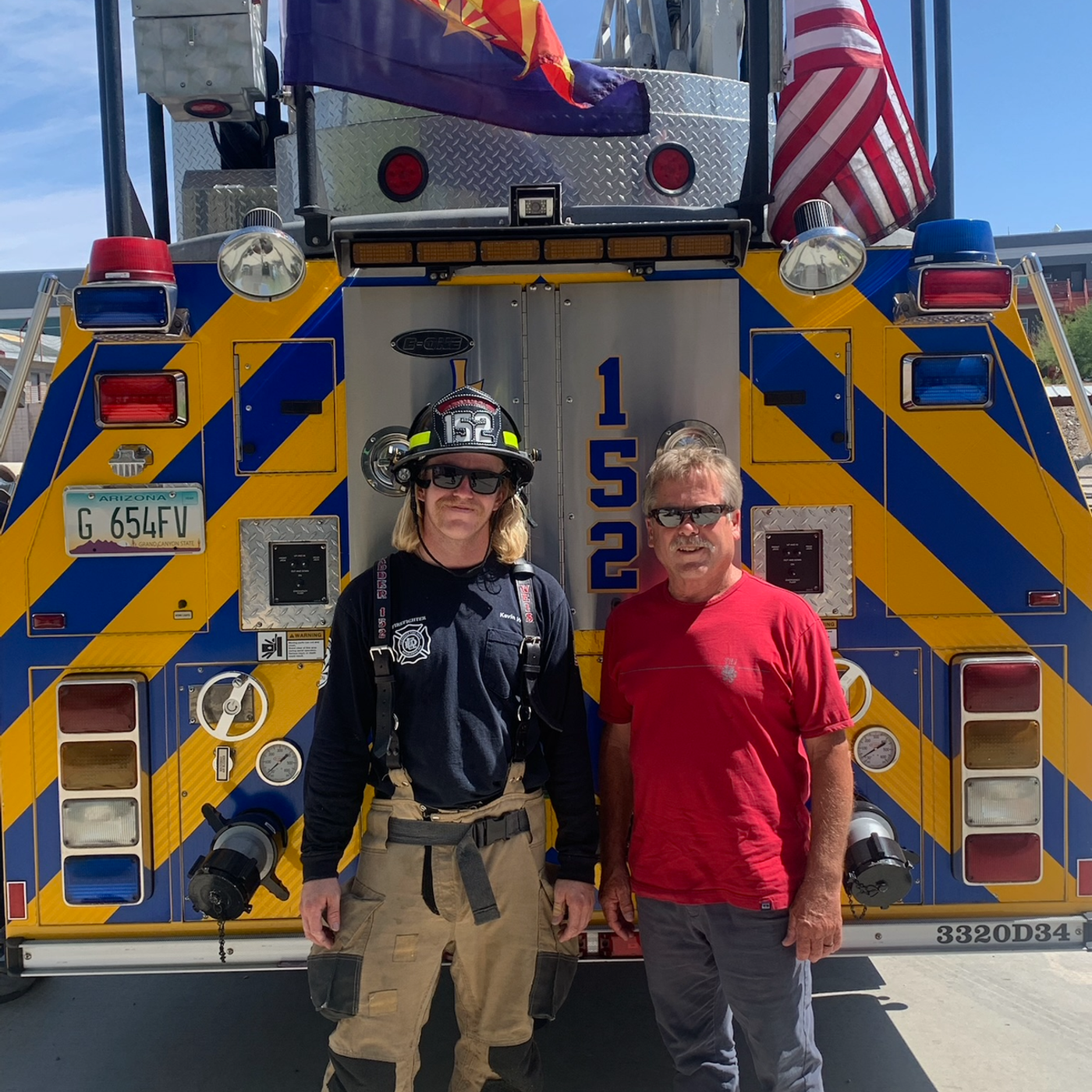
The conversation with Mr. Joe Weiss and Kevin Weiss covers Joe's extensive experience in the volunteer fire service, including his roles, the Junior Firefighter Program, and the challenges of rural firefighting. The discussion also delves into the unique aspects of firefighting in a farming community and the importance of mutual aid. The conversation covers a wide range of topics related to firefighting, including the challenges of drafting or zero to little water supply issues, the use of fill sites, and the importance of community support for volunteer firefighters. The discussion also delves into the political aspects of the fire service and the significance of the brotherhood and family atmosphere within the fire service. The conversation concludes with a message of gratitude for volunteer firefighters and a commitment to continue supporting and appreciating their service. Takeaways Volunteer firefighting in a rural farming community presents unique challenges and requires specialized equipment and tactics. The Junior Firefighter Program is an effective way to engage and mentor young individuals in the fire service, fostering a sense of community and responsibility. Mutual aid plays a crucial role in rural firefighting, especially in areas without hydrants, relying on ponds and fill sites for water supply. Challenges of drafting and water supply issues Importance of community support for volunteer firefighters Significance of the brotherhood and family atmosphere within the fire service Gratitude for volunteer firefighters and commitment to continue supporting and appreciating their service Chapters 00:00 Introduction to Mr. Joe Weiss 03:02 Early Years and Entry into the Fire Service 04:14 The Junior Firefighter Program 06:16 Volunteer Firefighting in a Farming Community 11:06 Challenges and Equipment in Rural Firefighting 13:45 The Role of Mutual Aid 25:04 The Experience of a Volunteer Firefighter 32:38 Equipment and Tactics in Rural Firefighting 34:39 Challenges of Drafting and Water Supply Issues 35:12 Community Support for Volunteer Firefighters 43:47 The Political Aspects of the Fire Service 53:18 The Significance of the Brotherhood and Family Atmosphere
Steve-O: welcome back. This is a big one. I'm sitting down with our president of our fools organization. But really, who we're here to talk about is his old man, popped, Mr. Joe Weiss. So let me tell you about this man, active in the volunteer fire service for 38 years in Ohio, his Fire Department is a hundred percent volunteer. That's kind of a rarity nowadays. He's held the rank from lieutenant. Then captain back to firemen to allow the younger members to assume more responsibility. Joe's mentored and developed firefighters since the beginning of his career. He's a co-founder and a previous chair of the Junior Firefighter Program. Joe is a husband of fifty years, proud father of three, Kevin Weis: Thanks. Steve-O: with five grandkids. Joe's worn many hats over the years, building houses, tire repair man, and a member of the streets. retiring as a public works director it is my privilege to have you, Mr. Joe Weiss, on the show, accompanied by his boy, Kevin Weiss, our president of the Fools program. Welcome. Is there anything you'd like to add, Mr. Joe, or anything I mispronounced or misled the audience on in your bio, sir? Kevin Weis: Yeah, I guess just the 50 years thing you just touched on that we literally my wife Sherry, you know, puts up with me for now for 50 years of doing this for 38 years, but we got married right out of high school and never looked back and she's put up with a lot of crap and help produce this guy and yeah and my daughters and proud of them too and everything at home and my grandkids and life's good Steve-O: thank you for taking time out of your evening. You're freaking at the fire hall, The the guy sitting next to you just taking away from the fire service, comes home to visit his pops, and then we're sitting down talking about firemanship in the fire hall. I can't I can't think of anything better. you said you're with your wife forever. high school sweethearts would did you know her before you got in the fire service? How did that kind of play out, boss? Kevin Weis: Oh yes, met her at freshman in high school. I had to make one phone call for one date and never never wanted to do that again, so I found a good one and just stuck with her and. And she put up with it. You know the fire service didn't start until I was 30 so. That come running. Steve-O: Okay, so y so I was thinking because you're back in the day, even though if you were able to call her, if you had to send a telegram, I wasn't quite sure how that worked. Kevin Weis: It was a lot. She lived 12 miles away and was a long distance phone call on a dial operator dial phone. Steve-O: Yeah, yeah. Right. People yeah, people don't remember these rotary phones, right? For the the guys can watch. All right, so you found the fire service at thirty. the department that you volley with, in your intro, we we went through all the ranks that you've held. when did that little spark happen? You said it was later on in life, so at thirty you're like Hey, I wanna join the fire service or was it a buddy that you wanted to join the house with? How did how did that play out, boss? Kevin Weis: I was just a guy asked me our chief at the time. You know, I just know him and I was actually doing tire work for him for that. I did the tires that I sold truck tires and I service truck tires and I took care of that the firehouse and I was always interested in a little bit. I come here and change the tire. Not not that often, maybe once a year and the chief asked me, you know, at about 30 years old and say, would you be interested in getting on? I said, yeah, I don't know much about it. I said right now I've got. baby at home and my wife is expecting the second one. I said she's not gonna be real thrilled about it, but yeah, he asked me and I jumped on board and Steve-O: The the rest is histories. know you did a lot of stuff. I really want to get into the culture and the call volume and what you've kind of done through your career. I know in your bio we talked about, so I want to hit this first. you started the juniors program. can you explain to the audience what that is? Volunteers aren't a big thing out here. I was a fireman back east, so I understand. I came from there pretty much all the departments around us are combination departments for the most part. Some are volley strong, some are volley just on paper that don't exist. You're a hundred percent volunteer. Is that juniors program was that designed Kevin Weis: Thanks. Steve-O: to boost your volunteer applicants or how did that come around? How'd you start it and what was the benefit for the fire service? Kevin Weis: It started because of him here all the other neighboring department departments our mutual aid departments all had it already and we was one of the last ones to get it and He was raised here. He'd come up to the firehouse We you know any training nights or you know anything wasn't official on Saturdays We used to meet up here in trucks and thing that he was just basically raised here and wanted to get on and I thought I had you know instead of waiting until you're 18 and can be voted on the other town around there had junior programs and so I kind of checked with a couple of the neighboring departments and they gave me the literature to get it started and you know we ever bypassed it and said it was good and he got on and I think that one thing I don't know if he told me that the best day of his life was when he got we wear the juniors wear blue helmets when he got his blue helmet and got on the department the second best day was he got rid of that and got a black helmet and we got on yeah voted on and on with us Yeah, the juniors are to be a junior, you have to be 16. And then there's like parameters. So I got on at 16 as a junior and then I got my own pager and turnouts and like he said, the blue helmet. And then we had parameters where when they got a fire call, I could respond, but I didn't have lights and sirens. I was supposed to wait, you know, I think it was five minutes after the page to respond. So I don't get in the way. And then when I showed up, could jump on a truck if there were seats available, as long as it wasn't first out. And then basically when we got there, I could do anything but go interior. Steve-O: to be a junior, did you have to have like fire one? because and the only reason I'm asking, so back east the volleys were like, Hey, to be a volley, they or to be riding the rig, they had to be a fire one. To go interior, they had to have their fire one and their fire two. was that kind of similar with you guys or or no? Kevin Weis: So I didn't have any formal cert. was just, but it's kind of similar to our cadet program out in AZ where it's like, dip your toes in the water. Is this something that you're interested in? Get familiar with the equipment. And then I think while I was in high school, it's the same cert that he still has. We called it the 36 hour card and it was a 36 hour class. And then they, you're a firefighter and that's it. So it was. I think like Steve-O: All right. Kevin Weis: fourth Saturdays is what I did. I don't know what you did years ago. Yeah, it was 36 and then back then I think you had to do 36 then your eight hour live burn, but that was, and now, now it's a one. got to be everybody. It did jump for that, you know, 20 years ago or so they jumped it to where you had to be a level one. Uh, what he did, he went straight to the academy and got his level two and just to get on board of that right away. Steve-O: So so Kevin had said he got voted in at eighteen because he was a junior, he went through that. I'm assuming everyone has to be voted in. when you when you joined the fire service, did you get voted in? How'd that work? Yeah, yeah, yeah. Kevin Weis: Him? Me? Yeah. Yeah. Yes, sir. That's actually the chief. When he asked me that time, there was kind of a line of maybe six, eight, 10 people to get on. But I had a little bit that he knew me already. And I think he must have spoke highly of me because I gave him my application and they had a meeting like a week or two later. And he called me and said, hey, we just voted you on. You want to come up? And literally come up and they say, you're on, but you know, we'll give you a set of turn out gear and old set just for training. You can't do anything yet until you get your hours in, but you can ride along in the truck and do whatever you're told to do. And they happened to catch a run right after I got my gear on. So they threw me on the second truck and went to my first chimney fire. And I could probably tell you the whole thing. Kind of a, okay. Well, yeah, here I am. just. Steve-O: Yeah, no, we yeah, I wanna hear the story for sure, please. You're right. I know there's more than just you went to a chimney fire. Kevin Weis: Yeah, first one just got on and I wasn't doing anything. went to a chimney fire and on the way back we had an accident with our fire truck. my first run, my first getting voted on, my first run, my first accident, got home like four in the morning and it was just a long night. But I thought, well, this is pretty neat. Pretty exciting. Steve-O: I was gonna say, like, e either at that point you're like, This is amazing, I can't believe I'm still alive, or you're like, Kevin Weis: Yeah. Steve-O: This is fuck this is for the birds. I'm out, What did the old lady think about that? Because I know I know my old lady would be like, Yeah, no, you're not doing that shit. you just get your first day, you guys get in a freaking wreck. who are these guys? Kevin Weis: Yeah, she wasn't real thrilled about that and had a couple accidents or different things along the way that she had to come to hospital and you know typical stuff that happens to everybody but yeah she's not excited about it I was but she's always been good. Steve-O: obviously, I mean over three decades later and you're and correct me if I'm wrong, are you still active right now? Jesus Christ. When do you say hey enough is enough? Kevin Weis: It's gotta be getting close. Because it's just hard for me. The young guys really help out a lot. And I really like a lot of our younger guys. They have me driving the truck, running the truck, things like that, a little bit more. And they don't like to see me go in too much. And it comes time to clean up things. They're like, hey, sit down, old man. We got this. You've done this long enough. And we just got done testing the hose on it the other day. And I tried to climb up on top to help pull the hose. And when we got done, and they about throw me back off. Sit down old man. Steve-O: they're that the boys the boys are looking out for their freaking senior firemen right there. They're doing the right thing. So Kevin Weis: Yeah. Steve-O: I I I love it. And that just sho I mean, talk about a sign of respect from the guys. That's the biggest respect out there when they're like, man, get Kevin Weis: Thank you. Steve-O: the hell off of here. You've already done your work, you know, sit down, tell us a story while we do the work for you, Kevin Weis: That's literally that's a hit. Get the hell off of here. Get the fuck off of here or something and get out of our way. Steve-O: Yeah. Kevin Weis: Get in the lane. Yeah. But yeah, it works Steve-O: That's Kevin Weis: out good. Steve-O: that's so that's perfect. So same if and correct me if wrong, same house for the entire time or did you go to a couple different volly houses throughout your career? Kevin Weis: Same fire house, not typically, I don't know if I can say house. We actually moved the building, we didn't move the building. We were on Main Street and a nicer, bigger building we was gonna add on at one time. Come available, it was another shop. So we literally moved, it's a very small town. We moved a mile away to a different location, but still same fire hall, just different spot. Steve-O: All right, so for the listeners that don't understand how your system works, give me give me like a a box run number or whatever you guys call it. Kevin Weis: So like you're and you'll have to help me with this because I've been I've been removed from this for like eight years if it's working you get mutual aid, Yeah. Yeah, right away automatically Steve-O: Alright, so that say that call comes out, Reported house fire. maybe it's not upgraded yet. How does are guys typically at the house, like hanging out, or is it like everyone's Kevin Weis: Thank Steve-O: coming from home or are they all meeting on scene? How's that usually work in your system? Kevin Weis: We come from work or from the house or from wherever you're at and respond. It used to be we had pagers and we still have pagers, but now they got on your cell phone. They also set an alarm off and that gives you, can push, know, respond, you know, whatever. you know, you come to the firehouse and you get your gear on and head out from here. So we're not, you guys are doing professional. You got to jump on us right away. You know, about a three minute jump. Most of us, they like to see a three to five minute response to the firehouse. And it's a very small town. We got less than 5,000 people, so the town's not that big. So you can usually get a good picture of it. Steve-O: Is there a minimum number of guys that have to be on the rig before you you leave the barn, or no? Kevin Weis: We like to, but we've cheated that already. I don't know, we're getting in trouble here. But yeah, you like to have the first out truck full. But you know, if there's been days already where during the day it's a little harder to get people out, got everybody's at work. And you you might have an empty seat, but usually the second truck out, you know, the guys that's coming in a little bit later, it'll fill out and it's always worked. And if it's something where you need more help every time out here, really, the whole county is just unbelievable. Everybody shares everything and... different times. got one full-time department in the county and actually we've got people that was raised here that was like Kevin and I started out here as volunteers and went to the neighboring full-time but they're still volunteer here when they're not on shift at that full-time job they'll come back and run with us. Steve-O: I was gonna ask you if you're surrounded by any career departments or at least combination departments. Cause I know I know a lot of even today's day and age, volunteer departments will have like usually one, at least a paid driver to make sure the rig gets out the barn. But it sounds like you guys are still doing it a hundred percent volunteer. What do you consider a full truck? Because he's like, we like to see it full. What's what's what's full in your guys' system? Kevin Weis: the driver and an officer in the front seat and four guys in the back, four people in the back. We do have women now. Steve-O: Alright, so you're you're you're a full literally like every seat is occupied, damn near. Kevin Weis: Yes, yes sir. Steve-O: All right, well that's a that's a full I thought you were gonna say full truck. You're like, yeah, three, right? Like four, now we're Kevin Weis: yeah. Steve-O: so you're you're rolling with six on the full truck. That's freaking awesome. So Kevin Weis: Yeah. Steve-O: was there ever a push because it's a rarity today, and I'm actually surprised and and I don't mean to be insulting to anybody listening, and definitely not you, Mr. Joe, but It's surprising to me in today's day and age that the volunteer service still exists. And when I say exist, it exists in a system like yours where it's a hundred percent volunteer. The Kevin Weis: Thank Steve-O: area that I used to live in when I was a fireman back east, that area was a hundred percent volunteer, and they went through a pretty shitty lawsuit at one point, and they ended up having to pay a driver for every station because they had a Wednesday it was a Wednesday morning. House fire with a family of four and they couldn't get anybody to take a piece out because like you said, everybody was at work, out of town, whatever the case might be. Has that ever been like a political issue or like a push with you guys Kevin Weis: Thank you. Steve-O: because you're still a hundred percent volunteer, which is freaking awesome? Kevin Weis: No, we've kind of held our own around here and all the other departments too because they're every other town here We've got the first out is going to be that that way is a town that's five miles away or one full time It's five miles that way about five six miles each way And if it's something well, we need help We're not bashful to call and you know, we kid around with about something we had to call Yeah, we had to come and help you to put your fire out type thing but and everybody does it but no we've always kind of held everyone around here kind of has I mean And we're actually kind of the middle size for our group around here. Some of the even smaller towns, but they still managed to get by. Steve-O: It's I mean it's good. Kevin Weis: There's another. Steve-O: Obviously you still have guys that live in that town, you know, and that's that was the inception of the volunteer service and correct me if I'm misspeaking, but it was the guys that lived in the town were volunteer firemen because they wanted fire protection, you know, and it was just like, Hey, I wanna look out for my family and my neighbors, you know, and my friends' families and and everything else. It's just you don't see it very often anymore. Kevin Weis: Yeah, I think especially around here, it's a lot of like a large farming community, which helps where everyone has that pride in their community. Everyone has that hard work ethic. And then we were just looking, we have a board in the other room that has all the names of members since the inception of the fire department. And we counted 20 families where there was a generational, like, you know, like me and him, father, son, whether it's father, son, father, daughter, you know, stepson, nephew, there was 20 different families on there. Steve-O: Now, Joe, do you do you guys run EMS too or just fire only? Kevin Weis: I do both, but it's a separate building. The EMS is run by the county and it's here in town. We just have two ambulances. know, but for a small town, they, I know you said it guys, but they average about 600 runs a year on that. Well, we're, you know, as far as the fire part, you might have a slow year and be as slow as 50 to 75 runs and up to hundred runs, but that's, and those aren't working fires. That's our biggest thing is, is car accidents. It seems like we have more accidents, lot of farm accidents, car accidents. wind damage like you've got in storms if you know there's power lines down things like that a lot of your knickknack crap but you guys probably average like I would say 15 plus working fires a year though yeah we do get our share of this Steve-O: So I mean that's that's more than some career departments run. That's one a month, more than one a month, you know? So that's I mean, that's nothing to sh shake a stick at, especially with the community of five thousand. I mean, that's freaking small. you got smaller cities that are a couple million, and you guys are rocking, five thousand. So that's a pretty that's a pretty good number right there. I was gonna and you already answered the question I was gonna ask you, you know, what do you guys run more? But you said motor vehicle collisions are Or farming accidents, you get a lot of like machinery calls, that kind of shit, like that's that's gotta be always good. Kevin Weis: Yeah. Yeah, there's, yeah, yeah, there's, you can probably imagine with the farmer things and farmers are really hard working people and they live right on the edge. The farmer, think, like the fire service is a very dangerous thing. You know, we've had a lot of fingers, hands missing, things like that, and some fatal things that, unfortunately, you get a big diesel, like a corn picker or something. If you get too close to it where you're not supposed to be, stick your hands in there. It'll suck you right through. It's funny because I have such a vast experience where I volunteered here for so long, right? And then I went to a single station municipality covering 20,000 people and 90 square miles to now a major metropolitan working nine stations next to one of the largest departments in the country. But what these guys can do with the little bit that they have is impressive. Like with the farming side of things, a frequent call here is manure. And so like, yeah, so like with the hog barns, the hogs are in the barn, but then the floor is graded and then all the shit falls between the grates below and then they pump it out and then spread it in the fields. And I would say probably once a year, someone goes down in one of those shit pits where the from the fumes of the methane. Yeah. Yeah. Yeah. Steve-O: From the fumes or what? From the menthol or menthane. I said menthol. But a fucking idiot over here. This freaking hazmat guy too. I just I I went like Newport menthol cigarettes for a second there. That was a a brain fart. Anyway, listen to the guy that knows what he's talking Kevin Weis: That's a different backwoods type of feeling. Steve-O: about. Gee, I'm gonna shut up now. Kevin Weis: But yeah, like you just had a family die. these guys are out in the middle of a lagoon and what three of them died. Yeah, the first one they weren't. They was actually and I don't want to step on their toes if I can say this or not, because they weren't ours. I mean, they did everything right. But the first the first guy went in and got overcome into like a pit. And so naturally his brother seen him down there and he went down right away. then by that time that yelled the third one come running up, seen two of them laying down there. He right after his brothers, you he just went down and thought he could help. But you think about that call in our region and like the amount of resources they would have. These guys are doing that with one, maybe two trucks and maybe 10 guys. And it's just figure it out. And they do. They figure it out every time. It's amazing to me. Steve-O: Like an old timer said, and I I love it, is like especially in on the machinery topic, because how complex those calls are, I mean it's kind of kind of the same, but even more complex than like say a nasty motor vehicle collision, a really good pin job or a cut job where you're you're really working. the machinery is it's all different and like where where is their body part? But old timer said to me once, he's like, Steve he's like, if they assembled it, we can disassemble it. And I'm like, yeah, Kevin Weis: Thank Steve-O: you know, you're you ain't wrong about that, but you know, it's and we don't get that very often. Like me and Kev, we work for the same department, obviously, but we don't get that very often. But when we do, I've been on a couple here. One was a a mattress. I it the crazy thing is I even know this machine existed. It just basically squishes mattresses, you know, and I guess that's how they, you Kevin Weis: Thank Steve-O: know, squish them and roll up or whatever. Well, this dude got halfway in it by accident, And it was squishing him. But we ended up breaking that. breaking that machine and i I know we didn't do the the best job but we got the guy out, you know. But it was like kind of like, hey, what are we gonna do? It's like we ended up using the spreaders and, you know, those big drum rollers and was able to get enough of a purchase and just start breaking Kevin Weis: Thanks. Steve-O: that machine. But I can't imagine what you guys get to see with that farming equipment. That's gotta be insane. I'm jealous. I'm gonna say that. Kevin Weis: Yeah, yeah, and I actually lost an uncle to a farm accident and then shell corn is another thing. That's a big corner around here and they shell it and they put it in bins and and them gutsy farmers there. They're hard work and they got up there to try and push. It was stuck and he tried to kick the top of it down and it was shell corn and once he slipped and got in there, he just sucks you down to the bottom just almost instantly and you suffocate. with the department. wasn't Steve-O: Really. Kevin Weis: our department, God, but they did a good job and they got him out and he was still alive, but he was just, he was under a little bit too long. And that's another thing that Steve-O: Yeah. Holy cow. That Kevin Weis: sucks about this, because you know everybody. Everybody knows everybody around here with these small towns. If you roll up on an accident or a farm accident or a fire, you're gonna probably know the person. That makes it a little harder. Steve-O: Yeah. There's there's a lot of guys that refuse to I don't I don't feel this way, but there's a lot of guys that refuse to be career dudes in the cities that they live in, which I feel the opposite. Like I would love to work in the city I live in because that's a that's my community. Kevin Weis: Thank you. Steve-O: but some guys will not do it for that reason because they're like, Hey, I know these people. And like I look at it as like, yeah, I know them, I want to help them, but they're like, No, I know them, I don't want to see them in you know, so I it's it's a good argument either way, but I mean it has like how do you feel about that? Like would you prefer running on your your town or would you rather be running on complete strangers? I'm just curious. Kevin Weis: No, after doing them for so long, I love being a volunteer and I've helped people and you know, every now and you get somebody might be a little upset, but usually you're running into their family member or some, you helped me here or there or something and you know, helped out and know, thanks a lot and helped my brother or something like that. But then I can still do other things. I know being a full time when I worked for the town, was doing that kind of a construction type work and which I always enjoyed doing. And then I got to do the fire stuff and the squad. let me do both. So if it's on a squad run or a fire run, and then you go back to work and do something different. the far, I'm kind of sidestepping the question there, but no, I don't, I don't mind. I'm used to it. make it through. You just do it. Steve-O: so there's there's a couple of things I really want to know. so I've been kinda writing down notes. part of your bio was you held a bunch of different hats. So please correct me if I'm wrong. So back step fireman, engineer, slash Kevin Weis: Thank you. Steve-O: driver, slash chauffeur, whatever you guys call it in your system, lieutenant and captain. Did I miss anything or that's it, right? I say that's it. That's a lot. All right. Kevin Weis: Yes, yeah. And on the Ambo, I'm just a driver. I'm basically, know, yeah, I'm not a medic. Steve-O: Okay. And and a fucking ambo we'll just call him the Ambo driver, right? The freaking the worst Kevin Weis: Yeah. Steve-O: thing you could ever say to the Ambo guy. All right, get out of here, Ambo driver. Kevin's laughing at me right now. Kevin Weis: He really he has no EMS training he's legitimately just a driver yeah, yeah, I mean CPR and you know, we get recertified and see if the base, you know, like CPR and and you know, I put band-aids on but basically I drive and I help load patients. Yeah, he's not even a basic. Yeah Steve-O: Hey, you know what? We're we're we're well, Kevin's got that fucking magical patch, but I'm a basic. That's all I do too is I put band-aids on and tell people it's okay also. So and and ask Kevin what he needs on the call, you know, but so Kevin Weis: Yeah. Steve-O: what was since you've had all the seats on Kevin Weis: enough. Steve-O: the most important rig, which is a freaking fire apparatus, What was your favorite spot out of all those? Kevin Weis: I love not being an officer now. Just, Steve-O: You love not being an officer? Kevin Weis: yes, I didn't like, it was, yeah, I'm not a decision maker and never was. wouldn't say I was a good officer. I put my time in and made most of the runs, I told my wife when I retired from the town, I don't ever want to make another decision the rest of my life. he's like me where we're just worker bees, you know, like either either let us work and leave us alone or just point us in the direction and we'll we'll get it done. Just leave us alone. Steve-O: So now I know for a fact why you've been successfully married for fifty years because you don't want to make a decision, so your old lady gets to do it all, right? So that's easy, all you have to say is yes, dear. You just say yes, Kevin Weis: Yeah, and she's very good at making them too. Steve-O: yes, dear. Okay, what are we doing today? Okay. Right? That's Kevin Weis: Yeah. Steve-O: it makes now it now it's all making sense, so not decision maker, not an officer, So now we have the chauffeur, the driver, or the back step? Which one would you prefer? Kevin Weis: don't mind driving. Yeah, you know, get to run the truck. It's just a lot easier to do than the guys going in doing all the hard work. It was exciting when I was young like him, but my body just doesn't like that stuff anymore. You know, if we do have Steve-O: okay. Kevin Weis: something, yeah. We call them like, you know, you get the big one, and around here it's usually a big barn fire or something like that. Last decent fire was a hog building. luckily was empty. didn't have any hogs in it, but it pretty much burned up. But I don't like those anymore. They're just exhausting. And I didn't do a whole lot that night, but I was out there most of the night and just pulling hose around stuff. By the time I get home, you got to soak in the tub and then you lay there and you think, what the heck am I doing this for? Steve-O: you gotta educate me on this I'm gonna ask a selfish question because I I wanna know and I'm positive there's other people that wanna know the same answer. so I have a little over twenty years in American Fire Service and I don't I have zero freaking minutes of experience in farming anything. my question to you, So I've I've never been on a a hog, whatever you just said, fire, a hog barn Kevin Weis: Yeah. Steve-O: tower. Column. I don't freaking know. But anyway, what I'm trying to get at is you go do something that has animals, okay? Outside of a chicken coop, because I know what those fucking are. Kevin Weis: Thanks. Steve-O: obviously, that's probably not an interior firefight for the most part. Is there is there a priority list of trying to save the animals? Because I know that's a financial thing for that the farmers big time. Like how's that What does that look like? Do you go I I guess I'm asking d like you go for a do you get a pig grab? Like just tell me if you get a pig grab. That's all I need you to know right now. Kevin Weis: yeah, we have, but yeah, and that happens a lot. Usually, and the farmers are, most of them are pretty good. You know, there might be something they actually don't, they lit or something on fire with a piece of machine or something. They're unloading their animals and stuff before we even get there. You know, as long as they don't get hurt, lot of that, you don't lose surprisingly a lot of animals, but like we do have chicken coops and turkey coops also around here and them things are huge. And unfortunately, just about all of them always don't make it. I mean, they're... They're like house trailers and once they get lit, they go from one end to the next. The ones that might be alive, they have to sacrifice anyhow because once they've been in the fire, you can't sell them as food or anything like that. it's different because the farmers have insurance on their crops and their livestock. It's very different than what we're used to. I can remember we had a barn fire that we were on for like, think, 30 to 40 hours. Steve-O: Whoa. Kevin Weis: Yeah, it was a hay barn. And so when they cut straw or they cut hay and then they bail it, if it has too high of a moisture, it can sit there and heat up and then spontaneously combust. But once that hay or straw gets exposed to smoke, the animals won't touch it. And so the farmers would Steve-O: Really? Kevin Weis: actually rather let it burn and just collect the insurance than salvage it and then have this junk hay laying there that you can't even use. Steve-O: Salvaging literally probably what? Sell it to guys like us at academies trying to do burns right? Who else is gonna buy that crap? Kevin Weis: Yeah, just trying to burn it up. Yeah. Steve-O: It's crazy because, again, I told you, zero minutes of experience in that kind of environment, but I live in the city of Buckeye, which is a very it's a huge city, very underdeveloped right now. so there's still a lot of farming communities and everything else. majority of the city is a farming community, I would say. And we had a bunch of Pretty large wildfires roll through there that the state had to kind of come in and and corral. But I'll tell you what, we were and again, I was I was buffing with my freaking wife and my stepdaughter, who's eight, you know, and literally there's a huge freaking column, and we're like, hey, let's go check it out. So I'm like, all right. So I'm like, let's drive Kevin Weis: So. Steve-O: as close, let's see how close we can get. I'll tell you what, I saw those cowboys legit making these noises and herding their freaking their cows. And they were f they were moving these herds of cows and I was like watching as this freaking massive fireballs coming at them and they're just working and they're Kevin Weis: you Steve-O: getting their animals out. I'm like, I was impressed. I was like, these guys, I'm like, the sounds that they were making, they're making like whoops, and I can't even like whatever. But I was again, it's just something I've never been exposed to. I was always a city boy growing up too, so it's it I think it's fascinating. I would love to learn more about that kind of firefighting, but so I'm I'm just Is there more questions than anything else I have for you, but Kevin Weis: that. Steve-O: I just I I imp I picture like you and Kevin on a working fire together, each with a pig in your freaking arms as you're running out and it's just squealing away, It's almost like the backdraps or yeah, the backdraps you were like, I got one or whatever. It's like it's a pig. You know, it might be prettier. Well, you so you've done Kevin Weis: Yeah. Steve-O: again A thousand freaking years in the fire service, you've had every seat. What kind of trucks do you guys have out of your department? So I heard I I think I heard a squad for a second there, So Kevin Weis: So the squads are actually our ambos. Steve-O: you guys are weird like that, Alright, I'll pretend like it didn't Kevin Weis: Yeah, call them guys. Steve-O: hear squad. So let's talk about fire apparatus. What do you guys have at the bar? Kevin Weis: Our pumper, they use it most around the first out and then car accidents, we have a rescue truck and we call them tankers. Around here, once you get out of town, there's no hydrants. We Steve-O: Mm-hmm. Kevin Weis: have ponds and that's where the mutual aid really comes in good. We have a 2,500 gallon tanker is used as a second truck out. In town, fire is the pumper, then the rescue truck or truck three that has a, but it's a pumper also and then the tanker. But in the rural area, like he said, the, well, you guys, don't relay water. We have to suck water out of a pond somewhere with a hard suction hose and put it in full tanks. And you disperse that from fill, we call them fill sites. And that's usually the, everything around here, you'd be, most of you run through, you're going to go to a fill site and get water and have to truck it back to the fire. they got five trucks. got Just like the cleanup, the universal language. They have an engine and that's a thousand gallon tank and I think a 2000 GPM pump. They have a rescue engine that's mirrored. It's the same setup. They have the tanker or we would call it a tender. Like he said, 2500 gallons with a thousand GPM. They have basically a heavy rescue. That's kind of like their equipment truck. and has all their specialty equipment. And then they have a grass truck. We call them grass trucks. be like a, Steve-O: Struck. Kevin Weis: yeah, it's like a type three or whatever. And then they got a boat and a trailer. Steve-O: Okay. So you got you have a you have a lot of shit then, basically. Kevin Weis: Yeah. Yeah. And thanks for him. Like I say, he's 10 times smarter than I am and I'm going to forget shit and he's better. He hasn't been around here in six years and he still knows more than I do. They're teaching me how to pump Steve-O: But that's why Kevin Weis: these things when I was 14. I remember this station in these rigs like the back of my hand still. Steve-O: It's what I'll tell you what, back east the department I work for, our our entire area was like five hundred plus square miles, four hundred and sixty touched water somewhere. So drafting was a legit thing. Transfer tanks was a legit thing. And we did the same thing, tankers. I when I came out here and I'm like a tanker, and they're like, That's a airplane. I mean, no, it's not. You know, like but it but it's obviously the West Coast, it's you know, they're talking about Wildland firefighting, obviously that's what they call it. So we call Kevin Weis: That's gonna be fun. Steve-O: it something different. But I I understand your verbiage. Like, so you had pumper tanker, so it's got fifteen hundred gallon pump and twenty five hundred plus gallons and a fold down tank or drop-down tank. Yeah, we got I I mess with the the engineers here all the time. I'm like, how many freaking hard suction hoses can you pull draft out of, bro? And it's and Kevin's laughing, we don't have any on the truck, but I I could do three, Three was my max. I could never pull draft past three. So it was somebody I'm like, you guys don't even know how to freaking pull draft, man. Like all the tips and tricks to it. But yeah, it it's a whole nother world. So for the guys like us, our city boys, our city fire department boys, tell us, please inform Kevin Weis: don't know. Steve-O: us on the challenges of fucking drafting or zero to little water supply issues of work and fires. Kevin Weis: There's always something around here. do have our Grand Lake here that's only about that magical five miles away again. And you can pump out of that thing forever. there's a lot of that. have fill sites are numbered. Each county, each department around here has so many in their area. And they'll tell you when you're dispatched to go to the fill site. usually they're all set up. We all do it the same way, basically. Most of them are a pipe that you know an 8 inch pipe that you hook to and you draw it out of that pipe and some of these literally drop a hose into a pond. We've dropped off of bridges already and that that was probably the fun thing. One time we tried to pump up. We had like three sections of hose off of a bridge and pumped up from off of a bridge out of a scandal. Yeah, we did. It took. We took Steve-O: Did you get it or no? Kevin Weis: the whole. had to the water out of our tank backwards into that line to get it to get magical. Steve-O: To flash yeah. Kevin Weis: Yeah, to get it to pump back up, which you sit. Steve-O: Yeah to pre fill the hose, right? By backfeeding from your tank. Yeah. That's yeah, guys don't remember those tricks, right? That's impressive Kevin Weis: Yep. Yeah. Steve-O: from a elevated sur I've never done that. It it's funny, we used to it we had the good chauffeurs that we had back east. you knew because if we went down south to like the third or fourth Kevin Weis: Thank you. Steve-O: battalion, I was always up north. It was all row homes. That's all we fought fire in, basically. But when you went south, it was single family, Kevin Weis: Thanks. Steve-O: larger lots, limited water supply, things like that. And so we get pulled on like a second, third alarm Kevin Weis: I don't know what I'm saying. Steve-O: all the time. And the good freaking wagon engineers, they'd go to the scene, even though they're like, Hey, go to the freaking the water shuttle site because they start, you know, they would want to set up shuttles. And he'd fucking pull up and be like, Boys get out. Kevin Weis: Thank Steve-O: And we're like, boom, right? So we could go to work. He's like, I got the I'm like, you need help? He's like, Nope. He's I got this. And he would take off and handle all that crap for us. So we at least the boys got to play, you know, so that was And I'll call him out Pat Saunders. He was the best engineer ever. He would do that for us all the fucking time. It was great. Kevin Weis: Yeah, we got guys around here legendary too then and I'm mediocre at best to the bottom end. You know, I'm glad they hand that spot over to one of these guys from the other departments that do more of and they could suck water out of a. mean, there's some guys that are legendary good then you know, have done it forever and they're just they just got that magic touch to get that draw coming and just keep it flowing. It's weird all the little Steve-O: All Kevin Weis: the little nuances too, because like he was talking about the the fill sites. Pretty much anybody that doesn't live in town here has a pond because that's their water supply for their house. Steve-O: Okay. Kevin Weis: And then certain ponds put pre-plumbed piping in so the fire department can use it as a water supply. And so they'll have a sign next to a six inch PVC pipe that says fill site. Yours would be like 2A because it's the number and then the letter associated to the specific site. But then when you hook up to that, got to remember to dump your tank. Like you said, to catch your draft, you fill that, you pre-fill that tube. But for those, you have to dump your tank to blow off the end of the screen. Yeah. Steve-O: To get all that crap out, right? Kevin Weis: Yeah. There was a lot of little tricks Steve-O: Do Kevin Weis: to drafting. Steve-O: Would they would they look like like a yard hydrant at trailer homes? Is that kind of what they would look like? Kevin Weis: No, it's straight up just a, it's a six inch PVC pipe that comes out at a 45 and then levels off at a 90. And you just hook up that hard suction. It's got threads on it. You spin the cap off. it's a lot bigger than a yard because those yard hydrants. Yeah, those are tiny. This was, Steve-O: Like three inch, I think. Kevin Weis: yeah. And so these were actual true. You just hooked your hard suction straight up to these things. Steve-O: wow. Wow, that's that's cool. I've never seen or heard of anything like that. So that's pretty badass. So fucking pre plumb for the fire department already. Cool. Well, Joe, so three decades in the fire service, what was probably the biggest takeaway and I'm not wording that correctly, so let me try to word that better for ya. What what benefit three decades in the fire service, how'd that benefit your life? Kevin Weis: Number one thing is him. You know, he just I'm just so proud of him, you know, just growing up It was so fun. He would get get half a hard on you know, we get if he got to go to the firehouse and he would always he'd be wanting to roll a hose or grab a broom or do something and he was just happy he was just one of us and to see him grow up and be doing so good at him and Like it's keep saying that ten times. He's probably 20 times a fireman I ever was and it's just proud just pride you know, working with him and these other departments around here that mutually, that's why I gotta watch what I say. I don't wanna piss any of my brothers or sisters off in the neighboring departments and try and take their run through anything. Cause they're all, they always got each other's backs. They're just good people around here. And it's been a lot of good friends and I don't know, call it family, guess, just basically it's our life now. lot of my friends, we vacation together and the other departments, mean, different. You go to different functions and it's usually fire stuff or squad stuff. Yeah. He was, he was taking me to FDIC in the first grade. mean, all of his buddies. Steve-O: Come on. Kevin Weis: Yeah. He'd take me out of school. I'd get a skip school for a day and go to Indy with the boys. Steve-O: Yes, that's the best field trip ever. Kevin Weis: yeah. We went to one, one. I think it wasn't the first year I went, but we went one year. And if you've ever been to FDIC, everyone knows exactly what I'm talking about. You leave Lucas oil. And then if you head a certain direction, there's a Hooters down there and it's just wall to wall firemen. And we were in there and it was a school day. They pulled me out of school to go to FDIC. I looked at the trucks all day and then we went to Hooters and ate. And then while we were in Hooters, there was a SWAT raid across the street. We watched a SWAT raid. That was a good day. I was probably in like Steve-O: Yes. And how Kev, how old were you? How old were you do you think? Kevin Weis: second grade. Steve-O: That's so you were like seven or eight years old. Kevin Weis: Yeah. Steve-O: Basically, and you got to you got to go to FDIC, then you went to Hooters, you got to see a raid and like that's like the best freaking field trip ever. Like you go back the Kevin Weis: I I went to FTP at least three times before I was actually a firefighter. Steve-O: Really? I would have loved Kevin Weis: Yeah. Steve-O: to I would have loved to be in class with Kev like at the beginning of the school year when they go around, you introduce each other, they're like, Hey, which dude during the summer? I I can't I'm already hearing the freaking yeah, I w I went to four working fires, I went to Hooters six times, right? You know, like Kevin Weis: What the fuck? Steve-O: just like listen to the I I'm sure his teachers are probably like, What the hell is wrong with his parents? Like, does he have parents? Is he freaking living in a zoo? Like what's going on? That's the best childhood ever. I think Kevin Weis: We actually did have teachers. had one, it was a lady teacher and she actually, we had to go and said, now I think he might be going a little bit overboard. This all this boy wants to talk about and think about is fire. I think she was wrong. Steve-O: Hey, well, you Yeah. I was gonna say, like, I thought school was supposed to encourage what you want to do for a living one day. And he already figured they Kevin Weis: Yeah. Steve-O: were pissed off because he figured out already. Like I said, I literally use him as a reference Kevin Weis: Let's take a final look. Steve-O: when I start asking the questions at the end of the episode every single time on Hey, were you the Kevin Weiss? Like literally, you're born, you wanted to be a fireman right from the get go. It's it it's freaking amazing. So, right, well, Mr. Joe, I know I've had you on for a little bit, but I wanna make sure we talk about the why. I know we kind of touched it a little bit. It was like, hey, your buddy and everything else, but can you please just do the whole why for the audience? Why do you become a fireman? Like what was the draw? And then more importantly, after you got voted in and started doing a job, why stay thirty eight years? I mean, that's a long fucking time. So obviously it was pretty good to you. So if you don't mind just kinda laying the audience on your story, brother. Kevin Weis: Yeah, like I said, I didn't get in until 30. And, you know, kind of the first year got more and more and then more years into it, the more you just wanted to do more and more of it. And I really, think as far as why I'm still doing it, I try and stay in the shape a little bit, but one of the days I'm not going to be able to do it. And every time I get in the truck, if I make a run, especially if I'm in the back, I look around, you know, those guys in there and I just kind of smile and almost get a tear in my eye because I'm, well, this could be the last one. You know, and then that's going to be sad. And he's always told me the hardest thing, you know, I've basically been in service between squad fire and at work. You know, we was always helping people. And before that in the truck tire business, I helped people that were down on the road, needed a truck tire fixed. And I've been helping people my whole life. And if it ever gets to point where I can't help people and have to be helped, that's going to be crushing. I just don't want it to happen. And, probably not answering the question in the way you was thinking, but. Yeah, I never really grew up with the love that he had for it. Like I said, I didn't know it that much until I was a little bit older. Kind of rambling on here. Steve-O: I'll tell you what, Joe, it's that's that's common. It literally, if you go back, literally 50% of the audience is split or audience, listen to me, guests on the show. It is literally from day one, they've always wanted to do this or they found it later on in life. There is almost a no in-between. It's crazy. It's it's one spectrum or the Kevin Weis: Subscribe. Steve-O: other. But the coolest thing about it is everyone has the same ends. Hey, as soon as they got in the fire service, I found out what I was meant to do for, you know, and it's Kevin Weis: Yep. Steve-O: And obviously you did, Kevin for sure, myself included. It's just once you get involved in the fire service, it's like, man, I wish like I say it all the time. I wish I found this earlier in life. You know, I wish my dad was a fireman, you know, and I I was exposed to to the service because Kevin Weis: the center. Steve-O: I would have, you know, I I look back all the time, hindsight being twenty twenty. I wish at eighteen years old instead of joining the military. I wish I tried to get on the fire service. But I remind myself I probably wouldn't have been successful getting on the fire service. if I didn't go into the military because I was a fucking asshole in high school. You know, so I was a it it forced me to grow up. I'm still an asshole, just not you know, I'm just not as much, you know. It's well Kevin Weis: Yeah, I joke because it's just how small this town is, is hard for people in AZ to comprehend. Everybody knows everybody, you know, but I joke, everyone knows everybody, but he's almost, he's like the mayor, he's the unofficial mayor Because everywhere we go, someone's like, you helped out at this incident at my house, so you helped this person with this or whatever it was. I think just the amount of community connection that you get out of this with your neighbors is unbelievable in the volunteer world. So I had to tell that and I got to tell, I want to make sure this story makes this because I tell this story frequently and I don't know if I've ever told you this story, but do you remember Steve-O: Yeah, wait. Kevin Weis: our first extrication together? So we get our first extrication together. It's my first extrication as a fledged firefighter. I had the spreaders in my hand and I had a purchase pointer ready in the door and I want to swing it back a little bit to just drive it in there and get a good bite. And what happens during my backswing? Someone takes it out of my hand and open the door. Yeah, I don't know what that was. That was probably one of the biggest mistakes. And he reminds me of that and it was stupid. You know, it was a yeah. And now, yeah, like I said, he beat, I can't even pick the jaws up anymore. I'm so weak in my old age. Yeah, we always talk about that. The one training one down to the drawers, the doors, especially since you're an expert now, but he had to save me on that one too. But I'll let you tell that. Yeah. We had a, we had an acquired structure that we were doing training and we could tell, we could do a whole episode on us just telling jobs that we went on together. We, got my, my stint here was short, but we got a lot of work together. It was probably my proudest moment of my career was just getting to work with Pops, but we had this acquired structure. We're doing training on it. And I was young, dumb, full of cum firemen. And I was arguing that it's easier to kick doors than to throw your shoulder into it. And so we had the, we had a center core hallway in the upstairs of this two story and we had two bedrooms on this side and two bedrooms on this side. And so I said, all right, well let's close all four doors and we'll kick this side and then shoulder this side simultaneously and see how it goes. Well, my dumb ass, I shut all the doors and I didn't latch his door that he was going to shoulder. And when he showedered it, the door just opened and he about went out the window in the bedroom. Yeah, that was a classic. And I think he bought, to grab me. think I was about literally just catching myself going out. It was a real small room. And when that door put my whole body into it and then come right open, it was funny though. Steve-O: So what what was the answer back in the day? Was it easier to shoulder or kick? Yeah. Kevin Weis: Shoulder. Yeah. Steve-O: Just it's it's funny because try shoulder and door now, Mr. Joe. It probably won't feel very good with it. Kevin Weis: Yeah, yeah, I'd probably break something. Yeah. Yeah. Steve-O: Yeah. I th I think I think I would too. I should have I should have rewrapped this entire episode and just called it hey, the calls that made us had just been a Kevin and Joe talking about fucking calls. So we'll have to re-spin that Kevin Weis: Ugh. Steve-O: in the future and literally dedicate an episode because I've been thoroughly entertained this entire time. I would just like to hear you guys fucking talk shit to each other and about different calls you're on. I I I did have a question about a call though. not necessarily the first fire, but if it was, but Joe Have you ever been on a line with your boy on a working fire? All Kevin Weis: yeah. Yeah. Steve-O: right. Was it the first one or no? No? Okay. Kevin Weis: No, no, I'm trying to think. I think my first work in fire is that one about fell in the basement. that big one. And so Henry, we were, we were here at the station for a meeting. do, they do meetings, meetings and trainings twice a month. So the second Wednesday is a meeting with a training. And then the fourth Wednesday is just a training. So we're all upstairs in the meeting room and we heard the neighboring town get kicked out on the house fire. So the way they did it, wasn't auto aid, was mutual aid. And so we would hear them get kicked out. And well, if we heard they were getting a fire, we knew they were going to call for us when they got on scene. And so we just jumped in the rig and started going and we ended up their first engine pulled in and we pulled in right behind their first engine. And it was a big like probably 4,000 square foot, two story with a walkout basement. And it was actually a couple of buddies of mine I went to high school with and yeah. We ended up the first in engine that the pump froze because it was winter time and it was negative 40. And so my line was the first line in. I forget you're on the second truck or pumping or something. Yeah, because you went in. think you. Yeah, it was me and Travis in there. But we went in there and I think I'd gone through my one and two. So I had a little bit more training than most. And we were crawling along, doing a search, making a push. And I was like, hey, man, feel that floor. And he's like, no, it's hot. And I was like, yeah, no, like push it. And it was just carpet. The floor burned out. Yeah. Steve-O: shit, you were just bouncing on carpet. Kevin Weis: Yeah. Yeah. But I'm trying to think of like a good one that we're on the line together. can't, we had a good basement fire that we were on the line together one time on the south side of town. Yeah. Paul and Amy were in town, but yeah, we had some good jobs together for sure. Steve-O: I can't I can't imagine what kind of banter goes back and forth when you put a fucking son and dad on a fucking on a on a hose line together in a fucking working fire. I it's gotta be who gets a knob? Does the young guy get the knob or does the senior dude get the knob? Kevin Weis: He would now for sure. Yeah. I don't know if I did. I think Spencer, I did the same thing. His buddy, what is he? I took a nozzle out of his hand one time. And this guy's a, we got a lot of cops around here. We eat a lot of cops or volunteers and stuff too. And we love our cops around here. And this guy's a cop and pretty bad ass guy. And I took a note and I was out of his hand one time and his dad was also a cop and a fireman, you know, a lot of, and now he's got a brother that's a cop or in and he's yeah. Sisters in EMS. It's just every it's all family But yeah, I took a knob on his one hand one time and I think if I did that I'd get my ass kicked now Steve-O: I d I love I love it so much. So listen, guys, we're at that magical hour mark. I we have to. I I don't care what we w what you guys say, we have to remix this again in the future. We'll figure out a time to do it, a date to do it, And we're literally just gonna talk shop and you guys are gonna tell me all your freaking amazing stories. Kevin Weis: you Steve-O: It's gonna make a great episode. this one's been amazing so far. I appreciate your time. Especially this evening, committing to this. So thank thank both you guys. So we did know the why. We found out the why. So let's get into a couple of questions. One of our favorite questions, Hence why me and Kevin started The Fools was traditions. So something out west is we lost a lot of fire service traditions that you know he loved in Ohio. I love back in Maryland. so that's why we started because we wanted to bring a lot of these traditions back, especially to the West Coast. Kevin Weis: Okay. Steve-O: on the tradition side, since you've been in the American Fire Service for freaking over three decades now, what is your favorite American fire service tradition? But more importantly, why? Why do you love this tradition so much? Kevin Weis: I'd probably like a, just a family thing. you know, you call them brothers and sisters. We do have a couple of the younger girls on the department here, but no matter who you're setting around afterwards, everybody pulls their own weight at something. was just telling him the other day, we had a couple of juniors and we had a training. think we were testing hoes, but we had a couple of 16 year olds sitting at the table and a couple of, got some 21 year olds and 30 year olds. And then he got my old ass and our assistant chief is my age and But everybody, they were all sitting around telling stories and bullshitting. I wish he could have been here for too but I told him guys, where else? I said, even you guys, because they're football players. I said, you guys do this in the locker room. You get along with, you know, like old people like us. He goes, no, this is, this is different. Everybody, you know, it's just like we're together. I'm not, just the old fart and they kid me about it. And these young bucks do all the hard work and it's just, I love that connection, I guess. just, Yeah, the family, the brother. mean, growing up here, like the guys on this department were like uncles. mean, we we built houses together. We hung out on the weekends together. We were like our the brotherhood is good in the career fire service. Like what I've had with with our boys and my whole department. But like the brotherhood and the volunteer departments and the right atmosphere is is second to none. I mean, the stuff that we did together and how involved we were in each other's lives is. was amazing. mean, you can't see it, the whole kitchen's full of family pictures. All the kids, know, just moments at the firehouse, moments at the family picnic that we have. yeah, the family atmosphere and the brotherhood is definitely alive in the volunteer world. Steve-O: And that's that's what this profession should mostly be about. And we were talking offline a little bit before we started recording, but I mean y you hit the nail on the head. It's we we call each other family, absolutely, but it's it is more like you like brother and sister, exactly what we say. I always say, hey, that's my stepbrother and my stepsister, because none of us are blood well, some of us are blood related, you guys are, right? But the majority of us aren't But it's the craziest thing. Like you were just saying, at that kitchen table or at the firehouse or at the freaking hall, you got the old timer, You got you, the salty dog, a thirty year old, a twenty year old, and a freaking sixteen year old that thinks they know something about life and they they haven't realized they don't know anything yet. But you guys can all talk shit to each other like your buddies because you are. And I wholeheartedly believe that crews, like you call that a crew, but departments that are close like that, they can talk shit. Kevin Weis: Thank you. Steve-O: that hang out with each other, that do the families hang out, they're the best performing fi like firemen, my personal opinion, best performing firemen on the fire ground hands down because they are with each other all the time. You know, like if me and Kevin are running a house fire together, I don't have to say shit to him. He doesn't have to say sh say shit to me. We know exactly what we're gonna do. And I guarantee you and your boys i it at the house are Kevin Weis: Okay. Steve-O: like that. And it's just it's because that family, because of that bond and what you guys are still holding on to, which is amazing. And I hope no one ever tarnishes that for you all because it's it's unfortunately, especially in the career world, it's starting to dissipate a little bit. and you know, pendulum swinging the fire service, it'll come back. but it just takes some time and it takes some guys like us that stress how important it is to to kind of start pushing it. But man, I I I love that answer for sure, Mr. Joe. That's you can't you can't explain any better. That is the best part of the job, I think. Also. Kevin Weis: Okay. Steve-O: All right, well, so you've worn a ton of hats at work, We talked about it. We already went to your favorite position. I'm gonna give you a hat that you haven't had yet, So I'm gonna promote you to the ultimate. So we call this the commissioner of the world Fire chief of the universe. You get that magical wish too. So with zero sweat equity, instant gratification, you get to change something that's adding, deleting, whatever you want to do for the American Fire Service, and it happens right now. Kevin Weis: Thanks. Steve-O: The real question is why? Why are you changing, altering, adding this to the American Fire Service, brother? Kevin Weis: Yeah, I don't know. There's nothing really jumps out. I mean, there you know, it's basically good. The politics sometimes is a little bit to deal with, but we don't have it too bad here in a small town. The town down there supports you pretty good, but. The equipment it is always we can keep up with everything and I know those areas you know that. It'd be nice. Every every town could have a department and every possible truck out there or a piece of equipment. But then you hear some of the horror stories. Some of these people are struggling to get the equipment. If he was a gazillionaire and he could go around and get everybody fully equipped with everything, I guess. I don't know. Yeah. It's. Steve-O: Yeah. No, I I go ahead. Kevin Weis: No, was gonna say, I think overall, because you talk pretty good to me, your city, take care of you guys and it's all together different. You guys run a lot and you get. I don't know how you do some of them big warehouses and high rises and stuff like that. That's not for an old farmer like me, but. Yeah, I think. Steve-O: But like said, we don't know how you do the far the farm equipment, you know. So it it's it's Kevin Weis: Ha! Steve-O: you know, it's it is literally, you know, different strokes for different folks. Like you got just SMEs everywhere. It's just I would love to be able to attach myself to your hip for a freaking month and hopefully run a bunch of machinery calls and and learn as much as I could. That would be freaking amazing and definitely get a pig grab in the process too. I don't care. That's gonna Kevin Weis: Ha! Steve-O: that's gonna have to happen now. So yeah, d dude, I I absolut the it's funny you said politics too, because Coming into the fire service, I I was like you. I found it later on in life. I literally got out of the military and was like, shit, what am I gonna do? And went back to five-year-old Kevin Weis: Thank Steve-O: Steve. Hey, cop, fireman, or air force pilot. I was already in the Coast Guard, so screwed Kevin Weis: We're gonna come. Steve-O: up my Air Force career, right? Can't be the fighter pilot. So literally, cop or fireman, I fell into the fire service by accident, and it was the best thing that ever happened to me. But I had no idea how political the fire service could be. And I still to this day, twenty years later, and you got eighteen more years than I do. Why? Joe, why do you think it's so political sometimes? Because I I can't figure it out, Kevin Weis: I'm have to move. Steve-O: maybe Kevin fucking knows. I don't know. You said he's the smartest guy Kevin Weis: I'm serious. Steve-O: in the family. I don't fucking know. But I mean, I don't know why there should be politics in the fire service at all. Just personal opinion. Kevin Weis: No, I don't. I don't know why there is either. And it just gets in the way, you know, like it's a generational curve of we've just I want to say loss, but there's a lacking in just the guys like us three that are just blue collar boots on the ground. Let's go to work. Right. Like people for some reason with money and power stick their hands into the shit. And at the end of the day, the fire service is still a blue collar job. And you got it. Support us, but let us do our job. Period. Steve-O: Yeah. Kevin Weis: You know what I mean? It sucks, but it's the nature of the beast. Steve-O: Do you feel hey Joe, do you feel like there's more politics in the volly world for you than maybe Kevin faces in the career world? Kevin Weis: No, no, it's not bad here and I don't want to get him in trouble. think Glendale is a nice city. like coming out and visit. Phoenix is great. My daughter is out there too. But yeah, I don't know that much about your politics out there and he seems like he's happy with every this stuff they've got and people are always going to argue the top to the bottom and I don't know. Around here, if cheese or white hats are out here, but... We've got a pretty good one. We've had good chiefs in the past, but I've heard horror stories about chiefs a lot of times, you know, maybe in the city a lot of time, because they're on more of the politics end. got the upper end trying to hold them back a little bit and save some money. And they're trying to keep their guys happy and safe and the city above them. But yeah, it's I think one thing that's interesting to me with the politics here is like the support's there. Absolutely. Right. Like obviously you could say, we should be staffing and whatever. You can't justify it with less than 100 calls a year. But like their apparatus is nice, Like, and they're actually on a smart replacement plan where every five to 10 years they're buying another truck and then they're just all on a constant cycle. They're not, you know, multiple trucks a year. They all got turnouts. They have an extractor here. their, equipment's nice. you know, they're not hurting in that way at all. But I think one thing I just wanted to highlight, like the politics and the volunteer side, at least in this organization, isn't that bad. It's pretty good. Um, but like the donors from the community, you would be amazed at the donors in the community that that are just well off people that care about the community. And at the end of the year, they say, Hey, I've got $20,000. need to get rid of before tax time. What do you guys need? And they'll Steve-O: Really? Kevin Weis: say, we, Oh yeah. Yeah. Yeah. Yeah. I'll let you, you can elaborate. Yeah. I've got a guy, we literally just, uh, a guy in our town and I don't want to, he's, he's pretty modest. I won't mention his name. But he's worked hard his whole life and he throws money at the squad. He throws money at the school here and he's got money and he throws it on well. And we literally just went out to his house. He's got a nice pond. We had the whole family out there. He said, come out here and swim and have fun. And just like the greatest guy in the world. And he just, he's got money and he throws it in the right direction. He just really, and there's every time I've got that person that around here that, you know, somebody that sold a business or a factory or did something really won the lottery and they, they, they, They really help out. mean, they throw their money around and give us all that nice stuff. Steve-O: Well, you know you guys are doing something right when the community like you got community members that are literally going, Hey man, I got fucking twenty grand. Let me get a write off. What do you boys fucking need? Because he could easily give that twenty grand to whoever, goodwill. I mean, name any big corp and get his sheet for his taxes. He doesn't have to give it to you guys, but he does, right? So that means Kevin Weis: Yeah. Steve-O: that that just shows the service you guys provide and how much he appreciates you, which is I think the best compliment in the fucking world. Kevin Weis: Yeah, and Steve-O: Some Kevin Weis: you mentioned being in the military. Thank you for your service too. That's a tough life. I'm thankfully didn't have to go through and I know you guys have to do it and that's really a plus for you guys. mean, not only you got fire chasing, now you got people shooting at you in different situations and what you guys been through and thanks a lot for everything you've done. Steve-O: I I appreciate you, brother. But I was on the boat so I didn't get shot at, thank God. So it was all Kevin Weis: Okay. Steve-O: good. Right. But but I do I do appreciate you. More and thank more importantly, thank you for your service. Literally over thirty years in the volunteer American Fire Service, just doing it. And again, you guys are the majority of the country. We talk about the American Fire Service all the time and we're typically talking to career guys, which is and I do not fucking quote me on these numbers, but it we're like 30 percent of the Cor or of the population of firemen. somebody can correct me on that or I'll I'll research it one day and I'll do a whole episode on it. But whatever, you know. So I appreciate what you guys are doing. Me and Kev got a chance to hang out with a bunch of dudes in Mississippi that that's their world too. So it's it's it's cool to see that the Brotherhood's alive, especially alive and well on the volunteer side, because I mean, I I straight up said it in the beginning. I'm like, I'm surprised you guys still exist. I'm happy. Kevin Weis: Yeah. Thank you. Steve-O: that you do. But it's one of those things where like you you feel like eventually a town or community will be like, hey man, yeah, you're gonna charge us an extra five bucks, everybody an extra five bucks a month or whatever, and we can we can f start to fund a career service. I feel like eventually that's where everyone's going to. So to to see that you guys are still doing it, but you're doing it the right way with fucking staffing and dudes you know giving back to the department is is freaking amazing. Kevin Weis: Okay. Steve-O: I thank you, my brother. I thank you for your time. Kevin, thank you for getting him on the fucking show because I know he would have never done it without you. I appreciate you, my brother, Kevin Weis: Yeah. Steve-O: for sure. So before we wrap up here, is there anything either of you guys want to leave the audience with besides the fact that this is the most badass fucking profession in the entire world? And it proves it because guys don't appreciate this shit. I'll hold on. I'm gonna go off a tangent real quick. Guys out here don't appreciate when I say this shit because Kevin Weis: I assume. Steve-O: they don't live it. I'm like, hey, you like I tell the recruits this, I'm like, you're getting paid right now, real money, to get trained and Kevin Weis: Thank Steve-O: learn how to be a fireman when the majority of the country they do that job for free. And you're out here getting paid for it. So freaking soak up that knowledge and be grateful. You know, it's but the problem is they don't have that lens Kevin Weis: Thanks. Steve-O: or perspective. So I'll get off my high horse. I'm sorry. So is there anything you guys want to leave the audience with besides the rant that I just went on? Kevin Weis: You got anything? No, go ahead. If anyone's listening and you live in an area that has volunteers, thank your volunteers. mean, the shit that they do, the hours they put in to not get paid. know, was at my childhood, it was known at Christmas that dad wasn't going to be there. He was going to be on the chimney fire or helping someone else. You know, he was there for some of it, there was like a five year stretch where he missed every Christmas because he had to serve the community. He had to go to a fire, he to go on a medical call, whatever it was, right? Like it's different than when we were on shift work because on shift work it's planned. It's known where the volunteer side, Pedro goes off, everything drops and they go and they answer the call to the best of their ability and they do a great fucking job. So if you live in a community that has volunteers, thank them and support them. That's all I say. Steve-O: I love it. Joe, you can't br you really Kevin Weis: Thank you. Steve-O: can't top that brother. Kevin Weis: No, no, that's perfect. And I want to thank you for your time and thanks for keeping an eye on him for me. And yeah, very proud of you guys and everything you guys do, especially him. I don't know you that well, Steve, but you're like a brother to just from talking here, but yeah, it's been a good life. And thanks again, sir, Steve-O: Yes sir. Well listen Kevin Weis: for being home, putting up with me. Yeah. Steve-O: Yeah, and I like I said, besides your time, I appreciate you're a fucking amazing dad because you raised a a freaking stellar fireman, stellar man all the way around. He's probably the most kind hearted guy I know, hands down. if we could ever convince him to promote to a suppression officer, he would be the best officer our city ever had. But we gotta get him out Kevin Weis: But... Steve-O: of the backseat. So we'll see one day. One day I'm gonna keep working on him, but one day we'll be there. if not, he's gonna be the most badass backseat senior fireman that the city's ever seen. So you did a great job. Your boy's fucking amazing. he's one of my best friends. So I appreciate him. I appreciate you. And then to the audience, thank you guys for listening. And stay tuned. I'll tell you what, I don't know when it's coming, but round two for short, we're gonna call it the calls that made Deweiss, it's gonna be freaking Kevin and the Joe show. I love it already. So Kevin Weis: Okay. Steve-O: stay tuned for that, and then we'll catch you guys on the next episode. Have a good one. Kevin Weis: Thank you,