
Copper State Firemen Podcast · Steve O
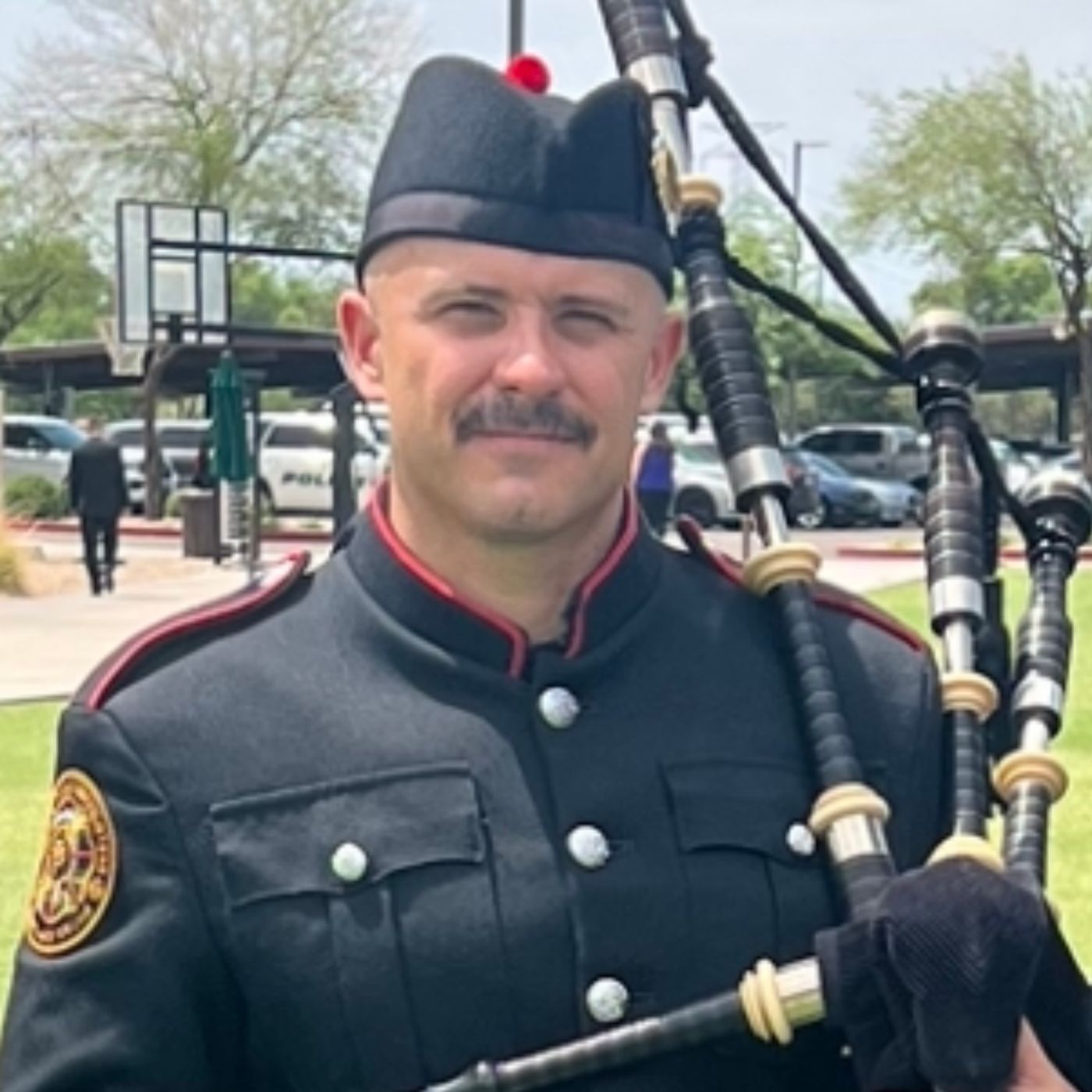
Captain Garrett Baker shares his journey and involvement in the Honor Guard and Pipes & Drums, discussing the history and tradition of bagpipes, the types of bagpipes and kilts, bagpipe competitions and performances, and his international bagpipe experience. The conversation covers the rarity of Grade One bands in the US, the influence of Irish and Scottish culture on bagpiping, the tradition of bagpiping in the fire service, and the impact of mandatory online training in the fire service. The significance of bagpipes in the fire service is highlighted, along with the cultural and historical context of bagpiping in the US. Takeaways Bagpipes in the American Fire Service History and tradition of bagpipes Participation in bagpipe competitions Rare Grade One Bands Bagpiping in the US Irish and Scottish Influence The Significance of Bagpipes in the Fire Service Chapters 00:00 Introduction to Captain Garrett Baker 09:49 History and Tradition of Bagpipes 24:06 Bagpipe Competitions and Performances 35:09 International Bagpipe Experience 44:52 The Tradition of Bagpiping in the Fire Service 01:09:06 Mandatory Online Training in the Fire Service
Steve-O: welcome back everybody. I had the privilege to sit down with Captain Garrett Baker. He's got 19 years in the American Fire Service. He started in 2007. He's currently a captain, hazmat and paramedic. We won't hold that paramedic against him right here, More importantly, what we're going to talk about, he's part of the Honor Guard Pipes and Drums since 2015. He's a wildland guy with the city ⁓ and state of Arizona forestry. More importantly, he's a Copper State Fools member, 4311, right, E-Board member for last six years. He's been an RTO for two classes. Prior to being promoted, he was a mentor for one. So he's spent a bunch of time at our academy. He's been married for 15 years. He's got two boys. They're seven and five. Welcome, Captain Garrett Baker. Thank you for your time, my brother. Did I butcher anything? Did I forget anything? Is there anything you want to add to your bio, my brother? Garrett Baker: ⁓ No, I no longer work for the Arizona State Forestry. That was a few seasons ago and I'm no longer on the e-board anymore. stepped down and much better people took my position. So we're good there. But other than that, yeah, perfect. Steve-O: All right, perfect. Well, well, good. Well, in on on Captain Baker's little note right there where he's saying, hey, he's not part of the forestry service right now. I'll tell you what, this motherfucker knows his shit because we just did a hike for the Grand Mountain 19 with the last Academy class because he was a recruit training officer for that. And I'll tell you what, there's so much knowledge this man has about the wildland side, especially when it came down to that event that he was able to educate us on. So. Garrett Baker: Hahaha Steve-O: even though he's not part of it, I'm telling you, he's a wealth of knowledge. But my buddy, my friend, Garrett Baker, thank you for coming on the show. More importantly, we are really here to talk about the pipes, the drums, the honor guard, but more importantly, the bags, Because, so, you're a piper. I've had a couple of pipers on the show. We've never talked about it. It is something that, and I don't care if you're a volley, ⁓ Garrett Baker: Yeah Steve-O: if you've been on a job for 30 years or a day. And again, this is my personal opinion. As soon as you hear the freaking pipes start to blow, It's like, it's this, I even know how to explain the feeling that comes over me. It's just this, it's goosebumps. It's just this overwhelming feeling of pride. ⁓ I hate to say this, but like sadness half the time because unfortunately, Most of the time we hear it during funerals, but it's just it is such an important part of our traditions and our history in the American Fire Service. So before we get into anything, can we just please talk about how you even got involved in that? Were you like, is this something that you were always? Did you like, did you always aspire? Were you like a music guy kind of growing up? Like, how did you get involved in? the the pipes in the freaking the bagpipes I mean that's the biggest part of the freaking my personal opinion in the freaking honor guard Garrett Baker: Hahaha I'd say, my career, I kind of just forced up my way into it and found myself holding the bags. I was like, okay, I guess it's me now. So within my department, I have a huge part with a few other guys in our honor guard and that. ⁓ Is my passion and all that good stuff? ⁓ That's where I spend most of my time is with the honor guard a few years back We're in Colorado. This is a joke part of it. Not quite how I got into it, but it definitely Planted the seed if you will we're in Colorado and we're standing in attention and I'm holding this big old flag this flapping in the wind It's kind of beat me up a little bit and it felt like hours and it may have been hours if you've been to Colorado You know what I'm talking about and I look over and the band guys are back there lounge hanging out. They're back at the tents while we're still doing the practices for the ceremonies. I was like, man, I gotta switch shoes, you know, or at least switch pants, I guess would be the better joke. So that planted the seed, yeah. but really the real answer is this. There's a couple of our members that wanted to switch into the piping side of it. And I was just working on connections throughout the valley and how I could get them lined up, you know, with the tutoring that they needed and that good. Steve-O: Switch, switch skirts. Garrett Baker: stuff. A couple of those members ended up not being able to make the meeting that I set up for them that particular night, so I went in their place. I didn't want to stand anybody up and I figured having the connections for future ⁓ anything would be a good idea. So I followed through with that meeting, had no intentions of ⁓ picking up the instrument myself, ⁓ but I got there and I always joke that it's like a little Rubik's Cube, you just can't put it down until you solve it. Some people smash it, but ⁓ You just can't put it down until you solve it. So there I was. like, are you going to come back next week? I'm like, so there I was next week. Gosh, eight years later, I'm still playing in that same, by the way, that was a civilian band traveling and competing. They've been really, really good to me. They've given me free education, taken me all over the Southwest and competitions and whatnot. It's a civilian band, but we have firefighters and civilians in there as well. And yeah, that's where I stuck with it. And then of course, that education and experience transitioned over to the fire side of things. ⁓ So here the valley we have the Arizona Fire Service pipes and drums. It's comprised of firefighters from all over the state of Arizona. ⁓ It's getting bigger and bigger each day man there's there's huge stuff going on behind the scenes even as we speak right now these guys are trying to grow the program and whatnot. But anyways once I picked up the instrument and ⁓ I could play a very very terrible ⁓ rendition of Amazing Grace I knocked on their door and they're like brother and and welcomed me into open arms and everybody was so helpful and of course you get a whole different education from that side of things. And ⁓ that's more or less how it went. I didn't have any intention of being a Piper or the Piper for my city or anything like that. We already had one. ⁓ He ended up retiring and all that good stuff so I took over the mantle from him. Later on I'll tell you about... ⁓ One of the things I think is super interesting in the fire service is the history and tradition. And we've tried to build the history and tradition of not only the bagpipes, but our members into our identity within my department. So it's pretty cool. But yeah, so that's the long and short of it. Just kind of found myself there. No intentions of really doing it. You asked if I had any previous musical background. Like most kids, well, I guess the kids I hung out with anyway is I played guitar and bass from an early age. Not very well. You would never pay to watch me play guitar or bass. But somehow or another, I wound up a bagpiper out of it. So that was my musical background prior to. So, yeah. Steve-O: Dude, that's crazy because to me, I had zero musical background. played the fucking, I think they called it a recorder in elementary school, the little do-do-do-do, And I sucked at that too. Okay, yeah, so I am super fucking jealous, honestly, of everybody in the Honor Guard when it comes down to instruments because you guys just fucking kill it when it comes down to just the sound, the precision. Garrett Baker: Hot cross buns. Steve-O: And great example. So you read or you led and correct me if I'm wrong. So I'm pretty sure. Did you lead our last graduation with the honor guard for the most part when he came down? OK, so just to hear you like with your commands, you know, it's just it's that militaristic like hard charge. Boom, boom, boom. You know, and everyone's fallen in regiment. It's just. Garrett Baker: Yes. Yeah. Steve-O: It's a fucking boner every time I fucking hear it. I mean, it really is. So with all that said, please, I mean, as much as you know, can you educate me and the audience on just kind of the history of the pipes? Like, how do even become an American Fire Service thing? Because I know now, okay, so we're 2026. If you hear back, I would say, Garrett Baker: Yeah Steve-O: I would like to say and I could be wrong in this that 99 % of the population they hear bagpipes are like, oh, this fire department and I and I hope that's the truth, but that's how I relate it. You know, as soon as I hear bagpipes, I'm like, oh shit, what's going on? Where the brothers out, right? How did that and I I know it's not just for us, but please educate the guys. I have that become one of our traditions like and I know it wasn't a fire service thing obviously prior to but Garrett Baker: . Steve-O: Whatever you know brother, if you don't mind just kind of educating us on the history at least of the pipes Garrett Baker: Yeah, I don't, I'm. probably not good with years, would say, 1776, when we became America, I guess. ⁓ But there's a huge influx of ⁓ Scottish, Irish, ⁓ Welsh, even English immigrants way back in the day. ⁓ They took over the menial jobs over there in the original colonies and whatnot. And from what I understand, a lot of those menial jobs were police, fire kind of situations. So originally, you have the Irish, they're called Steve-O: That's okay. Garrett Baker: pipes. have a bellows as well as a bag and they're very interesting. They sound beautiful by the way. Very complicated instrument and they typically are pretty quiet and you play them sitting down. So if you are on the Irish side of things and you passed away, ⁓ your people would you know stand you up and send you off in the very Irish way and it was zillin pipes. ⁓ Again very beautiful instrument, ⁓ very much quieter than the great Highland bagpipes which is what I play. That's the official name for the bagpipes you see. It's called the Great Highland bagpipe. ⁓ Versus, know, if you came from more of the Scottish side of things, they would send you off with the great Highland bagpipe and, you know, ceremonies and things like that. And this goes for parties too. A party in Scotland is called a Caillie. I didn't know that until a couple of years ago. So they would have their parties and they would play the inland pipes and their bagpipes. And then of course, if you passed away on the job or whatever like that, they would send you off in their traditional Irish or Scottish way. If you got the Irish pipes, the inland pipes, that was one thing. If you got the great Highland pipes, was another thing. Ultimately, and I don't know how much of this is particularly true, ⁓ but the bagpipes you can hear for a very long time. And I always envisioned like, know, East coast, New York, Boston, where you've just got walls of buildings and it just echoes and echoes and echoes for a very long time. So tradition got stuck in there somewhere and the bagpipes are loud and I think I just wanted to make a statement and that was the way to do it and so the bagpipes ultimately stuck. ⁓ And considering they're a tough instrument to play, in my opinion, the illin pipes were even harder to play. So that's probably another reason why they stuck out as well. But yeah, so it just... Steve-O: So what pipes do we use in the American Fire Service? Because you said a couple different ones, so. Garrett Baker: Yeah, so we use specifically the great Highland bagpipe is what it is. Yeah. Yeah. Steve-O: So the great Highland bagpipe. Okay, so that's a descent from what? From the Irish or Scottish? Garrett Baker: So yeah, the Irish bagpipe is called the Illyn pipe and it's a whole different monster, whole different monster. ⁓ But yeah, you kind of had two options, Illyn pipes, which is the Irish version or the Great Highland bagpipe, which is the Scottish version. And the Great Highland bagpipes are just louder, probably easier to play. So they became dominant and now they're kind of the identity of the American fire service and even police, police use them just as much as we do. Steve-O: Okay. So I know you go to competitions. I want to get to that a little bit later, but does everyone play the same pipes or do different regions use different pipes from what you've seen? Garrett Baker: No, yeah, we all play the same type of pipes. There's different manufacturers out there and all that, but yeah, we all play the same. Yep. Steve-O: Okay. Yeah. Alright, so what about what about the get up, So everyone sees We of course we fucking bust your balls every time we're like, hey, man, make sure you you have proper body language you like me. So make sure you cross your legs towards me and not cross your legs towards the other way. So by me, where did it where did the kilt come from? Garrett Baker: Ahem. Yeah, yeah, both those cultures, ⁓ including the Welsh culture, they all wear ⁓ kilts, different versions of kilts, but ultimately it's a kilt more or less. ⁓ How did it become prominent in the American Fire Service? Well, we copy and steal everything, The case method, ⁓ ⁓ ⁓ stole it to the best of my observation. I wouldn't even call it knowledge from ⁓ ⁓ the British regiments, army regiments, right? They all have ⁓ like the black watch is a very famous kilt pattern out there. Tartan is what they're called. It's the green and black one. People have seen that we've used that ⁓ each regiment sort of has its own tartan as its identity. And so again, when those cultures came over here and bled into the police and fire service, we just copy and stole everything. So ⁓ that's how we to the best of my observations and knowledge. got it in the American Fire Service over here. And we've kind of taken it even a bit further than that. There's many, many departments out there that have created their own tartan pattern ⁓ and got it registered with the, can't remember the specific name of it, but it's the the registry of tartans in Scotland to make it official. So they officially recognize it and you can, if you want to buy it, you can go get the exact specs and there'll be a, it's like a wool company or something. something like that. There's many of them over there that they'll create it for you and send it out. As a matter of fact, the Arizona Fire Service pipe and just created our own of which I'm the first one to have the kilt. As I won it in a raffle a couple clinics ago, we put on a school every year and know, fundraise and all that good stuff and I won the first kilt. So it's not made yet. They're making it as we speak. yeah, so departments throughout the whole nation. and have taken that concept of tartans and identities and created specific tartans for their own honor guards and their own departments. Steve-O: Now that one for Arizona that you said you just won, is that going to be officially recognized or you don't know yet? It is. Garrett Baker: It is. No, is they they went and got it registered in the in the registry of tartans. You can look it up online and ⁓ I said, see what it looks like and you can commission one of the weaving houses over there to create they call it like the whole nine yards, you know, the whole nine yards worth of kilt, kilt material and then you got to have another company make the kilt for you. So, you know, yeah, it's it's a it's a whole process. That's why it's taken so long for us. But yeah, it's it's officially recognized and the fire band and Steve-O: ⁓ okay. Jesus. Garrett Baker: Arizona that's that's our official identity we're still welcome to wear you know the kilts of our own departments for me the kilt of my department is special and I'll probably keep wearing it as often as I can but it's cool to have another you know another official identity to you all can wear that at different events as well so yeah Steve-O: Now, now your department, Kilt, is that different than, because we're both in the Valley, So we're different fire departments. I'm assuming that's different than my department's Kilt, correct? Okay. Garrett Baker: you It is, yeah it is. I don't remember specifically ⁓ which tartan you guys were. I know what it looks like, I just don't remember the name of it. For mine, ⁓ it's Malcolm Modern is specifically the name of it. ⁓ Malcolm you can just say, but if you wanted the specific one I wore, it's Malcolm Modern. And what that was is our very first piper is ⁓ of Scottish descent. He can trace his lineage back to the clans. And when he became the piper, he just used his own kiln. it was Malcolm and when I took over from him ⁓ I just adopted his kill well anyways he retired little earlier than he wanted to for medical reasons ⁓ but as homage to him in a recognition of the history and tradition Decided to adopt his kilt into our honor guard so ⁓ Henceforth we even got it made into our honor guard pipe syndrome patches So his kilt is there. It's the one that I wear going forward hundred years from now the whole ⁓ The whole point is some kid that doesn't know be hey, man. Why do we wear these kills be like the Kriados ethos we built into our honor guard unit is honor, pride, tradition, and family. So hopefully somebody can explain that to them and say, hey, this is our first guy and we wear that kilt because he was the first in recognition of honor, pride, tradition, and family. We're going to keep that going forward. So our kilt is meaningful to me and to our operation in general for our identity. And so that's where our kilt comes from. It's pretty cool. Steve-O: Dude, and that's badass because and correct me if I'm wrong, but your fire department that you currently work for has been basically a official fire department career 100 % since 2000, right? So it's been 26 years or 21, 25 years right around there. So fairly new in the fire service era, For the most part. Okay. Garrett Baker: Yeah ⁓ Yeah, correct. Yep. Steve-O: So dude, that's awesome because literally in another 50 or 100 years from now, like that's gonna be carried on, you know, and they're, you know, well, yeah, I mean, it's going to be for sure because you're doing the right thing. You're going to pass it on to the next guy. He's going to do the right thing. But to bring it back to like the OG Piper that you literally knew, that's that's pretty fucking cool. You know, I don't know in my realm, I think that's cool. So Garrett Baker: I hope. Yeah. Steve-O: That color that that pattern is that what you wear on your radio strap that you just got? Is that the same? Okay. Garrett Baker: Yeah Yeah, so the story behind that is the recruits in my ancient company in our last RTO class as a gift at the end of the class, they got a leather radio strap made. Actually, there's a story in there too, because the guy that made it is from the first department I worked for. So I feel like there's a connection there. It makes me happy to know that I took care of that. but yeah, on the backside of it, they wrote my name Baker on the back and they wrote it Steve-O: Yeah, we're- Garrett Baker: as close as they could get, you know, with the leather ink to the Malcolm Tartan. I was like, yeah, man, this is cool. on the back of it, yeah, now I have that there too. So, which... Steve-O: Dude, that's badass. Garrett Baker: That in and of itself made me happy because the kids at least, I call them kids, they're not kids, but the folks, ⁓ yeah, they listen. You get to philosophize with them, take them around the corner and talk about what makes the fire department special. They at least listened a little bit and took that into it created that. So in and of itself, it's a great gift and I love it, but the fact that they listened. Steve-O: They're kids. They're kids. They're kids. Garrett Baker: makes me even happier. know, because that's what it's all about. I didn't get here talking to you on this podcast all on my own accord. I got people helping me and grooming me and pushing me along the way to do the right things and make good decisions. And hopefully there's just a little bit of that in those guys going forward too. So yeah, that radio strap means the world to me. Steve-O: But there's there's a there's 100 % of that for sure in those guys and you you left an imprint for the rest of their career. I mean, you know that for a fact. And if you don't, I'm telling you right now, because everyone you remember your RTOs, your crew training officers. I remember both mine from both my academies. And it's just one of those things that you'll you'll never forget for the good and the bad. You know, you remember the assholes that you remember the ones you liked. And I'll tell you what, ⁓ Captain Baker, ⁓ Garrett Baker: Hahaha No. Steve-O: There is is nobody under the sun that said I didn't like this guy I guarantee you because like jokingly like I gave out awards at the end Academy and he got the cheerleader award because he is so fucking positive and I feel like the man just learned to curse there it is right there. Haha fucking cheerleader. I swear to God I the man just learned to curse like a year ago when he met me like and I and I love it because it's so unnatural and so good all at the same time. It's Garrett Baker: Hahaha and See you. Hahaha, wow! Steve-O: the most amazing thing you'll ever experience in your entire life when you have 47 freaking students saying what were they saying? Yeah, come on, me, give the audience here, come on, give it to me one more time. Garrett Baker: I need to say it. So I ask them, you know, how many bitch ass motherfuckers and they reply, no bitch ass motherfuckers. Steve-O: Right? No, bitch ass motherfuckers, right? And then it take that over 47 students over an echo of a canyon that we work in is the most enjoyable thing you'll ever experience in your entire life. So it is it is absolutely wonderful. So let me let me try to get back on track for a second here. So you had said so you guys compete, And we had talked. Garrett Baker: Yeah. hahahaha Yeah, for sure. Steve-O: ⁓ literally probably a week ago and you just came back from a competition. So explain to the audience, like what the what the fuck is a competition for for the honor guard or I mean, excuse my ignorance, ⁓ what to call it, but the pipes, the drums, the whole nine and then what group are you involved in? Is it a state group? And then and then if you don't mind hashing out how you guys did, Garrett Baker: ⁓ yeah, yeah. So. I'll back it up just a little bit. So the Arizona Fire Service pipe van is completely separate from what I do on the side and competition. ⁓ Yeah. So, so I got involved specifically called the Glendale pipes and drums. It is ⁓ it's a civilian side thing. ⁓ Back in the day, actually, it still is. I'm just not part of that side of it. ⁓ They do the honor guard happenings for all of the Glendale police department. So the Steve-O: ⁓ okay. Garrett Baker: band that I play in, there's a faction of those folks that are specific to the Glendale Police Department Honor Guard. As a whole though, it's a civilian band, travel and compete. So initially when I started piping, I was looking for tutoring really anywhere I could get it because I had no idea what to do or even how to tune the bagpipes. Even that's a skill in and of itself. It's pain in the ass. So I had to go learn everything. So I got involved with the Glendale Pipes and Drums basically as an avenue. to learn how to pipe so I can bring that back to the fire service, which is I did or done. And those folks have been so awesome to me. They've, ⁓ again, I've gotten to go around the whole Southwest with them. If I wasn't an RTO in the last academy, I would have gotten to compete in Canada. So anyways, they travel, travel and compete. There's a lot of gurus in there that are just really good at the craft and happy to teach you anything you could ever possibly want to know about bagpiping. So I do that on the side as a hobby, try to stay really good at it so I can bring it back to fire service and the perks of it is we get to travel around and compete. ⁓ I'll also back up once more that ⁓ as a bagpiper when you're playing in a band you can kind of hide a little bit. You you can like, you know, maybe I'm not that good at a tune or maybe my timing isn't that good so I'll just kind of hide in the band and listen to the bass drum. That'll save me, right? Well, about my third year bagpipe and I started doing solo stuff. So I started getting asked to do, know, funerals on the side. It was usually some connection to the fire service or police or something somewhere. So I always said yes to these things. And you find out really quick that when you're not a very strong bagpiper, not very good at it, like you stand out like a sore thumb. from, yeah, so from early on, like I went and sought tutoring. and ⁓ solo bagpipe competitions are a good way to get professional judgment back at you to learn where to improve. So that was kind of the catalyst for that. And of course I'm already in the band, so as a band, you can do much the same thing. You play as a band and you can get professional judgment back at you. ⁓ So, that's what I did last weekend. I went to Las Vegas. This year it was the biggest competition. in the Southwest that I'm aware of, pretty sure. ⁓ And I play in two bands. I lead our Novice Band, ⁓ is grade five, I'll talk about that just for a second. So it's grade five, four, three, two, one. Grade one band, there's only a couple grade one bands in all of the US. There's probably about a couple dozen or something like that over there in the Scotland, Ireland thing. it's grade one bands are very impressive. It's incredible. So I lead our lowest level Novice band. It's for folks that you don't want to learn or yeah it's just not us. There you go. So got the privilege to do that ⁓ and that particular band we won. ⁓ It was two day competition. We won day one and we got second on day two and we won first place overall for the whole weekend, which is pretty cool. And on that, I gotta say something. So going back to Wildland and... We play a tune in there called the Granite Mountain 19, which was written for, you know, the Granite Mountain 19 by a professional bagpiper and our competition band adopted that into one of our tunes in the middle of the set. At first when we made this decision, it's like, are we doing something bad here? We've got a tribute tune written for a heartfelt reason, and we're putting it in competition. So there's a little bit of apprehension at first. So I have a connection with a couple of folks, families anyways, from the Granite Mountain 19. I called them up and I said, hey, this is what we want to do. This is our intention. We're not trying to make any bad light of it or whatever, but this is kind what we want to do. We're an Arizona Fire Band made of Arizona Fire Service members and you people that have a heartfelt connection to the whole thing. How would you feel if we put this in a competition set? And they said send it and so we did it. We've been playing it and practicing it all year and that was the set that we got second on. Got very good marks on that specific tune. It was another piece of the music that kind of messed up on got a second place. But man I felt so proud of that. Immediately sent our video off to ⁓ Steve-O: Thanks. You Garrett Baker: know my connections on the 19, ⁓ which I'll just say her name, it's Amanda Marsh and if you've got a second to help out the Eric Marsh Foundation, ⁓ she does a great job up there. yeah, called up her and she's got other connections and collectively it was send it, put it on there and we did and it was awesome. I couldn't be more proud of the band and the fact that we got to play that specific tune. We're the only band that plays it, right, to such a large audience comprised from bands all over the southwest and even a couple came down. Steve-O: Mm-hmm. Garrett Baker: from ⁓ Utah and somewhere in Washington. I don't really know where. It's probably Seattle, but I'm not sure. So we got to play it for a huge audience and they got to hear the tune outside of Arizona. So I felt like we did a really good job there in perpetuating that, you know? So yeah, as a matter of fact, we got done playing it and the judges asked one of our other band members that was on the sidelines, hey, tell us about this tune. So not only did get to play it, we played it very well, but we also got to explain it. Steve-O: Mm. Garrett Baker: where it came from, so I'm super proud of that. So, little fire service in there. Steve-O: Which is even better. the only band that should be allowed to is you guys, the Arizona State Band. Because again, that's kind of where it's coming from. Please educate the audience that ⁓ not know who ⁓ Miss Marsh, And kind of tune, if you don't mind, real quick. Garrett Baker: Yeah, so Amanda Marsh is the widow of Eric Marsh, who is the crew superintendent of Granite Mountain 19. ⁓ And currently she runs the Eric Marsh Foundation located at the Prescott. And what they do is basically create massive amounts of funding and charity work for ⁓ LODDs and injured firefighters, both structural and wildland throughout the United States. She might even reach out to Canada too, but I don't know. I don't want to put words in her mouth. Anyways, she's a wonderful lady, great big old heart, and man, can't thank her enough for her friendship. She's been super cool. So she watched my dog when I ran a charity event. I didn't know who she was. And she was like, okay, crazy lady. They wouldn't let me run with my dog, which at the time is a whole nother story. So I was like, okay, crazy lady, watch my dog while I do this thing. And that's how I met her. So it was fun. Steve-O: Ha ha ha! This is also the same guy that has a sticker of his dog in a kilt with bagpipes on his fucking mortar bottle, right? So you know it means something to him for sure. So dude, you guys are fucking killing it. Basically on the scene, have you been, like you said, kind of Southwest, have you been to the East Coast or Midwest at all? Or is that just like not part of that mesh? How's that work? Garrett Baker: Yeah, yeah, yeah. And... So bag piping, hopping into that realm on both the civilian side and the fire service side has just been an incredible journey. ⁓ So backing up to it, ⁓ I got brave enough where I started doing solo work. ⁓ So people paid me to play bagpipes, which is the craziest thing. Cause again, you would never, ever, ever pay me a penny to play guitar. But yeah, I get to close down. It's a, Scottish tradition of closing down golf courses with bagpipes at the end of the day. So I've gotten to play at ⁓ a Weston Kierland, a couple of golf courses out in Fountain Hills. ⁓ Again, really, really heartfelt stuff, I think, to be asked to play someone's funeral or whatever. Again, most of those have been somehow fire service related retirees, things like that. ⁓ And then of course, doing the solo work at all of our local LODDs from cancer or other reasons, it's... Some of the most memorable and cherished times that I've ever had in the fire service being part of that stuff. in terms of where it's gotten to take me on the fun side of things. Oh man, St. Patty's Day. Most recently, and I don't know the connection here, one of our guys down south got connected with Savannah, Georgia. And unbeknownst to me, Savannah, Georgia is the largest St. Patty's Day event in the country. Blew my mind. I was like, why? That doesn't make any sense. So anyways, a bunch of us specifically from the Arizona Fire Service pipe van. we're all we're sworn firefighters from primarily Tucson and here in the valley, but we had a couple other ones. ⁓ We went to Savannah, Georgia on invite. I don't know what their conversation was, but I said yes. So I found myself over there on St. Patty's Day. And we did the biggest St. Patty's Day parade, which is apparently through Savannah. And it was a long way. And then we just got rowdy and had fun and represented Arizona Fire as best we could. We all had Arizona flags on our pipes. We played at every pub that would let us in. We played on just about every street corner down there in the main square. Played on the riverfront just as a kind of a crash concert drew a little crowd there. It was awesome, awesome experience. And yeah, just to be able to do that with the fire band was super cool. You know, it's again more of those memories I'll have for the rest of my life. ⁓ Outside of the fire service with a couple of the competition bands I play in. ⁓ I've gotten to go as far as Ireland. We competed a couple years ago and the it's called the I felt like karate kid a little bit because it's it's it's the all Irish pipe band championship and if you remember karate kids like the all-valley whatever karate championship I was like this we in the crowd kid but ⁓ but Yeah, you know, so that was cool man in that particular band ⁓ this this guy named Steve-O: Yep. Mm-hmm. Yep. You're Daniel's son right now. Garrett Baker: who if you're a firefighter here in Arizona, Len has probably taught you at some point. So he got a wild hair and decided to put together this whole band comprised of kids he's tutored on the way up. He's been the pipe major of numerous bands all over the country. So we had this Frankenstein band made up of a lot of firefighters here in the valley, because that's mainly who he, I always joke that we take years off his life every time he teaches us. He's a very traditional, bagpiper and firefighters to firefighters you know so I always joke we take a couple years off his life every time he has to teach one of us but he put together this band and there was gosh man there's a lot of us I want to say 20 probably ish maybe a couple more that flew over to Ireland and and we competed in this thing and I tell you what we didn't get last and I say that because over here seems like we throw our kids in baseball and soccer and over there they put their kids and backbite bands and I'll tell you what the talent over there from such a young age is incredible. ⁓ It really shows you what you don't know and and where the limit is, you know, and I'm not anywhere close to that level. Those guys are, even the kids are incredible. They just mop the floor with you competition wise. So incredibly humbling to go over there, just eye opening to watch the talent and see how well these things can be played. Some of those grade one bands I told you about, there's a couple of more over there. And just to hear those guys play in real life, cause they're so rare here in the United States, but to hear those guys play at that level, I was like, wow. Okay, there's a lot of work to be done. Tried to channel that as best I can, but ⁓ still got a long way to go. Not there. Not there. Steve-O: Those those grade ones. there any of those grade ones? Is is any of those bands a fire service band is like New York City? Do they have a grade one? Do you know of or Boston or no? So these are all like private. Garrett Baker: No, no they don't. Yeah, so there's, I want to say there's two currently, possibly three, grade one bands in the entire United States. One of them's out of Texas, one of them's out of Florida. The LA Scots out of Los Angeles used to be grade one, but they downgraded to grade two. Steve-O: ⁓ wow. Garrett Baker: Just play, yeah, so grade one bands are exceedingly rare here in the US. There's a few of them in Canada, but primarily they're in Ireland and Scotland. and there's a couple throughout the world, but yeah, they're exceedingly rare. to hear, what is it, three or four of them, three or four of them or whatever, play right in front of us, we're, know, front row during their competition sets is incredible, you know. So again, it really just shows you where the limit is. or where the limit is and how well you can play these things. It also showed me how well I don't play these things. Yeah, yeah. Yeah, yeah, it was. We've had really good sets where we go, yeah, man, we sounded great, we sounded amazing. And then I sat with those guys, I'm like, ah, shit. Yeah, yeah. Steve-O: I was gonna ask you, is it pretty eye-opening going, ⁓ fuck, these guys are killing me right now? Okay. Yeah We sound like garbage! Like what the fu- Garrett Baker: You know, it's, yeah, so bagpiping in general is, I joke, it's only gotten me to Ireland, but you know, say, I bagpiped all around the world, just Ireland, but we're not gonna split hairs. you know, anywhere in between, know, solo events and playing for the fire service and outside of the fire service, ⁓ getting to go over there to Savannah. ⁓ Yeah, it's just been an incredible journey so far. ⁓ Steve-O: That's okay. Garrett Baker: Lots of memories, lots of trinkets, if you will, acquired from those and beers had, you I always joke, dude, you put on a kill, like someone's going to hand you a beer somewhere. I don't know where these beers come from, but I always wind up with one. yeah, yeah, this is weird. yeah, but it's been a good, good run. Steve-O: ⁓ It's not bad thing until you start paying for them all, you know? Well, so. Dude, two things, right? First of all, Savannah, Georgia, and we had kind of talked prior to this episode, who fucking knew? Because if you were to say like, hey, man, where is the biggest St. Paddy's Day? I'd be like New York City and they'd be like wrong. I'd be like Boston and they'd be like wrong. I'd be like, I don't fucking know. You know, like the I don't know why those are like my two top cities because I'm thinking like where are the most of the fucking traditional Irish fucking firemen are at? It's. Garrett Baker: Yeah. Hahaha Steve-O: New York City and Boston and then you were like Savannah, Georgia. I'm like, what the fuck? But I'm like, that's freaking awesome. you have and you might not know the answer. You have any clue like how that became like a big thing or or no idea? Garrett Baker: Yeah, yeah, yeah, it was a lot more obvious than I thought. So first of all, your reaction was exactly the same as mine. Huge, what the fuck? You're like, are you kidding me right now? Am I getting punked? What's up? But yeah, so for a couple reasons. So culturally, ⁓ Steve-O: Yeah. Yeah. Garrett Baker: By the way, the politics in Ireland blow your mind, right? But all the way back to the potato famine era, you had a huge exodus of people just trying to get out and trying to survive. Well, of course, a lot of them came to the United States and a lot of them came to the Georgia region, the Savannah region, right? So there's a huge, huge Irish community there. Their roots go way back to the point if you've been to Savannah, ⁓ or know people that have like the city looks like Dublin like it you go down there on the riverfront and you're like God dang I'm I feel like I'm in Dublin right now. It's the same architecture ⁓ the same everything ⁓ Dublin is split by the River Liffey basically right down the center and Savannah is split by the Savannah River right down the center and right on the riverfront and look pretty much identical so Culturally, yeah potato famine a bunch of immigrants came over just trying to survive, get out of that plight that was going on over there. And they settled in that region. And the more obvious reason why St. Patty's Day is such a big event there, one, because of the culture, but two, Chicago and Boston and New York and all that are just too damn cold. And I didn't know that. So I had no idea. was like, ⁓ I guess that would make sense. You want to have this big, huge event, the parades and all this nonsense. ⁓ Steve-O: out. Yeah. Garrett Baker: And yeah, New York is freezing, Boston's freezing, all these places that I'm like you, those are my top three places. They're like, yeah, it's too damn cold, man. Nobody wants to go play bagpipes anywhere but a really, really warm pub. And so they have a huge ⁓ influx. I forgot what they said. I'm probably gonna butcher the numbers, but the population of Savannah that weekend goes to about a million. it's not, think it's like, yeah, it's an incredible, incredible amount of people that come down, huge event. Steve-O: Mmm. Jesus Garrett Baker: huge enormous event But it's really cool and then people so I actually got to trade challenge coins with an Irish battalion chief he's from a suburb just north of Dublin and the guy showed up in full fire department regalia wearing his full chief's uniform with the hat and everything and You know joking is like hey you fine man. He's like yeah, you know Couldn't tell you know he ended up being awesome, and we traded coins. You know by the end of the night. It really cool Steve-O: Yeah. Garrett Baker: But the police, the Irish police service, the Irish fire service, they all come over to Savannah that time of year to party and do their thing. I had no idea. So I thought we were kind of going to this small thing, whatever, it's an opportunity to pipe with the band. Of course, I'm going to say yes if I can. And we go there and I kind of find out more American Irish history. I had no idea about a whole event that... you know, for reasons happens and it's huge and it's just awesome to be part of it. ⁓ They don't want me on TV at all, but I guess one of our guys got interviewed by the local news people down there. I don't know if it was a magazine or a newspaper or, you know, straight up TV. I have no idea, but they talked to them about it. We made waves over there. It was really cool. ⁓ There's other fire service bands there too. Yonkers was there. ⁓ New Jersey Emerald Society, Warsaw was there. And those are the guys I asked. I was like, hey man, how the hell come you're here? Why aren't you playing there? And they're like, well, it's too damn cold, so we all come here where it's warm. ⁓ okay. So that's how I found out about it. Very interesting stuff to me. But, yeah. Steve-O: Dude, that's freaking, again, it's absolutely mind blowing, but again, when you break it down, it makes sense. You're like, ⁓ yeah, well duh, you know, that makes sense. So we talked about that little St. Patty's day. Can you kind of educate us just on the pipes? Like when we start, like we talk about history, so we talked about kind of how it got interjected into the American Fire Service, but like, do you even know like where the pipes came from? I understand it came from a couple different nations and stuff, just if you don't mind telling the audience on the construction ⁓ whatever, in traditions of the pipes themselves. Garrett Baker: Yeah Yeah, the Scottish, you know, has great highland bagpipes, so I'll say it ended there, you know, as the end of the road. But really most countries have their own version of a bagpipe. It doesn't always look like what you're used to, know, with the three drones over your shoulder looking like bagpipes do. They used to be made of intestines and sinew and all that good stuff back in the day. The part where the medley comes out that I play with my fingers, that's called the chanter. And that could have been made of wood back in the day. It could have been made of bone back in the day, like a radiating ⁓ as an owner or a femur off of a know whatever a goat I don't know so they're no well I mean maybe I don't know yeah it could have I have no idea but yeah so so the hard parts could have been made of wood or bone the back Steve-O: ⁓ I gonna say, I thought you were gonna say a person. I'm like, fuck. I'm like, enemy, fuck him, fuck the enemy, right? Garrett Baker: part of it was usually made of you know intestine or stomach because it stretches and it's strong and then to tie it all together so it's airtight you could be hemp it could be different types of robe but oftentimes it was sinew sinew I don't even know if I say that right but it's like the stuff your muscles are made of that attaches to your it attaches your muscle it's like ligament ligament sinew ligament Steve-O: What's that? What is that? ⁓ okay, I gotcha. Okay. Garrett Baker: But yeah, they tie it out around to make the bag airtight so you don't lose, you know your air that you put in ⁓ There's four reeds the one in the chanter is wood Double-sided not unlike a clarinet. I guess a clarinet is single sided but a bagpipe reed is double sided It's not made of the same reed wood There's three other reeds in each drone. ⁓ Back in the day, those things used to be made of reed as well, but they're pain in the ass. So somebody got smart somewhere and just started commercially manufacturing them. They're much more reliable that way. And yeah, so the last I wouldn't say the last it's probably not the last but for the conversation I'll say that it went around the world probably started somewhere in the Middle East made its way up and The the Scottish were like wow that thing sounds pretty cool. Let's go ahead and steal that so they put their twist on it And now you've got the great Highland bagpipe as it is now in terms of the history ⁓ original uses, you know like Trying to think of you know old civil war they would use the trumpet to control the regiments you know during war well you know they would use the bagpipes and all that to control the regiments ⁓ in in those types of war or the wars over there you know so ⁓ yeah originally a way to control armies then you know we'll write these laments and these slow sad tunes and we'll send our people off that way when they die and then you know the fire service thought that that would be a good idea too good idea Steve-O: Mm-hmm. Garrett Baker: too because we have such a ⁓ rich history of ⁓ Irish and Scottish culture. So there you go. That's about as succinct as I can make it. ⁓ I hope it's accurate or at least close, you know. So yeah. Yeah. Steve-O: I'll tell you what, you convinced me either way. And again, if you need a if you need a fact check us, that's OK. You can leave it in the comments below. But again, we're learning. But I mean, all that information I didn't fucking know five minutes ago. So, Garrett, I appreciate the knowledge that you have. ⁓ So we've been we've been yapping for about an hour before we kind of transition to the end of the season questions. Is there anything else you want to talk about? Garrett Baker: ⁓ Steve-O: Just specifically for the pipes or maybe the tradition in American Fire Service or anything you kind of want to leave the audience with when it comes down to ⁓ the piping side of it, brother. Garrett Baker: Nah, maybe just hitch it in the fields ⁓ a little bit. ⁓ You know, the journey for me. Originally it was just something fun to do and then you kind of find out that it does have meaning to people I kind of knew that but you don't you don't really know that until you see it. So I saw it and I saw it makes a difference for me just a small tune as well as I can play it makes the world a difference for people when it's done, right, so Try my best to do it as right as I can ⁓ Hopefully got educated as well as I can and still going within the you know how to play it how to control a band, how to do it the right way, the deportment, if you will, ⁓ to kind of continue that concept as well as we can and send our folks off the way that is there. ⁓ And so far, the investment that I've put into this instrument and ⁓ this discipline has paid me back tenfold. It's just been incredible to make the connections and the friendships and, you know, the adventures that's taken me on, you know, all that good stuff. I've always joked that my neighbors, you know, they love back pikes with it I like it or not. You can't get away from them you know. So yeah that's all I would say about that. Steve-O: Yeah I'll tell you. Yeah, I'll tell you what. So the department I work for, so Alex Matthews would and you know her. ⁓ So she would practice. I was stationed at 154. That was my last probationary station. And then at that point we were like wherever you ended last, that was your roving home, you know, until you found a home or whatever. So she would practice at work all the time. And it was like the best fucking thing ever because It was like after dinner, you know, is before the slaughter would happen from midnight on. And you hear the pipes and you're like, this is a fucking American fire service. Like this is like, I wish we had a piper at every station that would just practice like after dinner, you know, or something like in between calls because like nothing beats. And again, this is personal opinions, but it's just like you as soon as you assume for me, I'll just talk for me. As soon as I hear you guys and excuse my lack of knowledge, but blowing up the fucking bag or whatever, like as soon as I start hearing that and like, I'm like, ⁓ fuck, it's about to get real. And it's like the first note and it's just fucking chills. And it's every single time and it does, you're right. It means it means the world to me. And I know it does for 99 % of our population for sure. But like, as soon you hear that first note, you're like, holy fuck. and it's funerals, celebrations, retirements, whatever it is, it's hard not to have fucking feelers, honestly, when it comes down to that. And guys like you, I'm jealous. I honestly am. I'm jealous that you have the discipline to learn that instrument and be able to play it and just to hear, especially to hear you barking commands prior to, it's just like, that's the foreplay right before I fucking jizz my pants. It's just like, ⁓ my God, here it comes, here it comes, okay, we're there. It's so good, dude. And just, I appreciate, and I'm telling you, everyone appreciates guys like you that can pipe and just, ⁓ are part of that part of our tradition, you know? So it's it's much love all the way around, brother. We really do appreciate you for sure. Garrett Baker: Bye. I had on your thing, practicing in front of the station. During COVID, everything's on lockdown. But my station is a retirement community in North Buckeye. That's where I was at the time during COVID. So I used to go out front and I used to play. At the time, there was a tradition of bagpipes closing down the day as well, meaning that we survived another day. It was a big thing going around. this turned into essentially concerts in front of my station for about three months. It made the news and everything. You can Google this. Steve-O: Hmm. What? Garrett Baker: Yeah, 100%. And so talking about the connections and the friendships and all that good stuff, at that station today is about 100 some odd patches that I got from the retirees that live in that community. I stuck them all on a board and they're in that station. And if you go to our downtown station, 701, is about as many that I got from that event and more. Just more than that. And that has got to be 200 patches on there maybe, somewhere's about. from just playing in front of the station and making friends and connecting with people through bagpipes of all things. It's mind-blowing and very, very humbling to me. But yeah, so what you were talking about, just playing in front of the station, I got to know the whole ass community. Just making a racket out in the front yard. So yeah, it was cool. Steve-O: But dude, I love it because I mean, we talk to guys from all over the country. We listen to podcasts from dudes all over the country. And even though we have the same basically mission statement, know, life safety being number one property, being number two for the most part across the country. The one thing that brings us all together is honestly pipes and drums, because no matter how different New York City is than the Valley or Boston and fucking San Diego, whatever you say, the pipes are Or like again, it bring we all fucking love the same thing. It brings us together. So it's like I think that's the most again, personal opinion. That's the most important part because that is a tradition and a sound and a feeling that we can get from California to New York City, you know, and everywhere in between. And it's the same. And I fucking love that. I wish everything we did was more similar to that, where we could relate to that. the same feeling, the same, you know, the instrument or the tactic, whatever you want to put it down as. But it's like, man, I wish we could all be the same when it comes down to that. But do what a fucking what a great experience so far and what a great career you've had. So without really further ado, we never got a chance to cover the why. So let's cover it now. So we know what you do right. So you're a captain, you're a paramedic, you're hazmat or hazmat or a freaking. ⁓ a glow worm whenever you want to do it. I am one too, so it's okay. But why? So why did Garrett Baker become a fireman? Did you come out of the womb like my boy Kevin Weiss with a halogen in his hand or Colin Ward with a high shoulder 24? Or did you find it later in life like I did? So the why, why did you become a fireman? Where did that passion ignite, brother? Garrett Baker: Hahaha got into the fire service and the 07-08 crash. ⁓ I had really no idea what the fire service was. ⁓ I was a dirty hippie rock climber years ago and I got my EMT because ⁓ a couple of our friends had some injuries. ⁓ A couple of them tragic and the girl I was dating at the time was like, hey man, this medical thing is kind of cool, maybe you can use it. So I took it. I thought that was super awesome. ⁓ And then all your instructors were paramedics. and they fly in helicopters and do all this other cool stuff, know, SWAT medics and things like that. Well, shit, man, I wanna be a medic now. And then of course I go through there and I'm like, God, man, I could do, I could be a doctor, I can be a PA or whatever. So 708 crash and I was shooting the moon, I understand. Well, at the time I was working out in Wickenburg and I made a lot of friends out there. ⁓ I owe my career where it is today to the folks that mentored me out there in Wickenburg. So next thing you know, I'm going through the college fire academy and ⁓ seven to eight crash. The first place I put in was the first apartment I worked for. and about say about six years on out there. ⁓ I was just doing my thing. You're on the sticks a little bit. was, I was disconnected from probably the fire service at large. And of course the internet wasn't as prevalent as it is now. Podcasts weren't a thing. You know, you're, pretty localized in your exposure. So I didn't really know. I just had no idea about the fire service at large. I'd heard the stories, but again, they're, you know, ⁓ that stuff happens in New York or that stuff happens in, you know, Houston. Okay, it's not me. I work in the sticks. We're not exactly a fire factory. So, but I at least had enough wherewithal to follow my mentors and my role models and all that and get involved in the areas they pointed me to. One of those was wild land. So why did it become, I was already a fireman. I already had the blue shirt. I was already in the system. Cool, but I wasn't a fireman. I don't think I was. I was just kind of like, this is cool, this is a job. Tragedy struck. For me, that tragedy was the Granite 19, Yarnell fire. involved in that on the backseat. I went up there the day after, but that's neither here nor there. Got involved in the aftermath of it, helping out, doing different things. Up in Prescott, Slash put on a concert and a few of us that had some qualifications went up there and helped out and ran that thing like a type three incident. And you got to see behind the curtains. You got to see how bad these things affect people and how good they affect people too because a lot of good things came out of that as well. And for me that was it. That's when it struck home. That's when you know, the blinders got pulled back That's when I figured out what I had what I was a part of what the blue shirt means what the credos and ethos that we all say Brotherhood sisterhood. That's that's when I figured it all out. That was it. I was already years on the job when ⁓ When that happened, you know, I got to be part of that stuff. So that's when I really got serious. That's when ⁓ That's when I became a fireman and really jumped into the craft and into the firemanship, as you say. And so that was how I became a fireman. why, even again, even though I had time on already, why I became a fireman was to give back. I realized in very short order what the blue shirt meant, what all this stuff meant. I was like, man, I was in the ground level of giving back in what little way I could just in support of that event. I was like, you know what? This is way bigger. I might work in the sticks now. I'm not always going to work there. I had bigger plans. I wanted to make it my career at that point, so I moved on. And since then it's just trying to make myself useful and give back to I mean sitting here in my house with the kids and all this other stuff simply because of what the fire service has given me. So my why is that my It took a little bit, but I got there I got there ⁓ But yeah, that's that's the how and the why I decided to really dive into the title, you know fireman, right? ⁓ As you put it in your speech, I love it. ⁓ It's a non-binary term. ⁓ I think there's a whole lot of meaning to it that's my how and why I got there. ⁓ Steve-O: Dude, I love it. You're probably the first guy that found it like six years on the job, know, which is okay, right? Because some guys never fucking find it right there a firefighter their entire fucking career, right? But like it's it's awesome because you're literally the first guest to be honest and be like hey, I was on the job for like six years and then then I figured it out and unfortunately it took the grant in 19 But like you said from every tragedy is there's there's light to it also, you know and I have a personal story from 9-eleven that kind of is Garrett Baker: Yeah. Steve-O: is my why, but it's, it's, you know, again, like the worst case scenarios also bring a lot of light to a lot of different people that affect life for a long, long fucking time. And now you have damn near 20 years on the job. You know, you're a fucking true fireman. You're giving back. You've been a mentor as a fireman or an engineer. I don't remember your rank at the time, you know, and then, you know, being promoted captain, you came back and you've been a recruit training officer for two classes. So I mean that alone is more than 95 % of guys that get back to the department says it is. So you're there and then you're piping and everything else. So dude, I fucking love it. So since we're talking about traditions and you give me the perfect segue. So what is Garrett Baker's favorite American Fire Service tradition? But more importantly, why? So that's the important part of the question. Why do you love this tradition so much? And it could be from your region. It could be from wherever you want. But more importantly, why do you love this tradition? Garrett Baker: Alright, so you think I would say pipes and drums? Well, I probably would. I probably would, yes, I love that tradition. ⁓ No man, I'm a coin maniac. I love them. Steve-O: Yeah, I would. ⁓ okay. Garrett Baker: I love them. love them. ⁓ And so it depends on where you go. My experience on the east side of things is there are more shirt people. They'll take the shirt off your back and hand it to you and they're shirt people, right? ⁓ The Midwest, I got about 50-50 out there. They were patch people and some of them were coin people, right? So I like it all. I love it all as a matter of fact, but I'm gonna narrow it down to coins. ⁓ But I discovered the coin thing and I love them because they Steve-O: ⁓ okay. Garrett Baker: don't fade, they don't go away, I don't lose them, I don't get fat and outgrow them, you know what mean? Or my head gets bigger, right? But I love the coins, I love where they come from. What they mean to me is this, I got a whole wall of them, I love them. And every time I get one, no matter how I got it, whether it was purchasing it through a charity, helping another local out or whatever the case, or I traded a beer at a pub, or I did a cool class, or whatever the case is. Steve-O: Yeah. Garrett Baker: Any one of these that I get it goes in my little case and I got my boys like I got my seven and five year old right and we talk about why I got it how I got it why it's special to me ⁓ and at the end of the day it's a cool little you know trail of my career so far ⁓ so I can go back I can look at each one of those coins and ⁓ man that's where I got that one or this is the handshake I got for that one or you know you name it you get them for all kinds of reasons as you know but Probably my favorite tradition in the fire service is the slapping of coins and they do it amazingly well in Wisconsin. We went there for an honor guard clinic one year and I watched what happens when a guy drops his coin. Let me tell you what, I want to drill a hole through it and put it on a leash because I never want to drop the damn thing. yeah, they're coin game strong over there in Wisconsin for sure. But yeah, that's my favorite tradition is just that. paper trail if you will of your trajectory throughout your career. ⁓ I got a few coins in there that mean the world to me. Put them in the casket when I'm gone with me. know what mean? yeah, it's pretty cool. That's my favorite one. Steve-O: ⁓ yeah. All right. So, so the coin game. So just educate guys. What is the Wisconsin dropping the coin on point game to educate the guys that don't know what happens if you drop a coin? Garrett Baker: Well, it's more of just a story. Yeah, okay, so I think the coin thing is you trade it cool, whatever, you buy a beer, everybody knows what the game is, think. ⁓ Steve-O: Mm-hmm. Garrett Baker: I there in the pub one night, one of the guys slipped out of his pocket and you could hear it. It was absolutely like a pin dropping. The whole place went silent. Ding, ding, ding, ding. You hear this coin bouncing around and it went silent for I'll call it five seconds, maybe 10 seconds. And then the place erupts. ⁓ my fucking God. Fuck you. Fuck you. Everybody up here. Holy shit. And I thought they were just like fucking around. ⁓ no, that poor old boy bought around for everybody in the bar and I'm sure the waitresses are in on it because I don't think they like bankrupted the guy ⁓ but but no shit like I was getting a beer whether I wanted it or not because they put it right down for all the shit so ⁓ yeah at that point I was like I'm white knuckling my coin I am not dropping this motherfucker I'm not going home you know and ⁓ so anyways yeah that was it well the next night some other old boy dropped his coin or at so we all thought but now I'm in on the thing. I know what happens when you drop a coin. Fuck you man. Steve-O: Yeah, yeah. Garrett Baker: And so this guy, he actually ended up dropping a fork. But of course, the whole place erupts. You motherfucker, you're buying a beer. So he buys us all a beer, right? Because there's no getting out of it. You just dropped your fork. Yeah, that's exactly what you would say. So he did the right thing. Well, anyways, come to find out it was actually his fork or spoon or whatever the hell it was. So we all threw around a little charity jar for him. And whatever he put in to get us beers, we put in like double or triple to get it. Steve-O: Yeah. Garrett Baker: back like, sorry bro. So that motherfucker made off with a whole mess of money from dropping a fork. I was like, there goes my fork. Yeah, man. So, you know, they take it pretty seriously up there and just like anything else, you know, you do a cool class and meaningful class and you get a coin out of that particular event that you can't buy or get anywhere else. As a matter of fact, they change it every year. So you can't even get the same point if you go again. Steve-O: Yeah, I started the fork. You don't believe me. I'll buy you a drink. All right, then you believe me later Garrett Baker: ⁓ So yeah, that's another one of mine that are there at the stories and the friendships out of that You still see him every year in Colorado when you go so ⁓ pretty pretty incredible to me to go over there and get to take part in that shenanigans and Yeah ⁓ Steve-O: Dude, that's awesome. And for the guys listening, if you're young on the job, don't be like me. Like I didn't take coins seriously and I kind of kept them in a jar. And then I had an old engineer, Pat Saunders from back East, and I would send him like really cool ones because he collected them. So I'm like, well, he appreciates them. I didn't appreciate them till probably shit. I had like at least seven or eight years on the job. And then I started appreciating them. Like, God damn it. You know, like I wish I could go back. So like if you're new on the job, hold on like I tell kids all the time like the shit that I screwed up on them like hold on to this, hold on to that like, you know, the coins you write coins are special. They don't take up a lot of room. You never Garrett says the best you never outgrow them anything else, you know, just even if you don't have a little shadow box, just hold on to them, put them in a safe or a box to keep sake and later on in life. You'll definitely a hundred percent. I promise you appreciate the fact that you held on to them and I I wish I could get some of my old ones back, but I hold on to them all. All the ones I get now, like for dear life, I'm like, can I have two? You know, it's like, you know, want that was just in case I lose one. I want to keep one in my wallet. What you know, one in the shadow box until I get a new one and then, you know, rinse and repeat. But yeah, do coins. I love it. No one has ever said coins, which is surprising because it is a huge part of our service and our tradition. So. Garrett Baker: A keeper and a trader. Steve-O: Knowing your favorite tradition now, I'm gonna promote you, right? I know you've been promoted to captain a couple years ago, so I'm gonna promote you to the pinnacle, right? So you're gonna be the commissioner of the universe, fire chief of the world, right? But like I kind of alluded to, snap your fingers, boom, you changed something in American Fire Service, instant gratification, zero sweat equity, it happens right now. What is it? But more importantly, why? So that's either adding, deleting, modifying, Literally, your one wish, your genie rub, it happens right now. What are you changing? But really, why? Why are you changing, adding or deleting whatever this is, my brother? Garrett Baker: Yeah, obviously, adding milkshake machines in every fire station. Because why not? So I think collectively across the fire service, maybe the world, I don't know how the rest of the world does it, but mandatory. Steve-O: All right, we're in with that we'll just sign off good done best answer I've ever heard fucking milching machine Garrett Baker: Emphasis mandatory ⁓ online training, right? So your vector solutions target solutions I would get rid of it and get rid of the mandatory and I say mandatory because like I'm a super nerd like I love going and doing the little classes on ULFSRI and some of them you get some value out of them But when you the second you get told that you have to do what does everybody do? We just click play and go fuck around somewhere else, right? So just to just to do it for for a pencil work for a checkbox It you look good on paper. But what have you really accomplished? You've accomplished nothing You've taken time away from your guys. They could have been doing something more productive And again fire chief of the world for a minute I'm assuming that everybody's gonna do more productive things when you take away that nonsense ⁓ So I would take away the mandatory Steve-O: Ugh. Yep. Garrett Baker: online training. It's still there if you want it and I encourage folks to go out there and get some knowledge by that route. know there's again I say ULFSRI but there's a dozen more avenues out there to get really valuable information ⁓ for us in our profession. But I get rid of mandatory side of it just because I don't think checking boxes is really a productive way to do much of anything just for the sake of you know checking boxes and whatnot. So that's what I would do. Steve-O: Yeah, and I love it. Like how many times do we as freaking firemen have to go through extinguisher training annually, right online, which is fucking bullshit. like, are you kidding me? Like this? And again, we can't fast forward and it's an hour long. It's just like if you're a fire chief listening to this shit right now, cut the fucking bullshit. Like it is we don't need to do the OSHA fucking mandatory fucking we're on 40 hour bullshit or whatever where you do it every goddamn day. Garrett Baker: Yeah. Steve-O: We're teaching it, you know, it's like, but it's, is so mundane. It's like, ⁓ do you understand how to catch a phishing email? You'll guess what? I don't fucking look at any emails unless they're from people I know, you know, so you don't have to worry about that shit. We're freaking firemen, right? So yeah, allow that time instead of bugging us. Like, Hey, make sure you get your mandatory stuff done. How about bugging us instead? Be like, Hey man, have you guys thrown ladders this month? Have you pumped the truck this month? Have you pulled attack lines this month? Have you pulled a fucking draft? You even know how to do it. You know, like, and I'm just saying that, for example, in the Valley, like most Valley engineers don't know how to fucking pull a draft unless they're in the sticks. Like you were saying before, like, yeah, but again, yeah, or, yeah, or a wildland guy. But it's like, what about the valuable stuff? It's like, hey, let's harp on a guy's like, when's the last time you got out? Hey, man, I haven't heard you on the radio in a hot minute saying, hey, we're out of service, fucking training. Garrett Baker: Unless you're in the sticks, yeah. Or you're a wildland guy. Steve-O: Because that should be a good thing. You know, that shouldn't be a negative going, uh, you know, engine one and ladder one, they're out of service training again. It should be like, man, like as soon as they get back late, we're engine two ladder two. Let's fucking go to training. Let's, let's keep up with those guys. That should be the mentality that we hit. Like, dude, I love it. No one has ever said, get rid of mandatory online training, but you're, you're right. It's just like a necessary evil that we all go through. But I don't think anyone's ever said like, why? You know, like, except for except for what you're saying is there is a we are government employees when everything comes down to it and we have to maybe check a box here and there. But again, like a fireman having to check a box that says we've done a yearly extinguisher check or like a training is fucking ridiculous. You know, like, yeah, like, come on, you know. Garrett Baker: You ridiculous. Steve-O: Like the nails through the finger, what do you do? Do you call your supervisor? Do you put a bandaid on it? Like, do you pull the nail out? Do you call 911? It's just like, come on, man. But dude, I love everything that you're absolutely saying. And that's a fucking perfect answer. And again, it's crazy because, so you'll be episode, I think 48 or 49, I can't remember. We talked prior to, but I'll announce it at the beginning of this episode, whatever it really is. But no one's ever said that. Garrett Baker: Hahaha Steve-O: prior to you, so that's awesome. ⁓ So before we sign off, mean, we've been yapping for over an hour. ⁓ Is there anything you want to leave the audience with, brother? I I we talked about piping, we know we talked about traditions a little bit, a little bit about your fire service. Is there anything you kind of want to leave the guys with before we sign off? Garrett Baker: There you go. Well, I'll flip it back and I'll just say thank you for allowing me to be part of the fire service and the connections I've made and will continue to make. I could not have asked for better and I deserve far worse and it's been amazing. It's been an amazing trip so far. The honor guard, the pipes and drums, both of those disciplines have been very formative for me and the people that I've met along the way have. have really just meant the world to me and molded me and shaped me in ways that I'm not articulate enough to explain. So I'll flip it back, man. I'll leave everybody out there ⁓ with a big thank you for allowing me to be part of this, and appreciating music, of course, right? Because that's what we're talking about, so. Steve-O: Yes, exactly. All right. Well, I can't leave it any better. So we'll just go off of Captain Baker's right thing. Hey, thanks for letting us be part of the American Fire Service, be part of your traditions, be a part of your family. ⁓ And again, we appreciate you guys listening and taking time out of your day and hopefully you learn something. So Captain Baker, thank you so much for taking time away from your family on your day off after you just finished the Academy and then just got a freaking 48 hour shift. Garrett Baker: Hahaha Steve-O: And he's sitting here right at lunchtime talking to me. So if you can't ask for a better dude. So thank you so much for your time, my brother, your expertise, your knowledge, and we will catch you guys in another two weeks. Have a good one. Garrett Baker: Thanks for the opportunity.