
Copper State Firemen Podcast · Steve O
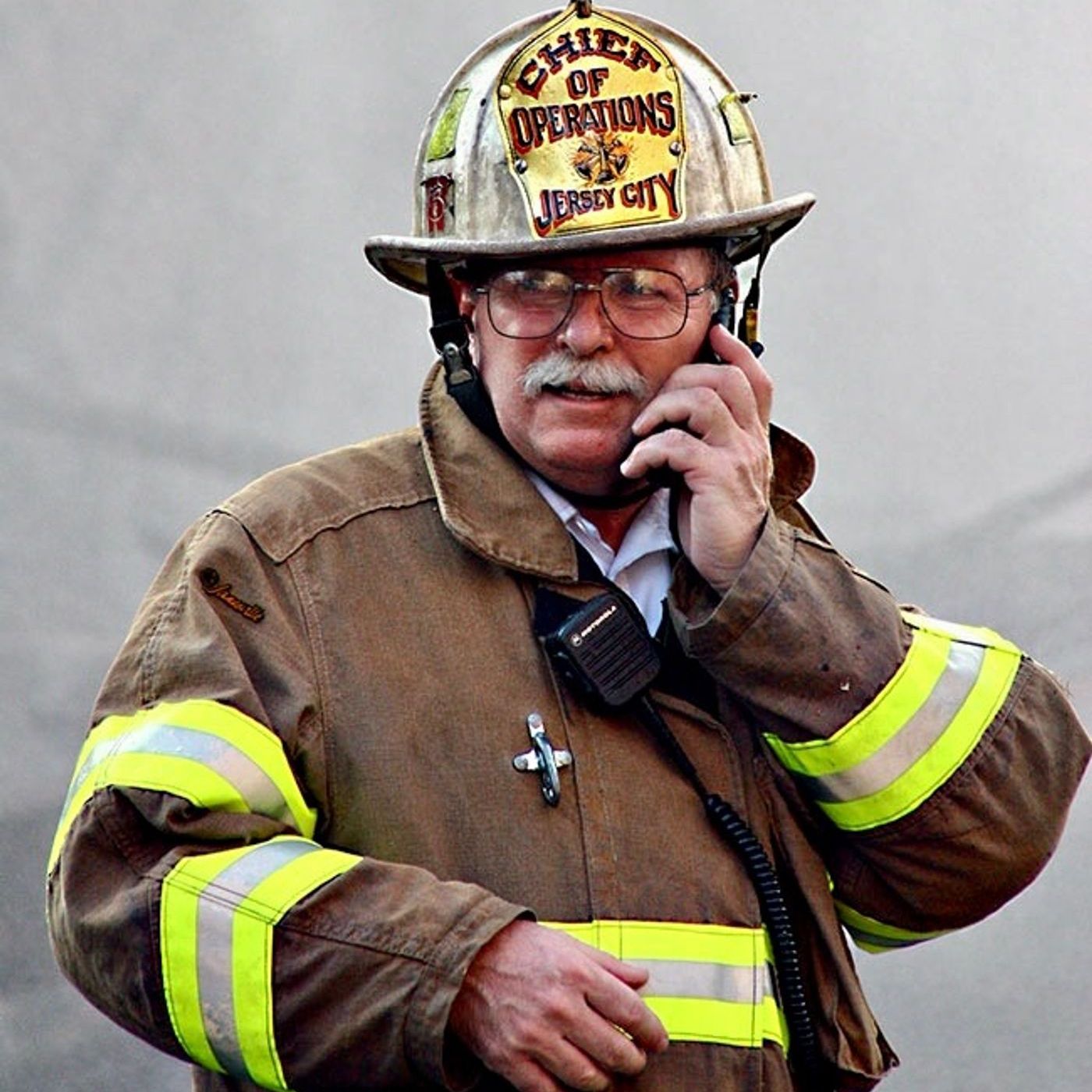
The conversation covers Chief Butch Cobb's transition from military service to the fire service, emphasizing the similarities and the importance of training and brotherhood. It also delves into the militaristic style in the fire service and the operations of rescue units, along with Chief Cobb's promotions and experiences in various roles within the fire department. The conversation delves into the importance of leadership and followership in the fire service, emphasizing the need for accountability and adherence to standards. It also provides valuable insights into the experiences and challenges faced by 9-11 responders, highlighting the critical role of emergency response and leadership in times of crisis. The conversation delves into the importance of preserving and sharing stories, particularly those related to the rescue efforts of 9/11. It also highlights the need for educating the next generation and the impact of programs like Never Forget. The generosity and unity post-9/11 are discussed, along with the tradition of Metal Day. Additionally, the need for improved funding and staffing in the fire service is emphasized. Takeaways Brotherhood Training Militaristic Style Rescue Operations Leadership and followership are essential in the fire service Accountability and standards in the American Fire Service are critical for safety and effectiveness The experiences and challenges of 9-11 responders provide valuable insights into emergency response and leadership Importance of preserving and sharing stories The need for improved funding and staffing in the fire service Chapters 00:00 Military Service and Transition to Fire Service 16:01 Training and Brotherhood 21:08 Militaristic Style in the Fire Service 34:03 Rescue Operations and Promotions 44:43 Leadership and Followership in the Fire Service 54:39 Accountability and Standards in the American Fire Service 01:08:26 Experiences and Challenges of 9-11 Responders 01:23:28 Preserving and Sharing Stories 01:33:39 The Generosity and Unity Post-9/11 01:44:06 The Tradition of Metal Day 01:49:27 The Need for Improved Funding and Staffing
Steve-O: Welcome back everybody. I had the privilege to sit down with my most seasoned and wholeheartedly with all love saying old timer coming into the show today. So I have Robert Butch Cobb. He's a Firehouse Hall of Fame legend right now inductee. He's a US Army veteran retired deputy chief from Jersey City. Those boys burn. He's been in fire service career for 34 years. It's some of the busiest cities and companies. as Chief of Operations, Chief of Training, OEM, Homeland Security, Deputy Coordinator. He's a former volunteer fire chief in New Jersey and 9-11 responder. Chief went on to lead the community for hazard mitigation for ISO, helping shape national fire protection grading and standards. For than three decades, he's been a key firehouse contributor, excuse hands-on training programs, national conferences, and safety seminars such as the Wichita Six, the Charleston Nine programs, All grounded in his lifelong belief that his words, train like your life depends on it, which is one of my favorite sayings, So outside of me mumbling and stumbling, did I screw anything up, mispronounce anything? Is there anything you'd like to add to your bio, Chief? Butch Cobb: No, I think that was well said. I am an older guy. I went to my first fire, I think, in 2009. I went to my last fire in 2019. So it's a long stretch. I've been around almost 50 years. I still love it. I just can't get rid of it. I still go to conferences. I'll sit in the class. I'll take notes. New instructors up there, and I chat with them. And I still can't get enough. My wife's leaning. towards cutting back a little bit, you know, it's too late. Steve-O: Well, perfect chief. So you found the right platform. Thank you for, first of all, your time this evening is our honor to have you on the show. But going through your bio, one of my soft spots, I am a veteran also, but you were a US Army veteran time of war, I believe. if you don't mind, if we could just start in the Army and then transition into the American Fire Service and just start talking to the audience, sir. Butch Cobb: Yeah, there's so much similarities in both of those. I got out of high school at 67, didn't want to go to college. I figured somewhere down the road, I figured I'd have to my parents a few bucks or enlist. I come from a military family. My dad, who five car brothers, they all served in World War II. I'll talk about my uncle Frank later, who was kind of my hero, but... I went down and enlisted August of 67. And unbeknownst to me, I went to basic training at Fort Dix. I'm going to talk about that in a little bit because that's my first dive into brotherhood. Before it was a popular term. was, you know, like I said before, I hope it continues in the fire service. But I went to basic training at Fort Dix. They sent me to Fort Huachuca, Arizona, which was the combat surveillance and electronic warfare school. And I learned that basically sitting in the right-hand seat of something called an OB-1 Mohawk, which is up on my shelf somewhere, two-seater with the first aviation brigade. Went to Vietnam for a year, 68, 69, a little over a year. You know, fortunate to come back. left, I guess there were about 14 or 15 of us in my... in my crew, left six of them behind. But it was an eye opener. But the key to this whole thing is when I got home and I didn't realize it when I joined New Jersey, and there's a lot of things I can say Jersey doesn't do. One of the things they do is if you're a veteran and you live in New Jersey, when you come back, they have what's called absolute preference on a civil service test. And everything in Jersey civil service, fire, police, public, you name it, it's civil service. So all I had to do was get a 70 on the test and my name went to the top of the list. So it was called absolute preference. So, you know, when I look back on it, it was kind of worth it. mean, you know, good and bad things happen, but. Steve-O: Chief is that real quick? that still the case in the state of New Jersey? Do you know? ⁓ Butch Cobb: Yes, absolutely. You come back, you go to the top of the list. Now, when I came back, of course, there were a lot of veterans. I think there were 70 in my class, 70 probies and probably 65 of them were Vietnam veterans. So they just took us and listed us from one to whatever. But if you weren't a veteran, you weren't getting on a job for a few years, which is fine with me. But yeah, so that's how I got my start. I always wanted to be a fireman. My dad hung out with firemen. He to be, you know, he had a business going, but he always wanted to be a fireman. And didn't get to pass the test. And I'll tell you why. When World II broke out, him and all his brothers enlisted. He went to the Navy, was on board the USS Yorktown, saw a lot of battles. Not one, but got ⁓ you know, on board Yorktown. And when he came out to take the test, he couldn't pass it. because of his knee. So that ended his career. But he played softball on a couple different fire departments in Hudson County, Weehawken Union City. And there was a bar down in a corner called the Nick's Tavern. And I used to down as a little kid. You know, it'd give me like 50 cents. That would give me like five sodas. And all five of the cops, that's what this bar was. And they always had a good time. And I noticed that as a little kid, these guys are really happy together. And he continued to play softball with them and, you know, et cetera, et cetera. And he had an uncle at the time who was a older than him, but he was a fireman over on the east side of New York, Manhattan, I guess back in the 50s and 60s. We would go over and visit. You I was like six, seven, eight years old. We went over to visit and it was the same thing. These guys were always happy. mean, I didn't realize what they were doing around the coffee table. But they were laughing, having good times, in and out the door. Bells going off because it was a Gongham Register back then. And then I noticed, we go to my uncle's house. He lives up in Valley College, New York. He built a house from scratch. Him and the guys from his company. I'm talking about from scratch, from level on the land, cinder blocks, framing. It was just them. And the funny thing about it, I remember as they put the walls up, they filled the walls with empty beer cans. And I guarantee you this house was well insulated. ⁓ But all this stuff just stuck with me. And I just decided, maybe 10, 11 years old, my dad joined the We moved to Dumont, New Jersey. We moved out of Hudson County, Dumont, New Jersey. He joined the volleys, went up through the ranks, became the chief in 83, I think 84. I was always in the firehouse. have to tell a story. Back when I was a kid, Steve-O: then they're probably still there to this day. Butch Cobb: It was before they had junior firemen, but I'll tell you, my main job was shining brass. Brass on a rag. don't know how many kids out there listening remember that, but that was my job. Nozzles, brass, couplings, shining them. That's what I did. And the whole thing just, I got caught up in it and I came back from Vietnam. In New Jersey back then, had to be 21 to be a copper fireman. So, know, the time I came back from Vietnam, was 21, I could join. It was interesting. I became a farmer. I became just engrossed in training. Anytime I had training, didn't care what day of the week it was, I was there. I was taking notes, scribbling stuff down and doing as much as I could and I got hooked in training. And it was good. And those guys were, lot of them were World War II career vets. Their souls were built on brass and steel, I think. Because I saw them run into places that you know, would scare me now, to tell you the truth. So just being around them, again, I up, I had a time in Dumont where things were changing. The older guys were retiring. The newer guys were like me. They wanted more. They wanted different. And they started looking, instead of the oldest guy becoming the chief or the guy that on Sundays, you know, the most beer, they traveled around with four companies and like, I don't know, two and half square miles maybe. We had three engines and a ladder truck and a utility truck. But anyway, you know, they came to me. I became a lieutenant for a couple of years and a captain for a couple of years. And then the younger guys came to me and said, you know, we'd like you to run for assistant chief. I was pretty young. I was like 27 or 28 years old. I've never had anybody, I think, under 60 at that point. And I said, you know, can give it a shot. I mean, I don't know a lot. And when I think back on it, probably shouldn't have been an assistant chief. But you know what? They got me elected. I hate to say this, I beat one of the older guys, much older guy by one vote. were 80 guys voting and I got ⁓ more than he did. And went up two years as assistant chief and then ran for chief of department. And I did and it was fun. But I did that. I looked back on it not as a chief, I did it as the coordinator of everybody that wanted to make change, I would get them in a room. We would talk about what we needed. And one of the guys who I think most of your listeners will know was a young kid named Mickey Conboy before he moved to New York City or New York State. Mickey's Lieutenant, rescue three now, he's retiring in August, he'll be 65, probably one of the most decorated firemen you'd ever see. And his company started talking to me about a rescue company. And this was 70. 78, I think. And we talked about it and, you know, there were two engines and a lot of truck. There was one engine and a lot of truck on the east side of the tracks, we called it, and they wanted it in the second engine on the other side of track. So I said, all right, give up your utility truck. We'll give it to engine three, make it a rescue three. Not that simple, but that's what we did. they have it. They built it into a sensational rescue company. A lot of Bergen County. looks at as a real model. So anyway, I got done there. And then the whole time I'm in Jersey City and just enjoying my career. Long time, think I was a fireman for eight, nine years, maybe 10 years before I took the lieutenants test, which I didn't do well on. Steve-O: So Chief, Chief, real quick, just to clarify, right? You were talking before, that was all your volley experience going through the ranks and everything else. So now, at what year did you get hired with Jersey City? When did you become a professional fireman? Butch Cobb: Yeah. I became a career firefighter in 72 with a small fire department in Hudson County, right next door to Jersey City. It's called Weehawken, New Jersey. We had three engines and a ladder truck. Again, it was civil service and I was at the top of the list. So actually Ridgewood, New Jersey called me first. I was one, but I didn't take that job because it was just, it didn't fit who I was. And I took They were doing a little bit of running, waited three years then Um, Jersey City called me and I left Weehawken went to Jersey City in 75. That was kind of my dream because they were, they were busy. Um, you know, a lot of buffs going there, a lot of pictures taken and I just, knew some guys there and they were just, you know, it was kind of the heart of the New Jersey had for their war years. And so I started in 75, um, you know, spent, uh, uh, My first six months in engine one downtown, which was pretty busy. was told we had like 5,000 vacant buildings. And Jersey City was only like 15, 16 square miles. So we had something every day. But is going to sound crazy, but I used to sit with the Rolodex. We still the boxes coming in. And I looked at the Rolodex, and I found the company, engine 20 down South End. I'd sit in engine one and listen to the South End companies. They would just run all the time. So I found a company that was on every box. If they were on the first alarm, they were on the second alarm, they were on the third alarm, they were on the fourth alarm, and they didn't relocate. that was a key thing for me. I didn't like to get relocated from a busy area to go to. So anyway, I a bid. We could about the bidding system, good and bad. So I bid through Engine 20. Spots opened up. lot of the older guys were leaving. And engine 20, ladder five, it the busiest firehouse in the city at the time. And was great. was home. I worked most of my career, 582 communal poor avenue. And at one point we were the only occupied building on the block. Everything else was vacant. Steve-O: And you're on the engine or on the truck at that point. Butch Cobb: I started on the engine, I stayed on the engine for a number of years. When I got a chance to cross over the cover spot, I took it. I wanted to learn both, but I was an engine guy for probably the first eight years. Loved it. Had a great crew. I had a couple of real senior guys when I got there. It was like dual senior men. It was great. It was great. mean, they were just, you know, they were just an encyclopedia of knowledge about the area, about the buildings. about everything about, you know, was back when you took care of the engine, the chauffeur would go underneath and let the air out of the air tanks if there was too much moisture in it. He checked the oil, you know, all that stuff. He loved, the chauffeur loved the engine and he took care of it, cleaned it. Steve-O: that would be it's I love that old school like they're the pride in it. But so it sounds like a super prideful city for the guys that don't know, especially a lot of our listeners are on the West Coast. So Jersey City is extremely busy with all that, though, You were a prior military and then you transition to the fire service. Was Jersey City very militaristic or were they were they gentler, kinder? And these are war years We're talking the 70s and 80s, right? Butch Cobb: Yeah, this was, it had all the military inflections that you could possibly think of. lot of World War II guys left, a lot of Vietnam guys coming. One of the greatest chiefs in history, in my history with the Jersey City Fire Department was guy named John T. Mullins, ex-Marine. He looked like a fire chief, square jawed, big guy, gray mustache. If he came to a multiple, I wouldn't walk past him. I'd either go behind him or go across the street. I mean, that's that was his presence. He was the colonel. And you know what? We didn't talk to him. He would talk to the deputy, maybe the battalion chief. But we had all that, all those guys. of my first captains was a B-24 pilot in World War Two. And it just that it was all there. Every company had that. And I like And I just I know I skipped over. Just getting back to the military. That's where I found The word brotherhood, the definition of it. When you're working with people and your life depends on it every day, that's brotherhood. When you see somebody save somebody else's life, when that gets into you and you say to yourself, hey, I got to help that guy out. I learned that, and they instill that in basic training. It's four ticks. We didn't do anything alone. Everything we did, we did together. And if one guy did it wrong, you all did it wrong and you all did it over again. If we were running and one guy got tired, we'd carry him. I we just I love that. I love all that. And you know, carried over to jersey City. the brotherhood thing before I learned about it, before I learned about, you know, everything that's going on now in the fire service, everything I learned about the brotherhood and care of. sitting with you, or riding with you, or crawling down the hallway with you. learned in the service. I to teach that. I was instructor in the fire academy for several years, and then when I became chief of training, I tried to instill that back at everybody. We made squads. Well, they always had squads, a squad leader. The squad leader didn't, let me just take his armbands off. You're done. Back on the line and give it to somebody else. No questions asked. Don't even ask me. It was like that. And I'm glad. I'm glad I learned it in the military because I don't think I would have learned it as well. I would have learned it in the fire service. But the military just really taught me about how the importance of camaraderie, the importance of training together, the importance of knowing the mission, not varying from the mission. just, all those things, I think, transitioned to the fire service. Yeah, it might have disappeared for a little while. But I think it's coming back. I think, you know, I think the fools have a lot to do with it. think I think you guys have re-energized and you might ask me, well, why haven't you joined before? I didn't have any time. You know, when I had my training company, I was traveling all over the country with a group of anywhere from six to 20, the 20 guys and girls. And we were just busy. I you know, I, I didn't see my family sometimes. I called my wife up and like, where am I going next? I forgot. Don't you look at my calendar. So I just didn't, I didn't have time for lot of other things. And became the head of all fire expo hands-on training. And that added to my, I still was with my company. But again, just getting back to the army, ⁓ I give them credit for really instilling brotherhood and what it meant. And I wanted that. I needed that in the fire service. I we need it. If you can't trust, you if you don't trust the guy next to you, that's trouble. I I still, every guy that I work with, that worked for me or I worked for them, actually, nobody ever worked for me. We all work together. I never say that, he worked for me. I work with him or we work together. But I still am in contact with all of them. You know, the godfathers are one of the guy's kids. You know, it just... It just, it never left. We see each other at different functions and whenever my friends, you know, have their walkout, whenever we talk, I slide back, I slide back. I want to be there for it. I want to be part of it. I was in a group of guys that was, I'm not going to say any names, but young chief, and he gave this little dissertation at a meeting about how he was going to try. when they're not out of fire having a rankless fire department. He said, new kids were intimidated by what's on the collar. So he said, around the firehouse, they weren't going to wear rank anymore. And I would just, it was the last meeting I went to with this group. It was a pretty prestigious group, but it was the last meeting I went to because some of the guys in the group said, hey, that's a good idea. I mean, just to be nice, but you know what? I couldn't wait till the meeting ended, but insanity, insanity, rankless. that's, that was eight, nine years ago. When things, there's guys out there with degrees and these letters after their name that decided let's try something new. But anyway, so. ⁓ Steve-O: What's crazy though is just to kind of back up what you're saying because I the militaristic style in the firehouse. I believe it has a place for multiple, multiple two different reasons. But with all that said too, we, for some reason there has been a wave and it's, I feel like we're starting to swing back some, but you alluded to it where they were trying to eliminate that, reduce it, whatever the case might be softer, kinder, gentler. whatever came across the table. But what we were seeing is with that kindler, gentler, a couple different things, right? Now we, these brand new individuals coming into the fire service have never been yelled at a day in their life because their feelings matter. And then we as instructors are now told that you can no longer act like boot camp or militaristic style. we're gonna get in trouble if we holler at them and scream at them and everything else and then we see this push that Once happens in the field because everyone listen this is on the job somewhere was so we know how controlled chaotic scenes are but they're chaotic and The time that kid gets screamed at by civilian, right? The last thing I want him to do is to freeze or we are that good job with known rescues And there is no please. Thank you. May you I give you a direct order of where we're going. We are going to enter that window on the second floor north side. Let's roll now. I don't need butts wise, huzz. I don't need you to freeze. So that has a place in the American Fire Service and I can't stand the fact that at any point that we are trying to eliminate that. But with that said, it's a hard fight now because we're trying to get back to where you were like your warriors. How is Jersey City now? Did they kind of dip down also or are they still? militaristic, charging, rank respecting everything else. Butch Cobb: Everything you just said is Jersey City. And I'll tell you the reason why. And I know a lot of guys don't like this, but we never had a fire chief that I know of in the last 60 years, 70 years in Jersey City that didn't come from the ranks. was a civil chief of department is a civil service test. Well, you know what? go to the ⁓ center, four or five parts, two days. Regardless of what you think about that, we never had a chief. you know what? Every chief from when I went on a job in 75 till yesterday, cut from the same piece of cloth. None of them want to see it digress. They want to keep what we have. I mean, when I tell you about things about Jersey, 16, 17 square miles, 26 companies, they get like 32. 32, 33 firefighters on the first alarm. Four engines, two trucks, rescue, two chiefs, the mass service unit goes on the box with the safety officer goes on the box. don't, you know, it's the whole thing we can get into when I was traveling around the country with ISO and I was saying, you know, follow the NFPA requirements, not a big NFPA fan, but it says 16 on the first alarm for a structure fire. You only send an eight. What about the other four companies? ⁓ well, we have to save them in case there's a second fire. But when's the last time you had two fires at the same time? Well, like 1853, maybe. But I just don't understand that. wouldn't you? The chief I respect, tremendous chief, very smart, he went on automatic alarms. He would just send a pickup truck or any fire department vehicle. there was an engine on a single response. to an automatic alarm because he told me 86 % of the time it's a false alarm. Well, what about the other time? What about the other 14 %? You're putting your guys in danger. So in Jersey City, it's always been two agents in a truck and a chief on an automatic alarm. And if there's anything, it all comes in and they fill out the box. But Jersey City's 4-2 to rescue two chiefs, mass service unit, safety officer on the initial alarm. the first engine gets in, nothing's showing, you'll be... returning the blah, blah. Then if you say working fire with a smoke showing, you get get you get a squad, you get a rapid, two intervention teams and a Back up that. So, you know, and we have a great safety record. I want to not quote it. I usually don't like to say that. Really good safety record. But I think it's because we can overwhelm a fire, number one. And number two, there's three chief officers. And lot of farmers don't like this. mean, well, our guys don't get in the way. They let the officers and the firemen do their job. The safety officers not running around, know, checking to see if your helmet straps. He's there to watch the building, learn from the building. What's it doing? What can he see that we can't see on the inside? So and it's worked. It just worked really well. And, you know, more is better. More is better. Less is Steve-O: I'm a huge fan of more is better. had Mickey Farrell, FDM Y Lieutenant, truck lieutenant, right? And yeah, and he says the same thing. was like, we literally like I had a dude from city of Chicago too. They're like, we literally beat the fire out with manpower. And like I talk about all the time, the system here in the area that I work, I can get on the radio and I can request anything I want whenever I want. And I can get waves of guys for almost endless resources. Butch Cobb: Number three. Steve-O: but not on our initial assignments like you guys do. New York City does. I love the fact of and literally they're like, you know what? If it's going south, we're going to throw more firemen in there. And it, it, and again, it kind of goes back to what I'm saying. If we're very aggressive in the beginning of the call, we usually deem the seam safe by putting the fire out, pull the people out, and then we're good. Right? We usually don't get in trouble till we're at minute 15, 20, 25. And then We're calling in multiple alarms. Those are the guys are getting in trouble because now that structure is compromised, especially today's day and age. But I love the fact that you guys operate similar. It sounds like to New York City. It's like we're just going to throw as many dudes there as we can. Butch Cobb: Yeah, absolutely. And it's always worked. mean, as a battalion chief, if I got to work, dispatchers knew I was going to do this. mean, they knew your habits and the dispatchers were really good. But if a company got there and it's a working fire, pull up behind them, I'd a quick report, start an initial engine and truck. That's before they sent two rep and as I mentioned, the squad. I would just say they knew if it was a working fire as soon as I got to extra engine and truck. I wanted somebody standing behind me, not doing anything. You can't have something go wrong and then say, send this, that, and the other thing. But yeah, it's always worked for us. We've been in a shadow on New York. I always say we're a small fire department because the closest fire department to us is 10,000 firemen on duty. And we actually do mutual aid with them. And we did in the tunnels. It's two subway tunnels from Duratney City over to Manhattan. One of them used to go, it still does, they rebuilt it right to the World Trade Center. There was a stop from Duratney City under the river that came up at World Trade Center. And then we have the two or three tunnels, freight train tunnels, and we did some training back and forth. I guess being in their shadow was a good thing. They started wrapping it's adventure. They started what's called a fast truck. We started it, you know, and we could call and say, hey, show us some paperwork. you, and I drive over and they give us the paperwork proving that that's what they need. So it was good having them there, but we still, we still were small fire department with that shadow over here. But yeah, I love Dirty City, like I said, and it stayed that way. And again, I think it'll always be that way because the chief is always going to come, you know, and if the mayor has to appoint somebody. We have like New York City has fire commissioners. Our fire commissioners are called fire directors. And he appoints anybody he wants. You can do that. he can't do much to... Yeah, he can cut the budget and whatnot, but you know what? Then he'd get in an argument with the fire chief, but he can't come to the fire scene and say anything. We give him a white helmet and a coat and he can come and stand there, but there's some very specific laws of what the fire director or fire commissioner can and can't do. So, but we never, we always got along. We thought we, usually somebody retires in the fire service that was, you know, that knew what was going on. So I like that part of it. Very traditional fire department, but very well trained. I'll tell you how well trained we are. We have a chief officer, there's four groups. We were 24 on 72 off, been doing that for 30 years, 40 years. Every group has what's called a FTO. It's a battalion chief, field training officer, works on shift. does nothing but train and document the training for all 130 guys on a shift, whatever it is. We have a chief assigned to each group and then there's a chief of training, but he has four more chiefs that he could go to and say, what's going on in group A? What's going on in group B? So again, crazy. And they go to fires also. They'll start out for a working fire. This is an extra set of eyes, but it was something that's probably only about four years old, but it's worked well. And everybody loves it. And again, pretty good safety record. of all, hard like you said, ⁓ we're interior firefighting. ⁓ It when I was there. It still is. I listen to the radio. You listen to everything now. And I hear running the floor above the fire, primary search underway. And some places you don't hear that anymore. But it's place to go for a walk. ⁓ Yeah. Steve-O: You're absolutely correct. So with. Butch Cobb: You know, so I was just fortunate. You know, like I said, I stayed a fireman for a long time. then, know, we lieutenants and captains. We had done away with lieutenants. The lieutenant sued the city saying that we're doing the same job as a captain. So he said, OK. So all the lieutenants on a Friday became captains on Monday. It was kind of ⁓ Steve-O: That's a quick fix. Butch Cobb: Yeah, yeah, yeah. So anyway, I became a company officer, went to 22, again, really super busy. Made my way back to 20 Engine and 582 Communicore Avenue with a different group of guys. But, you know, they just love that spot. I knew it real well. And, you know, it helps to know the area. I mean, it just, and I don't give you a volunteer or career. You need to know your area. You need to know what's out there. You know, I tell volunteer chiefs when I speak to them all the time, you have 80 guys in your department, you should have 80 sets of slides on each of one of those houses, from the outside, from the inside, if they let you. that generally one house looks in older town or even a newer town. The houses all look the same. Builder came in World War II, built 100 houses. So I tell fire teachers, have the firemen take slides. Look at their house. How long is the stretch from the house? Where's the closest hydrant? What ladder? You know, put that together, use it on drill nights when you can't go out, snow or rain or whatever. You have that, that, that whole put, I don't know how many of them listen to me, but you know, nowadays, like where I live up here in Goodyear, when they put houses in, they put like 50, 60, 75 at a time and they're in stages framing, you know, not framing roof. And you could go all the way up from point A to point Z of how a house is built and what goes into it. It's nothing like walking around in a house that has no walls in it looking at it. Where's the trouble start? Where are the spaces? So anyway. Steve-O: No, it's good too because you so you live in the valley Arizona in called Goodyear and Arizona the valley is not old like 60s is like city Phoenix 50s a little bit, know, but it's nothing like East Coast Jersey 1800 stuff like that. So everything out here is new and there's just and more and more. I mean, we take the recruits ⁓ every single class through building where we do commercial units. But then we will find a stick farm neighborhood because again, you can learn so much by looking at, hey, these are the houses we're building right now. These are our void spaces, right? This is where the AC ductwork goes. Here's your electrical. These are post-tension. I mean, whatever. And then start looking at your stretches, how far your hydrants are, just starting to know those areas because we respond around here. It's automatic aid. So everyone goes everywhere. You know, it doesn't matter what city. truck it is you live in Goodyear you might get a Buckeye you know or even the next closest city to you just because depending on the day but ⁓ it's awesome so but I love I love East Coast I love the old school I love the old school building construction and everything else so you stayed a fireman for a long time you promote through the ranks you be captain so when did you did you decide to go chief or was that one of those things where it was just for the betterment of the department at the time Butch Cobb: Well, in 1990, we decided to put we had two rescues. They closed both of them, I think, in 75, 76. They had a cut back. So we had rescue one rescue two. They closed both of them. But they weren't they were more of a manpower squad. They would just kind of fly to fires, do their thing, get back on. There was no extrication back then. So in 1989 and 90, they decided to bring back rescue one and make it a full heavy rescue, technical rescue. Everything except diving. So myself and Captain Frank Bentavigner had the opportunity to put that together from scratch. we did. And 91, when it came online, was fortunate. It's the only, we have a bidding system. If you want to go to a company, you put a bid in, you get a point for every year you're on a job. But for the rescue, we decided, and the union agreed with us and the city agreed, we took resumes. We didn't want to start with, you know, so. And there were a lot of firemen in Dirty City. You had to be a resident to take the test and three or four of them would get an apartment and lived there for a year and then qualified. But we had a lot of volunteer firemen, guys from other departments. And so we took resumes. there was a lot of training that was kind of under the covers. we put them, we assigned them. Each company, the rescue had a minimum of five for the rescue, an officer and four. We wanted six. city wouldn't give in to the six guy. There's interesting story about that. I have a picture of me standing in front of the rescue with four or men and myself, five, and a giant blow up Gumby. Steve-O: man number six. ⁓ Butch Cobb: Gumbi went on every run with us until the chief called the deputy and the deputy called the battalion and the battalion said to me, hey Bobby, Gumbi's got to go because he would hang out the way we pull up and he'd be hanging out the way. But you know what, brotherhood. Steve-O: Ha Yep, one the best parts of the job right there. Just the them up and then doing fun, you know, things just for you guys. You did it for you guys. So that's like the best part about it. Does Jersey City still have rescue water? Do they have more now or did they get rid of it again? Butch Cobb: Now they have rescue one and they have two squad companies now that are what we call rescue qualified. And they can do transfers into the rescue and whatnot and anything technical. Squad four goes with the rescue, squad one goes if needed. there's two squads. They're kind of semi-rescue type of, they're all trained and they all have a specialty. Squad one is high rise trained, but they have all other things, squad four. is in with the rescue. put them in with the rescue after a few years. So go back and forth across the floor. A regular fireman could go to squad four, the squad four guy would jump over to a vacation spot in the rescue. So I was there for six, seven years. And I was no spring chicken, but we were, it the greatest six or seven years of my career, because we started out on the initial box and every box in the city. And being 15 square miles, we got a piece of everything. we were, I'm telling you, it was, any of my guys will tell you, you know, it was on each group. It was lot of fun, a lot of work. We trained every single day, even though we had a lot of qualified guys. Quick story, we trained so much in the rescue, day and night everything that the union called me one day and said, hey, We got to figure something out with the overtime because the overtime rule was one of the dispatchers or back then the battalion chief's aides would call for overtime. some guys would take the rescue. It was an overtime slot. But if it got down to the last guy and they said, oh, you have 14 hours in the rescue and he would turn it down. And a couple of guys called the union and said, that shouldn't be one of the, it shouldn't be offered a regular five in that spot. the thing was we had five. four of the five had to be qualified in the rescue. And one guy could come over and hang out with us. But the guys complained because we'd go out at nine o'clock in the morning. I'd call on the radio, the rescue ones on the air, and the dispatcher would say, OK, rescue, you're on patrol. Because we would go to every junkyard there was. The Department of Public Works would publish vacant buildings that the city owned that were going to get torn down. So there was a free for all. Any company in the city could use them. Every morning, we'd get up. do our housework, have a cup of coffee, and then on the road, vacant building, two or three junkyards, pull out some cars, trucks. cops were really good, they ran those and they would pile cars on top of one another, et cetera. We'd go to vacant buildings and every day and every night, we'd come back, we'd eat, BS a little bit, back out. Go to fires at night and we were out all the time. We wanted to hone our skills, ⁓ wanted to be good at what we did. engines would volunteer, we'd take an engine with us. We to do everything. But some guys wouldn't come and work with us. So that was In network 24 hours, we were doing... They cut back on some of the runs. We were going crazy at the beginning. were going... Anything that 4.2 and 2 Chiefs went to, they put us on. But we were going to... Box came in in high school at three o'clock in the morning. It four to two to rescue two chiefs. So we kind of cut back. Elevator emergencies. We eventually trained most of the truck companies in elevator emergencies more than the normal, more than they knew. Got all the equipment so they could take some of the slack off us and God forbid we missed the fire. that's, but I was getting older and later in your career. I started thinking about my pension, started thinking about my family. It was a big jump from firefighter to captain and from captain to battalion chief. So I started studying for the battalion chief's test and I took it. Not expecting much, but they needed probably battalion chiefs at the time. I came out three on the list. I kind of got my choice where I wanted to go. Went to the second battalion, which is the south end of the city, the busiest end of the city. Went to house in engine 19, engine eight with, just can't say enough about Jersey. Engine 19, eight, Tony De La Rosa, who became a deputy chief eventually, he was the captain of the engine. Captain Gill was on the And you know I had one meeting and all my meeting was, listen, every day we're on duty, I need to hear. ⁓ I took my whole battalion, small battalion, but I said to them, listen, I just need to hear you on the air training. I don't care if you went to a vacant building or threw ladders on a firehouse, get on a radio and say, you know, we'll be delayed, we're out training. Or if you're doing something, you know, just call me and let me know you're going to be off duty for a few hours. But said, we'll get along really well. that's they loved it. They loved it. They loved me going to and watching. Never criticized. You know, ⁓ did stuff in the firehouse. I brought the rescue down. did that. We got it to search ropes and things like that and rapid intervention. So it was a great time. I great offices. know, time went by I was having a ball because it was great. And then you're about to go to training at school and then the deputy's test came up. I studied a little bit, not a lot. Not a lot because I knew what would happen. Most of the deputies when you got promoted, you went to fire headquarters probably for a year or two or three or four because the fire spots got out of line. Each shift had their own deputy. He worked 24 on 72 off. He was called Prince of the City. And there was a fifth deputy who was called the covering deputy because generally one of them would laugh at something. so the chiefs positions with deputy chiefs positions, I think we had like 12 deputy chiefs on our department. But I the and somehow I came out You know what, I don't if... He's good at BSing or whatever, but Mike Turpack, I don't know if you've ever heard of Mike Turpack, he's read a few books and wrote a few books and does a lot on the road. But anyway, he came out one, I came out two. The two spots were open where we chief of training. He took that in chief operations, which is normally the number two chief. But the union contract says you can't be forced into a staff position if you have a line position. So Chief Eggers, Rick Eggers. who again was one of the greatest chiefs we ever had, he went around to all the senior deputies and said, listen, I need to fill the chief operations spot. They all turned it down until they got to me. And the contract said, if everybody turns it down, then the junior person takes that spot. So I wound up the chief operations as a junior deputy chief, had a city car. I had to key all the gas tanks. It was pretty cool. I took it home, responded to all the multiple alarms. They called me and I responded. It was good because I got to see a part of the department I hadn't seen before, didn't care to see before, but I still got to go to every multiple alarm, every odd tactical rescue. I could go to anywhere I wanted, really. A couple of times I went to an all-hands fire. Deputy would, know, Chief Operator would never go over. One of my friends like Pete Gracie would come out and rescue with me with a battalion chief. I would just show up and go, what are you doing here? I wasn't doing much in the office. You know, pat him on the back. But Eggers was great chief, got a lot done, got a lot done. We got our first bailout equipment and, you know, he just gave me kind of a long leash to buy and things the department needed. So ⁓ it was pretty And I think I told you, but you want to. Steve-O: That's a, that's it. It's amazing because odd to me to hear all these senior deputies turning the spot down because to me, I would think that would be a prized spot because you have, you literally have your finger on the department on how they operate on fires, which I would believe would be a dream job for any real fireman coming up through the ranks. can't believe that even got to So it's like, Just beating that position, you got so lucky to be there, but then get to capitalize on all the benefits of literally I know if I ever made that position one day, which would be a dream come true, I would show up on three one house fires just to hang out with the boys and see them work. know, it's see how see how my city or my department's running and then I can freaking tweak it as needed. Like when we're talking about how much manpower goes on an assignment and everything else. Butch Cobb: off. Steve-O: What a freaking awesome spot to jump into. Butch Cobb: I never went to the working fire as the deputy chief operations on duty. Never, never, I'd never do that. I'd go fooling around with one of my friends, but never went. There was no need. Now, if you're a deputy chief and you got 28 years on the job, 22 years, would you want to work Monday to Friday? And most of them didn't live in the city. They lived down in South Jersey or North. Do you want to work 24 on 72 off? Or do you want to work five days a week in the office? Steve-O: I got you. Yeah, they want the schedules. They want that 24 72. Butch Cobb: Absolutely. And I said to Chief Eggers, the first spot that opens up, I'm gone. And he knew it. He knew it. And the first spot opened up, to Mike Turpack. He left Chief of Training. it the end of my career. I got a couple spots on line. It seems like I had an opportunity. I left Chief of Operations. And I don't know if there was a junior deputy to me at the time. But ⁓ yeah, if the spot opened up earlier, I would have left. But I had a good friend, Timmy Carney, who was the deputy chief. spent almost six years. And he just died of cancer, God rest his soul, from 9-11. It was over 9-11, he died of one of those cancers. He great guy. But he spent almost six years at headquarters as chief operations. It's great, but it is, but you you're kind of separated. The last thing I thought about was strategy and tactics out of fire. The last thing I thought about. If I went to a multiple, you know what it was? was if the press showed up, The councilmen showed up, that's what I did because the deputies that were there at the time, they were well-schooled. They were good at what they did needed to be like a hole in our head. So that's this dirty city. mean, even the biggest cities, you see, they go to the city and even in New York City, may get a deputy, you may get a deputy assistant chief, but they're kind of in the background. Everything's done by the chiefs that were there. So that's how I felt about it. it was... was interesting. I learned a lot about the job. again, it just, and I think I told you, I took the chief of department's test again. Didn't want to study for it. I came out two on the list and Michael Riley became the chief and he came down after, I was on the line and he came and he got me a spot on the line. So I was working 24 on 72 off and he came down one day and he goes, listen, I'm not enjoying myself. He says, I'm going to retire pretty soon. He said, it'll be all yours. I never let that happen. Before that happened, just before that happened, I retired. We just decided. Well, I have no offers from a company outside, but you know, I 60 years old and I just, you know, it just, we're not getting into too much of it. Jersey City is a very political city and I saw two chiefs before me just, you know, kind of get beat up and I was done. I was done. I wasn't a political figure and. I probably would have got fired if I became the fire chief. So I didn't want to take any chance. But I left for another job. I did the right thing. coincidentally, because there was some talk about, I was one of the last guys to retire with all my medical benefits. I don't pay a dime for medical benefits and other things in my pension. And six other deputies retired in a year or two after I did, all with 30 years. So you're talking. including me, over 200 years of experience walked out the door in years. That's incredible, right? ⁓ Steve-O: That is that's that's a lot leave it all at once. And I kind of feel like that's becoming a new norm in the fire service because we've had all these hiring spikes and, you know, we're in transition now where there's a bunch of senior members leaving. So we have a lot of younger suppression officers moving up through the ranks, which is not a bad thing. But again, it's just a lack of experience thing or maybe an outside knowledge thing where they they're only ingrained in their little bubble. So. ⁓ I think that's just American Fire Service. We go through these these massive waves of losing a ton of experience and then a bunch of hard chargers coming up, but then they're all coming up at the same time. So then you know, they're 200 years leaves 30 years later or whatever, but it yeah. Butch Cobb: Yeah, well, me, it's all about something I wrote about. I'm to speak about it. The New York State Chiefs of Schools. Follow the lead the followers. And what I mean by that just really shortly is when you first come on the job, pick somebody, pick one of the leaders, lieutenant captain, pick somebody that you look at say, I'd like to be him someday and just kind of follow his lead to follow that leader, learn from that leader. Ask him questions because you're confident that you're going to get the right answer. And it's not everybody, but follow somebody. I don't care how big or small your department is, your volunteer department. somebody there that just keys you that he what he's doing and he's the guy he might go to. So follow the leader. Now, if you're a leader, you also always talk following and leading, two sides of same coin. You can be a captain. Get in first due to a fire. All right. You're kind of leading this. All right. You got your company getting on a radio. You were signing a lot of you know, whatever you're doing, battalion chief shows up. What are you now? You're not the leader anymore. Now you follow his command. You follow his strategy, his tactics. All right. And now you're back in with your company leading the followers. So you know what saying? Leading and following are the same side of one coin. But you become a captain. Find that battalion chief. Find that that everybody talks about, that senior guy, he's a great boss. want in my... Follow him on your shift, see what he does. Why is everybody liking him? What does he do that's good? Ask guys, makes him special? Follow that, follow that. As you become battalion chief. The next rank, you want to become deputy or whatever, whatever rank is in your department. I don't give a volunteer a career. Who's the guy everybody likes? Who's the guy everybody says, boy, I... I want him outside the building before I run in it. You know what? And follow him. So regardless of your rank, you're going to lead and sometimes you're going to follow, but you have to be good at both of those. And what bothers me about taking somebody from the outside. He's followed no one in your department. You know, even I see some departments, you know, when I, when I done with Jerity city, there was some thought about being a chief. I put my resume, I even went to, ⁓ an interview on Florida and it just dawned on me, what I did in Jersey City is not gonna work here. I decided right away, I can't anyplace else, ⁓ nobody else. just couldn't do it. So I went with analytics and insurance office, which was a great move, but leading and following is your entire career. You know what? ⁓ Don't invent. being a leader. Somebody has done it well and is going to do it better than you. Follow that. To it's just all part of maturing in the fire service, following and leading in every rank. So that's my spiel on that. just don't see it happening as often as it should. I wish you couldn't take a test as early as you can in a jersey. I think it's after three years because there's some bright kids out there. But to this assessment center. I had a guy I was friendly with from another department. made Captain real young. And he said, well, listen, when I get there, I'm just going to tell them, you guys are all senior to me. And I said, that's a bad way to get started. Kind of saying, oh, I'm going to follow you, but I'm getting paid. So I made him change his mind a little bit. He was a little skeptical. So I just wish that we changed it. Maybe after five or six years. But you know what? The bad side of being a veteran, you can take a promotional exam in Jersey City after one year. don't know anybody that's ever done it, but it's there in writing, so that would scare the hell out of me. ⁓ Steve-O: Wow. Yeah, that would be so. I mean with with the young officers coming into the rank and everything else, we talked offline a little bit about standards in the American Fire Service and then holding guys accountable, either individual crew members or maybe even other companies that you responded with. So what do you again your personal opinion? What do you feel like we need to fix? What's the issue? If there is any in the American Fire Service right now when it comes down to accountability, because that's always a hot topic word. especially when we're talking about leadership. So what's your take on that, Chief? Butch Cobb: I don't know if this is the right direction you want me to go in, but one of the things, including myself, for a lot of years, we have seen mistakes made and let it slide. We've seen offices make mistakes. We've seen whole companies make mistakes or whole companies decide, I'm not doing that. Let somebody else do it. And we don't do anything about it. There's no accountability for that. I think sometimes we... We misinterpret the brotherhood part of it just because he worked with me and he's part of the brotherhood. I don't want to get him in trouble. And I'll give you an example. And I did nothing about this. We get up to the northern part of the city pretty quickly. Three story brick on the top floor. We get in really We split up. One guy goes to the roof Not good, but I can explain that later. I trusted my guys explicitly. Two of us would take the fire floor, two to the floor above if that was needed. So the three of us, because it's the top floor, we go to the top floor. There's an engine at the top of the stairs, fires out of the apartment into the hallway. And the captain turns to his guys and says, the rescue's here, give them the line. And I let it slide. I thought it was... Steve-O: What? Butch Cobb: I tell that story as a proud story, but you know what? I should have went to the battalion chief after the fire and said, what the F? This shit is up there with its guys hunkered down and gives me the line. But you know what? I didn't do anything about it. The battalion chief might have just him because that would cause for somebody get written up and maybe lose a few days pay. or more. And I let that slide, but that happened in more than one place. You know, we'd get up to the roof and ⁓ I guy, Lenny Rebicki, one of main guys, him and Pete. I go through all these names, but Lenny was good with the saw. That was his nickname, Lenny the saw. Lenny, if this with the saw put it back together on the roof, Lenny would go to roof and... You know, guys would say, let him cut. But you know what? It's things like that. I there's other things. saw there was a truck company by us once that had trouble getting the air a little bit of fire. And word got down to the chief. And the chief, without slapping anybody, took all the guys who settled into these two companies, six or seven firemen and the two officers, and transferred them all out. And the union could have fought it, but there was something in the union contract and the rules that say for the betterment of the department, the chief can't, and nobody argued him. He just split them all up, put them in other places, and hopefully they got retrained. But you can't not know how to put the arrow up. it's things like that. It goes on all the time. I went on to my volley department. I went on to Jersey City. As traveled the country, I went to some fires and one did. Look at all the videos. How many guys are standing there? How many guys take two, three minutes to get their mask on? They're guys that, you know what? They need somebody to get in there and start water, and then they'll go in and get their helmet dirty and their face, you know, you see it, but we need to do more accountability. We don't have, most departments other than in New York doesn't have enough manpower. You can't have a guy or two not doing his job. You know, I try to fire a guy for being a coward at a fire, a fire that kills a woman. Wind driven fire. Wind driven fire. Second new engine of a really good engine company. I don't know how he was working there, but the safety chief, Pete Greasy, worked on a rescue with the deputy. Pete Greasy goes, you know, he goes to do his 360. He comes back, he's got this kid by the collar. And he says, see, chief, I found him in the backyard. I said, what the fuck? Oh, sorry. What the F? Steve-O: ⁓ what's that story? Butch Cobb: And the kid says to me, ⁓ I was going to give you a report. He's got a second new engine and a wind driven fire on the top floor. When they opened up the front door, the smoke came out like a locomotive. You had to put your mask on before you went to get to the third floor. got in there. I don't know where he went. And I hammered the officer. We had a little chat with him in the battalion. I hammered the officer. But the officer said, you know, the smoke was thick the second we got there. You're not on to it. assumed he was humping holes with them, but needed the second line badly. Now, they got up there with the line without this guy, but I had the battalion chief ride him up. I rode him up for Calvinist. I put him fired and the legal department said no, But, you know, that made me rethink things a little bit because I didn't have the final and the chief backed me up. weren't firing this guy. That was a bad image for the legal department and they gave me like five reasons and you know, but anyway, yeah, just getting back to accountability, not just who you are, but accountability on who you are. One of the things I used to do that guys didn't like was a pain in the ass. If I was standing in front of a fire building and a fireman walked by me, headed out by himself, I'd grab him. Who are you with? And he'd tell me, he'd say, I'm just changing my bottle. be like, But if he didn't have a guy walk by me and I said to him, who are with? And he'd tell me, I where are they? Yeah, I'm not sure, Chief. He'd write his name down. it's got to be accountability when you're inside the building. As long as the officer knew he was going to change his bottle, fine. But I was a stickler on that. But things change you stand out in front of a building. ⁓ Steve-O: Yes, a completely is a completely different lens that those guys don't yet because they've never been in in that position in your position. So it's one of those things where they're always talking, at least now in today's day and age, especially the Fire Service. They're like, hey, know the roles and responsibilities of the guy above you. So for me as a captain would be a battalion chief. And that's exactly why they say that, because when he makes a decision and I'm if I'm interior, go, what the fuck? We got this right. He's pulling us out for whatever reason. I know for a fact. He's doing it to save my ass because there's something that I can't see or there's conditions change wouldn't wouldn't change direction, right? Whatever it is, but knowing that position above you is is is key. Again, this is my personal opinion. American Fire Service for reasons like that, because without that lens, you're just thinking the battalions being an asshole or whatever the case might be. Butch Cobb: Yeah, you know, one of the first fires I was down south under the city and we get this fire in the vacant building, lots of vacant buildings, but you know what? Every building in Jority City was occupied and this is just me speaking, every building in Jority City was occupied until we went inside and said it wasn't, period. I don't want to hear probably vacant. You know what? We had people living in these buildings. We gave food to people living in vacant buildings. that was the whole department was like that. we get into this fire 22 engine of Jimmy Farrell who top of the list of captains. Stated captain, wanted to be much. 22, tower ladder four in the great firehouse. Firehouse was built in 1893 and it's still being used. Oh God, yeah. Steve-O: So cool. Butch Cobb: On a really humid day, can still smell the hay in the horsemen door up in the loft. Jimmy gets in with his crew and they're doing their thing. And I'm standing there. It's my first really good fire. It's a vacant building. It's got three or four windows and know, blah, blah. And then finally I call dispatch. said, listen, sound the evacuation phone. want everybody out. So little by little they're coming out. Last company had 22 engine. I know Jimmy a long time. He's walking by me and big smile on his face. goes, Chief, I go, yeah, Cap. He said, when you were in the rescue, you wouldn't have come out. Yeah, he was. But you know what? It was a learning experience for me. You know what? I learned for things like that. You err on a safe site all the time. But it was always, you know. Steve-O: Right you know, he's right Butch Cobb: They can build primary searches. I think the first two metals I got on Metal Day going back a million years ago were homeless guy out of a basement and the other one pulling another guy out of a second floor above a store. They can. So that's the myth. If you go to a dirty city, they'll tell you that. Any guy right now, you go there and they'll tell you. There's no building in the city where somebody's not living in it. In all mine. Steve-O: Yeah, and I'll tell you what the guys, the boys in Detroit say the same thing. You know, they're like, just because they're not paying taxes doesn't mean there isn't somebody living in there. They don't have electricity or water. He's like, but it doesn't mean that someone's not in there, you know, and agree with you because how the fire start? It's not mice with matches, you know, so it's somebody's probably in there and I wholeheartedly believe that we should occupy every single structure that we are reported to on a fire to do exactly that. Get a primary all clear. Then we can come out and say, Butch Cobb: Yeah. Yeah. Steve-O: Hey boss, there ain't nobody in there. We can let that building go, right? But Butch Cobb: Primary search, I mean, know, I did a primary search once, know, the problem and the problem, a few rescue chief figures was was third alarm. No, no, he was a deputy, was the second alarm. But we get in right away with the rescue. We do a primary search, you know, I get on radio primary search negative. We come back, come out to take a blow. And one of the companies says, hey, we got a guy up on the second floor. And the chief looks at me like, what? I saw. So anyway, but we found out later The guy was on the first floor, which researched the floor above the fire, fire was on the first floor. He left the first floor, went out to back up the fire escape, was on the second floor. And that's what he told. I was off the hook for that. It wasn't the floor above the fire But yeah, shit happens like that. Yeah, one of the things that's not getting off the track here, I got in San Francisco not too long ago and I made a comment about Steve-O: ⁓ Butch Cobb: There's some fire departments, when you take the oath and it says to save lives and protect property, I've seen fire departments, they need to take out the part that says, well, they can leave and save lives, take out the part that says protect property. So I've seen fire departments just go to the outside right away and like not care, know, just it's gonna go beyond our capabilities and it burns to the ground and maybe get it into the exposure. But I've seen some fire departments that should take that out of their oath, really. It just really bothers me. again, I've traveled to every piece of the United States. When I was working for ISO, I was all over the country with my training company. I think we were one of the first training companies that got invited. And this is in the 90s, I guess. We got invited to California to put on some training programs. And it was my two deputies from LA County. The funny thing, the first thing that happened was when we got there was this guy came up to me and said, you guys can't be the lead instructors. I said, you know, got hired. They said, no, you have to have your certified California fire instructor. So I went to the deputy to hire us. And he said, oh, so you got it. had a couple guys with the certificates and they became the lead. We couldn't even know we'd done it like a thousand times in 30 states. But we got introduced to California and they're just like us. in most of the places. And I did that in LA County and there were a couple other companies in California that hired us to come out. We were big on search and rescue. We were big on search ropes. Before Worcester, before any the multiple life of law, life of duty deaths, before they happened, we in Jersey City went to search ropes early on. And it's just a piece. Steve-O: What was the did you leave? What did you retire from Jersey City, boss? Butch Cobb: 1999, let me just think for a minute. Oh, sorry, wait a It's 19, 2009, 2009. Steve-O: 2009. So the reason I asked is because part of your bio was 9-11 responders. So you had said prior in the beginning when we started talking, Jersey City actually ran mutual aid with New York City. So was that a response on the initial day or was that during the rescue efforts after? If you don't mind just kind of tell the audience your your piece of 9-11, sir. Butch Cobb: We got a for mutual aid to ground zero after the second plane hit. And we sent over, Johnny Austin was the third battalion chief. He went over with the safety officer. Our mutual aid response, because every department in Hudson County called us for mutual aid. We such a big department. We could send you four engines, two trucks. So, but our mutual aid response was the battalion chief and the safety officer. We'd go with our guys if they were going to the job. If they're relocating, it's different. You're going to the fire in another community. Even though it was New York City, our policy was battalion chief and the safety battalion went. And he went over and they asked for a mask service unit because everybody now, we work, we not only with New York City Fire Department, we work with the Port Authority Police and Emergency Services. They had that kind of like a mini fire department. We train them. They bought us equipment, we trained them, they trained us. In the tunnels, we needed to learn about the tunnels. They were a whole different animal. So we trained with portholes. So they asked for a mass origin. We had a big truck, carried, I don't know, 70, 80 bottles. And it got within a couple hundred yards of the North Tower and started giving out bottles. And the original one, two, three, five guys from Jersey City on mutual aid. the collapse of the South Tower. Now they were parked by the North Tower South Tower collapsed they made it through that gave a report back that there was an explosion Because you couldn't you couldn't comprehend and I do I Johnny Austin a senior battalion chief You could not comprehend that the building fell down So he gave it an explosion Again, they were parked near close to the North Tower giving out the bottles when a North Tower collapsed like everybody else they took off running north and You know, it collapsed and I have some pictures of a truck sandwiched between an engine and a ladder truck of New York City, you know, little lights off it. I have pictures of windshields blown out of fire trucks and light bars blown off fire trucks because the wind had created when it went down. I don't want to get into too many details, but so they survived a second. Before that happened, Chief Austin had called for dust mass and sterile water because nobody could see their eyes were all. And my chief had just gave me a department vehicle. I was a battalion chief at the time. I had gotten off duty. I went to fire headquarters when it started. And the chief said to me, go over, go to the command post. You know most the chiefs over there, Ray Downing, God rest his soul. Ray helped train all the special people in Jersey City in New York City. Trench, collapse, building. Whatever he had, he would pull and say, I got three openings, I got five openings, I got four openings. To this day, I don't know if it was official enough, but we got most everybody trained thanks to Chief Downey. And I work with him at the TriHouse Magazine and Hands-On Training Center. So anyway, so I was supposed to go over, got delayed going over, putting equipment and whatnot, got delayed at the Holland Tunnel because the Port Authority police were locked and loaded. They were in flak jackets. Steve-O: Wow. Butch Cobb: long guns, short guns, you name it, they had it. And they weren't gonna let me go through. So I got delayed. You let me go through eventually. But they said to me, they're waiting for the bomb dogs. All those bombs are here, there and everywhere. So they said, the bomb dogs haven't gone through the tunnel. You can go through, you'll be the only car there. Straddle a center line and go as fast as you can. So we did. Gil Turner was the captain in training. drove me. If anybody knows the Holland tunnel, when you get to the end, it's a sharp right turn down to West Street. We kind of skidded around and we may have touched the wall. I said to Gil, said, you know, we hit the wall. I said, Gil, that never happened. We got to West Street, made the left, couldn't go any further with 10,000 people in the street. You know, I was calling my guys, but what happened in the delay, I didn't get to the command post. And when the North Tower fell, killed every chief officer, every staff chief in New York City Fire Department got killed and every Steve-O: HAHAHAHA Butch Cobb: Every staff chief in the Port Authority Police Department, they were all in one spot and they all got killed. I didn't know that until later on. when I think about that every morning when I get up, I thank God I got delayed. Because I was going to look for Chief Downey. mean, I was going right to the command post. couldn't find it. Eventually, one of the guys said, it's over here. And it was just a pile of rubble. And I spent myself, Gil Turner, and the other five guys, we spent 12 hours there. And a two-star care, I think it was the training chief, he got the incident command back up and running within an hour or two. I know you read stuff that said two days, they had it going in an hour or two. This guy was sending runners out, what's left here, what's left there, writing down, who's calling on the radio, where you are. I they started reorganizing really quickly. And we were there when building seven. I had taken the rescue came over with a couple of other companies because eventually the chief in charge said to me, Bobby said, send anything you can that will cut metal because they would be on their capability. that's what we did. we didn't do one thing. The first two days, we didn't do one thing if we weren't with an FDNY officer. No freelancing. And I'm not saying anybody did. I'm just saying what we did. We got an assignment. Steve-O: you Butch Cobb: A lieutenant or a captain went with us to where we had to work. We did that work, went back, made our own changes. We went back and forth by, we had a tugboat bringing over supplies and whatnot. So we left about 12 hours. When our crews first got there, my friend Pete Greasy was the captain in the rescue then, he was the fireman with me. He was now the captain in the rescue. And we walked around building seven like three times, fire out six windows. 12 windows, 20 windows, 30 windows, four windows. And finally, the New York City Fire Department, if they got somebody there to engineering and they put their equipment on the walls. And finally they said, it looks like it's moving a little bit. And Gil Turner and I were in the lobby helping people out at the very beginning, out of Building 7. So everybody got away. They went around with loudspeakers, got everybody back. Building seven fell and it fell in the only spot it could fall without hitting another building or any people. Just went down and an later it was like it never happened. We just walked by it like it was like it never happened. And it was like really the third high rise in the history of the fire service and history of the world to fall from fire. you know, and a lot of other stories. had two cops grab me right away when I first got there by the shoulder and say, got to come with us. Steve-O: the Butch Cobb: We got to report bombs in the school that was right across from the North Tower. was a high school. I actually remember all this and I don't. These two said to me, Chief, there's a bomb. And I'm thinking to myself, I know a lot about the fire service. I know nothing about bombs. And it dragged me to the school. I got there, but of the kids had left. I think it was Johnny. Steve-O: I'm Butch Cobb: Johnny Tripp and the other guy from Jersey, they got a lot of the kids out the back and then walked them up the Hudson River North. There was a group of kids that wouldn't leave the auditorium. And I went with the two cops that explained to them, listen, the worst is over. You you go out the back and blah, blah, blah, blah, blah, blah. And then the kids left. But the whole time, I was panic stricken until I got to the school. Now they're talking about bombs. And then... You know, then later on, they were talking about there were snipers in the upper buildings. It was was just calamity at the beginning for a while. But, you know, we got through it. And they're about 12 hours. And finally we went back. And, you know, one member of Jersey City Fire Department, Joseph Lovero, who was a uniformed fire dispatcher, he couldn't get on the fire department because he had a heart ailment. His brother and I went on a job. So he gave him a fire dispatcher. But they were uniformed. They were part of the fire department. He got killed over there. if anybody would go over there and see that waterfall that goes, every five officers that got killed ⁓ on a plaque over there. And it says Jersey City Fire Department Joseph Lovero. So he got killed that day. got hit with a piece of the North Tower. A couple guys from New York City managed to get him out of the rubble, dragged him a couple blocks, got him into an abandoned ambulance, brought him to St. Steve-O: NNNN Butch Cobb: emergency room. was only one of four people brought to the emergency room. And, you know, one of the doctors said there were two people, two types of people came in, like, hurt really bad or dead. There was no in between. And so there were four people got brought in. He was one of them. died in the emergency room before they get him into surgery. So, I mean, his name is officially there. He's officially listed in Jersey City as one of that line of duty. But he did get something from the federal government. was his attachment to the fire service. But yeah, he was helping a New York City battalion chief, New York City captain, they were trapped in a rubble. And we have the tape of the captain saying, listen, I got this, he says, I got this journey city battalion chief here, he's really hurt bad, I can't get out of the rubble. And eventually pulled them all out. The reason he said he was battalion chief is in his wallet, he had a honorary battalion chief badge that we give to people that help him. But the funny thing Steve-O: Yeah Butch Cobb: It's not funny at the time, but he was built just like me. Same size, same height, same behavior. And when they said, got this battalion chief, people that it was me, because John Austin, the other battalion chief, ⁓ it like 6'2", full head of hair. But ⁓ eventually out it was him. Steve-O: Okay. Butch Cobb: One last thing that's the only thing I think that I think back on that makes me feel good because I was so depressed. I was just, I couldn't do anything. know, 50 times New York City firemen came up to me. It was the only white helmet there for a while. 50 times New York City guys would come up to me, Chief, what do want us to do? And I said to them, isn't I'm battalion chief from from Jersey City? I said, but EMS is setting up a triage area and I think you guys are setting up a command post up at the school at up on West Street, not Western, it was Community College. I said, take your guys up there. Half of were bleeding and hurt. I said, EMS has got triage going up there and blah, blah. I kept saying that over and over and over again, but I couldn't, that's the only thing I could tell them. couldn't tell them like, you know, and it was like nobody was asking about the guys that were trapped. was eerie. It was, ⁓ a shockwave took everybody ⁓ at the site. I was almost embarrassed to have a white helmet on because of that. years later, I had a guy call me and say, you know, if you didn't get me to up there, said, wouldn't have... His son had just graduated college, high school. And he said to me, you know, if you didn't do that for me, I would have never saw my son graduate. And he was the guy who was bleeding from everywhere. And he wouldn't get up. It was like three blocks from the North Tower. He wouldn't get up. I wanted to find him and said, you're a chief, order him. I said, I'm from Jersey City because he's not going to know it. And we did that. We did that. We ordered him. Get up and go with your guys, not asking, tell him. And he looked up, blood in his eyes and he got up and he went. So anyway, but one of the things I'm sort of proud of, I'm proud of my fight upon him because 6,000 survivors of those collapses went across the river by boat and met Jersey City cops and firemen and EMS and care of them. But anyway, Steve-O: Yeah. Butch Cobb: Chief Eggers called me a couple of times and he said, Bobby, on the radio, said, walk somewhere where your cell phone's working. I ⁓ got to a spot he gave me a list of like seven or eight guys, names, badge numbers, companies. And he says, they're all in Jersey City Hospital being taken care of. Went to the command post and I said to the said, got to talk to the chief, you know, this two-star chief. And the chief says, I got no time for you. I said to the captain, listen. These are your guys. They're in the Jersey City Hospital. the deputy, whatever. I didn't even know what rank he was. And he said to me, come up here. And he looked at it and I said, they're all alive. They're all being treated. They all have a union member with them. They're calling their loved ones, telling them they're OK. I said, we can't get them anywhere because everything's closed. And he just looked at me and he goes, how'd they get there? You know what? I said, I don't know. I wasn't thinking about the river. I wasn't thinking about boats. I didn't know they were like 500 boats in this flotilla put together by the Coast Guard taking 6,000 people. So that happened two or three times. I went back and then finally when I was leaving, the guy just turned to me and he said, you know what? The only little bit of hope that I had was you showing up with this piece of paper from your notebook. And I think about that because the rest of it is just, it's of like, and I'm sure you've run into this. I wish I could have done that over, but you don't know what you don't know. Steve-O: Hmm. Butch Cobb: You know, you could be prepared for a lot of things, but who could be prepared for two giant high rises collapsing minutes and a third one? And you what? I just, I guess, them or getting them back to EMS was the start of doing something. But, you know, then we we started to make our guys were there for days. You know, but again, we went over as a group, always got ⁓ an assignment and did So, you know, that's the story about Steve-O: Nobody. Butch Cobb: about 9-11. I'm proud of my department. were told to do it, and the rest is kind of history. ⁓ Steve-O: Yeah, it's that's something and again, like you're saying, hey, you don't know you don't know and that's why it is important to to the guys tell stories, right? Why we have podcasts and things like that because a young guy listens to your story 20 years from now, there's some sort of catastrophic event, At least he is heard a story about the worst ⁓ ever the largest rescue ever, the most successful rescue ever in the Butch Cobb: Absolutely, absolutely. Steve-O: in the history of the American Fire Service because that's truly what it is. But again, if we don't tell the stories and let them die with us, we're not doing the future of the American Fire Service any good at all. And like I said, you don't know what you don't know, but the only way you can learn if you have an experience yet is hopefully listen to a guy that went through that and say, hey man, if I could do it all over, this is what would probably do, you know. Butch Cobb: Yeah, we don't talk enough about the rescue, the search and rescue effort that New York City made. Those buildings had enough people in them that are bigger than some of the cities that are in your state or in your area. I you're talking about thousands and thousands, tens of thousands of people. And a lot of these guys, I'm sure knew they weren't coming back. they started up there, I think they knew. you know, they weren't coming back. just, you know, some of them had to think that, but never hesitated. Going up, people streaming out. It's just, you know, it's miraculous. It needs to be talked about more. you know, I'm not blowing my own whistle, but I have a program called Never Forget Means Never Forget. And it's the other side of the rivet. It talks about Jersey City's contribution to what we did over there. And I've done it all over the country, from the FBI to the DEA, the Delta Chi fraternity. their convention. I recently did it, I think I told you last year. A teacher came to me in the state of Arizona by law, by law on 9-11 or close to 9-11 if it lands on a weekend, every teacher from first grade up to high school has to talk an hour and a half about 9-11 and what happened. And I helped a little bit with the curriculum and then teachers started asking me and I said, get the principals okay, get the board of eds okay. I put a program together for kids and I've done probably 30 or 40 schools from high school. I did 125, fourth, fifth and sixth graders a couple of years ago. I was never so scared my whole life. But you know what? I always tell the school, invite the parents. I want the parents there with their kids if they can make it. And every parent that has come up to me said, you know, if I didn't see that, I would have never known what happened. And the last thing I did with these fourth, fifth and sixth graders, without any help from a teacher when I got done. And I kind of get dramatic at the end. I'll have the 343 and one journey 65 picture go through while I play Amazing Grace on a bagpipe. So I'm a bagpiper and I'll play Amazing Grace as it goes through. And when I got done, these fourth, fifth and sixth graders would have any sign from their teachers got up and gave me a standing ovation. It's so, but you know, it's not the same program. that I do for adults. I leave things out, but I do it all over the country and I'll go anywhere. I've done fundraisers. I've done it for fire departments with fundraisers where they charge like 30 bucks. I don't take a dime. Just get me there, a beer, and two cups of coffee in the kitchen. all I'm doing. ⁓ Steve-O: Obviously. Right in a place to stay. That's all I need. Right. And that's that that is amazing. And I agree with you. We I one of my personal missions, especially out here on the West Coast, as I talk about 9-11 all the time, most guys don't know select few do right 9-11 the exact day. I was in the Coast Guard to sign a station Sandy Hook first military units on scene. You alluded to a little bit. I'm not going to harp and tell my story. But again, the rescue efforts that we were involved in and then the cleanup for weeks and months after there's so many facets to that event that trickled on for years. But we never talk about all the other ⁓ entities it. Most people don't know about building seven. Most people don't know about how many how many fires were in the area after the collapse. ⁓ People don't even talk about the Pentagon. Butch Cobb: Everywhere. Everywhere. Steve-O: in Fairfax County in DC fighting fire for hours hours like the amount of fire those guys came across. But if we don't keep talking about then educate the young guys coming up again, I deal with recruits every day. Most my recruits now weren't born, you know, they're born in 0506 and you're going to holy cow. So you are telling the story for those guys to understand the ultimate sacrifice and again, the rescue efforts. Of everyone on sea, but most importantly, New York City Fire Department, And what they did and then making sure that those guys know because they need to tell that story to the next generation because shame on us if we don't if we don't tell that story and all the all the bravery that did happen that day and then weeks on and afterwards. Butch Cobb: Yeah, have some things in my program that nobody's ever seen before. I have some great video that Joe Scato, who's a friend of Harvey Eisen's, he worked for the Bronx District Attorney. He went to fires. He went to crime scenes and videotaped them. And he had all his equipment. He was in a meeting at the North Tower. And he got stuff that nobody's... He might have sold in news. But I have his whole thing. have the whole thing from both buildings coming down. I have clips that. People can't believe. It was a hurricane-force wind going by. It was incredible. were like three or four, third and fourth along fires burning all at the same time with no water going on them. was, and ⁓ I'll tell you, probably the last thing I'll tell you. Sometimes it's hard to talk about it, but I was in building six with some guys from Harlem. I don't even know what company they were. We kept hearing there were people trapped. It was really the people in the North Tower that capped them from five truck, I think it was, or six truck. And they were yelling on the radio. They gave me a New York City handy talk, and I was listening to it. And they thought it couldn't be this guy saying he's trapped in the North Tower. It had to be in building six. We went up in building six, up a ladder. We went into building six, and the idea was, get into the hallway and then go around and look at all the offices. But we got into the hallway and I looked down and I looked, when I looked down, I looked at the subways, the crushed subway trains. That's how much power, the top of the North Tower went through building six and landed 30, 40 feet below level, crushed all the train cars, cars. And I just, then I walked outside and Steve-O: Subway cars. Yeah. Butch Cobb: I went into this office and I went out like there was like a veranda, whatever, climbed over a railing. just looked at, looked out over the area and just struck me. Those are the combat companies who saw a lot of shit in Vietnam. I saw a lot of bodies, a lot of body bags, was almost a daily occurrence. But when I looked out over the scene, I said to myself and I say it today, what I saw in that one day was worse than I saw in 365 days in Vietnam. It was just, was the carnage and it just, it took a while to hit. mean, you know, like I said, I think everybody was sort of in some sort of, it just took your mind out of what was going on. I cause you know, at the beginning of a guy sitting around and the pass alarms going off and it just, it just, was hard to do anything. It was just, it was beyond, the brain just couldn't, couldn't wrap yourself around it. but anyway. Steve-O: is. Butch Cobb: I learned that doing the program, it comforts me when people come to me and say, thank you for doing that. We would have never known, or I alive. I'd read about it, but reading doesn't really tell the tale. My first or four slides about the New York City Fire Department and ⁓ the heroic that they made. So I give you numbers of people. it makes me think of numbers. Below building one is a mall. Below building one, And anytime in the morning could be six, seven, 8,000 people in this mall. You get off the train, you go up the escalator, it's a big mall, 20, 30 stores. It's like a mall except below ground. And New York City thought there may be hundreds and hundreds of people trapped in there. They didn't know. So they asked us if we could go through the Holland Tunnel to the mall and search it. Well, when we got down into the Holland Tunnel, there was like five feet of water, all the mains broke and filled the tunnel. Steve-O: Hmm. Butch Cobb: poor authority floated in these huge pumps and started getting the water down. But an thing that's kind of just tattooed in my mind is my guys paddling over in a Zodiac to New York City in the Holland Tunnel. mean, yeah. But they credit a train engineer who heard what was going on upstairs, and there's a loudspeaker system for the whole thing, and he got everybody evacuated before the went left. Otherwise, Steve-O: Holy cow. Butch Cobb: You would have been looking at 10,000 dead people. mean, just get everybody out. found one guy at the base of a one guy who didn't follow the rules and took the elevator down to get to his car or whatever it was. But yeah, but it was just that was one of the things that New York City asked. And we did it. But it was just, you know, there's too much debris really to you had to wait for a USAR team to get there. And, you know, people have to remember New York City, they had 11,405 in that day. They could have had 3,000 people on the pile, every firehouse covered, and had like 2,000 left over. You know them, they have their fire department. But you know what, was, they appreciate everybody that helped, no matter how you did it. mean, all these big companies sending over tractor trailers full of equipment, Home Depot, all sorts like that. Sores, you name it, just unloaded, just unloaded. Here it is taken. Steve-O: Yeah. Butch Cobb: And it just kept coming, just kept coming, just kept coming. And that was miraculous to see how quickly people decided, you know what, we're gonna give them everything they need. yeah. ⁓ Steve-O: Yeah, a horrible tragedy. But I remember the the one thing that I appreciated that came out of there. And I know you experienced it also was the generosity of everyone in the freaking country. At that point, they literally pulled behind New York City, the fire department and United States of America. And everybody was united for the first time in a very long time. And it sucked that it took that event. And it drives me crazy that we've gone so far away from that. But Butch Cobb: Yeah. Yeah. Steve-O: I want to have you have to recap everything but we've been yapping an hour and a half already. So before we start kind of transition into the end of the season questions, is there anything else that you want to just leave the audience with especially my generation, right? I'm a 20 year guy now, but everyone coming up through us. You have over three decades on the job in extremely city, have had an amazing career between publications, running jobs, experiences, calls, everything under the sun. What would you leave the new generation coming up that you feel important to make sure that we as the American Fire Service are successful? Butch Cobb: Oh, you know, I love what boils down to training for me. it's almost I wrote about this once. It's cyclic training. We can't train on a saw in Probee school and three months later, try to figure out how to cut a roof. All right. Two things about that. It happens volunteers and career. You learn about things and you move on to the next thing and then the next thing. I like cyclic training. You know what? If I was a company officer, I'd have my own folder and whatever's on my ladder truck, whatever on my engine, I'd have each guy pull engine three quarter. Now, in Jersey city, we never had a pre-connect. It's always been like that. And the other thing about Jersey city is the first engine in, booster to tank? There's no hydrant close by. And I have video of us knocking fires down because 500 gallons of water gives you, I don't know, like 200,000. cubic inches of steam. But you know what? You don't use it. What do you have it there for? So anyway, but if I were the company officer nowadays, I would make sure all my guys go through all the basics, pulling the line off, knowing the nozzle. You grab the nozzle and you're crawling down the hallway. it on straight stream or is it you have to know how you're to know? Well, you practice, you know what left is, you know what, right? Things like that. Anything about the pump panel, ladder truck, all the simple every month. All right, you do this, you do that. And I would check it out. Hey, you did that really well. You know what you need to practice with you. Cyclic training every month. Train on the basics. Train on the basics. That's a big deal with me is we're getting too far. know, but the training. The other thing is the fire service has been taking care of itself. I go back to when I first started. We had one inch booster lines. Now we have three quarter inch booster lines. Fires got bigger, got hotter. We want a one inch booster. Then we want an inch and a half. Now that was starting to get little creepy because, know, we've got synthetics and all of a we went to 1 3⁄4, right? We needed that. We figured that out and that's what we went to. Things are getting a little tougher now. Now I see my volley company's got off 2 inch. Jersey City's got, you can have 1 3⁄4 or 2 inch. You got both, all right? Because it's getting a little bit, know, fires are getting a little bit bigger. We're doing things, the saws now that we have cut faster, cut through more things. We understand. The fire service has taught itself to understand the structures, what's going on with them. I lived through all of it. I lived through it. When I went to Truss's, HUD came in and built Truss Homes in Jersey City. Didn't have to follow the city building code. Well, we learned what was in there. We learned what to do. We didn't learn on firefighter deaths We learned on experience, going through it. Maybe look at a book, look at a video, vacant building. then the real thing happens. know what? have something. it's not like, I don't want to say I don't believe in science. I've been to, when I was at ISO I went to a lot of these scientific experiments. People are going to yell at me and I don't give a shit. A lot of these scientific experiments I went to were built to succeed. And you know what? It just blows my mind. I think in a vacant building, I set it up. They bring the, this one in particular, they bring the volley company down, they spend an hour and half going over the building, every square foot of it. And then, you know, they hit the fire from outside and then take the line in the front door. This was the hit it hard from the yard thing. And I'm standing there looking at this, I number one, how many of us have ever gone through a building that's been on fire before it gets on fire? Unrealistic to me. Two, we're about to open up, not me, they're about to open up the line and this guy goes, oh, stop, stop. And he looks and he goes, somebody go in and. take that thing hanging down from the ceiling. And I said, so why? He says, because this is based on a straight stream. We can't have the stream break up because it'll cross too much stream. And was like, I wanted to leave. I wanted to leave. But I've that in three or four experiments where it was built for success. It wasn't realistic. Realistic is what we've done, what we've learned, and how cope with this. mean, most fire departments, I mean, know, guys get killed. The guy in Chicago just got arrested. So he just got killed. He fell for whatever reason. The rest of the guy was set to fire. mean, there are things are going to happen. I think we've done a pretty good job. mean, look at our safety record nationally. Let me tell you about what we haven't done for another day. More firemen die of their own hand in suicide than are killed in the line of duty every year. That's a simple, that's an absolute fact. Steve-O: you Butch Cobb: PTSD, whatever you want to call it, more firemen are killed by suicide than in a burning smoke-filled building. And differentiate between firemen getting killed inside a smoke-filled burning building or standing next to it, then a guy died rolling truck over or something. mean, they're sad, they're on a duty, but I just, maybe I learned that in the army. You you get shot, it's kind of on a duty. You fall off the Jeep and break your arm, it's nothing. Or if you fall off the Jeep and die, nothing. You get shot in combat, it's a lot of duty. So I'm not saying it was a sacrifice, but I kind of look at two sides of this, you know what? But we're doing a pretty good job. I think you have to admit it. Look at the facts. We don't have 155 men dying inside a burning smoke-filled building. So we're doing a pretty good job. You know, just seems to me we've kind of always taken care of ourselves. We knew we needed bigger, better lines. We needed this. you know, pumps, I guess, bigger booster tanks. You know, it just... And you what? Volunteer firemen, I'm not knocking, I've been one for a long time. In some respects, volunteer firemen have to train more than career firemen. You know why? Because volunteer firemen, when you get there, you don't know what your job's going to be. You're going to engineer the truck and the tanker. It's usually the first four guys showing up get on that engine. So you know what, if you've been on a truck and you can drive and pump the tech, you don't know, you have to hone your skills on everything. So I think that the volunteers need to train more, more often. They have less fires than a career department, but when your time comes, you better know what you're doing. so that's probably the answer to what we'll talk to you later. Steve-O: Training. ⁓ good. true. mean, it recaps exactly what you said. Hey, training, right? And I like the fact that you're like, hey, I'm going to do it with my guys monthly and just rinse and repeat. We're going to keep going and keep going because most departments, unfortunately, they do that, but they do that once a year. And guess what? The guys that are not staying up on their stuff, they trade for that test, A week before, just so they can be competent enough to stay on the job. And then then they think it's OK. And that's. Butch Cobb: Yeah. Steve-O: Again, my personal opinion, never okay, not a brother, not a real fireman. But again, that is just Steve Orsini's opinion. All right, I'll jump off that soapbox. Butch Cobb: Yeah. One last quick thing about Jersey City, I think a lot of guys are going to like this. We've never in the history of Jersey City have done any EMS. Steve-O: Oh my God. Yeah, I think I'm going to probably move back to Jersey right now and see if I get picked up over there because yeah, the job is the best job ever and then get rid of EMS. It's heaven. Let's talk. Let's talk. Butch Cobb: County Road EMS. It's all the MCs and paramedics are run by the county. We tried getting regular away from them. couldn't do it. Some strange laws in Jersey City about paramedics on a fire truck and stuff, but never. We tried doing some first responders. It was reckoning springs on some of the fire trucks. We've been doing that. But yeah, so for the most part, never did any formal EMS, but busy enough though with the rest of it. Steve-O: crazy. ⁓ yeah. And then, and again, that would be, I think every fireman listening to probably their wet dream. so Jersey city boys, I'm jealous. We're all jealous of you. Keep it up. Don't say anything, Just keep running, keep running your business. But so chief, we amazing career, crazy stories. I mean, I love every second of it. And I really appreciate you just opening up and, and, and like telling us the, these great things that's happened. over your decades in the fire service. But we know how you got the job. Now we've talked about militaristic and traditions and how great the brotherhood is. But let's talk about traditions for a second. So this question. What is your favorite American Fire Service tradition? But more importantly, why doesn't have to be from Jersey City, but absolutely can So what's the tradition that you love so much, but more importantly, tell the audience why you love it. Butch Cobb: and I get all, so, it's This is self-serving or anything, but you know what? In Jersey City, love the tradition of Metal Day. And people are gonna say, yeah. But you know what Metal Day does? It brings all the families together. All right? Because if you're getting something, your family's there. It's a big deal. They want, and the families get there and all get together. And love that. I love, cause you know what? Once we went to 24th and 72th, a of guys started moving out of the city. you know, it was a prerogative. The law said you had to live in a state and one year in residency in Jersey City. But once you're on, the law says you have to be there when you get appointed. Once you're in probationary period of one year is over, you can move out. So I knew when I was chief of operations on the 366th day, I would get 30 change addresses. But that continued to bring the families together. The kids were there, the families were there. afterwards, we were all getting together. And of the hotels, like the Hyatt or the Hilton, they would donate the ball. And even if you didn't know somebody, it brought the families out every year. So in Jersey City, I like I really love that. You know, tradition honoring line of duty deaths. And that's what got into bagpipes. decided. You know, instead of listening to it, I wanted to do it. I played more funerals than anything else, you know, and but I think the way we honor our members are unlike even better than, I don't know if better is the word, but we do the best job when we lose somebody. Even retirees. I how many jobs they walk out with hundreds of people applauding, you know, and I just want to pick briefly. I don't know how many years he did a lot, 40-some odd years. He turned 65, they kicked him out, I went down there. His whole volunteer company came down. They brought a fire truck down from North Jersey, the dirty city, to see him out. Now he's a chief. ⁓ yeah, so I like that too, the tradition of even when you're done, you're not done. We still got you. Steve-O: That's awesome. Right. Yeah. Once once you're a brother, you're always a brother, right? You do enough time. You're a brother. Butch Cobb: Yeah, absolutely. Yeah. Yeah. So they're the two things I really want specific to Jersey City. They do a great job with that. New York City, too, I've been to several of theirs. But that and fact that, you know, I like what they do for, you know, we used to do what I don't think they can do. We invited retired guys back. said, if you're a we promote captains. Bring a couple of captains back, them a lunch, have them sit down and mentor these guys. Tell them it's really light because you know what? I don't want to get off on another train, but you know what? The training schools I go to now, we don't make kids afraid. These kids in training schools, the gas fires and the fake smoke, they're smart enough, they're not afraid. And I just, don't like that part of it, but that's, you we need to go back throwing two-way forks in a barrel, guess. But anyway, but data truth. Steve-O: Yes. Butch Cobb: two traditions that I love and I continue to see and I continue to go to them. I go to them. I fly back all the time. Steve-O: That's awesome. And again, I love exactly why you love it because it brings everybody together. And one of our biggest complaints in today's American Fire Services, we don't get that very often because schedules you have 4896 is 2472 is everything else. You got guys in Cali working Cali live in Arizona, you know, and they're literally they'll do a bunch of shift trades work a week straight and then they're off or whatever. But it's Again, if you have something like metal day, which I love so much more than what a lot of departments do where they'll do. Hey, we're going to every year nominate guys for whatever fireman of the year. This this this I like metal day ⁓ because it's hey, you're getting recognized for your actions of what we get freaking paid for right to do what you're doing your job is not because your buddy wrote a really cool narrative and then you're going to get picked up for A piece of paper or something. This is like, you did a good job on this job, And then everyone gets to know about it too. So it's I I love every aspect of it. We don't have it in the area. I work. I wish we did. That would be one of the most amazing experiences ever. Then it would be something that we could hold on to forever. So yeah, Chief awesome answer. So with again, with all the years you have, you promoted extremely high, but I'm going to promote you one more time. to the ultimate spot, I call it the commission of the universe, fire chief of the world, whatever you want to call it. So you run the show and through FM, Fucking magic. You snap your fingers and you change something in the American Fire Service. So that could be add, delete, whatever it is, but it happens right now with zero sweat equity. So instant gratification. What would it be? But more importantly, why? Why are we adding, deleting or changing something for you, boss? Butch Cobb: Okay, you're going to think this is kind of odd, but I to know this, all the money that the federal government gives, and it's been going on for years, 15, 20 years, for staffing, equipment, for training, for fire, there's millions and and hundreds of millions of dollars out there for fire departments, okay? Now, when that initially happened, it was supposed to go to fire departments that We're at the lower level of the NFPA standards, all right? And the money was supposed to go to them so they could build themselves up to at least a norm, you know, whether it's volunteer or career, whatever it was. For your career, it has money to put guys on, more guys on as a group. For the volunteers, more training, better training, more equipment. You know, the money was supposed to go to the lower tier and raise them up, okay? Steve-O: Mm. Butch Cobb: That's gone. That's gone. So if it was me, I'd go back to that. I would look at the five apartments that need because again, I've traveled the country for ISO and I've seen things that wouldn't things that could happen in the 2000s. know, three Scott packs, the 15, I mean, no place they got to drive an hour and a half to fill their bottle. It just nuts. So we need to get back to that because what happened was with all that money out there, all these people, congressmen and senators and whatnot, they had their favorite places, their favorite city. And when you see some of these cities getting six, seven million dollars, I I could give you the name of one, but I'm not gonna because, a city got a lot of movie stars living in California get the huge amount of money. And maybe they should, but I think it's been misdirected. And if I was in charge, I'd redirect it. Because there's a lot of people dying. If you look at the people that die where they're from, mean, they're not in the big cities that much anymore. They're in rural places. You know what? If the fire department had more equipment or could afford maybe a few career guys, I just think we need to bolster the bottom half of the fire service up towards places like Jersey City or Beverly Hills or Patterson. When I saw it at the beginning, I it's a great idea, but it's gone now. It's gone. just, the money goes to whoever has the most power in government. I can give it to my city. And it's just crazy. I would just like to see fire departments get better. And some fire departments need money to get better, period. you know, that's all. That's kind of crazy. I don't know what you think of it, but that's, if I'm the chief of the world, that's what I do. I help. Steve-O: No, I'll tell you what, I love it and I love it for one particular. Well, one particular thing comes in my brain as soon as you said that. So last year, me and my couple of my buddies, we traveled to a fire conference in Mississippi to teach and help out. And there is a bunch of career departments. It was a fool's run organization. So volunteer departments, everything else. And I'm just trying to meet everybody, chat them up right. And you. Talk to one guy. Yeah. I work for whatever department. I'm like cool. How far is that from here? How many stations you guys have? How big are you? You know, and it's all these guys from super small departments one station, maybe two, right? And then I run into one guy. He's like, yeah, I work for whatever county. He's like, we got 14 houses. I'm like, oh shit. That's the biggest count. I heard since I've been out here. I'm like, well good for you guys. He's like, Steve, let me back up for a second. He's like, you're gonna be pissed. Once you hear this, he goes 14 stations, 14 dudes. driver only piece of apparatus and I'm like, are you fucking kidding me? He's like, no, I wish and then those poor guys in the state of Mississippi and this made me so angry in order to make a living. can't make a living just as being a fireman, but then they have to do 35 freaking years on the job to get 40 % of their pension. It's criminal, So if again, if you were the freaking fire chief or the commission of the universe, Butch Cobb: Yeah. Steve-O: That state should get the first huge, send all the money that year to the state of Mississippi, Let's get them up and going, And then exactly like you're saying, the departments that are struggling, let's get them up to where they at least have a minimum staffing of three. God forbid, let's try to get them to four. Nothing should be going out one or two guys in 2026, That's insane. But the crazy thing is the general public has no freaking idea. know, they think the fire department, they call and they're just going to get. Butch Cobb: Absolutely. Steve-O: of everybody under the sun. They might get one dude, you know, driver only because it's the only career guy they have that sucks. Butch Cobb: don't see many fire chiefs up at meetings yelling about... Three is not enough. have to four on every... The fire chief will say, the NFPA says I need to get new gear. NFPA says I need to get new air packs. But I don't see him saying, the NFPA says I need 16 people on the first alarm for a residential house fire. I need 24 people for a garden apartment fire. I need 42 for a high-rise fire. It just... I don't see them up there yelling. I don't see the hierarchy of the fire service yelling about staffing. And staffing is the key to everything. Everything. Steve-O: It could. I've I can't say that better. Yeah, you're absolutely correct. The area that I came from was the Baltimore region and our staffing was We were in three on everything. Our ops units had four, but I relocated out to here to the Phoenix Metro area, And there's four dudes and I'm like, wow, you know it's it. But I'll tell you what, being back east for almost 11 years and then coming out here. It is a considerable difference by one extra dude on how much extra work you can get done. Imagine throwing five on every truck, four on every wagon, at least across the country. guess what? The thing, fires from your heyday, right, are down, but civilian deaths are way higher than you guys had, you know, because of exactly what's going on. It sucks, you know, that that's where we're at right now. So something needs to change. Butch Cobb: Yeah, I'm not a big statistics guy, but of course I had to get into statistics because I work for a company that was built on statistics. But if you look at it, fires are down, but more civilians are dying where they live than ever before. That percentage has gone up. So what does that tell you? Are we not going in and getting them? would believe what the scientists say? Well, the fires are hotter. They can't get out. mean, you know what? just, you got look at this. Why is that? Why are more people dying? Steve-O: Yes. Butch Cobb: where they live than ever before when there's less fires. just, somebody has to do with D5 on it. They don't want to hear my answer. ⁓ Steve-O: Mm-hmm. Yeah, and I'll give I'll give my personal opinion and I could be 100 % wrong, but this is just what I believe. I do believe it's the fuel loads are different. But with that said, because the fuel loads are different, we have less time to respond and get there. we have right, we need more departments. We need more houses. We need more trucks. We need more guys because we have to do a lot more work on the front end rapidly. because we were behind the clock because of the fuel loads. But we never adapted as the American Fire Service to say we're building all these new houses, But we didn't add any more firehouses, Now we're adding all these additional fuels, but we're not increasing staffing levels. So it's it's our fault as the country that is American Fire Service, not the guys, not the guys responding, But the officials, whoever decides on those staffing levels from the state or feds down, They never adjusted and then ⁓ who pays the price the civilians do and we have to do more with less. Butch Cobb: Yeah, you know, the simple answer, and I said this to lot of fire chiefs and some say, oh, that's a good idea. They'll send two and one to a report of a house fire. All right. With three guys on each rig. Well, and I have three engines in a truck. Not going well, why not send three engines or four engines and a truck and a chief? And well, but what if I have another fire? Well, you know, when's the last time that happened? Like, you know, you can't you can't plan for. everything. So, but it just it bothers me and I see that everywhere that they only send the smallest amount that they have to hoping that it's not a fire. And it just, you know, that that's roll the dice firefighting. mean, just roll the dice, put you guys in danger. But you know what? Well, that's all the money I can get. Well, make some noise. Well, they'll fire me. Well, then, you know what? We'll want to someplace else. It just it just, know, the answers are right here. The staffing. Training and deployment, or how fast you get there, are three key things to me in any good fire department. Steve-O: There you go. Well, with that said, I mean, that's the perfect way to wrap us up right now. We know exactly what we need to do for the future of the American buyer service. So chief, thank you again. Everyone that made this far, We could talk. We could have this podcast going for five hours, But I wouldn't dare take chief all chief's time. So thank you for making it this far. Chief, is there anything you want to leave the audience with before we say it off boss? Butch Cobb: No, not really. You know what? Maybe someday in the future, we can come back and it down to one subject. I this. You know what? Retired guy, I don't get to go back in time and tell the whole story. We left couple of things out. I have some great stories about why I became a fireman that I left out. I told you about my dad and the Yankees. My dad was almost a New York Yankee in the World War II camp. But anyway, ⁓ yeah. Steve-O: ⁓ my goodness. Well, you guess what? We just have to do round two, which is absolutely perfect. So we'll just say part one with chief chief Cobb, Part two in our near future. So guys, thanks for hanging around and you're going to see chief again here shortly. So thank you so much. We'll see you guys in another two weeks. Butch Cobb: Thank you, appreciate it.