
Company of the Cat · Cat...*meow*
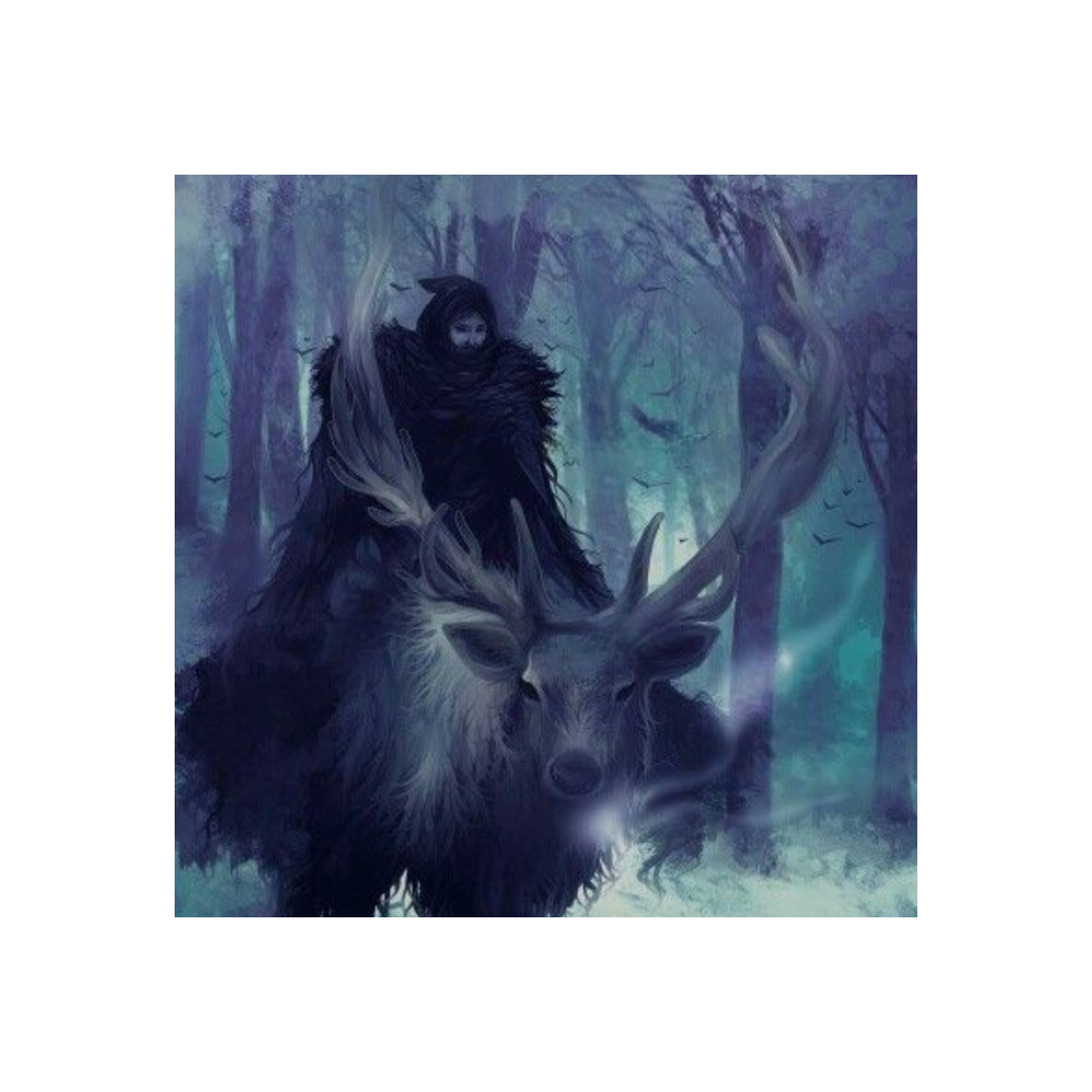
🐦⬛🦌No, Coldhands is not Dunk for the love of God! What's the deal, though? ~~ Chapters ~~ 00:00 - Who is Coldhands? 05:19 - Does his Identity really matter? 10:30 - Coldhands: Beric of the North 26:45 - Did Bran resurrect Coldhands? 48:47 - Set up for Jon’s resurrection? 53:00 - Outro ----------------------------------------------------------------------------------------------------------------------- 📚Sources: ASoIaF book series, The World of Ice and Fire, The Hedge Knight Novels, Fire & Blood. ----------------------------------------------------------------------------------------------------------------------- 🌐Social Media & Podcast: • Instagram: https://www.instagram.com/company_of_the_cat/ • Podcast Feed: https://media.rss.com/cotc/feed.xml ☕Support the Channel: [Buy Me a Coffee](https://bmc.link/CompotCat) ----------------------------------------------------------------------------------------------------------------------- 🎬Credits: • Coldhands by Alcoholic Ratle Snake 🎵Music: • Skyline Vibes by Aylex – https://freetouse.com/music ----------------------------------------------------------------------------------------------------------------------- #asoiaf #asongoficeandfire #thewindsofwinter 🔍Keywords: Coldhands identity theory, what is Coldhands, Coldhands explained, Bran Stark beyond the wall, Bloodraven theory, greenseer magic, ASOIAF magic explained, Children of the Forest magic, The Others explained, Winds of Winter theories, Theory, Analysis, ASOIAF, A Song of Ice and Fire, asoiaf theories, Coldhands, Coldhands theory, Bran Stark, Children of the Forest, Three-Eyed Crow, Bloodraven, The Wall, Beyond the Wall, The Others, White Walkers, wights, Old Gods, greenseers, Night's Watch, skinchanging, warg, The Winds of Winter, TWOW, George R R Martin, ASOIAF lore, ASOIAF mystery, Jon Snow, Beric Dondarrion
1. Who is Coldhands? Who is Coldhands? It’s a very common question, and a frequent point of discussion among fans of A Song of Ice and Fire. Coldhands is a figure from beyond the Wall, first encountered in A Storm of Swords, when he saves Sam and Gilly from wights in the Haunted Forest. [“Brother!” The shout cut through the night, through the shrieks of a thousand ravens. Beneath the trees, a man muffled head to heels in mottled blacks and greys sat astride an elk. “Here,” the rider called. A hood shadowed his face. He’s wearing blacks. Sam urged Gilly toward him. The elk was huge, a great elk, ten feet tall at the shoulder, with a rack of antlers near as wide. The creature sank to his knees to let them mount. “Here,” the rider said, reaching down with a gloved hand to pull Gilly up behind him. Then it was Sam’s turn. “My thanks,” he puffed. Only when he grasped the offered hand did he realize that the rider wore no glove. His hand was black and cold, with fingers hard as stone.] Coldhands is one of the most interesting minor characters in the novels, surrounded by countless theories, mostly regarding his identity. The name “Coldhands” is given to him by Sam; we never learn his real one. We don’t see his face clearly either, but his clothing and the fact that he calls Sam “brother” suggest he was a member of the Night’s Watch. He rides a massive elk, large enough to carry him, Sam, and Gilly at the same time, and he’s followed by hundreds of ravens that attack the wights and appear to act under his command. We next hear of Coldhands in Bran’s chapter at the Nightfort, later in the same book, which, if anyone cares, is one of my favorite chapters in the entire series. [“How did you get through the Wall?” Jojen demanded as Sam struggled to his feet. “Does the well lead to an underground river, is that where you came from? You’re not even wet . . . ” “There’s a gate,” said fat Sam. “A hidden gate, as old as the Wall itself. The Black Gate, he called it.” The Reeds exchanged a look. “We’ll find this gate at the bottom of the well?” asked Jojen. Sam shook his head. “You won’t. I have to take you.” “Why?” Meera demanded. “If there’s a gate . . . ” “You won’t find it. If you did it wouldn’t open. Not for you. It’s the Black Gate.” Sam plucked at the faded black wool of his sleeve. “Only a man of the Night’s Watch can open it, he said. A Sworn Brother who has said his words.” “He said.” Jojen frowned. “This . . . Coldhands?” “That wasn’t his true name,” said Gilly, rocking. “We only called him that, Sam and me. His hands were cold as ice, but he saved us from the dead men, him and his ravens, and he brought us here on his elk.” “His elk?” said Bran, wonderstruck. “His elk?” said Meera, startled. “His ravens?” said Jojen. “Hodor?” said Hodor. “Was he green?” Bran wanted to know. “Did he have antlers?” The fat man was confused. “The elk?” “Coldhands,” said Bran impatiently. “The green men ride on elks, Old Nan used to say. Sometimes they have antlers too.” “He wasn’t a green man. He wore blacks, like a brother of the Watch, but he was pale as a wight, with hands so cold that at first I was afraid. The wights have blue eyes, though, and they don’t have tongues, or they’ve forgotten how to use them.” The fat man turned to Jojen. “He’ll be waiting. We should go. Do you have anything warmer to wear? The Black Gate is cold, and the other side of the Wall is even colder. You—” “Why didn’t he come with you?” Meera gestured toward Gilly and her babe. “They came with you, why not him? Why didn’t you bring him through this Black Gate too?” “He . . . he can’t.” “Why not?” “The Wall. The Wall is more than just ice and stone, he said. There are spells woven into it . . . old ones, and strong. He cannot pass beyond the Wall.” It grew very quiet in the castle kitchen then. Bran could hear the soft crackle of the flames, the wind stirring the leaves in the night, the creak of the skinny weirwood reaching for the moon. Beyond the gates the monsters live, and the giants and the ghouls, he remembered Old Nan saying, but they cannot pass so long as the Wall stands strong. So go to sleep, my little Brandon, my baby boy. You needn’t fear. There are no monsters here. “I am not the one you were told to bring,” Jojen Reed told fat Sam in his stained and baggy blacks. “He is.”] From the moment Sam and Gilly meet him, it’s obvious something is off. In this chapter, we as readers become certain that Coldhands is a dead former brother of the Night’s Watch. He communicates with the ravens and shares a close bond with the enormous elk he rides. [Some would fly to the ranger and mutter at him, and it seemed to Bran that he understood their quorks and squawks. They are his eyes and ears. They scout for him, and whisper to him of dangers ahead and behind.] Coldhands leads them to the Black Gate beneath the Nightfort and shows them how to open it so they can pass the Wall, a gate he himself cannot pass through. He found Sam and Gilly because he was already heading toward the Wall. He was sent by someone, later revealed to be Bloodraven, the last greenseer, to find Bran and guide him safely north. The last time we see Coldhands, in A Dance with Dragons, Leaf confirms what the text has been building toward: Coldhands is dead, and has been for a long time. Somehow, though, he has retained his consciousness. It’s also heavily implied he was killed by wights. [Bran shivered again. “The ranger …” “He cannot come.” “They’ll kill him.” “No. They killed him long ago. Come now. It is warmer down deep, and no one will hurt you there. He is waiting for you.”] 2. Does his Identity really matter? Throughout the journey to Bloodraven’s cave, we see more of Coldhands, and we watch Bran and the others slowly realize something is wrong. What’s particularly interesting is that the central mystery is his nature and not really his identity. Whenever questions about his name arise, they turn into questions about what he is. ["There's been too much going around," Meera insisted, "and too many secrets. I don't like it. I don't like him. And I don't trust him. Those hands of his are bad enough. He hides his face, and will not speak a name. Who is he? What is he? Anyone can put on a black cloak. Anyone, or any thing. He does not eat, he never drinks, he does not seem to feel the cold." It's true. Bran had been afraid to speak of it, but he had noticed. Whenever they took shelter for the night, while he and Hodor and the Reeds huddled together for warmth, the ranger kept apart. Sometimes Coldhands closed his eyes, but Bran did not think he slept. And there was something else … "The scarf." Bran glanced about uneasily, but there was not a raven to be seen. All the big black birds had left them when the ranger did. No one was listening. Even so, he kept his voice low. "The scarf over his mouth, it never gets all hard with ice, like Hodor's beard. Not even when he talks." Meera gave him a sharp look. “You’re right. We’ve never seen his breath, have we?” “No.” A puff of white heralded each of Hodor’s hodors. When Jojen or his sister spoke, their words could be seen too. Even the elk left a warm fog upon the air when he exhaled. “If he does not breathe …”] The narrative consistently draws attention not to who he was in life, but to his condition — his behavior, his physical appearance, and the ways he differs from both the living and the dead we’ve seen so far. Coldhands is a ranger of the Night’s Watch who has been dead for quite some time and, if Leaf is correct, was killed by wights. He appears to have retained his mind. And he smells of cold and death, much like other ice wights. [Summer growled at him, his fur bristling. The direwolf did not like the way that Coldhands smelled. Dead meat, dry blood, a faint whiff of rot. And cold. Cold over all.] [Jon had no time to be afraid. He threw himself forward, shouting, bringing down the longsword with all his weight behind it. Steel sheared through sleeve and skin and bone, yet the sound was wrong somehow. The smell that engulfed him was so queer and cold he almost gagged.] Throughout Bran’s journey with him, what’s emphasized is how abnormal his behavior is. He does not eat. He does not seem to sleep. They never see him breathe. These are details that Bran and Meera, understandably, find very unsettling. [Just ahead, the elk wove between the snowdrifts with his head down, his huge rack of antlers crusted with ice. The ranger sat astride his broad back, grim and silent. Coldhands was the name that the fat boy Sam had given him, for though the ranger's face was pale, his hands were black and hard as iron, and cold as iron too.] And yet, every time his name or identity comes up, it becomes clear that this isn’t the important thing. What matters is not who he used to be, but that he is; he has almost all the traits an ice wight has, minus the blue eyes and the lost consciousness. Coldhands never denies being dead. When confronted, he explains the state of a dead body in a way that leaves little room for interpretation. [You killed them. You and the ravens. Their faces were all torn, and their eyes were gone." Coldhands did not deny it. "They were your brothers. I saw. The wolves had ripped their clothes up, but I could still tell. Their cloaks were black. Like your hands." Coldhands said nothing. "Who are you? Why are your hands black?" The ranger studied his hands as if he had never noticed them before. "Once the heart has ceased to beat, a man's blood runs down into his extremities, where it thickens and congeals." His voice rattled in his throat, as thin and gaunt as he was. "His hands and feet swell up and turn as black as pudding. The rest of him becomes as white as milk.] Bran still fears that the wights might kill him, which is interesting because Bran explicitly calls him a monster. [He's dead." Bran could taste the bile in his throat. "Meera, he's some dead thing. The monsters cannot pass so long as the Wall stands and the men of the Night's Watch stay true, that's what Old Nan used to say. He came to meet us at the Wall, but he could not pass. He sent Sam instead, with that wildling girl.] That concern only makes sense if Bran still holds some hope that Coldhands is not entirely dead. And that’s the point: Coldhands does not behave like an ordinary ice wight. He exists somewhere in between. More than any name or theory about his former life, that in-between state seems to be what actually matters. ["Jojen, did you dream this?" Meera asked her brother. "Who is he? What is he? What do we do now?"] How can a seemingly ice wight retain consciousness? If something like this is possible, it’s incredibly important for the story to establish, far more important than a past identity. 3. Coldhands: Beric of the North It would be inaccurate to say we haven’t seen something similar before, because we have. Kind of. Beric Dondarrion is, in many ways, more similar to Coldhands than the ice wights beyond the Wall. He too is a wight who retains free will and consciousness, and he serves a similar narrative purpose. Beric exists largely to establish the mechanics of resurrection. The subtle, vague magic George tends to like. His magic is not clear or by the numbers, but it has rules. It has consequences. It costs something. [“Yeah, if someone comes back from being dead, especially if they suffer a violent, traumatic death, they’re not going to come back as nice as ever.” That’s what I was trying to do, and am still trying to do, with the Lady Stoneheart character. Right. And poor Beric Dondarrion, who was set up as the foreshadowing of all this, every time he’s a little less Beric. His memories are fading, he’s got all these scars, he’s becoming more and more physically hideous, because he’s not a living human being anymore. His heart isn’t beating, his blood isn’t flowing in his veins, he’s a wight, but a wight animated by fire instead of by ice, now we’re getting back to the whole fire and ice thing.] Coldhands seems to function in a very similar way. Both men belong to brotherhoods. Both wear black. And both are acting in death on orders given by others. The imagery of Beric is even compared in text, to the Night’s Watch. ["Got no such man here," Yoren shouted back. "Only some lads for the Watch. Got no part o' your war." He hoisted up the staff, so they could all see the color of his cloak. "Have a look. That's black, for the Night's Watch." "Or black for House Dondarrion," called the man who bore the enemy banner. Arya could see its colors more clearly now in the light of the burning town: a golden lion on red. "Lord Beric's sigil is a purple lightning bolt on a black field."] Beric’s memories fade with each resurrection, yet his purpose remains: fulfilling Ned Stark’s command. Coldhands likewise, seemingly operates towards a goal: safely guiding Bran to the cave. Both serve as transitional figures, escorting Stark children to the next stage of their journeys. Both are dead men walking who retain agency. Their physical descriptions mirror each other as well. [Lord Beric himself did not eat. Arya had never seen him eat, though from time to time he took a cup of wine. He did not seem to sleep, either. His good eye would often close, as if from weariness, but when you spoke to him it would flick open again at once. The Marcher lord was still clad in his ratty black cloak and dented breastplate with its chipped enamel lightning. He even slept in that breastplate. The dull black steel hid the terrible wound the Hound had given him, the same way his thick woolen scarf concealed the dark ring about his throat. But nothing hid his broken head, all caved in at the temple, or the raw red pit that was his missing eye, or the shape of the skull beneath his face.] Beric does not eat. He does not sleep. He hides fatal wounds beneath his armor and scarf. Coldhands similarly hides his face and neck. [The ranger killed a pig. Coldhands stood beside the door, a raven on his arm, both staring at the fire. Reflections from the flames glittered off four black eyes. He does not eat, Bran remembered, and he fears the flames.] We often overanalyze this concealment as a mystery meant to hide identity. I think it serves the same purpose as Beric’s armor: to hide the wound that proves he is dead. There are literal ice zombies beyond the Wall. Hiding visible signs of death is practical. It’s hard to imagine Sam, Bran, Meera, or anyone else willingly following someone who openly looks like a corpse. Even when confronted, Coldhands never denies being dead, but he stays vague enough and refuses to lower the scarf. I doubt he’s hiding who he is, because what’s the point of that? Why, and how would anyone even recognize him as a former member of the Watch? Even if he had once been a well-known or famous member of the Watch, why would anyone know what he looked like? The only person the characters might realistically recognize would be Benjen, but GRRM himself has dismissed that theory. He’s most likely just hiding how he died. And to add to that, as the biggest Beric Dondarrion fan alive, I fangirl like Jeyne Poole at the tourney every time he appears on page. Beric’s original identity barely matters. He could have been any lord or knight, and his story would function just the same. What defines him happens after death. He is the Wisp o' the wood. The Scarecrow Knight. The Lord of Corpses. I doubt Coldhands is any different. He is Coldhands. I don’t think we are meant to learn his past identity, or to care. We have two Stark children. Two wights. One south of the Wall, one north. One fire, one ice. Both functioning as guides. Beric is, in many ways, a beautifully written plot device, escorting Arya through the Riverlands, helping Arya and us to understand and learn pieces of the wider political and personal history of Westeros, and most importantly, preparing both characters and, again, us readers to understand the whole resurrection thingy, the magic involved, and Lady Stoneheart. As Martin himself said, Beric was set up as the foreshadowing for all this. Coldhands may serve a similar role. Wights can be resurrected in different ways, which is why there are so many theories surrounding Jon’s eventual return. In the show, Jon was simply Beric-ed. Melisandre brings him back, clean and simple, removing almost all the lore and logic the novels build around resurrections. Book Jon will likely not return through a single ritual. His case is quite unique and will most likely involve multiple mechanisms, considering all the things we know about skinchanging and second lives and whatnot. Beric is resurrected by Thoros, and we are told that only death can pay for life. In Beric’s case, the sacrifice is himself, as it seems like his memories, his identity, his soul are slowly burning away. [Can I dwell on what I scarce remember? I held a castle on the Marches once, and there was a woman I was pledged to marry, but I could not find that castle today, nor tell you the color of that woman's hair. Who knighted me, old friend? What were my favorite foods? It all fades. . . “Fire consumes. It consumes, and when it is done there is nothing left. Nothing.] Beric does retain agency, though. The fire inside him is still his. The life Thoros breathes back into him becomes something Beric carries. We know this because he is able to give it away. He consciously passes the flame of life, his flame, to resurrect Catelyn. That final act is his true death. It’s also something Thoros is firmly against. Catelyn had been dead too long. Her body had lain in the river for 3 days. She should not have come back. ["Lady Catelyn?" Tears filled her eyes. "They said . . . they said that you were dead." "She is," said Thoros of Myr. "The Freys slashed her throat from ear to ear. When we found her by the river she was three days dead. Harwin begged me to give her the kiss of life, but it had been too long. I would not do it, so Lord Beric put his lips to hers instead, and the flame of life passed from him to her. And . . . she rose. May the Lord of Light protect us. She rose."] That is definitely not how ordinary ice wights function, the ordinary ones, not Coldhands. Coldhands is not a regular wight. He’s a cool wight. Ordinary ice wights move stiffly, clumsily, kind of uncoordinated. They appear to remember things, but they are not free to act on those memories. They feel like puppets. The text strongly suggests the Others control them through necromancy. [Sam cleared his throat. "S-sire. The dagger . . . the dragonglass only shattered when I tried to stab a wight." Melisandre smiled. "Necromancy animates these wights, yet they are still only dead flesh. Steel and fire will serve for them. The ones you call the Others are something more." "Demons made of snow and ice and cold," said Stannis Baratheon. "The ancient enemy. The only enemy that matters."] [Tormund turned back. "You know nothing. You killed a dead man, aye, I heard. Mance killed a hundred. A man can fight the dead, but when their masters come, when the white mists rise up … how do you fight a mist, crow? Shadows with teeth…] The Others themselves are frequently referred to as masters. The language and imagery used for the masters and slavers in Essos often mirrors the Other, which feels very deliberate. And the wights do not appear completely empty, despite what Melisandre says. They seem as if they are being controlled, yes. But not hollow. [The cold winds are rising, and men go out from their fires and never come back ... or if they do, they're not men no more, but only wights, with blue eyes and cold black hands.” “You'd best pray it's a wildling blade that kills me, though. The ones the Others kill don't stay dead ... and they remember.” “Septon Cellador paled. "Seven save us." Wine dribbled down his chin in a red line. "Lord Commander, wights are monstrous, unnatural creatures. Abominations before the eyes of the gods. You … you cannot mean to try to talk with them?" "Can they talk?" asked Jon Snow. "I think not, but I cannot claim to know. Monsters they may be, but they were men before they died. How much remains? The one I slew was intent on killing Lord Commander Mormont. Plainly it remembered who he was and where to find him." Maester Aemon would have grasped his purpose, Jon did not doubt; Sam Tarly would have been terrified, but he would have understood as well. "My lord father used to tell me that a man must know his enemies. We understand little of the wights and less about the Others. We need to learn."] The wights do not seem completely empty. They remember people they knew. They remember where to find them. Something remains. They do not choose. But they remember. We don’t know how much remains. How much memory? How much awareness? How much of the soul? If the Others are the masters and the wights function as slaves, then maybe they command the body while something inside it still exists. Some piece of memory. Some sense of self. Not free, but not erased either. The Dothraki myth about the end of the world also mentions something that I think fits and is a hint about the Others and the wights. It sounds like it is the same apocalyptic monomyth we see in ASoIaF through a Dothraki lens. [Down in the Shadow Lands beyond Asshai, they say there are oceans of ghost grass, taller than a man on horseback with stalks as pale as milkglass. It murders all other grass and glows in the dark with the spirits of the damned. The Dothraki claim that someday ghost grass will cover the entire world, and then all life will end.] That description sounds very similar to the Others. Pale as milk glass. Slender. Thrives in the dark and wants to end all life. And the glow is connected to trapped spirits. Maybe the wights, with their blue glowing eyes and black hands, are not empty. Maybe they are trapped in there. Maybe the Others are called masters because they control the bodies, but the souls might still be inside. Aware. Unable to act. Damned to serve them in ending life on earth. Unable to rest even in death. And if that is true, then the horror of the wights is not that they are monsters. It’s that they might still be people to some extent. “Monsters they may be, but they were men before they died. How much remains?” If this is the case, their whole existence gets recontextualized, and Coldhands becomes even more significant. He resembles an ice wight in nearly every way, yet he retains control of himself, much like Beric. He seems to be kind of out of it sometimes, like when they pointed out his hands and was looking at them like he had never seen them before, but he seems to be in control of himself, he looks similarly “resurrected” to Beric, and in the scene where they confront him, he actually says something very similar to what Beric said to Thoros. [Can I dwell on what I scarce remember? I held a castle on the Marches once, and there was a woman I was pledged to marry, but I could not find that castle today, nor tell you the color of that woman's hair. Who knighted me, old friend? What were my favorite foods? It all fades. Sometimes I think I was born on the bloody grass in that grove of ash, with the taste of fire in my mouth and a hole in my chest. Are you my mother, Thoros?] Beric here compares Thoros to a mother, who creates life, brings forth a child, granted in a very Frankenstein’s monster type of way, that fits very well here. Coldhands also talks about his situation as if someone else created him in his new state. [“Who are you? Why are your hands black?” The ranger studied his hands as if he had never noticed them before. “Once the heart has ceased to beat, a man’s blood runs down into his extremities, where it thickens and congeals.” His voice rattled in his throat, as thin and gaunt as he was. “His hands and feet swell up and turn as black as pudding. The rest of him becomes as white as milk.” Meera Reed rose, her frog spear in her hand, a chunk of smoking meat still impaled upon its tines. “Show us your face.” The ranger made no move to obey. “He’s dead.” Bran could taste the bile in his throat. “Meera, he’s some dead thing. The monsters cannot pass so long as the Wall stands and the men of the Night’s Watch stay true, that’s what Old Nan used to say. He came to meet us at the Wall, but he could not pass. He sent Sam instead, with that wildling girl.” Meera’s gloved hand tightened around the shaft of her frog spear. “Who sent you? Who is this three-eyed crow?” “A friend. Dreamer, wizard, call him what you will. The last greenseer.” The longhall’s wooden door banged open. Outside, the night wind howled, bleak and black. The trees were full of ravens, screaming. Coldhands did not move. “A monster,” Bran said. The ranger looked at Bran as if the rest of them did not exist. “Your monster, Brandon Stark.” “Yours,” the raven echoed, from his shoulder. Outside the door, the ravens in the trees took up the cry, until the night wood echoed to the murderer’s song of “Yours, yours, yours.”] He speaks, too, as someone who was made this way by someone else. Just as Thoros created the lightning lord, someone created Coldhands in his current state. And the text here seems to point toward Bran, not Bloodraven. The whole conversation works almost like a double entendre. Coldhands is Bran’s monster because he exists to help him, to guide him, but the dialogue, like much of Coldhands’ characterization, mirrors Beric’s in how distinctly Frankenstein-esque it feels. Reading with that comparison in mind, it starts to look very much like Bran himself may have had something to do with Coldhands’ resurrection. And in both cases, an uncomfortable question about resurrection is raised. Even if the resurrected retain agency, how consensual is the act of bringing someone back to life? By the end, Beric looks tired. Coldhands feels similarly tired. He is dedicated to his purpose, but nothing about him suggests peace in being undead. And so we circle back to the real questions surrounding Coldhands: Not who he is, but why he is. Why does he exist in this state? How is it possible? If he functions as foreshadowing, as Beric did for Catelyn, then he may be there to set up Jon. And considering everything we know about skinchangers, second lives, wights, icy or fiery, and greenseers, that would make the most sense. 4. Did Bran resurrect Coldhands? Characters like Beric, like Varamyr function as very interesting, fully fleshed-out plot devices. And I think Coldhands is in the same category. They exist primarily to help us understand the lore and the mechanics of magic, sometimes to guide or assist our main characters, while setting up future events. George is extremely good at doing this, in my opinion. Because as much as he keeps expanding the world of A Song of Ice and Fire, Martin is clearly more comfortable writing shorter stories and novellas. In a single prologue, with a character we barely know, or care about, Varamyr, he manages to put in an incredible amount of soul while essentially delivering a massive lore dump. But because of the format, because it’s “Show, don’t tell”, the magic remains mysterious, unsettling, and interesting while still being very much consistent. In the same novel, A Dance with Dragons, in the cave, they explain second lives directly to Bran. On paper, that chapter is basically a wiki page about skinchanging and death. But it works because we’ve already experienced it firsthand through Varamyr. Bran’s lesson only lands because we’ve already felt what dying as a warg looks like. We watched Varamyr slip from his body. We felt how overwhelming and frightening and strangely cathartic that moment was as his consciousness dissolved into the world around him. The terror and the freedom exist at the same time. [The white world turned and fell away. For a moment it was as if he were inside the weirwood, gazing out through carved red eyes as a dying man twitched feebly on the ground and a madwoman danced blind and bloody underneath the moon, weeping red tears and ripping at her clothes. Then both were gone and he was rising, melting, his spirit borne on some cold wind. He was in the snow and in the clouds, he was a sparrow, a squirrel, an oak. A horned owl flew silently between his trees, hunting a hare; Varamyr was inside the owl, inside the hare, inside the trees. Deep below the frozen ground, earthworms burrowed blindly in the dark, and he was them as well. I am the wood, and everything that's in it, he thought, exulting. A hundred ravens took to the air, cawing as they felt him pass. A great elk trumpeted, unsettling the children clinging to his back. A sleeping direwolf raised his head to snarl at empty air. Before their hearts could beat again he had passed on, searching for his own, for One Eye, Sly, and Stalker, for his pack. His wolves would save him, he told himself.] Without Varamyr’s prologue, Bran III wouldn’t work nearly as well. Once we’ve seen that death, and once Brynden and the singers explain second lives, Jon’s death begins to feel very different. It stops looking like an ending and starts looking like a gateway. A transition point. A way to communicate with Bran, with the weirwoods, maybe even with Ned, like Bran briefly did in the crypts. [“You must put these dreams aside, they will only break your heart.” The mention of dreams reminded him. “I dreamed about the crow again last night. The one with three eyes. He flew into my bedchamber and told me to come with him, so I did. We went down to the crypts. Father was there, and we talked. He was sad.” “And why was that?” Luwin peered through his tube. “It was something to do about Jon, I think.” The dream had been deeply disturbing, more so than any of the other crow dreams.] Unlike Beric, Jon’s memories and sense of self may remain largely intact, because his soul has somewhere safe to go: Ghost. Maybe because his soul is guarded inside Ghost, even if he takes some time to get awake, and if I had to guess I am gonna say he is gonna remain dead for three days, because ΣΥΜΒΟΛΙΣΜΟΣ, even if it’s gonna be largely traumatic and it will be, no doubt, it might not have the same consequences it has on Cat for example. The text never outright tells us this. But by this point, we most likely understand it. Beric serves this narrative function for Catelyn. When Lady Stoneheart appears, we don’t need long explanations about what resurrection does to a person. We’ve already seen it happen. We know the cost. We know how damaging repeated resurrection was for Beric, and Catelyn died violently, full of grief and rage, and remained dead for days before returning. The story doesn’t need to explain this again. It trusts us to connect the pieces. In Jon’s case, with Beric, Varamyr, and Lady Stoneheart, we have many of the pieces, just not presented in order yet. But most of the groundwork is already done. We understand second lives. We understand resurrection. We understand souls lingering after death. The remaining question is how will his body be restored, and how will his soul be guided safely back from Ghost. And this is where I think Coldhands might be very important. If Brynden, or more likely Bran, had something to do with Coldhands retaining his consciousness inside a dead body, then Coldhands may be the key to how it is possible for Jon to return to his own body after his death. With Bran’s help. Varamyr’s prologue establishes that, in death, consciousness seems to scatter into the natural world itself. Even non-skinchangers appear to return to nature; they simply lack the ability to hold onto a second life. ["Your little one is with the gods now," the woods witch told his mother, as she wept. "He'll never hurt again, never hunger, never cry. The gods have taken him down into the earth, into the trees. The gods are all around us, in the rocks and streams, in the birds and beasts. Your Bump has gone to join them. He'll be the world and all that's in it."] That moment of death, when the soul is everywhere at once, even inside the trees, feels like the perfect moment for a greenseer to reach and communicate with someone. Like Brynden reached Bran and helped him fly, maybe Bran will be able to reach Jon and play the role of a guide himself. Since I am not sure how to explain my thought process, let’s say a skinchanger dies north of the Wall. What normally happens is, at the moment of death, the skinchanger’s consciousness escapes the dying body and flees into the animal with which they share the strongest bond, after they pass through the nature that surrounds them. The human soul survives there and slowly merges with the animals’. So the soul is not gone; it is displaced. ["Someone else was in the raven," he told Lord Brynden, once he had returned to his own skin. "Some girl. I felt her." "A woman, of those who sing the song of earth," his teacher said. "Long dead, yet a part of her remains, just as a part of you would remain in Summer if your boy's flesh were to die upon the morrow. A shadow on the soul. She will not harm you."] With ice wights, the text strongly implies that something might remain inside them; some piece of the soul is trapped or overridden, controlled by the Others. In Beric’s case, his soul is repeatedly dragged back into his corpse by Thoros. Each resurrection damages his soul more and more, because he keeps being forced back to life. And the more the soul is out of the body and the more the body is damaged the worse the situation gets, which is the case with Catelyn. But, what if the soul never leaves for death wholly? What if: the body is reanimated through magic ice or fire, while the original soul already survives elsewhere, inside its bonded animal? For a time, that soul is still partly human. Before merging completely with the animal, the person remains there, thinking, remembering, existing as themselves inside the animal. [His wolves would save him, he told himself. That was his last thought as a man. True death came suddenly; he felt a shock of cold, as if he had been plunged into the icy waters of a frozen lake. Then he found himself rushing over moonlit snows with his packmates close behind him. Half the world was dark. One Eye, he knew. He bayed, and Sly and Stalker gave echo. When they reached the crest the wolves paused. Thistle, he remembered, and a part of him grieved for what he had lost and another part for what he’d done.] And we even get confirmation that traces of consciousness can linger long after death. Bran senses another presence inside a raven, a singer long dead, still there. So some piece of soul persists. Fragments remain. Which makes me wonder. Skinchanging is ultimately a psychic ability. It’s spiritual before it is physical, actually, the strongest skinchangers and greenseers have been mentioned to have poor physical health many times. Varamyr when younger was sickly, Leaf mentioned that the greenseers were always sickly individuals but with strong minds. Consciousness moving from one body into another is already something the series establishes as possible. So what happens if a skinchanger is powerful enough, or has help, a guide? Could they move their soul even after their original body has died? In theory, the answer could be yes. Varamyr actually attempts something very similar to this at the moment of his death. Realizing his body is failing, he tries to abandon it entirely and force his consciousness into another human being. The only reason he fails is not that the act itself is impossible, but because Thistle fights him back tooth and nail, literally. The text makes it very clear that the limitation to skinchanging isn’t magical capability, it’s resistance and how ethical someone is, these unwritten rules that Haggon was calling abominations. [Abomination. That had always been Haggon's favorite word. Abomination, abomination, abomination. To eat of human meat was abomination, to mate as wolf with wolf was abomination, and to seize the body of another man was the worst abomination of all. Haggon was weak, afraid of his own power. He died weeping and alone when I ripped his second life from him.] And we already see another version of this with Bran and Hodor. Bran overrides Hodor and pilots his body against his will. It works precisely because Hodor cannot meaningfully resist him. So the precedent exists. A human mind can enter another human body. A consciousness can survive outside its original flesh. A soul can persist after death inside an animal. I imagine that if a skinchanger is strong enough and is also no stranger to human skinchanging, they could even pull off what Varamyr tried to do while dying, skinchange into another human for their second life. So imagine… A skinchanger dies, their soul passes into their bonded animal for its second life. That means the soul does not scatter around, but instead continues existing inside another living being. Meanwhile, the skinchanger’s original body is reanimated and preserved through magic; ice magic, fire magic. We know both methods can restore un-life to a corpse. Beric’s soul returns to a dead body, which also does not properly decay; it remains trapped in an undead state. Cat, Coldhands, and other Ice wights appear similar in that respect. The difference here is that the soul has already escaped, inside something alive. The soul is still active, still conscious to some extent, but now housed inside another creature. Since skinchanging is fundamentally a psychic or spiritual power, could that soul return? Could a skinchanger, in essence, skinchange back into their own original body? Based on what the series shows us, in theory, it could be possible. Unlike Thistle or Hodor, that body would offer no resistance. It is the skinchanger’s own flesh, and there isn’t something left inside to fight back. What would likely be required is an exceptionally powerful skinchanger, or perhaps outside assistance, a guiding push to reconnect spirit and corpse. If something like this can happen: a skinchanger dies, their soul survives within their animal, let’s say the Others reanimate the abandoned body along with all the other bodies around, and later the spirit returns to inhabit that empty vessel. The outcome would be something very much like Coldhands: physically an ice wight, but mentally relatively intact, his own spirit, his own will. If such a process is possible, it could explain Coldhands’ condition very well with minimal background, because even though I sound batshit crazy sayin all this, we have seen most of it on our pages, the only thing we would need is Coldhands ' return, pretty much. Something that wouldn’t be out of line to see during Bran’s training. For accuracy’s sake, we should mention that we do not know for certain that Coldhands is a skinchanger, but the text heavily supports the idea. Coldhands can speak the Old Tongue and/or the Language of the Singers. He is able to communicate with the ravens that follow him. According to Leaf, they speak in the same way the Singers do. He also clearly has a close relationship with his elk, While we never explicitly see him skinchange into the animal, the familiarity between them mirrors the bonds seen between skinchangers and their bonded animals. He was familiar enough to make a eulogy before they killed it. The ravens, I think, may actually be Bloodraven, a thousand eyes and one, helping guide them safely to the cave. Still, Bran repeatedly notices that Coldhands seems to understand them. [From a nearby oak a raven quorked, and Bran heard the sound of wings as another of the big black birds flapped down to land beside it. By day only half a dozen ravens stayed with them, flitting from tree to tree or riding on the antlers of the elk. The rest of the murder flew ahead or lingered behind. But when the sun sank low they would return, descending from the sky on night-black wings until every branch of every tree was thick with them for yards around. Some would fly to the ranger and mutter at him, and it seemed to Bran that he understood their quorks and squawks. They are his eyes and ears. They scout for him, and whisper to him of dangers ahead and behind.] This is a Blackwood thing. The imagery here feels deliberate. We see trees covered every night with hundreds of ravens, which closely mirrors the description of the Blackwood weirwood. ["The Brackens poisoned it," said his host. "For a thousand years it has not shown a leaf. In another thousand it will have turned to stone, the maesters say. Weirwoods never rot." "And the ravens?" asked Jaime. "Where are they?" "They come at dusk and roost all night. Hundreds of them. They cover the tree like black leaves, every limb and every branch. They have been coming for thousands of years. How or why, no man can say, yet the tree draws them every night." Blackwood settled in a high-backed chair.] Like the weirwood at Raventree, Oaks as well as many other trees, in the Haunted Forest are bare in winter, yet every night, ravens gather and cover the branches around Coldhands’ camp. It feels like the text is pushing toward this connection. His green connections are mostly narrative. Coldhands functions almost exactly like a Green Man from Old Nan’s stories. [In the south the last weirwoods had been cut down or burned out a thousand years ago, except on the Isle of Faces where the green men kept their silent watch.] ["There they forged the Pact. The First Men were given the coastlands, the high plains and bright meadows, the mountains and bogs, but the deep woods were to remain forever the children's, and no more weirwoods were to be put to the axe anywhere in the realm. So the gods might bear witness to the signing, every tree on the island was given a face, and afterward, the sacred order of green men was formed to keep watch over the Isle of Faces.] ["The green men ride on elks, Old Nan used to say. Sometimes they have antlers too."] That is essentially what Coldhands does. He serves as a silent guardian, protecting Bran Stark, communicating with the last greenseer, safeguarding the remaining Children of the Forest, and guiding travelers through forbidden lands. The difference between them is symbolic rather than functional. The Green Men are associated with life, greenery, and spring or summer. Coldhands exists in winter: grey, black, cold, and hard as iron. He is not green. But if Coldhands once possessed green powers, if he were a skinchanger who returned to inhabit his own body, then he becomes a winter reflection of the same archetype. Something I noticed is that Gilly describes Coldhands as cold as ice only once, and all other descriptions, especially during Bran’s journey, describe him as hard as stone and cold as iron. ["In that darkness, the Others came for the first time," she said as her needles went click click click. "They were cold things, dead things, that hated iron and fire and the touch of the sun, and every creature with hot blood in its veins.] Even though Coldhands is dead and cold, his imagery aligns more with a grim guardian, almost like the statues in the crypts, rather than something really associated with the Others. We know that Bran is now receiving his greenseer training. We also know that Coldhands was sent very deliberately to find him. He even tells Sam that he was there specifically to find Bran and accompany him to the cave; he knew they were at the Nightfort. The ravens and Coldhands himself outright say that he is Bran Stark’s monster. Because of that, Bran, Brynden, or both not having a hand in his current state seems unlikely. [“Winterfell. I was back in Winterfell. I saw my father. He’s not dead, he’s not, I saw him, he’s back at Winterfell, he’s still alive.” “No,” said Leaf. “He is gone, boy. Do not seek to call him back from death.” “I saw him.” Bran could feel rough wood pressing against one cheek. “He was cleaning Ice.” “You saw what you wished to see. Your heart yearns for your father and your home, so that is what you saw.” “A man must know how to look before he can hope to see,” said Lord Brynden. “Those were shadows of days past that you saw, Bran. You were looking through the eyes of the heart tree in your godswood. Time is different for a tree than for a man. Sun and soil and water, these are the things a weirwood understands, not days and years and centuries. For men, time is a river. We are trapped in its flow, hurtling from past to present, always in the same direction. The lives of trees are different. They root and grow and die in one place, and that river does not move them. The oak is the acorn, the acorn is the oak. And the weirwood … a thousand human years are a moment to a weirwood, and through such gates you and I may gaze into the past.” “But,” said Bran, “he heard me.” “He heard a whisper on the wind, a rustling amongst the leaves. You cannot speak to him, try as you might. I know. I have my own ghosts, Bran. A brother that I loved, a brother that I hated, a woman I desired. Through the trees, I see them still, but no word of mine has ever reached them. The past remains the past. We can learn from it, but we cannot change it.”] In Bran’s visions, we are told that time does not function the same way for the trees as for the humans. When Bran sees his father, he believes he has truly reached him, the scene most likely takes place when Eddard was cleaning Ice after the execution in the beginning of A Game of Thrones. Brynden explains that Ned only heard something like wind in the leaves, that the past cannot be changed, and that Bran cannot speak to him or change the past. But Leaf does not say you cannot call him back from death. She says, “Do not seek to call him back from death.” That sounds like a warning. And considering everything we already know, it does not feel out of the realm of possibilities. If something like this can be done, Coldhands is the perfect narrative example, someone who may already have been called back from death. By Bran. If Coldhands, while alive, was someone who understood the threat beyond the Wall and died fighting it, agreeing to return would make sense. Much like Beric Dondarrion, who continues to return in order to fulfill his duty. Beric’s resurrection is purpose-driven. After all he was a brother of the watch; that was his duty. In reality, we do not need Coldhands to be someone historically important for that. He only needs to have known what was at stake. And he did, because we are told he was killed by wights. The nature of the weirwoods, existing outside normal time, would allow someone from almost any era to be drawn back. After all, Bran’s vision of Ned already shows interaction with the past, and Leaf speaks as if calling someone back is something that could be attempted, and maybe should not be attempted. Could Coldhands have been one of the Raven’s Teeth who served Brynden Rivers? Possibly. To me is the most likely theory out there. But in retrospect, it hardly matters. Who even remembers the individual members of the Raven’s Teeth? He could just as easily have been a Night’s Watch brother from the current era or from another age, perhaps even a skinchanger, aware of his gift like Jon or Bran, or unknowingly gifted like Robb or Jon at the beginning. It’s unlikely such abilities were ever unheard of within the Watch, especially among northmen. His clothes are described as worn but not completely decayed; he could have easily taken clothing from other dead men, honestly. And that’s without even getting into the possibility that he might not have been a brother of the Watch at all, but learned about the passage and the Black Gate through Brynden or some other connection, not something I personally believe, I think he was a member, but still possible. “Long ago” is also extremely vague. It could mean a couple of years, decades, or centuries. Even 2-3 years would qualify as long ago when we’re talking about someone who died and yet still walks the world. Caring so much about his identity really just makes everything more complicated for no reason at all. And, similarly to Beric, the exact identity does not matter. What matters is the function. Beric being Beric Dondarrion instead of some honorable young knight from House Rogers would not fundamentally change his story. If we were to actually witness someone being called back from death through Bran’s training, seeing Coldhands returned or restored, it would explain how his condition works while establishing the mechanics needed for later. It would also provide a natural framework for Jon Snow’s return. 5. Set up for Jon’s resurrection? Jon’s time between death and resurrection will most likely become the story’s main space for learning… well, everything. It could allow him to communicate with Bran, possibly even with Ned or his mother. It might be the way Jon learns about his mother, discovers that Bran and Rickon are alive, and gains knowledge about the Others, the wights, and even the previous Long Night. If the method of return has already been established through Coldhands, then the story would not need to spend time explaining how Jon comes back, much like what happened with Catelyn. The groundwork would already be there. And it’s important to remember that Bran has already communicated with Jon through Ghost back in A Clash of Kings. At the time, we had no understanding of where Bran was, but after A Dance with Dragons, it’s clear that this is Bran, in the cave, reaching Jon across time. [Jon? The call came from behind him, softer than a whisper, but strong too. Can a shout be silent? He turned his head, searching for his brother, for a glimpse of a lean grey shape moving beneath the trees, but there was nothing, only . . . A weirwood. It seemed to sprout from solid rock, its pale roots twisting up from a myriad of fissures and hairline cracks. The tree was slender compared to other weirwoods he had seen, no more than a sapling, yet it was growing as he watched, its limbs thickening as they reached for the sky. Wary, he circled the smooth white trunk until he came to the face. Red eyes looked at him. Fierce eyes they were, yet glad to see him. The weirwood had his brother’s face. Had his brother always had three eyes? Not always, came the silent shout. Not before the crow. He sniffed at the bark, smelled wolf and tree and boy, but behind that there were other scents, the rich brown smell of warm earth and the hard grey smell of stone and something else, something terrible. Death, he knew. He was smelling death. He cringed back, his hair bristling, and bared his fangs. Don’t be afraid, I like it in the dark. No one can see you, but you can see them. But first you have to open your eyes. See? Like this. And the tree reached down and touched him. And suddenly he was back in the mountains, his paws sunk deep in a drift of snow as he stood upon the edge of a great precipice. Before him the Skirling Pass opened up into airy emptiness, and a long vee-shaped valley lay spread beneath him like a quilt, awash in all the colors of an autumn afternoon.] Bran is already able to reach Jon through dreams, through Ghost, through the weirwoods. He “touches” him and pushes his consciousness and Ghost’ back into the waking world in this dream, almost guiding his spirit out of that dream-space and back to reality. So the idea that Bran could eventually be the one to call Jon back from death doesn’t feel impossible at all. And considering Coldhands is explicitly called Bran Stark’s monster, it raises the possibility that something similar may have already happened once before, another dead brother of the Watch guided back into purpose by Bran. Bran acting as Jon’s guide after death, much like the three-eyed crow guided him while he lay in his coma, helping him return to his body while learning the truth about his mother, about Ned, and about how the supposedly most dishonorable act Ned ever committed may actually have been his most honorable and dangerous choice, if Jon truly is Lyanna’s son as everything points toward, it wouldn’t just make narrative sense. It would give those chapters real emotional weight. Bran being there, afraid for Jon. Jon seeing Bran again. Maybe even Ned… maybe Lyanna. Because Jon learning about his parentage through rumors or secondhand exposition would feel empty. There is just no way that’s how this happens, and if Jon learns the truth through a random “I heard a rumor, my lord,” I will personally be the first to tear George’s writing to shreds. This is something that needs to be emotional. We readers, and Jon have to live through that, experience it, not just told. That said, George does love making me cry whenever family feels are involved, so I trust him. Outro If you somehow finished this video mentally stable after that last half… thank you very much for watching. I really hope you enjoyed it and that at least some of the ideas here were interesting to you. While I was writing this script, things happened in the fandom: a commenter brought to my attention a certain theory connecting Coldhands and Dunk, and as of now even a couple of pretty big channels have uploaded videos about it. I’m… not going to comment on that theory. Thanks again for watching. Don’t forget to like and subscribe if you enjoyed the video and want to see more, and I’ll see you in the next one. Mmmbye!