
Company of the Cat · Cat...*meow*
🌋 Volcanoes & Fire Magic in ASOIAF 📝 Chapters: - 00:00 Intro - 01:24 Volcanoes in RL Mythology & in ASoIaF - 03:31 Volcanoes & Past Magical Civilizations - 19:16 Valyrian Magic & Speton Barth’s Theory - 28:13 Dragonbinder - 33:03 Hardhome & Skagos - 36:46 Winterfell's Hot Springs - 41:31 Outro ### 📚 Sources: - A Song of Ice and Fire book series - House of the Dragon HBO TV series - The World of Ice and Fire - Fire & Blood - The Hedge Knight Novels 🌐 Social Media & Podcast - Instagram: [Company of the Cat](https://www.instagram.com/company_of_the_cat/) - Facebook Page: [Company of the Cat](https://www.facebook.com/profile.php?id=100086601590664) - Podcast Feed: [Company of the Cat Feed](https://media.rss.com/cotc/feed.xml) - Support the Channel: [Buy Me a Coffee ☕](https://bmc.link/CompotCat) 🎨 Art Credits: - All screenshots and art that aren't mine are credited on screen - Maps & Sigils from [A Wiki Of Ice And Fire](https://awoiaf.westeros.org/) 📄 Scientific Papers: - [Supervolcanoes and Metallic Ore Deposits](https://doi.org/10.2113/GSELEMENTS.4.1.22) - [Formation of Tin Ore Deposits: A Reassessment](https://doi.org/10.1016/j.lithos.2020.105756) - [Global Fe–O Isotope Correlation Reveals Magmatic Origin of Kiruna-type Apatite-Iron-Oxide Ores](https://doi.org/10.1038/s41467-019-09244-4) ### 🚀 Keywords: #houseofthedragon #hotd #asongoficeandfire #asoiaf #awoiaf #winterfell #asshai #housegreyjoy #fireandblood #ironislands #volcanic #pyke #volcanoes #valyria #dragons #theory #whitewalkers #dragonstone #dragonglass
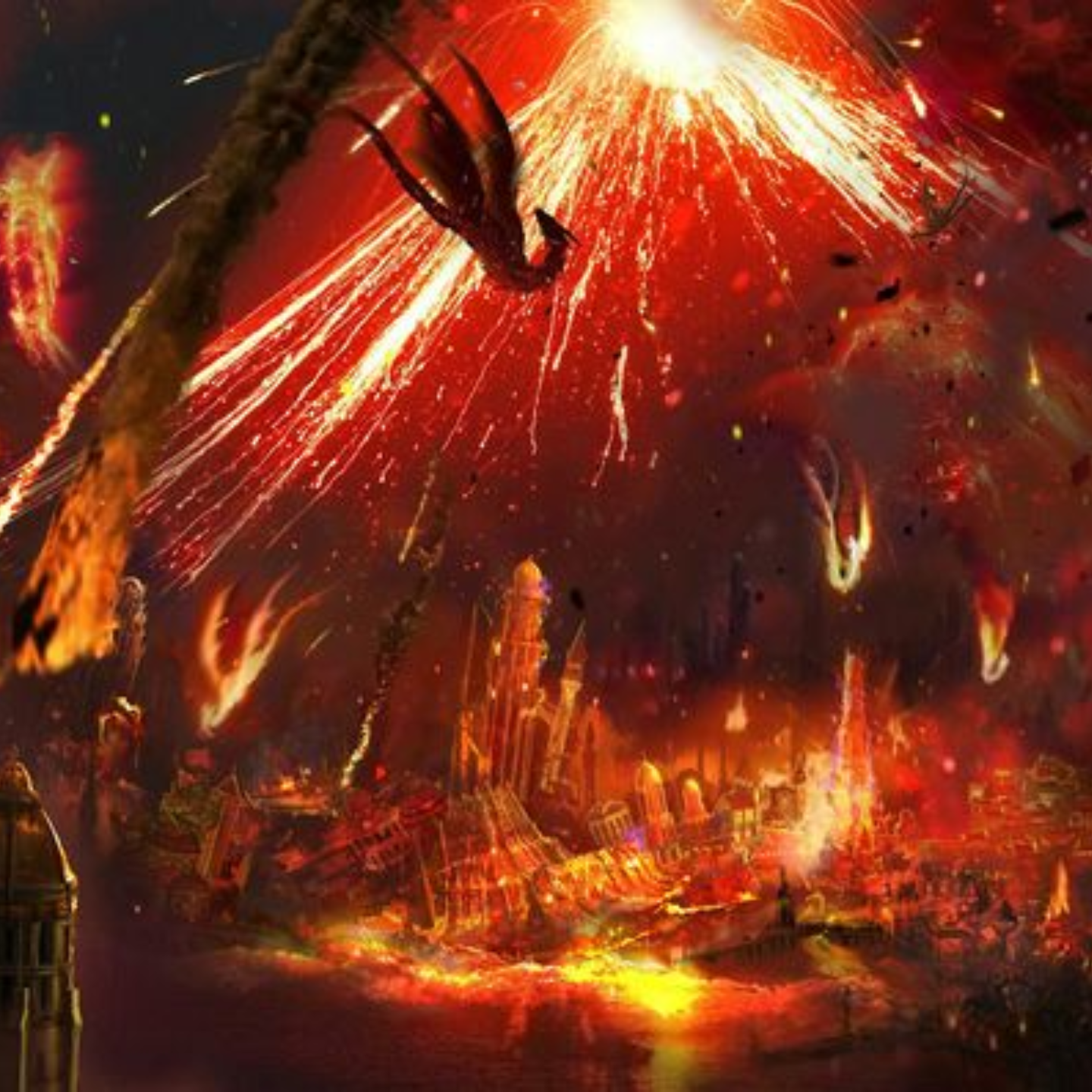
The Valyrian capital was built into a volcano, much like Dragonstone, and the dragonlords, the highest of the nobility, lived here, at the volcanic face, closest to the source of their magic and power. This was the Anogrion, where the blood mages worked their craft. Intro Welcome or welcome back to the CotC! In George R.R. Martin's universe, magic is deeply intertwined with natural elements such as animals, fire, plants, blood, light, darkness, water, the moon, stars and other celestial bodies. Fire magic, in particular, is one of the most prominent forms of magic we see in the series. Pyromancers are among the many types of magic practitioners in Asshai, the priests of R’hllor also practice it, and, of course, all Valyrian magic is rooted in fire and blood. If there's one thing besides dragons that defines fire, it's volcanoes, the reason for the immense power the Valyrians wielded, but also for their fall. And this is what this video is about, Volcanoes, because we really do not talk about them enough. Their importance, from Valyria and Dragonstone to Winterfell and Hardhome, their locations in this universe, and why they might be important in future books. But before we begin, don’t forget to like & subscribe if you enjoy my content! Volcanoes in RL Mythology & in ASoIaF Volcanoes in real-life legends and myths reflect the fascination and respect that ancient cultures had for them, attributing their powerful and often destructive nature to the actions of gods, spirits, and legendary figures. Most legends are not only associated with mythical heroes and gods but also with the emotions of these figures—emotions like anger, love, passion, and sadness. In Ancient Greece and Rome, volcanoes were connected to smith gods, representing their workshops where they crafted legendary weapons for the gods. In Hawaiian religion, Pele is the goddess of volcanoes and fire and the creator of the Hawaiian Islands. She is known for her power, passion, jealousy, and unstable nature. In the mythology of Tenerife, Guayota is the main malignant deity who lived inside the Teide volcano, one of the gateways to the underworld. According to legend, Guayota once kidnapped the sun and imprisoned it inside the volcano, plunging the world into darkness. Various Native American tribes, as well as people from the Philippines and Japan, have associated volcanoes with tragic love stories. In the novels, volcanoes are also associated with the Gods, especially R’hllor according to Moqorro, which makes sense given their fiery nature. 'Fourteen or fourteen thousand. What man dares count them? It is not wise for mortals to look too deeply at those fires, my friend. Those are the fires of god's own wrath, and no human flame can match them. We are small creatures, men.' In the Prologue of 'A Clash of Kings,' we see Maester Cressen connecting the restless Dragonmont with the red comet and the white raven from the Citadel, proclaiming them a herald for something big, aka the Long Night: 'And yet...and yet...the comet burned even by day now, while pale grey steam rose from the hot vents of Dragonmont behind the castle, and yestermorn a white raven had brought word from the Citadel itself, word long-expected but no less fearful for all that, word of summer's end. Omens, all. Too many to deny. What does it all mean? he wanted to cry.' Volcanoes in A Song of Ice and Fire are also the primary sources of dragonglass, a crucial material since it is the only material known to kill Others so far. This suggests that volcanoes may play an important role in the series' future events, particularly in relation to magical elements and the overarching conflict. Volcanoes & Past Magical Civilizations It seems like most of the biggest magical civilizations we know about, either Legendary or real, were located in volcanic areas. The Valyrian Freehold is the one we know the most about, but from the Great Empire of the Dawn– which will have its own video at some point– to the Ironborn of old, looks like the magic of Volcanoes was well-known and used, way before the Valyrians. The Great Empire of the Dawn was a mythic realm established on all the land between the Bones and the Grey Waste, from the Shivering Sea to the Jade Sea, including the isle of Leng and most likely the ancient city of Asshai by the Shadow. The origins of Asshai are lost in history. Even the Asshai'i do not know who built it, stating only a city stood there since the world began and will stand there until it ends. There are texts claiming that dragons first appeared in the Shadow and that people from the Shadow were the ones who taught Valyrians their secret. “She had heard that the first dragons had come from the east, from the Shadow Lands beyond Asshai and the islands of the Jade Sea.” Dragons are a very strong indication of Volcanoes. They tend to like, live, nest, and most importantly birth their eggs in volcanoes, with many stories claiming that they first sprung from them as well, and considering them the children of the Fourteen Flames. “The Valyrians themselves claimed that dragons sprang forth as the children of the Fourteen Flames, while in Qarth the tales state that there was once a second moon in the sky. One day this moon was scalded by the sun and cracked like an egg, and a million dragons poured forth. In Asshai, the tales are many and confused, but certain texts—all impossibly ancient—claim that dragons first came from the Shadow, a place where all of our learning fails us. These Asshai'i histories say that a people so ancient they had no name first tamed dragons in the Shadow and brought them to Valyria, teaching the Valyrians their arts before departing from the annals.” Volcanoes are necessary for the existence of Dragons because whichever possible option for their existence we take, volcanoes are in the equation, and indeed Asshai and the surrounding area are volcanic-coded. “He lifted his eyes and saw clear across the narrow sea, to the Free Cities and the green Dothraki sea and beyond, to Vaes Dothrak under its mountain, to the fabled lands of the Jade Sea, to Asshai by the Shadow, where dragons stirred beneath the sunrise.” “Marahai, the paradise isle, a verdant crescent attended by twin fire islands, where burning mountains belch plumes of molten stone day and night.” “Trader captains brought lace from Myr, chests of saffron from Yi Ti, amber and dragonglass out of Asshai.” The answer is gold. Beyond the walls of Asshai, food is scarce, but gold and gems are common...though some will say that the gold of the Shadow Lands is as unhealthy in its own way as the fruits that grow there," Obsidian forms from rapidly cooling volcanic lava, which already hints at volcanic activity in Asshai, additionally, gold and many types of gems can form as a result of volcanic processes. Gold deposits are often found in areas with significant geothermal activity (in the ASOIAF universe it already was a huge export of Valyria), as mineral-rich fluids move through the Earth's crust and deposit gold in cracks and crevices. Gems happen to be formed under high-pressure conditions deep within the Earth, often brought closer to the surface through volcanic eruptions. Given the presence of dragons, dragonglass, gold, and gems, it is reasonable to assume that Asshai and the surrounding Shadow Lands are volcanic in nature, and if those people taught the Valyrians their secret, then they must have been using the volcanoes as a magic source as well. Even Stygai, the ruined City of the Night, in the mountains of the Shadow Lands parallels the Anogrion, situated at the top of the volcanic mountain of Valyria. Now both haunted corpse cities, full of twisted creatures, demons, and even dragons. While Valyria and the Great Empire of the Dawn harnessed volcanic power, another group may have also utilized this force: the Ironborn of Old. I have a whole video dedicated to this theory. In fact, I started this channel because I wanted to share my theories about the Iron Islands and it is the only theory I hold so strongly. I am fairly biased here, but I find their history and mythology the most interesting in Westeros. They have legends about sea dragons, cursed black weapons, resurrection rituals, necromancers, magic horns, and a completely different and unique religion. Concerning the area, its geography, and geology support this theory. First of all, there is a very prominent caldera. Aeron Described Old Wyk as having windy hills and cruel black mountains and the Iron Islands are pretty much known for being barren, and this is something people first criticized with that theory, before my explanation. The assumption that all volcanic areas are very fertile and green is an extreme generalization that borders on misinformation. Many people hold this view because some of the most well-known volcanic places on Earth are in the tropics, like the volcanic islands of Hawaii, which have rich, fertile soils, particularly in regions with high rainfall. Volcanic soils can indeed be fertile due to ash packed with minerals. However, minerals are just one part of the equation. Other conditions are necessary for a place to be fertile, such as a favorable climate, fresh water sources, and soil with good consistency. For people who are not new to the channel you most likely know that I am very Greek and this is an example, I have brought up again, the areas in Greece, that are part of the Volcanic Aegean arc. Take the hilly dark and harsh Santorini which reminds me very much of Old Wyk, for instance: its soil resembles a mix of desert sand and lunar rock fragments. The topsoil consists of basalt, volcanic ashes, sand, pumice stone, and a mixture of lava known as aspa. Despite being rich in minerals like iron and magnesium, Santorinian aspa is overall poor, infertile, and dry. The soil's low clay content means it drains quickly and cannot retain enough water. Coupled with the Aegean area's relatively low rainfall and the small islands surrounded by saltwater, this results in generally infertile conditions. This scenario isn't as uncommon as some believe. Not every volcanic area is a green paradise. There are even places where some parts are extremely fertile while nearby areas are not. So, the Iron Islands and the depiction of Dragonstone, which I have seen a lot of people criticize, as bleak and infertile volcanic islands is entirely plausible. This is the case in Old Wyk too, I think, where there is most likely a crater, Pyke and the smallest islands of the archipelago in general, Great Wyk, Orkmond and Harlow, are not as barren, they are actually very forested and mountainous. Blue-green soldier pines cover the mountains of Great Wyk. Orkmont was once covered in forest but the timber was used extensively for shipbuilding and in Harlaw, too, there used to be extensive forests, but they were exhausted by the ironborn of old for use in shipbuilding. Nisyros, unlike other volcanic islands in the Aegean Arc, has abundant vegetation. The soil holds enough moisture, which makes the land particularly fertile and ideal for trees. The terrain of the island is not level, it has a considerable inclination which made the farming of the land quite difficult. All this to me sounds very close to what we know about the Iron Islands. The second reason I think the isles are volcanic is their ore deposits. The Iron Islands are known for their abundance in iron, lead, and tin ores. Tin production is closely linked to granitic rocks and volcanic equivalents. Volcanic activity can play a role in hosting valuable ore deposits, including hydrothermal lead deposits in calderas and the Iron Islands' vast iron deposits are reminiscent of Kiruna-type iron deposits, that irl are linked to volcanic activity as well. Myths surrounding the Iron Islands, also hint at past volcanic activity in the area as well as a connection of the Ironborn with fire magic. According to ironborn legend, Nagga was the first sea dragon, able to feed on krakens and leviathans and drown islands when angry. The Grey King, helped by the Drowned God, managed to slay her on the shores of the island of Old Wyk and built his hall out of her bones. Her jaws became his throne and her teeth made his crown. He made her living fire his slave and warmed his hall with it. However, when the Grey King died, the Storm God drowned out her fire and the sea took the throne. Only her bones that made up the pillars and beams remain. All this sounds way closer to a volcanic eruption than just a dragon, especially a firebreathing sea dragon where we have 0 other accounts anywhere else. The Grey King's use of Nagga's living fire for warmth and Nagga's ability to drown islands, hint at geothermal energy and past volcanic eruptions, possibly involving a caldera collapse, even the involvement of the Storm God hints at a volcanic eruption, because volcanic lightning is actually a thing. The different sizes of ash accelerating through the clouds rub against each other and produce lightning. Nagga might have been the volcano, with the creature the stories claim slayed on Old Wyk being actually just a normal dragon living there. If we take into consideration that dragons like to fish and deep dive into the sea, like Viseryon and Grey Ghost, Nagga could have been eating sea creatures. Grey Ghost was a wild dragon in Dragonmont in Dragonstone. He was a shy, pale gray-white dragon who avoided men and their works for years at a time. He preferred to feed on fish and was often glimpsed flying low over the narrow sea, snatching prey from the waters. If they hadn't seen a dragon before but knew stories about them, and saw a dragon so close to the sea, with bluish, grayish, greenish color, they could have been like: "Oh, a sea dragon!". And even if they had seen one before, they were calling her the sea dragon, because she liked the sea and was living near it. That doesn’t necessarily mean that she was a sea monster. At least this is what I think, because even the Sea Dragon Tower in Dragonstone from what I understand is just a normal dragon carving looking at the sea. Additionally, we are told that one of the crowns of the Grey King was from Nagga’s teeth. The sigil of house Greyiron has the head of the sea king on gray, we are told that the Grey king ruled the sea itself, so the Sea King in this sigil is probably the Grey King, but the crown he wears is black, similar to normal dragonbone, not white. In the fandom it is universally almost agreed upon that Nagga’s bones are not from a sea dragon, a leviathan, or any other animal. The most popular theory is that it’s the skeleton of the first ship the Grey King made from the Demon Tree, Ygg and I agree with it. It has parallels with trees, it’s stone and we know that Weirwood wood with time turns to stone and Ygg is described as a Weirwood. Martin has said in interviews and such that the ironborn ships are inspired from and similar to Viking ships and we know that Ironborn ships, too, have carvings on the front. The Viking longships owned by kings and chieftains often had dragonheads in the bow; it offered protection from sea monsters, men, bad weather, and raids along the voyages. If indeed they killed a dragon, sea or otherwise I think it would be ultimate flex to carve the likeness on the boat, Nagga the Sea Dragon was the ship, and indeed in most semi-canon art like the Histories and Lore, they have Grey King’s ship with Nagga carved on the prow. I think because they do not have written history at all, they have muddled the myths with time, which is extremely common in such cases. My guess is that there was a dragon there, since the Islands look volcanic, extremely possible that there was an active volcano and geothermal energy which they were taking advantage of like it is hinted, they believed it was from the dragon itself, similar to how people believe dragonglass is made by dragons or how the Winterfell springs are heated by a dragon when we know this is not the case, the Gray King killed it and carved its likeness on the boat, and all three had the same name. Nagga was the Dragon/Volcano and Nagga the Sea Dragon which is located on the island was the ship. The Stories we have about the Ironborn of Old and even in the current timeline are closely linked to fire magic, the possibility of them actually using it in the past is very very big. "In Riverrun, they would tell you different. They say the red comet is a herald of a new age. A messenger from the gods." "A sign it is," the priest agreed, "but from our god, not theirs. A burning brand it is, such as our people carried of old. It is the flame the Drowned God brought from the sea, and it proclaims a rising tide. It is time to hoist our sails and go forth into the world with fire and sword, as he did." "A wizard?" Could the Drowned God have sent a gift to him, here on the far side of the world? His brother Aeron would have known, but Aeron had seen the majesty of the Drowned God's watery halls below the sea before being returned to life. Victarion had a healthy fear of his god, as all men should, but put his faith in steel. He flexed his wounded hand, grimacing, then pulled his glove on and rose. "Show me this wizard." Grief's master awaited them on deck. A small man, as hairy as he was homely, he was a Sparr by birth. His men called him the Vole. "Lord Captain," he said when Victarion appeared, "this is Moqorro. A gift to us from the Drowned God." Victarion fished a Fire Mage from the sea and had his hand healed by him, making his faith slowly expand to include R'hllor. We see him believe in both gods now. He could almost hear the god's voice welling up from the depths of the sea. You shall serve me well, my captain, the waves seemed to say. It was for this I made you. But he would feed the red god too, Moqorro's fire god. The arm the priest had healed was hideous to look upon, pork crackling from elbow to fingertips. Sometimes when Victarion closed his hand the skin would split and smoke, yet the arm was stronger than it had ever been. "Two gods are with me now," he told the dusky woman. "No foe can stand before two gods." We are the ironborn, and two gods look over us. The Ironborn are the ones with the Dragonhorn, the Ironborn are the ones with a leader who has a Valyrian steel suit of armor and they are the ones who have two gods looking over them. And all these are very similar to the stories we have about the Ironborn of old. They have stories about black, soul-drinking weapons. They had a magical horn, they had a warrior who apparently had skin that was black and so hard that swords could not hurt him, who if you ask me sounds a lot like Vic’s current arm. "...the ironborn were demons risen from some watery hell, protected by fell sorceries and possessed of foul black weapons that drank the very souls of those they slew." Thus we hear of the likes of Torgon the Terrible, Jorl the Whale, Dagon Drumm the necromancer, Hrothgar of Pyke and his krakensummoning horn, and Ragged Ralf of Old Wyk. Most infamous of all was Balon Blackskin, who fought with an axe in his left hand and a hammer in his right. No weapon made of man could harm him, it was said; swords glanced off and left no mark, and axes shattered against his skin. The Ironborn were and still are very closely linked to fire and if indeed there is a drowned volcano on the Islands all these links to fire magic and the stories about how the drowned god brought the flame from the sea start to make sense. After all, he made them to carve out kingdoms and write their names in fire and blood and song. The myths and legends the ironborn themselves and the rest of Westeros have about them, suggest that at that time, the Ironborn were the top dog, very powerful, they meddled with sorcery and were quite fiery, making a slave of the living fire of Nagga. Many legends have come down to us through the millennia of the salt kings and reavers who made the Sunset Sea their own, men as wild and cruel and fearless as any who have ever lived. The Valyrians might be the confirmed fire civilization that was meddling with volcanoes (dragons is another story and I am not 100% sold on the theory that there was another dragon riding civilization that was controlling so many dragons to such a big extent similarly to the Valyrians), but it is more plausible than not, that the people from the Shadow were indeed the first who taught to the Valyrians how to tame the magic of the volcanoes, maybe the Grey King was a Euron figure as well, traveled the world and became aware of magic and fire, and brought them back to the islands. The only sure thing is that all these civilizations met their end pretty tragically seemingly because of poor choices and arrogance and never recovered. Valyrian Magic & Speton Barth’s Theory And with that I am gonna jump to the Valyrians, the people we know the most about. Valyrian magic was drawing power from the volcanoes, it seems like the dragons drew power from the volcanoes actually, and the existence of dragons is a very strong indicator not only of volcanoes but also of magic. “Half a year gone, that man could scarcely wake fire from dragonglass. He had some small skill with powders and wildfire, sufficient to entrance a crowd while his cutpurses did their work. He could walk across hot coals and make burning roses bloom in the air, but he could no more aspire to climb the fiery ladder than a common fisherman could hope to catch a kraken in his nets.” Dany looked uneasily at where the ladder had stood. Even the smoke was gone now, and the crowd was breaking up, each man going about his business. In a moment more than a few would find their purses flat and empty. “And now?” “And now his powers grow, Khaleesi. And you are the cause of it.” “Me?” She laughed. “How could that be?” The woman stepped closer and lay two fingers on Dany’s wrist. “You are the Mother of Dragons, are you not?” Valyrians considered Dragons the children of the Fourteen Flames. Either they sprung from the Fourteen Flames, or they came from the East, where we have a heavily volcanic-coded area like Asshai, or even Septon’s Barth theory about their unnatural history is correct, volcanic magic is involved. Barth’s theory points to firewyrm and wyvern hybrids with the former being creatures that breathe fire, known to live in the Fourteen Flames and preceding dragons. Marwyn also said something that connects the magic behind obsidian glass candles with the magic behind dragonfire. "What feeds the flame?" asked Sam. "What feeds a dragon's fire?" Marwyn seated himself upon a stool. "All Valyrian sorcery was rooted in blood or fire. The sorcerers of the Freehold could see across mountains, seas, and deserts with one of these glass candles. They could enter a man's dreams and give him visions, and speak to one another half a world apart, seated before their candles. Do you think that might be useful, Slayer?" "We would have no more need of ravens." From the stuff GRRM has said about dragonglass in an interview, it looks like obsidian is magical by nature because it is a magical world. Martin: There are a lot of legends, and you'll be hearing more about them in the future books, but a lot of stuff about Others and about dragons maybe isn't completely understood by the people of the present. Obsidian is of course volcanic glass; it's formed by immense heat and pressure down in the earth. The dragons themselves are creatures of intense heat. Shaw: I wasn't sure if you had added something to obsidian for the fantasy. Martin: I've given it magical characteristics that of course real obsidian doesn't necessarily have. After all, we live in a world that has no magic. My world does have magic, so it's a little bit different. Obsidian’s properties, magical and not, seem to be at least partially there by nature, because of the volcanoes. After all, it is frozen fire. Marwyn here connects the source that feeds dragonflame and glass candles: Fire & Blood. Volcanoes are not just simple fires, throughout the novels, they are described as living mountains with veins of molten rock and hearts of fire, as godly fires that no human fire can match, if Melisandre, Moqorro, Benero, and Throros can practice magical spells using simple fire, imagine what can be achieved with an immense chain of 14 volcanoes. Volcanoes were the reason for the Rise of the Valyrian Freehold and there is no way they would have achieved these heights without them. And this can be further supported by the existence of Dragonstone. The Valyrians chose specifically Dragonstone as an outpost because it is an actively volcanic place. The Freehold's grasp had reached as far as Dragonstone, but never to the mainland of Westeros itself. Odd, that. Dragonstone is no more than a rock. The wealth was farther west, but they had dragons. Surely they knew that it was there. Dragons tend to do better and be stronger when closer to the Volcanoes. “We have more,” said Princess Rhaenys, the Queen Who Never Was, who had been a dragonrider longer than all of them. “And ours are larger and stronger, but for Vhagar. Dragons thrive best here on Dragonstone.” The Castle also is reputed to have been built with sorcery. Located on the face of the Dragonmont, with the volcano having passages that lead to its core, similar to the mines of old Valyria, and from the looks of it, Melisandre’s magic is stronger down there. Queer talking I have heard, of hungry fires within the mountain, and how Stannis and the red woman go down together to watch the flames. There are shafts, they say, and secret stairs down into the mountain's heart, into hot places where only she may walk unburned. It is enough and more to give an old man such terrors that sometimes he can scarcely find the strength to eat. On the island, there are also hatcheries under the Volcano. The dragons that were on the island were living, sleeping, hatching, etc in Dragonmont, and there was no construction similar to the Dragonpit of King's Landing. The Dragonpit is described as huge and cavernous, but it still is believed to have restricted the growth and health of the Dragons. We also have accounts of people believing that far away from Dragonstone, dragon eggs were more difficult to hatch. “If those eggs should hatch, there will be another dragonlord in the world, one not of our own house.” “They may not hatch,” Benifer said. “Not away from Dragonstone. The heat…it is known, some dragon eggs simply turn to stone.” As you might know I try to keep the information we get from both the TV shows to a minimum except if GRRM has a say in them, for example, the prophecy, that being said in Season 1 they also added the Anogrion as a piece of information, a temple in the Civic Centre of Old Valyria that served as a place of work for Valyrian bloodmages. According to David J. Peterson, the direct translation is closer to Blood Tower. In the novels, there is no mention of the term, but Bloodmages were of very high standing in the Valyrian Freehold, so they most likely had their own center within the capital. We also get glimpses of the construction, one in Viserys's miniature of Valyria and in both intros we have. The Temple was in the Highest part and center of the town at the top of a volcano, and in the second intro we see the beginning of the Doom starting from there as well, which aligns with Septon Barth’s theories. To this day, no one knows what caused the Doom. Most say that it was a natural cataclysm—a catastrophic explosion caused by the eruption of all Fourteen Flames together. Some septons, less wise, claim that the Valyrians brought the disaster on themselves for their promiscuous belief in a hundred gods and more, and in their godlessness they delved too deep and unleashed the fires of the Seven hells on the Freehold. A handful of maesters, influenced by fragments of the work of Septon Barth, hold that Valyria had used spells to tame the Fourteen Flames for thousands of years, that their ceaseless hunger for slaves and wealth was as much to sustain these spells as to expand their power, and that when at last those spells faltered, the cataclysm became inevitable. Of these, some argue that it was the curse of Garin the Great at last coming to fruition. Others speak of the priests of R'hllor calling down the fire of their god in queer rituals. Some, wedding the fanciful notion of Valyrian magic to the reality of the ambitious great houses of Valyria, have argued that it was the constant whirl of conflict and deception amongst the great houses that might have led to the assassinations of too many of the reputed mages who renewed and maintained the rituals that banked the fires of the Fourteen Flames. Septon Barth has come forward with many theories about Valyrian blood and fire magic and according to Martin he had most of it right. One of them was the fact that they were controlling and using their volcanoes for their benefit, which Viserys confirms in HotD season 1, and how they created dragons, as well as how the inconsistency of the seasons is a consequence of magic. Something that other people have expressed as well, since the extinction of magic has not only contributed to weaker magic, but to the colder weather as well. "The third Aegon that would be, not King Daeron's father, but the one they named Dragonbane, or Aegon the Unlucky. He was afraid of dragons, for he'd seen his uncle's beast devour his own mother. The summers have been shorter since the last dragon died, and the winters longer and crueler." Though the Citadel has long sought to learn the manner by which it may predict the length and change of seasons, all efforts have been confounded. Septon Barth appeared to argue, in a fragmentary treatise, that the inconstancy of the seasons was a matter of magical art rather than trustworthy knowledge. Viserys' beliefs about the Doom and dragons in House of the Dragon season 1 echo Septon Barth’s theories. He states, “The idea that we control the dragons is an illusion. They're a power men should never have trifled with. One that brought Valyria its doom. If we don't mind our own histories, it will do the same to us. Targaryen must understand this to be king. Or queen.” This highlights the inherent danger in trying to wield such tremendous power, suggesting that the magic involved in controlling or even creating dragons, and the dragonbond, is tricky business. If the Valyrians could barely maintain control over their dragons, how much more uncertain would the “taming” of volcanoes have been? The dragonlords of old Valyria had controlled their mounts with binding spells and sorcerous horns. The technology of these magical horns seems to have been widespread, with similar artifacts like the Horn of Winter and the legendary Kraken horn known to exist. These instruments, using sacrifices, an element like fire in this instance, and sounds, were not just for controlling creatures but for various forms of sorcery and spellcasting. In the current timeline, Euron Greyjoy possesses a magical Valyrian dragonhorn, known as Dragonbinder, which is believed to bind dragons to the will of its master. But is Dragonbinder truly meant just for controlling dragons? Dragonbinder "That horn you heard I found amongst the smoking ruins that were Valyria, where no man has dared to walk but me. You heard its call, and felt its power. It is a dragon horn, bound with bands of red gold and Valyrian steel graven with enchantments. The dragonlords of old sounded such horns, before the Doom devoured them. With this horn, ironmen, I can bind dragons to my will." Dragonbinder is 1.83 meters long. It is made from the horn of what must have been an enormous dragon. It has a black gleam and is banded with red gold and Valyrian steel. When touched, the horn feels warm and smooth. Its surface is shiny and reflective, although the reflection is somehow twisted. Strange writings and Valyrian glyphs cover the bands of the horn. When the horn sounds, the glyphs glow red-hot and then white-hot. The fact that the Valyrians used horns to control dragons is quite certain and it has been commented on more than once, but I am not 100% sure whether this specific horn is just for that or how direct the spells and connection are. Given its size and the nature of its construction, it seems unlikely that Dragonbinder was designed merely for commanding dragons, especially considering how impractical it would be in such a role. The horn is also frequently referred to as the "Hellhorn" in the books. Even after its name and function were known, the author continues to call it that. “It was a terrible sound, a wail of pain and fury that seemed to burn the ears. Aeron Damphair covered his, and prayed for the Drowned God to raise a mighty wave and smash the horn to silence, yet still the shriek went on and on. It is the horn of hell, he wanted to scream, though no man would have heard him.” Not only have the explosions of the Fourteen Flames been described as “unleashing the fires of the Seven hells on the Freehold,” but the way Euron talks about this horn connects it to the Doom: “The dragonlords of old sounded such horns before the Doom devoured them.” The Valyrian glyphs on the horn read, "I am Dragonbinder ... No mortal man shall sound me and live ... Blood for fire, fire for blood." From the first time I read the novels, my question has remained: how are we sure this means literal dragons and that we can take the glyphs at face value? Aemon and Rhaegar found a prophecy about a dragon, but it wasn’t about a literal dragon; they interpreted it incorrectly, noting that the language misled them. For example, Melisandre and Sam say that obsidian in High Valyrian is called "frozen fire," which makes sense—it is solidified lava. But if someone doesn't know this and translates word for word, they might be confused. Obsidian, even in the common tongue, causes misconceptions and strange stories. “Is dragonglass made by dragons, as the smallfolk like to say?" "The m-maesters think not," Sam stammered. "The maesters say it comes from the fires of the earth. They call it obsidian." We know that obsidian is formed by the rapid cooling of viscous lava from volcanoes, and the maesters concur: “Forged in the fires of the gods, far below the earth.” The legends and stories across this universe often equate dragons with volcanoes—dragonglass made by dragons, Winterfell warmed by a dragon, and so on—when we know they exist because of volcanism. The only known volcano in Westeros is called Dragonmont, or "dragon mountain," and we really don’t know the word for volcanoes in Valyrian, or the Valyrian name for the Fourteen Flames for that matter. Even if Dragonbinder does allow a bond with a dragon, how does it work? Where does it draw the fire magic from? The guy burned from the inside after he blew it. Dragons are often attracted to volcanoes, suggesting they might use the earth’s fires in their bonding with humans. Barth speculated that when Aerea claimed Balerion, she was unable to bend the dragon to her will. Instead, Balerion took her to Valyria, perhaps to return to the Fourteen Flames, the place of his birth—or maybe for another, unknown reason. We don't know, but Balerion seemed willing to fly there initially, and whatever happened left even him injured. Maybe controlling a dragon via Dragonbinder is not as direct as we think. Hardhome & Skagos And since I’ve mentioned Winterfell twice so far, let’s move to the North for a hot minute. Looking at the descriptions we get of Valyria after the Doom: “Every man there knew that the Doom still ruled Valyria. The very sea there boiled and smoked, and the land was overrun with demons. It was said that any sailor who so much as glimpsed the fiery mountains of Valyria rising above the waves would soon die a dreadful death, yet the Crow's Eye had been there, and returned.” We have another event, with an aftermath described very similarly to that of Valyria, one that happened beyond the Wall. From what I understand, there must be a stock of obsidian beyond the Wall as well, indicating volcanic activity. Not only did the Children of the Forest have a pact with the men of the Night's Watch to provide them with dragonglass annually, but we also know the Free Folk trade obsidian. “The first time he had seen the Wall he had been younger than Devan, serving aboard the Cobblecat under Roro Uhoris, a Tyroshi known up and down the narrow sea as the Blind Bastard, though he was neither blind nor baseborn. Roro had sailed past Skagos into the Shivering Sea, visiting a hundred little coves that had never seen a trading ship before. He brought steel; swords, axes, helms, good chainmail hauberks, to trade for furs, ivory, amber, and obsidian.” The general area “somewhere above the Wall” is very vague—the area is vast—so the idea of a volcano existing somewhere out there isn’t crazy at all. But I’m going to speculate here: it must be somewhere close to Hardhome. First of all, the area is relatively close to Skagos and the Bay of Seals, suggesting it is near a likely volcanic region because similarly to the Free Folk, the Stoneborn trade dragonglass among other things. “For most of recorded history, they have remained an isolated, backward, savage folk, as like to murder those who land upon their isle as to trade with them. When they do consent to trade, the Skagosi offer pelts, obsidian blades and arrowheads, and 'unicorn horns' for goods they desire.” Secondly, the destruction of Hardhome is a very peculiar situation that raises eyebrows. The event and its aftermath are described very similarly to the Doom of Valyria. “Hardhome had been halfway toward becoming a town, the only true town north of the Wall, until the night six hundred years ago when hell had swallowed it. Its people had been carried off into slavery or slaughtered for meat, depending on which version of the tale you believed, their homes and halls consumed in a conflagration that burned so hot that watchers on the Wall far to the south had thought the sun was rising in the north. Afterward ashes rained down on haunted forest and Shivering Sea alike for almost half a year. Traders reported finding only nightmarish devastation where Hardhome had stood, a landscape of charred trees and burned bones, waters choked with swollen corpses, blood-chilling shrieks echoing from the cave mouths that pocked the great cliff that loomed above the settlement. Six centuries had come and gone since that night, but Hardhome was still shunned. The wild had reclaimed the site, Jon had been told, but rangers claimed that the overgrown ruins were haunted by ghouls and demons and burning ghosts with an unhealthy taste for blood.“Hardhome had been halfway toward becoming a town, the only true town north of the Wall, until the night six hundred years ago when hell had swallowed it. Its people had been carried off into slavery or slaughtered for meat, depending on which version of the tale you believed, their homes and halls consumed in a conflagration that burned so hot that watchers on the Wall far to the south had thought the sun was rising in the north. Afterward ashes rained down on haunted forest and Shivering Sea alike for almost half a year.”This description sounds remarkably like a volcanic eruption, with intense heat, crazy flames, prolonged ashfall, and the perception of a second sun in the north. Given the magical context of the world and the things people say about the area and its alleged inhabitants—“The strangest stories, from a ship of the Watch sent to investigate, tell of hideous screams echoing down from the cliffs above Hardhome, where no living man or woman could be found.”—I find it plausible that a volcanic event might have occurred, possibly influenced by magic. We don’t really have information about what exactly happened in Hardhome, but the aftermath is easily something that could have been caused by a volcanic eruption. I’ve seen theories about trials for the Doom of Valyria, stray dragons, people possessing a dragon egg and trying to hatch it, and so on. I’m not sure we’ll ever find out what exactly happened there, if magic was involved or whatever, but volcanoes being part of the equation seems more than possible, to me at least. Winterfell’s Walls And last but certainly not least, because I think it might have an impact on our story in future books, is Winterfell. 'Hot springs such as the one beneath Winterfell have been shown to be heated by the furnaces of the world—the same fires that made the Fourteen Flames or the smoking mountain of Dragonstone. Yet the smallfolk of Winterfell and the winter town have been known to claim that the springs are heated by the breath of a dragon that sleeps beneath the castle.' Hot springs are springs with water at temperatures substantially higher than the air temperature of the surrounding region. Most hot springs discharge groundwater heated by shallow intrusions of magma in volcanic areas. Winterfell is very strategically built over these natural hot springs, and the water is piped through walls and chambers to heat them, making Winterfell more comfortable than other castles during the harsh northern winters. The castle is described as being alive, similar to the "living mountains". “The castle had been built over natural hot springs, and the scalding waters rushed through its walls and chambers like blood through a man's body, driving the chill from the stone halls, filling the glass gardens with a moist warmth, keeping the earth from freezing.” It might be grey, grim, and stony, but it is also warm and alive. One of the questions I've always had about Winterfell is: what’s the deal with the name? It can easily mean winter came, it fell, but also the place where winter fell—we beat the winter. And I think it’s actually the second one. The Others are described as the opposite of dragons and other creatures of fire. The Others cannot pass south of the Wall, just as dragons cannot pass north of the Wall. "Of all. They shall come day and night to see the wonder that has been born again into the world, and when they see they shall lust. For dragons are fire made flesh, and fire is power." "The Others are not dead. They are strange, beautiful... think, oh... the Sidhe made of ice, something like that... a different sort of life... inhuman, elegant, dangerous." Dragons tend to dislike the cold, quite a lot. “Autumn was well advanced when the Prince of Dragonstone came to Winterfell. The snows lay deep upon the ground, a cold wind was howling from the north, and Lord Stark was in the midst of his preparations for the coming winter, yet he gave Jacaerys a warm welcome. Snow and ice and cold made Vermax ill-tempered, it is said, so the prince did not linger long amongst the northmen, but many a curious tale came out of that short sojourn.” And the creatures of fire Aerea Targaryen was infected with were killed by cold and ice. “The things…Mother have mercy, I do not know how to speak of them…they were…worms with faces…snakes with hands…twisting, slimy, unspeakable things that seemed to writhe and pulse and squirm as they came bursting from her flesh. Some were no bigger than my little finger, but one at least was as long as my arm…oh, Warrior protect me, the sounds they made… “They died, though. I must remember that, cling to that. Whatever they might have been, they were creatures of heat and fire, and they did not love the ice, oh no. One after another they thrashed and writhed and died before my eyes, thank the Seven. I will not presume to give them names…they were horrors.” The Others are ice made flesh, and so far, the only material that can kill them is obsidian. Old Nan claimed they hate the heat and the touch of the sun and anything warm in general—this is why they hate the living. They're never far, you know. They won't come out by day, not when that old sun's shining, but don't think that means they went away. Shadows never go away. Might be you don't see them, but they're always clinging to your heels. "In that darkness, the Others came for the first time," she said as her needles went click click click. "They were cold things, dead things, that hated iron and fire and the touch of the sun, and every creature with hot blood in its veins. “In that darkness, the Others came riding, she used to say, dropping her voice lower and lower. Cold and dead they were, and they hated iron and fire and the touch of the sun, and every living creature with hot blood in its veins.” Maybe the location of Winterfell was much more calculated than we give it credit for. The same goes for its construction—it seems quite possible that the castle can hold the Others out for some time, and if this is not important, I don’t know what is. Maybe the castle is even bound to the Starks so it can remain a living castle; after all, “There must always be a Stark in Winterfell." Most ancient castles that we have rumors about, for example Storm’s End, indeed have wards; I think it might be the same for Winterfell. There must be wards, which seems quite possible considering how uncomfortable non-Starks feel in the crypts and the older parts of the castle. The magic involved must be more deeply rooted than it first appears. And deep underneath Winterfell, there seem to be living fires. Outro And I think I am gonna wrap up this video here. Obviously, there are more areas that might check the boxes and are possibly or definitely volcanic, but I decided to keep to the places where volcanoes and magic went hand in hand because otherwise, the episode would have been too long and probably all over the place. From the volcanic power fueling Valyrian sorcery to the magical properties of dragonglass, it's clear that volcanoes are more than mere background elements in our story. From ancient civilizations harnessing their power, to Valyria's rise and fall, and possibly to future books. Looking ahead, the role of volcanoes will continue to be important, especially with the looming threat of the Others and the significance of dragonglass. Even if Valyrian Steel works, which most likely does, it’s still not enough to arm enough people. And they would be even more important if indeed Dragonbinder or Winterfell have a connection to them. So, what do you think? Drop your thoughts in the comments below. Don't forget to like and subscribe if you enjoyed this theory. Thanks for watching, and see you in the next video. Bye!