
Company of the Cat · Cat...*meow*
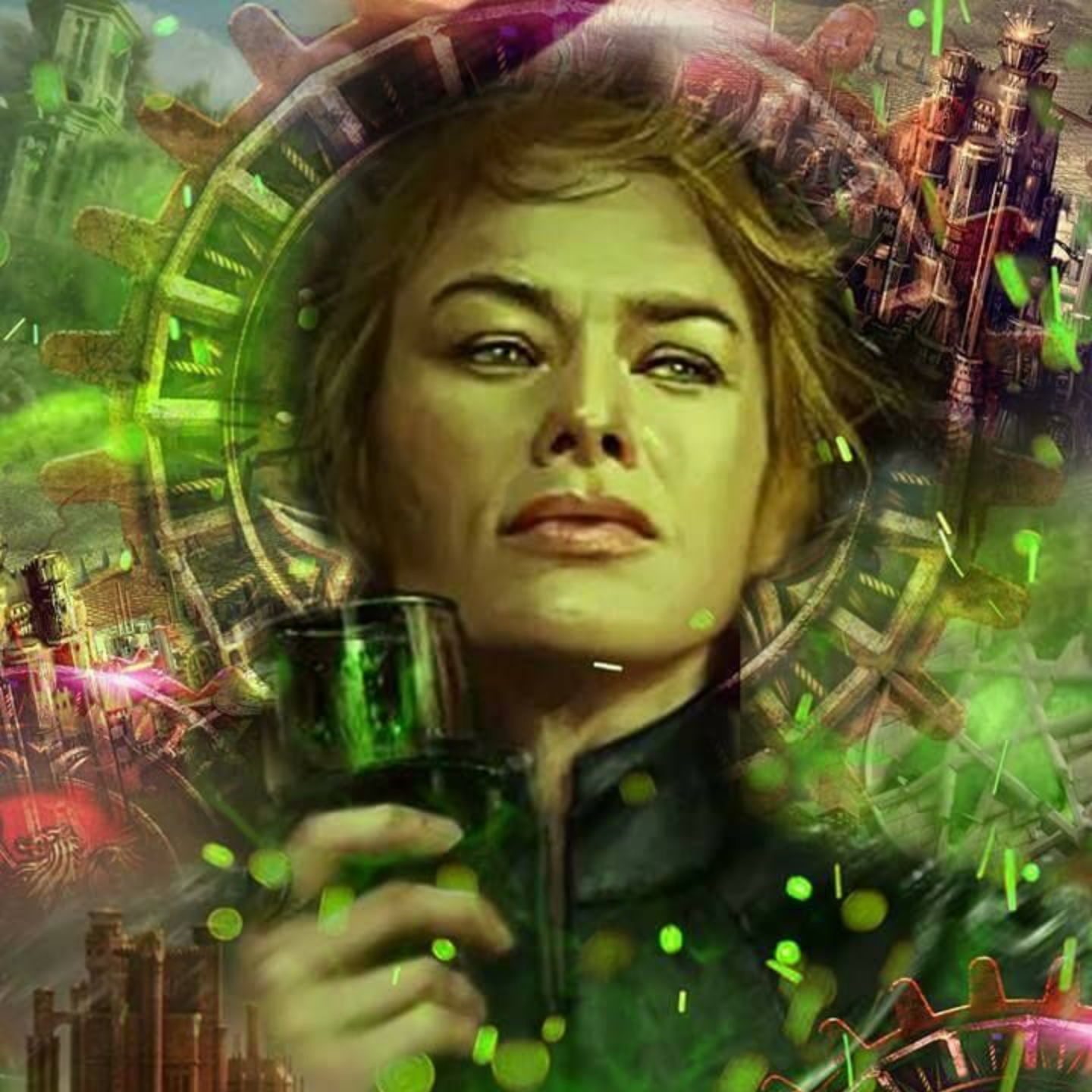
Analysis and deep dive into the theory of Jon Connington and Cersei Lannister burning King's Landing in the Winds of Winter. 00:00 Intro 01:01 Daenerys & Tyrion will not be involved in the Burning of King’s Landing in the Novels 11:18 JonCon in ADWD & TWOW 16:33 This is JonCon’s story & NOT Young Griff’s 19:48 Why Jon got Greyscale and Tyrion didn’t 32:16 The meaning of stone and greyscale 35:25 A War of Ice (Griff) & Fire (Cersei) 50:10 Battle of the Bells: The burning of a vicious circle 54:59 Outro ------------------------------------------------------------------------------------------------------------------ 📚 Sources 📚 ASoIaF book series, The Never Ending Story, GoT: Histories and Lore & GoT HBO TV series. ------------------------------------------------------------------------------------------------------------------ 🌐Social Media & Podcast 🌐 Instagram: [Company of the Cat](https://www.instagram.com/company_of_the_cat/) Facebook Page: [Company of the Cat](https://www.facebook.com/profile.php?id=100086601590664) Youtube: [Company of the Cat](https://youtu.be/p2CU7X3T_5s) ☕ Support the Channel ☕ [Buy Me a Coffee](https://bmc.link/CompotCat) ------------------------------------------------------------------------------------------------------------------ 🖼️ Art Credits 🖼️ TN: JonCon by mylestoyne & Cersei by inna-vjuzhanina. Clips: HBO's GoT 🎶 Music 🎶 Wonderland by Alexander Nakarada (www.creatorchords.com) Licensed under Creative Commons BY Attribution 4.0 License https://creativecommons.org/licenses/by/4.0/ Horror House by Aaron Kenny Walk Alone | Dark Cinematic Music | Horror Music by MusiQO ------------------------------------------------------------------------------------------------------------------ #asoiaf #asongoficeandfire #hotd #houseofthedragon 🔍 Keywords 🔍 ASOIAF, asoiaf, theory, theories, analysis, cersei lannister, king's landing, jon connington, greyscale, dance with dragons, adwd, got, game of thrones, a song of ice & fire
Intro Welcome or welcome back to the CotC, hi! One of the most discussed topics in the ASOIAF fandom was and still is the burning of King’s Landing. Five years after the finale of GOT, people talk about the way this event was incorporated in the TV adaptation and try to figure out if and how this might happen in the novels. My previous upload was about the Rise and Fall of the Rhoynar, the Sorrows, Garin and his Greyscale curse but I left out Jon Connington, one of the more, if not the most, important characters in the discussion about Greyscale. There is a reason I did that. Since the first time I read the novels, the annihilation of King’s Landing seemed like the obvious closure in Griff’s storyline, a POV character missing from the TV series. Before we begin, don't forget to like & subscribe if you enjoy my content. No, Daenerys & Tyrion will not be involved in the Burning of King’s Landing in the Novels. First let’s talk about the elephant in the room, the TV series. If you don’t want to hear me rambling and ranting about it, there are chapters, feel free to skip it, but I want to talk about it because it is a huge topic of discussion in the fandom. As stated before, the annihilation of KL, a bit that was very poorly incorporated into the show, has been foreshadowed since the earlier books, in ACOK, we learned that there are various stashes of wildfire under the city in unknown places. Tens of thousands had fled the fighting for the supposed safety of King's Landing. He had seen them on the kingsroad, troupes of mothers and children and anxious fathers who had gazed on his horses and wagons with covetous eyes. Once they reached the city they would doubtless pay over all they had to put those high comforting walls between them and the war . . . though they might think twice if they knew about the wildfire. The majority of the readers agree that this tragic event will happen and I agree 100%, I have seen conversations here and there, though not many, about why it might not happen. To be honest, having so much discourse since the very early books about the wildfire stashes, the pyromancers, and how dangerous of a substance it is, for it to just be a dead plot-line and a red herring would be not just underwhelming but kinda poor writing because there is already a huge amount of time spent on this matter that could have been used more wisely if this is just a random thing. But how will this event happen? For sure not like in the show, for 2 simple reasons: the people involved and the timing of the event. There are many important characters that will be involved, as we will explore in the rest of the video, who were removed from the show, mainly JonCon, the Dornish, the friends from the Reach, and the rest of YG’s crew, the main people we see in Aegon’s storyline, a storyline that in the show was merged half with Jon’s and half with Dany’s. Now from the existing characters with the exception of Cersei and maybe Jaime Lannister, I seriously doubt any other person that was involved in the series would be in the capital because there is no way this event will happen after dealing with the Others so people like Jon Snow and Arya would not be involved. The only thing that I believe is somewhat accurate as a concept, is the bells. But I doubt D&D really understood the reason behind this bit in the books, they simply incorporated it even though the main person associated with it, Griff, was absent. Sadly, there is a heavy Western/Westeros-centric notion I have observed circulating around, and many theories and conversations paint the events that take place in Essos as not that important and as foreplay for the stuff in Westeros, but I don’t think it is the case. For sure George doesn’t help this notion since he has a very limited amount of POVs in Essos, for the most part only one, Dany, and the secondary characters are way more rushed and sloppily crafted, I also have a video about it, all the Dothraki as characters are extremely poorly written even though we know many of them since book 1, but many readers take this west centric idea to the MAX and completely disregard the situation in Essos, either because they don’t care about Essos and are not that invested, because the POV’s are few, because the names are hard and they get frustrated, something I have heard a lot of times btw and my reaction is always lol whatever, bc readers can remember the 45 different nicknames for people in Westeros, but not 10 names that are not Jon or Tom. Anyway, the thing is that the politics and social issues in Essos clearly establish this part of the story as having the same importance as the events that take place in Westeros and even more than some. I think that the show had a hand in this, they focused all the attention on court politics, and Essos, Dorne, the North, and the Iron Islands, meaning the interesting politics imo, were screwed over. People who were introduced to the novels from the show, often care more about the same stuff the show focused on and way less, if at all, about the rest, with only the North being an exception sometimes, because it is the closest tied to Southern politics. For this reason, many times we expect all the main characters and all the major subplots to be somehow tied to important for the court and the capital events, even though, it’s not really necessary, and the Iron Throne is not even the main conflict of the story to have every character and plot connected to it, that title goes to the Others, which is made very clear from the prologue of AGOT and from GRRM’s interviews. "It was the cold," Gared said with iron certainty. "I saw men freeze last winter, and the one before, when I was half a boy. Everyone talks about snows forty foot deep, and how the ice wind comes howling out of the north, but the real enemy is the cold. It steals up on you quieter than Will, and at first you shiver and your teeth chatter and you stamp your feet and dream of mulled wine and nice hot fires. It burns, it does. Nothing burns like the cold. You know, one of the dynamics I started with there was the sense of…people being so consumed by their petty struggles for power. Within the Seven Kingdoms within King's Landing, who's going to be king, who's going to be on the small council, who's going to determine the policies, that they're blind to the much greater and more dangerous threats that are happening far away on the periphery of their kingdoms. If there is one plot thread that all main characters and most major subplots would be connected to, is the Others, not the court. The name of the series is A Song of Ice & Fire and it’s very often highlighted that the political drama especially in Westeros is pretty much a game, as the title of the first book indicates. Narratively-wise, there is no real reason for all the major characters to be part of the burning of King’s Landing or the general Court messiness. And that brings me to the involvement or lack thereof of Daenerys and Tyrion. Many times I see a lot of people say there is no way Daenerys will finish the campaign in Essos because there is no time, she must be in Westeros for the x,y,z event, with the burning of King’s Landing being one of them, but no. The truth is that Daenerys has pressed pause for years at this point to remain in Essos, for the whole of Dance she doesn’t even think that much about Westeros and the throne but she does think about the situation in Essos, her whole life is in Essos and every person that has plans rely on her and not the other way around. She has the army, she has the dragons, and she wants to put an end to the slaver elite. Unlike the politics in Westeros, in Essos the main conflict is slavery, which is leagues more important than an uncomfortable throne. If GRRM continues the story like “Oh well who cares about the slavery storyline I spent five books on, let’s go for court politics and petty drama” as the show did, it would be a very crappy thing to do and also a very poor writing choice, because similar to the wildfire plot all these chapters and the threads about the slaver cities, Volantis, the Dothraki Khals and even Pentos and Braavos were useless and dead ends that spent pages that could have been used in better ways. The truth is that Daenerys’ storyline is in Essos, the Iron Throne is an idea that in the end she never really pursues, and she chooses to remain in Essos every time she comes across the dilemma of leaving or staying. She will have to resolve that before her departure which I highly doubt will happen before the end of Winds, and I think it will also end in Essos and she will not remain in Westeros or die for that matter, after the Long Night if I’m completely honest, which i won’t be discussing here. Daenerys’ storyline and politicking are in Essos, and the cities she will burn are the slaver cities and Volantis, where even the slaves are waiting for this exact thing, in Westeros she will most likely be involved mainly if not exclusively with the magical issues, Euron and the Others. I know many of the fans disagree with this, I have heard and read countless counter arguments on why “she will” or “could do”, that I honestly don’t find convincing, they rely way too much on the show and its vastly different portrayal of themes and characters and very often disregard 5 whole books, the actual written material and the timeline so these and the show will not be taken into account for the rest of the video. If I cannot find written things in five books and I have to rely on a bad adaptation show made by people who didn’t like the magical aspect and the actual themes of the novels, then something is missing. I also believe that one of the reasons people say there is no way George can finish the story in two books is because many readers and non-readers who just follow the project, have very specific theories and ideas about the books, we all have let’s be real, but many are heavily inspired by the show, and indeed if, like in the show, they try to connect every single plotline with the next one, while also dropping important events of these storylines, it’s impossible to do it and also very questionable writing-wise. Like in the rest of the books, the political events in Essos and in Westeros will happen at the same time and will parallel one another, there is no real reason for all the characters to be in the capital. Daenerys, Tyrion, and Victarion will burn Volantis at the same time Aegon’s and Griff’s crew and Cersei will burn King’s Landing, most likely. Which makes a lot of sense, considering Daenerys is still in the middle of the Dothraki sea with diarrhea, while Jon, Aegon & the Golden Company are already in Westeros and ten days away from attacking Storm’s End which as we see in the Winds’ chapters soon gets captured. On the other side, in the winds chapter we have about the events in Essos, Daenerys is still absent from the slaver cities. The weather is also atrocious for sailing, do Tyrion, Dany, and Vic know how to teleport armies? Because everyone else has had issues with transportation and I doubt they will have none, so how will they be able to unite the Dothraki, finish the campaign in Essos, and be in time to burn King’s Landing, an event that most definitely will happen before the main conflict with the Others, since they are the real problem? These are my thoughts on the “Daenerys will burn the Capital”, it doesn’t fit the timeline, the storyline, and the narrative in its entirety. And if it’s after the whole Euron and Long Night conundrum so it can fit the timeline it would be more than poor writing and I will be the first to bitch about it. Daenerys will burn the cities in Essos, not KL and the reasons and background will be vastly different. Let’s talk about the novels now. JonCon in ADWD & TWOW Jon Connington is a POV character that first appeared in ADWD under the alias of Griff. Jon was Lord of Griffin's Roost and the head of House Connington towards the end of the reign of King Aerys Targaryen, and served for a short time as Hand of the King to Aerys during Robert's Rebellion, before his exile to Essos. In his youth, Jon served as a squire in King's Landing, first alongside Prince Rhaegar Targaryen, and later to him. Jon was considered to be one of the Prince's dear friends and after Jon’s own POVs in the last book, we learned he was in love with Rhaegar who he referred to as his silver prince. During the Rebellion, Aerys dismissed his previous Hand, Owen Merryweather, and named Jon to the office, whom Tywin Lannister, also a former Hand to Aerys, considered to be too young and reckless. After the battle of Ashford, Jon along with his forces tracked Robert to the Stoney Sept in the Riverlands where he offered rewards for his capture and put hostages in crow cages as a scare tactic, while his soldiers began a house-to-house search for Robert, but were unable to locate him before his rebel allies, lords Eddard Stark and Hoster Tully, arrived to oust Jon and his forces, and even though Jon Connington fought back fiercely, killing Lord Jon Arryn's nephew and heir, Ser Denys Arryn, and wounding Lord Tully, he was nearly slain by Robert at the town's sept, and retreated when he saw that the Battle of the Bells (as it was later named) was lost, a decision that still haunts him, as he believed the war would have had a completely different trajectory if he had succeeded in killing Robert there. King Aerys also held Jon responsible for his defeat at Stoney Sept and exiled Jon, stripping him of his titles, lands, and wealth, and passing the rule of Griffin's Roost to Ser Ronald Connington. While in exile Jon joined the Golden Company and rose quickly in the ranks even believing that, had his exile gone otherwise, he might have been the successor to his friend Myles as a captain and general of the company. After Jon had served with the Golden Company for five years, he and Myles were approached by Illyrio Mopatis and Varys, who informed them that Prince Rhaegar Targaryen's infant son, Aegon, had survived the Sack of King's Landing during the Rebellion. In order to whisk Jon away from the Golden Company and the public eye and put their plan into motion, they created rumors that he was driven from the company after he was allegedly caught stealing from the war chest and that he drank himself to death in Lys. Even the rest of the Golden Company was left unaware of the truth, and while Jon agreed for Aegon's sake, he still resents the shameful lie of his death. The rumors of Jon's disgrace and death eventually reached Westeros, leaving Jon free to focus on raising and protecting "Young Griff" in the guise of his father, "Griff". We as readers meet both Griff and Young Griff in ADWD, as they travel on the Shy Maid alongside Haldon, Rolly Duckfield, Lemore, Ysilla, and Yandry. Jon plans to meet with Daenerys and knowing that, whichever route she chooses, she needs to pass through Volantis, they decide to wait for her there. In the meantime, Illyrio sends to them Tyrion Lannister, who has fled Westeros after he killed his father and was unfairly condemned for the death of Joffrey. While traveling from Pentos to Volantis through the Rhoyne, the Shy Maid Passes through the Sorrows. When stone men attack the crew in Chroyane, Jon rescues Tyrion after the latter is knocked into the water and Jon contracts greyscale that starts from his right hand, but he keeps it a secret out of fear that he would be left for dead and wouldn’t be able to avenge Rhaegar’s death. During their journey, and while in Chroyane, Tyrion figures out who Griff and Young Griff are and suggests to Aegon that they go to Westeros instead of waiting for Daenerys in Volantis, which JonCon finds pleasing since he doesn’t know how much time he has, now that he’s afflicted with greyscale. He then reveales to the GC the real identity of YG and we see the scene from Daenerys' vision in the house of the Undying before their journey to Westeros. The trip to Westeros was quite troublesome because of the autumn storms; their ships scattered, the Volantene fleet had to drop them off at various locations, and the GC landed with a smaller host. Despite that, Jon led a successful assault on Griffin's Roost, and upon reuniting with his remaining family members, Jon abandoned attempts at reconciliation and confined them to guarded quarters because of their fear and anger towards him. Strategically, Jon tasked Haldon with sending a letter to Doran Martell, revealing the survival of Elia's son, and their plans to secure alliances for Aegon's cause, but he also refused to arrange a marriage for Aegon, because they hope for an alliance by marriage with Daenerys and although it was suggested that he offers his own hand, he refused to do so, since that hand is already in a relationship with greyscale. The last piece of information we get about Jon and YG in the last book is Jon’s displeasure with Aegon’s decision to appoint Rolly to the Kingsguard, instead of keeping these positions for cementing alliances. Despite that, they settle on a plan to seize Storm's End and want to maintain the façade of an exiled lord reclaiming his seat, with Jon planning a petition to King Tommen for a pardon so that he can keep this guise, intending to deceive the Iron Throne about the invasion. In case someone is not familiar with the published chapters from Winds and doesn’t want any spoilers skip forward 1 minute. Doran received Jon's letter, and sent Princess Arianne to seek out Aegon and Jon, but upon arrival, Arianne learned that they had already marched from Griffin's Roost. Haldon informs her that they have captured Storm's End, and Arianne is awaited there. This is JonCon’s story & NOT Young Griff’s I have stated my opinion on the matter before, and I still stand by it, this whole side-plot is Jon Connington’s story and not Young Griff’s. Even though it looks like Aegon is at the center of the events, with him being the alleged lost son of the previous prince, but in reality, YG in the text reads way more as a plot device, than a character, and whatever feeling a reader has about him is because of the limited information from Tyrion POVs, that does not paint him in the best light and contradict what Illyrio and Varys were saying about him, and most importantly Jon’s. The thing is that in Jon’s chapters, his feelings are centered around his demons, his past, and Rhaegar and not Aegon, who still to this day thinks of as Rhaegar’s son in the best case and as that boy or the boy, never as the child he pretty much raised. "Where in the seven hells is Haldon?" Griff complained to Lady Lemore. "How long should it take to buy three horses?" She shrugged. "My lord, wouldn't it be safer to leave the boy here aboard the boat?" "Safer, yes. Wiser, no. He is a man grown now, and this is the road that he was born to walk." Griff had no patience for this quibbling. He was sick of hiding, sick of waiting, sick of caution. I do not have time enough for caution. Prince Aegon Targaryen was not near as biddable as the boy Young Griff had been, however. The better part of an hour had passed before he finally turned up in the solar, with Duck at his side. "Lord Connington," he said, "I like your castle." "Your father's lands are beautiful," he said. His silvery hair was blowing in the wind, and his eyes were a deep purple, darker than this boy's. The road ahead was full of perils, he knew, but what of it? All men must die. All he asked was time. He had waited so long, surely the gods would grant him a few more years, enough time to see the boy he'd called a son seated on the Iron Throne. To reclaim his lands, his name, his honor. To still the bells that rang so loudly in his dreams whenever he closed his eyes to sleep. He sees Aegon and this whole cause as a way, a means, to make amends with his past and avenge Rhaegar and himself. Even in the last quote where he thinks about raising Aegon as his son and wants him to sit on the Iron Throne it’s not because Aegon was cheated and his family was slaughtered and it’s his right and he cares for the boy, but to reclaim what he lost, the Connington Lands, his honor, and correct his failures so he can have peace. Even though I am not a fan of Young Griff at all, it is kinda sad to see that Jon, the person who raised him as a son, sees him less as a person and more as the way to his own redemption and is ok with rush decisions that in retrospect are clearly the wrong ones, only because he thinks of himself and the limited time he has. Jon knows the kid is not his son, but he did raise him, and the amount of information we get from his POVs about Aegon’s likes, dislikes and personality is close to non-existent because looking at how he thinks and talks about him, Jon hardly sees Aegon as his own person. From the first time we meet the crew of the Shy Maid, we follow the story of Griff, he is the key character of this new bunch, and we learn about his past, his demons, his mistakes, feelings, triggers, and thoughts. He is the POV character for a reason and the link between the past, the present, and the future major events we will see in the next book whenever this happens. Why Jon got Greyscale and Tyrion didn’t In my previous upload which was about the Rhoynar I talked about Greyscale, but I didn’t talk about Jon Connington, even though he is the character that contracted the affliction. I did talk about Tyrion though and why this part of the story is very important to his arc. To be completely honest, to me it looks like that case of greyscale is way more important narrative and literary-wise than lore-wise, magic-wise, or whatever. And the reason why Jon Connington got the affliction and Tyrion didn’t, serves, if not only at least mostly, as character development for the two characters. And this is pointed out even more in the stories about the creation of greyscale and that of the Shrouded Lord. Greyscale is a disease that can leave flesh stiff and dead, and the skin cracked and flaking, mottled black and grey and stone-like to the touch. Greyscale is one of the many diseases common in Sothoryos. Cold, damp climates like the Iron Islands and Dragonstone are also very prone to the disease, and of course, it is a danger to those traveling down the Rhoyne through the Sorrows, since the area is inhabited by stone men: people in the late stage of the affliction. The disease causes them to be mentally sluggish and lethargic, so they remain quite passive when undisturbed. However, as the sickness progresses, more often than not, it escalates to madness and there is a higher likelihood of becoming aggressive. The most known legend about greyscale is that of Garin the Great, a Rhoynish prince who united all the Rhoynar so they could oppose the Valyrians and went on to achieve many wins before his fall. During the destruction of the Rhoynish cities, the men of Volantis and Valyria hung Garin in a golden cage and brought him to Chroyane so that he could witness his city's destruction. Garin called upon Mother Rhoyne to destroy his captors and that very night, the waters of the Rhoyne flooded out of season and with great force, drowned the invaders. The spirits of the drowned dragonlords are said to remain beneath the water, however, and their cold breath rises to become fog. The fog covered Chroyane, and the Valyrian conquerors began to die of greyscale. It is a story of revenge. The Shy Maid moved through the fog like a blind man groping his way down an unfamiliar hall. Septa Lemore was praying. The mists muffled the sound of her voice, making it seem small and hushed. . . “I do not like this place,” Haldon Halfmaester muttered. “Frightened of a little fog?” mocked Tyrion, though in truth there was quite a lot of fog. At the prow of the Shy Maid, Young Griff stood with the third pole, to push them away from hazards as they loomed up through the mists. The lanterns had been lit fore and aft, but the fog was so thick that all the dwarf could see from amidships was a light floating out ahead of him and another following behind. His own task was to tend the brazier and make certain that the fire did not go out. “This is no common fog, Hugor Hill,” Ysilla insisted. “It stinks of sorcery, as you would know if you had a nose to smell it. Many a voyager has been lost here, poleboats and pirates and great river galleys too. They wander forlorn through the mists, searching for a sun they cannot find until madness or hunger claim their lives. There are restless spirits in the air here and tormented souls below the water.” “There’s one now,” said Tyrion. Off to starboard a hand large enough to crush the boat was reaching up from the murky depths. Only the tops of two fingers broke the river’s surface, but as the Shy Maid eased on past he could see the rest of the hand rippling below the water and a pale face looking up. Though his tone was light, he was uneasy. This was a bad place, rank with despair and death. Ysilla is not wrong. This fog is not natural. Something foul grew in the waters here, and festered in the air. Small wonder the stone men go mad. “You should not make mock,” warned Ysilla. “The whispering dead hate the warm and quick and ever seek for more damned souls to join them.” “We’d do well not to breathe the fog either,” said Haldon. “Garin’s Curse is all about us.” The only way not to breathe the fog is not to breathe. “Garin’s Curse is only greyscale,” said Tyrion. The curse was oft seen in children, especially in damp, cold climes. The afflicted flesh stiffened, calcified, and cracked, though the dwarf had read that greyscale’s progress could be stayed by limes, mustard poultices, and scalding-hot baths (the maesters said) or by prayer, sacrifice, and fasting (the septons insisted). Then the disease passed, leaving its young victims disfigured but alive. Maesters and sep-tons alike agreed that children marked by greyscale could never be touched by the rarer mortal form of the affliction, nor by its terrible swift cousin, the grey plague. “Damp is said to be the culprit,” he said. “Foul humors in the air. Not curses.” The conquerors did not believe either, Hugor Hill. The men of Volantis and Valyria hung Garin in a golden cage and made mock as he called upon his Mother to destroy them. But in the night the waters rose and drowned them, and from that day to this they have not rested. They are down there still beneath the water, they who were once the lords of fire. Their cold breath rises from the murk to make these fogs, and their flesh has turned as stony as their hearts. In the Sorrows the Stone Men congregate on the Bridge of Dream. A huge bridge, rising forty feet above the river, extending from the Palace of Sorrow nee of Love to the Rhoyne's western bank. “Light ahead,” warned Young Griff. Tyrion saw it too. Kingfisher, or another poleboat, he told himself, but somehow he knew that was not right. His nose itched. He scratched at it savagely. The light grew brighter as the Shy Maid approached it. A soft star in the distance, it glimmered faintly through the fog, beckoning them on. Shortly it became two lights, then three: a ragged row of beacons rising from the water. “The Bridge of Dream,” Griff named it. “There will be stone men on the span. Some may start to wail at our approach, but they are not like to molest us. Most stone men are feeble creatures, clumsy, lumbering, witless. Near the end they all go mad, but that is when they are most dangerous. If need be, fend them off with the torches. On no account let them touch you.” “They may not even see us,” said Haldon Halfmaester. “The fog will hide us from them until we are almost at the bridge, and then we will be past before they know that we are here.” Stone eyes are blind eyes, thought Tyrion. The mortal form of greyscale began in the extremities, he knew: a tingling in a fingertip, a toenail turning black, a loss of feeling. As the numbness crept into the hand, or stole past the foot and up the leg, the flesh stiffened and grew cold and the victim’s skin took on a greyish hue, resembling stone. He had heard it said that there were three good cures for greyscale: axe and sword and cleaver. Hacking off afflicted parts did sometimes stop the spread of the disease, Tyrion knew, but not always. Many a man had sacrificed one arm or foot, only to find the other going grey. Once that happened, hope was gone. Blindness was common when the stone reached the face. In the final stages the curse turned inward, to muscles, bones, and inner organs. Ahead of them, the bridge grew larger. The Bridge of Dream, Griff called it, but this dream was smashed and broken. Pale stone arches marched off into the fog, reaching from the Palace of Sorrow to the river’s western bank. Half of them had collapsed, pulled down by the weight of the grey moss that draped them and the thick black vines that snaked upward from the water. The broad wooden span of the bridge had rotted through, but some of the lamps that lined the way were still aglow. As the Shy Maid drew closer, Tyrion could see the shapes of stone men moving in the light, shuffling aimlessly around the lamps like slow grey moths. Some were naked, others clad in shrouds. In the chapters we learn about the greyscale and Garin, we also get the story of the Shrouded Lord. “As you say. If we encounter this Lady Korra, I will just slip into a skirt and say that I am Cersei, the famous bearded beauty of King’s Landing.” This time Duck laughed, and Haldon said, “What a droll little fellow you are, Yollo. They say that the Shrouded Lord will grant a boon to any man who can make him laugh. Perhaps His Grey Grace will choose you to ornament his stony court.” Duck glanced at his companion uneasily. “It’s not good to jape of that one, not when we’re so near the Rhoyne. He hears.” “Wisdom from a duck,” said Haldon. “I beg your pardon, Yollo. You need not look so pale, I was only playing with you. The Prince of Sorrows does not bestow his grey kiss lightly.” His grey kiss. The thought made his flesh crawl. Death had lost its terror for Tyrion Lannister, but greyscale was another matter. The Shrouded Lord is just a legend, he told himself, no more real than the ghost of Lann the Clever that some claim haunts Casterly Rock. Even so, he held his tongue. “We are made of blood and bone, in the image of the Father and the Mother,” said Septa Lemore. “Make no vainglorious boasts, I beg you. Pride is a grievous sin. The stone men were proud as well, and the Shrouded Lord was proudest of them all.” The heat from the glowing coals brought a flush to Tyrion’s face. “Is there a Shrouded Lord? Or is he just some tale?” “The Shrouded Lord has ruled these mists since Garin’s day,” said Yandry. “Some say that he himself is Garin, risen from his watery grave.” “The dead do not rise,” insisted Haldon Halfmaester, “and no man lives a thousand years. Yes, there is a Shrouded Lord. There have been a score of them. When one dies another takes his place. This one is a corsair from the Basilisk Islands who believed the Rhoyne would offer richer pickings than the Summer Sea.” “Aye, I’ve heard that too,” said Duck, “but there’s another tale I like better. The one that says he’s not like t’other stone men, that he started as a statue till a grey woman came out of the fog and kissed him with lips as cold as ice.” His Grey Grace does not have an appearance in the novels apart from these stories and the dream Tyrion had when he fell into the river. He dreamt of his lord father and the Shrouded Lord. He dreamt that they were one and the same, and when his father wrapped stone arms around him and bent to give him his grey kiss, he woke with his mouth dry and rusty with the taste of blood and his heart hammering in his chest. “Our dead dwarf has returned to us,” Haldon said. Tyrion shook his head to clear away the webs of dream. The Sorrows. I was lost in the Sorrows. “I am not dead.” “That remains to be seen.” The Halfmaester stood over him. “Duck, be a fine fowl and boil some broth for our little friend here. He must be famished.” He was on the Shy Maid, Tyrion saw, under a scratchy blanket that smelled of vinegar. The Sorrows are behind us. It was just a dream I dreamed as I was drowning. “Why do I stink of vinegar?” “Lemore has been washing you with it. Some say it helps prevent the greyscale. I am inclined to doubt that, but there was no harm in trying. It was Lemore who forced the water from your lungs after Griff had pulled you up. You were as cold as ice, and your lips were blue. Yandry said we ought to throw you back, but the lad forbade it.” Who really is the shrouded lord and whether he is real isn’t that important, what this figure represents, on the other hand, is. One of the stories we have doesn’t paint the Shrouded Lord as a stone man, but as a wight. The legend talks about a hero, a prince who led thousands of people but in the end, lost to his enemies. He lost his people, and his home and was hanged and mocked and in the end he lost his life as well, until a woman kissed him and he rose from his watery grave. Like Thoros raised Beric, like Cat was killed and her family and traditions were mocked and in the end, she got dragged out of the river and was resurrected as Lady Stoneheart. Even Tyrion, in this chapter, fell into the water, drowned, and got resuscitated by Lemore, who is a Septa, and never got Greyscale. The stories of Garrin and the Shrouded Lord, Catelyn, and even Tyrion parallel each other, how someone loses oneself when the only thing they care about is revenge. And no one represents this better than Jon Connington, who is on the verge of death from a cruel illness and his only thought is revenge and pride, without caring about the consequences. Tragic figures, people who try to take revenge no matter the cost. Tyrion after this chapter becomes such a shitty person, he doesn’t care whom he hurts and what consequences his actions have, he just wants revenge against the people in Westeros. In his nightmare he saw the shrouded lord and his father being the same person and trying to kiss him, wanting to pass the affliction, which is coldheartedness, pride, and thirst for revenge. There are worse ways to die than drowning. And if truth be told, he had perished long ago, back in King’s Landing. It was only his revenant who remained, the small vengeful ghost who throttled Shae and put a cross-bow bolt through the great Lord Tywin’s bowels. No man would mourn the thing that he’d become. I’ll haunt the Seven Kingdoms, he thought, sinking deeper. They would not love me living, so let them dread me dead. On the other hand, Jon parallels the Stone Men, it’s the reason why Jon caught greyscale, but Tyrion did not. Griff is in it because of his pride, similar to the dragonlords, he and the company went to Westeros, bc Tyrion put this idea on the table in the first place. Jon and his obsession with taking back what he lost are in Westeros and already causing havoc, according to Arianne, because of Tyrion and his want to cause chaos over there and take revenge for his unfair treatment. Tyrion took advantage of Aegon’s and Griff's characters. In this story Tyrion is the failed, mocked, and wronged person who sent the proud, stony ex-dragonlords to terrorize and conquer his home that failed him. The meaning of stone and greyscale "They may not even see us," said Haldon Halfmaester. "The fog will hide us from them until we are almost at the bridge, and then we will be past before they know that we are here. "Stone eyes are blind eyes, thought Tyrion. Wolves, was Jon's first thought, but that was wrong. Wolves eat their kill. More garrons were strewn across the slope, legs twisted grotesquely, blind eyes staring in death. In the story stone parallels death, similar to ice. Both hard, both cold, both are unforgiving. And there are no better chapters to observe this than the Stark Chapters. They started back down between the pillars. Blind stone eyes seemed to follow them as they passed. The king kept his arm around Ned's shoulder. "You must have wondered why I finally came north to Winterfell, after so long." He looked at the stone figures all around them, breathed deep in the chill silence of the crypt. He could feel the eyes of the dead. They were all listening, he knew. And winter was coming. He was walking through the crypts beneath Winterfell, as he had walked a thousand times before. The Kings of Winter watched him pass with eyes of ice, and the direwolves at their feet turned their great stone heads and snarled. He remembered the jest the king had shared in the crypts of Winterfell, as the Kings of Winter looked on with cold stone eyes. It was not Lord Eddard's face he saw floating before him, though; it was Lady Catelyn's. With her deep blue eyes and hard cold mouth, she looked a bit like Stannis. The head had been rejoined to the body with fine silver wire, but one skull looks much like another, and in those empty hollows she found no trace of her lord's dark grey eyes, eyes that could be soft as a fog or hard as stone. The color of the ice was wont to change with every shift of the light. Now it was the deep blue of frozen rivers, now the dirty white of old snow, and when a cloud passed before the sun it darkened to the pale grey of pitted stone. “You should not make mock,” warned Ysilla. “The whispering dead hate the warm and quick and ever seek for more damned souls to join them.” "They were cold things, dead things, that hated iron and fire and the touch of the sun, and every creature with hot blood in its veins. There is an undeniable connection and parallelism between death, stone, and ice in the novels, which makes sense since cold as ice and still as stone are probably two of the most common and used phrases for dead people and some of the best chapters in the series are chapters that play with these patterns. Ice and Fire is not just the literal magical conflict of the books but the deeper conflicts between the things these two represent. I mean... Fire is love, fire is passion, fire is sexual ardor, and all of these things. Ice is betrayal, ice is revenge, ice is… you know, that kind of cold inhumanity and all that stuff is being played out in the books. The greyscale’s purpose, its threat I think is more symbolic than actual. The real destruction is Jon’s coldheartedness, his folly, and all the destruction and havoc someone can cause when they are stripped of most emotions and think solely of their revenge and pride. A War of Ice (Griff) & Fire (Cersei) In every major conflict, we have seen the sides represent Ice & Fire in one way or another. Of course, the main conflict which is life versus death is the most obvious but all the other smaller conflicts align with this as well. I think this pattern will be present in the destruction of the capital, as well, with YG’s and Griff’s crew on one side and Cersei and the Lannister regime on the other. And in this clash, Aegon’s side will represent the ice, the stone, and the cold. In Essos we have the dragon queen vs the slaver elite which constantly parallels the Others. Both are referred to as masters and there are dreams who linked the slavers to ice and death. Ser Jorah had no answer. He only smiled, and touched her hair, so lightly. It was enough. That night she dreamt that she was Rhaegar, riding to the Trident. But she was mounted on a dragon, not a horse. When she saw the Usurper's rebel host across the river they were armored all in ice, but she bathed them in dragonfire and they melted away like dew and turned the Trident into a torrent. Some small part of her knew that she was dreaming, but another part exulted. This is how it was meant to be. The other was a nightmare, and I have only now awakened. Beneath her coverlets she tossed and turned, dreaming that Hizdahr was kissing her … but his lips were blue and bruised, and when he thrust himself inside her, his manhood was cold as ice. "You know nothing. You killed a dead man, aye, I heard. Mance killed a hundred. A man can fight the dead, but when their masters come, when the white mists rise up … how do you fight a mist, crow? Shadows with teeth … air so cold it hurts to breathe, like a knife inside your chest … you do not know, you cannot know … can your sword cut cold?" When the main conflict was the Starks vs the Lannisters there were antitheses everywhere as well. On one hand the grey, cold lords of the North and Winter, on the other the Lannisters. From the imagery and colors we associate with their sigils and even members to Tywin literally melting Ice, the ancestral sword of House Stark, the sides represented fire and Ice. As he entered his lord father's solar a few moments later, he heard a voice saying, ". . . cherrywood for the scabbards, bound in red leather and ornamented with a row of lion's-head studs in pure gold. Perhaps with garnets for the eyes . . ." "Rubies," Lord Tywin said. "Garnets lack the fire." And here I want to focus on the Lannister fire. So far the Lannisters play the role of fire for the most part, in their conflict against the Starks and Stannis. Stannis is cosplaying as fire, he and his people believe he is Azor Ahai, and he wants to be, but he isn’t. Stannis is cold, Stannis is proud, Stannis is honorable to a fault, Stannis is hard, stony, and grey. He has a sword that is not even warm, his descriptions are always gloomy and unyielding and the Lannisters defeated him with Wild Fire. The Baratheon look was stamped on his face, in his jaw, his eyes, that black hair. Renly was too young to have fathered a boy of that age, Stannis too cold and proud in his honor. Gendry had to be Robert's. As the long fingers of dawn fanned across the fields, color was returning to the world. Where grey men had sat grey horses armed with shadow spears, the points of ten thousand lances now glinted silverly cold, and on the myriad flapping banners Catelyn saw the blush of red and pink and orange, the richness of blues and browns, the blaze of gold and yellow. All the power of Storm's End and Highgarden, the power that had been Renly's an hour ago. They belong to Stannis now, she realized, even if they do not know it themselves yet. Where else are they to turn, if not to the last Baratheon? Stannis has won all with a single evil stroke. Catelyn could still hear Stannis saying that Robb's turn too would come in time. It was like a cold breath on the back of her neck. And the side of Young Griff is similar to that, cosplaying. The scene where YG started to make decisions on his own highlights that. From Jon Conington literally turning grey and blue-haired YG is being highlighted as a potential impostor and not Rhaegar’s son. Young Griff ran his fingers through his hair. "I am sick of this blue dye. We should have washed it out." "Soon enough." Griff would be glad to go back to his own true colors too, though his once red hair had gone to grey. They gave the prince the best of the three horses, a big grey gelding so pale that he was almost white. Griff and Haldon rode beside him on lesser mounts. The road ran south beneath the high white walls of Volon Therys for a good half mile. Then they left the town behind, following the winding course of the Rhoyne through willow groves and poppy fields and past a tall wooden windmill whose blades creaked like old bones as they turned. They found the Golden Company beside the river as the sun was lowering in the west. It was a camp that even Arthur Dayne might have approved of—compact, orderly, defensible. A deep ditch had been dug around it, with sharpened stakes inside. The tents stood in rows, with broad avenues between them. The latrines had been placed beside the river, so the current would wash away the wastes. The horse lines were to the north, and beyond them, two dozen elephants grazed beside the water, pulling up reeds with their trunks. Griff glanced at the great grey beasts with approval. There is not a warhorse in all of Westeros that will stand against them. Griff will be the catalyst for the burning of King's Landing, his whole arc leads him precisely there, this is his story and it’s not a recent turn, this happened at Stony Sept, this is the real moment Jon’s old self dies, something that is highlighted by the name of the area which is Stony Sept and the titles of Jon’s chapters the Lost Lord and The Griffin Reborn respectively. Jon is hardened and ready to embrace the cruelty and coldheartedness this time. And so he swept down on Stoney Sept, closed off the town, and began a search. His knights went house to house, smashed in every door, peered into every cellar. He had even sent men crawling through the sewers, yet somehow Robert still eluded him. The townsfolk were hiding him. They moved him from one secret bolt-hole to the next, always one step ahead of the king's men. The whole town was a nest of traitors. At the end they had the usurper hidden in a brothel. What sort of king was that, who would hide behind the skirts of women? Yet whilst the search dragged on, Eddard Stark and Hoster Tully came down upon the town with a rebel army. Bells and battle followed, and Robert emerged from his brothel with a blade in hand, and almost slew Jon on the steps of the old sept that gave the town its name. For years afterward, Jon Connington told himself that he was not to blame, that he had done all that any man could do. His soldiers searched every hole and hovel, he offered pardons and rewards, he took hostages and hung them in crow cages and swore that they would have neither food nor drink until Robert was delivered to him. All to no avail. "Tywin Lannister himself could have done no more," he had insisted one night to Blackheart, during his first year of exile. "There is where you're wrong," Myles Toyne had replied. "Lord Tywin would not have bothered with a search. He would have burned that town and every living creature in it. Men and boys, babes at the breast, noble knights and holy septons, pigs and whores, rats and rebels, he would have burned them all. When the fires guttered out and only ash and cinders remained, he would have sent his men in to find the bones of Robert Baratheon. Later, when Stark and Tully turned up with their host, he would have offered pardons to the both of them, and they would have accepted and turned for home with their tails between their legs." He was not wrong, Jon Connington reflected, leaning on the battlements of his forebears. I wanted the glory of slaying Robert in single combat, and I did not want the name of butcher. So Robert escaped me and cut down Rhaegar on the Trident. "I failed the father," he said, "but I will not fail the son." Jon is ok with getting the butcher name. He has nothing to lose and everything to gain at this point. He is ravaged and filled with guilt and thirst for revenge and dreams of nightmares every night. Last night he'd dreamt of Stoney Sept again. Alone, with sword in hand, he ran from house to house, smashing down doors, racing up stairs, leaping from roof to roof, as his ears rang to the sound of distant bells. Deep bronze booms and silver chiming pounded through his skull, a maddening cacophony of noise that grew ever louder until it seemed as if his head would explode. Seventeen years had come and gone since the Battle of the Bells, yet the sound of bells ringing still tied a knot in his guts. Others might claim that the realm was lost when Prince Rhaegar fell to Robert's warhammer on the Trident, but the Battle of the Trident would never have been fought if the griffin had only slain the stag there in Stoney Sept. The bells tolled for all of us that day. For Aerys and his queen, for Elia of Dorne and her little daughter, for every true man and honest woman in the Seven Kingdoms. And for my silver prince. "As you say," she answered, unhappily. So be it. He had grown fond of Lemore, but that did not mean he required her approval. Her task had been to instruct the prince in the doctrines of the Faith, and she had done that. No amount of prayer would put him on the Iron Throne, however. That was Griff's task. He had failed Prince Rhaegar once. He would not fail his son, not whilst life remained in his body. On top of that YG’s side is the one of Varys the Spider, it’s a part of and in the House of the Undying, the mummer has a bigger role than the dragon who is described as being made from cloth. The spider vs. serpent is a pattern we often see in the novels. The others were said to ride ice spiders and on the other side, we have dragons, fiery reptiles. Mythical magical creatures that in various rl mythologies and cultures were actually very large serpents. We hear as well of the lost city Lyber in the Grasslands of Essos, where acolytes of a spider goddess and a serpent god fought an endless, bloody war. Some real-life myths and stories also have similar patterns, with the most famous being the stories behind the constellation of Ophiuchus. In Mesopotamia, the constellation depicted Nirah, a serpent god who served as a messenger of the gods. In Ancient Greece the constellation represented the god Apollo struggling with a huge snake that guarded the Oracle of Delphi. Other myths identified Ophiuchus with Laocoön, the Trojan priest of Poseidon, who warned the Trojans about the Horse and was later slain by a pair of sea serpents sent by the gods to punish him. In Roman myths, the figure represents the healer Asclepius, who learned the secrets of keeping death at bay after observing one serpent bringing another healing herbs. To prevent humans from becoming immortal with the help of Asclepius, Jupiter killed him with a bolt of lightning but later placed his image in the heavens to honor his good works. Ophiuchus is located next to Scorpius, Aratus in his work describes Ophiuchus as trampling on Scorpius with his feet and Scorpius also seems to threaten to sting him. In various mythologies and stories animals like horses, lions, and serpents are very often on the same side while spiders and scorpions are on the opposite. Lions especially are animals that are pretty often associated with fire. Chimæra was a monstrous fire-breathing hybrid creature usually depicted as a lion, with the head of a goat protruding from its back, often depicted with dragon's wings and a tail that ends with a snake's head. Sekhmet was a solar warrior deity as well as a goddess of medicine who was depicted with the head of a lioness and was said to breathe fire. In the 1979 fantasy novel “The Neverending Story” Grograman is a giant lion who is also an Elemental Embodiment of fire and is able to change colors similarly to a chameleon. Every night Grograman turns to stone, a state he describes as death, and every morning with the sun he turns back to life. The protagonist, Bastian, made immune to his fire because of a magical medallion, is the first living being to befriend him, so Grograman gives him the magical sword Sikanda, since only a person who has eaten and drunk of his fire and bathed in it like Bastian, can touch it without danger. This is something that of course we see in our story as well. Ice Spiders VS Dragons, fiery horses riding the Nightlands, scorpions literally being the only weapon against the dragons, myths about acolytes of Spider and Serpent gods fighting eternally, and of course the Lannisters dressed in Red and gold, like flames with burning green eyes and hair as golden as the sun, defeating the Lords of Winter and melting Ice, defeating Stannis, the dark lord brooding high in his tower, in a castle as black as the night in the words of Galyeon of Cuy. Cersei is not only as fiery as it gets without dragons right now, but is also an amazing character to face Griff. Both people remember their past, thinking what could have been if Rhagar hadn’t died, still trapped in a one-sided affection that could have never been for either of the two. It is equal parts sad, ironic, and poetic. Cersei’s fire is highlighted in every aspect her personality, clothing, hair, obsession, and irresponsibility with wildfire, she symbolizes the wild, dangerous flames, not something cozy and warm, but something aggressive, destructive and terrifying. "Oh, Lysa was not so fearsome as all that." She had been a pretty girl, in truth; dimpled and delicate, with long auburn hair. Timid, though. Prone to tongue-tied silences and fits of giggles, with none of Cersei's fire. "The Hand speaks with the king's voice." Candlelight gleamed green as wildfire in Cersei's eyes. "If we send you, Tyrion, it will be as if Joffrey went himself. And who better? You wield words as skillfully as Jaime wields a sword." Cersei beckoned to her page for another cup of wine, a golden vintage from the Arbor, fruity and rich. The queen was drinking heavily, but the wine only seemed to make her more beautiful; her cheeks were flushed, and her eyes had a bright, feverish heat to them as she looked down over the hall. Eyes of wildfire, Sansa thought. “No need.” Cersei felt too alive for sleep. The wildfire was cleansing her, burning away all her rage and fear, filling her with resolve. “The flames are so pretty. I want to watch them for a while.” Jaime hesitated. “You should not stay alone.” “I will not be alone. Ser Osmund can remain with me and keep me safe. Your Sworn Brother.” “If it please Your Grace,” said Kettleblack. “It does.” Cersei slid her arm through his, and side by side they watched the fire rage. "Lord Hallyne has assured me that his pyromancers can control the fire." The Guild of Alchemists had been brewing fresh wildfire for a fortnight. "Let all of King's Landing see the flames. It will be a lesson to our enemies." "Now you sound like Aerys." Her nostrils flared. "Guard your tongue, ser." Westeros is torn and bleeding, and I do not doubt that even now my sweet sister is binding up the wounds … with salt. Cersei is as gentle as King Maegor, as selfless as Aegon the Unworthy, as wise as Mad Aerys. She never forgets a slight, real or imagined. She takes caution for cowardice and dissent for defiance. And she is greedy. Greedy for power, for honor, for love. Jaime knew the look in his sister's eyes. He had seen it before, most recently on the night of Tommen's wedding, when she burned the Tower of the Hand. The green light of the wildfire had bathed the face of the watchers, so they looked like nothing so much as rotting corpses, a pack of gleeful ghouls, but some of the corpses were prettier than others. Even in the baleful glow, Cersei had been beautiful to look upon. She'd stood with one hand on her breast, her lips parted, her green eyes shining. She is crying, Jaime had realized, but whether it was from grief or ecstasy he could not have said. The sight had filled him with disquiet, reminding him of Aerys Targaryen and the way a burning would arouse him. "I govern the realm." Seven save us all, you do. His sister liked to think of herself as Lord Tywin with teats, but she was wrong. Their father had been as relentless and implacable as a glacier, where Cersei was all wildfire, especially when thwarted. Battle of the Bells: The burning of a vicious circle. Reading the chapters of people who were alive and remembering Robert’s Rebellion, this vicious circle of cruelty and greediness will end with the same people in the capital, the place that symbolizes these aspects, but in reverse. Jon Connington will become Tiwyn. He will sack and burn a city full of innocent civilians so as to not fail YG the same way he failed Rhaegar, while Cersei will become the monster her family betrayed and who in her opinion deprived her of a happy ending, with a handsome prince. Margaery's clumsy attempts at seduction were so obvious as to be laughable. Tommen is too young for kisses, so she gives him kittens. Cersei rather wished they were not black, though. Black cats brought ill luck, as Rhaegar's little girl had discovered in this very castle. She would have been my daughter, if the Mad King had not played his cruel jape on Father. It had to have been the madness that led Aerys to refuse Lord Tywin's daughter and take his son instead, whilst marrying his own son to a feeble Dornish princess with black eyes and a flat chest. The memory of the rejection still rankled, even after all these years. Many a night she had watched Prince Rhaegar in the hall, playing his silver-stringed harp with those long, elegant fingers of his. Had any man ever been so beautiful? He was more than a man, though. His blood was the blood of old Valyria, the blood of dragons and gods. When she was just a little girl, her father had promised her that she would marry Rhaegar. She could not have been more than six or seven. "Never speak of it, child," he had told her, smiling his secret smile that only Cersei ever saw. "Not until His Grace agrees to the betrothal. It must remain our secret for now." And so it had, though once she had drawn a picture of herself flying behind Rhaegar on a dragon, her arms wrapped tight about his chest. When Jaime had discovered it she told him it was Queen Alysanne and King Jaehaerys. The ringing of Bells, especially those of the Sept of Baelor has been brought to our attention since AGOT, where we learned how loud as well as how, and when they are ringed. The Sept has seven bells which can be rung in mourning, celebration or to gather crowds. Prior to the Battle of the Blackwater, thousands jammed the Great Sept of Baelor and the sept's bells joyously thundered after Stannis's attack on the city was thwarted. Add to that, a Jon Connington ready for everything thinking how he would have succeeded if he was more like Tiwyn, burning and sacking the city to the ground, who on top of that has PTSD and gets triggered by the sound of bells, a Cersei that solves all her problems with wildfire and a ton of hidden and forgotten wildfire stashes all around the city. Jon Connington already plans on asking for a pardon and tricking the crown, to catch them unaware with his attack, like Tywin tricked Aerys into opening the gates. Varys killed Kevan, so I think it’s very plausible that they will try to trick Cersei similarly to how Aerys was tricked so they can enter the city. In a case like that,the Sept will start to ring the bells to gather the people into safety, THE GC, maybe the Dornish depending on how Doran takes the canceled marriage news, the friends from the reach, who I think might be the Tarlys and the Peaks btw, both houses from the Dornish marches, with Jon on the lead will start sacking and burning, Cersei will turn to wildfire for defense, and if something of this nature happens it is certain that the hidden wildfire stashes will start to explode as well. Leading to a fiery end for the City and the people involved, that mirrors the events they tried to prevent during Robert’s Rebellion and putting an end to this cycle for good. For these reasons, Jaime killing Cersei as he did with Aerys, while also dying there because of his inability to inform the people of the wildfire would be a very fitting ending writing-wise for the Lannister Twins. Conclusions + Outro. These are my thoughts on the matter, Griff’s and Cersei’s stories ending in KL but now in opposite places. If I were to place when the event will happen I believe somewhere around the third act of the next book, after the taking of Storm’s end and of course, after whatever communication and decisions they make with Doran Martell, who I doubt will be very happy with both JonCon and YG refusing marriages. Jon is a character that I really enjoy, for similar reasons I enjoy Cersei and Stannis to a lesser degree, since he doesn’t have a POV, precisely because they are tragic figures, we follow their fall and character regression and this is always something I find interesting in storytelling when it’s done correctly. Cersei and Jon are both people stuck in the past, thinking of what could have been and they desperately try to achieve what they couldn’t the first time around, I think from a writing standpoint their stories ending, at the same time and place, while also paralleling Tywin and Aerys, fulfilling the events that never happened during the rebellion would be very interesting for the characters as well as a final end of the Robert’s Rebellion saga, whose events still loom like a dark, stale cloud over the story even more than a decade after. This is why it is important for this event to happen because of people who were actively involved in the Rebellion and the events in King’s Landing. This is it for today’s upload, I hope you enjoyed the video since it was both quite a big one and one that had many quotes from the novels that I know can be kinda hard to follow with my accent, but I think that it was necessary to read the actual scenes as well as revisit quotes I also analyzed in my previous video. If you did have fun, don’t forget to like, subscribe if you haven’t already, and comment your theories, ideas, and opinions. See you in the next video, bye!