
Company of the Cat · Cat...*meow*
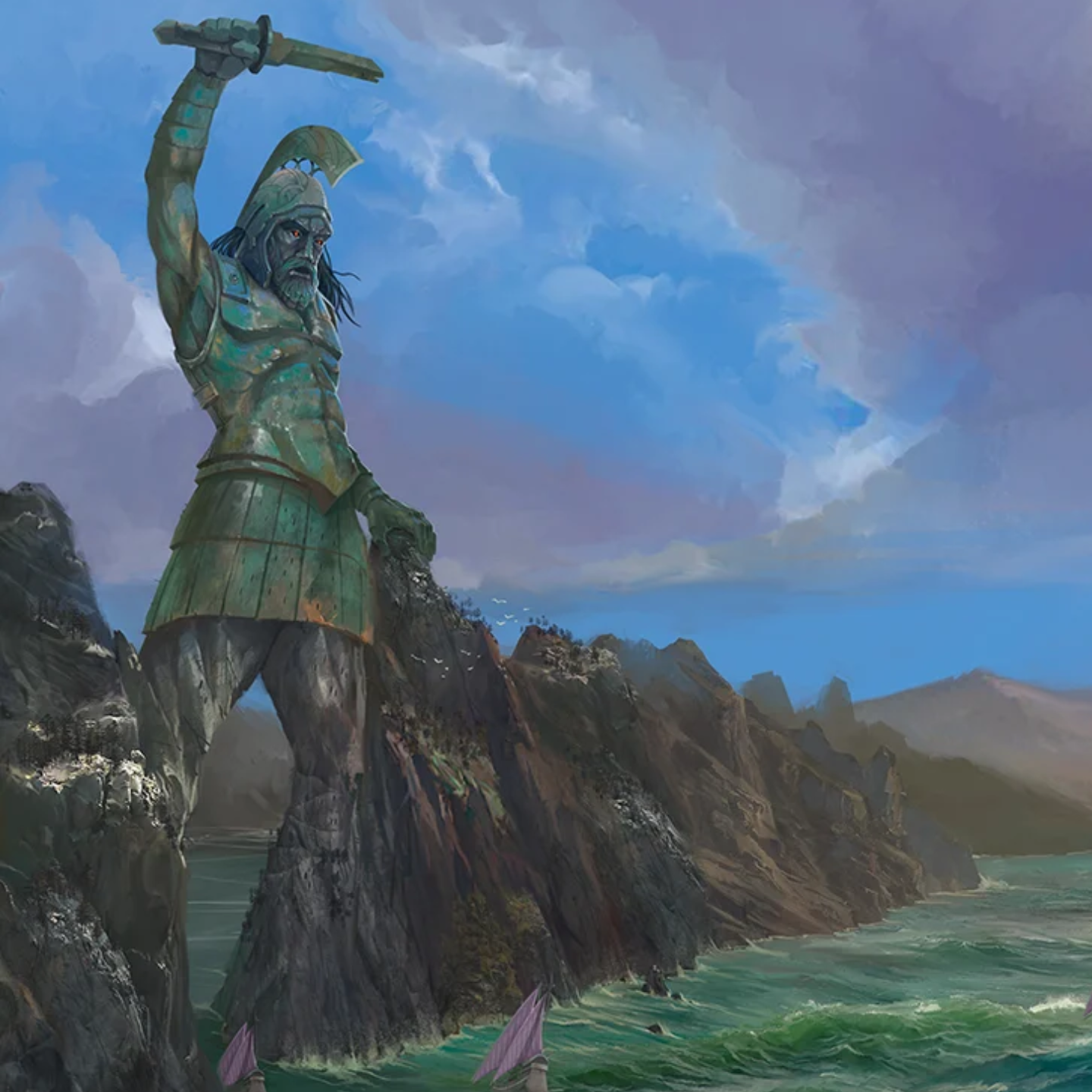
Theory about Braavos & the Titan. Tinfoil hats on! 00:00 Intro 00:46 The Bastard Daughter of Valyria 02:24 The Secret City 06:18 A grey city in a green sea 13:02 The seeming nothingness of fog 18:17 Titan of Braavos: Wonders made by Men 22:41 The Wall of Braavos 30:20 The Unmasking of Uthero 35:28 The Titan’s Magic 46:10 Winds of Winter & Conclusions -------------------------------------------------------------------------------------------------------- 📚 Sources 📚 ASoIaF book series, The World of Ice and Fire. -------------------------------------------------------------------------------------------------------- 🌐Social Media & Podcast 🌐 Instagram: [Company of the Cat](https://www.instagram.com/company_of_the_cat/) Facebook Page: [Company of the Cat](https://www.facebook.com/profile.php?id=100086601590664) Podcast Feed: [COTC Feed](https://media.rss.com/cotc/feed.xml) ☕ Support the Channel ☕ [Buy Me a Coffee](https://bmc.link/CompotCat) -------------------------------------------------------------------------------------------------------- 🎶 Music 🎶 ThroneKing by Liborio Conti Mystical Sting 2 by Alexander Nakarada (www.creatorchords.com) Licensed under Creative Commons BY Attribution 4.0 License https://creativecommons.org/licenses/by/4.0/ -------------------------------------------------------------------------------------------------------- 🖼️Art🖼️ The Titan of Braavos. Illustration for The World of Ice and Fire. -------------------------------------------------------------------------------------------------------- #asoiaf #asongoficeandfire #hotd #houseofthedragon 🔍 Keywords 🔍 ASOIAF, asoiaf, theory, theories, analysis, braavos, arya stark, Titan of braavos, Free Cities of Essos, valyria, essos, titan, adwd, got, game of thrones
Intro Welcome or welcome back to the company of the cat, and today's video is a deep dive and a theory about the myths, legends, and secrets surrounding the city of Braavos and the Titan. In George R.R. Martin's A Song of Ice and Fire novels, one of the most intriguing places is the Free City of Braavos in Essos. From the Titan to the secret founding of the city and the existence of the Faceless men, a band of religious assassins, Braavos of the Thousand Islands is easily one of the most mysterious places we get to learn more about and even see through various POVs, mainly Arya Stark’s. Now, there's a lot to unpack, so grab a cup of tea or coffee, and get cozy, but before we begin don’t forget to like and subscribe if you enjoy my content! Braavos: The Bastard Daughter of Valyria Braavos is both the wealthiest and likely the most powerful of the Free Cities of Essos. Located in the Great Lagoon where the narrow sea meets the Shivering Sea, the city spreads across a hundred islands connected by canals and bridges. It is protected by mountainous islands like Sellagoro's Shield and is famously guarded by the Titan of Braavos, a massive fortress in the shape of a Warrior that alerts the city about incoming ships. Braavos lacks walls, relying on its natural defenses and powerful fleet for protection. The city is known for its cultural and religious diversity, with various temples located on the Isle of the Gods, including the Temple of the Moonsingers and the House of Black and White, home to the Faceless Men, a religious society of assassins who worship the Many-Faced God. The city also has a unique style of sword fighting, called water dancing. Founded by escaped slaves fleeing the Valyrian Freehold, Braavos remained hidden for a century before its existence was revealed. The city's founders made slavery illegal, which still is a core part of Braavosi law. Early on, the city prospered by trading, capitalizing on the purple dye produced by local sea snails, and by establishing the Iron Bank, one of the wealthiest banks of the known world, that often lends money to outsiders, such as archons, triarchs, and the Lord of the Seven Kingdoms. The Sealord, who rules the city, is selected by magisters and keyholders. Braavos’ wealth is bolstered by its navy, which dominates the northwestern seas of Essos and the city has become one of the world’s busiest and wealthiest trading centers. In short, Braavos is a powerful maritime city built on trade, finance, and freedom, with strong naval defenses, diverse culture and religion, and a strict stance against slavery. The Secret City “However, it is clear that Braavos is unique among all the Free Cities, as it was founded not by the will of the Freehold, nor by its citizens, but instead by its slaves. According to the tales of the Braavosi, a huge slaver fleet that had been out collecting tributes in human flesh from the lands of the Summer and Jade Seas became victim to a slave uprising instead; the success of this uprising was doubtless dependent on the fact that the Valyrians were wont to use slaves as oarsmen and even sailors, and that these men then joined the uprising. Seizing control of the fleet but realizing there was no place nearby to hide from the Freehold, the slaves instead elected to seek out some land far from Valyria and its subjects, and founded their own city in hiding. Legend says that the moonsingers prophesied that the fleet must travel far north to a forlorn corner of Essos—a place of mudflats and brackish water and fogs. There, the slaves first laid the foundation of their city.” The story of the founding of Braavos is one that everyone seems to agree on—whether it’s the maesters, the other Free Cities, or the Braavosi themselves. The Moonsingers are always prominently featured in these stories, both in the discovery of the area and the founding of the city. While the Many-Faced God and the Faceless Men are likely the first things that come to mind when most people think of Braavos—thanks to their prominence in the novels—the Temple of the Moonsingers is actually the largest temple in the city. Among the hundreds of temples and religious sites in Braavos, this one stands out. It’s located on an island northwest of the Isle of the Gods, at the junction of the Long Canal and the Canal of Heroes. "The Isle of the Gods is farther on. See? Six bridges down, on the right bank. That is the Temple of the Moonsingers." It was one of those that Arya had spied from the lagoon, a mighty mass of snow-white marble topped by a huge silvered dome whose milk glass windows showed all the phases of the moon. A pair of marble maidens flanked its gates, tall as the Sealords, supporting a crescent-shaped lintel." The moonsingers and their prophetic dream/vision are central to the story of the founding of the free city and are honored for their role in leading the refugees to a place safe from the freehold. Undiscovered, Braavos grew and prospered. Farms, homes, and temples sprouted across the low-lying islands, whilst fishermen harvested the bounty of the great lagoon and the seas beyond. Amongst the other shellfish the Braavosi discovered was a certain sea snail, akin to those that had made Tyrosh and its dyes rich and famous. The snail yielded a dark purple dye. To change the look of their stolen ships, Braavosi captains dyed their sails this color whenever they sailed beyond the lagoon. Taking care to avoid Valyrian ships and cities wherever possible, the Braavosi began to trade with Ib, and later with the Seven Kingdoms. For a long while, however, Braavosi merchant ships carried false charts and practiced an artful deceit when questioned about their home port. Thus, for more than a century, Braavos was known as the Secret City. How Braavos managed to remain completely hidden from the world for so many years is a question we’ve all probably wondered about at some point. Sure, the area is naturally foggy, it’s located within the Great Lagoon, and the surrounding islands—thick with trees—provide excellent shelter from outsiders. But even all that doesn’t fully explain how a whole-ass city remained hidden for a century. Let’s assume that no random ship ever accidentally landed on its shores. Even so, the Valyrians, with their ability to fly over the continent and their colonies being relatively close to Braavos, should have discovered it eventually. The idea that they never realized a city was hidden there feels pretty unconvincing. Unless, of course, magic was involved… A grey city in a green sea “The city had seemed like one big island from where the Titan stood, but as Yorko rowed them closer she saw that it was many small islands close together, linked by arched stone bridges that spanned innumerable canals. Beyond the harbor she glimpsed streets of grey stone houses, built so close they leaned one upon the other. To Arya's eyes they were queer-looking, four and five stories tall and very skinny, with sharp-peaked tile roofs like pointed hats. She saw no thatch, and only a few timbered houses of the sort she knew in Westeros. They have no trees, she realized. Braavos is all stone, a grey city in a green sea.” Maybe it’s because our main POV in Braavos is Arya Stark, a character with a connection to green magic, but the way Braavos is described almost feels intentional on the author’s part. It seems like George R.R. Martin wants us to draw parallels between Braavos, the Neck, and the Riverlands, among other places. “The lagoon where the fugitives found a refuge seemed a drear and uninviting place of mudflats, tidal shallows, and saltmarshes at first glance, but it was well hidden behind outlying islands and sea stacks, and oft cloaked from above by fog. Moreover, its brackish waters were rich with fish and shellfish of all sorts, the sheltering islands were thickly forested…” “The steep hills, black bogs, and piney woods of Crackclaw Point were nowhere to be found this side of Maidenpool. The lands they traveled through were low and wet, a wilderness of sandy dunes and salt marshes beneath a vast blue-grey vault of sky. The road was prone to vanishing amongst the reeds and tidal pools, only to appear again a mile farther on; without Meribald, Brienne knew, they surely would have lost their way. The ground was often soft, so in places the septon would walk ahead, tapping with his quarterstaff to make certain of the footing. There were no trees for leagues around, just sea and sky and sand.” “The swamp-dwellers of the Neck [are] known as crannogmen for the floating islands on which they raise their halls and hovels…amidst the fens and swamps and salt marshes. Summer lay down with his head in Bran's lap. "I never knew anyone who fought with a net before," he told Meera while he scratched the direwolf between the ears. "Did your master-at-arms teach you net-fighting?" "My father taught me. We have no knights at Greywater. No master-at-arms, and no maester." "Who keeps your ravens?" She smiled. "Ravens can't find Greywater Watch, no more than our enemies can."” “Not one of them could find it. They ride into the Neck, but not back out. And sooner or later they blunder into the bogs and sink beneath the weight of all that steel and drown in their armor.” The maze-like, wet wilds are a recurring motif in the novels. We see them in the Riverlands, Braavos, the Neck, and even the Sorrows—uninviting cities or landscapes half-drowned in green waters, cloaked in fog, and surrounded by dense woods. Outsiders are often unwelcome; many cannot even find these places, and if they do, there is a big chance they may never find their way out again. “She could tell the fog was thick from the clammy way her clothes clung to her and the damp feeling of the air on her bare hands. The mists of Braavos did queer things to sounds as well, she found. Half the city will be half-blind tonight. It was queer, but Tyrion remembered the Green Fork much better than the Blackwater. It was my first. You never forget your first. He remembered the fog drifting off the river, wending through the reeds like pale white fingers. "This is no common fog, Hugor Hill," Ysilla insisted. "It stinks of sorcery, as you would know if you had a nose to smell it. Many a voyager has been lost here, poleboats and pirates and great river galleys too. They wander forlorn through the mists, searching for a sun they cannot find until madness or hunger claim their lives. There are restless spirits in the air here and tormented souls below the water." "There's one now," said Tyrion. Off to starboard a hand large enough to crush the boat was reaching up from the murky depths. Only the tops of two fingers broke the river's surface, but as the Shy Maid eased on past he could see the rest of the hand rippling below the water and a pale face looking up. Though his tone was light, he was uneasy. This was a bad place, rank with despair and death. Ysilla is not wrong. This fog is not natural.” Even the Stormlands carry some of the same imagery: green, wet, wild places, mystical and with an underlying hint of magic, with the ever-present sensation of eyes watching. “Huge willows grew along the watercourses, larger than any that Arianne had ever seen, their great trunks as gnarled and twisted as an old man’s face and festooned with beards of silvery moss. Trees pressed close on every side, shutting out the sun… The wood was full of caves as well. That first night they took shelter in one of them, to get out of the wet. In Dorne they had often travelled after dark, when the moonlight turned the blowing sands to silver, but the rainwood was too full of bogs, ravines, and sinkholes, and black as pitch beneath the trees, where the moon was just a memory. And all at once she found herself in another cavern, five times as big as the last one, surrounded by a forest of stone columns. Daemon Sand moved to her side and raised his torch. “Look how the stone’s been shaped,” he said. “Those columns, and the wall there. See them?” “Faces,” said Arianne. So many sad eyes, staring. We even find some parallels between the mazy, stony vaults beneath the House of Black and White, the crypts of Winterfell and Bran’s cave beyond the Wall. While we don’t necessarily see the damp, wet, wild atmosphere, it does link Braavos to places where the Old Gods and green magic are still present. As they made their way back to the steps, the empty eyeholes of the skins upon the walls seemed to follow her. For a moment she could almost see their lips moving, whispering dark sweet secrets to one another in words too faint to hear. They started back down between the pillars. Blind stone eyes seemed to follow them as they passed. The king kept his arm around Ned's shoulder. "You must have wondered why I finally came north to Winterfell, after so long." One was full of singers, enthroned like Brynden in nests of weirwood roots that wove under and through and around their bodies. Most of them looked dead to him, but as he crossed in front of them their eyes would open and follow the light of his torch, and one of them opened and closed a wrinkled mouth as if he were trying to speak. Braavos is a barren city—a grey maze of stone and underground vaults surrounded by green, and eyes everywhere. “Yorko swung them north of the docks and down the gullet of a great canal, a broad green waterway that ran straight into the heart of the city. They passed under the arches of a carved stone bridge, decorated with half a hundred kinds of fish and crabs and squids. A second bridge appeared ahead, this one carved in lacy leafy vines, and beyond that a third, gazing down on them from a thousand painted eyes. The mouths of lesser canals opened to either side, and others still smaller off of those. Some of the houses were built above the waterways, she saw, turning the canals into a sort of tunnel.” The seeming nothingness of fog Martin has stated before that he likes to keep the magic in his universe magical, mystical, and mysterious, this is why a big chunk of magic is present in dreams and visions. He, also, seems to prefer making places associated with magic feel enigmatic—quiet, dark, obscured, and difficult to approach, see or navigate. These locations often feel unsettling yet strangely beautiful, or at least captivating in an unusual way. From the eerie weirwoods to the shadowy, airy caves of the Children of the Forest and the unreachable Isle of Faces, the theme is consistent throughout this world. Maze-like caves, crypts, streets, and caverns, wet and slippery pathways, dangerous bogs and sinkholes, weird currents like the ones in the Sorrows and God’s Eye in the Riverlands, and of course fog. Mysterious fogs and ominous mists are a very prevalent element in literature, movies, games, and so on. The presence of mist or fog is a sign that there is something magical or supernatural about a certain place at that time. The mist itself is very often neutral, with the type of magical or supernatural event swinging it one way or the other. It comes in a couple of forms. Mist appears with or preceding some form of magical or supernatural event. It is frequently the opening of a portal or gateway between one world and another. The mist is most often a by-product of the magic used. Fog can also become permanently attached to a location. We see this in Chroyene in this story, regardless of the surrounding weather. Usually hiding a location that is magical itself and/or contains something magical. Valleys, islands, ancient forests, magical villages/cities. This type of fog frequently has unnaturally straight edges. One of the most famous legendary places hidden by magical mist is Avalon. Featured prominently in Arthurian legend, Avalon is a mythical island connected to magic. It is said to be the place where Excalibur was forged and where King Arthur was taken to recover from his mortal wounds. Avalon is a must of Arthurian mythology, much like Camelot, and has long been associated with mystical practices and magical figures. Among these figures is Morgan, King Arthur’s sorceress sister, who is often portrayed as the island’s ruler. Geoffrey of Monmouth first introduced Morgan in Vita Merlini, where she is described as the leader of nine sisters who govern Avalon, the "island of trees," and use their magic to conceal it behind an impenetrable mist. …it produces all things of itself; the fields there have no need of the ploughs of the farmers and all cultivation is lacking except what nature provides. Of its own accord it produces grain and grapes, and apple trees grow in its woods from the close-clipped grass. The ground of its own accord produces everything instead of merely grass, and people live there a hundred years or more. It’s worth noting that Avalon, at least to me, seems like a strong inspiration for the Isle of Faces in the God’s Eye in the Riverlands. Like Avalon, it is an inaccessible and mysterious island—a place of magic, filled with ancient trees and inhabitants who live for centuries. It’s situated at the heart of Westeros, yet it remains almost impossible for anyone to reach. Back to the fog, sometimes, rather than being influenced by magic, it is naturally occurring mist that is emphasized to add to the atmosphere of a scene. It is not linked to magic itself, but tells the reader that it is a suitable time and location for something supernatural or mystical to occur. Or that at some point something mysterious happened there. Fog can also be a great tool to use for character and story development. Fog can create a very ominous mood or be tied to dangerous and ''creepy'' supernatural phenomena. It's the way you feel alone in the fog. It's how the fog seems to swallow everything and makes noise and sight unfamiliar. It's the way it curls and sways around you as if it knows you are there. It's the fact that anything could lurk a few meters from you and you wouldn't know it. “The mists seemed to part before her and close up again as she passed. The cobblestones were wet and slick under her feet. She heard a cat yowl plaintively. Braavos was a good city for cats, and they roamed everywhere, especially at night. In the fog all cats are grey, Mercy thought. In the fog all men are killers.” In Braavos, fog is ever-present, amplifying its aura of secrecy and danger, even when the city feels boisterous and loud. Braavos is a hidden city, drowned in grey and green and secrets, the most fitting home for the Faceless Men. “The tale of our beginnings. If you would be one of us, you had best know who we are and how we came to be. Men may whisper of the Faceless Men of Braavos, but we are older than the Secret City. Before the Titan rose, before the Unmasking of Uthero, before the Founding, we were. We have flowered in Braavos amongst these northern fogs…” In Braavos, fog and secrecy go hand in hand. The mist conceals, protects, and isolates—mirroring the nature of the city itself. Braavos was a city made for secrets, a city of fogs and masks and whispers. Braavos seems to check many of the same boxes as other places where magic, especially green magic is present or was at some point. It feels almost as if the city itself is alive and watching you. Titan of Braavos: Wonders made by Men The last of the night's stars had vanished . . . all but the pair dead ahead. "It's two stars now." "Two eyes," said Denyo. "The Titan sees us." The Titan of Braavos. Old Nan had told them stories of the Titan back in Winterfell. One of the most fascinating aspects of Braavos is the Titan, specifically, the myths and legends that surround the Titan. Despite its humble origins, Braavos has not only become the wealthiest of the Free Cities, but also one of the most impregnable. Volantis may have its Black Walls, but Braavos has a wall of ships such as no other city in the world possesses. Lomas Longstrider marveled at the Titan of Braavos—the great fortress of stone and bronze in the shape of a warrior that bestrides the main entrance into the lagoon, but the true wonder is the Arsenal. There, one of the purple hulled war galleys of Braavos can be built in a day. It would be folly, however, not to give the Titan its due. With his proud head and fiery eyes looming close to four hundred feet above the sea, the Titan is a fortress of a type never seen before or since, cast in the form of a huge giant straddling two seamounts. The Titan's legs and lower torso are black granite, originally a natural stone archway, carved and shaped by three generations of sculptors and stonemasons and wrapped in a pleated bronze skirt; above the waist, the colossus is bronze, with green-dyed hemp for hair. When seen from the sea for the first time, the Titan is a sight terrifying to behold. His eyes are huge beacon fires, lighting the way for returning ships back inside the lagoon. Within his bronze body are halls and chambers, murder holes and arrow slits, such that any vessel that dared to force the passage would surely be destroyed. Enemy ships can easily be steered onto the rocks by the watchmen inside the Titan, and stones and pots of burning pitch can be dropped onto the decks of any that attempt to pass between the Titan's legs without leave. This has seldom been necessary, however; not since the Century of Blood has any enemy been so rash as to attempt to provoke the Titan's wrath. Whenever a ship approaches the lagoon, the Titan releases a loud, roaring sound to alert the Arsenal of Braavos. The deep groan echoes across the water, drowning out nearby sounds, and can even be heard from the city itself. The roars also mark the sunrise, sunset, and the passing hours of the day. The Titan of Braavos, even from the first description we get, is pretty obviously George R.R. Martin’s take on the Colossus of Rhodes—something he has said himself as well. Both are huge statues that serve as entrances to their cities’ ports and are considered wonders in their respective universes. That being said, the mythology, folklore, and stories surrounding the Titan seem to draw more inspiration from Talos than the Colossus. Talos was a giant, bronze, living statue forged by Hephaistos—or, according to other accounts, the last of the ancient bronze race of man. This giant was tasked with patrolling the island of Crete, circling it three times a day and driving off pirates and invaders with volleys of rocks. Even though the Titan is a static statue and fortress, its role is guarding Braavos. In old Nun’s stories, the Titan is an animated Statue that would awaken to protect the city. He was a giant as tall as a mountain, and whenever Braavos stood in danger he would wake with fire in his eyes, his rocky limbs grinding and groaning as he waded out into the sea to smash the enemies. "The Braavosi feed him on the juicy pink flesh of little highborn girls," Nan would end, and Sansa would give a stupid squeak. But Maester Luwin said the Titan was only a statue, and Old Nan's stories were only stories. In the TV show, the design was also heavily inspired by Talos from 1963’s Jason and the Argonauts, who, in turn, incorporated elements of the Colossus. In pop culture, Talos and the Colossus often inspire one another, largely because, even in ancient times, their origins seemed to be common: Helios, the Sun God. Whether the Titan is actually an animated statue is a topic often debated within the fandom. The truth is, these stories could easily be exaggerated or anthropomorphic interpretations. The idea of the Titan 'waking up' to protect the city could simply be a poetic way of describing the defenders within it, using hot oil, fire, and rocks to create chaos among attackers. But also, Old Nan has repeatedly been proven right about various things, whereas Maester Luwin has been wrong. The Walls of Braavos So, is Braavos a magical city? Yes and no. Maybe it was at some point in the past, and maybe it still is, just not in the way we usually picture it. It’s not magical like Asshai, Old Valyria, or even Qohor—places where magic is practiced openly, whether it’s blood magic, dark rituals, or other flashy stuff. For all the “limited magic” label A Song of Ice and Fire gets, the reality is that there’s a lot of impressive, ancient, and quite permanent magic present throughout the story. One of the most common types of magic we encounter is…barriers. Magical barriers are everywhere in the story, scattered all across Planetos, right from book one. The Wall is the most powerful and strongest barrier we have. It’s an enormous structure of ice that serves as an incredibly effective physical barrier—especially when fully manned and properly guarded. But beyond that, it’s also the most potent magical barrier we know of so far. The Night's Watch has forgotten its true purpose, Tarly. You don't build a wall seven hundred feet high to keep savages in skins from stealing women. The Wall was made to guard the realms of men ... and not against other men, which is all the wildlings are when you come right down to it. Thrice I flew Silverwing high above Castle Black, and thrice I tried to take her north beyond the Wall,” Alysanne wrote to Jaehaerys, “but every time she veered back south again and refused to go. Never before has she refused to take me where I wished to go. I laughed about it when I came down again, so the black brothers would not realize anything was amiss, but it troubled me then and it troubles me still. Jon wondered where Ghost was now. Had he gone to Castle Black, or was he running with some wolfpack in the woods? He had no sense of the direwolf, not even in his dreams. It made him feel as if part of himself had been cut off. It completely blocks magic. The Others cannot pass, dragons cannot cross it, and even the skinchanger’s bond with their animal goes dark. Another example is the cave of the Three-Eyed Crow. It acts as a magical barrier, one we know can block the dead. Wights cannot enter, Coldhands is unable to pass, and the Others are also kept out. The moon was fat and full. Summer prowled through the silent woods, a long grey shadow that grew more gaunt with every hunt, for living game could not be found. The ward upon the cave mouth still held; the dead men could not enter. As mentioned before, the Isle of Faces is surrounded by magical forces that prevent intruders from reaching it. Whether the green men still survive on their isle is not clear although there is the occasional account of some foolhardy young riverlord taking a boat to the isle and catching sight of them before winds rise up or a flock of ravens drives him away. The island is visible—people can see it from the opposite shore—but for ages, almost no one has been able to set foot on it. The fish in the lake are said to be dangerous, and the currents are strange. Anyone attempting to row there is inevitably driven away by sudden windstorms or flocks of ravens. Storm’s End has magical barriers as well. “This Storm's End is an old place. There are spells woven into the stones. Dark walls that no shadow can pass—ancient, forgotten, yet still in place.” It appears there is some sort of magic within the walls that prevents other forms of magic from passing through. And these are just the barriers in Westeros—and only the ones we are aware of. Imagine how many other keeps and places, once allegedly inhabited by magical people, could have similar magical protection as well. In Essos, we have the Five Forts, which according to the stories, were built for a very similar reason as the wall. To keep out the demons the Lion of the Night sent during the Last Long Night. The Five Forts are very old, older than the Golden Empire itself; some claim they were raised by the Pearl Emperor during the morning of the Great Empire to keep the Lion of Night and his demons from the realms of men...and indeed, there is something godlike, or demonic, about the monstrous size of the forts, for each of the five is large enough to house ten thousand men, and their massive walls stand almost a thousand feet high. Even the Sorrows seem to have a similar kind of magic around them, but instead of keeping something out, it keeps something in. It traps travelers and stone men in the cursed area, making leaving this place almost impossible. "Kingfisher," said Griff. "Her, or some other like her." But he drew his sword again. No one said a word. The Shy Maid moved with the current. Her sail had not been raised since she first entered the Sorrows. She had no way to move but with the river. Duck stood squinting, clutching his pole with both hands. After a time even Yandry stopped pushing. Every eye was on the distant light. As they grew closer, it turned into two lights. Then three. "The Bridge of Dream," said Tyrion. "Inconceivable," said Haldon Halfmaester. "We've left the bridge behind. Rivers only run one way." "Mother Rhoyne runs how she will," murmured Yandry. The fogs of the area are said to be cursed, the currents seem to push travelers back instead of south as the river runs, and the stone men, who, according to legend, started to gather there because of Garin’s Curse, all contribute to this effect. Everything about the Sorrows seems designed to trap people in the ruins of Chroyane, dooming them to a cruel fate, same as the Rhoynar who once lived and died there. The Rhoynar are also said to have been able to create watery walls to protect themselves from the Valyrians for years. Even the Neck and the Stepstones are believed to have been created as barriers through the use of magic. The Singers used magic to prevent humans from crossing. Theon was about to tell him what he ought to do with his wet nurse's fable when Maester Luwin spoke up. "The histories say the crannogmen grew close to the children of the forest in the days when the greenseers tried to bring the hammer of the waters down upon the Neck. It may be that they have secret knowledge." Suddenly the wood seemed a deal darker than it had a moment before, as if a cloud had passed before the sun. And the old gods stirred, and giants awoke in the earth, and all of Westeros shook and trembled. Great cracks appeared in the earth, and hills and mountains collapsed and were swallowed up. And then the seas came rushing in, and the Arm of Dorne was broken and shattered by the force of the water, until only a few bare rocky islands remained above the waves. The Summer Sea joined the narrow sea, and the bridge between Essos and Westeros vanished for all time. These barriers may not be inherently magical anymore, but they were created through magical means most likely. Braavos is a city founded by various slaves from around the world, they would have known all that, different types of magic, different magical places, and ancient knowledge. The location of their city was chosen based on a vision, and some of these people had lived among the Valyrians, whose empire was built on magic. They had the unique advantage of combining this collective knowledge to choose a place to settle and ensure its protection from the Valyrians and other threats. Magic of this kind could explain how Braavos remained completely hidden for so long and why, even after revealing themselves to the world, its exact location remained unknown. “Braavos was a city made for secrets, a city of fogs and masks and whispers. Its very existence had been a secret for a century, the girl had learned; its location had been hidden thrice that long.” Fogs, strange currents, and magic spells that prevent magical beings from passing through them, we have seen these types of magic already. Ancient, undetectable magic that seems to have been widely used in the past and is still in place. This kind of magic would undoubtedly have been of great use to Braavos, especially given the city's need for secrecy and protection from outside threats. It would explain how Braavos remained hidden for so long, using subtle, powerful magic to shield itself, not just from those who would search for it but even from those who would find it by chance. The Unmasking of Uthero The reveal of the city is another very interesting story and the festival that accompanies its anniversary looks quite ceremonial and fun, but we care more about the ceremonial part. Sealord Uthero Zalyne put an end to that secrecy, sending forth his ships to every corner of the world to proclaim the existence and location of Braavos, and invite men of all nations to celebrate the 111th festival of the city's founding. By that time all of the original escaped slaves were dead, along with all of their former masters. Even so, Uthero had sent envoys from the Iron Bank to Valyria several years prior, to clear the way for what became known as the Uncloaking or the Unmasking of Uthero. The dragonlords proved to have little interest in the descendants of slaves who had escaped a century before, and the Iron Bank paid handsome settlements to the grandchildren of the men whose ships the founders had seized and sailed away (whilst refusing to pay for the value of the slaves themselves). Thus was accord achieved. The anniversary of the Uncloaking is celebrated every year in Braavos with ten days of feasting and masked revelry—a festival like none other in all the known world, culminating at midnight on the tenth day when the Titan roars and tens of thousands of revelers and celebrants remove their masks as one. The ceremony as a whole reflects both preparation for the reveal and the anticipation of being able to live openly and safely. For ten days, people celebrate, eat, and party while wearing masks (Απόκριες Ελλάδα απο την Τσικνοπέμτη μεχρι την Καθαρα Δευτερα δηλαδή), symbolizing a mix of excitement, anticipation, and perhaps a touch of fear. After all, you never know if something might go wrong. If there was even the slightest possibility of danger during or after the reveal, then taking time to celebrate their freedom, eat, and enjoy life seems like an appropriate and meaningful move. The way this monumental change is announced is through the Titan’s roar. The Titan serves as the city’s herald, marking every significant moment for Braavos. From signaling the time of day to sounding warnings or proclaiming celebrations, the Titan is the voice of the city, announcing its most important events. The Titan is the symbol, protector, and most iconic landmark of Braavos, but its exact construction timeline remains a mystery. Given its immense size, it would have likely taken a significant amount of time to complete, we know only the legs were made by three generations of workers. It is a massive, visible structure. In many ways, the existence of the Titan seems counterintuitive if Braavos wanted to remain hidden, considering that a colossal lighthouse and garrison shaped like a warrior that could step over the walls of Winterfell, can be seen from miles away. However, considering the Titan's role as a protector and symbol of Braavos' strength maybe the city was waiting for the moment when it could safely reveal its existence to the world…once the Titan was completed. It would make sense for Braavos to mark that moment, signaling the time to drop the masks and embrace their newfound visibility. The roar of the Titan, as a signal, it’s the perfect announcement—reminding everyone that the city's protector is ready and that the time for secrecy has come to an end. With the Titan in place, Braavos would indeed be in a position of strength and preparedness. No longer reliant on constant secrecy, the Titan serves as both a physical and symbolic protector. Its role would not just be limited to a warning system, but also as an active guardian, capable of defending the city when necessary, it is not only a lighthouse but a very effective garrison as well. And if the myths and legends hold any truth, the Titan is far more than just an inanimate statue or a fort. The Titan is portrayed as both a warrior and a guardian. The image of the Titan raising its broken sword, as if in perpetual defense of the city, while clad in bronze armor, draws even more parallels with the stories from the Age of Heroes about brave warriors and magic. It embodies Braavos' resilience—a hero who once stood against their enemies and who, in the city’s darkest hour, would rise again to protect them. The Titan is "the Last Hero of Braavos," an image we have encountered before: a warrior with a broken sword, fighting until the very end. “His legs bestrode the gap, one foot planted on each mountain, his shoulders looming tall above the jagged crests. His legs were carved of solid stone, the same black granite as the sea monts on which he stood, though around his hips he wore an armored skirt of greenish bronze. His breastplate was bronze as well, and his head in his crested halfhelm. His blowing hair was made of hempen ropes dyed green, and huge fires burned in the caves that were his eyes. One hand rested atop the ridge to his left, bronze fingers coiled about a knob of stone; the other thrust up into the air, clasping the hilt of a broken sword. One by one his friends died, and his horse, and finally even his dog, and his sword froze so hard the blade snapped when he tried to use it. And the Others smelled the hot blood in him and came silent on his trail, stalking him with packs of pale white spiders big as hounds – The Titan’s Magic One of the larger canals in Braavos is the Canal of Heroes, located closest to the Titan, and the Arsenal. Multiple bridges span the Canal, and along both sides are rows of statues of deceased Sealords and it leads directly to the center of the city, where the Isle of the Gods is located. When entering Braavos and moving toward the center, the Titan is technically the first statue in this line of statues that we see. He is only a little bigger than King Baelor's statue in King's Landing, she told herself when they were still well off to sea. As the galleas drove closer to where the breakers smashed against the ridgeline, however, the Titan grew larger still. She could hear Denyo's father bellowing commands in his deep voice, and up in the rigging men were bringing in the sails. We are going to row beneath the Titan's legs. Arya could see the arrow slits in the great bronze breastplate, and stains and speckles on the Titan's arms and shoulders where the seabirds nested. Her neck craned upward. Baelor the Blessed would not reach his knee. He could step right over the walls of Winterfell. [...] Even if the Titan did eat juicy pink girl flesh, Arya would not fear him. She was a scrawny thing, no proper meal for a giant, and almost eleven, practically a woman grown. And Salty isn't highborn, either. "Is the Titan the god of Braavos?" she asked. "Or do you have the Seven?" "All gods are honored in Braavos."” We do not get an answer here because Arya asks a second question right after and Denyo gives an answer to the latter one. While moving towards the heart of the city, we have an almost identical scene when they reach the canal of Heroes. “Ahead, a row of mighty statues stood along both sides of the channel, solemn stone men in long bronze robes, spattered with the droppings of the seabirds. Some held books, some daggers, some hammers. One clutched a golden star in his upraised hand. Another was upending a stone flagon to send an endless stream of water splashing down into the canal. "Are they gods?" asked Arya. "Sealords," said Yorko.” Throughout the story, we encounter various statues, primarily of gods and important highborn figures. When Arya first caught a glimpse of the Titan from afar, she compared it to the statue of Baelor. However, as she got closer and realized its immense size, she asked if it was a god. We never really got an answer about what or who the Titan is, and, funnily enough, the fandom has never seemed to care much about the Titan's identity either. While there is a lot of discourse around the Titan within the community, this doesn’t seem to be something people discuss. Even though the Titan appears to resemble a statue meant to honor some important figure and the first thing Arya asks about him, is who/what is he to Braavos? Like the Titan, who is partly made of stone, appears to be rising from the sea, wears bronze armor, holds a weapon, and has green flowing hair, the Sealords are also depicted as stone figures, dressed in bronze robes and holding important artifacts. In a sense, the Titan is 'protecting' the Sealords and Braavos as a whole, acting as the First Sword of Braavos. However, he is much larger and seemingly more significant than the Sealords. The statues along the canal commemorate past rulers and their achievements. If Uthero completed the Titan as a means to protect the city, he could be seen as both a Sealord and the First Sword of Braavos, the city’s guardian. Additionally, if the statue is indeed a memorial to a past Sealord, like the others along the canal, it makes sense that it would be larger—finishing the Titan is undoubtedly one of the most, if not the most, important achievements in Braavosi history. Earlier, I mentioned that the idea of the ‘Titan waking up and smashing enemies’ might be exaggerated way of describing the defenders within it, using hot oil, fire, and rocks to create chaos among attackers, but the truth is that a non-magical Titan would only be effective against ships and would pose little threat to dragons. And since the Valyrians were their main concern—the very reason they went into hiding—any conflict with the dragonlords arising between the uncloacking of Braavos and the Doom would have required more effective defenses. This makes the idea and countless stories of the Titan being partly magical much more plausible than it simply being a garrison against fleets. One phrase that might suggest the Titan is partly magical can once again be found in the stories of Old Nan. She had to look straight up to see the Titan's head. "The Braavosi feed him on the juicy pink flesh of little highborn girls," she heard Old Nan say again, but she was not a little girl, and she would not be frightened of a stupid statue. Even so, she kept one hand on Needle as they slipped between his legs. The line “feeding something with human flesh” is one we have seen more than once in the novels and is used when sacrifices are involved. Finally, driven by desperation, the little people turned to sorcery and beseeched their greenseers to stem the tide of these invaders. And so they did, gathering in their hundreds (some say on the Isle of Faces), and calling on their old gods with song and prayer and grisly sacrifice (a thousand captive men were fed to the weirwood, one version of the tale goes, whilst another claims the children used the blood of their own young). "Me and mine were here before the Manderlys. Like as not, my own forebears strung those entrails through the tree." "I never knew that northmen made blood sacrifice to their heart trees." "There's much and more you southrons do not know about the north," Ser Bartimus replied. Behind them was only cold and death. Ahead was hope. They came on, clutching their scraps of wood until the time came to feed them to the flames. R'hllor was a jealous deity, ever hungry. So the new god devoured the corpse of the old, and cast gigantic shadows of Stannis and Melisandre upon the Wall, black against the ruddy red reflections on the ice. It was the Grey King who brought fire to the earth by taunting the Storm God until he lashed down with a thunderbolt, setting a tree ablaze. The Grey King also taught men to weave nets and sails and carved the first longship from the hard pale wood of Ygg, a demon tree who fed on human flesh. They feed something they believe to be magical or divine, expecting something in return. It’s not far-fetched to think that if the completion of the Titan was tied to magic, especially considering that much of the magic in this universe is sacrificial, they might have fed it with juicy, pink, girl flesh. After all, 'Only death can pay for life.' King's blood is also often depicted as a valuable form of 'magical coin,' and the idea that highborn girls, with their noble bloodlines, might be particularly valuable as sacrifices makes this connection even more plausible. This would align with other magical defensive constructions, such as the building of the Wall, which required sacrifices to create its extremely powerful barrier. "I hate this Wall," she said in a low angry voice. "Can you feel how cold it is?" "It's made of ice," Jon pointed out. "You know nothing, Jon Snow. This wall is made o' blood." Another detail I find interesting is that the Titan, and more specifically the Titan’s roar, is described similarly to the sound of Euron’s Valyrian horn: “Then the Titan gave a mighty roar. The sound was as huge as he was, a terrible groaning and grinding, so loud it drowned out even the captain's voice and the crash of the waves against those pine-clad ridges. A thousand seabirds took to the air at once, and Arya flinched until she saw that Denyo was laughing.” “It was a terrible sound, a wail of pain and fury that seemed to burn the ears. Aeron Damphair covered his, and prayed for the Drowned God to raise a mighty wave and smash the horn to silence, yet still the shriek went on and on. It is the horn of hell, he wanted to scream, though no man would have heard him. The cheeks of the tattooed man were so puffed out they looked about to burst, and the muscles in his chest twitched in a way that made it seem as if the bird were about to rip free of his flesh and take wing. And now the glyphs were burning brightly, every line and letter shimmering with white fire. On and on and on the sound went, echoing amongst the howling hills behind them and across the waters of Nagga's Cradle to ring against the mountains of Great Wyk, on and on and on until it filled the whole wet world.” If the Titan has spells woven into it, then it could also be seen as a magical warhorn. Dragonbinder requires a sacrifice to function, and the Horn of Winter, also requires a sacrifice, according to the free folk. The Titan’s roar is a signal, and if we think about it, he is a literal blowing horn. Paralleling the Titan to these magical instruments might suggest that he too requires some sort of sacrifice to function. When we think of the Titan "waking up" or "fighting," we often imagine it as a literal, physical giant defending Braavos. However, this could be more metaphorical than it first appears, magical, but still metaphorical. The Titan, much like the horns, might not be a weapon in itself but rather an activation—a catalyst for something greater. Like how the Horn of Winter is rumored to awaken giants from the earth and bring the Wall down, or how the Dragonbinder is said to give you the ability to control dragons, the Titan’s roar could be the trigger for a protective force. Looking at past civilizations and events it could be many things, it could bring about the rise of watery walls similar to those of the Rhoynar, or even cause the water to move the earth, to tremble, with rocks shifting and chaos unfolding, like we know the Hammer of the Waters caused. In this way, the Titan isn't the barrier itself, but the instrument that unleashes it, much like the horns serve as the magical means to awaken or control power. We also know that events of this nature tend to leave parts of the surrounding area drowned and half-destroyed. Even though Braavos is a city of islands and canals, the old part of the city, located near the periphery and close to the Titan, is called the Drowned Town. This area is mostly submerged in water, though some people still live in the high towers and upper floors of buildings. Only the tops of half-sunken towers and domes are visible, as the rest is submerged in the lagoon. This sinking could be a natural one due to the geography and geomorphology of Braavos, or a combination of both magic & natural causes, like the Stepstones, where a natural catastrophe occurred. However, it is heavily implied that it was caused magically. A catastrophe that was caused to create a barrier, and needed plenty of sacrifices. All in all, the Titan may not just be a symbolic guardian and just a garrison, and the myths are not all false, and if you ask me, I trust Old Nan on these matters, she has a very good streak so far. The Titan’s roar could serve as a trigger for powerful protective forces, much like the magical horns we have seen, activated through sacrifice. It might be a key to Braavos' survival after they revealed themselves to the world and maybe it was used to activate the city's long-forgotten protection magic that they wouldn’t have been able to keep permanently up after the reveal. Maybe, λέω εγώ, maybe ο Γιωργάκης θα έπρεπε να βγάλει κανά βιβλίο γιατί θα ξεμείνουμε από μυστήρια να συζητάμε και όσο σκέφτομαι αυτό το βίντεο, νιώθω τρελή. Maybe. Winds of Winter & Conclusions Braavos, the Titan, and their origins are still a mystery. With all the magical barriers, rituals, and sacrifices we see across the story, it wouldn’t be surprising if magic was somehow involved in the Titan’s design and purpose. Could Braavos have used magic for its protection? Looking at similar magical places, like the Isle of Face, it seems possible. Maybe the Titan’s roar isn’t just a warning but a magical trigger—like the horns—setting off protective barriers such as watery walls or even tremors. Whether this magic ties back to the Titan’s creation or requires sacrifices is something we might never really find out. Honestly, it feels like another one of those mysteries, like the Ironborn, Yeen, or Garth, where we’ll never know the full story, and that’s fine. It would be great to know everything about the past, but that’s not something George tends to do if we look at some of the things he’s said during interviews. It’s the kind of theory that’s just fun to think about and debate, like so many others in A Song of Ice and Fire. We might get a few more hints here and there, and that’s cool too. Considering how the story’s gotten more magical as it progresses, there’s always a chance the Titan will play a bigger role in the future. I wouldn’t be surprised if magic is somehow tied to it, but I don’t expect it to explain past events entirely. One thing’s for sure: Braavos is one of the most interesting places in the series. Its origin story, blending so many cultures and ideas, makes it one of the coolest locations in the books. With Daenerys, Tyrion, Illyrio and his crew, and Arya’s storylines with the Faceless Men all connected to Braavos in some way, it’s bound to play a big role in the next book. How it all comes together is anyone’s guess, but it’ll be exciting to find out. This is it for this one! I might do a part two with the Faceless Men and the House of Black & White at some point as well. I know, I know—it’s been 84 years since my last video, but I’m planning to start uploading more regularly like I used to. I hope 2025 is treating you well so far, that you had amazing holidays and a great New Year’s Eve, and that everyone’s safe and healthy. Thank you so much for watching and for still supporting the channel even after what feels like an eternity without a video. If you’re new here, don’t forget to like and subscribe if you enjoyed this theory! See you in the next one—mmmbye!