
Company of the Cat · Cat...*meow*
🐎ASoIaF Theory - The Stallion who Mounts the World: Sarnor and Azor Ahai connections 🐎 📖 Sources: ASoIaF book series, Game of Thrones & House of the Dragon HBO TV series, The World of Ice and Fire, Dunk & Egg Novels. 🎬 Chapters: 00:00 Intro 00:43 Dothraki Culture & “The Stallion Who Mounts the World” Prophecy 06:14 How the Stallion Prophecy Lead to the Fall of Sarnor 11:12 Sarnor: the forgotten middle child of Great Kingdoms 17:51 The “(Ice)Spider VS (Fire)Serpent” pattern 21:32 The Stallion Prophecy is the same as the Azor Ahai one and it is about Daenerys (Winds Predictions) 26:17 Conclusions & Outro 🌐 Social Media & Podcast: Instagram: https://www.instagram.com/company_of_the_cat/ FB Page: https://www.facebook.com/profile.php?id=100086601590664 Youtube: https://youtu.be/peTzmDvBCF0 🎨 Art Credits: Thumbnail by Deniz Maznev
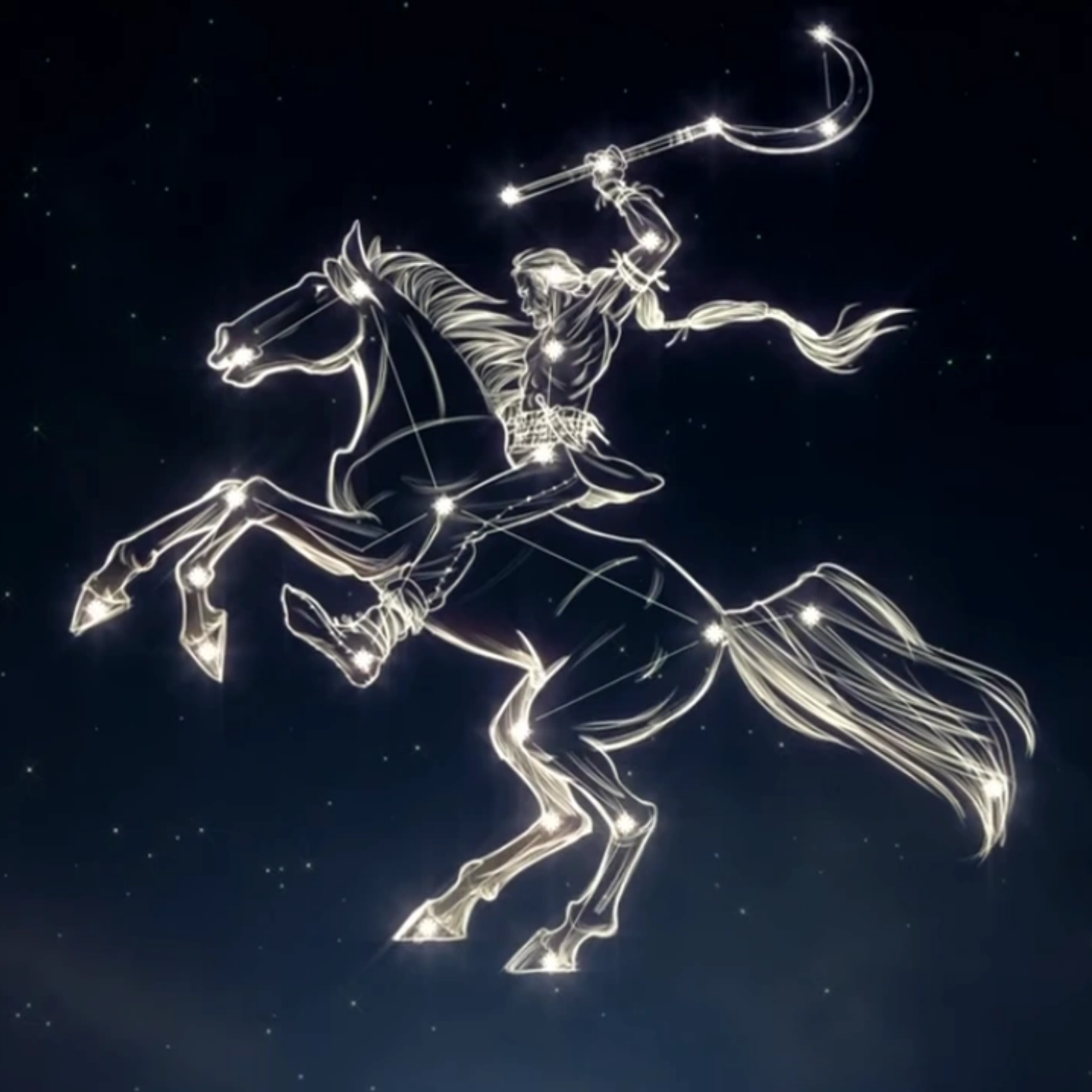
Intro The bodies are burned beneath the open sky, and the khal rises on his fiery steed to take his place among the stars. Welcome or welcome back to the CotC, hi! As you can already guess, today's video is about the Dothraki Prophecy, how it is connected to the Azor Ahai one like most if not all prophecies we have, and how the events during the Century of Blood and the Fall of Sarnor give hints about it. Before we begin don’t forget to like and subscribe to the channel if you enjoy my videos! Dothraki Culture & “The Stallion Who Mounts the World” Prophecy The Stallion Who Mounts the World is a Dothraki prophecy about an individual who will rise to become the most powerful Khal ever seen. We saw this prophecy first appearing in Daenerys V in AGoT, when, after she ate the stallion's heart at Vaes Dothrak, a crone of the Dosh Khaleen proclaimed: As swift as the wind he rides, and behind him his khalasar covers the earth, men without number, with arakhs shining in their hands like blades of razor grass. Fierce as a storm this prince will be. His enemies will tremble before him, and their wives will weep tears of blood and rend their flesh in grief. The bells in his hair will sing his coming, and the milk men in the stone tents will fear his name. The prince is riding, and he shall be the stallion who mounts the world. I am not reinventing the wheel here, this prophecy was about Daenerys and not Rhaego, and of course, it is connected to the Azor Ahai and the Prince that was promised. Of all the prophecies we have in the series, this one is probably the one that I like the most. I find the way it is portrayed and how the events play out extremely clever. I will return to the breakdown of the stallion prophecy and its connection to the Azor Ahai one and to how it might hint at certain things about winds, but first I think it’s important to try and understand as best as we can some aspects of the Dothraki culture. In general, the Dothraki dislike and mistrust magic a lot, with blood magic being forbidden amongst them. That being said, they do have prophecies, they have an apocalypse myth and they do practice religious ceremonies that at some point in the past were certainly tied to magic and one of these practices is the consumption of the Stallion heart by the Khaleesi during her pregnancy. It is believed by the Dothraki that eating the raw heart of a stallion during pregnancy will make a Khal's son strong, swift, and fearless - but only if the mother can eat the entire heart. If she chokes on the blood or retches up the flesh, the omens are less favorable; the child might be stillborn, weak, deformed, or god forbid a female. When Daenerys was pregnant with Rhaego she took part in this ceremony, in the evening, in a chalk pit ringed by torches in the sacred Dothraki city of Vaes Dothrak, where she managed to consume the entire stallion's heart. In general, they believe that eating horse flesh makes them stronger and faster like a horse and their main deity is also a horse god. We have seen several other instances where people claim that eating raw meat or drinking the blood of some animals can indeed give you the characteristics of the animal and, from the look of it, this whole belief must have originated from past magical practices. Bors the Breaker, a legendary son of Garth Greenhand and founder of House Bulwer gained the strength of twenty men by drinking only bull's blood. Some tales state Bors drank so much blood he grew a pair of shiny black horns. When Sam was younger, Randyl Tarly hired two warlocks from Qarth with white skin and blue lips, who slaughtered a bull aurochs and made Sam bathe in the hot blood, to make him brave. The whole eating of the heart sounds very similar to these stories. Also, it sounds a lot like a very specific ceremony that, indeed if magic was involved in the past and things didn’t go as intended, might cause the baby health issues, or impact the pregnancy negatively or maybe do nothing at all with the baby coming out as intended, no extra powers just a normal boy or girl. This is very much blood magic and of course with the Dothraki culture being amongst the most sexist cultures we have seen, if things did go as intended, it was the Khal’s son and blood and not the magical ceremony the mother went through. Το μαγικό σπερματοζωάριο! In any case, after this ceremony, we hear the prophecy for the first time. The individual will be a prince, a Khal’s son, and one day the Khal of all Khals will rise. This stallion who mounts the world is prophesied to unite the Dothraki into a single khalasar and ride to the ends of the earth, making everyone in the world his herd. They also have an apocalypse myth where they believe that someday ghost grass will cover the world, and then all life will end. Ghost grass is a type of grass that grows everywhere throughout the Shadow Lands in eastern Essos, on its shores, and in the valleys between its mountains. Ghost grass is taller than a human on horseback and has stalks as pale as milkglass. It is an invasive plant that overwhelms other forms of life. The Dothraki believe that ghost grass glows with the spirits of the damned and will one day cover the entire world. This sounds like the long night and the others. Tall and gaunt, with flesh pale as milk. With cold blue eyes that burn like ice, as bright as blue stars, with pale blue blood and bones that shine like milkglass. They thrive in the Dark, want to end life on earth and trap the souls of the dead in their dead bodies with glowing eyes. This is why I really like the Dothraki prophecies so much, they are so uniquely written and I am still salty that from all the stuff in the world book, they decided to cut down on the Dothraki parts. The only issue here is that, unlike most myths about the apocalypse, we do not see the Stallion being connected to it. The individual in their mythology is not exactly presented as the savior but as their strongest leader with the best ride that will unite them all and lead them to victory. But most likely they are connected, not only the prophecy was given in the current timeline where the long night is about to take place, but I think it was given once before during a time when people might have thought that “damn the world is ending” and was in a very similar state of upheaval, during the Century of Blood. How the Stallion Prophecy Lead to the Fall of Sarnor The Century of Blood was a period of chaos in Essos that began after the Doom of Valyria, a cataclysm of an unspecified nature that caused the collapse of the Valyrian Freehold, which had prospered for five thousand years up until that point. On the day of the Doom, every hill for five hundred miles exploded, filling the air with ash and smoke and fire, killing everything and everyone, even the dragons. Earthquakes destroyed everything, while lakes boiled or turned to acid. The Fourteen Flames, the volcanoes of Valyria, hurled molten rocks a thousand feet into the air, and red clouds rained down dragonglass. The events fragmented the Valyrian peninsula into numerous smaller islands and created the Smoking Sea between them, with many places East of Valyria, like Velos and Ghozai on the Isle of Cedars being destroyed by tsunamis. We are not told how this event affected the rest of the continent, but considering that very big volcanic eruptions are known to affect the weather and here there was a chain eruption of fourteen huge volcanoes, for 1-3 years after the eruption things must have been quite difficult. During a volcanic eruption, ash and dust are released into the atmosphere, temporarily cooling the Earth. The smallest particles can reach the stratosphere, staying airborne for months and even years, causing widespread cooling by blocking sunlight. Additionally, sulfuric acid from the eruption forms tiny droplets in the stratosphere, reflecting solar radiation and further contributing to cooling. The Fourteen Flames eruption probably caused the closest to a “Long Night” event we have seen since the actual first long night we learned about. And I am not the only one who thinks that, I am fairly sure that Doshi did too. Doshi was a Dothraki, allegedly, witch queen and the mother of Khal Mengo. She was the one who counseled Mengo to unite all Dothraki tribes and khalasars under his rule and become the first great khal. Mengo made all other Dothraki accept his rule, enslaving or killing those who refused to follow him. In short, his reputed witch mother told him to become the Khal of Khals, the stallion that mounts the world, after the Doom of Valyria, an event that for sure caused some amount of darkness and colder temperatures for some years. Khal Mengo united the sixty khalasars and after becoming great Khal, in his old age, he turned his attention to the West, where he started the wars against the Kingdom of Sarnor. Here I want to add, that unlike other beliefs about the apocalypse we don’t know why the Dothraki think the ghost grass will suffocate all life on Earth. In the Religion of R’hollor where we see Azor Ahai as the champion of the God, the reason is the eternal fight between the Lord of Light and the Great Other, in YiTi they were talking about the Gods punishing the GEotD, because of the blood betrayal and the sins the humans practiced and I think that the Dothraki might have a similar explanation. The story is pretty much a carbon copy of various others we have in the series. A person who, allegedly, practices magic pushes someone to take the lead and become the leading-promised figure in a magical prophecy because they are certain they can read the signs correctly and the darkness is upon them. The story of Doshi and Mengo, to me, sounds very similar to all that to not be the case, considering that the concept of a Great Khal, the Khal of all Khals is a major point of their prophecy and Mengo was the first to try and do it, after his witch mother pushed him and a cataclysmic event that most likely caused some temperature drop and darkness for some time. Considering that Ghost Grass thrives in places where there is darkness, like the Shadowlands and the area around the House of the Undying, darkness must have been a sign of the upcoming doom in their myth as well. Something that is very important for the Dothraki and is not commented on as often, is that among their deities is the earth, they consider the earth to be their mother and think it sinful to cut her flesh with plows and spades and axes. This is why they burn down fields, farms, and towns and don’t just sack them, to return the grasslands to their wild state, a piece of information we learned in the stories about the events during the century of blood and the beginning of the wars between Sarnor and Mengo’s khalasar. So this information along with the stallion prophecy, which also points out how they are gonna crush their stone contractions and towns, etc, make me believe that the world's end in their religion is also a punishment for the people's sins and since they do not make the sin of “cutting their mother’s flesh” for palaces, towns, and farms, they are gonna be the ones who, under the leadership of the stallion, will save the world or something similar, I imagine. Sarnor: the forgotten middle child of Great Kingdoms It is kinda sad how quickly the Fall of Sarnor happened and it is even sadder if indeed this information is put in place for a reason and the domino that followed with the Dothraki and the Sarnori started indeed because of a prophecy. The Dothraki would most definitely have started to raid more after the doom, since Valyria wouldn’t be able defend their allies, and generally areas where there were settlements, like the Sarnori and the Qaathi cities, but Mengo uniting all the Khalassars under his rule surely made everything more difficult to deal with. Sarnor along with the Patrimony of Hyrkoon, another very fascinating kingdom that is rarely talked about, are kind of the forgotten middle children between the GEotD and Valyria. The Kingdom of Sarnor and the Patrimony of Hyrkoon have as mythical founders two figures that have been connected to Azor Ahai, Huzor Amai, and Hyrkoon the Hero respectively. Unlike Hyrkoon we do not have sources that Huzor is a reference to Azor Ahai, but looking at the name, I will take the risk and say that yes it was. According to legend, he was born of the last of the Fisher Queens, a legendary dynasty that ruled central Essos during the Dawn Age. Their kingdom is said to have covered the lands adjoining the Silver Sea, a great inland sea located in what today is the Dothraki Sea, of which only three great lakes remain. The Fisher Queens ruled from a floating palace that made its way endlessly around its shores, something that sounds much more like a ship to me and less like a crannog, like many theories, suggest, even more, if we take into consideration the fact that the Qartheen ships have been described as palaces in the novels. Anyway, they were wise and benevolent and favored by the gods, a phrase used very often in most stories to describe magic users. Kings, lords, and wise men sought their floating palace for their counsel. The last of the Fisher Queens gave birth to Huzhor Amai, who would become the ancestor of the Tall Men who founded the Kingdom of Sarnor. The kingdom centered around the river Sarne and its tributaries, as well as the lakes-remnants of the Silver Sea. We are talking about a very old Kingdom, by the time recorded history began, the Sarnori had already established most of their city-states. The Sarnori were known to be quite a quarrelsome people, they were seldom unified, but engaged in long wars against the Qaathi for domination of central Essos. They were well-known for using chariot teams in battle with both men and women participating in battles, something that does make sense since the Fisher Queens, the Zoqora, from which they adopted the chariot warfare, and even the Cymmeri, all groups of people the Tall Men assimilated with, seem to have been fairly egalitarian, as far as gender equality goes. During their peak, the Sarnori traded with Valyria, Yi Ti, Leng, and Asshai. They also sailed the Shivering Sea to Ib, the Thousand Islands, and Mossovy; warred against the Qaathi and the Ghiscari Empire, something to be expected since they were controlling the major trading route of central Essos. The Sarnori became involved in the wars between the ancient Ghiscari Empire and the rising Valyrian Freehold, allying with Valyria during the Second and Third Ghiscari Wars, though during the Fourth, the rival Sarnori kings supported both sides. The Valyrians never tried to conquer the Sarnori; they remained trading partners with them and we even see Valyrian Colonies, like Essaria inside their borders. The Kingdom of Sarnor consisted of the cities Gornath, Hornoth, Kasath, Kyth, Mardosh, Rathylar, Saath, Sallosh, Sarnath, Sarys, and Sathar, all of which were destroyed during the century of Blood by the Dothraki, minus Saath, a city in northern Essos at the western end of the Sarne delta along the Shivering Sea. The Sarnori cities all have Lovecraftian-inspired names something that isn’t that surprising since in the Doom that came to Sarnath, according to the tale, we see a race of shepherd people colonizing the banks of the river Ai, forming cities and rising to great intellectual and trading prowess, pretty similar to the Kingdom of Sarnor. Apart from being a huge trading power, the cities of Sarnor were known to be rich, and elaborate, with some having waterfalls and canals, like Sathar and Gornath, with the greatest city Sarnath being the house of the High King and his estate, the Palace With a Thousand Rooms. Sarnor was also the host of one of the biggest libraries located in the now ruined city of Sallosh, also known as the city of Scholars, which of course was destroyed completely by the Dothraki. After the Doom of Valyria, the Sarnori kingdoms took less than a century to fall. The Tall Men, Tagaez Fen in their language, ignored the Dothraki threat, even as khalasars began to raid all across their eastern borders. Since the Dothraki were often an issue for them they didn’t give it much thought and some Sarnori kings even tried to use the Dothraki in their own wars, offering them gold, slaves, and other gifts to fight against their rivals. Khal Mengo, who had united all khalasars under his rule, accepted the gifts but then burnt fields, farms, and towns to return the grasslands to nature. The Sarnori did not realize the danger until Mengo's son, Khal Moro, led his khalasar to the gates of Sathar. The men of the city were put to the sword, while the women and the children were carried off as slaves, with around three-quarters of them dying on the march to the Ghiscari city of Hazdahn Mo. Sathar was burned to ash, and the Dothraki marched towards Kasath and Gornath, which fought each other for Sathar's plunder, instead of uniting against the khalasars. After the fall of Sathar, Khal Moro razed Kasath, with the aid of the King of Gornath, who had made common cause with the Dothraki and took one of Moro's daughters to wife, something that didn’t end well since she killed him before she was taken by Khal Horro, a rival Khal of her father who also killed him, because as expected, after the death of Mengo, the khalasars also came into conflict with one another as well. Horro was also killed after some years and his great khalasar was split. Even with Mengo dead and the Dothraki separated the issue did not stop as the Dothraki continued to raid Sarnor, and the cities fell to new khals who tried to outdo one another in conquest and carrying the broken gods of the defeated to Vaes Dothrak. Most of the Tall Men's history was lost with the burning of Sallosh and its great library. Kyth and Hornoth soon fell to rival khals and the fortress city of Mardosh, after years of resistance fell due to starvation. The defenders slew their women and children and rode outside of the walls to certain defeat. After the fall of Mardosh, a city known for its military power and defencive capacity, the Sarnori united under Mazor Alexi, the last High King. He and his army were trapped and destroyed by four khalasars at the Field of Crows and Sarnath, the honorary capital, was put to the torch by Khal Loso less than a fortnight later, and the remaining cities continued to fall. Sarys, the last fallen Sarnori city had already been mostly abandoned when Khal Zeggo reached it and with the support of Ibben and Lorath Saath survived and it’s the only city where the Tall Men still live. The “(Ice)Spider VS (Fire)Serpent” pattern. A very random and minor thing we learn about the Sarnori is that their rider warriors wore steel and spider silk. One pattern that we constantly see in the books is the spider vs. serpent. The others were said to ride ice spiders and on the other side, we have dragons, fiery reptiles. Mythical magical creatures that in various rl mythologies and cultures were actually very large serpents. We hear as well of the lost city Lyber in the Grasslands of Essos, where acolytes of a spider goddess and a serpent god fought an endless, bloody war. Some real-life myths and stories also have similar patterns, with the most famous being the stories behind the constellation of Ophiuchus. In Mesopotamia, the constellation depicted Nirah, a serpent god who served as a messenger of the gods. In Ancient Greece the constellation represented the god Apollo struggling with a huge snake that guarded the Oracle of Delphi. Other myths identified Ophiuchus with Laocoön, the Trojan priest of Poseidon, who warned theTrojans about the Horse and was later slain by a pair of sea serpents sent by the gods to punish him. In Roman myths, the figure represents the healer Asclepius, who learned the secrets of keeping death at bay after observing one serpent bringing another healing herbs. To prevent humans from becoming immortal with the help of Asclepius, Jupiter killed him with a bolt of lightning but later placed his image in the heavens to honor his good works. In medieval Islamic astronomy, the constellation was known as Al-Ḥawwa', "the snake-charmer". Ophiuchus is located next to Scorpius, Aratus in his work describes Ophiuchus as trampling on Scorpius with his feet and Scorpius also seems to threaten to sting him. Depending on what myth we are looking at, we see horses and serpents being on the same side while spiders and scorpions are on the opposite, something that of course we see in our story as well. Ice Spiders VS Dragons, fiery horses riding the Nightlands, scorpions literally being the only weapon against the dragons, myths about acolytes of Spider and Serpent gods fighting eternally, and small tidbits like the spider silk of the Sarnori against the horses of the Dothraki gathered together by an Azor Ahai-esque figure. Even in Daenerys’ storyline when people discuss her enemies in Westeros and all the attempts to assassinate her they mention Varys the Spider, and the main conspirator right now is actually Varys. We see the Dragon Queen VS the Spider, even in the house of the undying the dragon was from cloth, and the real person was the mummer. It is a pattern that I really like, both serpents and spiders are heavily featured in real-life myths and were important symbols. Serpents represented rebirth, transformation, immortality, and healing. The ouroboros is a symbol of eternity and continuous renewal of life. Even though both creatures have been the subject of many both positive and negative depictions, spiders were portrayed more often in a negative light, it was often a symbol of mischief and malice because of their toxic venom and the slow death it causes. But there are cultures that held it in high positions as well. The Spider Grandmother is an important figure in the mythology, oral traditions, and folklore of many Native American cultures where we see her in many creation myths, because of their ability to weave. In Ancient Egypt they were associated with Neith, known as the terrifying one, an early ancient Egyptian deity, she was the first and the prime creator, thus the connection to spiders and her aspect as a spinner and weaver of destiny. I think GRRM tried to incorporate something similar in the novels and I dig it. The Stallion Prophecy is the same as the Azor Ahai one and it is about Daenerys (Winds Predictions) With all these down and from the looks of it, the Stallion who Mounts the World prophecy is again about an individual who will unite all people when the darkness gathers and regardless of whether there will be one or more individuals, Daenerys is 100% a part of all this and the things mentioned by the Dosh Khaleen are the events that will take place in Winds. Rhaegho died, but Daenerys is alive and she is the one that consumed the heart in the first place making HER the stallion, not the baby, additionally in the chapter where Dany hatches the eggs we are told exactly what they believe happens when a Dothraki dies. When a horselord dies, his horse is slain with him, so he might ride proud into the night lands. The bodies are burned beneath the open sky, and the khal rises on his fiery steed to take his place among the stars. A fiery horse that can ride in the sky is pretty much a dragon and so far Dany is the only person able to ride one. As swift as the wind he rides, and behind him his khalasar covers the earth, men without number, with arakhs shining in their hands like blades of razor grass. Daenerys right now is in the Dothraki sea with Drogon and Khal Jhaqo and his khalasar eventually found her, standing next to her dragon. Jhaqo and Mago were responsible for Eroeh’s tragic death and Daenerys has promised that they will pay for their crimes, so I really think that we will see Jhaqo and Mago flambe with more and more khalasars joining her as she marches back to slaver’s bay. Fierce as a storm this prince will be. Dany is literally named Stormborn so there is that. His enemies will tremble before him, and their wives will weep tears of blood and rend their flesh in grief. The bells in his hair will sing his coming, and the milk men in the stone tents will fear his name. When we first see this passage in AGoT even though we pretty much can guess that the prophecy is for her, and the only guess is what it is about, we assume it is about her return to Westeros or something similar, in this part of the story we finally get that “Oh, it is about the Slavers”, with the citation being as it is I don’t see many adult men and head of houses from the slaver elite surviving. A Stone Tent is literally a pyramid, a status symbol of the Ghiscari, and the term milk men is used by the Dothraki to describe white-skinned people, mostly the Qaathi since they are light-skinned, but we have seen the term used to describe a way of acting and and not just outer appearance. The chairs were immense, fantastically carved, bright with goldwork and studded with amber, onyx, lapis, and jade, each one different from all the others, and each striving to be the most fabulous. Yet the men who sat in them seemed so listless and world-weary that they might have been asleep. They listened, but they did not hear, or care, she thought. They are Milk Men indeed. They never meant to help me. They came because they were curious. They came because they were bored, and the dragon on my shoulder interested them more than I did. This applies to the Ghiscari elite as well, both these groups of people are opposed to the anti-slavery campaign. Right now people say she died, but everything points to her eventual return, atop Drogon, with a gigantic khalasar, they most definitely will be scared shitless inside their pyramids. The prince is riding, and he shall be the stallion who mounts the world. This line is one that is very interesting because it is written quite similarly to the “prince” prophecy both in the novels and in HotD, drawing a very clear parallel between all these prophecies. The Prince is riding, and he shall be the stallion who mounts the world. He is the prince that was promised, and his is the song of ice and fire. Westeros must unite beneath her one true king, the prince that was promised, Lord of Dragonstone and chosen of R'hllor. All these prophecies are about a prince who will gather everyone together and Dany is the one. Whether she is the only one is another conversation for a different video, but the only thing sure is that she is it. Even one of her visions in the HotU that universally is agreed upon to be about Rhaegho I think was partly about her. A tall lord with copper skin and silver-gold hair stood beneath the banner of a fiery stallion, a burning city behind him. This scene indeed depicts a man, but this scene also plays pretty much the same as the fall of Astapor. Dany’s fiery stallion is Drogon who flew above the city. And saw her brother Rhaegar, mounted on a stallion as black as his armor. Fire glimmered red through the narrow eye slit of his helm. "The last dragon," Ser Jorah's voice whispered faintly. "The last, the last." Dany lifted his polished black visor. The face within was her own. Outro This is it pretty much, I wanted to make this video because I think many small details around the Fall of Sarnor were placed in the World book for a reason, there are so many interesting details that add to the main plot a lot and help us understand the Dothraki more, because sadly they have pulled the short stick as writing goes. George hasn’t fleshed out the existing Dothraki in our story nearly enough, so more background was necessary. According to Elio & Linda in a Reddit AMA from 2015: "95% of the Far East material was written by George, and we’d say 90% of what he wrote is what actually made it into the book -- there was a bit of trimming here and there, mostly in the sections on Yi Ti and the Dothraki.", even though they removed Dothraki stuff, and it is also confirmed that the majority of the lore is written by Martin only. This is a prelude of some sort for a series of videos that I will make about Azor Ahai and R’hollor, I also have some analysis videos in mind as well and I am not sure how to do the uploads. I will upload a poll so you can choose between uploading the Azor Ahai videos one after another or having an analysis video every other upload. If you stuck to the end of this video, thanks a lot for watching, I hope you enjoyed it. If you did, don’t forget to like, subscribe, and write your theories, opinions, and whatever else you want to talk about, down below, and until the next one, bye!