
Company of the Cat · Cat...*meow*
🎶Horns, Healing Songs & Singing Spells Explained🎶 (For some reason, sound issues occurred in Chapter 4 after the export.) 📝 Chapters - 00:00 Intro - 01:47 Music & Magic in Real-Life Mythologies and Cultures - 3:47 Music & Nihilism: A Song for Lya - 8:08 How Sounds symbolize Life & Death - 15:12 Sounds and Magic: Food of the Soul. - 23:38 Magical Horns & Hammers of Apocalypse - 28:14 Songs as a literary tool - 30:37 Songs: Narration, Magic & Harmony 📚 Sources: - A Song of Ice and Fire book series - Game of Thrones & House of the Dragon HBO TV series - The World of Ice and Fire 🌐 Social Media & Podcast - Instagram: (https://www.instagram.com/company_of_the_cat/) - Facebook Page: (https://www.facebook.com/profile.php?id=100086601590664) - Podcast Feed: (https://media.rss.com/cotc/feed.xml) - Support the Channel: [Buy Me a Coffee ☕](https://bmc.link/CompotCat) 🎨 Art Credits: - Animated from HBO's Game of Thrones - Histories and Lore - Clips from HBO's GoT & HotD - Intro Art by Eric Velhagen & Donato Giancola - Thumbnail: HBO's Game of Thrones ➡️ Great " A Song for Lya" review by Priscilla Zorzi from The Fandomentals ➡️ Shameless Promotion of Villagers of Ioannina City: https://www.youtube.com/watch?v=Y9eUhnOjPLI 🔍 Keywords: #asongoficeandfire #asoiaf #awoiaf #hotd faith of the seven, old gods, religions, magic in asoiaf, asoiaf, a song of ice & Fire, theory, analysis, drowned god, lord of light, many faced god, Songs, horns, music, sounds
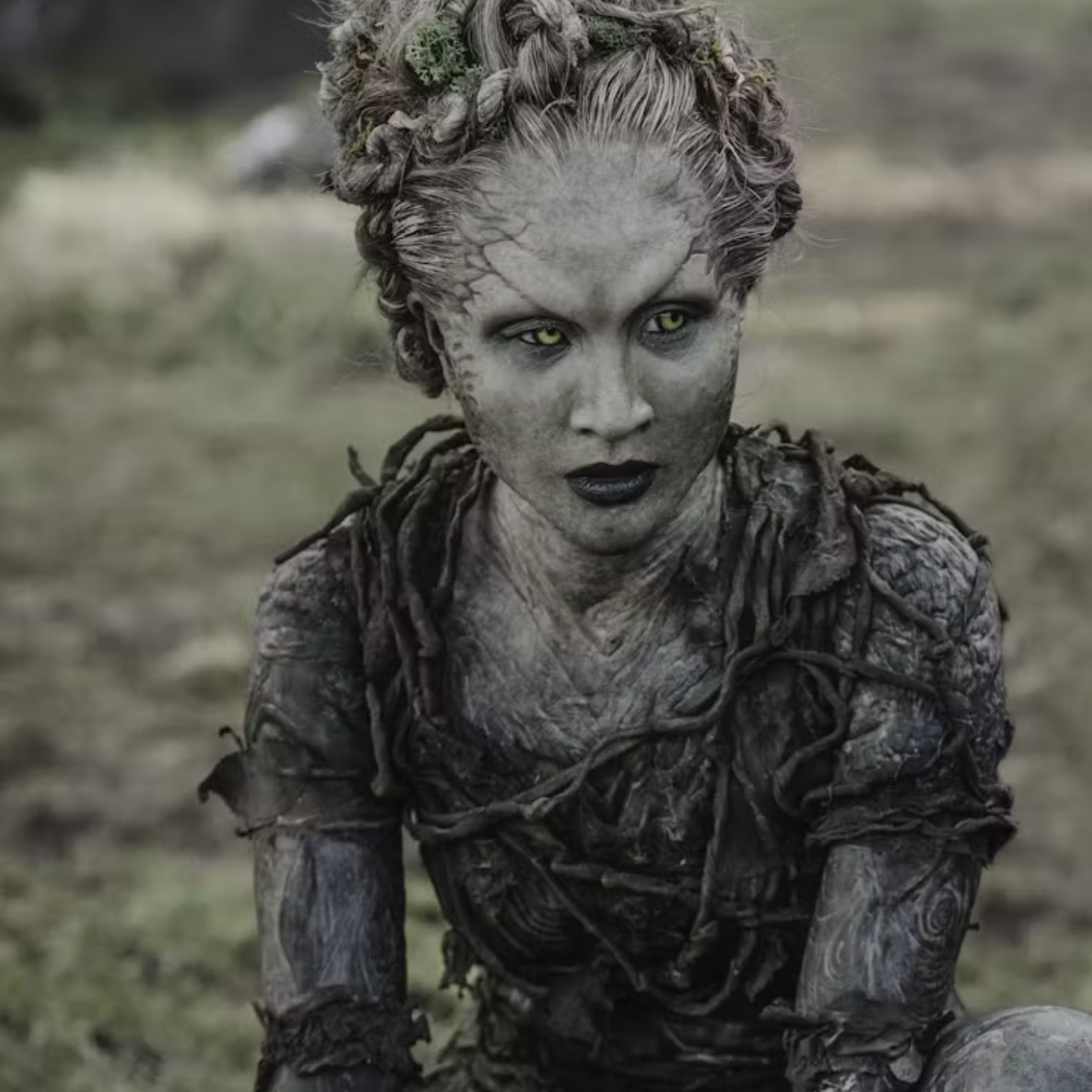
It was a terrible sound, a wail of pain and fury that seemed to burn the ears. Aeron Damphair covered his, and prayed for the Drowned God to raise a mighty wave and smash the horn to silence, yet still the shriek went on and on. It is the horn of hell, he wanted to scream, though no man would have heard him. The cheeks of the tattooed man were so puffed out they looked about to burst, and the muscles in his chest twitched in a way that it made it seem as if the bird were about to rip free of his flesh and take wing. And now the glyphs were burning brightly, every line and letter shimmering with white fire. On and on and on the sound went, echoing amongst the howling hills behind them and across the waters of Nagga's Cradle to ring against the mountains of Great Wyk, on and on and on until it filled the whole wet world. And when it seemed the sound would never end, it did. Intro Welcome or welcome back to the CotC, hi! Today’s video is one that I hadn’t planned, but upon an AGoT re-read I thought, I would really love to talk about it because not only does it give hints about the magic in the universe but it’s also something that GRRM heavily uses as a literary tool: songs, sounds, and music. All three are used frequently as tools on screen and on paper, it is a great way to add layers to the narrative. It is a strength of GRRM that is not often recognized as much, but I personally find the way he describes music, songs, and sounds brilliant. His use of music and sounds in most of his works, ASOIAF included, is so detailed and thematically integrated, that it can help with understanding the story, the themes, and the characters more and even the magic, wherever involved. And this is what I want to talk about today, but before we begin, don’t forget to like & subscribe if you enjoy my content. Music & Magic in Real-Life Mythologies and Cultures Songs, music, and sounds have long been considered magical in various - if not all - mythologies and cultures worldwide, because of the powerful effects that music and sounds can have on emotions, behavior, and even the physical world. Music, Singing, vibrations, and various sounds being a part of creation myths, various music deities in every culture, singing, chanting, and music being a very important part of rituals all over the world, magical instruments, healing songs, and in general the idea that music, singing and sounds can connect people to each other and to otherworldly powers and gods, the idea that music is divine, eternal and untouchable has been observed in every culture. Music has the ability to evoke emotions and memories. This strong emotional response can feel almost magical, it scratches something in our brain like very few things can. There are sounds that are calming, make you sleep, make you angry, sad, happy, or annoy you for some reason. Additionally, music and sounds are fundamentally vibrations that can have physical effects, think glass breaking. And there are certain frequencies and rhythms that can resonate with the body and the environment, creating sensations that could feel otherworldly or magical if you are not familiar with that; you don’t see anything, but you feel something. Music is not visible or tangible and the fact that music does not have a physical form but can still have a significant impact makes it seem otherworldly. And these reasons are exactly why people everywhere consider it a fundamental, magical force that shapes reality, why we see it in creation myths and rituals, why in many cultures, harmonious music is believed to restore balance and health. Harmony’s reflection of cosmic order, emotional resonance, and unity perfectly explains why music is connected to the divine and supernatural. Everything about music, singing, and sounds explains why they are often considered magical across different cultures and mythologies. Music & Nihilism And this is something heavily utilized by George and not just in this series. His use of songs and music extends into his older works as well, including his short story collections and standalone novels in the titles and the rest of the narrative. Aside from ASoIaF, Song for Lya is the best example. Robb, an empath, and his lover Lyanna, who is a telepath are hired to investigate a troubling situation on the planet Shkea, where the humanoid Shkeen practice a ritual called Joining, allowing themselves to be consumed by a parasite called the Greeshka. Initially unconcerned, humans start joining the Cult of the Union, prompting an investigation. With the help of administrator Dino Valcarenghi and anthropologist Laurie Blackburn, Robb and Lyanna explore the Shkeen culture, finding the Joined to be remarkably happy due to their deep connection facilitated by the Greeshka. Lyanna becomes increasingly drawn to this Union, questioning her beliefs about love and connection, and eventually disappears. The feelings of the joined are something we see firsthand and are described with sounds. It is loud, a mindstorm, a song, deafening obnoxious bells, joyful, and bright. It’s a screaming of love and belonging. At some point, Lyanna went missing and Robb visited the caves again alone, when he met with the main Greeshka and tried to read its feelings, he began to understand what Lyanna was sensing. Feeling one with the universe, loved. At night, Robb dreamed he was alone on a darkling plain, a dark, lonely, cold, silent empty realm, and Lyanna came to him. The plain is the antithesis of what people feel when joined. It is dark, cold, disturbingly silent, and lonely. It brings out feelings people are afraid of and feelings that Lyanna could not handle, so she joined. She couldn’t handle being forever alone, forever in the dark, forever in silence, forever cold. She explained that, and wanted Robb to experience the happiness she felt, but Robb refused and soon after left the planet as well. George in this story, uses music and sounds similar to how he uses them in ASOIAF as we will see in a moment. The music and the sound symbolize harmony, unity, strong emotions, life, joy and love. Mostly positive emotions, so positive in fact, that feel violent, fiery, something that burns you from the inside. The ending of the story could be interpreted as nihilistic at first glance, but I would say it carries determination and resilience as well. The darkling plain symbolizes how humans are alone in the universe and how connections and true love are superficial more often than not. Lya joined hoping she will find a deeper connection and escape the cold, dark, silent, empty, realm, but Robb decided to keep on living. He knows that life has suffering and loneliness, but decides to continue, in the hope that he will eventually find real connections and a meaning, that he will find love. “A Song for Lya" explores themes of loneliness and existential dread, questioning whether real connection between people is possible and sustainable. Can we ever fully know and love each other? It’s questioning the Shkeen's promise. Does ultimate togetherness strip away essential human qualities? The story highlights that humans, being flawed and incomplete, is what pushes them to develop dreams, desires, and connections. It might look sad and hopeless, but it celebrates the meaningful connections people manage to create, moments of shared love, and the capacity to find comfort and love in various forms—art, pets, nature, places, and stories, and of course other people—even during loss, fear, and the existential darkness and fear that looms after death. This is why the lack of music represents death, despair, and loneliness. Personally, I see the same approach in most of GRRM’s works and it is something he has talked about when people claim that ASOIAF is nihilistic. In a very basic level winter is coming for all of us … but I don’t think it makes it necessarily a pessimistic world. Not any more pessimistic than the real world we live in. We’re here for a short time and we should be conscious of our own mortality, but the important thing is that love, compassion and empathy with other human beings is still possible. Laughter is still possible! Even laughter in the face of death… The struggle to make the world a better place… We have things like war, murder and rape… horrible things that still exist, but we don’t have to accept them, we can fight the good fight. The fight to eliminate those things. There is darkness in the world, but I don’t think we necessarily need to give way to despair. One of the great things that Tolkien says in Lord of The Rings is “despair is the ultimate crime”. That’s the ultimate failing of Denethor, the Steward of Gondor, that he despairs of ever being able to defeat Sauron. We should not despair. We should not go gentle into that good night. So winter is coming, but light the torches, drink the wine and gather around the fire, we can still defy it! How Sounds symbolize Life & Death It is an idea that he makes very obvious and integrated into this story from book one, and of course, he is using sounds or the lack of them. "Will saw them," Gared said. "If he says they are dead, that's proof enough for me." Will had known they would drag him into the quarrel sooner or later. He wished it had been later rather than sooner. "My mother told me that dead men sing no songs," he put in. "It was the cold," Gared said with iron certainty. "I saw men freeze last winter, and the one before, when I was half a boy. Everyone talks about snows forty foot deep, and how the ice wind comes howling out of the north, but the real enemy is the cold. It steals up on you quieter than Will, and at first you shiver and your teeth chatter and you stamp your feet and dream of mulled wine and nice hot fires. It burns, it does. Nothing burns like the cold. But only for a while. Then it gets inside you and starts to fill you up, and after a while you don't have the strength to fight it. It's easier just to sit down or go to sleep. They say you don't feel any pain toward the end. First you go weak and drowsy, and everything starts to fade, and then it's like sinking into a sea of warm milk. Peaceful, like." [...] The pale sword came shivering through the air. Ser Waymar met it with steel. When the blades met, there was no ring of metal on metal; only a high, thin sound at the edge of hearing, like an animal screaming in pain. In the prologue of AGOT, the Others are introduced, the cold, the darkness, and the death. Cold is described as a Silent Killer. It is “Quieter than Will”, personified as a stealthy enemy that "steals up on you,". It’s insidious and inevitable. Gared describes the progression from shivering to weakness and drowsiness, leading up to a peaceful, painless end, an end you cannot fight. It is the silence that accompanies the cold that intensifies the sense of danger and the stealthy, insidious nature of this deadly force. Dead men sing no songs. The quietness of the cold is the antithesis of the usual sounds of human activity (shivering, chattering teeth). It makes the cold feel even more ominous, as it slowly and quietly claims its victims. When Ser Waymar's sword meets the blade of the Other, the lack of a typical metallic ring and the presence of a faint, eerie sound suggest the supernatural and otherworldly nature of the encounter, it is a wail of pain, a sound someone makes while dying. It is at "the edge of hearing", it is unsettling, it is almost silent, almost dead, but not really. The whole prologue ends in death, helplessness, and despair. Everything around is cold, dead, peaceful, and silent. But the last chapter of the book brings back life, brings hope, brings music. Jhogo spied it first. "There," he said in a hushed voice. Dany looked and saw it, low in the east. The first star was a comet, burning red. Bloodred; fire red; the dragon's tail. She could not have asked for a stronger sign. Dany took the torch from Aggo's hand and thrust it between the logs. The oil took the fire at once, the brush and dried grass a heartbeat later. Tiny flames went darting up the wood like swift red mice, skating over the oil and leaping from bark to branch to leaf. A rising heat puffed at her face, soft and sudden as a lover's breath, but in seconds it had grown too hot to bear. Dany stepped backward. The wood crackled, louder and louder. Mirri Maz Duur began to sing in a shrill, ululating voice. The flames whirled and writhed, racing each other up the platform. The dusk shimmered as the air itself seemed to liquefy from the heat. Dany heard logs spit and crack. The fires swept over Mirri Maz Duur. Her song grew louder, shriller … then she gasped, again and again, and her song became a shuddering wail, thin and high and full of agony. [...] As Daenerys Targaryen rose to her feet, her black hissed, pale smoke venting from its mouth and nostrils. The other two pulled away from her breasts and added their voices to the call, translucent wings unfolding and stirring the air, and for the first time in hundreds of years, the night came alive with the music of dragons. Unlike the prologue, this instance is chaotic, violent, loud, and bloody. The red comet is a harbinger of change, a symbol of fire and blood, foreshadowing the transformative events to come. The ritual involves a burning pyre, with flames that "whirl and writhe," it’s chaotic, loud, and destructive. Fire crackling, wind, whirls, the heat "puffing at her face, soft and sudden as a lover's breath," and singing screams. The whole scene represents real childbirth. Mirri Maz Duur's song becomes a "shuddering wail," like the screams of agony and the sounds of childbirth, which can be both painful and bloody, and often lead to death. Her death in the flames is a catalyst for the birth of the dragons, symbolizing how new life emerges from death and destruction. Birth is not a fun, easy or pretty thing. It is bloody, painful, and violent. The first passage depicts death as cold, silent, and inevitable, while the second passage shows life emerging from fire and pain, paralleling the brutal reality of childbirth where life and death are closely linked. For years and years birth was something that was considered almost a sacrifice. The cold in the first passage leads to a silent end, while the fire in the second passage leads to a dramatic rebirth. The "music of dragons" symbolizes the return of magic and the start of a new era. It also parallels the cries of a newborn, announcing life and potential. Nothing is silent after a birth, even when it is accompanied by death, it is never silent. Daenerys' dragons are born from the flames, much like a child is born from the intense process of labor. The ritual is a transformative act, symbolizing rebirth and renewal. Alexa, play Zvara by V.I.C (λετζιτ θα το βαλω, ατ λιστ το κομματι που λεει καψτε τα κλπ κλπ μη φαμε και κοπιραιτ). There is a reason the world music is used and not screams, wails, or roars. The first sound of the dragons, with their "translucent wings unfolding and stirring the air," symbolizes something beautiful. It is an almost gentle and ethereal sound that contrasts with the earlier chaos and violence, marking the arrival of new life. The night came alive. Magic is not just accompanied by music, magic is music and life. Something we have seen especially Melisandre point out, with the mantra “only death can pay for life”. We see the phrase for the first time in a life/death situation, with Dany’s unborn child and Drogo, but Melisandre and the Faceless men use similar phrases pretty often about magical spells. "You do not believe me. You will. The cost of that belief will be three lives. A small price to pay for wisdom, some might say … but not one you had to pay. Remember that when you behold the blind and ravaged faces of your dead. And come that day, take my hand." Though her own children had all been stillborn, the milk that flowed so abundantly from the breasts of Alys Rivers had nourished countless babes born of other women at Harrenhal. Was she in truth a witch who lay with demons, bringing forth dead children as payment for the knowledge they gave her? Only Death can pay for magic pretty much. Sounds and Magic: Food of the Soul. Music is both connected to life, but also magic. Not only is it always linked to magic, it seems like music is necessary to magic. The gods in the pyre were scarcely recognizable anymore. The head fell off the Smith with a puff of ash and embers. Melisandre sang in the tongue of Asshai, her voice rising and falling like the tides of the sea. Stannis untied his singed leather cape and listened in silence. Thrust in the ground, Lightbringer still glowed ruddy hot, but the flames that clung to the sword were dwindling and dying. Davos looked down from an arched window in the gallery above. He watched Melisandre lift her arms, as if to embrace the shivering flames. "R'hllor," she sang in a voice loud and clear, "you are the light in our eyes, the fire in our hearts, the heat in our loins. Yours is the sun that warms our days, yours the stars that guard us in the dark of night." The iron captain was not seen again that day, but as the hours passed the crew of his Iron Victory reported hearing the sound of wild laughter coming from the captain's cabin, laughter deep and dark and mad, and when Longwater Pyke and Wulfe One-Eye tried the cabin door they found it barred. Later singing was heard, a strange high wailing song in a tongue the maester said was High Valyrian. That was when the monkeys left the ship, screeching as they leapt into the water. Come sunset, as the sea turned black as ink and the swollen sun tinted the sky a deep and bloody red, Victarion came back on deck. He was naked from the waist up, his left arm blood to the elbow. As his crew gathered, whispering and trading glances, he raised a charred and blackened hand. Wisps of dark smoke rose from his fingers as he pointed at the maester. As she made her way past the temples, she could hear the acolytes of the Cult of Starry Wisdom atop their scrying tower, singing to the evening stars. The priests always sing no matter the religion, from R’hollorists to Mirri Maz Durr to the priests of the church of Starry Wisdom, they sing. Even the children of the forest are called the singers. "You will never walk again," the three-eyed crow had promised, "but you will fly." Sometimes the sound of song would drift up from someplace far below. The children of the forest, Old Nan would have called the singers, but those who sing the song of earth was their own name for themselves, in the True Tongue that no human man could speak. The ravens could speak it, though. Their small black eyes were full of secrets, and they would caw at him and peck his skin when they heard the songs. These things are less certain. Archmaester Cassander suggests elsewise in his Song of the Sea: How the Lands Were Severed, arguing that it was not the singing of greenseers that parted Westeros from Essos but rather what he calls the Song of the Sea. Music and Songs work kinda as a link. A way to connect the tangible with the spiritual, the natural with the supernatural. Music is food for the soul and magic is heavily linked to the spirit in the novels. People move their spirits, and souls into inanimate objects like swords, trees containing souls, and more. In my “Are gods real in ASOIAF” I said that the whole concept of magic in these novels is according to the author connected to animism, a belief common in various religions in RL and one that is reflected in Plato’s Theory of Forms. The theory suggests that the physical world is not as real or true as "Forms". Forms or "Ideas" are the non-physical, timeless, absolute, and unchangeable essences of all things, of which objects and matter in the physical world are mere imitations, a belief mirrored in what the priests of Boash believe in the novels and the animistic beliefs of the Singers. "Your little one is with the gods now," the woods witch told his mother, as she wept. "He'll never hurt again, never hunger, never cry. The gods have taken him down into the earth, into the trees. The gods are all around us, in the rocks and streams, in the birds and beasts. Your Bump has gone to join them. He'll be the world and all that's in it." Their eunuch priests wore eyeless hoods in honor of their god; only in darkness, they believed, would their third eye open, allowing them to see the "higher truths" of creation that lay concealed behind the world's illusions. All elements of nature possess a spiritual essence, something we saw being reflected in the religion of the Old Gods. Practitioners of magic tap into this essence to wield supernatural powers, they feed the trees, they are feeding the flames, give sheep and babies to the Cold Gods, White Calfs to the Aquan the Red Bull, they drink Bull’s Blood to become super strong, Dothraki women eat a stallion’s heart to make the baby strong and swift like a stallion and so on. Everything seems to have its own spiritual print, of sorts. And music is the way to connect with that print. Like in real life ancient and not beliefs, music is used as a way of connecting to the higher powers and I find this concept amazing. Even the direwolves, the main animal we see from a first-person POV, connect their spirit with their human and sing to communicate. He could not walk, nor climb nor hunt nor fight with a wooden sword as once he had, but he could still look. He liked to watch the windows begin to glow all over Winterfell as candles and hearth fires were lit behind the diamond-shaped panes of tower and hall, and he loved to listen to the direwolves sing to the stars. Of late, he often dreamed of wolves. They are talking to me, brother to brother, he told himself when the direwolves howled. He could almost understand them . . . not quite, not truly, but almost . . . as if they were singing in a language he had once known and somehow forgotten. While Bran was unconscious, Robb even said that listening to the direwolves sing, will help him. "He needs to hear them sing," Robb said. Somewhere out in Winterfell, a second wolf began to howl in chorus with the first. Then a third, closer. "Shaggydog and Grey Wind," Robb said as their voices rose and fell together. "You can tell them apart if you listen close." Catelyn was shaking. It was the grief, the cold, the howling of the direwolves. It is a cold song, a sad song full of grief, but still, a song, something that will help Bran survive. The sad and hard realities of life, but life and magic nonetheless, the wolves are of help, when all is darkest. It was the hour of the wolf. The longest, darkest hour of the night. For many of the men who had assembled in the market square, it would be the last night of their lives. In Scandinavian folklore, the hour of the wolf is when the boundary between the living and the dead is thinnest, it is the time of night when fear is at its peak. But like in the Catelyn chapter above and in the Bran chapter when he wakes up from the coma, we see the wolves being there, a help during the darkest hour. Bran touched his forehead, between his eyes. The place where the crow had pecked him was still burning, but there was nothing there, no blood, no wound. He felt weak and dizzy. He tried to get out of bed, but nothing happened. And then there was movement beside the bed, and something landed lightly on his legs. He felt nothing. A pair of yellow eyes looked into his own, shining like the sun. The window was open and it was cold in the room, but the warmth that came off the wolf enfolded him like a hot bath. His pup, Bran realized … or was it? He was so big now. He reached out to pet him, his hand trembling like a leaf. When his brother Robb burst into the room, breathless from his dash up the tower steps, the direwolf was licking Bran's face. Bran looked up calmly. "His name is Summer," he said. Summer was not only always protecting Bran while unconscious, he was the first thing, the first warmth Bran felt when he woke up. With eyes as golden as the sun, warm and comfortable, thus he named him Summer. Btw this paragraph easily is one of my favorite passages in the novels. There is a reason I brought up “A Song for Lya” specifically. The afterlife and collective consciousness within the Greeshka parallels the afterlife and collective consciousness of the Weirwood trees. "The man who never reads lives only one. The singers of the forest had no books. No ink, no parchment, no written language. Instead they had the trees, and the weirwoods above all. When they died, they went into the wood, into leaf and limb and root, and the trees remembered. All their songs and spells, their histories and prayers, everything they knew about this world. Maesters will tell you that the weirwoods are sacred to the old gods. The singers believe they are the old gods. When singers die they become part of that godhood." There is a very important difference though, the Singers live, laugh, love first 😛. They have relationships, connections with their animals, they sing, fight, and live, an all-in-all, human life, but completely harmonious with the world around them. When they die they can merge with their gods in eternal harmony. In “A Song for Lya” this connection seems unsettling almost scary, because people commit suicide to achieve that. They are willing to be consumed alive, slowly so they can feel in company, loved, and whole. Magical Horns & Hammers And of course, nothing screams “sounds can wield power” in ASOIAF, more than the existence of the Magical Horns. The horn of Joramun and the Dragonbinder are probably the most tangible proof that music, songs, and sounds are a way of wielding and amplifying magical power. The idea of magical instruments, specifically horns, is an idea that can be found in all cultures around the world. Heimdall is destined to blow Gjallarhorn to signal the onset of Ragnarök. The blowing of Gjallarhorn marks the beginning of the end, a summon to the final battle. It symbolizes alertness, the duty of guardianship, and the inevitable cycle of destruction and rebirth. In the New Testament, the Book of Revelation describes seven trumpets that are sounded by seven angels. Each trumpet blast heralds a different apocalyptic event upon the Earth, leading to the ultimate judgment and the establishment of a new divine order. They serve as divine warnings, each one bringing progressively severe catastrophes. They represent the unfolding of God's plan for the end times and the transition from the current world to a new, purified creation. The shofar is an ancient musical horn made from a ram's horn, traditionally used during the Jewish New Year and the Day of Atonement. Shofars were used often to signify the start of a war and the most famous shofar story is in the book of Joshua, when the Israelite priests circled Jericho while blowing their horns, and the city's walls came tumbling down. Israfil is the angel who blows the trumpet to signal the Day of Judgment in Islam. At first blast, the earth and the mountains will be lifted up and crushed with a single blow. A second trumpet blast will signal a "final cataclysm", the extinction of all living creatures. Like the trumpets of revelation, the trumpet of Israfil represents the momentous shift from earthly life to eternal life. Judgment, resurrection, and the fulfillment of divine prophecy. While not a horn, the Dagda's harp in Celtic mythology is another magical musical instrument. It could change the seasons and control the elements. All these reflect the deep connection between music, magic, and cosmic order. Sounds are the way to connect with the powers. I think that GRRM uses music, songs, and sounds exactly like real-life myths and religions perceived, and some still perceive, them. He gave music a magical twist. Sound is not visible or tangible; it exists as vibrations traveling through the air and this invisibility gives it a mysterious quality. We can feel it and experience it without it being seen or touched. The very nature of music led many if not all cultures to perceive it as a supernatural, powerful force. A way of connecting with the higher powers. In this universe, magic is real so these qualities actually exist. They are immaterial forces that influence the material world. TIt is obvious that the Horn of Joramun and the Dragonbinder are gonna be catalysts for the apocalypse, they will 100% herald it and they most likely will be followed by catastrophic physical magical aftereffects. These instruments seem to need a sacrifice, a big sacrifice and at least one of them produces the most loud, aggressive sound. A sound that can literally burn you in the case of Dragonbinder, its sound is part of the reason they are so strong. I have also talked about it in other videos, but I think the hammer of the waters was a horn. In the novels horn, antlers, and hammers are all associated with the same people. Gendry with his horned bull helmet and his hammer, Robert sitting like a horned god with his hammer during his youth, Tormund is both hornblower and thunderfist with hands as big as hammers. Horns in real life bring the day of judgment, similarly, hammers represent judgment and fairness. Both are loud and echoing tools of the divine. It kinda makes sense for the hammer of the waters to be brought on by a horn, one that was linked to the waters since this is what the greenseers allegedly did with their songs and sacrifice. These horns are the ASOIAF’s take on real-life apocalyptic, and not only, magical instruments. They represent otherworldly intervention, the end of an era, the call to arms, and the transition from the known world to a new order. Whether it's Heimdall's Gjallarhorn signaling Ragnarök, the seven trumpets of Revelation, or the Dagda’s harp changing the seasons, these instruments play crucial roles in the cosmos. Their blasts are not just sounds but profound declarations of change, warning, and renewal. The sound partially causes the changes, it is the invisible force. Songs as a literary tool I would like to give an honorable mention to all the songs we have in the novels, as well. Songs with lyrics that emphasize the plot like “The Bear and the Maiden Fair”, songs written about current events like the “Battle of the Blackwater”, and songs that work as exposition tools for legends and historical events like "Six Maids in a Pool". They are all so integrated into the story and help us understand the lore and the way George works his myths and legends in it. Songs are allegorical, songs are different from place to place, and from time to time, they don’t give us actual events, but vague clues about the events. The bear of course was not an actual bear, but like in our story a big rugged harsh around-the-edges character, most likely not conventionally attractive. Maybe not all the people in the songs were the actual heroes and villains, think about how in years from the current timeline if historical accounts and stuff get destroyed, but songs continue to be sung, as in RL as well, people will think that Joffrey was “A brave young boy with hair of gold” and Stannis was doing everything out of jealousy, an uncle with heart as black as his hair. The many songs and bards in the series work as actual bards, they are exposition devices. Clever and entertaining exposition devices, they give information about the lore, myths and legends, help the current narrative and character development, and give clues about the society of the areas, while pushing us, the readers, to understand that not everything about the past is as it seems. Songs in the novels are a utopia of sorts, like an eternal summer, like the eternal joy and harmony after the Singers die and go into the weirwood. "Winter will never come for the likes of us. Should we die in battle, they will surely sing of us, and it's always summer in the songs. In the songs all knights are gallant, all maids are beautiful, and the sun is always shining." Winter comes for all of us, Catelyn thought. Songs oftentimes are a way of expression, even when they are about actual events everything is romanticized, even when the song is sad, even if it’s about death. Songs represent heaven, the ideal world, even when sad, they are still beautiful. It is why in A Song for Lya the joined were always amidst song, love, and joy. Maybe real life isn’t always like that, but there are times it is and these moments are more impactful and important, they are cherished because they are not the norm. If it was summer all year round, people wouldn’t long for it. Songs: Narration, Magic & Harmony The word "song" is obviously a favorite of Martin's. He uses it in the titles of many of his works and in the fictional creations of others, like the books written by maesters in A Song of Ice and Fire. It’s a multipurpose word and one very fun to play around with. At its core, a song is a story woven with melody and rhythm, carrying the essence of tales both ancient and new. In the context of fantasy, it is also a magical spell with the power to enchant, from Moqqoro’s healing songs to the magical horns and sounds. Lastly, a song represents harmony, the ideal state of balance and unity that people constantly strive to achieve despite the difficulties. A song, and music in general, mirrors how humans try to create order amidst chaos and strive for harmony, showing how combining different elements together can create something new and beautiful. This is it for today. If you liked the video don’t forget to like and subscribe. Leave your comments about what you believe about music in the novels, passages that you believe are elevated because of the music and songs GRRM uses, and whether you have a favorite song from the novels. And since we are here, write down below one of your favorite songs in general. Until next time bye!