
Company of the Cat · Cat...*meow*
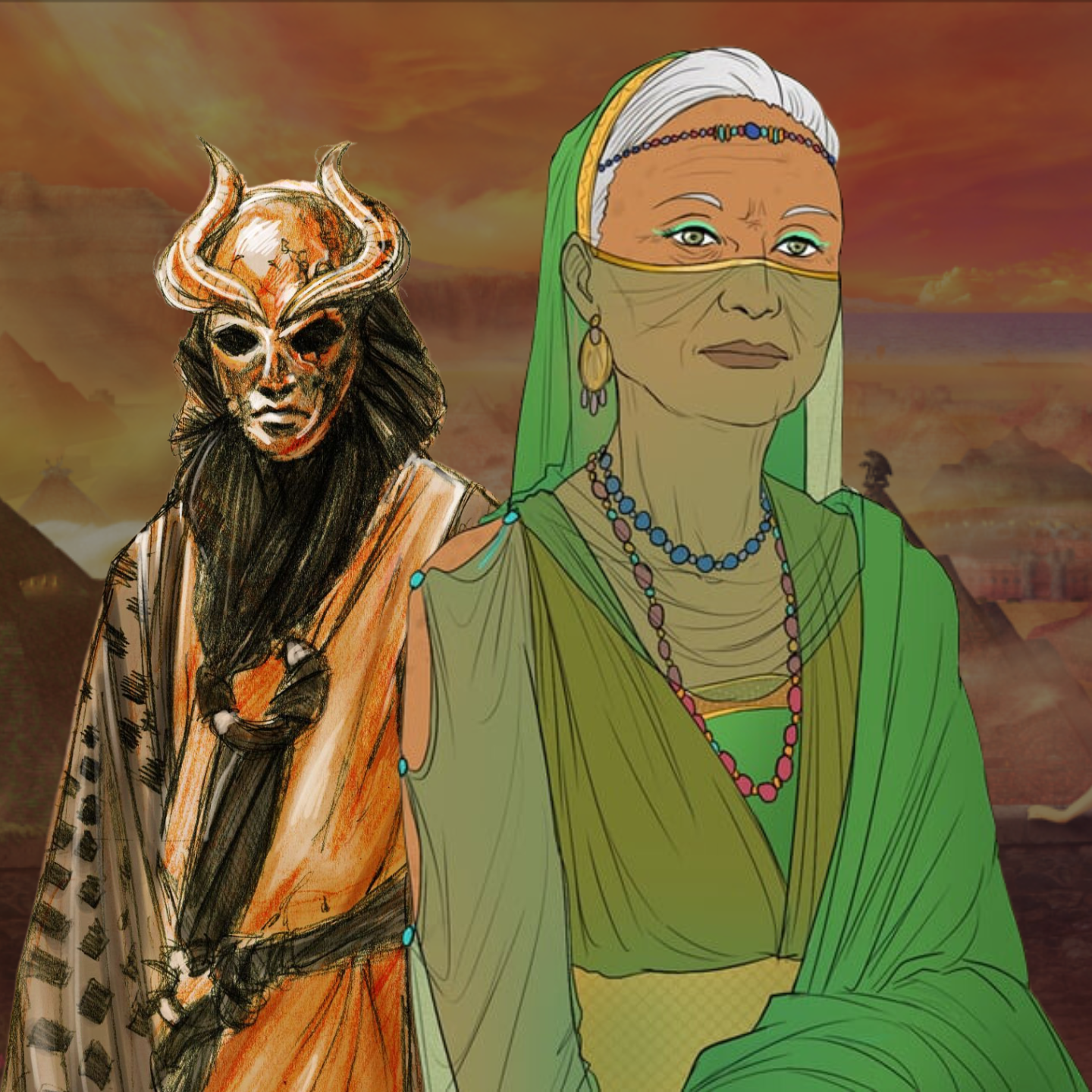
Who is the Harpy and Why it Matters | ASoIaF Theory & Analysis 📖 Sources: - A Song of Ice and Fire book series - The World of Ice and Fire - A Laboratory of Politics Part VI: https://towerofthehand.com/blog/2015/02/01-laboratory-of-politics-part-vi/ 🎬 Chapters: 00:00 Intro 01:29 Meereen in A Dance with Dragons 05:01 The Sons of the Harpy & the Slaver Elite 11:29 The Poisoned Locusts: Skahaz vs Hizdahr 26:03 Galazza Galare: The Harpy 34:42 The Illusion of Peace & Culture 46:33 Outro 🌐 Social Media & Podcast: Instagram: https://www.instagram.com/company_of_the_cat/ Facebook Page: https://www.facebook.com/profile.php?id=100086601590664 Youtube: https://youtu.be/-XFfqnCJrtI 🎨 Art Credits: Thumbnail: Green Grace by Sasha Gladysh, Meereen by lvlorf3us All art credited on screen Clips from HBO's Game of Thrones and Game of Thrones: Histories & Lore 🔍 Keywords: Daenerys Targaryen, Character Analysis, dragons, analysis, ASOIAF, A Song of Ice and Fire, ASOIAF theories, Old Valyria, Valyrian magic, Dany Targaryen, Game of Thrones, Ghiscari, Old Ghis, Harpy, Sons of the Harpy, Skahaz mo Kandaq, Hizdahr zo Loraq, Green Grace, Galazza Galare #asoiaf #gameofthrones #daenerystargaryen
Intro Welcome or welcome back to the CotC! Today, we're diving into one of the most intriguing, divisive, and underappreciated political plotlines in A Dance with Dragons: the chaotic situation in Slaver's Bay. This book picks up where A Storm of Swords left off and runs concurrently with A Feast for Crows, focusing on Daenerys Targaryen's struggle to rule Meereen after conquering the city. The newfound freedom of the former slaves is under constant threat from the Sons of the Harpy—a group of Ghiscari nobles who seek to reinstate slavery and remove Daenerys from the picture. The Harpy is allegedly the mastermind behind this resistance, though many, including Daenerys herself, doubt that a single person is pulling the strings. One popular theory in the fandom is that Galazza Galare, the Green Grace, is secretly the Harpy. In this video, I’ll dive into why Galazza being the Harpy would be a brilliant plot point, both narratively and thematically, for the next book and why it makes so much sense. We’ll also explore the characters of Hizdahr and Skahaz mo Kandaq. Most importantly we will dive into how Ghiscari culture has been reduced to a shadow of its former glory, and why ending slavery isn't about erasing their culture but about preserving what's left of it. And of course, we’ll discuss the so-called ‘peace’ in Meereen, which is anything but peaceful. But before we get started, don’t forget to like and subscribe if you enjoy my content! Meereen in A Dance with Dragons "A Dance with Dragons" progresses the story in Essos more than any previous book, with events unfolding through multiple POVs: Daenerys, Tyrion, Victarion, Barristan, Quentyn, and Jon Connington. To fully grasp the situation in Meereen, it’s essential to consider details from all these chapters. The central storyline follows Daenerys in Meereen, the third slave city she conquers. After the chaos in Astapor, she decides to stay in Meereen until it’s stable enough for her to continue to Westeros. Her greatest challenge comes from the Sons of the Harpy, a group of Ghiscari nobles terrorizing the city to restore slavery. They wage a shadow war, brutally attacking freedmen, Unsullied, and shavepates—Ghiscari who support Daenerys—under cover of night, leaving a bloody harpy symbol behind. Several key characters are introduced in Meereen: Reznak mo Reznak, the seneschal on Dany’s council; Skahaz mo Kandaq, the first and most prominent shavepate; and Hizdahr zo Loraq, a wealthy noble pushing for the reopening of the fighting pits. Despite Daenerys’ efforts—including raising bounties and forming a new guard called the Brazen Beasts—the violence escalates. After Drogon kills a child and more Unsullied are murdered, Daenerys locks up Viserion and Rhaegal, though Drogon escapes, and takes noble children as hostages. Xaro Xhoan Daxos reappears, arguing that slavery is natural and trying to convince Daenerys to leave. Meanwhile, Yunkai is preparing for war against Meereen, Qarth—bolstered by some Meereenese ships—blocks its trade routes, and cities like Myr, Volantis, and Mantarys also oppose the abolition of slavery. Xaro offers Daenerys ships to sail to Westeros, but she refuses, knowing her departure would spell disaster for Meereen. Both Xaro and the Meereenese nobles notice she is reluctant to use her dragons in war and unwilling to harm the hostages, which gives them leverage. Galazza Galare, the Green Grace and high priestess of the Ghiscari Temple of the Graces in Meereen, who acts as a voice for peace and tolerance in Dany’s council, suggests that marrying Hizdahr could stabilize the city. Dany agrees to a deal: if Hizdahr can stop the killings for ninety days and negotiate peace with Yunkai, they will wed. Suspicion lingers—Daario even suggests a "Meereenese Red Wedding," which Dany fiercely rejects—but the murders cease for sixty-four days. However, a plague breaks out in Astapor, refugees flood into Meereen, and Yunkai prepares for siege. After visiting the refugee camp to tend the sick, Daenerys, believing marriage is her best option, agrees and reopens the fighting pits as part of the wedding arrangements. Hizdahr negotiates peace with Yunkai, under the condition that Daenerys will allow the slave trade to continue in Astapor and Yunkai. Quentyn Martell arrives, revealing a secret marriage pact between his sister and Viserys, and offers himself to Dany, but she refuses, having already agreed to marry Hizdahr. During the wedding festivities, the Yunkai’i openly show off and trade slaves within Meereen’s walls, and Daenerys becomes increasingly miserable. At the fighting pits, Hizdahr, who was responsible for providing food for the wedding feast, urges her to eat honeyed locusts; she declines, but Strong Belwas eats them and falls ill. Drogon then appears, rampaging through the pit. Hizdahr orders his death, but Daenerys tames Drogon and flies away. With Daenerys gone, Hizdahr rules Meereen. Skahaz convinces Barristan Selmy that Hizdahr poisoned the locusts to kill Dany, leading Barristan to arrest Hizdahr. The Sons of the Harpy resume their attacks, and Quentyn dies trying to tame the dragons. Barristan takes over as regeant and breaks the peace. The Yunkai’i hurl corpses into the city to spread the plague, while Daenerys, lost in the Dothraki Sea, struggles to return to Meereen. She becomes ill and has visions before being discovered by Khal Jhaqo’s khalasar. This is just a quick rundown of the events, but I'll dive into more details where needed in the rest of the video. The Sons of the Harpy The Sons of the Harpy, as mentioned earlier, is a group of Ghiscari noblemen from Meereen who quickly turned against Daenerys after she decided to stay and abolish slavery. They began brutally attacking, killing, and terrorizing the freedmen of the city, including the Unsullied and any Ghiscari willing to accept the new order in Meereen. “The dead man's face was smooth and hairless, though his cheeks had been slashed open ear to ear. He had been a tall man, blue-eyed and fair of face. Some child of Lys or Old Volantis, snatched off a ship by corsairs and sold into bondage in red Astapor. Though his eyes were open, it was his wounds that wept. There were more wounds than she could count. "Your Grace," Ser Barristan said, "there was a harpy drawn on the bricks in the alley where he was found …" "… drawn in blood." Daenerys knew the way of it by now. The Sons of the Harpy did their butchery by night, and over each kill they left their mark. "Grey Worm, why was this man alone? Had he no partner?" By her command, when the Unsullied walked the streets of Meereen by night they always walked in pairs. "My queen," replied the captain, "your servant Stalwart Shield had no duty last night. He had gone to a … a certain place … to drink, and have companionship." “A certain place? What do you mean?” “A house of pleasure, Your Grace.” A brothel. Half of her freedmen were from Yunkai, where the Wise Masters had been famed for training bedslaves. The way of the seven sighs. Brothels had sprouted up like mushrooms all over Meereen. It is all they know. They need to survive. Food was more costly every day, whilst the price of flesh grew cheaper. In the poorer districts between the stepped pyramids of Meereen’s slaver nobility, there were brothels catering to every conceivable erotic taste, she knew. Even so … “What could a eunuch hope to find in a brothel?” “Even those who lack a man’s parts may still have a man’s heart, Your Grace,” said Grey Worm. “This one has been told that your servant Stalwart Shield sometimes gave coin to the women of the brothels to lie with him and hold him.” The blood of the dragon does not weep. “Stalwart Shield,” she said, dry-eyed. “That was his name?” “If it please Your Grace.” “It is a fine name.” The Good Masters of Astapor had not allowed their slave soldiers even names. Some of her Unsullied reclaimed their birth names after she had freed them; others chose new names for themselves. “Is it known how many attackers fell upon Stalwart Shield?” “This one does not know. Many.” “Six or more,” said Ser Barristan. “From the look of his wounds, they swarmed him from all sides. He was found with an empty scabbard. It may be that he wounded some of his attackers.” Dany said a silent prayer that somewhere one of the Harpy’s Sons was dying even now, clutching at his belly and writhing in pain. “Why did they cut open his cheeks like that?” “Gracious queen,” said Grey Worm, “his killers had forced the genitals of a goat down the throat of your servant Stalwart Shield. This one removed them before bringing him here.” They could not feed him his own genitals. The Astapori left him neither root nor stem.” The cruelty of the Sons of the Harpy goes beyond mere killings. They brutally mutilate their victims and defile the bodies in grotesque ways, emphasizing their intent to humiliate and instill terror. The Harpy’s Sons have even offered a bounty for Daenerys's life, promising wealth, glory, and of course: slaves. "I had to come," said Xaro in a languid tone. "Even far away in Qarth, fearful tales had reached my ears. I wept to hear them. It is said that your enemies have promised wealth and glory and a hundred virgin slave girls to any man who slays you." "The Sons of the Harpy." How does he know that? "They scrawl on walls by night and cut the throats of honest freedmen as they sleep. When the sun comes up they hide like roaches. They fear my Brazen Beasts." The Sons of the Harpy have repeatedly threatened the lives of any Ghiscari who aids Daenerys or the freedmen, forcing the Brazen Beasts, the city watch, to hide their identities behind masks. Their methods are vicious and underhanded, relying on intimidation and fear to maintain their grip on power. Even before Daenerys’s arrival, the Meereenese slavers were operating in similar ways. Knowing what happened to Astapor and Yunkai, they never tried to negotiate. Instead, they retreated behind Meereen’s walls, scorched their own fields, and poisoned their wells, leaving Daenerys and her followers—twenty thousand soldiers and sixty thousand former slaves—with nothing. On top of that, they nailed a disemboweled slave child to every milepost along the coastal road from Yunkai, each one pointing toward Meereen as a message to her. The crucifixion of 163 slave children, while they were still alive, was just a display of power; it was meant to spite and break the spirits of Daenerys and her followers. But instead of scaring them off, it enraged the starving and exhausted slaves inside and outside the city, leading to the violent storming of Meereen. In the aftermath, many noblemen sought justice from Daenerys for the acts committed by the enraged slaves during the siege. A more peaceful solution was never on the slavers’ agenda. Even before Daenerys showed up, they were burning crops and poisoning water—tactical warfare, sure, but the crucifixions? That was pure spite and a brutal power play that deserved punishment. All of this is crucial to keep in mind when considering the situation. As I will discuss in the next chapters (but it's important to point out here as well), the Harpy does not care about preserving Ghiscari culture and customs, as many claim. Nor do they care about the punishments Daenerys imposed. This becomes clear in Tyrion’s chapters: "They say," said Haldon. "By they, you mean the slavers, the exiles she drove from Astapor and Meereen. Mere calumnies." "The best calumnies are spiced with truth," suggested Qavo, "but the girl's true sin cannot be denied. This arrogant child has taken it upon herself to smash the slave trade, but that traffic was never confined to Slaver's Bay. It was part of the sea of trade that spanned the world, and the dragon queen has clouded the water. Behind the Black Wall, lords of ancient blood sleep poorly, listening as their kitchen slaves sharpen their long knives. Slaves grow our food, clean our streets, teach our young. They guard our walls, row our galleys, fight our battles. And now when they look east, they see this young queen shining from afar, this breaker of chains. The Old Blood cannot suffer that. Poor men hate her too. Even the vilest beggar stands higher than a slave. This dragon queen would rob him of that consolation." The truth is that the slavers, Ghiscari or not, across this part of the world, have a problem with Daenerys—not because they care about customs, culture, or anything else. If those concerns were even a small part of their grievances, they would include them in their slander campaigns. But they don’t. Their rumors don’t mention her punishments, which were justified, or the supposed disrespect for Ghiscari culture, because that isn’t happening. Instead, they spread stories about her being a witch or having all sorts of weird sex. What they truly care about is money, power, and status—things they have long achieved through the slave trade. The Poisoned Locusts: Skahaz vs Hizdahr The Harpy is the conjectured leader of the Sons of the Harpy, first brought to our and Daenerys’s attention by Skahaz mo Kandaq. “"So far Hizdahr has made good on his promises." "How? The Sons of the Harpy have put down their knives, but why? Because the noble Hizdahr asked sweetly? He is one of them, I tell you. That's why they obey him. He may well be the Harpy." "If there is a Harpy." Skahaz was convinced that somewhere in Meereen the Sons of the Harpy had a highborn overlord, a secret general commanding an army of shadows. Dany did not share his belief.” After Daenerys agrees to marry Hizdahr because he stopped the attacks, Skahaz rightly questions how Hizdahr, if he had no contact with the Sons of the Harpy, was able to negotiate with them—and so quickly. Since his introduction, Hizdahr has been portrayed as a man who greatly benefited from and supported the previous status quo. He stands to gain significantly from the return of slavery, making his swift success in halting the attacks suspicious. “"Magnificence," prompted Reznak mo Reznak, "will you hear the noble Hizdahr zo Loraq?" Again? Dany nodded, and Hizdahr strode forth; a tall man, very slender, with flawless amber skin. He bowed on the same spot where Stalwart Shield had lain in death not long before. I need this man, Dany reminded herself. Hizdahr was a wealthy merchant with many friends in Meereen, and more across the seas. He had visited Volantis, Lys, and Qarth, had kin in Tolos and Elyria, and was even said to wield some influence in New Ghis, where the Yunkai'i were trying to stir up enmity against Dany and her rule. And he was rich. Famously and fabulously rich … And like to grow richer, if I grant his petition. When Dany had closed the city's fighting pits, the value of pit shares had plummeted. Hizdahr zo Loraq had grabbed them up with both hands, and now owned most of the fighting pits in Meereen.” Since the abolition of slavery, the cities of Slaver’s Bay have faced tremendous economic difficulties, as their economies were heavily reliant on the slave trade. If Hizdahr, and by extension, House Loraq, were so wealthy in Meereen, it is almost certain that they were deeply involved in the slave trade. This would align them ideologically with the Sons of the Harpy. Even if Hizdahr is not the Harpy, his ability to negotiate so quickly with them casts doubt on his innocence. Skahaz’s family has a blood feud with Hizdahr and his house, giving Skahaz personal reasons to want Hizdahr out of the picture. However, Hizdahr has sufficient motivation to align himself with the Harpy or even to be the Harpy himself. The existence of a singular leader within the ranks of the Sons of the Harpy remains uncertain. Still, the precision and coordination of their attacks suggest a highly organized operation. Whether the Harpy is an individual leader or a symbol of a broader leadership structure, it is clear that someone with considerable power is orchestrating the violence and chaos within Meereen. Hizdahr has a strong case against him, but also he doesn’t seem as calculated as the harpy seems to be. He is quite easy to read, with both Daenerys and Biristan picking up when he is displeased or trying to cover his butt. "Be patient, my sweet," said Hizdahr. "They are about to loose the lions." Daenerys gave him a quizzical look. "Lions?" "Three of them. The dwarfs will not expect them." She frowned. "The dwarfs have wooden swords. Wooden armor. How do you expect them to fight lions?" "Badly," said Hizdahr, "though perhaps they will surprise us. More like they will shriek and run about and try to climb out of the pit. That is what makes this a folly." Dany was not pleased. “I forbid it.” "Gentle queen. You do not want to disappoint your people." "You swore to me that the fighters would be grown men who had freely consented to risk their lives for gold and honor. These dwarfs did not consent to battle lions with wooden swords. You will stop it. Now." The king's mouth tightened. For a heartbeat Dany thought she saw a flash of anger in those placid eyes. "As you command." Hizdahr beckoned to his pitmaster. "No lions," he said when the man trotted over, whip in hand. Was, he says. He believes her dead. "Only you can answer that, Magnificence. It might be that you wished to put another woman in her place." Ser Barristan nodded at the girl peering timidly from the bedchamber. "That one, perhaps?" The king looked around wildly. "Her? She's nothing. A bedslave." He raised his hands. "I misspoke. Not a slave. A free woman. Trained in pleasure. Even a king has needs, she … she is none of your concern, ser. I would never harm Daenerys. Never." "You urged the queen to try the locusts. I heard you." That being said, the, quite sloppy, poison attack on Daenerys is very heavily suggested that was orchestrated by him and it would make sense. He was the one who insisted that she had to try the locusts and it was he who planned the feast with his cooks preparing it. “A dozen different sorts of meat and fish were served: camel, crocodile, singing squid, lacquered ducks and spiny grubs, with goat and ham and horse for those whose tastes were less exotic. Plus dog. No Ghiscari feast was complete without a course of dog. Hizdahr's cooks prepared dog four different ways. Hizdahr had stocked their box with flagons of chilled wine and sweetwater, with figs, dates, melons, and pomegranates, with pecans and peppers and a big bowl of honeyed locusts. Strong Belwas bellowed, "Locusts!" as he seized the bowl and began to crunch them by the handful. "Those are very tasty," advised Hizdahr. "You ought to try a few yourself, my love. They are rolled in spice before the honey, so they are sweet and hot at once.” The mystery of the locusts and the poisoner is one of the few things from this subplot that is often discussed in great detail. The text heavily points to Hizdahr, since not only was he the one who organized the feast, but his whole agenda aligns with that of the Slaver elite. Other people who have been suspected are Quentyn, Daario, Skahaz, Reznak mo Reznak, the Wise Masters and of course the Sons of the Harpy. Skahaz specifically is a very interesting character imo, and one that I truly believe is not involved with the Harpy and would greatly benefit from Daenerys staying in power. The Kandaq family is a family that had a feud with house Loraq, one of the slaver families of Meereen, an ancient line that has produced many famous figures and is famously and incredibly rich and influential inside and outside of Slaver’s Bay. Unlike the Loraqs’ house, Kandaq is actually a much more humble family, with their pyramid being described as humble, and many of the nobles not having the highest opinion of them. After Dany’s arrival, Skahaz acquired power that he didn’t have before, becoming Commander of the Brazen Beasts, which is similar to him becoming Commander of the Gold Cloaks. He became a leader of the city watch and someone who has constant control and access to places he didn’t have before. And because of his choice other less prominent Ghiscari followed him, because it would advantage them greatly to change the existing status quo. And if the current top dogs benefit from slavery, then their best chance lies to supporting the person who wants to overthrow it. Yes, maybe they don’t necessarily care for the former slaves or have pure intentions, but they care for their position and currently supporting Daenerys and her cause is the best way they have to improve their status. They already have put themselves, Shavepate in particular, in danger by supporting Daenerys, with Skahaz even thinking that if Volantis gets involved slavery will be their fate as well. Skahaz poisoning the locusts for whatever reason is a very poor choice that doesn’t help him in the slightest considering that he was the one urging Dany to harm hostages, something that would very much turn the nobles against him for sure. The whole conversation with Barristan doesn't paint the Shavepate as guilty, but as desperate, because he is no longer a commander, since Hizdahr removed him, no longer has Danerys’ backup and Volantis would probably put him in chains along his fellow Shavepates. Throughout history even the sides that opposed clearly vile humans and rulers also included some very distasteful people in their ranks. The fact that he is cruel and pushes for more extreme measures doesn’t mean he wants to sabotage Dany, on the contrary it looks like he wants at all costs to remove the previous ruling class, because it is the safest and more profitable choice for him. “Then a shadow detached itself from inside an empty stall and became another Brazen Beast, clad in pleated black skirt, greaves, and muscled breastplate. “A cat?” said Barristan Selmy then he saw the brass beneath the hood. When the Shavepate had commanded the Brazen Beasts, he had favored a serpent’s-head mask, imperious and frightening. “Cats go everywhere,” replied the familiar voice of Skahaz mo Kandaq. “No one ever looks at them.” “If Hizdahr should learn that you are here …” “Who will tell him? Marghaz? Marghaz knows what I want him to know. The Beasts are still mine. Do not forget it.” The Shavepate’s voice was muffled by his mask, but Selmy could hear the anger in it. “I have the poisoner.” “Who?” “Hizdahr’s confectioner. His name would mean nothing to you. The man was just a cats paw. The Sons of the Harpy took his daughter and swore she would be returned unharmed once the queen was dead. Belwas and the dragon saved Daenerys. No one saved the girl. She was returned to her father in the black of night, in nine pieces. One for every year she lived.” “Why?” Doubts gnawed at him. “The Sons had stopped their killing. Hizdahr’s peace—” “—is a sham. Not at first, no. The Yunkai’i were afraid of our queen, of her Unsullied, of her dragons. This land has known dragons before. Yurkhaz zo Yunzak had read his histories, he knew. Hizdahr as well. Why not a peace? Daenerys wanted it, they could see that. Wanted it too much. She should have marched to Astapor.” Skahaz moved closer. “That was before. The pit changed all. Daenerys gone, Yurkhaz dead. In place of one old lion, a pack of jackals. Bloodbeard … that one has no taste for peace. And there is more. Worse. Volantis has launched its fleet against us.” “Volantis.” Selmy’s sword hand tingled. We made a peace with Yunkai. Not with Volantis. “You are certain?” “Certain. The Wise Masters know. So do their friends. The Harpy, Reznak, Hizdahr. This king will open the city gates to the Volantenes when they arrive. All those Daenerys freed will be enslaved again. Even some who were never slaves will be fitted for chains. You may end your days in a fighting pit, old man. Khrazz will eat your heart.” His head was pounding. “Daenerys must be told.” “Find her first.” Skahaz grasped his forearm. His fingers felt like iron. “We cannot wait for her. I have spoken with the Free Brothers, the Moth-er’s Men, the Stalwart Shields. They have no trust in Loraq. We must break the Yunkai’i. But we need the Unsullied. Grey Worm will listen to you. Speak to him.” “To what end?” He is speaking treason. Conspiracy. “Life.” The Shavepate’s eyes were black pools behind the brazen cat mask. “We must strike before the Volantenes arrive. Break the siege, kill the slaver lords, turn their sellswords. The Yunkai’i do not expect an attack. I have spies in their camps. There’s sickness, they say, worse every day. Discipline has gone to rot. The lords are drunk more oft than not, gorging themselves at feasts, telling each other of the riches they’ll divide when Meereen falls, squabbling over primacy. Bloodbeard and the Tattered Prince despise each other. No one expects a fight. Not now. Hizdahr’s peace has lulled us to sleep, they believe.” “Daenerys signed that peace,” Ser Barristan said. “It is not for us to break it without her leave.” “And if she is dead?” demanded Skahaz. “What then, ser? I say she would want us to protect her city. Her children.” Her children were the freedmen. Mhysa, they called her, all those whose chains she broke. “Mother.” The Shavepate was not wrong. Daenerys would want her children protected. “What of Hizdahr? He is still her consort. Her king. Her husband.” “Her poisoner.” Is he? “Where is your proof?” “The crown he wears is proof enough. The throne he sits. Open your eyes, old man. That is all he needed from Daenerys, all he ever wanted. Once he had it, why share the rule?” Why indeed? It had been so hot down in the pit. He could still see the air shimmering above the scarlet sands, smell the blood spilling from the men who’d died for their amusement. And he could still hear Hizdahr, urging his queen to try the honeyed locusts. Those are very tasty … sweet and hot … yet he never touched so much as one himself … Selmy rubbed his temple. I swore no vows to Hizdahr zo Loraq. And if I had, he has cast me aside, just as Joffrey did. “This … this confectioner, I want to question him myself. Alone.” “Is it that way?” The Shavepate crossed his arms against his chest. “Done, then. Question him as you like.” “If … if what he has to say convinces me … if I join with you in this, this … I would require your word that no harm would come to Hizdahr zo Loraq until … unless … it can be proved that he had some part in this.” “Why do you care so much for Hizdahr, old man? If he is not the Harpy, he is the Harpy’s firstborn son.” “All I know for certain is that he is the queen’s consort. I want your word on this, or I swear, I shall oppose you.” Skahaz’s smile was savage. “My word, then. No harm to Hizdahr till his guilt is proved. But when we have the proof, I mean to kill him with my own hands. I want to pull his entrails out and show them to him before I let him die.”” Skahaz might be self-serving, impatient, unlikable sometimes and not the best person either, but he is also very much dependent on Daenerys remaining in power. The Shavepate has always been a man driven by ambition and survival, and the fall of Daenerys would likely spell doom for him and those like him who have risen through the ranks in Dany’s wake. His desperation to protect his newfound position in Meereen’s shifting power dynamics aligns with his ruthless tactics and his willingness to conspire against Hizdahr and the rest of slaver elite. His motivations, while self-serving, are rooted in a genuine concern for the city’s freedmen and the fragile society Daenerys has tried to build and of course himself and his family. Hizdahr’s peace is indeed a sham, a temporary truce that only serves to delay the inevitable clash. Skahaz, understanding this, is willing to take drastic measures to ensure that the progress made under Daenerys’s rule is not undone by the return of the slaver lords and that his ass remains alive and not in chains. The tension between Skahaz and Hizdahr is symbolic of the broader conflict in Meereen: a struggle between the entrenched interests of the old regime and the emerging powers that seek to redefine the city’s future. Hizdahr, with his wealth and influence, represents a return to the status quo, where the elite continue to prosper at the expense of the many. Skahaz, for all his flaws, represents the possibility of change, however brutal and uncompromising it might be. As Skahaz said, “If Hizdahr is not the Harpy, he is the Harpy’s firstborn son.” Galazza Galare: The Harpy “These are grievous times. Your Radiance, might I presume to offer you my counsel?” “You know how much I value your wisdom.” “Then heed me now and marry.” “Ah.” Dany had been expecting this. “Oftimes I have heard you say that you are only a young girl. To look at you, you still seem half a child, too young and frail to face such trials by yourself. You need a king beside you to help you bear these burdens.” Dany speared a chunk of lamb, took a bite from it, chewed slowly. “Tell me, can this king puff his cheeks up and blow Xaro’s galleys back to Qarth? Can he clap his hands and break the siege of Astapor? Can he put food in the bellies of my children and bring peace back to my streets?” “Can you?” the Green Grace asked. “A king is not a god, but there is still much that a strong man might do. When my people look at you, they see a conqueror from across the seas, come to murder us and make slaves of our children. A king could change that. A highborn king of pure Ghiscari blood could reconcile the city to your rule. Elsewise, I fear, your reign must end as it began, in blood and fire.” Dany pushed her food about her plate. “And who would the gods of Ghis have me take as my king and consort?” “Hizdahr zo Loraq,” Galazza Galare said firmly. Dany did not trouble to feign surprise. “Why Hizdahr? Skahaz is noble born as well.” “Skahaz is Kandaq, Hizdahr Loraq. Your Radiance will forgive me, but only one who is not herself Ghiscari would not understand the difference. Oft have I heard that yours is the blood of Aegon the Conqueror, Jaehaerys the Wise, and Daeron the Dragon. The noble Hizdahr is of the blood of Mazdhan the Magnificent, Hazrak the Handsome, and Zharaq the Liberator.” Galazza Galare is the high priestess of the Ghiscari Temple of the Graces in Meereen. The Green Grace is a crucial part of Daenerys’s council, serving as a voice for peace and tolerance. She had suggested Daenerys marry Hizdahr zo Loraq to achieve the peace she desired, acting almost like a mother arranging a marriage. It is clear from Daenerys' lack of surprise that praising Hizdahr and pushing him as the ideal consort had become a recurring theme. “Wed Hizdahr zo Loraq and make a son with him, a son whose father is the harpy, whose mother is the dragon.” Galazza’s strong support of the old and wealthy Ghiscari families, and her family’s involvement with slavery, make her motives questionable. "Magnificence," said Reznak, consulting his list, "the noble Grazdan zo Galare would address you. Will you hear him?" "It would be my pleasure," said Dany, admiring the glimmer of the gold and the sheen of the green pearls on Cleon's slippers while doing her best to ignore the pinching in her toes. Grazdan, she had been forewarned, was a cousin of the Green Grace, whose support she had found invaluable. The priestess was a voice for peace, acceptance, and obedience to lawful authority. I can give her cousin a respectful hearing, whatever he desires. What he desired turned out to be gold. Dany had refused to compensate any of the Great Masters for the value of their slaves, but the Meereenese kept devising other ways to squeeze coin from her. The noble Grazdan had once owned a slave woman who was a very fine weaver, it seemed; the fruits of her loom were greatly valued, not only in Meereen, but in New Ghis and Astapor and Qarth. When this woman had grown old, Grazdan had purchased half a dozen young girls and commanded the crone to instruct them in the secrets of her craft. The old woman was dead now. The young ones, freed, had opened a shop by the harbor wall to sell their weavings. Grazdan zo Galare asked that he be granted a portion of their earnings. "They owe their skill to me," he insisted. "I plucked them from the auction bloc and gave them to the loom." Dany listened quietly, her face still. When he was done, she said, “What was the name of the old weaver?” “The slave?” Grazdan shifted his weight, frowning. “She was … Elza, it might have been. Or Ella. It was six years ago she died. I have owned so many slaves, Your Grace.” “Let us say Elza. Here is our ruling. From the girls, you shall have nothing. It was Elza who taught them weaving, not you. From you, the girls shall have a new loom, the finest coin can buy. That is for forgetting the name of the old woman.” The weavers are mentioned again after this event as victims of the Sons of the Harpy in a conversation between Galazza and Daenerys. "I shall pray and make sacrifice. Mayhaps the gods of Ghis will hear me." Galazza Galare sipped her wine, but her eyes did not leave Dany. "Storms rage within the walls as well as without. More freedmen died last night, or so I have been told." "Three." Saying it left a bitter taste in her mouth. "The cowards broke in on some weavers, freedwomen who had done no harm to anyone. All they did was make beautiful things. I have a tapestry they gave me hanging over my bed. The Sons of the Harpy broke their loom and raped them before slitting their throats." "This we have heard. And yet Your Radiance has found the courage to answer butchery with mercy. You have not harmed any of the noble children you hold as hostage." “Not as yet, no.” Dany had grown fond of her young charges. Some were shy and some were bold, some sweet and some sullen, but all were innocent. “If I kill my cupbearers, who will pour my wine and serve my supper?” she said, trying to make light of it. The priestess did not smile. “The Shavepate would feed them to your dragons, it is said. A life for a life. For every Brazen Beast cut down, he would have a child die.” Dany pushed her food about her plate. She dare not glance over to where Grazhar and Qezza stood, for fear that she might cry. The Shavepate has a harder heart than mine. They had fought about the hostages half a dozen times. “The Sons of the Harpy are laughing in their pyramids,” Skahaz said, just this morning. “What good are hostages if you will not take their heads?” In his eyes, she was only a weak woman. Hazzea was enough. What good is peace if it must be purchased with the blood of little children? “These murders are not their doing,” Dany told the Green Grace, feebly. “I am no butcher queen.” “And for that Meereen gives thanks,” said Galazza Galare. The murder of the weavers after Daenerys had refused Galazza’s cousin recompense for the business of weavers who had formerly been his slaves is quite suspicious. The conversation is taking place with the Green Grace present as well, and in this instance Galazza is first-hand seeing that Daenerys doesn’t have the guts to harm any of the hostages, something that gave the green light to the Sons of the Harpy to continue the killing. She is in the perfect position to get inside information, and as the High Priestess of Meereen, she has a lot of social influence among the nobles. Galazza urges Daenerys to take a Meereenese nobleman for a husband and suggests Hizdahr zo Loraq as her own candidate. Once Daenerys agrees to be betrothed to Hizdahr, the murders stop and then start again immediately after Hizdahr has been arrested. Although at first glance implicating Hizdahr, as it is believed his influence halted the murders, Hizdahr was Galazza’s personal choice of a Meereenese husband for Daenerys, implicating her in turn. Harpies are females; she is portrayed as the protector of customs, culture, and history of the Ghiscari. Her family was heavily involved with slavery, and her cousin was already mentioned. Additionally, even though the Sons of the Harpy have promised a grisly death to every person who serves Daenerys, Galazza never expresses fear for an attempt on her life or her family’s. The only direct attack on Dany we see is the poisoned locusts, and poison has been described many times as a woman’s weapon. “"I have heard it said that poison is a woman's weapon." Pycelle stroked his beard thoughtfully. "It is said. Women, cravens … and eunuchs." He cleared his throat and spat a thick glob of phlegm onto the rushes. Above them, a raven cawed loudly in the rookery. "The Lord Varys was born a slave in Lys, did you know? Put not your trust in spiders, my lord."” It is also worth noticing that the execution of the attempt, even though sloppy and unsuccessful, had good timing. Killing Daenerys at that point is actually something that could greatly benefit them, thus they went for it. People from Yunkai were already in Meereen, Qarth had ships in the area, and two of the dragons were locked up, so it was possible to remove them from the equation by killing them and Drogon was absent. It was a great time to try and remove Daenerys from the picture. And of course, the person who advocated for peace and harmony being the Harpy points out even more that the peace was never real. In reality, Galazza being the Harpy has very few counterarguments, with the main one being that we believe her and that she is genuine, but without having strong proof to back how truthful she is, while there is a lot that points otherwise. Additionally, other suspicious characters like Reznak mo Reznak constantly echo the advice of the Green Grace, or Hizdahr. Even George R.R. Martin's use of the color green for Galazza Galare seems like a deliberate choice to me. Green is often associated with growth, peace, healing, and wisdom—qualities that Galazza Galare appears to embody. As the Green Grace, she presents herself as a spiritual leader who promotes harmony and peace in a city ravaged by war and unrest. Her title, "Green Grace," reinforces this image, drawing on the connotations of green as a calming, life-affirming color associated with balance and renewal. But green can, also, symbolize envy, decay, and poison—elements that reflect Galazza Galare’s potential duplicity. If she is, in fact, the Harpy or working closely with the insurgents, her role as a supposed peacekeeper is a deception. The "green" of her title becomes ironic, hinting at hidden dangers and moral decay. Her true intentions—organizing violent resistance and terrorist attacks against innocents—align with the toxic, dangerous aspects of the color green. Green can be a peaceful color, but this peace in Meereen is a rotting green and not a blooming one. The Illusion of Peace & Culture Hizdahr and the rest of the elite are responsible for a fragile "peace" that the ex-slaves despise—a peace that’s little more than a thinly veiled continuation of slavery. “The Yunkai'i can be persuaded to allow all your freedmen to remain free, I believe if Your Worship will agree that the Yellow City may trade and train slaves unmolested from this day forth. No more blood need flow." "Save for the blood of those slaves that the Yunkai'i will trade and train," This so-called peace doesn’t benefit the freedmen or ex-slaves at all. Who is this peace even for? Only the slavers? Only the 20% of the people who benefit from this horrific institution? Because let’s not forget that these cities are described as having 5 slaves for every free man. “Mormont paid no mind to the mongrel crowd; his eyes were fixed beyond the siege lines, on the distant city with its ancient walls of many-colored brick. Tyrion could read that look as easy as a book: so near and yet so distant. The poor wretch had returned too late. Daenerys Targaryen was wed, the guards on the pens had told them, laughing. She had taken a Meereenese slaver as her king, as wealthy as he was noble, and when the peace was signed and sealed the fighting pits of Meereen would open once again. Other slaves insisted that the guards were lying, that Daenerys Targaryen would never make peace with slavers. Mhysa, they called her. Someone told him that meant Mother. Soon the silver queen would come forth from her city, smash the Yunkai'i, and break their chains, they whispered to one another.” "I am no lady," the widow replied, "just Vogarro's whore. You want to be gone from here before the tigers come. Should you reach your queen, give her a message from the slaves of Old Volantis." She touched the faded scar upon her wrinkled cheek, where her tears had been cut away. "Tell her we are waiting. Tell her to come soon." For the slaves, this war didn’t start with Daenerys’ arrival—it began the day they were abducted from their homes and sold to be mutilated and tortured. The peace negotiated by Hizdahr is an illusion, a cheap trick that never should have been struck in the first place. As Steven Attewell brilliantly pointed out in “A Laboratory of Politics Part VI”: “If the price of peace with Yunkai was to accept the restoration of slavery in Yunkai and Astapor, and the re-establishment of the slave trade across Slaver's Bay, then in a very real sense it's not peace at all. The slaves of Yunkai and Astapor, in their thousands and tens of thousands, will continue to experience not only the "perpetual existential violence" of being a slave, but the very physical violence of being mutilated, raped, and murdered on a yearly basis - as Dany acknowledges. I cannot see how one can argue that peace of this nature is preferable to war without privileging the lives of the Yunkish and Meereenese nobles who might die in this war over the lives of the slaves who will suffer in peace for who knows how many more thousands of years.” The slavers present slavery as natural, something that just is, a way of life embedded in their culture, even though not unique as they themselves point out. “...the girl's true sin cannot be denied. This arrogant child has taken it upon herself to smash the slave trade, but that traffic was never confined to Slaver's Bay. It was part of the sea of trade that spanned the world, and the dragon queen has clouded the water.” Apart from the fact that the vast majority of the people in Slaver’s Bay are not Ghiscari and have their cultures and identities removed, Ghiscari culture wasn’t always only about slavery. What we see today is a shattered version of what once was, shaped by centuries of decline, conquest, and adaptation to external pressures. “For centuries Meereen and her sister cities Yunkai and Astapor had been the linchpins of the slave trade, the place where Dothraki khals and the corsairs of the Basilisk Isles sold their captives and the rest of the world came to buy. Without slaves, Meereen had little to offer traders. Copper was plentiful in the Ghiscari hills, but the metal was not as valuable as it had been when bronze ruled the world. The cedars that had once grown tall along the coast grew no more, felled by the axes of the Old Empire or consumed by dragonfire when Ghis made war against Valyria. Once the trees had gone, the soil baked beneath the hot sun and blew away in thick red clouds. "It was these calamities that transformed my people into slavers," Galazza Galare had told her, at the Temple of the Graces.” Sure, slavery was a part of Old Ghis, like it was for most empires, but it wasn’t the entirety of their culture, it was not on the industrial scale it is today. It’s a remnant that has survived and amplified, not because it is an inherent cultural value, but because it is useful to those in power. Much of their rich heritage has been lost or severely diminished, leaving behind the most exploitable elements. Slavery isn’t a unique cultural tradition of the Ghiscari—it is just a widespread and regrettable historical norm that’s been around forever in most societies, both in Martin's world and in ours. And of course, just because something is part of a culture doesn’t mean it deserves protection. Respecting a culture doesn’t mean accepting every brutal and oppressive practice within it. The abolition of slavery isn’t just a cultural shift; it’s a matter of fundamental human rights. Slavery has been incorporated into almost every part of life in Slaver’s Bay, even in areas where it didn’t belong. “"Bricks and blood built Astapor, and bricks and blood her people," an old rhyme says, referring to the redbricked walls of the city and of the blood shed by the thousands of slaves who would live, labor, and die constructing them. Ruled by men who name themselves the Good Masters, Astapor is best known for the creation of the eunuch slave-soldiers called the Unsullied—men raised from boyhood to be fearless warriors who feel no pain. The Astapori pretend that they are the lockstep legions of the Old Empire come again, but those men were free, and the Unsullied are not.” The Ghiscari once mined copper, had timber, and lived in a time when the climate was more forgiving and were profiting off from the earth. Slavery wasn’t their main source of income—it became that way after the Doom of Valyria. Even the practice of breeding and training slaves like animals was adopted from the Valyrians. Before that, they were more like the Andals, enslaving the people they conquered—still immoral, but different from what we see now. The Old Empire had more to offer: written history, colorful architecture, language, beautiful clothes, and art. Even the tokar, which Dany wants to ban, only has such horrible connotations now because the elite who wear these beautiful, ornamented clothes are mostly slavers. The garment itself should represent Ghiscari culture, not slavery. But now, slavers use it to show off who has more power, they make it more uncomfortable, more grandiose, to show off how many slaves can afford for almost every task. The new sigils are a far cry from the original ones of Old Ghis. Where there were once thunderbolts, now there are collars, whips, and chains. The titles “Good, Wise, and Great Masters” are self-appointed, and we don’t even know whether the people fighting in the pits were slaves back then. Maybe, the fighters of Old Ghis were free men (like the Unsullied) who chose to fight to honor their gods. That’s a far cry from the forced bloodsport of slaves today. "The fighting pits have been a part of Meereen since the city was founded. The combats are profoundly religious in nature, a blood sacrifice to the gods of Ghis. The mortal art of Ghis is not mere butchery but a display of courage, skill, and strength most pleasing to your gods. Victorious fighters are pampered and acclaimed, and the slain are honored and remembered. By reopening the pits I would show the people of Meereen that I respect their ways and customs. The pits are far-famed across the world. They draw trade to Meereen, and fill the city's coffers with coin from the ends of the earth. All men share a taste for blood, a taste the pits help slake. In that way they make Meereen more tranquil. For criminals condemned to die upon the sands, the pits represent a judgment by battle, a last chance for a man to prove his innocence." If anything of what Hizdahr says is true, how do we know the fighters weren’t volunteers back then? Yes, it’s a brutal custom, but it’s different if the participants were there willingly or as a form of judgment by combat. They pampered the victors and honored the slain—would they have done that for slaves? Would they have honored the dwarves after they were killed by the lions or the three boys after the bear attack in Astapor? Doubt it. But for free men, it’s possible. Maybe, indeed, the arenas were religious in nature, and the participants were fighters who wanted to honor their gods and were honored in return. Ending slavery doesn’t mean wiping out Ghiscari culture. The idea that getting rid of slavery would destroy their entire identity is false and harmful. It’s a convenient lie the slavers tell to keep their power. Reducing Ghiscari culture to nothing but slavery is an insult to what it once was and what it could be again. The elite will train children for brothels because "it’s our culture, it’s the natural state of things," but they do not bother to relearn what little of their own ancient language is still available. Translations of old Ghiscari scrolls are available; the oldest written history is by the Old Empire of Ghis. They may not speak the language widely anymore, but the nobles could preserve and learn what has survived. Instead, they cling only to the parts that keep them in power. Sure, the Ghiscari have strange customs that many would find unsavory—like their food, which Dany wasn’t a fan of—but no one’s trying to change that. If someone doesn’t want to eat what we eat in Greece during Easter, no one would care and it’s not disrespecting our culture, because you don’t want to eat guts. We’ve seen Ghiscari who aren’t painted as villains—Dany grew fond of her young charges, who were sweet, sullen, shy, or bold, but all innocent. Among the slaves, there are also Ghiscari people. The elite in Slaver’s Bay aren’t any more cartoonish than the Boltons or half the Freys, who are also irredeemable. They are described as villainous because we see them through the eyes of their enemies. Obviously, they have feelings and care about their families, but their actions are irredeemable. They defend slavery, and some of them seem to enjoy it. “"Oh, gods," moaned Reznak, "he's eating her!" The seneschal covered his mouth. Strong Belwas was retching noisily. A queer look passed across Hizdahr zo Loraq's long, pale face—part fear, part lust, part rapture. He licked his lips.” Their culture has been reduced to slavery due to circumstances, but that doesn’t excuse the horrors they commit. These cities can move forward, but it will be hard and violent. No one said it wouldn’t be. Every political shift brings instability, economic and otherwise, but when the goal is abolishing slavery, it’s worth it. Societies and cultures evolve and it is time for Slaver’s Bay to do the same. For the Ghiscari, moving beyond slavery could mean reclaiming and renewing other aspects of their identity. The Harpy represents moral corruption, looking backward instead of forward, clinging to comfort at the expense of others. The Slaver elite embodies a vicious cycle of revenge and exploitation. Their agenda isn’t about preserving culture; it’s about maintaining a status quo that benefits them. A new order challenges this by ending slavery and finding new ways for Ghiscari culture to thrive. History and culture are important, but so is identifying wrongs, correcting them, and preserving the good. The shavepates and the young wards are the future, and they could help rebuild a better one. The illusion of peace that Hizdahr and the slaver elite have created is just that: an illusion. This peace serves no one but the slavers. In Meereen, peace was just another word for war—war waged on the slaves, on the freedmen, and on anyone who dared to challenge the slavers. If Galazza is the Harpy, these points become even clearer. The Green Grace might present herself as an old, wise defender of history and Ghiscari culture who advocates for peace and harmony, but she’s really motivated by power and control. Her stance is less about tradition and more about keeping a status quo built on blood that benefits her and the other slavers. But peace cannot exist in a society where culture is a shield for cruelty, and tradition is an excuse for tyranny. The slaver culture must be removed, and only then can Meereen and the rest of the cities begin to build something new. Outro This is it for today’s upload, it was mostly an analysis of the situation in Meereen and in Slaver’s Bay in general, which is a very misunderstood part of the story imo. I hope you enjoyed the video, if you did, don't forget to like & subscribe if you haven’t already, and thank you a lot for watching! See you in the next one and until then, bye!