
Company of the Cat · Cat...*meow*
❤️🔥 "Evil Azor Ahai" Theory Analysis ❤️🔥 Sorry for the weird sound; I'm not on my usual setup. 📖 Sources: ASoIaF book series Game of Thrones & House of the Dragon (HBO TV series) The World of Ice and Fire Dunk & Egg Novels Fire & Blood 🎬 Chapters: 00:00 Intro 01:46 The Real Role of Azor Ahai: Unifier 15:35 Azor Ahai Was Not Evil, Those Who Tried to Be Were! 21:18 The Dragon Has 3 Heads: The Real Azor Ahai Is the Friends We Made Along the Way (Kinda) 🌐 Social Media & Podcast: Instagram: https://www.instagram.com/company_of_the_cat/ FB Page: https://www.facebook.com/profile.php?id=100086601590664 Podcast Feed: https://media.rss.com/cotc/feed.xml 🎨 Art Credits: Thumbnail by Tim Durning 🔍 Keywords: Daenerys Targaryen, Prophecy Analysis, dragons, theory, ASOIAF, A Song of Ice and Fire, asoiaf theories, Messiah, Azor Ahai, Stallion Who Mounts the World, Long Night, Huzor Amai, Prince That Was Promised, Eldric Shadowchaser, Yit Tar, Neferion, R'hllor, Asshai, Great Other #asoiaf #gameofthrones #daenerystargaryen #houseofthedragon
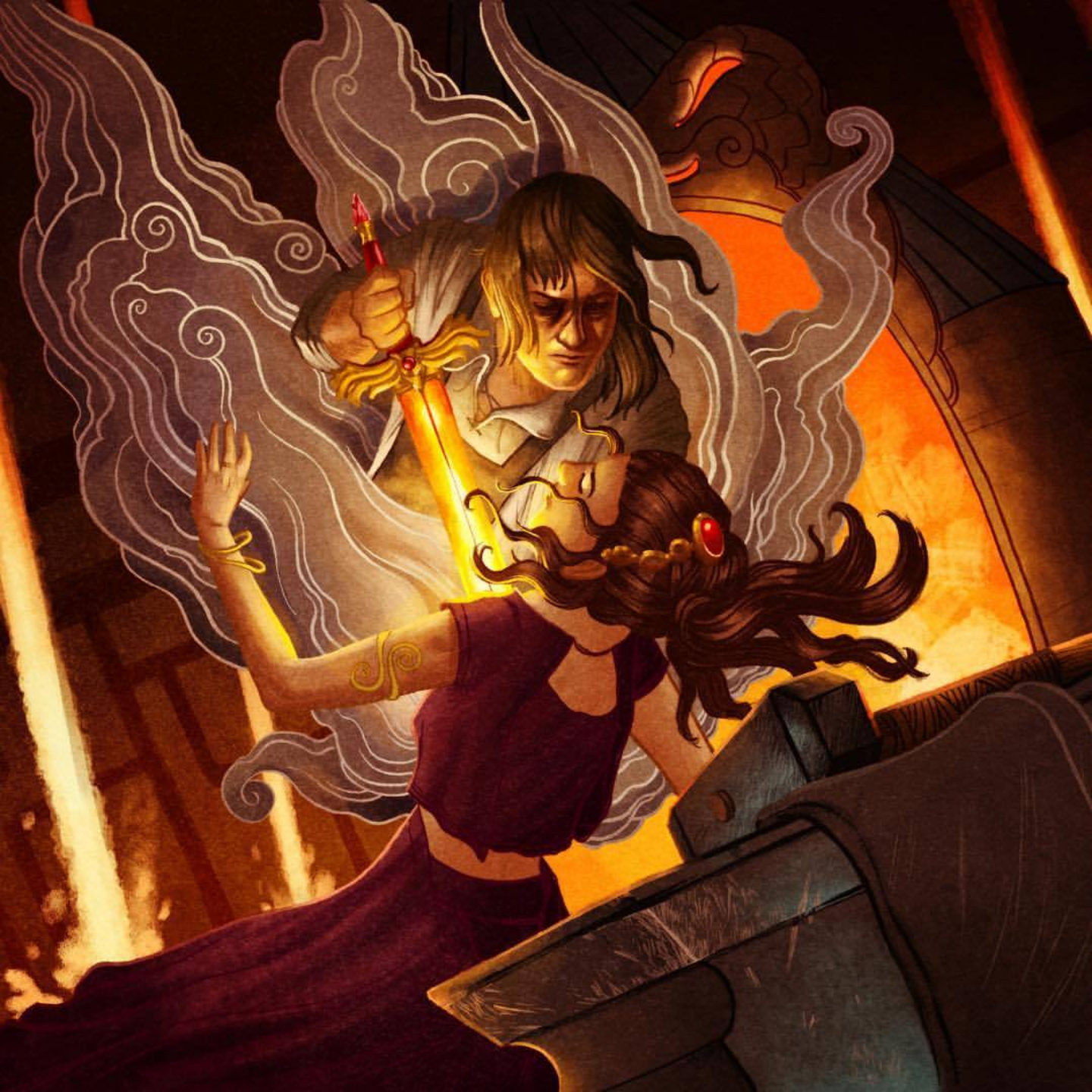
Intro Welcome or Welcome back to the CotC, hi! Throughout history and across cultures, the concept of a messiah—a savior destined to deliver humanity from darkness or restore a lost world order—has played a central role in myth, religion, and storytelling. Messiahs often emerge in times of great need, symbolizing hope and the promise of salvation. These figures, whether divine or mortal, share common traits: they face immense trials, make great sacrifices, and ultimately bring about significant change, through battle, wisdom, or self-sacrifice. In George R.R. Martin's A Song of Ice and Fire series, the legend of Azor Ahai stands out as a prime example of a messianic figure. Prophecies tell of a hero reborn amidst smoke and salt wielding a flaming sword and combating the upcoming darkness—an ancient icy race known as the Others, who bring death and eternal winter. The search for Azor Ahai’s reincarnation is one of the most discussed topics in the ASoIaF community, with countless characters being considered as potential candidates. Even within the universe, characters are actively seeking this savior. Yet, as with many prophecies in Martin's world—and in general—the truth behind Azor Ahai's return I think is both simple and complex. It raises questions about destiny, belief, and the true nature of heroism. These conversations have sparked a bunch of theories, some quite popular, such as Azor Ahai being evil, not existing at all, or perhaps everyone embodying aspects of Azor Ahai. Today, I want to dive into this: What’s up with Azor Ahai? Before we begin, don’t forget to like and subscribe if you enjoy my content, and click the bell to get notified about all new videos! Azor Ahai is a Unifier According to legends, when an age of darkness began—which the Westerosi call the Long Night—a great warrior rose to fight this darkness laying over the world. The Assha’i and the followers of R'hllor say the hero's name was Azor Ahai. Azor Ahai needed to forge a hero's sword, so he labored for thirty days and thirty nights at the sacred fires of a temple until it was done. However, when he went to temper it in water, the sword broke, so he started over. He took fifty days and fifty nights to make another sword, better than the first. To temper it this time, he captured a lion and drove the sword into its heart, but once more the steel shattered. The third time, with a heavy heart, for he knew beforehand what he must do to finish the blade, Azor Ahai worked for a hundred days and nights until it was finished. This time, he called for his wife, Nissa Nissa, and asked her to bare her breast. He drove his sword into her living heart, and her soul, combined with the steel of the sword, created Lightbringer, the Red Sword of Heroes. The sword was henceforth always warm to the touch, as if alive. According to prophecy, in ancient books of Asshai from over five thousand years ago, Azor Ahai is to be reborn again as a champion sent by R'hllor. This will occur after a long summer when an evil, cold darkness descends upon the world. It is said that, wielding Lightbringer once again, Azor Ahai will stand against the darkness, and if he fails, the world fails with him. Additionally, the quotes we get about Azor Ahai provide slightly different pieces of information each time, depending on the person and their beliefs. “There will come a day after a long summer when the stars bleed and the cold breath of darkness falls heavy on the world. In this dread hour, a warrior shall draw from the fire a burning sword. And that sword shall be Lightbringer, the Red Sword of Heroes, and he who clasps it shall be Azor Ahai come again, and the darkness shall flee before him. Azor Ahai, beloved of R'hllor! The Warrior of Light, the Son of Fire! When the red star bleeds and the darkness gathers, Azor Ahai shall be born again amidst smoke and salt to wake dragons out of stone. "It may be that I am mistaken in you, Jon Snow. We both know the things that are said of bastards. You may lack your father's honor, or your brother's skill in arms. But you are the weapon the Lord has given me. I have found you here, as you found the cache of dragonglass beneath the Fist, and I mean to make use of you. Even Azor Ahai did not win his war alone. I killed a thousand wildlings, took another thousand captive, and scattered the rest, but we both know they will return. Melisandre has seen that in her fires. This Tormund Thunderfist is likely re-forming them even now, and planning some new assault. And the more we bleed each other, the weaker we shall all be when the real enemy falls upon us. "I looked at that book Maester Aemon left me. The Jade Compendium. The pages that told of Azor Ahai. Lightbringer was his sword. Tempered with his wife's blood, if Votar can be believed. Thereafter Lightbringer was never cold to the touch, but warm as Nissa Nissa had been warm. In battle, the blade burned fiery hot. Once Azor Ahai fought a monster. When he thrust the sword through the belly of the beast, its blood began to boil. Smoke and steam poured from its mouth, its eyes melted and dribbled down its cheeks, and its body burst into flame." Clydas blinked. "A sword that makes its own heat …"" The majority of the info about Azor Ahai comes from religious texts and people—something we need to keep in mind. Azor Ahai in this prophecy is portrayed as a classic messiah, a champion of the Lord of Light. If we look at different parts of the story that talk about Azor Ahai and are not from a religious perspective, or at least not from R’hllorists, we get some more alternatives. We are told that in some other cultures, this warrior is called Hyrkoon the Hero, Yin Tar, Neferion and Eldric Shadowchaser, but we do not really have any information about whether this is indeed the case and all these figures were the same person just with different names. It is also unclear whether the legend of the Last Hero is about the same figure. “Yet here and there in the fastness of the woods, the children still lived in their wooden cities and hollow hills, and the faces in the trees kept watch. So as cold and death filled the earth, the last hero determined to seek out the children, in the hopes that their ancient magics could win back what the armies of men had lost. He set out into the dead lands with a sword, a horse, a dog, and a dozen companions. For years he searched until he despaired of ever finding the children of the forest in their secret cities. One by one his friends died, and his horse, and finally even his dog, and his sword froze so hard the blade snapped when he tried to use it. And the Others smelled the hot blood in him and came silent on his trail, stalking him with packs of pale white spiders big as hounds –” The Rhoynar tell of a darkness that made the Rhoyne of Essos dwindle and disappear, her waters frozen as far south as the joining of Selhoru, until a hero convinced tchildren of Mother Rhoyne, the Crab King and the Old Man of the River, to put aside their bickering and join in a secret song that brought back the day. According to a legend from Yi Ti, during the Long Night, the sun hid its face for a lifetime, ashamed at something none could discover, and disaster was only averted by the deeds of a woman with a monkey's tail. The legend of Azor Ahai spread from Asshai and is especially prevalent among the followers of R'hllor, and there is also a similar prophecy about the prince that was promised. A prophecy we know very few things about. A "bleeding star" is supposed to herald the coming of the prince, and he is said to have "a song"—the song of ice and fire. Mel, also, tends to use the terms “the prince that was promised” and “Azor Ahai” interchangeably. The issue here is that the prince that was promised is also wrongly translated by the characters in the universe. "No one ever looked for a girl," he said. "It was a prince that was promised, not a princess. Rhaegar, I thought . . . the smoke was from the fire that devoured Summerhall on the day of his birth, the salt from the tears shed for those who died. He shared my belief when he was young, but later he became persuaded that it was his own son who fulfilled the prophecy, for a comet had been seen above King's Landing on the night Aegon was conceived, and Rhaegar was certain the bleeding star had to be a comet. What fools we were, who thought ourselves so wise! The error crept in from the translation. Dragons are neither male nor female, Barth saw the truth of that, but now one and now the other, as changeable as flame. The language misled us all for a thousand years.” The prophecy about the dream is not necessarily about a prince, hence a man, but about a dragon, a creature no one knows how to distinguish the sex of. Benero also didn’t rule out Daenerys, who is a woman, so we do not know whether the term Azor Ahai is a name and it refers specifically to a man, which we need to take into consideration, since in Yi Ti, even for the first Long Night, they have a legend about a woman being the hero. Most prophecies in this universe come from visions and dreams. As far as the Targaryen dreams go, the majority of them see themselves as dragons, like various other dreamers see people as animals. “I dreamt of a roaring river and a woman that was a fish.” So, the prince that was promised not only has been connected to the Azor Ahai prophecy but it is the prophecy/dream that really shows how easily things can get misinterpreted and how prophecies work, or don’t work. “"The last dragon died before you were born," said Sam. "How could you remember them?" "I see them in my dreams, Sam. I see a red star bleeding in the sky. I still remember red. I see their shadows on the snow, hear the crack of leathern wings, feel their hot breath. My brothers dreamed of dragons too, and the dreams killed them, every one. Sam, we tremble on the cusp of half-remembered prophecies, of wonders and terrors that no man now living could hope to comprehend . . . or . . ." "Or?" said Sam. “... or not.” Aemon chuckled softly.” In House of the Dragon (HotD), even though highly fanfiction-y in my opinion as far as characters and events go, there is the prophecy bit that came from GRRM himself. “Aegon foresaw the end of the world of men. It's, to begin with, a terrible winter, gusting out of the distant North. Aegon saw absolute darkness riding on those winds, and whatever dwells within will destroy the world of the living. When this great winter comes, Rhaenyra, all of Westeros must stand against it. And if the world of men is to survive, a Targaryen must be seated on the Iron Throne. A King or Queen, strong enough to unite the realm against the cold and the dark. Aegon called his dream 'The Song of Ice and Fire.'” In reality, the prophecy was mentioned in the novels, and in retrospect, it was quite obvious that this was the case, at least to me. “The man had her brother's hair, but he was taller, and his eyes were a dark indigo rather than lilac. "Aegon," he said to a woman nursing a newborn babe in a great wooden bed. "What better name for a king?" "Will you make a song for him?" the woman asked. "He has a song," the man replied. "He is the prince that was promised, and his is the song of ice and fire."” “Someday the dragons will return. My brother Daeron's dreamed of it, and King Aerys read it in a prophecy. Maybe it will be my egg that hatches. That would be splendid.” We have Song of Ice & Fire, prophecy, the return of dragons, and a bleeding star; it is about the Azor Ahai prophecy for certain. House of the Dragon just spelled it out and heavily used it, especially in Season 2, most of the time wrongly as well, but oh well. Lastly, we have the stallion who mounts the world, the very first prophecy we see in the series. As swift as the wind he rides, and behind him his khalasar covers the earth, men without number, with arakhs shining in their hands like blades of razor grass. Fierce as a storm this prince will be. His enemies will tremble before him, and their wives will weep tears of blood and rend their flesh in grief. The bells in his hair will sing his coming, and the milk men in the stone tents will fear his name. The prince is riding, and he shall be the stallion who mounts the world. This individual, unlike the rest, is not explicitly linked to the Long Night, but I will take a guess and say he is. The first and only time someone tried to fulfill this prophecy and become the Khal of Khals was during the Century of Blood, the chaotic period after the massive Doom of Valyria that 100% caused not only political but temperature instability as well as darkness that massive volcanic eruptions tend to cause. Khal Mengo decided to become the Khal of Khals and bring all the Dothraki under his command after the Doom because his witch mother told him. I would say that darkness and chaos are connected to this prophecy as well, especially considering that the prophecy was given to Daenerys Stormborn in the current timeline where the Long Night is imminent. If, and I will explain why "if" in a moment, all these prophecies are about the same person, because dreams and prophecies in Martin’s universe are foretelling, you cannot stop them, pursue them, or 100% understand them, but one way or another they do come true. The important bit about the prophecy is not the fact that he had a magic sword and was the Messiah, but the fact that Azor Ahai was the Messiah because they were a leader. They united people, they stopped the bickering so humans could stop the Long Night. “When the daughter of the Opal Emperor succeeded him as the Amethyst Empress, her envious younger brother cast her down and slew her, proclaiming himself the Bloodstone Emperor and beginning a reign of terror. He practiced dark arts, torture, and necromancy, enslaved his people, took a tiger-woman for his bride, feasted on human flesh, and cast down the true gods to worship a black stone that had fallen from the sky. In the annals of the Further East, it was the Blood Betrayal, as his usurpation is named, that ushered in the age of darkness called the Long Night. Despairing of the evil that had been unleashed on earth, the Maiden-Made-of-Light turned her back upon the world, and the Lion of Night came forth in all his wroth to punish the wickedness of men. How long the darkness endured no man can say, but all agree that it was only when a great warrior—known variously as Hyrkoon the Hero, Azor Ahai, Yin Tar, Neferion, and Eldric Shadowchaser—arose to give courage to the race of men and lead the virtuous into battle with his blazing sword Lightbringer that the darkness was put to rout, and light and love returned once more to the world.” The Long Night is not just a magical issue, it also includes the things happening before as well. It is a true rebirth of everything corrupt, like most apocalyptic myths and issues. The individual arose in a time of slavery, necromancy, war, usurpation, and torture to unite the people so love and light would be brought back, in the East they even believed that moral corruption was the reason for the demons. It is about the sacrifice for the greater good and unity, not about magical swords and magical princes, at least not only and not mainly. Well, of course, the two outlying ones, the things that are going north at the Wall and Daenerys Targaryen on the other continent with her dragons are, of course, the ice and fire of the title, A Song of Ice and Fire. The central stuff, the stuff that's happening in the middle in King's Landing, the capital of the Seven Kingdoms, is much more based on historical events. You know, one of the dynamics I started with there was the sense of people being so consumed by their petty struggles for power within the Seven Kingdoms, within King's Landing, who's going to be king, who's going to be on the small council, who's going to determine the policies, that they're blind to the much greater and more dangerous threats that are happening far away on the periphery of their kingdoms. And, of course, you can see that all through history. It's a common dynamic that takes place in history. You know, maybe there are lessons in modern day, too, who knows? I mean, we have things going on in our world right now like climate change that's, you know, ultimately a threat to the entire world, but people using it as a political football instead of, you know, you'd think everybody would get together just as something that can wipe out possibly the human race. So I wanted to do an analog, not specifically to the modern day thing, but as a general thing with the structure of the book. And the truth of the matter is that if someone wants to unite everyone to beat a dangerous threat, in this case the most dangerous threat, they have to make hard decisions, have power, and yes sometimes even eliminate people who knowingly want to oppress and do not care about the good of the community. Azor Ahai was not Evil, those who tried to be, were! Azor Ahai is celebrated as a hero in the legends, but the fandom has also linked him to another, more sinister figure—the Bloodstone Emperor, the last ruler of the Great Empire of the Dawn. These connections, based on the information we have about both figures, have fueled theories suggesting that Azor Ahai might not be the savior he's often depicted as, but rather the villain of the story, potentially responsible for bringing about the Long Night. However, this interpretation, in my view, overlooks some very important details, particularly the nature of prophecies and how people respond to them. To explain why I believe the Azor Ahai = Bloodstone and other similar theories are flawed, I would like to bring forward two examples from the current timeline that illustrate why having similarities with the Azor Ahai figure doesn’t necessarily mean someone is Azor Ahai. “When the daughter of the Opal Emperor succeeded him as the Amethyst Empress, her envious younger brother cast her down and slew her, proclaiming himself the Bloodstone Emperor and beginning a reign of terror. He practiced dark arts, torture, and necromancy, enslaved his people, took a tiger-woman for his bride, feasted on human flesh, and cast down the true gods to worship a black stone that had fallen from the sky. In the annals of the Further East, it was the Blood Betrayal, as his usurpation is named, that ushered in the age of darkness called the Long Night.” People have connected Bloodstone to Azor Ahai since the World Book came out. The similarities between these two figures are actually not that prominent in my humble opinion, except if you put two people from the current timeline in the equation—Stannis and Euron, especially Stannis. The only thing we know about these figures that match is that both killed a woman to gain power: Azor Ahai his wife for his magical sword and Bloodstone his sister so he could take the throne, even though in Azor Ahai’s case, the killing, in the legend at least, is portrayed as a willing sacrifice. “A hundred days and a hundred nights he labored on the third blade, and as it glowed white-hot in the sacred fires, he summoned his wife. 'Nissa Nissa,' he said to her, for that was her name, 'bare your breast, and know that I love you best of all that is in this world.' She did this thing, why I cannot say, and Azor Ahai thrust the smoking sword through her living heart. It is said that her cry of anguish and ecstasy left a crack across the face of the moon, but her blood and her soul and her strength and her courage all went into the steel. Such is the tale of the forging of Lightbringer, the Red Sword of Heroes.” In Bloodstone’s story, the dude is portrayed as the reason for the Long Night, and after, one of the many savior figures we learned about helped to save the world. We can make speculations about the Empire and how maybe, like the Valyrians, they had the custom of sibling marriage, making the Amethyst Empress Nissa Nissa and his wife as well. But not only is this kind of a leap and pretty speculative, even though not as crazy, it also completely dismisses Stannis’s and Euron’s parallels and roles in the story—similarities that are way more prominent and needed if someone wants to analyze these two figures. Stannis is called Azor Ahai; there is a part of people who genuinely believe he is, but the truth is he hasn’t fulfilled this prophecy, he is trying to fulfill it. He does stuff and listens to Melisandre so he can be molded into Azor Ahai. If we put down everything we know about Stannis and everything people, apart from his followers, say and sing about him, it paints him as Bloodstone, not Azor Ahai. The few similarities he has with Azor Ahai are made, and mere illusions, like the sword. But the things that make him a Bloodstone figure are real things he did. He treats a magical woman as his wife, he cast down the Seven and all the other religions in Westeros and burns their idols so he can worship a new deity, and he gave his seed for a dark spell so he could kill his own brother over a throne. And we haven’t seen what else he is capable of doing to achieve becoming Azor Ahai. If Stannis is not Azor Ahai in the novels—and it is painfully clear to the readers that he isn’t, with his writing crafted specifically to make this obvious—what proof do we really have that Bloodstone was Azor Ahai and not just another figure chasing a prophecy? It is the same pattern we see in the current timeline as well, the fact that some people are written as foils or with parallels to each other doesn’t mean they are the same person. Euron follows a similar path. The way he talks about the prophecy reveals his character, personality, and goals, but he, too, hasn’t fulfilled anything. Like Stannis, he is chasing a prophecy, and in the meantime, he brings chaos in his journey to become Azor Ahai, because he believes that by becoming Azor Ahai, he will become the ultimate leader and king—something closer to a god than a man. “The bleeding star bespoke the end,” he said to Aeron. “These are the last days, when the world shall be broken and remade. A new god shall be born from the graves and charnel pits.” Then Euron lifted a great horn to his lips and blew, and dragons and krakens and sphinxes came at his command and bowed before him. “Kneel, brother,” the Crow’s Eye commanded. “I am your king, I am your god. Worship me, and I will raise you up to be my priest.” Euron talks about rebirth, a bleeding star, his travels to the ruins of Valyria—the place amidst salt and smoke—his attempt to hatch a dragon’s egg, and even the murder of his brother. The prophecy he is chasing is that of Azor Ahai. But in reality, he, too, embodies Bloodstone; he cannot fulfill anything apart from beginning a reign of terror. The Night’s King is also depicted as a similar figure. He sought to become a king, gave his seed and soul, loved and married a magical woman who allegedly practiced dark arts and necromancy, and enslaved his brothers of the Watch, unleashing a reign of terror. These people were not Azor Ahai or the Last Hero; they wanted to be, but from the stories we have, the only thing they ultimately achieved was chaos. Azor Ahai was not the villain. The true evil came from those who, in their pursuit of prophecy, tried to become the sole hero and, in doing so, committed terrible acts. So, far the only person who has fulfilled the first part of the prophecy is Daenerys, someone who was not even aware of the prophecy and this is a very important detail. The Real Azor Ahai is the Friends we made along the way, kinda. In a previous video, I mentioned that the real Azor Ahai is "the friends we made along the way," and while that’s partly true, it’s not entirely accurate—at least, not in the way many people have interpreted this as well as other similar ideas circulating within the fandom. “He set out into the dead lands with a sword, a horse, a dog, and a dozen companions. For years he searched until he despaired of ever finding the children of the forest in their secret cities. As swift as the wind he rides, and behind him his khalasar covers the earth, men without number… But you are the weapon the Lord has given me. I have found you here, as you found the cache of dragonglass beneath the Fist, and I mean to make use of you. Even Azor Ahai did not win his war alone.” Azor Ahai isn’t just another Jesus figure, it is not every character in the story or someone who turns out to be evil. Azor Ahai is an idea almost, someone who symbolizes that true heroism is about collective effort and unity in the face of evil. Azor Ahai isn’t a flawless savior or divine messiah but someone who brings people together and inspires them to fight for what’s right. The legend shows that even the greatest heroes can’t achieve their goals alone. This flips the traditional hero and messiah trope, real heroism is in unity and support, not individual perfection. Azor Ahai gathers followers and earns their support, rather than commanding slaves or relying only on power. They represent hope and perseverance in the darkest times, fighting the good fight despite personal flaws and tough odds. The idea that George R. R. Martin is out to trick his readers and undermine classic heroism by making a messianic figure evil (which isn’t that new of a concept either btw) doesn’t hold up when you look at his works, including A Song of Ice and Fire. Actually, I’d argue the opposite. Martin writes stories where heroes, though imperfect and struggling, are key to the plot. He redefines heroism, showing it’s not about achieving an ideal outcome and being the perfect little angel but about the effort and intent behind the actions, fighting for good. His heroes might not always succeed, but their journeys show a more real and authentic kind of heroism. I’ll stand by this: George does have heroes—they’re not perfect, and they don’t always win, but that’s the true twist. But goddammit, he does make heroes. “My own heroes are the dreamers, those men and women who tried to make the world a better place than when they found it, whether in small ways or great ones. Some succeeded, some failed, most had mixed results... but it is the effort that's heroic, as I see it. Win or lose, I admire those who fight the good fight.” Azor Ahai: The Dragon has three heads Lastly, unity and harmony are at the heart of Azor Ahai, because in these novels Azor Ahai is even hinted to be more than just one person. “Three?" She did not understand. ... three heads has the dragon... the ghost chorus yammered inside her skull with never a lip moving, never a breath stirring the still blue air... mother of dragons... child of storm... The whispers became a swirling song…” Azor Ahai, apart from the prophecy and legends of Asshai, is prominently featured in the religion of R’hllor—a religion that, according to GRRM, is inspired by Zoroastrianism and Catharism. The religion is based on a dualistic view of the world: R’hllor, the god of light, heat, and life, versus the Great Other, the god of ice and death. These two deities are locked in an eternal struggle over the fate of the world—a struggle that, according to ancient prophecies from the books of Asshai, will only end when Azor Ahai, the messianic figure, returns wielding a flaming sword called Lightbringer, the Red Sword of Heroes and raises dragons from stone. Saoshyant means "one who brings benefit." The term was contracted to Soshans in Zoroastrian tradition and came to apply to three savior figures who were prophesied to progressively bring about the final renovation. So far, we have seen the first in our story, Daenerys. The only person who has fulfilled the first part of the prophecy before we even knew about its existence. But that’s going to be in the next video! Who are the three heads of the dragon, and what are their roles? This is the beginning of a three —maybe even four— part series about the Long Night and Azor Ahai. If you enjoyed this one, don’t forget to like, comment, and subscribe if you haven’t already. Until next time, bye!