
Company of the Cat · Cat...*meow*
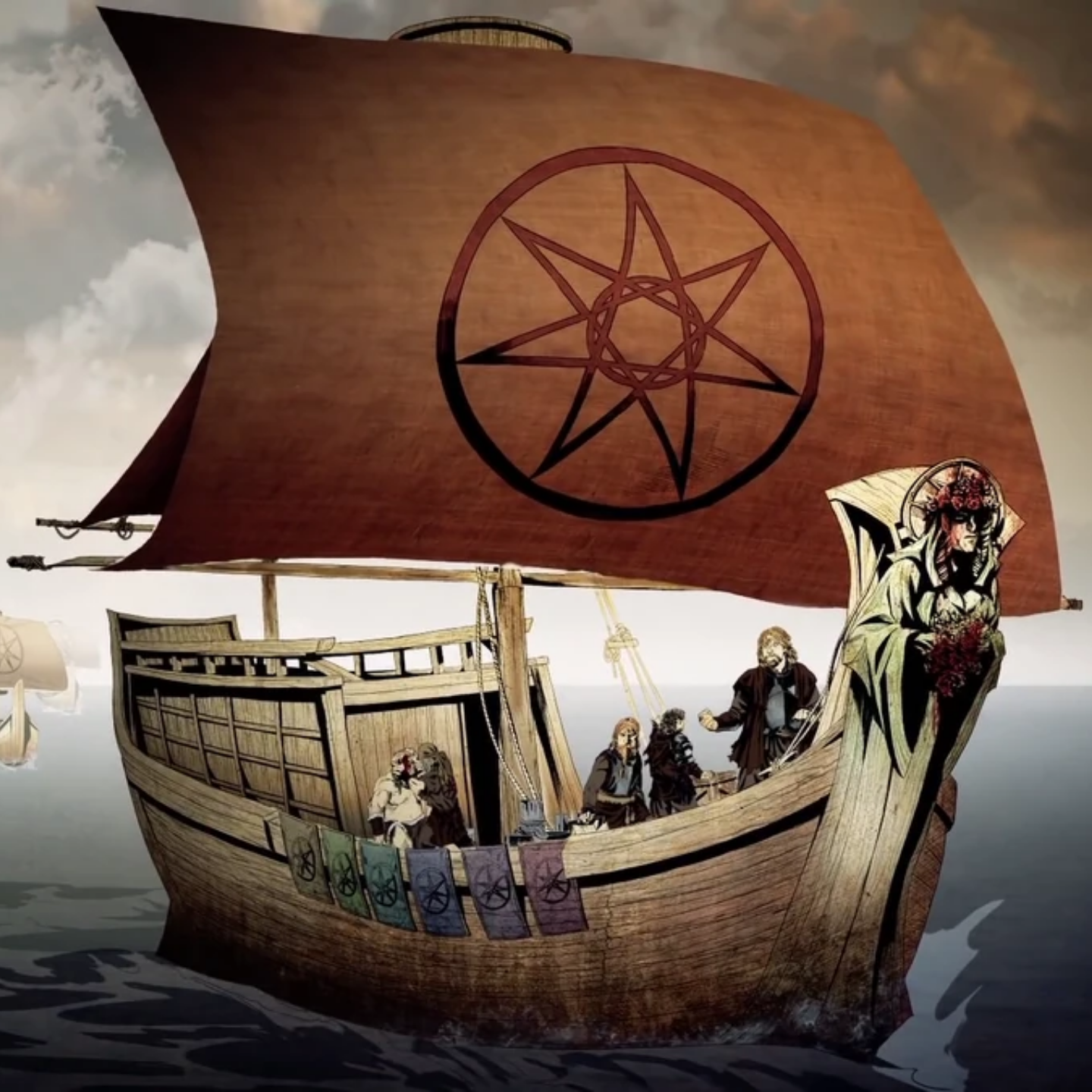
🌍 The Andal Invasion happened in Multiple Waves 🌍 📖 Chapters 📖 00:00 - Intro 01:52 - Who are the Andals 03:21 - Contradictions & Inconsistencies: The Issue with the Andals and the Timeline 12:16 - ~2000 Years Ago: The Founding of Pentos and Norvos & the Scouring of Lorath 19:06 - ~4000 Years Ago: Western Expansion: Founding of Volantis, Myr, Tyrosh & Lys 24:46 - ~6000 Years Ago: Religious wars 38:32 - Andals in Westeros 56:34 - All 3 dates are correct 57:55 - Place of Origin 01:14:50 - Summary & Andal Cover Up 01:17:09 - Outro 📚 Sources 📚 ASoIaF book series, GoT: Histories and Lore & House of the Dragon HBO TV series, The World of Ice and Fire. 🌐 Social Media & Podcast 🌐 Instagram: [Company of the Cat](https://www.instagram.com/company_of_the_cat/) Facebook Page: [Company of the Cat](https://www.facebook.com/profile.php?id=100086601590664) Podcast Feed: [COTC Feed](https://media.rss.com/cotc/feed.xml) ☕ Support the Channel ☕ [Buy Me a Coffee](https://bmc.link/CompotCat) 🖼️ Art Credits 🖼️ Game of Thrones: Histories & Lore. 🎶 Music 🎶 Music: Mystical Sting 2 by Alexander Nakarada (www.creatorchords.com) Licensed under Creative Commons BY Attribution 4.0 License https://creativecommons.org/licenses/by/4.0/ Music: Wonderland by Alexander Nakarada (www.creatorchords.com) Licensed under Creative Commons BY Attribution 4.0 License https://creativecommons.org/licenses/by/4.0/ 🔍 Keywords 🔍 House of the Dragon, HOTD, House of the Dragon HBO, theory, house Greyjoy, house of the dragon theories, ASOIAF, A Song of Ice and Fire, asoiaf theories, Iron Islands, Grey King, Nagga, Pyke, dreams, Hugor of the Hill, House Arryn, Andals, Andal Invasion, prophecies, visions, old Valyria, Valyria, House Velaryon, House Celtigar, Valyrian Houses
Intro Welcome or welcome back to the CotC! As you can see, this video is quite long, so I'll try and keep this intro as brief as I can. For the new viewers, hi I am Cat and I have previously touched on the Andal Invasion in some of my videos, however, this time, I've delved deeper into the Andal history in Essos and Westeros to put forth a theory on how the Andal Invasion played out. For regular viewers, I've included some familiar concepts but also added some new ideas and a lot more details and tidbits to keep things interesting. The Andal invasion conspiracy/Andal cover-up is a well-known theory in the fandom that suggests that the Andals reached Westeros before the Long Night and attempted to cover up this fact. While I do agree with this theory, I don't believe it's entirely accurate. I think all the stories, myths, and dates we know about the Andals have some truth to them, and they migrated to Westeros in multiple waves, each triggered by different causes. I asked in a poll some days ago about the structure of the video and whether you think it would be better if I started with the recent or older events, but I will not follow your suggestion, I am sorry. I tried it, but I don’t think it works. It would be better and easier if we start from the most recent events and move backwards since we do have more information about events that happened 2000 years ago than stuff that occurred 6k thousand years ago. Also, the absence of an origin place for the Andals creates even more issues, and even though I have a theory, I think that leading with it and not with stuff we know for sure, will make this video much more difficult to follow. Without further ado, let’s go to the video. Before we begin, if you enjoy my content, don't forget to like, subscribe, and share! Who are the Andals The Andals are one of the three major ethnic groups from which the humans of Westeros are descended. The Andals of antiquity originated in Essos and are described as noticeably taller and fairer than the First Men and the Roynar, the two other ethnic groups in Westeros. Their place of origin is disputed with the Axe and the lands south of the Dothraki Sea being two possible places of origin. What is known about them is that for years they were the migratory people who founded Andalos in northwestern Essos, stretching south as far as the Flatlands and the Velvet Hills. It is unknown when the Andals sailed from Andalos to Westeros; some sources date the Andal invasion to six thousand years ago, according to the True History it occurred four thousand years ago, and some maesters even place it only two thousand years ago. The Maesters generally believe that the Andals fled from Essos because of the Valyrian expansion, but there are other legends, myths, and stories as to why this migration might have happened. The Andals first landed on the Fingers and attacked the First Men living in the Vale and, in time, expanded all over Westeros minus the North. The Westerosi culture is majorly influenced by that of the Andals, they brought a different law system, the Faith of the Seven, the now main religion of the continent, and with it the warrior tradition of the knight. They also brought advanced metalworking and architectural techniques and most importantly a superior writing system that supplanted the First Men's runes. The Andal influence on the continent is so major that the Dothraki refer to Westeros as Rhaesh Andahli, which means the land of the Andals. Contradictions & Inconsistencies: The Issue with the Andals and the Timeline Almost all of the early history of Westeros was written after the Andal invasions, causing it to be from the Andal perspective. Everything written about the Age of Heroes, the Dawn Age, the Long Night, and the Invasion, as well as the events that happened after it, originate from stories written down by septons and later scholars who were biased in favor of the Andals. And here is where the issues with the Andals start and this is the reason why they are a very interesting case. The Citadel as well as the Maesters as an institution was founded by House Hightower according to most sources and the family is ancient, existing since the dawn of days when they were petty kings. Most accounts credit the citadel's founding to Prince Peremore the Twisted, the second son of King Uthor of the High Tower, founder of the house. We are talking about a very ancient order. Peremore had gathered numerous scholars, including wise men, teachers, priests, healers, singers, wizards, alchemists, and sorcerers, in Oldtown. When Peremore died, his brother King Urrigon bequeathed a large tract of land beside the Honeywine to “Peremore’s pets,” that they might establish themselves and continue teaching, learning, and questing after truth. And so they did. In the citadel, there are many runic accounts from the first men to this day, with the oldest of them demonstrating that men have lived since the Dawn Age at the mouth of the Honeywine in the Reach. Other runic records tell of the crossing of the Arm of Dorne by the First Men and there are also many that haven’t been translated yet. When the Andals came, the Hightowers were amongst the first lords of Westeros to welcome them. “Wars are bad for trade,” said Lord Dorian Hightower, when he set aside his wife of twenty years, the mother of his children, to take an Andal princess as his bride. Considering that, it is highly, if not suspicious, then certainly peculiar that the Maesters at the Citadel didn’t start to translate all their historical records and accounts to a more convenient writing system, because at that point the Citadel was a thousands of years old institution. The septons had already written down accounts of their own, didn’t the Maesters think it useful to start to use and convert thealready existing records in the common tongue? We are not talking about a newly established order, it was a very well-established order and no one thought it important to start writing and filing stuff using a superior way. They could translate the records about the coming of the first men, some of the oldest known runic accounts, but no one had written down information and dates about the Andals, even though it happened in a way more advanced era and there was also a new better writing system available. And this is a pattern with the Andal history, there are way too many holes, gaps, contradictions and inconsistencies in comparison to other groups like the First Men and the Rhoynar, especially for a group of people that were the victors for the majority of their existence and have written most of the history from their perspective. Many official historical accounts like the True History, have dates that do not make that much sense. For example, the “True History” suggests that the Battle for the Dawn and the building of the Wall occurred eight thousand years ago, rather than six thousand years ago, as other sources claim. This specific account also has moved the Andal invasion from what other in-universe sources suggest, putting it 4k years ago and not 6k, going even as far as saying, that the Andals were never involved with the CotF, who were already not present south of the Neck when they arrived, contradicting many other stories and dates of events that involve Andals and are thought to have taken place 6k years ago, like the stories of Alyssa Arryn and Erreg the KInslayer. We also see many issues with the dates in the accounts at the Wall. “The Others.” Sam licked his lips. “They are mentioned in the annals, though not as often as I would have thought. The annals I’ve found and looked at, that is. There’s more I haven’t found, I know. Some of the older books are falling to pieces. The pages crumble when I try and turn them. And the really old books... either they have crumbled all away or they are buried somewhere that I haven’t looked yet or... well, it could be that there are no such books, and never were. The oldest histories we have were written after the Andals came to Westeros. The First Men only left us runes on rocks, so everything we think we know about the Age of Heroes and the Dawn Age and the Long Night comes from accounts set down by septons thousands of years later. There are archmaesters at the Citadel who question all of it. Those old histories are full of kings who reigned for hundreds of years, and knights riding around a thousand years before there were knights. You know the tales, Brandon the Builder, Symeon Star-Eyes, Night’s King... we say that you’re the nine hundred and ninety-eighth Lord Commander of the Night’s Watch, but the oldest list I’ve found shows six hundred seventy-four commanders, which suggests that it was written during...” “Long ago,” Jon broke in. “What about the Others?” During when? Jon chose the worst time to cut him off, let him finish his phrase dammit. Sam was going to say an era here, “...it was written during…” the Age of Heroes? Long Night? Andal Invasion? When? The way he talks indicates that he would say a very important and widely known era. George himself has said that he isn’t that good with numbers and there is a possibility that distances and dates, especially months, like for example during Robert’s rebellion, might be off, but here it is obvious he had in mind a very specific era. Because in the novels the timeline is very vague, even the current one, we do not know if all chapters are in chronological order, that being said, his general timeline is something that seems like he has thought about and we are not talking about minor dates and 2 months or 2 years or even 100 years being off, but whole periods. The things Sam says here are quite hard to believe, at least for me. The watch not having more accounts about the Others, I find impossible. They were the reason this order was created in the first place and didn’t have as many records and information about them as they could gather. He claims that the First Men didn’t have records, but they did. Even if the runes were on rocks, it is very much explicitly stated in the world book by a maester that these records do exist and talk about important events like the arrival of the first men and the arm of Dorne, plus the Citadel was established during the Dawn Age. The incomplete lists are also very suspicious, considering that we are talking about 324 missing commanders. Of course, we do not know for how many years each commander ruled, we have commanders that held the title for months, others a decade, and others that had it for more than half a century, like Osric Stark for example, but if we take an average and say that every commander had the title for around 5-6 years we are missing 1600-2000 years of accounts. The possibility that these accounts never existed is very very low, most likely they were either destroyed or moved, lost, or something of this nature. On top of that, these “lost” years in these records happened to be the same amount as the years moved around in the dates stated in the “True History”. Most major events have been moved close to 2000 years forward or backward in this historical account. Also, let’s be honest, the fact that the book is called True History makes everything more suspicious. Have you ever seen a history book titled True History Book? During an interview in 2018, GRRM talked a little bit about the timeline, while the Long Night TV show was in discussion, and revealed that The Long Night took place closer to 5000 years ago and not to 10k like the “True History” suggests. In-universe sources say that the Long Night occurred 6k years ago, meaning 2k years after the date the TH puts forward, a date that corresponds with what GRRM said, closer to 5k years ago. Additionally, we have two very different reasons for their migrations. The first stories the Septons wrote down were talking about dreams and visions about Westeros, and the Maesters suggest that the Andals fled from Essos because of the Valyrians who, according to GRRM, started to rise around 5k years ago, right after the long night. Looking at everything we know about the Andals in Essos and in Westeros, myths, historical accounts, what GRRM has said about his timeline, as well as the inconsistencies mentioned above, it all make sense and this is because from the way the events are described, all of them might be the case and the Andal Invasion happened in multiple waves, like most migrations, with three of these waves being the major ones and the Andals did not leave Essos all at the same time. The first major wave happened 6k years ago, very close to the Long Night, probably sometime before, and had a religious motive. The second took place around 4k years ago, because of the Valyrians who had started to expand their empire, had conquered Old Ghis, were in their Roman Empire era, and were expanding west of their peninsula as well. And the last one happened 2k years ago, because of the excessive political and religious turmoil in Essos during that time. Thus the timeline must look closer to what you are seeing on the screen right now. So, let’s break down each one of them starting from the most recent one. ~2000 Years Ago: The Founding of Pentos and Norvos & the Scouring of Lorath The latest date for the Andal migration suggested by some maesters is 2000 years ago because the Andals were very much present in Essos up until that point and took part in some important events. Seventeen hundred and thirty-six years before the current timeline (300AC), the islands of Lorath got their first inhabitants after more than a century of being completely uninhabited. The previous inhabitants of the isles were Andals, pushing north from Andalos to the shores of Lorath Bay and across the bay in longships, swept through the islands, slaughtered the hairy men living there in the name of the Seven, and took their women and children as slaves. With time each island had its king, and the largest had four. The Andals, being Andals, spent the next thousand years warring with each other, until Qarlon the Great brought all the islands under his rule. Qarlon’s keep was raised at the center of Lorassyon’s vast, haunted maze and it is said that he decorated his halls with the heads of his enemies. His dream was to make himself King of all Andals, and to that end, he went forth time and time again against the petty kings of Andalos. After twenty years and as many wars, the writ of Qarlon the Great extended from the lagoon where Braavos would one day be established, all the way east to the Axe and as far south as the headwaters of the Upper Rhoyne and Noyne. The south expansion brought him into conflict not only with other Andal kings but also with the Free City of Norvos, a Daughter city of Valyria. The Norvoshi closed the river against him, so he left his hall in the maze to lead the attack, defeating them in two battles at the hills. After these two victories, Qarlon marched against the Free City itself and laid siege to Norvos. The Norvoshi, instead of facing him, sent to Valyria for help. The Freehold was at its peak at that point and decided to dispatch 100 dragons to assist Norvos, following the great river north to descend upon the Andals. Qarlon burned with his army, and after, the dragonlords flew onward, bringing blood and fire to the isles of Lorath. Qarlon’s great keep, towns, and fishing villages along his shores went up in flames. Even the great stones of the mazes were scorched and blackened by the dragonfire. It is said that not a man, woman, or child survived the Scouring of Lorath. So around 1800-2000 years ago, the Andals had various fights with each other and a direct, very bloody, face-to-face with Valyria. It makes sense for the Andals to flee in great numbers, especially the people who were part of Qarlon’s very large domain. Additionally the Free City of Pentos and most likely Norvos as well, were inhabited by Andals before the Valyrians. We don’t know when either of these two cities was established, but I am gonna take a guess and say that they were founded around 2500-2000 years ago as well. Norvos during the conflict with Qarlon was already a daughter city of Valyria and we know that like its sister cities Lorath and Qohor, the Free City of Norvos as we know it today was originally founded by religious dissidents from Valyria. If Lorath was reinhabited because of the Valyrian schism, as stated in the World Book, 1436 years before the conquest, I think that it would make sense for Norvos to have been established some hundred years before this event, so somewhere between 2k years ago with 2.5k years ago, causing more Andals to move, since more people were starting to settle in their lands. Pentos, unlike Norvos, was founded by Valyrians as a trading outpost, and soon absorbed the hinterlands surrounding it, from the Velvet Hills and the Little Rhoyne to the sea, including almost the whole of the ancient realm of Andalos. The first Pentoshi were merchants, traders, seafarers, and farmers, with few of high birth amongst them, for this reason it seems they were less protective of their Valyrian blood and intermarried with the original inhabitants of the lands they ruled. Even to this day, there is a considerable amount of Andal blood amongst the people of Pentos. So, it is safe to assume that Pentos was founded before the Andals completely fled to Westeros. On the other hand, I find it unlikely for the city to have been established before the free cities of Lys, Tyrosh, and Myr. We know that the first Daughter of Valyria was Volantis and it was founded after the freehold started to expand west of the river Rhoyne. Lys, Myr, and Tyrosh are all closer to the center of the Valyrian Freehold, and founding a Valyrian port city in the place where Pentos is, without having any other port city inbetween is not the smartest move. Myr and Lys are in excellent locations for trading cities, with great geography, geology, and climate. Considering that Tyrosh started as a military outpost and later became a trading harbor, I think that Valyria first secured all the southwestern part of Essos, before starting to expand to the North. Let’s not forget, that the Summer and the Jade Sea were the most important trading areas for the empire, even the majority of the trading with Westeros at that point was happening through Oldtown, the biggest and most important city of the continent. Additionally, they had another way of trading with the Shivering Sea, the river Sarne. Valyria started to rise around 5k years ago and the expansion towards the West started quite a bit later, since it took place after the Ghiscari wars, a series of five wars fought between the Old Empire of Ghis and the rising new power of the Valyrian Freehold. These wars took place East of the Peninsula and Sothoryos. North of Valyria, the Kingdom of Sarnor allied with the Freehold during the Second and Third Ghiscari Wars, though during the Fourth, Sarnori kings supported both sides. After the fifth and final Ghiscari War, the Valyrians did not move on to conquer the Sarnori, who at the time were a major trading power and controlled the Sarne and the remaining Silver Sea and they were in no hurry to conquer the west either, because there were internal rivalries in Valyria itself. Sarnor remained a trading partner with Valyria, with Valyrian colonies existing inside the Kingdom as well, like Essaria, and was also a useful buffer against raids by the Dothraki. So, I will confidently say that a trading port, like Pentos, which is fairly distant from the center of the Empire was established at the height of its power meaning after the establishment of the Free Cities of Volantis, Lys, Tyros, and Myr that they themselves were founded after the end of five Ghiscari wars, after the end of the internal political conflicts and maybe even after the establishment of some Valyrian Colonies in Sarnor, a place that was both closer and highly profitable, somewhere 2k years ago give or take. Therefore there were a number of reasons for the last remaining Andals in the northwest Essos to flee and a big migration wave towards Westeros to have begun around that time. Not only 2 major Valyrian Colonies were established inside their lands, but Valyria was at its peak with various Valyrian roads being constructed and even more Valyrian Steel being made and extracted, so the demand for slaves was very high as well. ~4000 Years Ago: Western Expansion: Founding of Volantis, Myr, Tyrosh & Lys The second date we are given about the Andal Invasion to Westeros and the one the “True History” suggests is 4k years ago, a date that also could very much be correct as it most likely corresponds with the beginning of the expansion of Valyria in the southwestern Essos, an area where the Andals were present as well. At the mouth of the Rhoyne, the Valyrians founded the first of their colonies. There, Volantis was raised by some of the wealthiest men of the Freehold in order to gather up the wealth that flowed down the Rhoyne, and from Volantis their conquering forces crossed the river in great strength. The Andals might have fought against them at first, and the Rhoynar might even have aided them, but the tide was unstoppable. So it is likely the Andals chose to flee rather than face the inevitable slavery that came with Valyrian conquest. The Myrmen are believed by certain maesters to be akin to the Rhoynar, as many of them share the same olive skin and dark hair as the river people, but this supposed link is likely spurious. There are certain signs that a city stood where Myr now stands even during the Dawn Age and the Long Night, raised by some ancient, vanished people, but the Myr we know was founded by a group of Valyrian merchant adventurers on the site of a walled Andal town whose inhabitants they butchered or enslaved. The Andals were present all over West Essos and not just in the northern part. It seems like at the time the Valyrians started their expansion the 2 primary people west of the peninsula were the Rhoynar and the Andals. There is only one more group mentioned in this part of the continent: the hairy men. The Hairy Men were an ancient people of Essos, probably akin to the Ibennese, but bigger, a race of savage and shaggy warriors who rode to battle on unicorns. I have a video about them if you are interested, it is one of my earlier ones and the sound quality is very questionable, but these people, to me, sound very similar to the Skagosi and I think they came from the same bunch. In any case, this group originated in central Essos and with time moved to the West, there are Pentoshi histories of them having been settled in western Essos, in what would become Andalos, until they were driven out by the Andals. Hairy Men akin to the Ibbenese were also settled in Lorath as stated earlier and they too were slaughtered by the Andals. It seems that in time most of western Essos was settled by the Andals, with the Rhoynar claiming the areas around the river. There are accounts of some Rhoynish colonies in areas where Andals lived, but for the most part, Roynish cities similar to the Sarnori ones were built around one river system, their main deity was Mother Rhoyne a goddess associated with the river Rhoyne thus they remained close to it and were trading through it as well. The Andals and the Rhoynar not only had a very mutually beneficial relationship, they had an interdependent one. The Andals were controlling and trading through the sea while the Rhoynars traded through and controlled the river, according to the information we get. Looking at the map, without taking into account the Valyrian Roads, the river was the easiest, fastest, and probably the safest way of transportation from North to South and vice versa, as well as from West to East and vice versa, because several tributaries lead pretty close to Sarne, the main trading center in Central Essos. The Andals were controlling the coastal trade routes in Western Essos and the Rhoynar the main mainland route, so these two controlled pretty much all the trade in this part of the continent. The moment Volantis was founded, the Andals started their conflicts with Valyria, the Rhoynar tried to aid most likely, but with little result. With Valyria expanding west we see the establishment of Lys, Myr which was another Andal harbor town, and Tyrosh. They also conquered the part where the disputed lands are today since the region was a rich land during the era of the Valyrian Freehold. It is also safe to assume that these farmlands were, at least partially, controlled by the Andals as well, considering that the biggest coastal towns nearby were Andal towns. Also, the Valyrians at this point were beginning to import more and more slaves to use in the mines, which were vast, very dangerous, and extremely rich in ore, and also in the construction of the Valyrian roads as well. The roads connected most major economic centers, were huge, straight, and fused with dragonfire, but obviously, someone had to carry and collect the stones and materials for these roads, so most definitely slaves were necessary and essential to kickstart their empire. The Valyrians were at their peak during the incident with Qarlon according to historians and the Rhoynish wars were at their peak and ended around 1k years ago when already most of the Valyrian roads in the North were finished and the Rhoynar had lost control of the main trading routes. Btw, I want to make a video about the Rhoynar and the Rhoynish wars, so I am not gonna delve too deep in this one, but we know that the final and more serious ones took place after the roads were finished because there were Valyrian roads passing through Rhoynish cities that were destroyed after, during the second Spice War. So, 4k thousand years ago is a very sensible and already suggested date for Andals to have fled to Westeros since they were being pushed from southwestern Essos. Around 4k years ago the Valyrians started their expansion to the West and with time they established Volantis, Lys, Myr, and Tyrosh and conquered the disputed lands, all regions where Andals lived. They later moved north, to Pentos, as well as Norvos and Qohor as discussed in the previous section, the Heart of the Kingdom of Andalos, and when the Andals had fled most of Essos, they started to have conflicts with the Rhoynar, conflicts that ended around 1k years ago. ~6000 Years Ago: Religious wars The two dates mentioned above are dates that indeed make sense to be suggested by the maesters, additionally, there is enough proof that they are actually true. We also see maesters and other sources suggesting that the first Andals arrived in Westeros 6k years ago and the oldest written accounts written by Andals, like the Seven-Pointed Star, propose a different reason for their migration. For thousands of years the Andals abided in Andalos, growing in number. In the oldest of the holy books, The Seven-Pointed Star, it is said that the Seven themselves walked among their people in the hills of Andalos, and it was they who crowned Hugor of the Hill and promised him and his descendants great kingdoms in a foreign land. THE VALE OF ARRYN—a long, wide, fertile valley entirely ringed by the great grey-green peaks of the mighty Mountains of the Moon—is as rich as it is beautiful. Perhaps that was why the first Andal invaders chose to land there when they crossed the narrow sea beneath the banners of their gods. The proof of that claim lies in the stones carved all about the Fingers, which bear images of stars, swords, and axes (or hammers, as some have argued). The sacred book of the Faith, The Seven-Pointed Star, speaks of a “golden land amidst towering mountains” when Hugor of the Hill received his vision of the bounty that would one day belong to the Andals. I will return to the vision later, but even without taking it into consideration, from the stories we get, as well as the accounts on how Andals used to expand to other areas, it seems like they were on a crusade. Many of the conquests the early Andals did were pretty much because of their religion, both in Essos and in Westeros, and along with the many inconsistencies and the already existing 6k years ago date, it looks like the first Andals came to Westeros because of the Faith. So long as the kingdoms of the First Men held sway, the Pact endured, all through the Age of Heroes and the Long Night and the birth of the Seven Kingdoms, yet finally there came a time, many centuries later, when other peoples crossed the narrow sea. "The Andals were the first, a race of tall, fair-haired warriors who came with steel and fire and the seven-pointed star of the new gods painted on their chests. The wars lasted hundreds of years, but in the end the six southron kingdoms all fell before them. Only here, where the King in the North threw back every army that tried to cross the Neck, did the rule of the First Men endure. The Andals burnt out the weirwood groves, hacked down the faces, slaughtered the children where they found them, and everywhere proclaimed the triumph of the Seven over the old gods. So the children fled north—" The seven-pointed star went everywhere the Andals went, borne before them on shields and banners, embroidered on their surcoats, sometimes incised into their very flesh. In their zeal for the Seven, the conquerors looked upon the old gods of the First Men and the children of the forest as little more than demons, and fell upon the weirwood groves sacred to them with steel and fire, destroying the great white trees wherever they found them and hacking out their carved faces. An old legend told in Pentos claims that the Andals slew the swan maidens who lured travelers to their deaths in the Velvet Hills that lie to the east of the Free City. A hero whom the Pentoshi singers call Hukko led the Andals at that time, and it is said that he slew the seven maids not for their crimes but instead as sacrifice to his gods. There are some maesters who have noted that Hukko may well be a rendering of the name of Hugor. But even more so than in the Seven Kingdoms, ancient legends from the east must be distrusted. Too many peoples have traveled back and forth, and too many legends and tales have mingled. Others followed the mazemakers on Lorath in the centuries that followed. For a time the isles were home to a small, dark, hairy people, akin to the men of Ib. Fisherfolk, they lived along the coasts and shunned the great mazes of their predecessors. They in turn were displaced by Andals, pushing north from Andalos to the shores of Lorath Bay and across the bay in longships. Clad in mail and wielding iron swords and axes, the Andals swept across the islands, slaughtering the hairy men in the name of their seven-faced god and taking their women and children as slaves. It is pointed out way too much that the first Andals were not displaced and were not conquering other places and people because they were pushed by the Valyrians. The Andals came hot and heavy for battle and to spread their religion, someone could say they came way too horny for battle, especially for a group of people who fled, because of the Valyrians. Yes, the Rhoynar too participated in battles when they arrived, but the moment everyone had a place to settle they stopped the conflicts and found a way to accommodate everyone. The Andals on the other hand tried over and over again to conquer the Iron Islands so they could spread the faith. Haereg writes that, at first, the new Andal kings sought to force worship of the Seven on the Ironborn, but the Ironborn would not have it. They were carving the symbols of the Seven all over Westeros, they had it on their banners and they even painted and carved it on their warriors. Another very important reason I think at least some Andals arrived in Westeros before the Rise of Valyria is their shift of beliefs about slavery. Andals did practice slavery, both in Essos and in Westeros. In the Lorathi accounts it is explicitly stated that they took the inhabitants as slaves and their migration to the Isles happened before the Valyrians started to expand, similarly, accounts from Westeros say that the First Men of the Vale who did not submit to House Arryn, after the Battle of the Seven Stars, were reduced to thralls. A thrall is an indentured servant, so pretty much a slave. Both the First Men and the Andals practiced slavery, the Seven and the Old Gods as well as the Drowned God thought it a sin to sell and buy them like products, but the loser in a war being reduced to a slave or a thrall, or repaying debts by becoming a slave was not seen as immoral and it was something everyone practiced. It is very easy to see this in Victarion's chapters, he thinks the slavers were bad because they were selling the women to brothels, but salt wives, meaning women being stolen during raids and having zero rights are not considered slaves. The way of acquiring the people is different, but the essence is the same and it was practiced by most, Andals included. This is something that stopped with time in Westeros, and it would make sense if it stopped after the Andals who were displaced because of the Valyrians started to arrive in Westeros, because they saw that this is not cool. The Valyrians did pretty much the same, and the Ghiscari of old as well, they were taking as slaves people who were conquered during the war. The Valyrians started “breeding” them, the same as what is going on with the slaver cities now, only when they were in extremely peaceful periods and couldn’t acquire them through war. The Andals were also way too lenient as far as magic, human sacrifices, and visions go. Baelor the Blessed considered Septon Barth more of a mage than a Septon, thus he burned his books, but from various stories and tidbits of information, we get that the early Andals were more than ok with all these practices. Like most religions that are not considered useless like the Seven, have stories about fallen stars, human sacrifices, visions, and magic swords. The Stories about the Andals and the Faith become less magical from the moment they made some sort of peace and both the faith and the Andals solidified their place, with the help of the Hightowers, in the Reach. Only when the Faith, the High Septon, and the Citadel became close did these stories and most likely practices stop. And it is not very peculiar considering that both the Faith and the Citadel have Oldtown as their base. Even though the Andals came late to the Reach, the Hightowers were among the first Westerosi lords to welcome them and were the first to accept the Faith. They constructed the first Sept in Oldtown, and six more elsewhere in the realm. Including the Starry Sept. Oldtown became the center of the Faith and the Starry Sept home to the High Septon. Septon Robeson, who ruled Oldtown as regent for Lord Triston Hightower for twenty years, became the first High Septon and until the arrival of the Targaryens, the High Septon had power equal to a king according to many. And of course, the Citadel, another organization with huge influence and ties to the Hightowers, is also located in Oldtown and is known to not be very accepting of magic. Even among the maesters who have earned a Valyrian steel link, representing the higher mysteries, believe that though magic might have once been a mighty force in the world, it no longer is. I can teach you to measure the days and marks the seasons, and at the Citadel in Oldtown they can teach you a thousand things more. But, Bran, no man can teach you magic. Something we know isn’t true. They describe Valyria as the "last ember" of magic, which went out with the Doom. Most archmaesters do not care much for ideas concerning occult matters and the rare archmaester who does, like Marwyn, knows this is going to impact his reputation. Who do you think killed all the dragons the last time around? Gallant dragonslayers armed with swords? The world the Citadel is building has no place in it for sorcery or prophecy or glass candles, much less for dragons. Ask yourself why Aemon Targaryen was allowed to waste his life upon the Wall, when by rights he should have been raised to archmaester. His blood was why. He could not be trusted. No more than I can. They are also the people who have written most of the known history. The Andals did talk about Prophecies, visions, about the war for their Gods, about the Maiden handing out a magic sword to a worthy gallant knight. They practiced human sacrifice, even of people who were considered magical, like the swan maidens. Pentos was at the heart of Andalos while they were in Essos and in the world book we learned about a very interesting custom. In elder days, the city was ruled by a prince of high and noble birth, chosen from amongst the adult males of the so called forty families. Once chosen, the Prince of Pentos ruled for life; when one prince died, another would be chosen, almost always from a different family. Over the centuries, however, the power of the prince steadily eroded, whilst that of the city magisters who chose him grew. Today it is the council of magisters that rules Pentos, for all practical purposes; the prince’s power is largely nominal, his duties almost entirely ceremonial. In the main, he presides over feasts and balls, carried from place to place in a rich palanquin with a handsome guard. Each new year, the prince must deflower two maidens, the maid of the sea and the maid of the fields. This ancient ritual—perhaps arising from the mysterious origins of pre-Valyrian Pentos—is meant to ensure the continued prosperity of Pentos on land and at sea. Yet, if there is famine or if a war is lost, the prince becomes not a ruler but a sacrifice; his throat is slit so that the gods might be appeased. And then a new prince is chosen who might bring more fortune to the city. The hills and the sea were the Andals’ entire life and the Andals were the main inhabitants of Pentos for centuries, even to this day Andal blood is present in the area, this custom is most likely a remnant of ancient Andal customs and is significantly different than what the Faith preaches in Westeros now. Considering that magic is real and the Andals have stories similar to most other religions and talk about visions about Westeros, along with how fanatic the first Andals were, the vision of Hugor is not just a myth. It has, at least some, credence, especially if we take into account the fact that the Aegon’s dream bit in House of the Dragon came from Martin and was hinted at in the books as well. Another very eye-catching thing is that their whole religion could flourish and spread during long periods of night and darkness. The whole concept of the religion is centered around the stars. In the night sky, the seven "wanderers", held sacred by the Faith, can be seen, each sacred to one of the Seven; the red wanderer is held to be sacred to the Smith. The father apparently brought seven stars down to earth, crystals and light, as well as candles, are important parts of the religion because they are reminiscent of the stars in the night sky. According to The Seven-Pointed Star, lives are like candle flames, easily snuffed out by errant winds. The septons teach that the afterlife is a sweet surcease, and sing of voyaging to a far sweet land where men and women may laugh and love and feast until the end of days in the Father's golden hall. It is vastly different to how the followers of R'hllor talk about death for example. It is said that when the Crone peered through the door of death, she let the first raven into the world, thus she sends visions to guide the followers of the faith. During the Battle of the Seven Stars, a massive battle that took place at the foot of the Giant's Lance during the Andal invasion of the Vale, where the First Men of the Vale were defeated, and dominion over the Vale was claimed by House Arryn and their Andal supporters, Andal songs claim the Andals began their attack when they saw seven stars in the dawn sky. This battle was the catalyst for the Invasion to continue everywhere in the continent. Even looking at some of the sigils in the Vale we see not only stars, but moons as well, House Egen blazon their arms with a yellow sun, white crescent moon, and silver star on blue chief above white, with their motto being "By Day or Night". House Pryor of Pebble is a noble house from Pebble in the Vale. According to semi-canon sources they blazon their arms with a partial eclipse, black moon over yellow sun, on dusty pink. Houses Templeton and Tollet, both of Andal origin, have nine stars, one of 7 points and the rest of 6 points, on a gold saltire on black and pily grey and black respectively, with House Tollet’s words being "When All is Darkest". The First Andals arrived in Westeros because of the vision somewhere very close to the Long Night. Something that aligns with how people act in the current timeline. "We are the ironborn, and once we were conquerors. Our writ ran everywhere the sound of the waves was heard. My brother would have you be content with the cold and dismal north, my niece with even less . . . but I shall give you Lannisport. Highgarden. The Arbor. Oldtown. The riverlands and the Reach, the kingswood and the rainwood, Dorne and the marches, the Mountains of the Moon and the Vale of Arryn, Tarth and the Stepstones. I say we take it all! I say, we take Westeros." He glanced at the priest. "All for the greater glory of our Drowned God, to be sure."For half a heartbeat even Aeron was swept away by the boldness of his words. The priest had dreamed the same dream, when first he'd seen the red comet in the sky. We shall sweep over the green lands with fire and sword, root out the seven gods of the septons and the white trees of the northmen . . . Euron is not Religious, but the rest of the Ironborn are, similarly Melisandre is also religious, similarly religious to the stories we have about the first Andals. The Andals were in Westeros during the Long Night, and the first of them didn’t come because of the Valyrians, but because of a prophecy. Andals in Westeros It is widely agreed by everyone that the first area in Westeros, where the Andals arrived, is the Vale and as mentioned in the previous part, the Andals in this region arrived before the Long Night, most likely. Their conquest had a religious character, with the Warrior’s Sons being fanatics. The symbol of the faith was carved all over the surrounding area on rocks and the warriors themselves even carved the star on their skin. Warriors Like Torgold Tollett stand out as extreme cases among them, but not entirely unique, since there are similar stories in the Stormlands and the Riverlands. One of the things that caught my attention the first time I read the world book was the existence of Lady Forlorn. Lady Forlorn is the ancestral longsword of House Corbray and it is made of Valyrian steel. Robar II Royce, the High King of the First Men of the Vale, claimed Lady Forlorn after slaying Qyle Corbray, the King of the Fingers and an Andal leader. Robar wielded Lady Forlorn during the Battle of the Seven Stars, using it to kill Torgold Tollett who was dressed as Ser Artys Arryn. The Corbrays claim that Ser Jaime Corbray slew Robar in the battle, allowing them to reclaim the blade. In The World of Ice & Fire, the Lady Forlorn of Robar II Royce's era is described to be a Valyrian steel sword. If this was the case then that would mean that the Valyrians were already making their legendary blades and some Andals, like the Corbrays for example would have acquired one, meaning that the Andals indeed came after the Long Night and the rise of Valyria, but it has been confirmed that "Valyrian steel" should have been removed from the description. Lady Forlorn is an “Ice” situation, the blade got replaced with Valyrian Steel at some point later, and the original steel was normal, which was indeed better than the bronze of the First Men. That being said, if the First Andals came because of the Valyrians more than 1k after the Valyrians started their empire, then there wasn’t a reason to confirm that this was a mistake. The Valyrians were selling Valyrian steel blades, it wouldn’t be so unheard of for some people to have acquired one, the fact that it got corrected though is something and indeed all these inconsistencies and contradictions in the Andal history are somewhat important and the Andals were already in Westeros during the Long Night and might have even caused further issues as well. The second region the Andals reached was the Riverlands and I am gonna say that this expansion also happened before the Long Night. The wars again have a religious tone, probably the most religious tone we have seen in any place since the area was the center of the old gods. The children of the Forest are involved in many battles such as the events of the night in the White Wood, where subterranean children of the forest appeared one night and sent hundreds of wolves against an Andal camp in the White Wood, resulting in hundreds of slain men. We see the slaughter of the Children of the Forest and the Fall of many First Men Houses like the Mudds, who were the greatest of the river kings. We also have the events of High Heart where the Andal king Erreg the Kinslayer slaughtered children of the forest, their animals, and their First Men allies at High Heart, after which his men cut down the weirwood grove. During this conquest the Andals burned weirwood groves and slew the children of the forest whenever they found them, believing them abominations and most battles bore the Faith’s banners. There is again one event that seems out of place, but I think that this is indeed embellished for a song, because it makes the story sound more compelling, kinda like the song they wrote for Joffrey’s wedding for example, where the events did not happen like that in the slightest. Among the battles we learn of is the Battle of Bitter River, where Houses Blackwood and Bracken, allied together to oppose the invading Andals. According to the song, the First Men were shattered by 777 charging Andal knights who carried the faith's banners and were accompanied by seven septons, as seven is a holy number in the Faith. The Brackens converted to the Faith while the Blackwoods remained loyal to the old gods. I don’t think the Blackwoods were present at all during this event, they were still in the North. One question I have seen countless times since I became part of the fandom is why House Rhoyce doesn’t believe in the Old Gods like the Blackwoods. Or are the Royces followers of the Old Gods? House Royce was converted to the Faith after the Battle of the Seven Stars. We see knights from the house and knighthood is partially a religious matter, as it is usually open only to followers of the Faith of the Seven thus in the North we see very few knights, the reason people ask specifically about them is the fact that there have been marriages with Northmen, they are very proud of their First Men origin and have some ancient allegedly magical pieces of armor. The thing is that in the Vale, the Riverlands and, as we will see in a bit, in the Stormlands there was no room for accommodation, keeping the Old Gods was not a choice, and the Andals were reducing people to thralls, slaughtering and burning in the name of the Seven and with the exception of the Ironborn, which is an outlier, the Blackwoods are the only House south of the Wall that follows the Old Gods as far as we are aware and that because I don’t think they were in the Riverlands during that mess. House Stark was founded by First Men, yes, but after the Long Night, meaning the Blackwoods fled from the North after the Long Night because of the King of Winter, if these events took place before, as I think did, then the Blackwoods were still in the North. With the amount of slaughtering and burning that happened in the Riverlands, I find it highly improbable for the Andals to be “ok keep the Old Gods” only for one house, a house with a magical bloodline, with skinchangers and more, one that is this close to Oldstones. In a song or a story it is more compelling to write the old enemies made peace to fight the invaders and after their tragic downfall only one of them converted to the Faith, while the other remained defiant. But the truth of the matter is that the Andals went ballistic in the Riverlands and for them to allow just one house to keep its religion is high-key impossible. The Blackwoods most likely came south after the LN and kept the religion they had in the North, at that point, the faith and the Andals were very well established and just one house, following the Old Gods, when not even their smallfolk have the same religion as them is not a pressing matter, thus they just left them alone. For houses like the Royces, Redfords, Brackens, Tullys, Mudds, Mootons and so on this was not a choice, it was a live-or-die situation. True History insists that the Children had abandoned the Riverlands long before the Andals crossed the narrow sea, which I doubt was the case. The stories are way too many, and the Riverlands was not the only place we see Andals and Children of the Forest interact, in the Stormlands we also have some pretty similar stories. When the Andals first began crossing the narrow sea, the Storm King from House Durrandon took little interest in the invaders as he was embroiled in his own wars at the time, and he died during the time the Andals completed their conquest of the Vale. After the Andals conquered the Vale, they began sailing to Blackwater Bay and the Stormlands. The Andal Togarion Bar Emmon allied with House Massey, expelled the Stormlanders from Massey's Hook, and established Andal control over the peninsula. King Qarlton the Conqueror, was the first Storm King to face the Andals in battle, and his reign and the reigns of his successors, Qarlton III and Monfryd V, would be spent continually warring against them. House Durrandon won at least six major battles against the Andals, including the great Battle of Bronzegate, when King Monfryd V Durrandon defeated the Holy Brotherhood of the Andals, an alliance of seven Andal warlords and petty kings, at the cost of his own life. To prevent the Andals from conquering all of the Rainwood, King Baldric the Cunning manipulated the petty Andal kings and warlords of Cape Wrath into attacking each other and King Durran XXI allied with the children of the forest, and this Weirwood Alliance achieved victories over the Andals at Black Bog, the Misty Wood, and the Howling Hill, and helped to check the decline of the Kingdom of the Storm for a time. A generation later, King Cleoden I allied with three Dornish kings and defeated the Andal Drox the Corpse-Maker in a battle on the river Slayne. The Durrandons and Andals came to an accord when the Andals failed in a seventh attempt to conquer the great castle of Storm's End. The Andals intermarried with the First Men storm lords; King Maldon IV and his son, Durran XXIV married Andal maidens and the Andals swore to serve the Storm Kings, when King Ormund III and his queen converted to the Faith of the Seven. In the Stormlands we also have the ruins of Morne. Now in ruins, on the eastern coast of the island was once the seat of petty kings who were conquered by Storm Kings. Maester Hubert believes the site was of Andal origin, not First Men, and stories from Tarth claim descent from Ser Galladon of Morne. Ser Galladon is remembered as a perfect knight whose valor was so great the Maiden fell in love with him. She gave him an enchanted sword, the Just Maid, to demonstrate her love for him. No sword could check the sword's blows, and no shield could stop them. According to the legend, Galladon only unsheathed the sword three times, not once against a mortal man, for the fight would have been unfair, and is said to have slain a dragon with it. This sword sounds very much like Dawn and the story is even more similar if we consider that the Maid gave him the sword and how the seven are one and are represented by a star. So, again we see Children of the Forest being involved, Holy brotherhoods, a mythical figure with a magic sword connected to the Seven, and wars that caused issues for both sides continued for years. In the end, the Andals swore service after the Storm Kings converted to The Faith. It is the same thing that happened in the Riverlands and Stormlands with the difference being that the First Men had the upper hand for the most part so the Andals agreed to peace, but again only if the people converted to the Faith of the Seven. After the conquest of the Trident and the Riverlands, the Andals began to attack the North from its south, over land. However, every attack was thrown back by the crannogmen of the Neck as well as the strong fortifications of Moat Cailin. Moat Cailin is a very weird case asa construction is general. It is huge, it is very old, it has an unknown background. Even though it is a man-made castle, according to myth, the greenseers of the children of the forest worked dark magic at Moat Cailin. From the Children's Tower, they are said to have used the hammer of the waters on the Neck to break Westeros in two, separating the North from the South in the same manner they had shattered the Arm of Dorne. However the children failed and only succeeded in flooding it, creating bogs and swamps. If something similar happened and indeed magic was involved, which isn’t that unusual or that hard to believe, then I am gonna say, this event must have happened after the events at High Heart and the fall of the Riverlands. First Men and Singers alike were desperate enough to try and do the same thing they did with the Arm of Dorne when the First Men arrived. This is where I am gonna place the Long Night as well. Looking at the current timeline people were unaware of the Long Night most likely at the beginning, we saw the break of a Pact, that must have been magical between the children of the forest and the first men, and wars on every side of the continent, which is pretty much what is going on in the main storyline if an event this big and probably magical as well that cause physical catastrophes happened, the shit must have hit the fan, at least seemingly, at the speed of light. Even now we have no idea what is gonna happen, but Euron’s Blood Ritual, along with two magical horns we have and don’t know what they can do, isn’t that far away from an alleged second hammer for example. And the vast majority of people are still unaware of the bigger issue. After the Long Night for sure, there were attacks and wars to the North, as we learned from various sources and there were attacks from the sea by the Andals of Andalos as well, but these also happened after the LN since we see the involvement of the Starks. The kings of Winter were supporting the crannogmen when needed to repel southern attacks, from First Men and Andal Houses alike. The Hungry Wolf, King Theon Stark supported by House Bolton defeated the Andal warlord Argos Sevenstar, attacked and was slain in the Battle of the Weeping Water. Argos was not an Andal from Westeros though but from Andalos and Theon then sailed east, raided Andalos, and displayed the heads of his Andal victims along the shores of the north. After the Long Night, the Andals and the First Men made peace for the most part seeing how things were handled between the Andals and the remaining kingdoms. The Westerlands was attacked after the Riverlands and the Vale fell, but Tybolt Lannister, the King of the Rock, defeated the first Andal warlord, and the next few attacks were also successfully dealt with by House Lannister and I think the Long Night hit somewhere in the middle and of course skirmishes of this nature stopped because there were more serious problems. After, we learn that the Kings Tyrion III and Gerold II arranged marriages between their bannermen and the most powerful of the warlords. The children of the Andals were brought to Casterly Rock to serve as wards but also as hostages. After the death of King Gerold III, his daughter's husband, the Andal Ser Joffrey Lydden took the Lannister name. Many Westerland houses were formed by intermarriages, including Houses Brax, Drox, Jast, Kyndall, Lefford, Marbrand, Parren, Sarsfield, and Serrett. Unlike in previous wars, the support of the Andals allowed the Kings of the Rock to expand their power. Kinda similar were the things in the Reach as well. The Andals, after the invasions of the Vale, the Riverlands, and the Stormlands, were prevented from sailing there by the fleets of House Hightower of Oldtown and Redwyne of the Arbor. The Gardener kings of Highgarden prepared the defenses of the Kingdom of the Reach. King Gwayne IV sought help from the children of the forest, while King Mern II focused on fortification. King Mern III bestowed honors on a woods witch who claimed she could raise armies of the dead, but the anticipated Andal attacks never occurred. These events look like they took place somewhere before the long night and not only were there children of the forest in the area, magic was widely used in the Reach as well. The Andals reached the realm generations later and were welcomed by the Three Sage Kings: Garth IX, his son Merle I, and grandson Gwayne V. They granted lands, wives, and lordships to the most powerful of the Andals. Garth IX brought a septon to his court and built the first Sept at Highgarden. Merle I, a convert to the Faith of the Seven, promoted the construction of septs, septries, and motherhouses across the Reach. Gwayne V was the first Gardener born into the new Faith and the first to be knighted. Merle I and Gwayne V took Andal brides, and all three kings accepted Andal knights and retainers into their service. Ser Alester, the founder of House Tyrell, was made Gwayne V's champion and sworn shield. The Hightowers were amongst the first lords to welcome the Andals. Lord Dorian Hightower set aside his wife for an Andal princess and Lord Damon was the first Hightower to accept the Faith. After Damon's premature death, his son, Triston, was raised and trained by Septon Robeson, who eventually became the first High Septon. Triston honored him by building the Starry Sept, and Triston's son, Lord Barris gave the High Septon his first crystal crown. Families formed by the intermarriage of First Men and Andal nobles include Houses Cuy, Graceford, Leygood, Orme, Roxton, Uffering, and Varner. The Andals and First Men of the Reach became closely integrated, and most of the Andals aided the Gardeners against future Andal invaders. The Iron Islands, like most of the time, are an exception. The Andals tried to invade the Isles thousands of years after they first reached Westeros. As the Andals settled in the Riverlands, Westerlands, and the Reach, the grip of the Ironborn was weakened on the Sunset Sea, since the Andals had better sailing abilities than the First Men. The Andals then began to invade the Iron Islands in waves, often with the support of Ironborn lords seeking to settle rivalries with their own kinmen . One of the reasons the Andals stayed in the Isles was because the Ironborn wanted to remove the Greyirons from power and made an alliance with them. Rognar II Greyiron, King of the Iron Islands, was defeated by an alliance of Andals with Houses Drumm, Greyjoy, Hoare, and Orkwood.The Greyirons were considered ungodly since they were not chosen by the kingsmoot and for many years they ruled as Hereditary Kings so many Ironborn wanted their removal, thus allying with the Andals. According to legend, Harras Hoare was chosen as king through the finger dance, but Archmaester Haereg states Harras became king by marrying the daughter of an Andal warlord. The Hoars was another house of Kings despised by the Ironborn because they had the "Andal taint", since they were taking Andal queens, and were accused of being false kings, which Archmaester Hake agreed with, referring to them as being "black of hair, black of eye, and black of heart". Even though the Andals tried to establish the Faith in the Isles it never took off and even the Andals in the area started to convert to the religion of the Drowned God. The influence of the Andals is less in Dorne than in the other southern kingdoms of Westeros. Most Andals focused on the nearer lands on the narrow sea, rather than the Dornish desert. I will even say that Andals never attempted to conquer Dorne before the Long Night, similar to the Iron Islands. The Andals that settled Dorne I think came much later when the region where Myr and the surrounding area is today were conquered by the Valyrians. Andals fled from Essos and the closest place is Dorne. Houses like the Ullers, Qorgyles, Vaiths, Allyrions, Jordaynes, and Santagars settled there after the Valyrians started their western expansion. The Martells similarly defeated two First Men houses, the Wades and the Shells, claiming territory near the mouth of the Greenblood. There were wars and First Men casualties, but the battles were not Faith-related at all, the faith was never strong in Dorne and the Rhoynar were not the only reason. Even houses and areas with less Rhoynish blood do not have that strong a relationship with the Faith. That would make sense if indeed the Andals who settled there were not from the First wave that not only was extremely devout but incorporated the Faith into their everyday life. The Andals never conquered Dorne prior to the Long Night and never cared to expand there after. The first people of Andal origin came thousands of years later from Essos, an area where the Valyrians had an influence, so it makes sense to not be that devout since the Freehold was notoriously lax with religions. Even their names are heavily influenced by Valyrians, the earlier Andal names we hear, like Arryn and Tollett, are vastly different from names like Allyrion, Qorgyle, and Santagar, which sound very much Valyrian. All 3 dates are correct Therefore the Andals came to Westeros in multiple waves, this is why the maesters cannot settle to one date. The earliest Andal wave, undeniably the most destructive one, most likely happened before the Long Night and had a different trigger as well. After the Long Night, the remaining Andals settled more peacefully and allied with the First Men, while in the meantime more Andals were arriving on the continent. The three dates suggested by the maesters are correct and correspond with some major events, religious as well as geopolitical ones, which most definitely triggered more people to migrate. That being said, the wave of Andals towards Westeros never really stopped. It seems like gradually people kept moving there from 6k years ago up until 2k years ago, it just happened for three waves to be big enough to cause a considerable amount of wars and instability in Westeros, but Andal migration was not just one big wave, it was very gradual, quite steady and lasted for thousands of years. This is why we see old stories involving Andal Kings, knights, and the Seven in stories that seem out of place, this is why Andal houses and their origin stories are so different from each other and why names, architecture as well as imagery of Andal houses are so diverse from story to story. Place of Origin The only Andal information we are missing a considerable part of, is actually their place of origin in Essos. The World Book gives two possible places of origin for them, the Axe and the fertile fields south of the Dothraki Sea. As we see on the map they are not very close to each other and the latter one is very vague as well. The Dothraki Sea, formerly known as the Silver Sea, covers a vast area, so just a “south of the Sea” is not very informative, it could mean anywhere, from the area around Skahazadhan to the Red Waste, where it was fertile fields at that point and not yet a waste. What we do know about them is that they were a migratory people who didn’t stay for long at any one place before they founded Andalos, they were fairly tall and often very pale with blonde hair and light-colored eyes, something mentioned a lot about the Andals of antiquity. Andalos is located south of Braavos and its coastland, east of the narrow sea, and west of the Hills of Norvos, with the Velvet Hills also included. The center of the ancient kingdom of Hugor of the Hill, the first High King of the Andals, lay in the hills of Andalos, with the southern marches of the kingdom reaching the Flatlands. And this is where I will completely dismiss the maesters and say that neither of these places of origin is correct. I already have a video where I suggest that the Andals as well as the ironborn originated in the Valyrian peninsula and/or the surrounding area. They were in this region and started to move when the Hammer of the Waters occurred, something that caused the drowning of land and the change of currents and climate all over Planetos. When the Hammer hit, the people in the coastal area there, like most coastal settlements, were hit hard and they most definitely had to leave to find shelter in places nearby. I believe the Andals were originally from the area and through the Rhoyne reached Andalos, around the time of the Hammer. It makes sense for them to use the rivers and not the sea to move around, since it was safer. It makes sense that they would move around for years, thus they were considered a migratory people, it makes sense how they learned the art of forging steel, since not only were they close to the Rhoynar, but they would have passed through all the Rhoynish cities to reach the area they finally settled, Andalos. “Your Smith must have been Rhoynish,” Illyrio quipped. “The Andals learned the art of working iron from the Rhoynar who dwelt along the river. This is known.” Even the story of Tyrion in Dance looks like a parallel. His name is Hugor Hill and was traveling through the River. The reason for this theory is the many similarities Andals, Ironborn, and Valyrians have. I am gonna talk about the Ironborn and the Valyrians for a short moment, in case someone isn’t familiar with my video about their similarities, and I promise it isn’t random. The ironborn as well as some other seafaring houses from the Dawn Age, like the Hightowers are an outlier and do not ally culturally with the rest of the early First Men. There are enough differences that even the maesters put forward the idea that these people were not First Men, but seafarers and traders that were in Westeros maybe even prior to the First Men. The ironborn and their drowned god are associated with fire. Both the Ironborn of old and the Ironborn in the current timeline have storylines heavily linked to fire magic. They believe the red comet was sent by the drowned god because it is a burning brand and it was the drowned god who brought fire from the sea. They believe in spreading their culture and religion with fire and blood and song. Victarion fished a Fire Mage from the sea and their first thought was that he was a gift from the Drowned God. Vic had his hand healed by Moqorro, resulting in his faith slowly expanding to include R'hllor. We see him believe in both gods now and say that both of them look over the ironborn. The Ironborn are the ones with the Dragonhorn, they have a leader who has a Valyrian steel suit of armor and believe they have two gods looking over them, one of them a fire god. And all these are very similar to the stories we have about the Ironborn of old. They have stories about black, soul-drinking weapons and dragons. They had a magical horn, they had a warrior who apparently had skin that was black and so hard that swords could not hurt him, very similar to Victarion’s new hand. Additionally, many of the Ironborn names share suffixes with Valyrian names like “on”, “ion”, and “gon”. Ironborn names like Victarion, Balon, Aeron, Veron, and Dagon wouldn’t sound out of place on a Targaryen or a Velaryon. Another big similarity is their imagery and some of their stories. The island of Driftmark was gifted to the Velaryons, along with the driftwood throne, by the Merling King and this throne sounds very similar to the ironborn throne that was allegedly lost. It is heavily hinted at by the author and speculated by the fandom that the Grey King’s throne, Nagga's bones, and the Grey King’s crown, which they called driftwood crown, were actually made from weirwood. Many of the descriptions we get about Driftmark are very similar to the description of Harlow, an ancient Ironborn seat, that got replaced with a more elaborate seat similar to High Tide, both of them grand with beaten silver details. There are connections with the Celtigars as well, like the magical Kraken summoning horn. This type of horn has appeared twice in stories around Westeros; once when Hrothgar of Pyke, an Ironborn of old, had it and once in the current timeline where it is, allegedly, in the possession of the Celtigars. In HotD they decided to give a piece of information about them, which I found very curious. House Velaryon has entirely different customs, and religion too, to the Targaryens who like most Dragonlords of Old were not religious. In Laena’s funeral, there must have been some input by GRRM himself, I haven’t seen anything to confirm that, but I doubt that the Valyrian chants and songs came completely out of the imagination of the writers (especially looking at the lyrics of most) so I think that George must have had a say in them. We see identical phrases like “From the sea, we came to the sea we must return '' and “Salt courses through our blood”. Ironborn being originally from the Valyrian peninsula also explains many peculiar information we have about them. Before the Hammer of the Waters and the Doom, the peninsula was perfect for settlements, especially trading ones. The area was larger and by the seaside, close to Northern Sothoryos and the Great Empire of Ghis, two of the biggest civilizations at the time, considering the sheer size of Yeen. The Skahazadhan River, controlled by Ghis, served as a major route for trade between the shivering sea and the Summer Sea, since with the Arm intact, trading was happening through the rivers and the Silver Sea, a major inland sea located where is now the Dothraki Sea. The title of Warden of the River, given in Meereen, is an ancient position and includes overseeing ferries, dredges, and irrigation along the river for fifty leagues. This would make it a hub for trading settlements and a great place for seafaring confederations to originate from. And lastly, it could explain the Seastone chair. If they were from this peninsula, they were in contact with the people from Sothoryos, the other place with slimy, oily, fishy stuff, and they could have acquired the chair from them. Through trade? Through plundering? Through some pact or marriage? Through settlements? We cannot be sure, but there are many reasons for the Ironborn to be in contact with and have artifacts from Sothoryos if they were from this area. And it can also explain why the Ironborn as well as the rest of the seafaring houses of the west, like the Hightowers and the Farmans, would settle on the southwest coast of Westeros. If they were on the hunt for new areas to settle, plunder, and explore, and they went west, obviously, they settled on the coastal part of the Reach and Westerlands, since with the Arm intact and Dorne being a desert, the first great place to settle they came across were these lands. Additionally, prior to the dragons, Valyria most likely had port cities and trading settlements and the most important people would have been traders and seafarers, families like the Velaryons and the Celtigars, with their religion being a water-related one, as we have seen with the Vearyons. The reason I delved into the Ironborn thing is because the Andals have some very eye-catching similarities to the Valyrians and the Ironborn, who in turn have even more with the Valyrians. As stated before, many Andal names, especially the ones in Dorne, sound very Valyrian. Houses like Allyrion, Qorgyle, Santagar, Uller, Vaith, Gargalen do not sound very Andal, on the other hand, the early Andals we learn about could be considered very Ironborn-like. We have many legendary Andal warriors, and if someone gives a description of them, without us knowing that they are Andals, they sound straight-up Ironborn. Torgold the Grim, this man was called, but even his name was a jape, for it is written that he went into battle laughing, naked above the waist, with a bloody seven-pointed star carved across his chest and an axe in each hand. The songs say that Torgold knew no fear and felt no pain. Though bleeding from a score of wounds, he cut a red swathe through Lord Redfort's staunchest warriors, then took his lordship's arm off at the shoulder with a single cut. Nor was he dismayed when the sorceress Ursula Upcliff appeared upon a bloodred horse to curse him. By then he was bare-handed, having left both of his axes buried in a foe's chest, but the singers say he leapt upon the witch's horse, grasped her face between two bloody hands, and tore her head from her shoulders as she screamed for succor. The giant died choking on his last laugh, the singers say. If the carving was not a star, I could easily believe he was an Ironborn warrior of old. Drox the corpse maker is again a name I could easily see an Ironborn having, but he also was an Andal warrior during the invasion. Another Andal who tried to invade the North was Argos Sevenstar, a name very similar to Argoth which we have seen in Dawn Age Stories from the Reach. MARIS THE MAID, the Most Fair, whose beauty was so renowned that fifty lords vied for her hand at the first tourney ever to be held in Westeros. (The victor was the Grey Giant, Argoth Stone-Skin, but Maris wed King Uthor of the High Tower before he could claim her, and Argoth spent the rest of his days raging outside the walls of Oldtown, roaring for his bride.) I have 2 videos where I discuss him and I think that Argoth was an Ironborn, and the founder of House Hightower, Uthor, was also from the same bunch as the Ironborn and was not a first man. Houses like the Hightowers, Farmans, Baneforts, Grimms, all the Ironborn ones, and even the Manderlys and the Westerlings seem to be very very old, some much older than the ones on the inner mainland and they have a slightly different culture. We are told that all of these houses were First Men, but unlike the rest of the first men, most were great navigators and traders, which wasn’t the strongest suit of the early FM. As I said before, there are enough differences that even some maesters consider the possibility that some of these people, like the Ironborn and the Hightowers, were not first men. Looking at the names and imagery we get from all these houses, I think they were the same group of people as the Ironborn and split after the breaking of the Arm, with some of them assimilating into the Westerosi culture of the First Men and the rest developing or keeping the culture we know the Ironborn have. All were seafarers, often depicted with gray, fishy characteristics and close to the sea, also had similar ships, similar constructions, and similar names. The names Uthor and Urrigon are very peculiar names for first men, we don't see them very often. We see the name Uthor more, but the name Urrigon is one that we see only in Ironborn characters, along with similar names like Urragon, Urras, Urron, and Urrathon. Another similarity is the fixation that both the Hightowers and the Ironborn had with “conquest by sea”. Many Hightowers like many Ironborn and some other western houses of old, like the Baneforts had the reputation of being necromancers. There has been noted a certain likeness between the black stone of the base of the Hightower and that of the Seastone Chair and additionally, the colors gray and green are often associated with both the Hightowers and the Ironborn. The names Uthor and Argoth are similar or the same names we see in Andals like Argos Sevenstar, Uthor Tollet, and Uthor Uller. In general, Andal names, especially old Andal names, or in areas where they were more isolated, like in Dorne, are a very weird combination of Valyrian and Ironborn-sounding names, like Togarion the Terrible. The Andals of Antiquity were very similar to the Ironborn, as a culture. Their religions aside, their whole schtick was attacking from the sea, and conquering. It’s worth noticing that the Andals of Old and the Ironborn had the same type of ships. It is pointed out that Longships are a smaller type of ship primarily used by the Ironborn, some coastal lords, and the Andals of antiquity. They in turn were displaced by Andals, pushing north from Andalos to the shores of Lorath Bay and across the bay in longships. Clad in mail and wielding iron swords and axes, the Andals swept across the islands, slaughtering the hairy men in the name of their seven-faced god and taking their women and children as slaves. The First Men, who were there before the Andals, fought these seaborne conquerors stubbornly, but the Vale was but thinly peopled in those days, and they soon found themselves outnumbered in every fight. No sooner was one longship set aflame or driven back into the sea, the singers say, than ten more rose from the dawn. There is even the Pentosi custom that was mentioned before, where Each new year, the prince must deflower two maidens, the maid of the sea and the maid of the fields, pointing to how important the sea was for the Andals. Axes are also very important to both the Andals and the ironborn. The ironborn use them as weapons more often than the rest of the Westerosi, and they also have the finger dance as a game as well, a game where players spin a throwing ax at one another and attempt to snatch it from the air. Axes were carved, along with the star of the seven, all around the Vale when they first arrived in Westeros, it seems like they were significant at the time. There is even a catalog containing all these carvings and it appears that the ax was the second most favored symbol of the holy warriors who conquered the old Seven Kingdoms. Even though the Hoars were another house of Kings despised by the Ironborn, like the Greyirons were, they were not liked because of their Andal blood. But if someone looks at the history of the Hoars and the Greyirons side to side, there isn’t that much of a difference, even though the Hoars were considered Andals. Some Hoar-kings we know from that era were: Wulfgar the Widowmaker, Horgan Priestkiller, Fergon the Fierce, Othgar the Soulless, Othgar Demonlover, and Craghorn of the Red Smile. Archmaester Haereg praised these Hoare kings, for bringing the Faith of the Seven to the Iron Islands, discouraging reaving, and promoting trade, but looking at these names and the very dark reputation of the Hoars in general, it looks to me like the reavings continued since at that time the Ironborn were at their peak. Maybe they brought the seven and intermarried with other houses from the mainland, but stopping the reaving was not included in the things they did. House Lannister led the Westerlands in invading and crushing the ironborn, and the Hoar Castle on Great Wyk was razed to the ground because the Ironborn were such a huge problem. After that, the Hoars promoted trade with Lannisport, Oldtown, and the Free Cities. After centuries we also see the Hoars expanding through the trident to the Riverlands with the last member of the House being Harren the Black who built Harrenhal and was roasted by Aegon during the conquest. The Andals also have similarities with the Valyrians. As mentioned before, Andal names, especially the Andal names from Dorne, a pretty secluded area, are very Valyrian sounding. The Andals are also quite fair, similarly fair to the Valyrians. Hugor of the Hills in semi-canon art looks more like a Valyrian than many Valyrians, they for sure were fair enough for it to be noticeable to the First Men, since the world book is commenting on it, quite often. House Tarth in the current timeline has Andal blood and if they are or were similarly-looking to Brienne we are talking again about very fair-haired people with pale eyes, since as far as we are aware, there has been no wedding to the Targaryens and the one wedding with a Velaryon woman was to a second son and produced one daughter that later married an Estermont. The Arryns are also described as very blonde and blue-eyed. And generally, for Maesters and First Men to point it out as much, they most likely as a whole were fairly more light-coloured than themselves. "The Andals were the first, a race of tall, fair-haired warriors who came with steel and fire and the seven-pointed star of the new gods painted on their chests. And those who would not be slaves but were unable to withstand the might of Valyria fled. Many failed and are forgotten. But one people, tall and fair-haired, made courageous and indomitable by their faith, succeeded in their escape from Valyria. And those men are the Andals. And of course, the Dream about Westeros Aegon had was added as a piece of information to a TV show, GRRM’s addition, but it was still introduced in HotD, but the main idea, invading Westeros because of a prophetic dream, has been introduced before, in the World Book in the story of Hugor of the Hill and the Andal Invasion. Additionally it is very similar to Euron’s motivational speech and how the drowned god wants the ironborn to conquer all of Westeros. Because of all these similarities, I think all these groups of people originated in the lands of the Valyrian Peninsula and the surrounding region. It would explain the similarities and their differences as well, since they got separated a long time ago and each group developed their own culture. Summary In summary, the Andals are an ethnic group of people that originated in Essos. Their place of origin is a matter of debate, but they migrated and founded Andalos in western Essos, engaging in conflict with the tribes that already inhabited those lands and establishing their own kingdoms. They started migrating to Westeros en masse 6000 years ago, first because of prophecy and again in two more big waves 4000 and 2000 years ago, trying to escape conflict in Essos, but there was probably a steady trickle of immigrants in between these waves. Eventually, they conquered the continent all the way to the Neck, succeeding in making their religion and culture the dominant ones, which gave them the opportunity to write history from their own perspective. This, along with the fact that they came to control the Citadel aka the main knowledge hub in their part of the world, allowed them to also control the narrative and push their own, apparently altered version of the timeline of their conquest. Although we do not really know the reason for that, it makes sense that they would do it to portray themselves in a better light by concealing their atrocities and mistakes and shifting the blame to other people. Considering the part of history they chose to remove themselves from, it is possible that they were at least partly responsible for the Long Night. Maybe the religious war they waged was what triggered the whole thing, maybe they ignored the warnings. To me at least, it seems that if you combine the elements of their early history and mythology the result is once again some power-hungry dude with a superiority complex killing a buttload of people because he saw in a dream by God tm that this is the way to raise his kingdom. And that story has some very unfortunate parallels in this universe, from the blood betrayal and the bloodstone emperor to the Valyrians, to whatever the hell Euron is currently doing. And since, after the Long Night was dealt with and the dust settled, the Andals actually did come out (mostly) on top, it makes sense that they would try and conceal that part of their history in order to claim moral superiority and solidify their rule, since I doubt that the smallfolk would otherwise support the religion that nearly ended their world. So with the help of the Faith and the Citadel, they altered the timeline, downplayed the role magic played in their conquest, and stopped using it altogether, to the point that they now claim it doesn’t even exist. So yeeeeah… Outro This is it for this video, I hope you were not bored, and if you stuck around for the whole thing, thanks very very much for watching. Next upload is going to be either a smaller video about the Century of Blood or a video I’ve had in mind for some time now about the Heart trees and the magical First Men bloodlines south of the Wall, I have a poll out on the community tab and I swear I will make the one you choose first. Thanks for watching, if you enjoyed this video don’t forget to like, subscribe and leave a comment if you haven’t already, and until the next one mmmbye.