
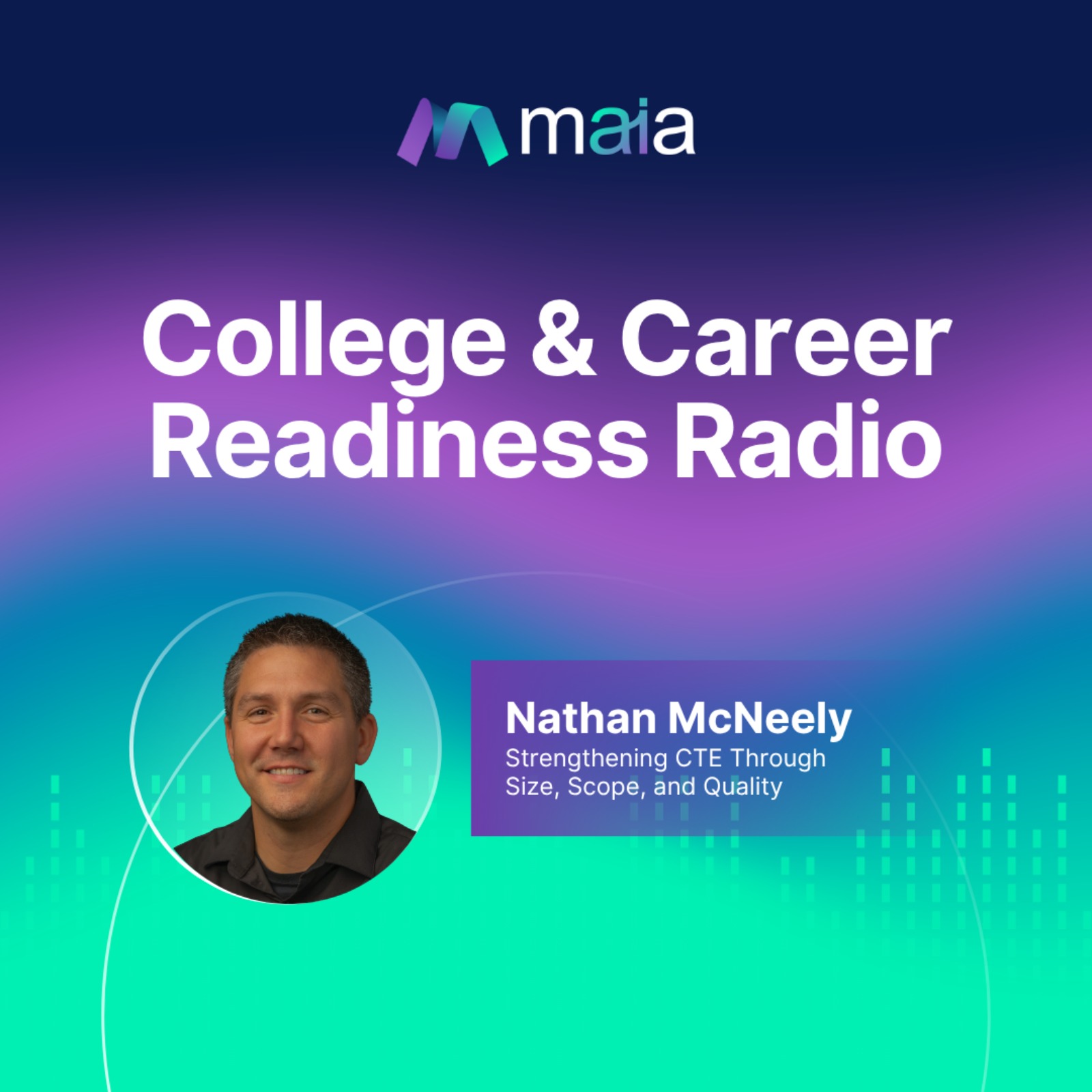
College & Career Readiness Radio · T.J. Vari
Our guest for this episode of College & Career Readiness Radio is Nathan McNeely, CTE Director at Grant Regional Career Center in Marion, Indiana. Nate defines size as being about access—whether enough students and schools have access to CTE programs that align with student interest and labor-market demand. He explains that scope is about opportunity. Programs should reflect local needs while also preparing students for opportunities regionally, nationally, and even internationally. Nate says that quality is about outcomes. Dual credit, credentials of value, work-based learning, and other experiences should produce career-ready graduates, not simply students who completed a CTE program. He reports on a problem regarding demand, which can exceed available seats, making partnerships between comprehensive high schools and career centers critical. High schools can provide introductory experiences while career centers offer more advanced, equipment-intensive programming. He says that having a pathway isn't enough. Students also need meaningful internships and work-based learning experiences connected directly to that pathway. Nate emphasizes that employers often need support understanding how to create high-quality experiences for high school students. Schools and community partners have to educate employers about what meaningful internships should look like. He tells listeners that a welding student shouldn't spend an internship sweeping floors. Schools and employers should agree upfront on what the student, school, and employer will each contribute to the experience. McNeely recommends using advisory boards as more than a compliance requirement. Employers should actively influence programs, particularly when determining which credentials actually have value in the local workforce. Nate says schools may need a both/and approach to credentials—earning credentials required for accountability while also providing additional certifications that employers actually want. He clarifies that strong CTE programs prepare students for whatever comes next, not one path or another. Some students may enter the workforce immediately, while others use CTE, dual credit, and credentials to gain an advantage as they continue into postsecondary education. Nate emphasizes that a true pathway shouldn't be a dead end. It should connect coursework, credentials, dual enrollment, work-based learning, postsecondary opportunities, and ultimately employment. His final message is collaborate! Bring schools, career centers, employers, chambers, higher education, and other stakeholders together because collaboration creates better opportunities for students. College & Career Readiness Radio is brought to you by MaiaLearning, your fully comprehensive college and career planning tool, including the ability to plan and track CTE courses and work-based learning, award credentials, and build student portfolios for post-secondary use, and more. Schedule a demo today.
0:10Hello, everyone, and welcome to College and Career
0:13Readiness Radio. I'm your host, Dr. TJ Vari.
0:17College and Career Readiness Radio is a podcast
0:19that brings together thought leaders from around
0:21the world to discuss the implementation of innovative
0:24strategies to support college and career readiness
0:26for students from early childhood to post-secondary
0:30success. I want to thank you for tuning in as
0:32listeners. And I'm excited to share this episode
0:35with you. Hello, everyone, and welcome to College
0:48and Career Readiness Radio. I'm your host, TJ
0:51Vari, and I'm thrilled to be talking today with
0:53our guest, Nathan McNeely. Nate, thanks for joining
0:56me on the show. Yeah, thanks, TJ. Thanks for
0:58having me on. Absolutely. It's going to be a