
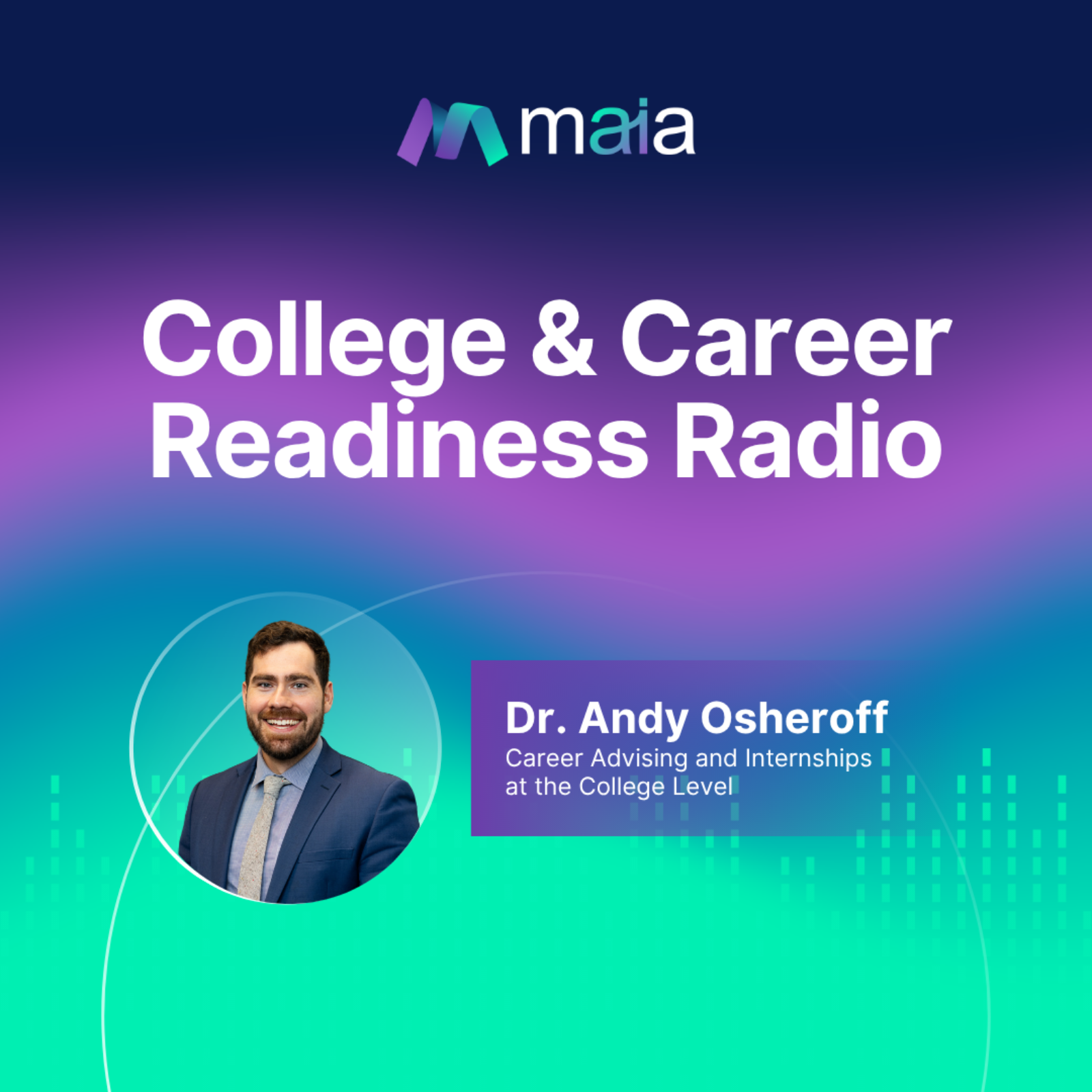
College & Career Readiness Radio · T.J. Vari
Dr. Osheroff says that career development should begin as soon as students arrive at college, not in their final year, because early engagement helps them build confidence, find opportunities, and avoid missing out on internships or other high-impact experiences. He explains that his office at the University of Southern Maine uses peer career guides to create a low-pressure first step for students who may be hesitant to meet with a professional advisor. Dr. Osheroff notes that the peer career guide model works because students connect more easily with near peers who are still figuring things out, and because empathy is essential to effective peer advising. He says the program includes training, ongoing development, and employer-led sessions so students can learn what the job market values and share that insight with others. He emphasizes that internships should be more accessible, not just highly competitive summer opportunities, and says his team runs the program three times a year to create more entry points. He describes a process in which his team handles student recruitment, screening, interview coaching, and employer matching, making the internship process easier for both students and employers. He says spreading internships across fall, spring, and summer reduces competition and helps students fit part-time internships around their classes. He explains that the program grew because USM invested in it over time and was able to show that it improved student retention, classroom success, and post-graduation outcomes. He says paid internships are essential for equity because many students are commuters, work part-time, and have rent, childcare, or other financial responsibilities. Dr. Osheroff explains that funding comes from grants and cost-sharing with employers, with each partner’s share varying by organization size and other factors. He says the goal is to create meaningful, project-based internships rather than busywork, and his team helps employers design stronger roles from the start. He notes that each internship begins with a learning agreement and three student-set learning outcomes, followed by midpoint check-ins to address issues before the internship ends. He tells listeners that the team measures outcomes through surveys, resume support, and longer-term follow-up with alumni to see where participants go afterward and how the experience shaped them. His main message is simple: if an idea is useful, start small, try it, and let it grow in your own context.
0:10Hello, everyone, and welcome to College and Career
0:13Readiness Radio. I'm your host, Dr. TJ Vari.
0:17College and Career Readiness Radio is a podcast
0:19that brings together thought leaders from around
0:21the world to discuss the implementation of innovative
0:24strategies to support college and career readiness
0:26for students from early childhood to post -secondary
0:30success. I want to thank you for tuning in as
0:32listeners. And I'm excited to share this episode
0:35with you. Hello, everyone, and welcome to College
0:48and Career Readiness Radio. I'm your host, TJ
0:51Vari, and I'm thrilled to be talking today with
0:53our guest, Dr. Andy Osheroff. Thanks for joining
0:57me on the show, Andy. Yeah, thank you so much.
0:59It's a pleasure to be here. Fantastic. Today,