
Clarity Connections with Julia Tucker-Lloyd · Julia Tucker-Lloyd
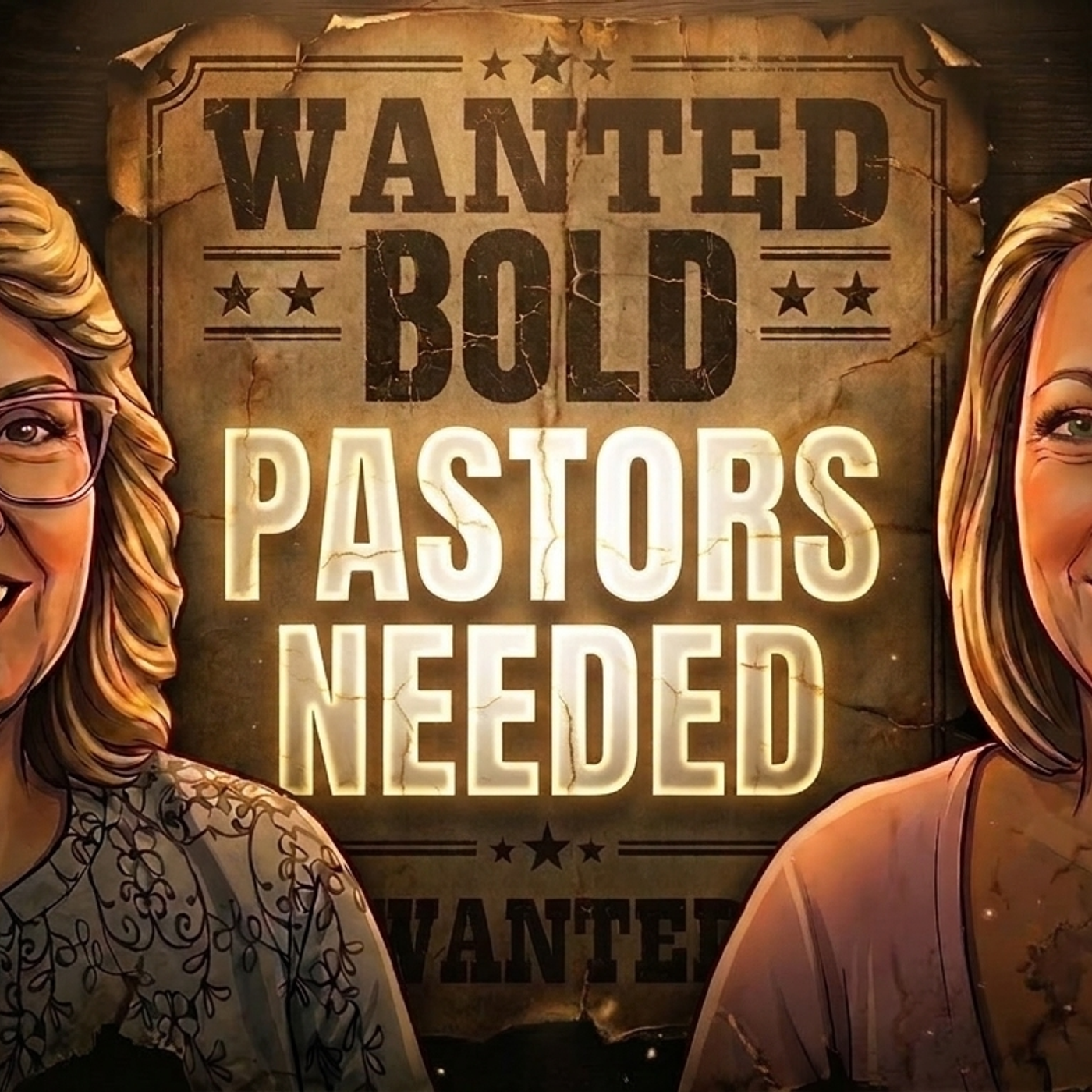
The conversation delves into the role of pastors in today's society, the pressure they face to stay silent on political issues, the church's responsibility to teach biblical truth, the shepherd's role in protecting the flock, and the church's prophetic role and obligation to speak boldly. It emphasizes the importance of pastors preaching the word faithfully and standing firm in the face of cultural challenges. Takeaways Pastors face pressure to remain silent on political issues to avoid division and offense within the congregation. The church's responsibility is to teach what God says, not because it's popular or easy, but because it's true. Role and Obligation to Speak Boldly
Cindy Mac: What happens in church doesn't stay in church. Welcome to Grace, Grit, and Gumption. I'm Cindy Mack. Julie Tucker: And I'm Julie Tucker. Cindy Mac: And together we are guarding our values with grace, defending them with grit, and moving forward with a whole lot of gumption. So let's get to it. So, Julie, this past week or so I've been working with a local pastor, and we've been putting together a packet of information for other pastors. And it's not a political packet, it it wasn't telling people how to vote. It was just simply information about These proposed constitutional amendments regarding abortion and marriage and how they could affect our churches and our schools and our religious freedoms. And as I was putting it together, I kept coming back to one question. Where have all the bold pastors gone? And let me explain what I mean by bold. I don't mean pastors who are yelling from the pulpit. I'm not talking about pastors who, you know, get up there and endorse candidates from behind the pulpit. I'm talking about pastors who simply open God's word and teach us what it says. They aren't afraid to apply God's word to how we're living today. Because let's be honest, if pastors won't talk about what God says regarding marriage and family, the truth, life, and the religious liberty, who will? So I think it's important for people to know before we go any further that I wasn't raised in a Christian home. I didn't grow up going to church on Sunday. And in fact, I can only really think of three times that my family spent together in church. One was Easter Easter Sunday, I was really young, and we were leaving the sanctuary, leaving the church building. The parking lot was packed full of cars and we were the only people leaving. And I remember my dad getting in the car and slamming the door and saying they're nothing but a bunch of hypocrites. And so that's how I was raised. Julie Tucker: Mm. Cindy Mac: and then the other two times was when my dad's grandmother died and when his mother died. That was the only times I remember being in a church with my family. so and I didn't accept Jesus as my savior till I was in my 30s. So when I talk about pastors today, I'm not comparing pastors of today to ones when I was a kid, I'm comparing pastors to those you know just 20 years ago because the ones that helped me grow in my faith those are the ones that I'm gonna be talking about and comparing to today's pastors. And again we're talking you know 26 years since I accepted Jesus. And the pastors that helped me grow in in my faith, they discipled me and they weren't afraid to teach the whole Bible. They didn't Skip the hard passages. In fact, they taught verse by verse, one book at a time, verse by verse. They didn't avoid the difficult conversations. They didn't say, is this going to offend someone? They asked, What does God say? And that's what helped me grow in my relationship with Him. Being a Christ follower isn't all emotion, it's knowledge. So, that all being said, Julie, let me ask you a question. Do you think pastors today are under more pressure to stay silent than they were just twenty or thirty years ago? Julie Tucker: Nerd alert. Cindy Mac: Ha ha ha Julie Tucker: academic nerd alert. so in I rather than answer this question from my own experiences and and and my own impressions, I looked at 15 different sources. And those sources, they were like Barna, LifeWay, Pew Research, etc. And it shows in each of these 15 sources that over the last 20 to 30 years. Many American pastors have faced a lot of real social, congregational, and legal institutional pressure to avoid political or controversial public issues. As a matter of fact, over the past generation, American pastors have faced pressure to remain quiet or cautious on political issues because they don't want to divide the congregation, they don't want to fear members or They won't they won't they fear offending members. There's public discomfort with politicized churches. And they are also concerned about these legal concerns. Now think about that whole list. That means the pressure is coming from inside the church as well as outside of the church. It's not from the media and the government and the outside culture alone. It's from the pews. And I think people need to be more clear on the Johnson Amendment. So it's the Johnson Amendment that tells pastors and churches not to endorse specific candidates. It doesn't say that they can't speak on issues like the the cultural divides and the identity of sexuality, et cetera, et cetera. As a matter of fact, There's nothing anyone can do to touch them if they do that. So while the Johnson Amendment does not prevent at all preaching on moral or policy issues, the caution only lives in what pastors can say about a candidate from the pulpit. I think that's the biggest Cindy Mac: Yeah and Julie Tucker: misunderstanding that our churches and our pastors have. Cindy Mac: Absolutely, I'm so glad you brought that up because it's true. And I think we've talked about this before on another episode, but pastors don't know what they can and cannot say, and so they're afraid. And you know, if if they preach on biblical marriage, then they're accused of being political. And if they preach on the sanctity of life, they're accused of taking sides. if they preach on what God says about gender. Then someone's gonna say they're hateful or they're a bigot. And that's a lot of pressure. I mean, that's gotta be a lot of pressure for them. And I genuinely, I genuinely have compassion for them because I do know those pressures are real, but here's where I struggle. If pastors won't teach what God says about the issues that we're facing every day, where are we supposed to learn it? From social media? From the mainstream media? Hollywood, that's not where Christians should be getting anything. So they should be getting it straight from God's word, taught by faithful shepherds. And so that's what this conversation is going to be about today. let me ask you another question. You hear people throw around the phrase the church needs to stay out of politics. Do you think Christians have forgotten the difference between politics and biblical truth? Julie Tucker: Second nerd alert. Cindy Mac: Yeah. Julie Tucker: I'm just gonna start signaling to our readers, I mean our listeners. So there's there's a book we've talked about on a previous podcast, and I and I want to bring it up again. And Eric Metaxis wrote a book, Letter to the American Church. It's also a documentary, and he underscores the fact that Th if the church does not speak up society falls. One of his biggest biggest examples is he said there were 18,000 Protestant pastors in Germany during the Nazi period, and there were three groups. There were 3,000 that were pro-Nazi, supported and aligned with the Nazi regime. 3,000 were anti-Nazi. They resisted. They were associated with the confessing church, which is the one that went to scripture and used scripture for the reasoning. Bonhoeffer, who was executed, was part of the confessing church. But listen to this that's 6,000, 3,000 for, 3,000 against, 12,000 pastors were neutral or passive. They didn't actively support the Nazis, but they also didn't oppose them. And Mataxis's point is The silent majority avoided taking a public stand. Hence, trains and trains and trains destroyed millions of people. It wasn't openly supporting evil, but they were so silent and cautious and politically neutral while evil advanced that this is a warning to American Christians. He flat out says it's a warning. When churches avoid controversial moral issues out of fear, comfort, or desire for respectability, they become complicit. Cindy Mac: Absolutely Julie Tucker: So Cindy Mac: true. Julie Tucker: you know, I th I think about how afraid a lot of people are to say anything negative about anyone that's Muslim. You know, we have a political representative in the General Assembly whose bill got passed next session, but it's to make it a crime to say anything negative about someone who's of of the Muslim faith. Well N nobody's cautioning the Imams about what they can or cannot say, and nobody is speaking boldly about what the word says that's antiqual to that. Why? Anyway, in my nerd alert, I think it's not just an interesting statistic, an interesting piece of history. I hope it makes the case that we're not only legally able to speak boldly, we are obligated to speak boldly against that which is evil. Cindy Mac: Absolutely. Absolutely we are. So this is the way I look at the whole politics versus biblical truth. If a pastor stood up on Sunday morning and he preached that Jesus is the only way to heaven, nobody's gonna say he's being political. And if he preaches on forgiveness, nobody's gonna say he's being political. But the minute that he preaches about what the Bible says about marriage or unborn life or creating us male and female, then all of a sudden that's politics. Is it? No. Those are biblical issues that politicians decided to argue about. The church didn't make them political, the culture did. The church's responsibility hasn't changed. The pastor's responsibility is to teach what God says. Not because it's popular Not because it's easy for sure, but because it's true. And sadly, our Christians today, they don't have a biblical worldview. We've talked about this before because the church isn't teaching them to have one. I think we said what four to six, four, two, six percent of Christians have a biblical worldview. And I was thinking about this too, you know, we recently moved our party meetings to a church. We were meeting in a courthouse, which we outgrew. And so we moved to a church. And do you know there are people who stopped attending because we were meeting in a church? The party's creed says, quote, that faith in God as recognized by our founding fathers is essential to the moral fiber of our nation. But people are actually upset and quit attending the meetings because we have them in a church. And you know, it's sad to me because The church used to be the center of town. It wasn't just worship that they had on Sunday, but it was where they had town meetings, any meetings. It was where they held it's where they had school. The church was the the center of everything. And I think it's really sad that churches are only open on Sunday. They should be the center of the community every day of the week. And I think if they were, the United States would be in a lot better Shape than they are. so what do you think about when you hear the word pastor? What comes to your mind? Julie Tucker: Well, the first thing that comes to mind is the twenty-third Psalm, The Lord is My Shepherd. And as I was looking at The Lord is my shepherd, remember the verse that says, Your rod and your staff comfort me. So a good shepherd protects their sheep, but they they have to do it by taking on the wolves. So the staff guides the people. But the rod, which by the way, comes first, is to fend off the wolves. And I feel like there's a lot of focus on the staff part of pastoring sometimes and not a lot on the rod. Cindy Mac: Yeah, I think you're right. And and the shepherd doesn't exist to make the sheep comfortable. He's there to protect them. He feeds them. And he warns them when danger's coming. And I was thinking about it, you imagine a shepherd who sees a wolf coming towards his flock and he says, Well, you know, I really don't want to upset them anybody today. How is that compassion? That would be negligence. It wouldn't be compassion. And the same's true spiritually. If pastors see confusion spreading throughout culture, if they see biblical truth being challenged, if they are seeing families struggle, isn't that exactly what the church should isn't that when they should really speak with b biblical clarity? I just I don't understand. And here's here's the good news. People are starving for that kind of leadership. I hear it everywhere I go. I know so many people who are looking for someone to love them enough to tell them the truth. People don't want another motivational speaker. They want simply to simply tell them God's word and explain what it says. And isn't that what pastors are called to do? Julie Tucker: Yes, and I think that I think that we forget the rod and the staff. They both need to be present. So that the staff is the gentle guidance and support and reflecting the care of the sheep. But the rod without the rod, the sh the sheep are vulnerable. So I think that it is more fun, more Rewarding to be the gentle guide and support. But to your point, a pastor's job is to fend off the wolves by proclaiming biblical truth. The Bible is the rod. They're not the rod. They're not beating people up. But they are saying, hey, this is what the word says. This is what the word says. And it and it's God that does the convicting. Cindy Mac: Yes. Yep, well said. Anything else you want to add to our conversation? Julie Tucker: Well, I did want to add that it has become a political issue and it's not, it's an apologetics issue. I am very concerned as I watch what's happening in Europe with the invasion of one faith over another. Now the Church of England is fighting back. they're asserting themselves in in different ways. But it's also it's almost become a political third rail that you can't talk about Islam. Well, if we don't talk about it, we're not actually being apologists. And in in in the US, I think we need to have an honest conversation about what American imams are saying about what truth is and what the purpose is. You're an infidel, Cindy. And you're a woman, and you're probably not gonna go to heaven. And if you are, you're gonna be somebody's wife, and among other ones. I mean, it's such a convoluted thing to protect something in the interest of diversity, equity, and conclusion and inclusion that will actually destroy you. And I I'm not gonna listen to Islamophobia anymore. I'm not gonna listen to that charge anymore. I'm gonna be an apologist. I'm gonna look at what the word says. I'm gonna look at what the imams and the Quran and that says, and I I'm gonna question, you know, and y if we don't Yes. Cindy Mac: And and that's what we need our pastors to do. That's they've got to lead this charge. They've got to show their congregation it's okay. It this is okay. And until they do, I don't know what happens. The good news is the good news is though, I think that the younger people, and I think I want to give Charlie Kirk credit for this, they see through all this. They see through the you're a racist, you're a bigot, you're Islamophobe. If you don't agree with us, you're these things. They're seeing through that and I and they're over it. I was listening to Steve Dace a few days ago and he was talking about how the younger the younger generation, the college kids, again, they're seeing through it and and older than that. They're seeing through it and they're waiting. They're locked and loaded. They are waiting for someone to say that to them because they have the answer. They've got the right answer. And so that's good. We need our age group to get over it. Julie Tucker: Well, and what we have to face is the lessons that history's taught us, which means by the way, we should teach history. Eric Mataxis said, We should say that whenever a church is subservient to the state or the reigning worldly culture, as the official communist church in China is, it's no longer the Church of Jesus Christ. It's a counterfeit church that doesn't serve Jesus. But serves the forces of power, which is to say it serves the devil. Unquote. Cindy Mac: So true. Anything else? Absolutely. Julie Tucker: can I add one other thing? This is not new to our culture. In the Old Testament, God sent prophets to call the people of God to be the people of God, not only in name, but in how they lived. So 2,000 years, God has sent people to prophetic figures to do the same thing, call the people of God. And what we now know as the church. is that prophetic role. And and I I am I am humbled by the idea that if we don't be the church as God calls it, we're serving the enemy. I don't want to serve the enemy. Cindy Mac: No, absolutely not. That's awesome. Thank you for saying that. Well, before we go, I wanna encourage our pastors. I know you're under a lot of pressure. I can't imagine. And I know every Sunday you stand behind that pulpit knowing no matter what you say, someone's going to disagree with you. There are gonna be people who will accuse you of being too political. Too conservative, too liberal, too soft, too bold. But here's the question. When you stand before Jesus one day, whose approval will matter? Will it be the congregations? Will it be the cultures? Or his? The Bible never called you to be popular. It calls you to be faithful. Your job isn't to preach what people want to hear. Your job is to preach what God has already said. Not with anger, not with arrogance, and not to win arguments, but because you love people enough to tell them the truth. Our culture is changing at a at a a pace we've never seen before. Every day our children and our families and our churches are being bombarded with messages that stand in direct opposition opposition of God's word. If the church won't speak with biblical clarity, who will? People don't need another motivational speaker. They don't need another self-help message. They need shepherds. Shepherds who will open God's word, teach it faithfully, and trust God with the results. So, pastors, thank you. Thank you to ever for every sermon you preach that pointed people to Christ. Thank you for every difficult truth you've ever taught, even when it wasn't popular. Thank you for standing when it would have been easier to sit down. And if you've been tempted to stay silent, let today be your reminder that God didn't call you to comfort. He called you to faithfulness, to be gracious, to be humble, to love people well, but never, ever apologize. for the truth of God's word. Because what happens in our churches doesn't stay in our churches. It shapes our families, our communities, our commonwealth, and ultimately our nation. So please stand firm, preach the word, and be bold. And that is all the time we have for today. Thank you for joining us. Please be sure to follow us on Facebook at Grace Grit Gumption. You can email us at podcast at GraceGritGumption.us, listen on Spotify and Apple Podcast and watch us on YouTube, Grace, Grit and Gumption. We don't promise easy answers, but we do promise honest conversation. Until next time, be sure to lead with Grace, stand with grit, and move forward with a whole lot of gumption.