
Clarity Connections with Julia Tucker-Lloyd · Julia Tucker-Lloyd
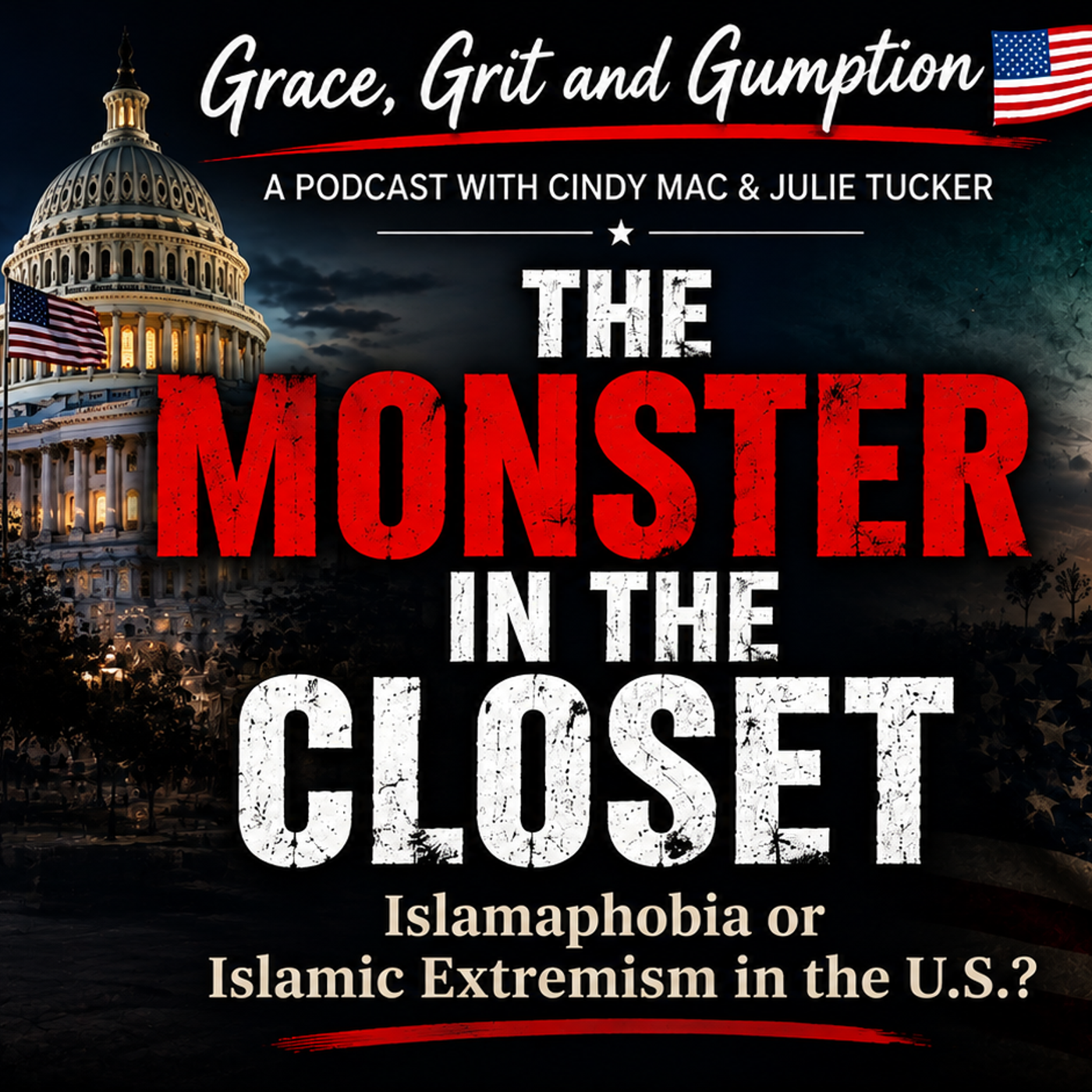
When the Closet Door Opens: Islamophobia, Islamism, and the Constitution Cindy Mac and Julie Tucker examine the difference between prejudice against Muslims and legitimate criticism of Islamist ideology, religious doctrine, and organizations tied to extremism. They frame the conversation around “three closets” - people, ideas, and organizations - and ask what Americans should do when fear of being called Islamophobic keeps them from asking hard questions.We discuss why precise language matters, how constitutional protections apply to people but not ideas, and why scrutiny of terrorism financing, Sharia-related political goals, and civil rights concerns can coexist with defending Muslim Americans from discrimination. The episode also reaches into historical context, federal prosecutions, congressional actions, and a Virginia bill to test what free speech and religious liberty actually require. Key topics Cindy Mac explains why she pushed back on criticism after sharing a post about Muslim candidates, while Julie Tucker lays out the larger question: where is the line between prejudice and legitimate concern? The hosts define key distinctions:Muslim as a person Islam as a religion Islamism as a political ideology Jihadist extremism as violent enforcement of ideology Cindy argues that Americans can defend Muslim Americans’ constitutional rights while still rejecting Sharia-based political rule and extremist religious governance. Julie introduces the “three closets” framework:Closet 1 - ordinary Muslim people Closet 2 - ideas such as Islam, Islamism, jihad, Sharia, apostasy, and blasphemy Closet 3 - organizations such as the Muslim Brotherhood, Hamas, ISIS, and Al Qaeda The discussion stresses that prejudice against Muslim people is real, but so is the need to scrutinize ideas and organizations tied to violence or anti-constitutional goals. The hosts connect the conversation to history, including the Arab conquest of Egypt, jizyah, and the long-term effects of political power shaping religious demographics. They discuss the Muslim Brotherhood’s founding in 1928, its ideological branches, and Hamas’s roots in the Palestinian Muslim Brotherhood. Julie cites the Holy Land Foundation prosecution as an example of federal terrorism-financing evidence, including the government’s claims about the Palestine Committee and Hamas support. CARE is discussed in the context of the Holy Land litigation and later congressional scrutiny, with the hosts emphasizing the distinction between a conviction and inclusion on an unindicted co-conspirator list. The episode also references intelligence findings about ongoing Islamist threats, including disrupted plotters and attacks in the United States, to argue that the threat is not merely historical. The Virginia legislative angle centers on a bill defining Islamophobia in hate-crime reporting, prompting a broader discussion of how to protect people from violence without shielding beliefs or ideologies from...
Cindy Mac: if we are so scared of being called a a racist or a bigot or Islamophobic that we won't even look at what's happening, then we've got a serious problem. I'm not saying you throw open all the Closet doors and start screaming monster. But I am saying turn on the dang light and look. if there's something dangerous standing there pretending that you don't see it, that's not tolerance. That's just stupid. What happens in Richmond doesn't stay in Richmond. Welcome to Grace, Grit, and Gumption. I'm Cindy Mack. Julie Tucker: And I'm Julie Tucker. Cindy Mac: And together we are guarding our values with grace, defending them with grit, and moving forward with a whole lot of gumption. So let's get to it. Julie Tucker: Cindy, I have a question for you and I can't imagine you being afraid of anything. But when you were the littlest of girls, did you ever think there was a monster in your closet? Cindy Mac: I don't remember specifically a monster in the closet. I think the monster was under my bed, but yes. Julie Tucker: Think most of us did because the scariest thing about what the closet about the closet wasn't necessarily what was in there, but what we imagined might be there. There's the other police there's another possibility though. What if there really Cindy Mac: Yeah. Julie Tucker: is something in the closet? Every great horror movie has somebody actually in the closet, or the shower, or behind the door, or in the woods. So What if we become so embarrassed about being afraid that we won't even open the door? Today we're talking about one of those subjects where Americans seem to be told to choose between two positions. Either Islam is dangerous or concerned about Islam is in Islam is Islamophobic. And I don't think those are our only choices. So here's what we're going to do today. We're going to turn on the light in the closet. And You and I have discussed this, but just for our listeners, this podcast was actually inspired by a simple forwarded post on Facebook for me. And the Facebook post was about how women should consider carefully the Muslim candidates they endorse because of the current moves in heavily Muslim immigrant states to prevent Sharia law from being implemented: Minnesota, Michigan, Texas. And Those are the same areas from which these candidates are emerging. And the post simply said, Don't vote for the axe that's gonna chop your own tree down. And it was directed at upper middle class white women who are liberal who are supporting these candidates. Now, it was not an original post, it was just something I was like, that's clever. Forward on my personal page. And The next thing I know, I am being accused of condemning two billion Muslims by two people I've known for decades. The mere whiff of critical thinking about, hey, should we really look at the platforms of Muslim candidates before we vote for them? Should we look at the context in which the culture they're operating might affect their leadership? Just do a short post. I generated a lot of criticism about a point I never actually made. I never indicted two billion Muslims. I just said candidates for office in the United States who are vocal critics of the country for which they're running for office, El Saed from Michigan, Rashida Taliba, Ilhan Omar. We really need to pause. to consider what's gonna happen with women, you know, and and it wasn't even original thought. And it's funny, as I talk with people in the community, there are a lot of people who just did not comment on that post, even though they agreed with how I responded. And but they didn't comment publicly 'cause they just didn't want it to go on. And I spoke with a woman today that said, you know, I just don't want to be called Islamophobic. And so let's start with the center of this conversation, Islamophobia. So generally speaking, we say Islamophobia describes the prejudice, hostility, fear, or even discrimination directed towards Muslims or Islam. Some of that unquestionably exists. With the mass immigration we're seeing across Europe into the United States, there are is in qu unquestionably prejudice and hostility. But is and if someone's harassed because she wears a hijab or if a mosque is vandalized, you know, that's prejudice. But conservatives should be able to say without hesitation That religious liberty doesn't mean religious liberty for people who just believe what I believe, or d or or that my religious liberty needs to be compromised so that I don't offend someone else. So it it gets really messy. I had to do a whole like language study here. We tend to make everything one thing. A Muslim is a person, Islam is the religion. So you Just because you don't agree with the tenets of Islam doesn't mean you're rejecting Muslims. Islamism is a political ideology or a family of movements seeking to order all of society according to Islamic principles. So, in other words, we are going to impose our political views because they are spiritual. on everybody and then jihadist extremism says and we're gonna use violence to do it. Those things aren't interchangeable and so we have to really understand what we're talking about. what's your two second thought on that those language distinguis distinguishing distinctions? A Muslim as a person, Islam as a religion Islamism as a political ideology, jihadist extremism involving violence. Cindy Mac: Well, I think we have to I think we need to draw a line between the prejudice of Muslims and legitimate criticisms of Islam beliefs and the whole political movement. I mean those are different things and I do draw that line between the person and that belief system. a Muslim like you said, it's i as a person. I'm not gonna mistreat anybody or Hate them or deny them their constitutional rights because they're Muslim, period. But is Islam Islamism is different. That's not just somebody going to a mosque and practicing practicing their religion. That is a a political ideology. And it says that the society and government should be ordered. according to Islamic principles in Sharia law. And you know how you do your nerd alert? Maybe I need Julie Tucker: Yeah. Cindy Mac: to do a blunt alert because When we're looking at Islamist governments and extremist movements where gay people are executed for simply being gay, where women are treated as second class citizens. I mean, they're not even considered valuable property. They can be stoned for being raped. You've got religious minorities are persecuted. you've got people that are punished for leaving or criticizing their religion. Don't tell me Americans aren't allowed to question that. Those ideas are not even close to being compatible with the United States con United States Constitution. You cannot have Sharia as supreme law of the land and the Constitution as the supreme law of the land. One of them has to win to the liberal women and the gay Americans cheering on this movement because you think you're being kind and tolerant, please learn what you're supporting. The Constitution protects your right to disagree with me. You can criticize Christianity, you can marry whoever you want, you can live your life without a religious government. Controlling you. Sharia law absolutely would not give you those freedoms and you need to know that. So yeah, I'll defend a Muslim American's constitutional rights all day long, but I will strongly defend this country against any political ideology that wants to take those rights away. And that's not prejudice, that's understanding the difference between respecting a person and surrendering to an ideology. And if that's too blunt, well I started to say I'm sorry, but I'm not. Julie Tucker: No and no, I thought you did my one of my first questions for you, and you answered it beautifully, where do you draw the line between prejudice against Muslims and legitimate criticism of Islamic beliefs or li Islamic political movements? You know, the minute someone sees Muslim or Islam in your post and it's not celebrating the Islamist ideal, you are Islamophobic. But If you look at the candidates that I listed, El Said, Rashida Talib, Ilhar, Ilhan Omar, not only are they on the record as being hostile to the U.S. government and the United States of America, they're also supporters of the Democratic Socialists of America. They're a part of that. And their stated platform is to centralize power among a congressional body and then approach. Appoint the executive director or the president and appoint the judges, but they're subject to a centralized controlled body. And you have to pay attention to how that does reflect Islamism. I'm not critic criticizing the Muslim and his wife, the or or the Muslim and her husband who are running for office. I'm questioning their ideology because it's in direct conflict. And you know, there's another principle here that you pointed out that Americans sometimes forget. The Constitution protects people, but it doesn't protect ideas from criticism. Every Muslim has the right to tell me that Christianity's false. And I have every right to say Islam is false. Neither one of us has the right to attack the other for saying it. And that distinction's going to be very important today. So picture three closets. As I've researched this, I think that our metaphor isn't quite right. It's three closets. Closet number one: the people, our Muslim neighbors. Millions of ordinary people, actually billions. Who are working, raising families, worshiping, and living their lives. If we look at them and automatically see terrorists because they're Muslim, that monster is probably our prejudice. And are there people that do that? Yes. I think the fear factor comes from the extremists who have the microphone and the attention most of the time. And we're not sure. How many extremists there are? Cindy Mac: Well, and not only that though, you've got the the the Muslims that won't speak out against you know, I hear that all the time. Why aren't they speaking out? If they're if they're not believing what what these extremists are saying, why are they not speaking out? The only thing I can come up with is they're afraid. And I don't blame Julie Tucker: So it's interesting because Islamophobia has made us afraid. It's kind of ironic. So if you've got closet number one with the people, closet number two is the ideas. Islam, Islamism, jihad, Sharia, apostasy, blasphemy, religious government, the relationship between the mosque and the state. Those are ideas. And you know, for the brothers of our listeners that need some distinctions, you know, Islam is the faith. Islamism is something you can object to because it's about proliferating that faith among everybody, including the government, and moving to Sharia law. Jihad is the war. There there were several it's on social media, so I won't bring them up on the podcast because I'm not sure how much I trust social media. But there's there's a call in the streets of Spain right now for jihad. All the sixty thousand young men that crossed the border, which was more than the beaches of Normandy, taking over homes. That's jihad. apostasy just means you know, i if if you decided, Cindy, which you would never do, but if you decided, you know, I I'm done with this Christian thing, I I'm leaving the faith. No no one would put you to death for it. But if we're looking at ideas, apostasy says, it would be okay for me to kill you if you left the Christian faith. Now that doesn't line up with Christians, but it does line up with Islamism. And I can't, I can't agree to that. That's contrary to our Constitution. Blasphemy is saying anybody other than Allah is God. Well, I can't agree with that. and actually blasphemy is grounds for stoning as well. we talk a lot about the separation of church and state, and basically Islamism says the mosque becomes the state. There's no separation. They are they are one. And we can we not only can examine, debate, criticize, and reject these ideas. We darn blunt award, we darn well better should. and then the the three the third or is the the third closet is organizations and this is where things become more difficult. There there are organizations that we hear the names, the Muslim Brotherhood, Hamas, ISIS, Al Qaeda. These are the organizations who finance terrorism. appear in federal investigations, they're scrutinized by Congress, and these are not imaginary subjects. This is not Islamophobia. They're matters of history, intelligence, criminal prosecution, and public policy. So closet number one, the Muslims. Yep. Not not afraid of them. Closet number two, the ideas. Not really afraid of them, don't like Closet number three, organizations, I'm a little bit afraid of them if they aren't kept in check. here's a question I have for you. Which mistake is more dangerous? Seeing a monster where there isn't one, or refusing to open the door because we're afraid of what we might find? Cindy Mac: I think refusing to open the door, that's way more dangerous because if we are so called so scared of being called a a racist or a bigot or Islamophobic that we won't even look at what's happening, then we've got a serious problem. That's what we're seeing, and mainly out of liberal white women for some reason. We've got a serious problem there. I'm not saying you throw open all the Closet doors and start screaming monster. But I am saying turn on the dang light and look. And if there's nothing there, great. Shut the door and move on. But if there's something dangerous standing there pretending that you don't see it, that's not tolerance. That's just stupid. I just don't understand. We've got to stop being so afraid of offending somebody that we're afraid to ask questions. Asking questions. Just you know, making statements just like you did, Julie, and asking questions doesn't mean you're condemning every Muslim in America. It means you're using some common sense, which unfortunately I think went out the window decades ago. And I'm telling you right now, I'd rather somebody called me a name for asking a legitimate question than to wake up one day and realize we saw the morning signs and we kept our mouth shut and we did absolutely nothing about it. People need to wake up. Julie Tucker: And what I want to give all of our listeners permission to do is to ask questions. You know, as teachers who say there's no such thing as a dumb question. That's not actually true. There are dumb questions. But the dumbest questions are the ones that aren't asked. Cindy Mac: Exactly. Julie Tucker: So nerd alert, I want to do a little quick history review. About what happens when religion and political power meet. So let's go backwards. Before the Arab Muslim conquest of the seventh century, Egypt was predominantly Christian, particularly Coptic Christian. And around 639, Arab Muslim armies conquered Byzantine-controlled Egypt, and Egypt didn't suddenly become Muslim. The transformation occurred. Gradually. Christians continued practicing their faith, but they started to live under a different political and legal order. And they historically played something called the jitzyah, and it was a tax imposed on certain non-Muslim populations. So people say, What's what's the problem if we have Sharia law? Well, it's two-tier justice. Two-tier justice began in Egypt with this tax. And so over generations, Egypt transitions from a Christian majority society to a Muslim majority society. There were periods of coexistence, there were also periods of discrimination, restriction, and violence. That's what the whole crusades were all about. And many people will criticize the West for the crusades. And I'm not saying there wasn't crusades. you know, violence, discrimination and and restriction on both sides, but there there was a conflict of religion and political power in Egypt. So you gotta acknowledge that this is not a uniquely Islamic historical phenomenon. there are Christian conquests that took Muslim territories, including parts of Spain and Sicily, same people Place people are invading now. Political power alters religious demographics throughout history. But what happens when authority that is religious and political authority become entwined? We're still going to hang out in Egypt because that's where we see the birth of the Muslim Brotherhood. So The Muslim Brotherhood was founded in Egypt in nineteen twenty eight by Hassan al Bana, and for nearly a century it's developed branches, affiliates, and ideological descendants across numerous countries. Different Brotherhood related organizations have pursued different strategies. Some have participated in elections, others have become associated with violence, but one is Particular connection matters enormously. Hamas traces its roots to the Palestinian Muslim Brotherhood. And so for people who say, well, you know, Iran is all about oil and and the Strait of Harmouth, and this goes back centuries. The current legislation before the United States, this is Senator DeCruz introduced the Muslim Brotherhood Terrorist Designation Act of 2025. So that's Senate Bill 2293. And then there was a House Companion Bill that Representative Mario Diaz Baylart introduced. It cites Hamas's charter describing Hamas as a wing of the Muslim Brotherhood in Palestine. But it also cites the National Counter Terrorism Center's description of Hamas's roots in the Palestinian branch of the Brotherhood. And this is important. These are proposed bills. It doesn't mean that Congress has adjusted every claim in them or the legislation becomes law. But what the F what Congress is saying Is what does the evidence say and what do we do about it? And I'm not I'm specifically in this episode not using research sources that are left or right, but more like congressional records and historical records, because I don't want to be accused of being biased. You can call me Islamophobic, I'm I don't care, I'm not afraid of it anymore, but I don't want to be called biased, so I'm not using sources that can be considered briased. So I've got a question for you, Cindy. If one branch of an international ideological movement participates peacefully in politics while another branch embraces terrorism, how should Americans decide which organizations deserve scrutiny? Cindy Mac: Well, kinda like I touched on before, I mean, I would expect that peaceful peaceful branch to speak out against the terrorist. And if they don't, then I I do question their motives. but besides that, I think we decide based on their actions. Who they who are they associated with? Where's their funding coming from? And what's their stated goals? If you pay attention, they'll flat out tell you who they are. For some reason we just don't want to believe them. We need to start believing when people tell us who they are. We need to believe them. And so they'll tell you. And I think we just need to make again common sense decisions that common sense doesn't seem to be around anymore. Julie Tucker: So let's take the word Islam and switch it for Christian. If you had a Christian organization and a Christian ideological movement, and one section participates peacefully in politics, but the other is burning mosques, you would expect that Christian organization to not only speak up. But shut the other down. Why is not Cindy Mac: Yeah, I would. Julie Tucker: the why is not the you know, you've gotta you've got to impose the same reasoning. But we've gone through this period of time where we've been conditioned to believe that we have to embrace diversity above all else. And I'm not rejecting diversity, but there are some things that are mutually exclusive of one another. And it's fair to ask if Islamism can and should flourish in America or in the West, given what their stated goals are. This is big. I'm over the fear of being afraid to talk about this. I gave you two different episodes to talk about today. And honestly, even in the last thirty seconds before we started, I was like, I hope she picks voter integrity. You know? 'Cause this is heavy. Cindy Mac: It is heavy. But like I said, I chose this one 'cause I was in a mood. Julie Tucker: You you you had your blunt coming on, right? Cindy Mac: I was walking loaded. Bring it. Julie Tucker: So let's let's nerd alert again. Nerd alert. I want to do the Holy Land sort of exploration. So let's take the p politician impundits out of it. Let's talk about an actual federal terrorism financing prosecution. So the Holy Land Foundation for Relief and Development sounds great. It was once one of America's largest Muslim charities. Ministering to Muslim people who were suffering. However, federal prosecutors accused the organization of providing financial support to Hamas. After an earlier mistrial, the Holy Land Foundation and five of its leaders were convicted in federal court in 2008. And the FBI subsequently said approximately $12.4 million. had been provided to Hamas controlled organizations. And the convictions of those individual defendants were later upheld, even though they appealed their case. And here's an important part of this government's case. Federal prosecutors presented evidence concerning something called the Palestine Committee. According to the government's case, this committee was established by the Muslim Brotherhood. in America to support Hamas. So the evidence presented by the prosecutors included a wiretap 1993 meeting in which participants discussed Hamas and how their activities should be presented publicly in the United States. All right, flash forward. We are seeing young people across our countries in our cities draped in Palestini w I forget what they call it, but it's the Palestinian black and white scarf thing. And you know, from the river to the sea, protesting for Palestine. Where did that begin? 2026. Did it happen in nineteen ninety-three when this meeting was wiretapped? And you know, I I want listeners to understand why I'm telling you this. This isn't somebody on Substack says or Prager U says, or some Republican on television says. We're talking about evidence presented in a United States federal terrorism. financing prosecution that resulted in convictions. It doesn't mean every allegation about every Muslim organization is therefore true, but this part of history is not imaginary. Cindy Mac: So me ask you a question. Where does care, C-A-I-R, where does that fit into all this? Julie Tucker: I'm glad you asked because we can talk about 2008, 1993. CARE is the Council on American Islamic Relations, and it describes itself as a Muslim civil rights and advocacy organization. Now, if we have civil rights in the US, do you need an organization for one particular faith above all others. So during the Holy Land Foundation litigation, care was included on a government list containing more than two hundred individuals and organizations identified as unindicted co conspirars or joint venturers. Now let's stop right there, because this distinction matters. An unindicted co conspirator is not a convicted co-conspirator. CARE was not convicted in the Holy Land prosecution. It has strongly disputed allegations connecting it to terrorism. But in June of 2025, so a year ago, Congress Cro Congressman Randy Fine introduced H.R. 4097 called Designate Care as a Terrorist Organization Act. So despite that provocative title, And directed the Secretary of State to review whether CARE meets the legal criteria for a designation of a f as a foreign terrorist organization. And the legislation contains congressional findings citing the Holy Land Foundation's case, care's inclusion on the unindicted co-conspirator list, and their connections involving Hamas and the Muslim Brotherhood. Those assertions are contained in proposed legislation. It's not an imaginary monster, it's litigation based on evidence of that third monster or that third closet and an actual monster. so I think we finally have this question right, and I'd love for people to talk about this on social media. instead of the knee-jerk reactions. Can we defend Muslim Americans against genuine discrimination while simultaneously insisting that organizations claiming to represent Muslims remain subject to exactly the same national security scrutiny as everybody else? Cindy Mac: Yeah, I mean I don't I don't even see a contradiction there. a Muslim American should be protected from being assaulted or threatened or discriminated against because they're Muslim, because but an organization doesn't get immunity from scrutiny because it claims to represent Muslims. I mean Julie Tucker: So like Cindy Mac: Those are two completely different things. It's it's if if it's if there's credible evidence that an organization can have or may have connections to terrorism or extremism, investigate it for the love of Pete. But that's not an attack on every Muslim every Muslim in America. That's that's the government doing its job for once. Julie Tucker: Yeah, so let's let's take Muslim out of the whole question and say, can we defend Christian Americans against genuine discrimination while simultaneously insisting that organizations that claim to represent Christian Americans, like the Proud Boys, remain subject to the same national security as everyone else? See, when you take Muslim out and put in, let's say Jewish Let's say Christian. The the same principle should be consistent. And if you separate Muslim in a separate category, what are you saying? Other than rule, you know, there there are tears of justice. And that's not constitutional. here's a question that's underneath that one to me. If we're asking legitimate questions about an organization, and then it's automatically called Islamophobia. Does the accusation itself start shutting down legitimate conversation? Yeah, I ex I experienced it Cindy Mac: Absolutely. Yeah, I mean Julie Tucker: personally. Cindy Mac: yeah, I mean if if Islamophobia starts meaning that you can't question any of you know can't question Sharia law or an Islamist organization or the actions of a Muslim political leader, then we've crossed a line. No nobody should be able to end an argument just by attaching a label to the person that's asking a question. Answer the question. If the concern is wrong, show me why it's wrong. But we see this that we've talked about this so many times. We see the same thing with the labels bigoted and racist. Those words have been weaponized against any thinking human being who dared disagree with the narrative. And again, I've said this if I said for once, I've said it a thousand times. People are catching on and they're sick of it. Julie Tucker: Well, and I can already hear somebody talking back to their podcast player saying, Julie, Holy Land Foundation, 2008, Muslim Brotherhood, haven't we moved on? Fair question. So let's go to 2026. Let's ask the United States intelligence community. And so if you look at the 2026 annual threat assessment. The director of National Intelligence, Tulsi Gabbard, told Congress that the United States continues to face a geographically diverse collection of Islamist terrorist actors. Not Muslims in the first closet, jihadists in the third closet. She says it's here. Here's the statistic that stopped me cold. According to that testimony, there were at least three Islamist during 2025, there were at least three Islamist terrorist attacks in the United States. Law enforcement disrupted 15 US-based Islamist plotters. And the testimony said roughly half of those disrupted plotters had some online contact with Islamist terrorists or inspiration from foreign terrorist gov organizations abroad. Meanwhile, ISIS and Al Qaeda continue to pose threats to American over interests overseas. The monster is not in the closet in the Middle East. The monster, according to Tulsi Gabbard, is in the Here. So let's remove conservatives from the argument, remove liberals, remove social media, remove documentaries, remove me. The United States intelligence community says Islamist terrorism remains a threat. So if it's a threat, what language are we supposed to use to discuss an actual national security threat? If if you can't say Muslim and you can't say Islam What what are you gonna say? Cindy Mac: Yeah, I mean you use the the exact language the intelligent community just used, Islamist extremists. That's the whole point of being precise. We're not talking about every Muslim. I don't understand why this is so difficult to get through people's thick set thick heads. We're talking about people who embrace this extremist political or the religious ideology and violence. We're not even if we're not even allowed to name the ideology motivating a threat, how in the world are we supposed to confront it? Calling it Islamist extreme extremism. What that that isn't a lot Islamophobia. It's the truth. Julie Tucker: And we and we need to we do need to be careful and precise with our language. Muslim isn't synonym for Islamist. An Islamist isn't necessarily synonymous with a terrorist. They won't want what they want in terms of rule in their country, but isn't necessarily going to take a violent approach somewhere else. And a terrorist isn't necessarily synonymous with a Muslim. So We have to actually, you know, stumble over our words and get to a place where we can have conversations. So this is where I'm going to bring this home to Virginia. This is why this episode still stayed. What happens in Richmond doesn't stay in Richmond. Virginia Senator Saddam Aslan Salim introduced Senate Bill 624 during Virginia's 2026 legislative session. So this proposal. Concerns the assault and battery and defines Islamophobia in connection with malicious prejudice or hatred directed toward Islam or Muslims. It also incorporates the definition into Virginia's hate crime reporting system. Now, the language is specifically about Muslim. It doesn't protect. Antisemitism or Jewish people from anti-Semitism. It doesn't protect Christians from vandalism or or violence. So the bill was introduced in January 26. It's been continued to 2027. And basically, their argument is if someone attacks a woman because she's wearing a hijab. Or beats a man because he believes he's Muslim, that's bias motivated, violence, hate crime. And that's what the this law is designed to address. That's not really controversial, right? But if if you beat me up 'cause I'm wearing a cross Cindy Mac: No, but you know what? I have a I have a problem with the whole hate crime anyway. Every crime's hateful. I don't understand why we have to label it that way. If you if you hurt, if you purposely hurt another human being in any shape, fashion, or form, that's just hateful. Why why do we have to have different laws for hate crime? Julie Tucker: Well, and this is where the language of the bill is also really misleading. So the definition concerns prejudice or hatred directly aimed at Muslims, but it uses the word Islam. So the legislation contains language protecting people protecting constitutionally protected speech. So I I think it's important that this law is saying you cannot speak against Islam because constitutionally I have to if Islamism is going to threaten the stability of of of my world. Like the constitution gives me that right. So Should government protect Muslims from violence and discrimination while being extremely careful never to protect Islam, Christianity, Judaism, atheism, or any other system of belief from critic criticism? Like, can you do one of these? And not all of these I mean th i I I don't understand the singling out and people say, you're you know, you're not being sensitive enough to our Muslim brothers. Yes, I am. Because it Cindy Mac: Well, you protect you protect the person, not the idea. If if somebody attacks a Muslim because of his religion, then you prosecute them. If somebody vandalizes a mosque, you prosecute them. But if somebody says, I believe Islam is false or criticizes Muhammad or the Quran, that's protected speech. There's there's nothing you can do about that. Go away. Julie Tucker: Well and people have civil rights. All people. If if if if all people have civil rights, then Cindy Mac: But the but the ideas don't. Julie Tucker: you push for all people to have those protected. and ideas don't have a right to not be criticized. Cindy Mac: Right. Julie Tucker: And and politicians are putting their ideas out there, so yes, they will draw criticism. And that's Why it's politics. So we're dancing around this elephant in the room. Islam th or or or those who would criti criticize people for being Islamophobic says you might say you don't understand, isn't Islam a religion of peace? And you know, after doing this research, I think it's actually the wrong question. I mean we could go down lots of historical trails and look in the Quran itself and make a argument about this b being a religion of peace or not. But the better question is which Islam, which interpretation, which Muslim, which movement? Because there are a billion Muslims spread over lots of different c societies and traditions. We see El Sayed's wife has a PhD, she does not wear a head covering. you know th they they're they're that that's vastly different than Afghanistan. But quoting one Quranic vo verse and announcing, see, Islam is peaceful. doesn't settle the question. You know, we have to look at the history and the traditions and and the specific group that that is manifesting those. So like ISIS justifies its atrocities through explicitly Islamic framework and Quran. Al-Qaeda does it. Hamas does it. Islamist governments and movements do it. Religious minorities have faced persecution. There were how many Coptic Christians recently beheaded? I think it was almost a hundred, because they refused to renounce Cindy Mac: I don't know. Julie Tucker: their faith. So Islam peace is Islam peaceful? It might be, but what group are you looking at to answer that question? So here's an uncomfortable question. I know you love them. have Americans sometimes become afraid to ask legitimate questions about Islamic doctrine because they don't want to be called Islamophobic? Or is it just easier to believe this is a religion of peace? Cindy Mac: Yeah, of course they are. And I mean, again, I get it. Nobody wants to be called a bigot or accused of hating an entire group of people. So I think I think a lot of times just people just well, just like your friend that said, you know, I just I just don't want to be called that. So I just keep my mouth shut. But that's not healthy in a free society. I mean, we ought to be able to ask hard questions about Islam or anything else. Just like we ask hard questions about Christianity and Judaism or any other or any political ideology. It should be okay and we shouldn't be afraid. And I think I think we need to see some a lot more gumption in people. Like my play there. Julie Tucker: Yeah, and and the grit to d and the grit to do the research, to look at the facts. If Cindy Mac: Yes. Yes. Julie Tucker: we extend grace just 'cause it feels good, but don't apply grit and gumption, we're just handing a whole society Cindy Mac: Well, Julie Tucker: off. Cindy Mac: yeah, and think about this too. As believers, people need to realize that Jesus was g is grace and truth. You don't they go together and this whole grace thing without truth coming from people is dangerous. It's just very dangerous. Julie Tucker: How much doctor Pepper do you have left? Cindy Mac: I don't know. Well, not sure it's enough. Huh? Julie Tucker: You got enough for the final pour? You got enough for the final pour? Cindy Mac: We're doing the final pour. All right. So Julie, you've opened all three closets. We've looked at people and we've looked at ideas and we've looked at organizations and the history. We've looked at the federal prosecutions and Congress. So what's the test? Julie Tucker: The Constitution. Cindy Mac: You wanna explain that to people? Julie Tucker: I think this becomes remarkably simple when we come home to first principles. Can you worship as a Muslim in America? Yes. Constitutionally protected. Can you build a mosque? Yes. Can you tell me Christianity's false? Absolutely. Can I tell you Islam is false? Absolutely. Can Muslims evangelize Christians? Yes. Can Christians evangelize Muslims? Yes again. Can you run for office? Yes. Can you argue that America should adopt policies inspired by your religious convictions? Yes, you can. But so can I. Any of us use violence or terrorism to impose our religion? No. Knuck the teacher finger out there. No. Can religious authority extinguish other Americans' constitutional rights? Hard? No. Can government punish someone merely because he leaves a religion? No. Can governments punish someone because She criticizes a prophet, a church, a mosque, a religious leader, a sacred test. No. Can we assault our neighbor because we hate what he believes? Absolutely not. That's the American test. And there's something really remarkable about it. It protects the Muslim and the Christian and the Jew and the atheist. It protects belief, unbelief, conversion, criticism, worship, dissent. Protects it all. Cindy Mac: So was there a monster in the closet? Julie Tucker: think there are two. Prejudice is real and we we have to we have to s expect that we have to think through the humans that are that are Muslim or Christians if you're Muslim, you know the family down the street isn't Hamas. The Muslim physician treating your mother isn't the Muslim Brotherhood. The Muslim student sitting beside your child is not responsible for September eleventh. An American who is Muslim possesses the same constitutional rights. But there's one other monster. Extremism is real too. These Islamist organizations exist, jihadist terrorism exists, terror financing exists in the United States. Our community in the intelligence field says the threat has not disappeared. There are legitimate questions about Islamism, Sharia, Jihad, apostasy, blasphemy, religious liberty, and the relationship between religious and theor and civil authority. Asking those questions isn't hatred, and refusing to ask them is not tolerance. Cindy Mac: So what do we do? Julie Tucker: Well, I think it's what I picture you doing anyway, ripping open the closet door, turning on the light. And you know, the answer to Islamophobia isn't blindness to Islamism, and the answer to Islamism isn't suspicion of all Muslim, but the answer in truth is having the constitutional liberty and the courage to distinguish between those. Let's protect our neighbor, protect religious liberty, protect free speech. Investigate genuine threats and don't confuse one with the other. That's grace. And what you said, having the courage to examine uncomfortable facts. It's one of my favorite parts about you. That's grit. And then walking into that dark closet with the constitution in one hand and a flashlight in the other, that's gumption. And that's all I have for you today on the nerd front. Cindy Mac: Well then that is all the time we have for today. Thank you for joining us. Be sure to follow us on Facebook at Grace Grit Gumption. You can email us at podcast at gracegritgumption.us, listen on Spotify and Apple Podcasts, or watch us on YouTube. Grace Grit and Gumption. We don't promise easy answers, but we do promise honest conversation. Until next time. Be sure to lead with grace, stand with grit, and move forward with a whole lot of gumption.