
Cinema Recall · The Vern
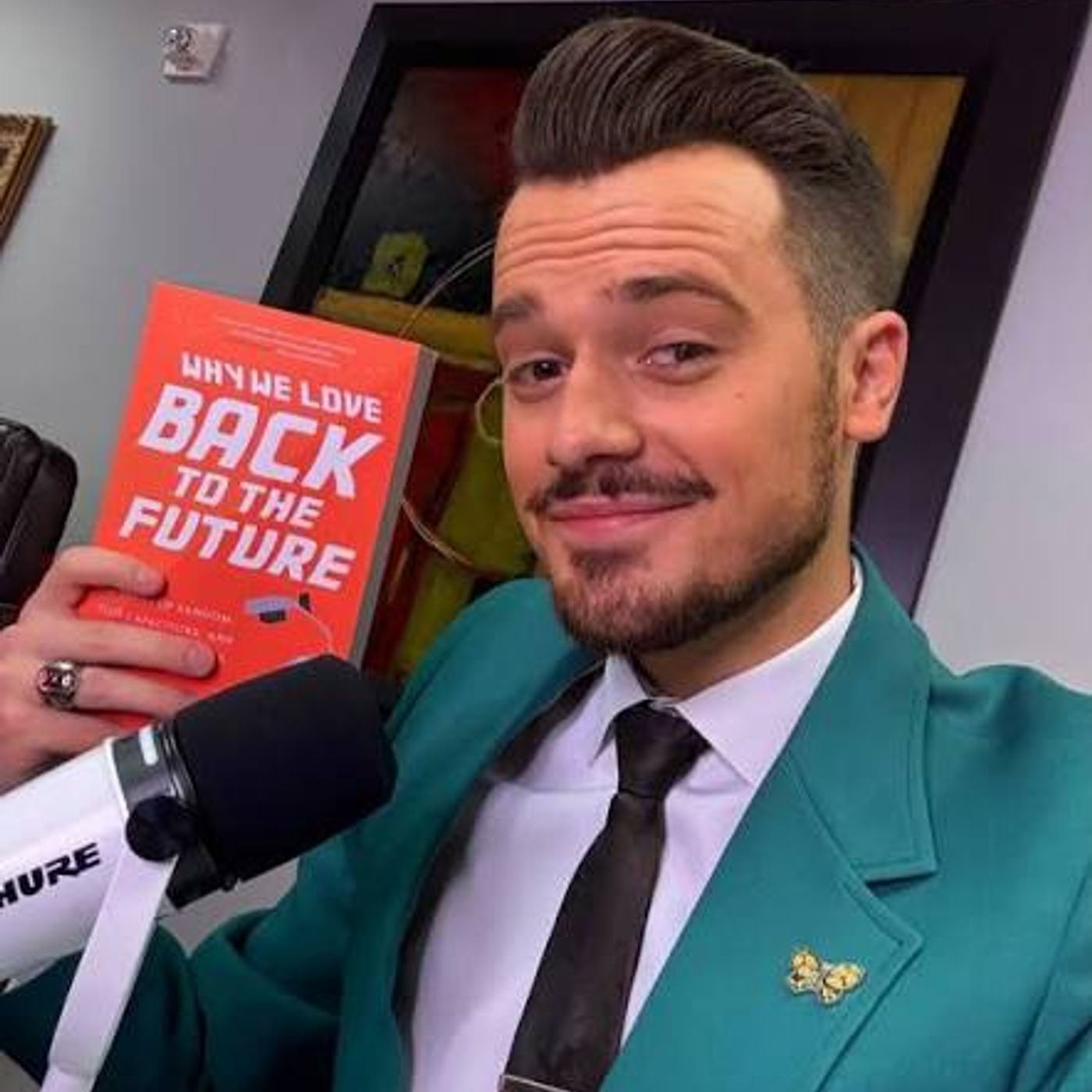
On today's episode, The Vern welcomes writer Brad Gilmore to talk about his new book. Why We Love Back to the Future and discuss not only what we love best about this series of films. But some fun behind the scenes trivia about the making of this iconic trilogy. Buy the book on Amazon Check out the other books and projects Brad Gilmore has done over on his website The Vern is a proud member of the Minnesota Film Critics Association
speaker-0: This podcast may contain adult language, adult situations, spoilers, and some brief nudity, so printer guidance is adjusted. We have such sights to show you. speaker-1: After about five minutes of this movie, you're gonna wish you had 10 beers. speaker-0: Human sacrifice, dogs and cats living together, mass terrier! speaker-1: So, what would you little maniacs like to do first? Hi, I'm Jackie Wanapla! speaker-0: well, Ladida. speaker-1: La di da la la yeah. speaker-0: Welcome back to the Cinema Recall Podcast. Hello everyone, and welcome back to the Cinema Recall Podcast. I am the Vern. Thank you so much for listening, watching, whatever you are doing. My special guest today, he is the writer of the new book, Why We Love Back to the Future. We have with us right now Mr. Brad Gillimore. Hello, Brad. speaker-1: Hey, what's going on, man? I appreciate you having me on. speaker-0: I appreciate you being here. So all I get into Back to the Future just for a little bit here. Of course. But let's begin with you. I mean, what began your whole right in career? speaker-1: man, it was it was something that I never had ventured out to do. Growing up I was, in a band and and writing songs and and things of that nature and that that led me to, doing a radio interview one day where the program director said, Hey, you would be pretty good at radio, why don't you try that? And the radio led me to wrestling, wrestling led me to television, television led me to writing. So I I didn't expect any of it. I've just been along for the ride, man. speaker-0: That's pre mentioned music 'cause I'm a musician myself. What what's your acts? What do you play? speaker-1: Yeah, yeah. So I was actually a singer and MC in a band called Twenty Eleven, and we actually were high school friends who who came together and and put out a few records, did some touring that was fun, and a few years ago we got back together after a decade plus and did a did a new album called Happiness, Sadness, etcetera. And it was actually narrated by Booker T who I work with, who's a wrestling hall of famer. So it it's been fun, man, but you know, I just I just I think that some ti sometimes my life Vern, I I think of it wouldn't it be cool if and then I fill in the blank. Right? Like wouldn't it be cool if I tried to do this and that's kind of my modus of operandi? speaker-0: I love that. So we started in music. can I guess what kind of genre it was? Was it like rock, ska? speaker-1: Yeah, no, so it was like it was like a I would say a hip hop pop R and B kind groove. Yeah, yeah. a singer, a few rappers, a a multi instrumentalist, a DJ. my friend Avery, who is actually now he plays in a country band in Austin. But he would he and I he was a bass player and and a good multi instrumentalist, and one day I I went to him, I said, Hey man, we need to do a band. And then, it became what it became. Well, I guess song structure, how to how to take a thought and tell a story over a a two verse, d two chorus, a hook, or or a bridge and trying to figure out the puzzle piece that is a song, which is one of the one of the most difficult things, especially when you're doing it as a collaboration, but learning that skill at an early age I think helped get me to understanding how to how to put a a a book or a thought or or or a piece of work together. speaker-0: That's so cool. The whole soft structure thing and then from moving from that to wrestling. I mean, that's that's a very wild difference right there too, Brad. speaker-1: Well, yes, but I'd always have an affinity for pro wrestling my entire life. I remember seeing Stone Cold Steve Austin on the ki on the TV when I was a kid and I thought this is the coolest thing I'd ever seen in my life and being enthralled by it. About these guys who are larger than life going out there and putting on athletic exhibitions where we as the audience member are supposed to think they're beating the heck out of each other, but in actuality they're protecting one another and and the kind of the sweet science of putting together a match was was interesting to me. And then when you get into pro wrestling you realize It's the ultimate of entertainment boot camp, right? Because it is a television show that has a narrative and a storyline through it. Yep. There's guys who are playing exaggerated versions of themselves or sometimes different people altogether, characters. You have to learn how to put together a a a what we call in the business a promo, which is essentially a monologue and how to deliver that because you have one take. You have to deliver it to camera, but also a live studio audience. And you got to wrestle for the people. Who are in the crowd simulate combat, put psychology together as a character, because it's not only, hey, I'm gonna give this guy a suplex. Well, why am I gonna give a guy a suplex? What am I gonna do after that? How do I it how do I interject my character in this moveset? And then you have live audience feedback that you then have to react to because if they're not reacting, then you're actually not doing your job. So it's an improv at the same time. You have to learn about camera angles and and how to go up Go on the fly if something goes wrong. There's so many elements to that industry that are applicable to everything else. speaker-0: And you made it look so it's reality, this is just happening in the moment. Yeah. And most people don't realize that it's all been pre planned with the other wrestlers and trying to move the right way and one wrestler has to do one thing to make sure the other one doesn't get hurt. And it's all really per planned and speaker-1: It's a world. It's a very delicate, delicate dance. And then sometimes a a a match that involves just two people might have nine or ten people who've put thought into it and have laid it out and said, Hey, what about this? Well, what about that? and then you could do this, this, and this. This would be a great point for you to do that, right? And then we can tell the story. Because I'm the broadcaster on the show, so I get to tell the stories of the moves that are happening. And so When I'm there, I I like to figure out, okay, how can I tell the story of these two characters? Because the moves, who cares, right? They're moves. Every every wrestling match has a move. The great ones, just like a movie, ever every movie has dialogue. Every movie has characters. But the great ones make us feel something because we understand the story at a deeper level. And and that's the the the the comparison to wrestling. speaker-0: So did you rate any of the characters like bat stories or something there or? speaker-1: Yeah, w with every character. I'm I've been a part of of this organization. It's called Reality of Wrestling, held by Booker T. It's actually the first school to ever be fully designated by the WWE as one of their developmental schools in their system. And I've been there for fourteen years, right? So I know a lot of these guys. I saw them when they walked into the school for the first time and I know them intimately, right? Like I know their their real names or as we call them in wrestling, their shoot names. I know their girlfriends or their wives or their kids or their moms, right? So I know what the real jobs were when they started and and all those things. So yeah, you you almost don't have to write a backstory because it's such a camaraderie and it's such a fraternity of people who are all what I love about wrestling is we're all thinking singularly, but acting collectively. We all have the same goal in mind. Everybody in the locker room, every wrestler on the show, every cameraman, every tech guy, every referee every announcer, everyone on the show, every producer, every staff person, we all want to do the same thing. And we know we have to play our part in that in order to achieve the goal, which is giving the people a hell of a show. And and that's what I love about wrestling. speaker-0: That's so cool. I I really would love to get you connected. I don't know if you'll ever watch the The Last Drive In with Joe Bob Ritz. speaker-1: No, I see. speaker-0: Okay, well it's a horror show where they play like older and new movies. But Darcy on that show, she has her own wrestling podcast where you talk to other wrestlers. And I think it would be just so much fun if you ever wanted to go on to that show and talk about your your past wrestling speaker-1: I love wrestling. Wrestle wrestling's given me so much in my career, but yeah, I love it. speaker-0: So I and then moving on to our main topic here, how did wrestling lead you into writing this book about back to the future? speaker-1: Well, again, re like going into my career, nothing was ever planned. And so I've been a part of reality wrestling. A lot of great opportunities have come through with media. And Booker T, who is friend and mentor and the boss man of that show, he added me to his radio show back in 2015. And that kind of started a different media career that I did not expect. Really before, in radio, I was just interviewing local musicians. And then Booker opened up this sports world to me. And I'm interviewing combat athletes, boxing, wrestling, MMA. And then I again I had just a a need and a desire to to to continue this honing this skill of interviewing and and learning about people and their craft. And so and then I on my own show started to reach out to people. I wanted to reach out to someone o other than music, other than wrestling. I wanted to talk about movies 'cause I love movies. And my favorite movie was always Back to the Future. So Using the skill set I'd honed in wrestling, I started to reach out to people who are involved in Back to the Future because it was 2015. And I thought, well, this is a great time to have a little maybe two, three week retrospective on my show about Back to the Future. We'll talk about the movies. Maybe I can get a couple of people who are involved on and we'll talk about it. And so I started reaching out to folks and I started to get a lot of yeses. And people wanted to come on the podcast and talk about it. And so then I go, you know what would be great? I need to do some research about Back to the Future. Let me go find a Back to the Future podcast to listen to to know what I'm going to talk about to these people. Mm-hmm. And so I went to the Apple Podcast and I was shocked that there was no Back to the Future podcast out there. there's a couple of people who did episodes on it, but nothing dedicated wholly to back to the future. So I said, Well, maybe I should do it. Maybe I should do the Back to the Future podcast and learn about this movie in real time, right? And and and talk to people who were involved. So in twenty fifteen I started the podcast and it started to get its own little audience together so much so that a friend of mine did a a book about Star Wars and the publishing company that he did it for was named Mango Publishing at the time. And we somehow got into contact with each other and and they said, Well, hey, you do this back to the future podcast. Well would you want to do a book about Back to the Future? And I said, Yeah, sure. And they're like, Well, put together a pitch and let's see if it's one we're interested in. So I went back and I put together like a kind of a half half you know, half pitch, because I didn't know what I was doing really. And I was like, Well, what do really talk about? So I put together like a little pitch to him and I sent it to him. A couple months went by, and then one day I get a phone call, Hey, we want to do your Back to the Future book. Start writing. And I was like, well, I guess I gotta figure this out now, having never written anything long longer than a school paper. I had to start figuring out how to become an actual writer and and that's where the journey of of crafting this particular book started. speaker-0: Well, very cool. is this like your like first book on covering a movie, would you say? Or would you speaker-1: Yeah, yeah, of course. Yeah. So this started really me getting into the the movie world and and covering film at a at a at a deeper level. I'm a member of the Critics Choice Association and a voting member in both TV and film. And I I again something I never thought that I would do, but but Back to the Future was my first l first movie that I saw that I connected to as a kid. And then what I w what what's great about a great movie like Back to the Future Is as you get older, you start loving it for different reasons. Other themes hit you because of your own life experiences that you've been through. All of a sudden, this part of the movie is more sent sentimental to you, or you you resonate with this thing that Marty's going through. So yeah, this was the first thing that I'd written about a film at all. And then I would go on to do another book about James Bond, which is another passion of mine, but Back to the Future was my first love and my and my biggest one. speaker-0: Well let's do this folks. I'm gonna play just a quick little ad spot for the Back to the Future trilogy. This is an older ad spot and we'll be back more with the Brad to talk more about his book. Are you telling me you built a time machine? Kind of a glorian? If you're gonna build a time machine into a car, why not do it some style? speaker-1: To the future and back. The Back to the Future trilogy is finally on DVD. Get ready for the greatest adventure through time. speaker-0: Why do you keep calling me Calvin? Calvin Klein? It's written all over your under- speaker-1: This complete DVD collection that brings home hours of never before seen special features on all three films. This complete three-disc adventure is powered by 1.21 gigawatts of energy with hours of action-packed extras that explore every generation, let you see the science of time travel up close, and reveal the secrets. Back to the Future, the Ultimate Action Adventure trilogy. Coming to DVD December 17th. speaker-0: Sending you back to the future! Ooh, DVDs. It's a new format that's coming out, kids. It's gonna be huge. Huge I tell you. DVDs are like taking over the world right now. Wow, this new format's amazing. Where were you when you first saw the the first movie, the first Back to the Future? speaker-1: Yeah, it's it's crazy story. So I'm actually I was born in the early nineties. So I I didn't see any of them in the theaters. I first saw Back to the Future part one in nineteen ninety nine on the Disney Channel and and and of all places. But here's the funny thing is we were talking about music, you know how sometimes like I remember being young and my dad was older obviously, but but much older than me. So he had like a different musical Realm that he enjoyed. And one of his favorite bands was Credence Clearwater Revival, CCR, John Fogarty. And I remember listening to them and going to again to a friend being like, Hey, have you heard about this cool band that's really underground that nobody knows about called Credence Clearwater Revival? But yeah, of course, like everybody knows CCR. And and so it felt similar with Back to the Future. Is I remember going to a friend of mine, Avery Davis, in first grade and going, Hey, have you ever heard about this movie, Back to the Future? I I just saw it last night on the Disney channel, thinking that. This no one knows this movie. It's some random film that they put on. And of course, as I began to ask around, everybody had you know either heard or seen or was familiar with Back to the Future. And so that's the first time I saw it. And I remember back in the glory days of Blockbuster, asking my mother, Would you take me to Blockbuster so I can rent this movie? 'Cause it ha it's said to be continued at the end. So I'm assuming it has more parts to it. And I I want to see them. And I that's what that's where it all started. speaker-0: Sure. Well, that's a weird thing 'cause I do remember seeing the first one in theaters. Yeah. eighty five. And I remember at the end, there was no to be continued when it was first released in theaters. speaker-1: Right. Yeah, no, it wasn't. speaker-0: We had no idea that there was ever gonna be sequels to it. But it was so kind of cool seeing with my family and like Martin McFly seeing his parents when they were younger and I'm thinking about how I would feel my seeing my parents when they were younger, it was a very weird thing to see. So what was about when you were when you were at that young age, what was about the first Bath of the Future that really spoke to you? Was it like the technology? Was it like knowing more about your parents? I know you talked about your dad's C C R records. Were you interested because seeing your dad as like a younger kid, I mean speaker-1: I think that everything you named is is a part of why it stayed with me. I think when I was a kid and I saw it for the first time, it was the DeLorean and Marty McFly. Right. I don't think there's anything cooler than Michael J. Fox in that movie. He's got a beautiful girlfriend, he's playing rock and roll, he's riding skateboards, he's traveling through time, he stands up to the bully, right? he's the quintessential awesome hero of a film. But as I got older, my father who the book is dedicated to, he he grew up in the fifties. He was a teenager in the fifties, right? My father had me when he was forty-eight years old. So he had grown up in that era. And so I think getting to see into the window of of how life was for him growing up was interesting. And really that was the that was the origin of this movie, is is Bob Gale finding who's a co creator and co writer of Back to the Future, he found his father's yearbook in the basement. And and and was looking through it. He and his dad went to the same high school and he saw that his dad was the president of his graduating class. And he thought about the president of his graduating class and was like, wow, I would never have anything to do with that guy. And then he thought, I wonder if I went to high school with my dad, if we would have been friends. And that's when he calls Zemeckis and goes, I I figured it out. I figured out the time travel movie. A kid goes back to school with his parents. And that was kind of the origin of Back to the Future. So what you're saying and what eventually became for me. That was the same for Bob Gale is what if you went to school with your dad? speaker-0: That's so cool. I know that Bob Gill and Robert Semectis worked on Romance of the Stone before Back to the Future, which was like a huge blockbuster for them. which wasn't the case so much for their other movie, Used Cars. And speaker-1: Yeah, yeah. speaker-0: Robert Semegis and him d also worked on another movie called I Wanna Hold Your Hand, which is about a bunch of girls who don't visit the Beatles. Not so much a success there, but after Romance and the Stone hit huge at the bot's office, you know. they'd have more clout to make Batch the Future, which became like this huge entire thoughts office hit. When you were like researching Batch the Future, and I'll talk about the other movies more briefly, when you were researching the first Batch of the Future, was there anything about the making of that movie that really surprised you? Like thing you didn't know about? speaker-1: Yeah, there's a ton going deep to it. And then again, Bob and Bob, like you said, they they had worked on several things together. they did a episode of Kol Shak the Night Stalker, which is actually ironically one of my dad's favorite shows that he would show me and or coincidentally rather. And then they did nineteen forty one, of course they wrote for Steven Spielberg, which is one of his movies that didn't hit as much as, the roll run that he was on. And so yeah, when I started to research it There's a few things that you know if you're a Back to the Future fan, or or maybe or you've heard. And the biggest one is that Michael J. Fox wasn't Marty McFly. Eric St speaker-0: Yeah. speaker-1: Eric Stoltz was cast as as Marty McFly. And again, I knew that going into the research, I didn't understand I guess I didn't appreciate how giant of a decision it was for them to change that. 'Cause they were they were at the point in in in filming where Everyone's starting to figure out hey, what do you got lined up next? what what are you working on next? Because we're about to be done with this movie. Means six, seven, eight weeks of filming they they had done to the point to where Christopher Lloyd was done with his scenes, Tom Wilson was done with his. And then for them to make that decision that we need to recast, one takes a a giant set of you know what to make that speaker-0: Exactly. speaker-1: because you're spending the studios money and they're not really keen on spending it more than once. And they they they told you know, Bob Zemecas and and and Gail and and Spielberg were all looking at the dailies and they were just like, Yeah, we're just not getting the laughs that we want. It just Sultz is playing it from what everyone who's seen footage and who was there, he was playing it seriously, you know? Like a guy who was actually trapped in the past and his mom has the hops for him and he might disappear because he interrupted his parents' first meeting. So so he was playing it seriously and it just it the the comedy just didn't come across. It wasn't funny the way that the Bobs had written it. So to make that change and to cast Michael J. Fox and have Michael J. Fox filming at night after he got done with Family Ties and and then the movie actually being so well done that they moved the release date up. You know, it was supposed to be end of July. They pushed it to the beginning of July. To hit it really in the middle of that 4th of July weekend in 1985 and really release it in the middle of the summer movie season. That was fascinating. But one of my favorite stories was Sid Scheinberg. Sid Scheinberg was the president of Univers Univ Universal, the studio obviously making the film. And He had read a an early draft, and the early draft of Back to the Future there's a lot of big differences. speaker-0: has some weird refrigerator. I I found that to be odd. speaker-1: Yeah, it's weird that they chose that and then later on and and here's the thing, the the the the climax of the movie was there's no Hill Valley clock tower lightning striking it. They they they take the refrigerator in a truck and go to a nuclear test site where an atom bomb is being tested in fifty five, and that's how they get Marty back to the future. So way different, right? speaker-0: Didn't he use that in the Indiana Jones the Crystal Skull? speaker-1: Yeah. Yes. Spielberg later went back to it and decided to nuke the fridge in Crystal Skull because of course it's lead lined and whatever. The original movie was real different and and even Marty McFly was a video pirate who was, you know, filming bootleg movies and the time circuits were powered by Coca-Cola. And like there was a really different kind of movie. But Sid Scheinberg, Present Studio, had some really good suggestions on how to make it better. One of them, he said, Hey, I know that Marty's mom is named Eileen. I don't I don't really buy her as an Eileen. Let's name her Lorraine. Lorraine sounds better. Lorraine was actually his wife's name, so that's probably why he liked it. Hey, I know that this Professor Brown has a pet chimpanzee named Shemp. I don't like that. Let's let's give him a dog, maybe name him Einstein or something like that. Because he because no movie that ever had a pet chimpanzee ever turned a profit at the box office. And actually Bob Gale brought up to him, Well what about any which way but loose with Clint Eastwood? And and he looked at Bob Gale and said, That wasn't orangutan. So he had so he had some speaker-0: Got a chip. Given the monkey like a celebrity voice, maybe that could have done speaker-1: Maybe, maybe. So he made some good suggestions along the way of what things you could change. And let's not call him Professor Brown, name him Dr. Brown, and then Marty can call him Doc. And I mean, how iconic is Doc? Doc? Yo, you got to come back with me. So, anyway, the biggest note that he gave came later when Sid Scheinberg thought that the title of this movie is bad. The movie being called Back to the Future, it just doesn't. It didn't make sense to him. He just didn't like the title. How can you go back to the future? It it doesn't really make sense. And so he wrote them a a a fax, and I put a version of it in the book. And the fax was to Steven Spielberg, Robert Zemeckis, and Bob Gale, and he came up with a new title for the movie. And he was serious about this. This was his big note. After again, remember, letting them film this movie again. He had a note. And the note was I don't like the title of this movie. I think the perfect title for this film, and he gave several reasons why, the perfect title for this film is Spaceman from Pluto. And that's what speaker-0: That's a totally different movie. speaker-1: It's a terrible title. And just think about that. Like that was the big note. And so the Bobs were kind of freaking out. How do we how do we tell this president of the studio this is a terrible idea? And Steven Spielberg, who is the producer of the film, showed why he's a great producer. Because he wrote a a note back to Sid and said, Sid, we got your facts this morning. We all got a big kick out of it. Thank you for sending that joke down and uplifting our spirits on set. We really needed it. And they never heard about Spaceman from Pluto ever again. But that was the way they got out of it. But can you imagine Eric Stoltz, stars and spaceman from Pluto? There's no way we're talking about it forty one years later. speaker-0: anything spacemen for Pluto that has nothing to do with like time travel. I'm thinking that his parents got adopted are now living in Mars and Mars got going on some like space droids or whatnot right there. speaker-1: Spaceman from Pluto. speaker-0: Natural G's. speaker-1: Could have been bad, man. Could have been real bad. speaker-0: I still kinda remember the original trailer spots where it just showed the DeLorean opening up and Michael J. Fast is Marty getting into the car and the announcer goes like where do you want to go thirty years back? And right there the tiles come up, back to the future. Now I wanna ask you this, Brad, because this movie takes place in the eighties, late eighties. Might have fly goes back to the fifties, messes things up. hasn't tried to get his parents together. If he doesn't, he'll disappear in nineteen eighty five. Now that the movie's over thirty years later, how do you feel this movie being set in the eighties and go back to the fifties? How this still resonates with people today? speaker-1: That's great question. It's not this movie doesn't still resonate with people because of the time period. It it resonates with people because of this reason. And everybody has done this. Everyone listening to this, everyone watching this, and the two people involved in this conversation right now, we've all done this. We've all gone back in our head and go, man, if I didn't do this At this time, I wouldn't have met this person. If I didn't met this person, I wouldn't have gotten that job or that opportunity. Right. You play like that reverse engineering of your life and how you got to the moment. And it's because your life is all about these small series of choices that you don't realize are going to be all interconnected with one another, but they are. And that's what Back to the Future hits on. It hits on how life is about small choices that you do not realize have this major impact in your life. Who would have known? that if I was the peepin' Tom in the tree and I fell out of it, I'd meet my future wife and have children. Who would have thought if I actually stood up to the high school bully, that it would give me this confidence in myself to send in my stories and get my book published years later, A Match Made in Space? Who would have thought these things? And and to me, those themes of back to the future, because at first Marty McFly, he's hesitant about his own life. You know, what if I send in this record, you know, the tape to the record companies and they tell me I'm no good. I don't know if I can take that kind of rejection. We hear his father later say that to him in the lunchroom about his science fiction stories. Who can't relate to that? Who can't relate to what if I'm no good? What if the what if they tell me I I stink? I can't know if I could take that kind of rejection. And then realizing that the belief in yourself, like Doc says, if you put your mind to it, you can accomplish anything. And your future hasn't been written yet, no one's has. These themes are are generational, they're universal, they're more than just About nineteen eighty five and nineteen fifty five and eighteen eighty five and twenty fifteen. speaker-0: before Marty never really known who his parents were. And at the start of the movie, Marty has like the somewhat disdain and hatred because his dad's like such a pushover and his mom's always drunk. And so when he does see them in a younger age and realize, okay, well this is why they are this way, he has is a much more understanding of them. And I think that Leah Thompson and Crispin Glover Thomas Elth Wilson, they all do just a fabulous job in those movies. And I wanted to you know get a little bit into the sequels a little bit, but yeah, not too much here. I know you did research about this, and I'm kind of curious about since Christopher Glover has a big part in the first one, and his character is in the second and third the second one, but the actor is not in the second one. I know that. I don't know if it was a contractual arguments or whatnot, if it was not getting paid or something like that. But Leah Thompson and Thomas Thomas Elf Wilson, they appear in the sequels. I'm just kinda curious why Chris McGlover did not. speaker-1: Yeah, it's an interesting question and it's one of those things to where there's a there's some he said, he said about it and Crispin Glover has told his. It b they both kinda come to some sort of contract dispute is what the most likely outcome would be. But nevertheless, I mean the original version of of Back to the Future two and three were actually written as one movie called Paradox and that was the working title and and George McFly was very much a part of of the story. But as with anything, you when you don't have an actor, especially a principal, who is as strong as Crispin Glover was in Back to the Future One. Back to the Future One is really Crispin Glover's movie. If you really look at it, it's his story. He has the big character arc in it. You're tr rooting for George McFly. By proxy, are you rooting for Marty McFly? But it's really George's movie. And he and he played that that part brilliantly. Brilliant. And and so it was a shame that he didn't return. Jeffrey Weisman, who took over the role as George McFly in two and three, he was put in an unenviable position to try to replicate a performance and have prosthetics and prostheses put on his face in order to look like Crispin and they intercut footage of Glover from the first movie into the second one to make people think that, yeah, he is a part of it. A lot of people don't know, even to this day. that Crispin wasn't in the moo in the sequels. They just assumed that he was 'cause they see his character. Yeah. Yeah. A lot of people some people know, some people don't. some people don't even realize that Elizabeth Shue wasn't in Back to the Future One and that was Claudia Wells. Yeah. speaker-0: It was a completely different person 'cause I I guess she was raised in a family, I guess I heard. speaker-1: So the story that actually Claudia Wells, who who's the original Jennifer Parker, her mother had fallen ill. And so she went to go take care of her mother and chose not to come back. And really, it's actually ironic that we that we're talking about this today because I actually talked to Malore Hardin earlier today, who's an actress, obviously, and she was the original, original Jennifer Parker when Eric Stoltz was Marty McFly, and she was then let go of her role because she was much taller than Michael J. Fox. And they just didn't like that. So she could have been the original she was the original Jennifer Parker and you know, it didn't it didn't work out. speaker-0: It's so crazy hearing about these alternate things. So for the story of like Back to the Future Part Two, where Marty, you know, goes to the future to save his kids, and then situations happen where Biff steals a type almanac and alternates in eighteen eighty-five. So then Marty has to go back to nineteen fifty-five to get the almanac back. was that not gonna be the original story for part two? There should be a whole new part two? speaker-1: Yeah, yeah. So it's a little bit different. There there's still the Marty and Doc going to the future. speaker-0: Okay. speaker-1: And in the in the future there's some things that they run into that are is different. and this script does live online. You can find it and read it. 'Cause it is fascinating to read what could have been. But yeah, Marty ends up seeing a hologr holographic performance from Huey Lewis in the news performing the power of love. And yeah, I mean there's like some some some differences. And then when you go when they go back, they don't go back to nineteen fifty-five. They go back To nineteen sixty two, I believe. And Lorraine Lorraine's a flower child, and Marty gets arrested for being a a Vietnam War protester, and they have to get him out of jail. And I mean, there's this whole subplot of it being in the sixties. And then it was Zemechis who was like, Hey, you know what though? What would be really cool is if we did something that only we could do is go back in time to the first movie. And look at the first movie from a different perspective. And Zemeckis has always been an Uber creative and and that was on full display. Because Back to the Future Two is one of the craziest sequels that you'll ever see because you're dealing with three time periods, an alternate time period, going back into a first movie where you have to recreate the first movie, you know, from scratch and and try to shoot it in a different way. I mean, it's it it is a Ambitious, ambitious sequel. speaker-0: That and I gotta say when they are at the Enchantment Under the Sea Dance and you're seeing the new Bunny McFly try to change things for the Money McFly in the fifties, the original one, the way that they made the exact same shots in their movie really I it's still kind of surprised me how they did it because the sequels I think came out like in like eighty nine ninety or so. And they're taking footage from the original movie of nineteen eighty five and how to make that seamlessly put together was kind of interesting. When you were researching things about like part two and how they're doing certain scenes were there other moments that sort of surprised you when you were looking up these movies. speaker-1: Well, it was interesting that Zemechis and and the filmmakers for Back to the Future Two, I mean, they were they worked with ILM to create a camera where you could have this the same actor as different characters in the same shot. And that hadn't happened prior to Back to the Future Two. So, you know, y I think a famous example is is Eddie Murphy as the nighty professor, where he's playing all these characters at one dinner table. It was the same it was the same concept, but they did it in Back to the Future Two when Marty Is playing a older version of himself and is playing his daughter and his son all in twenty fifteen and they're all in the same shot together. That was a special camera that they had to make an ILM design in order for that to to happen. And if you look at Zemeckis' career, he is obsessed with this kind of thing, right? Going back to the first movie he does after Back to the Future is Who Framed Roger Rabbit. Can you think of a more ambitious movie? To try to do. speaker-0: That is crazy. speaker-1: It's insane. It's an insane movie that he pulled off for it to be as good as it is and for all the licensing and the characters that he had to do and and the innovations of technology that he had to make happen. So that just shows you that he's ambitious. He does these sequels, films them at the same time over an eleven month period, and and then goes and decides to do yeah, the name of the film, Death Becomes Her after the sequels are over, which is another like special effects, heavy, interesting, technical story to tell, and then does Forrest Gump. And then says, yeah, let me let me take the the technologic technological stakes up a little bit with Forrest Gump. then I'll do Castaway, where I'm gonna actually film a part of this movie, wait a year, and then film the rest of it when when Tom Hanks is skinny. and then I'll then I'll do Beowulf. You know, where we're gonna shoot live actors and make animated. Then I'm then you know his his most recent movie. came out in twenty four, is here with Tom Hanks, where it's a a sh a movie shot from a single shot and in in inner stories interweaving in it. And the way they transition the film. So I'm saying that to say he's always been this technological creative genius. And and he is he is so supreme at that. And that really started at Roger Rabbit and then he flexed his muscle in in part two and three And then in all the films that he's done since then. speaker-0: Well sure, 'cause I don't know if we took old footage of Bad to the Future One and just integrated that into Back to the Future Two. It just used like Michael J. Fox, you know, reprising his role again to make that scene seamless because it looks like the actual footage of Back to the Future One with the new footage of Back to the Future Two. So like our actors just on green screen and he's like superimposing footage of scenes into there because it looks like Some stuff is shot for new, but then it looks like the same exact shot. So I'm yeah, a lot of crazy editing on the on that movie right there. speaker-1: It just can you just think about the logistical nightmare of trying to edit that movie? yeah. Of just how difficult and then just how to shoot it. where are we and what's exactly going on here? And okay, we're back in fifty five. Okay, we we have this shot already from the first movie. So now we need to reset that shot up, but we need to shoot it from behind so we can get that coverage. there's just so much that had to go into that second movie. speaker-0: There had to be so many rehearsals for the actors to hit their mark to make sure that they're not overlapping on the actual images that's gonna be on the eyes for the audience because it all looks like it's right there. It's like the actors stepped in time to that time period and shot the movie the way it was right there, which I thought was absolutely like brilliant. No, I think Robert Summectus is a brilliant guy who's from Dodge Rabbit. Contact is one of my favorite movies of his. man I love Contact. speaker-1: Right. Flight is great too. People forget about speaker-0: Yeah. Yes. Does Washington great job of that one too. Now for like Bad to the Future Part three, this is much more of like a standard Western. It's got some great stuff there. I think John Mary Steen version is great as Josh La story. You mentioned that how the first movie is George McFly's story. I think the third one is a Doc Brown story. speaker-1: Absolutely. speaker-0: Tulli is his story, and you should know more about him. Now I The third one is probably the first time I ever saw a Western. Westerns are not my usual genre. But I found that to be just a lot of fun. I know a lot of people are mixed on the third movie. I think the third movie is is very good and wraps up the story just fine. was it always gonna be a Western according to your research or was it speaker-1: Yeah. Yeah, they wanted to go to the old west. And that was where the where it ended up. And when they actually presented the screen the script to the studio, the studio's Hey, you have two movies here. Like there's a lot of there's a lot of content. We can just let's just split in the two movies. And so that's where the idea came from to do the sequels back to back and just film at the same time. And that's why there's so much that interconnects between Back to the Future two and three, down to the shirt that Doc Brown is wearing in Back to the Future Two in twenty fifteen and has horses and trains on it, and he later uses that as his bandana in Back to the Future three when they're robbing the train and and and hijacking it. and that's just a small example, but there's so much that interconnects those two movies. But I actually, yes, people are mixed on the third one. It's my favorite of the three. It's my favorite. It's I know one is the best. One is the best by far. But I even have the Drew Struzen art behind me of Back to the Future three. That's my favorite. And I don't know if it's because I'm from I'm a Texan and we like Westerns here in Texas. Shocker to everyone. We like horses and cowboys. And I grew up on unlike yourself, where you said this was your first western. I was very familiar with westerns. My grandfather and dad watched Gunsmoke and Have Gun Will Travel and the Rifleman and and all these great shows. Yeah, from back in the day. speaker-0: My dad was huge into Westerns, huge. Watched a lot of them as a kid, Roy Rogers, John Wayne. But as like a kid growing up, I never really got to watch I watched some with them and I'm not into that. I was more like sci-fi, Star Wars, Star Trek, that type of thing. But I know as a family we did sit down and watch Back to the Future 3. And but yeah, this was actually a lot of fun and I thought the dynamics that Martin Bitfly has with Doc Brown was good there. Doc Brown just trying to find the love with his teach tool teacher, Mary Steenbergs' character was also very good. And you got to see more of Doc as a different person, how like Marty McFly knew who George McFly was. Now Marty tends to see a different side of Doc Brown. I think the friendship grows more symptomatic because of their relationship in that movie. speaker-1: Doc and Marty almost switch places in some ways. Where Marty's like, Doc, we gotta do this. Like we can't you can't, you know, interact with this woman. You know, think about the consequences on the space time continuum, is essentially what he's telling you. And then Doc is i you know, in love for the first time. And Mary Steamberge, what a great addition to the cast. And and it was actually Christopher Lloyd's first on screen kiss. And maybe his only one, but definitely his first one. And if it's his only one to go Only kiss Mary Steam burgeon on film. Well, you know what? Yeah, you you hit a high you ended on a high note there, Doc. speaker-0: A high door. speaker-1: Yeah, yeah. So I love the third one. It's just a it's just a lot of fun. Whereas the second one is great. Second one gets a little dark, right? It's it's a little darker. as the second in a trilogy typically is, it gets darker. Empire, right, strikes back is a little bit darker than New Hope and and then of course Return. But but yeah, so I I like this second one, but to me now I I cannot watch Back to the Future two and then not immediately put on three. I it's almost I have to watch them back to back. Whereas one I can watch and just like leave it and and enjoy it as as its own standalone. As it was meant to be. speaker-0: Well y yeah, I would ask you about that too, would be the fact that it is a trilogy now. If it just ended on the first one with the DeLorean going up in the sky and Doc Brown going where we're going, we don't need roads, and just flies off. Huey Lewis plays, would it still I mean, it still has this impact thirty five years later, would you still be thinking about Marty and Doc? I mean speaker-1: I think yes and no. It would have the impact because it still was the biggest movie of 1985. Yes. And yes, so for that reason, I think it would have stuck with a certain generation of individuals. The sequels, this is an interesting thing about Back to the Future 2. I say Back to the Future 2 has more of the iconography of the trilogy than any other of the movies because. Not only do have the Flying DeLorean Mr. Fusion, which is there at the end of the first one, but you have the hoverboard, which is so iconic to the franchise. People think of the hoverboard, the Mattel pink hoverboard. You have the Nike Air Mags, which are the self-lacing shoes, right, that Marty puts on in 2015. You have the holographic sh jaws that a lot of people think about when they think of the movies. You have the almanac, which is its own piece of of future tech that a lot of people relate to and so so there's so much in that second movie that is that is iconic that when you think about back to the future, it's one of the first two things you're gonna say is hoverboard, Nike Air Mags, Pepsi Perfect, which was a cool one for me. The Pepsi Perfect, the Cafe 80s, the rehydrating pizza. There's so much when you start thinking about it that is like, wow. And they got a lot right, by the way, too. paying for things with your biometrics, having a in-home voice assistant. picture in picture, the g glasses that you can have virtual reality with or an answer phone calls. all these things came to be for the most part. We don't have flying cars yet, but I think I saw a Tesla flying on the internet the other day. So maybe it's gonna happen. I don't know. Who knows? I h I hope not because I don't know about drivers where you are in Texas. They're not the greatest. So I can't imagine them flying. So speaker-0: AI drivers, yeah, this could be insane. speaker-1: Yeah, yeah, yeah. So we'll see. But the second movie's so ambitious, but I but I just always had fun with Back to the Future three. To answer your question, I think that it would have been as big, Back to the Future, but I think the sequels helped bolster its popularity. yeah. speaker-0: I agree with that. Have you ever played the game? speaker-1: Of course. Of course I played the game. The game is great. speaker-0: The day where they they go back to the thirties. I speaker-1: Yes, yes. with Kid Tannin. speaker-0: Kit Tannin. using some of the original like voice actors too, and I thought that was a really kind of a fun thing. what did you call the the game like the fourth one? Like the unofficial fourth movie? speaker-1: what's funny is is some people have taken the footage from the game and and cut it together and put it on YouTube and and made a second trilogy of Back to the Future and I've watched them and they're fun. I think that it's a spiritual successor in the same way that the animated series is a spiritual successor to Back to the Future or the musical, which is phenomenal. If people haven't seen the musical, it's so great, so well done. And they all seem like spiritual sequels, but you know, the g the Bob and Bob and I've asked Gail Every every chance I get. is there any can we do a TV show? Can we do something? They're s they're stuck on those first three are or that's all you're gonna get. That's all you're ever gonna get so long as they're around. And and I've grown to be okay with that and grown to appreciate that. And that's why I think Back to the Future is the greatest pure trilogy of all time. Now, yes, there's been other trilogies you can call about the original Star Wars trilogy, but they've now had, I don't know, what is there, twelve of the Star Wars saga Skywalker saga now, or nine or whatever it might be. And Indiana Jones was a strong first three and now there's been two other ones. The Godfather is like the another pure trilogy, but the third one is just not up to snuff. How many Batmans have there been? So I can't really consider the Dark Knight trilogy as a standalone. So when you look at just pure trilogies, I don't know of one that's better than Back to the Future. speaker-0: That's true. I I would put probably Bat to the Future and the Before Trilogy as like my two favorite like pure trilogy movies. Like just full on just like three movies, just perfect like trilogies. And Bat to the Future and Richard Linked Later's the before trilogy is like ones that have like a specific beginning and end. And both in a weird way is have something to do with like time travel. Sure. In a ways, all right. speaker-1: In a in a way. I'm a big Link Ladder fan. he's a he's a a fellow Texan. so I always love of anything that he does. So that's actually that you're actually the first person to bring that one up, but I I could agree with that. That's a good contender. speaker-0: Yeah, for right there. Just great stuff. So when Ray's book, Why We Love Back to the Future, and I'll post links in the show notes where you can find this wonderful book. What did you love most about Bad to the Future? Why should we love Back to the Future? speaker-1: Because it's a story that is bigger than just the story in the film. It's a story about belief in yourself. It's it's a story about you are not who you think that you are destined to be because your future truly hasn't been written yet. No one's has. So make it a good one. And who can't relate to that? Yes, the the the sci-fi elements are great. The humor is hilarious. The adventure is spectacular. The performances are off the charts, but truly it's the story. It's the words that were on the page that translate to more than just the words that are on the page. Those universal themes of belief in yourself, true love, they w they are always going to be elements in any successful movie. And isn't it isn't it indicative of a good or great piece of art that it's bigger than w the story that it's actually telling? That there are so many things that you can relate to it outside of the world of the actual film. And that's when I think about the small choices that we make. And I think about it all the time because of this movie. wow, if I didn't do that, I wouldn't be if I didn't see that movie in ninety nine, I'm not talking to you. Yeah. I'm not talking to you right now. I like it I had to see that movie and this bizarre sequences of events in your life and in mine have gotten us to this very moment at this juncture in time to have a conversation. That wouldn't have happened if not seeing this film and you enjoying it and starting this show. And by the way, I was looking at the movies that you have behind you. Heathers. Ugh. Heathers is a fantastic, fantastic film. And I love several that you have up there. but but Heathers Heathers, people if people haven't seen nineteen nine's Heathers, you're missing out on a quintessential film of speaker-0: Well speaker-1: that decade. speaker-0: maybe I will write a whole book about the history of Heathers and the legacy of like Heathers and talk about the musical. I interviewed the director of the musical Heathers, so I maybe could do a whole thing about Heathers and different versions of the Heathers. speaker-1: I didn't see Heathers till last year was the first time I saw it. Yeah. And I went, wow. What a movie. Yeah. Yeah. And then you see a lot of Heathers in other movies and it's very influential. Great performances by Christian and in and Wynona. speaker-0: a hundred percent and it how that movie influenced other movies now back to the future influenced other movies like the look wise and like character speaker-1: Here's the thing too about Back to the Future. Whenever you make a time travel movie, it's the first thing people compare it to is Back to the Future. And they did such a great job of setting up their rules of time travel that everyone assumes that that's just the rules of time travel. Yeah. Didn't they mention speaker-0: Isn't that in the latest horrible, like the event? Yeah. speaker-1: End game. In end game In Endgame, they actually say, back to the Future, that's not how time travel works. And then they do exactly what Back to the Future does is go back into the previous movies and fix things to to come back to a present moment in time and fix the timeline. So yeah, these these are people accept these are the rules of time travel as written. By back to the speaker-0: Well that's so cool. The only other book I've read about the matin of a movie is Blade Runner, which I have right over there. Blade Runner. speaker-1: Right there, yeah. speaker-0: I read the whole history about Blade Runner and the different versions of Blade Runners, this big lawn board that talks about everything that goes into it. Does your book also cover about how these movies are marketed? speaker-1: So yeah, of course we talk about the the the the commercial success of Back to the Future, but what what's interesting and what I love to actually point out to people about the book is that the book has three parts. and and there's there's time circuits on to be continued and back in time, but those are the three parts of the book. But really the first part of the book discusses the making of these three films. And then I go into some fan theories. Of hey, there is some deleted scenes from this movie that maybe you don't know about. Let's talk about these deleted scenes and if they were good cuts or bad cuts. Hey, there was this one cut that happened in Back to the Future 2 where Biff disappears. Can we talk about that? And I do a whole chapter called American Time Story, Old Man Biff, talking about the importance of that scene and why they should have left it in, or maybe why it was good to take it out. Then we t do the almanac, which is another part of the book where I talk about All the the best gadgets Doc Brown invented, the best characters from Back to the Future that are maybe some of the side characters and not the the big four or five. Then then we actually go into the musical, the power of love and music. I talk about the animated series and animating the future, the riding the future of again of the universal ride, and and and which were some people say is a spiritual sequel as well to the trilogy. So we go we go into all of this and then we hypothesize of what the future of Hill Valley could truly be. So It it is a fun ride and it really talks about everything back to the future, not just the three movies. speaker-0: That is amazing stuff, Brad. well, by all means, check out the book. Like I said before, it's the links are in the show notes. We can go and purchase the book, do it right there. Brad, what other projects do you have on the horizon in the future? speaker-1: Yeah, great great way to put it. So this Why We Love Back to the Future that came out on October twenty-first, future day, for the price of nineteen eighty-five, by by mind you. That that had to be very specific. But it it launched what I call Project 33, which is the launch also of my own publishing house called Red Main Publishing House, and we're launching three books in thirty days that I've written. we start with Why We Love Back to the Future, which is already out. Tomorrow, the day before Halloween. Is the release of my second children's book called Luna's Night Out, which is a real story about when I accidentally let my cat out of the house and I wondered what she did all night. Well, this was my fictionalized version of the events of that fair night in Luna's Night Out. And then on November the twelfth, a screenplay that I wrote that is being released in in a printed format is called Making the Towns, which is about two professional wrestlers, one on their way out and one on their way up. And they're doing a loop together, riding from Houston to Dallas to to Los Angeles to Las Vegas and it's their story. and that comes out on November the twelfth. So those are the three projects that I'm releasing in thirty days. Very ambitious project. Wow. But Project thirty three is officially underway. speaker-0: And is there like a a website where people didn't like find your boots on or any more things that you're doing, Brad? speaker-1: Yeah, yeah. The best place is to actually to go to my Instagram account where the I have all the links in my bio. You can also go to Bradgilmore.net, which is where, the most recent things will be uploaded. But yeah, Amazon, you can find all five of my books on Amazon, and and that's probably the easiest place for most people. Why we love back to the future, my first children's book, there's something really great about it. Grandma is up there, Luna's Night Out, Making the Towns, and Bond James Bond. speaker-0: Beautiful. Great stuff there, Brad. Thank you so much for appearing on Cinema Recall Podcast. Greatly appreciate it. as for cinema recall, I know I've got episodes planned out there, but I'm mostly gonna be doing more work on the Rotten Truth Podcast, which is another show I host with my good friend Dinny Roberts, where we talk about movies that have gotten bad ratings on Rotten Tomatoes. And we talked about few movies there. I know I've got ones coming up here in November with the cats from the Reals of Justice podcast talking about King They forbidden Subjects, the Charles Bronson movie, as well as Drop Dead Fred with UK comedian Molly G. So that'll be coming up in December for the Rotten Truth podcast. And then I'll be getting a whole new podcast all about David Lynch movies. We're called The Lair of Lynch. That's coming out in November. is with me and filmmaker James Lightfoot and we're gonna be going over all David Lynch movies, TV shows, commercials. So the letter of Lynch will premiere in November. And sort of recall I'm still doing my random thoughts of a movie Insomniac where I review movies that have come out recently. So it'll be a fun time. So look for the Rotten Truth podcast. And Cinnamon Recall. But as always, please subscribe to Cinem Recall Podcast on YouTube on your favorite podcast app because I will have episodes coming out here and there. So thank you very much for listening and watching everyone. Huge thank you to my guest Brad Gilmore here. I'm so excited to get into his book right now. like and subscribe on your favorite podcast platforms. We're available, like I said, YouTube, Spotify, iHeartRadio, whole bunch of places. Anyways, folks, that's all. Leaders, I love you all. Thank you very much. Don't forget to hug your neighbor. Call your mom. All right. Shake the neighbor's hand. All right. And the future is yours. So make it the best. Love you.