
Cary Harrison Files · CARY HARRISON
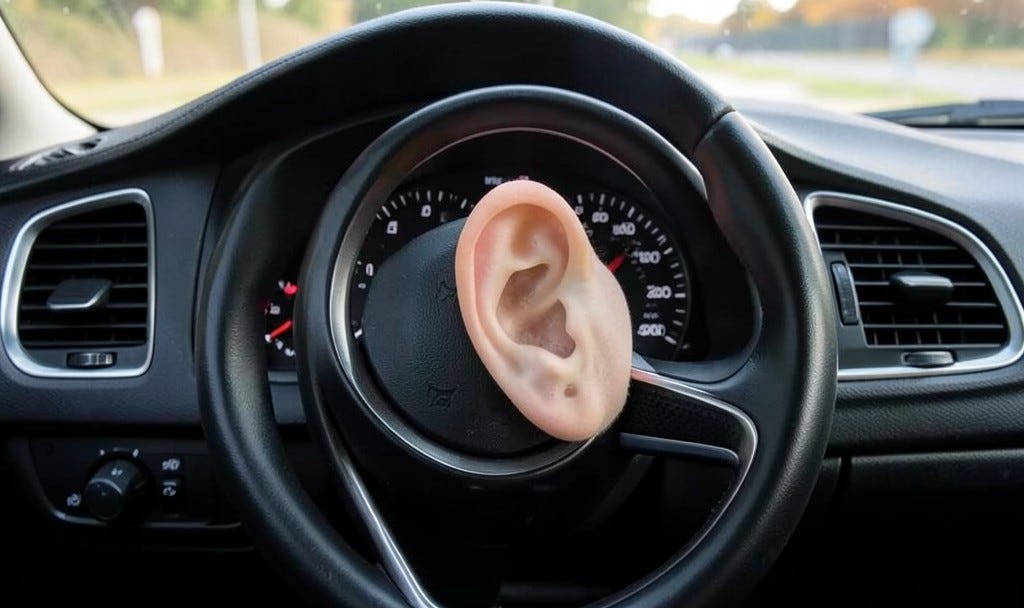
THE SHORT VERSION: The next layer of vehicle surveillance may not need to begin with a license plate, a suspect, or even a name. It may begin with the recurring electronic family traveling inside the car. Welcome to another magnificent episode of the continuing human experiment in which we take every invention ever designed to make your life easier and ask the only question that really matters: How can we use this to watch you more efficiently? Because apparently the license plate wasn’t enough. That was primitive. Neanderthal surveillance. You drove past a camera, it photographed your plate, and some bureaucrat somewhere could say, “Ah-ha! There goes the blue Toyota.” But civilization has evolved. Now, the camera may not need to know your license plate. It may just need to know your phone, your watch, your earbuds, and the other little electronic breadcrumbs you’ve stuffed into your automobile like a technologically sophisticated bag of trail mix. Enter SignalTrace, stage left SignalTrace is a surveillance system designed to work alongside license-plate-reader infrastructure. It detects electronic signals from consumer devices traveling in vehicles and can identify groups of devices that routinely move together—potentially giving investigators leads even when they do not begin with a known person or vehicle. And this is what we call innovation. Your car does not merely have a license plate anymore. It has a social life. The phone goes with it. The smartwatch goes with it. The Bluetooth devices go with it. Perhaps the abandoned vibrator in the trunk goes with it. If that particular constellation of gadgets keeps appearing together, the system can potentially start recognizing the pattern. Not necessarily you, at first. Just the little electronic herd traveling around with you. Your anonymous electronic shadow can begin to look suspiciously like a biography. anonymous electronic shadow If the same fingerprint appears at your house every morning, your office every day, the gym every Tuesday, and the same bar every Friday night, nobody needed to begin with your name. The pattern can lead back to the person. That is the conceptual leap. Traditional investigation begins with something: a suspect, a vehicle, a plate, a photograph. This approach can begin with a recurring pattern of movement and proximity, then work backward toward the people attached to it. You do not have to be known to become interesting. You can become interesting because your gadgets keep showing up together. That’s the modern American dream. You don’t need a criminal record. You don’t need to be famous. You don’t need to be suspected of anything. You merely need to be sufficiently predictable—and congratulations, most of you are. Same house. Same office. Same grocery store. Same Starbucks. Same goddamned strip mall. The great mystery is no longer Who are you? It is: “Which little electronic puckfist keeps traveling with this other little electronic puckfist?” Share This is...
0:00SPEAKER_02Lemon scented freedom of speech since 1787.
0:04SPEAKER_03KPFK
0:05[music]
0:33SPEAKER_01Welcome to the latest miracle of human progress.
0:36SPEAKER_01It's called Signal Trace.
0:38SPEAKER_01And it's a surveillance system that is designed
0:42SPEAKER_01to work alongside license plate reader infrastructure and detect electronic signals
0:47SPEAKER_01from consumer devices that are traveling inside our cars.
0:57SPEAKER_01Oh, George Orwell is rubbing his nubbin as we speak.
1:02SPEAKER_01This signal trace is what it's called.
1:05SPEAKER_01Look it up.
1:07SPEAKER_01It can identify groups of devices that routinely travel together.
1:12SPEAKER_01Sounds so weird, doesn't it?
1:14SPEAKER_01And this allows investigators,
1:16SPEAKER_01whatever that is,